
滞胀

Search documents
东吴期货原油四季报:此消彼长,供应压力逐渐显现
Dong Wu Qi Huo· 2025-09-26 11:29
Report Industry Investment Rating No relevant information provided. Core Viewpoints of the Report - The report maintains the view that oil prices will decline throughout the year. It is expected that the supply - demand balance in the oil market will gradually break by the end of the year, and Brent crude oil prices are likely to challenge the $60/barrel mark again. The expected price range for the second half of the year is $57 - 86/barrel, with an average of $67/barrel. In the fourth quarter, supply is increasing while demand is seasonally decreasing, making oil prices prone to decline. The reference price range for Brent crude is $59 - 74/barrel, with an average of $64/barrel [1][2]. Summary by Directory 1. 2025 Fourth - Quarter Outlook - The report maintains previous views that oil prices will decline throughout the year. Non - OPEC+ supply will significantly increase in the second half of the year, and seasonal peak consumption will end in the third quarter, leading to a break in the oil market balance. Considering additional negative factors, the oil market remains difficult. The expected price range for the second half of the year is $57 - 86/barrel, with an average of $67/barrel. In the fourth quarter, supply increases while demand seasonally decreases, and the reference price range for Brent crude is $59 - 74/barrel, with an average of $64/barrel [1][2]. 2. Third - Quarter Market Review - In the third quarter, the trading center of oil prices gradually declined. The increase in early July was driven by strong demand, and subsequent increases were mostly due to geopolitical situations. Declines were driven by the disappearance of supply - risk - driven increases, high tariffs, poor non - farm employment reports, and OPEC+'s decision to gradually exit production - cut agreements. Excluding short - term disturbances, oil prices showed weakness after August, which was due to the market's consensus on supply surplus. The height of price rebounds also showed a decreasing trend [5]. 3. Crude Oil Balance Sheet (1) Supply Surplus Remains the Consensus - IEA and EIA have continuously raised supply expectations for three consecutive months, with non - OPEC+ supply growth far exceeding global demand growth. OPEC maintains an optimistic demand forecast and implies that OPEC+ needs to increase production to balance supply and demand. Overall, IEA and EIA expect future supply to far exceed demand and inventory to increase significantly, while OPEC is endorsing potential future production increases [7][8]. (2) The Balance Sheet Shows a Gradual Increase in Supply - Demand Surplus - According to the EIA balance sheet, supply exceeds demand in all quarters of this year and next year. After the summer peak consumption season, the supply - surplus pattern will expand. The surplus in the third and fourth quarters of this year and the first quarter of next year will exceed 2 million barrels per day, and the situation will improve in the second quarter of 2026 [10]. (3) The Narrative of Large - Scale Supply is Further Strengthened - IEA and EIA have continuously raised supply growth expectations. Compared with three months ago, their global supply growth expectations have increased by 900,000 and 790,000 barrels per day respectively. IEA attributes all the 900,000 - barrel - per - day increase to OPEC+, while EIA attributes most of the supply increase to non - OPEC+. OPEC has raised its 2026 Call On OPEC+ forecast to justify future production increases [14][15]. 4. Macroeconomics and Its Marginal Changes (1) The Essence of the Fed's Shift to Rate Cuts is the Increasing Risk in the Employment Market - The Fed has been hesitant about rate cuts this year due to signs of stagflation in the US economy. Traditional monetary policies are ineffective in stagflation. Currently, US core inflation is stubborn, and employment indicators have been disappointing for two consecutive months, indicating increasing employment market risks. The Fed's shift to preventive rate cuts is to prioritize economic stability [16][17]. (2) The Contradictory September Fed Meeting - The Fed cut rates by 25BP to 4% - 4.25% in September, in line with market expectations. The September dot - plot shows a significant downward shift, indicating that doves are gaining the upper hand. The median and average both decreased by 25BP. The meeting content is contradictory, with the policy statement highlighting employment risks while the economic forecast shows a decline in the unemployment rate. The report predicts that the Fed will cut rates twice in the second half of the year [20][21][22]. 5. Microeconomics and Its Marginal Changes (1) The Month - Spread Indicates a Weakening of Supply - Demand Fundamentals - The month - spread reflecting immediate supply - demand relations has weakened since August but rebounded slightly due to geopolitical situations. Global supply increases and seasonal demand decline will continue to pressure the oil market. The month - spread in the Middle East is relatively strong, supported by China's strategic oil reserves. China's implied inventory increase from March to August this year reached a monthly average of 1.33 million barrels per day, the highest since 2020 [24]. (2) Crack Spreads Still Provide Support - Crack spreads remain supported, mainly due to diesel. OPEC+'s production cuts since 2022 have reduced the supply of intermediate components, and sanctions on Russia have further decreased the supply of middle - distillates. Diesel crack spreads are the main support for the market, and the performance of US distillate oil consumption is a key signal [29][31]. (3) Production Will Continue to Rise in the Fourth Quarter - OPEC+ will gradually exit a 1.65 - million - barrel - per - day production - cut agreement in October and increased production by 137,000 barrels per day in that month. Except for Kazakhstan, other OPEC+ countries have closely followed their production targets. If calculated according to the IEA's report, OPEC+'s production - increase capacity will far exceed market expectations. Non - OPEC+ production is also increasing, with countries like Canada, Brazil, and others contributing to the growth. The current oil supply pattern fits the narrative of large - scale supply, and $55 - 60/barrel is considered a balance point for various stakeholders [33][39][40]. (4) Demand Gradually Moves Out of the Peak Season - Although crack spreads are temporarily strong, seasonal demand decline exists. After the peak travel season and summer power - generation demand in the Northern Hemisphere end, refinery maintenance will increase, and demand will decline. The fourth - quarter demand boost will be limited, and the market will focus on the weak demand in the first quarter [41][42]. (5) Pay Attention to Geopolitical and Sanction Disturbances - Geopolitical and sanction factors are the only things that can change the current large - scale supply situation. Russia will partially restrict diesel exports and extend the gasoline export ban due to attacks on its refineries. EU and US sanctions on Russia have had limited long - term impacts on oil supply [43].
美国中产正在消失?车价暴涨房价下跌,降息成了最后的止痛药
Sou Hu Cai Jing· 2025-09-26 09:27
前言 聊起美国经济,最近最绕不开的就是"利率怎么走"和"矛盾怎么解"这两件事,这是资本的本质,也是美 国社会的根基之一。 很多人盯着美联储的降息信号,但很少有人把背后白宫、央行、市场的拧巴劲儿说透。 其实现在美国经济的核心问题,早就不是"降多少息",而是"政策方向能不能对齐"。 尤其是在就业数据这个敏感点上,美联储和白宫的角力,已经成了解开所有问题的第一道锁。 就业数据博弈 美联储主席鲍威尔最近的表态很明确:短期内美联储的重心从通胀转向了就业,言下之意就是"只要就 业数据冷下来,降息就有理由"。 这个逻辑本身没问题,毕竟美联储的双重使命就是控通胀、稳就业,但坏就坏在,美国的就业数据早已 不是单纯的经济指标,而是成了特朗普的"政治成绩单"。 此前美国大幅下修就业数据,特朗普对此震怒,随即解雇劳工统计局局长,任命自己的亲信EGAnthony 接任。 这位新局长上任后便公开表态,认为"月度就业报告可改为季度发布"。 尽管目前月度报告尚未正式调整,但政策风向已明确:特朗普绝不容忍"疲软就业数据"影响竞选支持 率,其任期内的就业数据必须"呈现向好态势"。 这一局面暗藏关键矛盾:若就业数据被"修饰",原本低迷的数据被调整 ...

货币政策那点事儿:美联储内部吵翻了,降息这步棋到底咋走啊
Sou Hu Cai Jing· 2025-09-26 03:19
现在市场啥样呢,大家都在猜,美联储啥时候降息啊,根据CME"美联储观察",多数人觉得10月降息 的可能性比较大,12月可能会降更多,特别是9月25号那天,好多美联储官员都出来说话了,个个都发 表了自己对于降息的看法,以后还得接着关注开会的内容,最关键的还是通胀和劳动力市场数据,这直 接决定美联储的行动,还有全球经济,万一出点啥事,美国也得跟着遭殃,关税政策也有影响,长时间 下来,对通胀和经济肯定有影响,10月,12月,美联储议息会议,估计又得吵翻天。 其实大家也在想,这到底是怎么一回事,争议的背后,是害怕滞胀,就是经济停滞不前,物价还涨得厉 害,这种情况下,货币政策就不好使了,还有对就业市场的看法不一样,有人觉得好,有人觉得差,这 直接影响降息的决定,以及对于降息这个工具的理解,觉得降息到底是好是坏,有没有副作用,每个人 看法都不一样啊。 美国经济现在有点意思,通货膨胀在那杵着,劳动力市场也没个消停,美联储之前猛加息,现在内部意 见可大了,你说这接下来该咋办,谁也说不准啊。 降息,现在就是个烫手山芋,有人说通胀差不多了,劳动力市场看着也不结实,得降息,赶紧的,要不 然经济就完了,还说应该快点降、猛点降,可是吧 ...
白银td走势小幅上涨 戴利对降息进程“放鸽”
Jin Tou Wang· 2025-09-26 03:16
Group 1 - The core viewpoint of the articles revolves around the support from Mary Daly, President of the San Francisco Federal Reserve Bank, for the recent interest rate cuts by the Federal Reserve, indicating potential further cuts in the future [2] - Daly emphasizes the need to balance inflation control and labor market support, suggesting that while inflation is still above the Fed's target, it is approaching it [2] - The silver T+D market experienced fluctuations, with a slight increase in price, closing at 10,354 yuan/kg, reflecting the impact of monetary policy on commodity prices [1][3] Group 2 - The silver T+D market showed a trading range with resistance levels noted between 10,400 and 11,000 yuan/kg, while support levels were identified between 9,900 and 10,278 yuan/kg [3] - Daly's comments suggest that the U.S. economy does not currently face a recession, and she denies the possibility of a "stagflation" scenario, indicating a more stable economic outlook [2] - The overall sentiment in the silver market is influenced by the high borrowing costs, which are expected to continue exerting downward pressure on inflation [2]
刚刚,降息大消息!美联储重磅发声!
天天基金网· 2025-09-26 01:32
Core Viewpoint - The article discusses the increasing divergence among Federal Reserve officials regarding future interest rate adjustments, highlighting contrasting views on the necessity and timing of potential rate cuts [4][10][12]. Group 1: Federal Reserve Officials' Perspectives - Kansas City Fed President Jeffrey Schmid expressed concerns that excessive rate cuts could hinder inflation from returning to the Fed's 2% target, indicating that current policy is only slightly restrictive [6][8]. - Chicago Fed President Austin Goolsbee voiced unease about aggressive rate cuts, suggesting that the current economic environment shows signs of stagflation, which complicates the Fed's dual mandate [8][9]. - Fed Vice Chair Michelle Bowman stated that inflation is close enough to the target to justify further rate cuts, emphasizing the fragility of the labor market [10][11]. Group 2: Rate Cut Probabilities - As of September 26, the probability of the Fed maintaining rates in October is 14.5%, while the likelihood of a 25 basis point cut is 85.5%. For December, the probabilities are 4.3% for no change, 35.4% for a cumulative 25 basis point cut, and 60.4% for a cumulative 50 basis point cut [4]. Group 3: Aggressive Rate Cut Proposals - New Fed Governor Stephen Milan advocated for a rapid adjustment of monetary policy, proposing a series of 50 basis point cuts to quickly reach neutral interest rates, totaling a reduction of 150 to 200 basis points [10][12]. - San Francisco Fed President Mary Daly supported the recent rate cut decision and anticipated further cuts, asserting that the economy is not heading towards recession [12].
美AI巨头掀起投资潮,市场“喜忧参半”
Huan Qiu Shi Bao· 2025-09-25 22:58
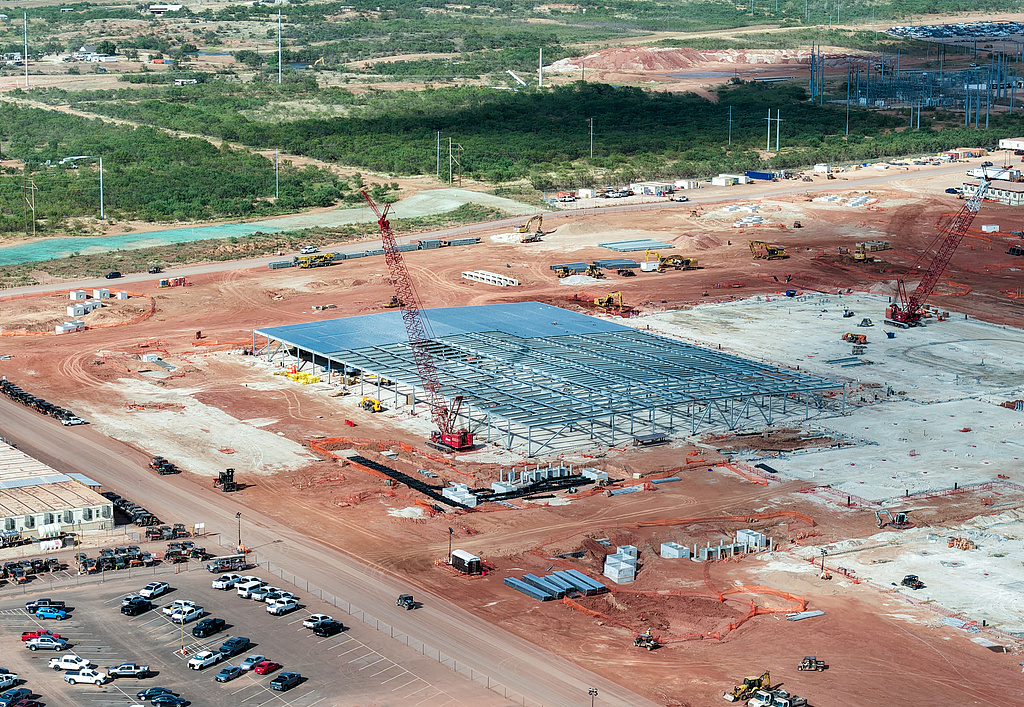
Core Insights - The report indicates that without significant increases in AI capital expenditures by US tech companies, the US economy could be on the brink of recession or already in one [1] - AI spending is becoming a crucial pillar supporting the overall US economy, but there are concerns about the sustainability of this trend [1][2] Group 1: AI Investment Impact - The OECD has raised its economic growth forecast for the US in 2025 to 1.8%, up from 1.6% in June, attributing this to strong AI-related investments [2] - AI infrastructure investments have contributed more to US economic growth than consumer spending over the past six months, marking a historic shift [4] - Major tech companies, including Nvidia, Apple, and Microsoft, have invested over $100 billion in data centers in the last three months [4] Group 2: Concerns Over AI Bubble - There are growing concerns about a potential AI bubble, with fears that the current surge in AI capital spending may not be sustainable [5] - Major companies like Microsoft, Google, Amazon, and Meta are expected to reach a record $364 billion in capital investments by 2025 [5] - The cycle of investment and procurement among AI companies, such as Nvidia and OpenAI, is raising suspicions of a "circular trading" phenomenon that could exacerbate the bubble [6] Group 3: Economic Challenges and AI's Role - The OECD predicts that the US annual inflation rate will remain above the Federal Reserve's target through 2026, leading to a downward revision of economic growth expectations to 1.5% [7] - The US economy is facing "stagflation-like" challenges, with growth and employment showing signs of weakness while inflation remains high [7] - AI is seen as a potential driver of new productivity, but the transition to a new economic order will take time and may involve significant disruptions [7]






Broadcom, Alphabet are long-term AI winners, says Nuveen's Saira Malik
Youtube· 2025-09-25 21:10
AI Industry Insights - The AI sector is experiencing strong growth, with companies like Avago and Alphabet positioned as leaders due to their robust earnings growth and significant investments in artificial intelligence [3][5] - Concerns regarding the impact of OpenAI on Alphabet's advertising business are present, but the potential upside from YouTube and other ventures may mitigate these worries [5][6] Investment Strategies - A balanced portfolio approach is recommended for investors who believe in the long-term potential of AI while also wanting to protect against near-term volatility [4][6] - Infrastructure sectors, including utilities and waste management, are highlighted as defensive investments that can provide an inflation hedge and offset tech picks [6][7] Economic Context - The market is currently mixed, with concerns about inflation, economic growth, and the pace of future Federal Reserve rate cuts influencing investor sentiment [2][8] - Estimates suggest three more rate cuts in the next 12 months, which will be critical for market direction [9] - The employment market is showing signs of slowing, which could lead to stagflation if inflation remains sticky around 3% [10][11]
纳指跌超1% 明星科技股普跌 甲骨文(ORCL.US)跌超6%
Zhi Tong Cai Jing· 2025-09-25 14:05
此外,周二,美联储主席鲍威尔表示,美国经济正面临"滞胀式"挑战,经济增长和就业市场出现明显疲 软,而通胀仍处于高位。这种"上下两难"的局面使货币政策制定者面临艰难抉择。在谈及金融市场时, 鲍威尔表示,美联储会关注整体金融状况,并指出"从多项衡量指标来看,美国股市估值相对偏高"。 周四,美股盘初走低,纳指跌超1%,明星科技股普跌,甲骨文(ORCL.US)跌超6%,美光(MU.US)、特 斯拉(TSLA.US)、台积电(TSM.US)、博通(AVGO.US)跌超3%,英伟达(NVDA.US)跌超1%。消息面上, 随着美国国会民主党与共和党就联邦政府后续资金拨付方案陷入僵局,美国政府部门下周开始部分停摆 的风险正持续上升。如果政府停摆,这可能通过限制金融监管机构的运作、推迟关键经济数据的发布等 方式对市场产生影响。野村证券分析师在本周报告中指出,若停摆持续时间较长,可能导致投资者评估 宏观经济趋势所需的关键数据延迟发布甚至取消,例如月度就业报告与通胀数据。 ...


美股异动 | 纳指跌超1% 明星科技股普跌 甲骨文(ORCL.US)跌超6%
智通财经网· 2025-09-25 14:04
此外,周二,美联储主席鲍威尔表示,美国经济正面临"滞胀式"挑战,经济增长和就业市场出现明显疲 软,而通胀仍处于高位。这种"上下两难"的局面使货币政策制定者面临艰难抉择。在谈及金融市场时, 鲍威尔表示,美联储会关注整体金融状况,并指出"从多项衡量指标来看,美国股市估值相对偏高"。 智通财经APP获悉,周四,美股盘初走低,纳指跌超1%,明星科技股普跌,甲骨文(ORCL.US)跌超 6%,美光(MU.US)、特斯拉(TSLA.US)、台积电(TSM.US)、博通(AVGO.US)跌超3%,英伟达 (NVDA.US)跌超1%。消息面上,随着美国国会民主党与共和党就联邦政府后续资金拨付方案陷入僵 局,美国政府部门下周开始部分停摆的风险正持续上升。如果政府停摆,这可能通过限制金融监管机构 的运作、推迟关键经济数据的发布等方式对市场产生影响。野村证券分析师在本周报告中指出,若停摆 持续时间较长,可能导致投资者评估宏观经济趋势所需的关键数据延迟发布甚至取消,例如月度就业报 告与通胀数据。 ...
【世界说】国际组织研究:关税已成美国通胀主要“推手”及美企首要担忧 多方承压
Sou Hu Cai Jing· 2025-09-25 12:51
Core Viewpoint - The tariff policy of the Trump administration is identified as a key factor driving up prices in the U.S. and may hinder economic growth for years to come [1][2]. Group 1: Impact on Inflation - Approximately one-third of price increases this year for U.S. companies are attributed to tariffs, with inflation potentially dropping to the Federal Reserve's target of 2% without these tariffs [2][3]. - By 2026, tariffs are expected to account for about 25% of the factors driving price increases for businesses [3]. Group 2: Business Costs and Consumer Impact - U.S. companies anticipate an average cost increase of 4.4% this year, with 1.7 percentage points driven by tariffs. Consequently, prices are expected to rise by 3.9%, with 1.3 percentage points attributed to tariffs [3]. - Tariffs and trade policies have become the top concern for CFOs for three consecutive quarters, with those identifying tariffs as a primary risk being notably more pessimistic about economic and business prospects [3]. Group 3: Real-World Price Increases - Coffee prices surged by 4% between July and August due to a 50% tariff on Brazil, marking the largest monthly increase in 14 years. Similarly, a 17% tariff on Mexican tomatoes resulted in a 4% price increase in August [4]. Group 4: Long-term Economic Consequences - The OECD predicts a 1% decline in U.S. economic growth in 2024, with potential losses amounting to trillions of dollars in goods and services by 2035 if the slowdown continues [5]. - As companies exhaust their ability to buffer against tariff impacts, the U.S. may face a stagnation risk characterized by slowing growth, a weak labor market, and rising inflation, with average inflation expected to reach 3% by 2026 [7]. - Evidence of economic impact is already visible, with 60% of Texas retailers and 70% of manufacturers reporting negative effects from tariffs. John Deere has incurred losses of approximately $300 million due to steel and aluminum tariffs, with further losses expected by year-end [7].
