经济衰退

Search documents
华尔街分析员:美联储或将开启恐慌性降息周期,全球将陷入“非常深度的衰退”
Sou Hu Cai Jing· 2025-09-16 01:12
Core Viewpoint - Ed Dowd, a senior analyst and co-founder of Phinance Technologies, warns that the U.S. economy is facing severe challenges that are being underestimated, particularly in light of the upcoming interest rate cuts by the Federal Reserve, which he believes could lead to a "panic rate-cutting cycle" similar to the 2007 financial crisis [1] Economic Data and Trends - Dowd highlights that the recent annual non-farm employment revision data from the Bureau of Labor Statistics (BLS) reveals significant issues with economic data during the Biden administration, indicating that Trump is now dealing with a "disaster" [1] - He predicts that the U.S. real estate market is already weakening and that declining inflation expectations will make it difficult for the Federal Reserve's rate cuts to reverse this trend [1] Investment Recommendations - Dowd suggests that investors should consider safe-haven assets such as gold and land in light of his forecast of a "very deep recession" globally [1] Market Sentiment - Analysts from Morgan Stanley, JPMorgan, and Oppenheimer Asset Management caution that as investors shift their focus to potential economic slowdowns, a more cautious tone may replace the current optimistic sentiment [1] - These analysts indicate that following the anticipated rate cuts by the Federal Reserve, the recent upward trend in the U.S. stock market may face risks of a temporary halt [1]
美联储决议前瞻:重启降息箭在弦上
Di Yi Cai Jing Zi Xun· 2025-09-16 00:21
Core Viewpoint - The Federal Reserve is expected to restart the interest rate cut process due to alarming signals from the U.S. job market, with significant attention on future easing paths amid internal pressures and the unclear impact of Trump's trade policies [2][3]. Economic Outlook Changes - Since August, both inflation and employment have been under pressure, with the Consumer Price Index (CPI) rising 2.9% year-on-year in August, the highest increase since January, and core CPI at 3.1%, significantly above the Fed's 2% target [3]. - Initial jobless claims reached their highest level since 2021, indicating delays in job placements, while the unemployment rate rose to 4.3% [3]. - The IMF noted signs of pressure on the U.S. economy, including slowing domestic demand and decelerating job growth, with potential inflation risks stemming from tariffs imposed by the Trump administration [3][4]. Policy Outlook - The FOMC is expected to reassess its economic and federal funds rate outlook, with Wall Street anticipating a slight downward adjustment in the 2025 economic growth forecast and a stable inflation prediction [4]. - Wells Fargo predicts a reduction in the median interest rate forecast for 2025 from a 50 basis point cut to a 75 basis point cut, with a further reduction for 2026 [5]. - The updated "dot plot" will help determine whether the FOMC members favor "quarterly cuts" or "continuous cuts," with a terminal policy rate expected to be between 3.00%-3.25% by the end of 2026 [5]. Interest Rate Expectations - The market widely anticipates a 25 basis point rate cut, lowering the federal funds rate to a range of 4.00%-4.25% [6]. - There are indications of potential dissent within the Fed, with some members concerned about rising inflation while others focus on preventing a possible recession [6]. - The futures market shows an 80% probability of a rate cut in October, with expectations for cuts in September, October, and December [6][7]. Future Rate Cut Signals - Analysts suggest that Powell may signal three rate cuts of 25 basis points each in September, October, and December to mitigate risks in the job market [7]. - However, there remains uncertainty regarding future policy directions, which will depend on upcoming inflation and employment data [7].

华尔街老兵:美国经济挑战可能被低估,美联储或将开启"恐慌性降息周期"
Hua Er Jie Jian Wen· 2025-09-15 20:25
Core Insights - Ed Dowd, a senior analyst, warns that the U.S. economy is facing severe challenges that are being underestimated, particularly following Trump's election, which he describes as inheriting a "mess" [1] - Dowd criticizes the recent significant downward revision of U.S. non-farm employment data, suggesting it indicates potential statistical fraud or bureaucratic incompetence [2] - The U.S. real estate market is predicted to decline, which will have profound implications for the overall economy, as it constitutes 36% of economic activity [3] - Dowd anticipates that the Federal Reserve may enter a "panic rate-cutting cycle," similar to the early stages of the 2007 financial crisis, which will not prevent asset value depreciation [4] - Investment recommendations favor traditional safe-haven assets like gold and land over cryptocurrencies, based on expectations of asset deflation and economic recession [5][6] Group 1: Economic Challenges - Dowd emphasizes that the U.S. economy is facing underestimated challenges, particularly in light of the recent employment data revisions [1][2] - The significant downward revision of non-farm employment numbers by 911,000, the largest since 2000, raises concerns about the integrity of economic data [2] Group 2: Real Estate Market - The real estate market is identified as a major concern, with predictions of continued decline due to unaffordable housing costs and the impact of immigration policy changes [3] - Dowd notes that the weakening real estate market will lead to inflation rates dropping below 2%, reflecting economic weakness rather than healthy cooling [3] Group 3: Federal Reserve Actions - Dowd warns that the Federal Reserve's anticipated rate cuts may lead to a "panic rate-cutting cycle," which historically has not reversed asset value declines [4] - He suggests that the current economic issues are not confined to the U.S. but are part of a broader global economic downturn [4] Group 4: Investment Recommendations - Dowd advises investors to focus on traditional safe-haven assets like gold and land, as these are expected to provide better value preservation in a declining asset price environment [5][6] - His track record includes successful predictions of major market shifts, which adds weight to his current warnings about the economic outlook [6]
国泰海通 · 晨报0916|宏观
国泰海通证券研究· 2025-09-15 13:43
Group 1: Macroeconomic Insights - The U.S. labor market is showing signs of potential recession, with a significant increase in the proportion of the population considering job availability as difficult [2][5] - The current unemployment rate is rising at a historically slow pace, indicating a rare transition in the labor market from supply constraints to demand constraints [3] - A fragile balance in labor supply and demand is maintained due to simultaneous reductions in labor supply from immigration policies and retirement trends, but this balance is expected to be disrupted soon [4][7] Group 2: Employment Trends - The average monthly job creation needed to maintain the current unemployment rate is estimated to be between 150,000 and 180,000, while the recent average has dropped to 120,000 [5] - The labor market is sensitive to changes in employment demand, with a risk of rapid unemployment rate increases if demand continues to decline [7] - The impact of immigration on labor supply is diminishing, and the trend of early retirements is expected to decrease as the peak retirement year of 2025 approaches [7] Group 3: Agricultural Sector - Attention is drawn to the seed and livestock sectors as significant activities in the agricultural industry during the autumn season [8] Group 4: Research and Reports - Various industry reports and discussions are scheduled, including topics on transportation, home appliances, consumer structure changes, real estate cycles, and textiles [9][11]

金价三创新高,超级央行周美日英利率决议受瞩目
Sou Hu Cai Jing· 2025-09-14 23:59
Group 1 - The core viewpoint of the articles highlights the anticipation of interest rate cuts by the Federal Reserve, driven by weaker-than-expected inflation and employment data, which has led to a rise in gold prices and stock indices [1][2][3]. - International gold prices increased by 0.91% last week, with three trading days reaching historical closing highs, supported by expectations of a Fed rate cut [2]. - The upcoming "Super Central Bank Week" will see major central banks, including the Fed, the Bank of England, and the Bank of Japan, announce their latest interest rate decisions, with market focus on the Fed's potential 25 basis point cut [3][4]. Group 2 - The U.S. stock indices collectively rose last week, with the Dow Jones up 0.95%, the S&P 500 up 1.59%, and the Nasdaq up 2.03%, influenced by the performance of chip and AI stocks [1]. - Oil prices also saw an increase, with New York oil prices rising by 1.33% and Brent oil prices by 2.27%, driven by geopolitical tensions in the Middle East and Eastern Europe [1]. - The Bank of England is expected to maintain its interest rates amid conflicting internal opinions, while the Bank of Japan is likely to keep rates unchanged but may consider a rate hike later this year [3][4].
全球媒体聚焦 | 英媒:美国经济接近“滞胀”关税将致贫困人口增加
Sou Hu Cai Jing· 2025-09-14 09:29
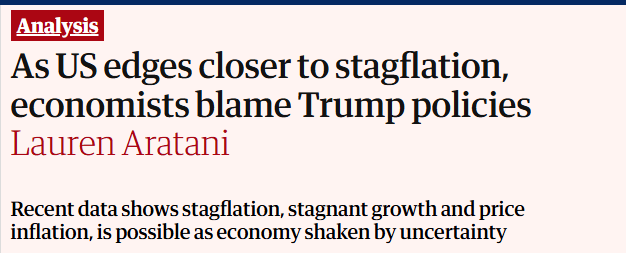
近日,英国《卫报》网站刊发文章指出,当下的美国经济正呈现一种奇怪的态势:物价上涨,就业增长停滞,不 确定性无处不在,而股市却飙升至历史新高。 这让"滞胀"这个美国人记忆当中的可怕词汇再度被提及。 英国《卫报》网站截图 "滞胀"是指经济增长"停滞"与物价"通胀"并存。这意味着企业正在减少生产和招聘,但价格却持续攀升。 一些经济学家认为,经济"滞胀"可能比"衰退"更糟。美国上一次经历长期滞胀是在20世纪70年代的石油危机期 间。当时油价上涨导致通胀上升,消费者削减支出又使得失业率上升。目前,美国经济虽未出现滞胀,但正逐渐 接近。 英国《卫报》网站截图 美国劳动力市场走软 通胀率走高 文章分析,今年春季特朗普宣布加征关税后,官方数据最初显示美国经济未受明显影响,新增就业岗位稳定增 加,通胀率降至2021年以来的最低水平。 与此同时,美国通胀率自4月开始回升,8月达到2.9%,为今年1月份以来的最高涨幅。 英国《卫报》网站截图 在哥伦比亚商学院经济学家布雷特·豪斯看来,今年1月,市场对未来一年经济衰退的预期处于3年来的最低水平, 同时预计通胀率将持续下降。但随后白宫经济政策的变化颠覆了这两种预期,市场对今年经济增长的 ...
共和党,不会搞经济!经济学家预警:特朗普政府正将美国推向滞涨
Sou Hu Cai Jing· 2025-09-13 23:03
Economic Outlook - Weak economic data raises concerns among analysts about the potential for the U.S. economy to slide into stagflation or even recession, with consumer confidence declining for two consecutive months, job creation falling significantly short of expectations, and inflation levels continuing to rise [1][12] - The current economic situation is reminiscent of the stagflation crisis that plagued the Western world in the 1970s and 1980s, indicating a re-emergence of this long-dormant risk [3] Stagflation Definition - Stagflation is defined as a unique economic phenomenon where production stagnation coexists with inflation, leading to rising unemployment, sluggish corporate production, and soaring prices, creating a dilemma for macroeconomic policy [4] Labor Market and Inflation - Recent data shows a sharp decline in hiring activities in August, with the labor market remaining weak, while inflation has reached its highest point since January, slightly below the Federal Reserve's 2% target [4] - Consumer expectations for inflation over the next year remain high at 4.8%, significantly above the current actual rate of 2.9%, indicating a potential self-fulfilling prophecy that could further elevate actual inflation [4] Political Economic Policies - The economic governance model of the Republican Party, particularly during the Trump administration, is criticized for its large-scale tariff policies that have led to increased prices for imported goods, exacerbating inflationary pressures [6] - In contrast, the Democratic Party traditionally emphasizes balanced economic policies, with historical data showing that GDP growth rates under Democratic presidents have been higher than those under Republican presidents since 1945 [8] Long-term Economic Strategies - The Biden administration's infrastructure investment plan aims to inject $1.2 trillion over the next decade to modernize infrastructure, which is expected to create numerous jobs and enhance long-term economic growth potential [8] - Democratic policies focus on structural reforms and long-term investments rather than short-term stimulus, promoting inclusive and sustainable economic growth [11] Inflation Control Measures - The Democratic approach to controlling inflation includes a multi-faceted strategy, such as releasing strategic oil reserves to stabilize energy prices and implementing the Inflation Reduction Act to lower prescription drug and healthcare costs [9] - The Republican reliance on monetary tools like interest rate hikes is seen as a one-size-fits-all approach that risks leading to economic hard landings [9] Consumer Confidence and Economic Risks - The current economic landscape is precarious, with consumer spending accounting for two-thirds of U.S. economic activity, and declining consumer confidence, a weak job market, and rising inflation signals warrant close attention [12] - If policymakers fail to adjust economic strategies effectively, the U.S. economy may indeed face the unsettling prospect of returning to a stagflation era, impacting living costs, job opportunities, and real income for ordinary Americans [13][15]
91万就业岗位蒸发 美联储下周豪赌50基点降息
Sou Hu Cai Jing· 2025-09-13 16:17
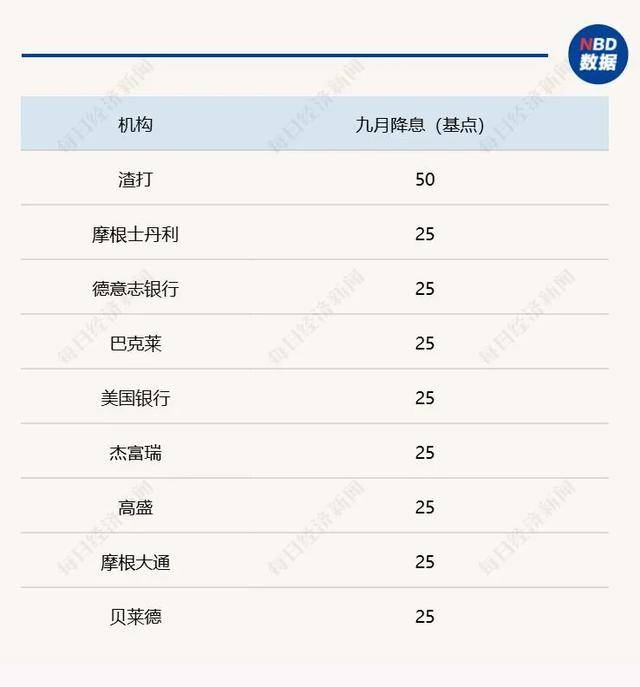
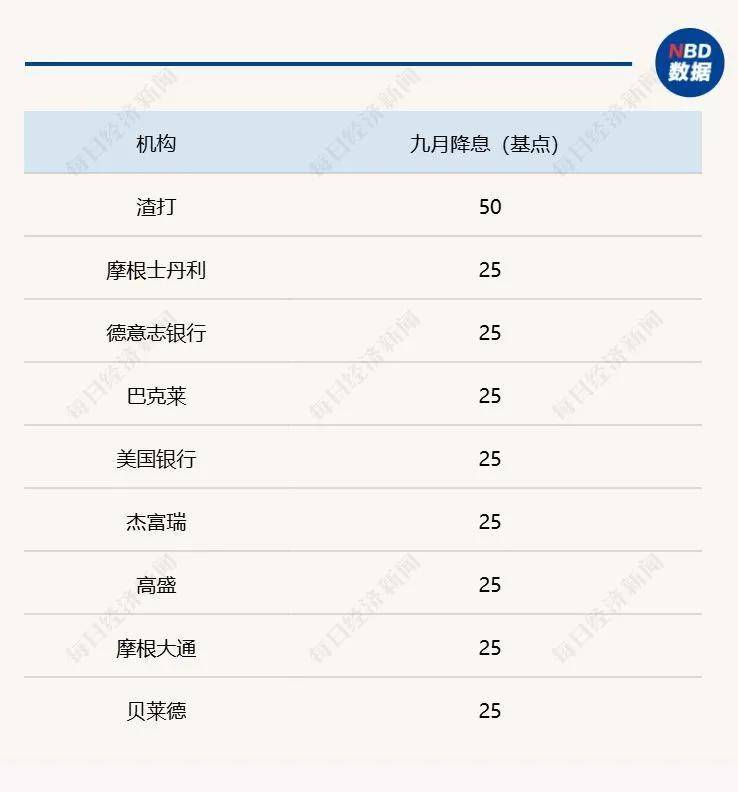
Core Viewpoint - The Federal Reserve is expected to lower interest rates next week, with debates intensifying over whether the cut will be 25 or 50 basis points, influenced by economic data and political pressures surrounding Chairman Powell [1][3][21]. Economic Data - Recent economic indicators, including a surprising drop in the Producer Price Index (PPI) and a significant downward revision of non-farm employment data, suggest a weakening labor market, paving the way for a potential rate cut [2][5]. - The unemployment rate has risen to 4.3%, the highest in nearly four years, indicating a deteriorating job market [2]. Predictions on Rate Cuts - Various financial institutions have adjusted their predictions for the Fed's rate cut, with Standard Chartered now forecasting a 50 basis point cut, citing a rapid shift in the labor market from robust to weak [5][6]. - In contrast, firms like Morgan Stanley and Deutsche Bank believe that the August employment report does not justify a 50 basis point cut in a single meeting, although they acknowledge the possibility of consecutive cuts [5][6]. Political Influences - Chairman Powell's recent shift towards a more dovish stance has raised concerns about the influence of political pressures, particularly from the Trump administration, which has been vocal about the need for significant rate cuts [10][11]. - Analysts suggest that a 50 basis point cut could be seen as a political statement of loyalty to Trump, rather than purely an economic decision [10][11]. Historical Context - Historical data indicates that every time the Fed has initiated a rate cut cycle with a 50 basis point reduction since 1987, it has been followed by an economic recession [12][13]. - The potential for a 50 basis point cut raises alarms among market participants, who fear it may signal severe economic distress [13][20]. Market Reactions - The market is currently pricing in a 90% probability of a 25 basis point cut and a 10% chance for a 50 basis point cut, reflecting uncertainty and divided opinions among investors [7]. - The upcoming Fed meeting is anticipated to have significant implications for global financial markets, influencing stock, bond, currency, and commodity markets [21].
黄金暴涨背后的全球焦虑
Sou Hu Cai Jing· 2025-09-13 14:57
Core Insights - Recent surge in gold prices, breaking through $3,650 per ounce, reflects global economic uncertainty and transformation [1][3] - The primary driver for rising gold prices is the expectation of interest rate cuts by the Federal Reserve [1][3] Economic Indicators - U.S. non-farm payrolls grew by only 22,000 in August, with rising unemployment rates, leading to a 100% market expectation for a rate cut in September [3] - Historical trends indicate that Fed rate cuts typically weaken the dollar, while strengthening gold [3] Geopolitical Factors - Escalating geopolitical risks, including conflicts in the Middle East and the ongoing Russia-Ukraine situation, have heightened global risk aversion, making gold a preferred safe-haven asset [3][5] - Central banks globally are increasing gold purchases, with China's central bank adding gold for 10 consecutive months and a total of 166 tons bought in Q2 [3][5] Market Dynamics - U.S. national debt surpassing $37 trillion and government interventions affecting the Fed's independence are eroding trust in the dollar [5] - Gold ETFs saw a 23% increase in holdings, while retail demand for gold bars surged, and jewelry sales rose by 45% [5] Future Projections - Wall Street firms have differing predictions for gold prices, with Goldman Sachs forecasting $3,700 by the end of 2025, potentially reaching $4,000-$5,000 in a recession scenario [5] - UBS also sees a target of $3,700, with geopolitical tensions possibly pushing prices above $4,000, while Bank of America predicts an aggressive target of $4,000 [5] Investor Sentiment - The current enthusiasm in the gold market reflects widespread concerns about the global economic outlook, with various market participants, from central banks to retail investors, expressing uncertainty through gold purchases [5]

下周,全球市场的超级“靴子”将落下
Sou Hu Cai Jing· 2025-09-13 12:47
Group 1 - The Federal Reserve is expected to lower interest rates next week, with debates intensifying over whether to cut by 25 or 50 basis points due to weak economic data [1][2] - Political pressures and economic concerns are influencing the Fed's decision, with analysts suggesting a higher likelihood of a 50 basis point cut [1][3] - Historical data indicates that every time the Fed has initiated a rate cut cycle with a 50 basis point reduction since 1987, the U.S. has entered a recession [1][10] Group 2 - Recent employment data has been revised down significantly, indicating a potential weakening labor market, which may justify a larger rate cut [2][3] - Various financial institutions have differing predictions for the rate cut, with Standard Chartered predicting a 50 basis point cut, while others like Deutsche Bank and Barclays expect a 25 basis point cut [3][4] - The CME FedWatch Tool shows a 90% probability for a 25 basis point cut and a 10% probability for a 50 basis point cut [4] Group 3 - Fed Chair Jerome Powell's recent shift towards a more dovish stance has raised expectations for a larger rate cut, influenced by political pressures from the Trump administration [5][7] - The relationship between the Trump administration and the Fed has become increasingly tense, with potential implications for future monetary policy decisions [7][8] - Some economists argue that a 50 basis point cut could signal severe economic distress, while others view it as a proactive measure to support employment growth [10][11] Group 4 - Historical analysis shows that rate cuts do not guarantee a bull market for U.S. stocks, with past cycles indicating mixed outcomes for equity markets [15] - The dollar typically faces downward pressure during rate cut cycles, while gold prices often rise due to lower opportunity costs for holding non-yielding assets [15][16] - The upcoming Fed meeting is anticipated to be a critical event for global financial markets, influencing various asset classes and revealing the Fed's policy direction under economic and political pressures [16]