
AI投资

Search documents
睿盛银行:预期美联储明年降息3次,维持对股票长期升势的看法
Ge Long Hui A P P· 2025-12-15 02:08
格隆汇12月15日|睿盛银行预期,美联储明年会继续温和减息,在关税问题抑制经济增长下,虽然有低 利率和AI投资抵销相关影响,但预期2026年美国经济增长或略较2025年放缓。另一方面,美联储新主 席是否有亲特朗普的候选人担任,仍有待观察,现时预计美国明年会降息3次。 该行维持对股票长期升势的看法,指企业盈利和美国低利率环境会继续支撑股票市场。明年前景看来更 具挑战性,主要因为估值已变得很高及全球经济前景疲弱。企业能否继续以令人信服的盈利增速满足市 场的高预期,将成为关键因素。有机会令市况波动性变得更大。 该行提到,在在不稳定时期,美元仍是热门避险资产。如果美元出现意外的突然升值,部分沽美元进的 合约更有机会需要平仓,将会产生反效果,即推高美元。 ...
有色金属:行情延续,宏观情绪仍是主导 (1)
2025-12-15 01:55
Summary of Key Points from Conference Call Records Industry Overview: Non-Ferrous Metals - The non-ferrous metals market is significantly influenced by macroeconomic sentiment, with the Federal Reserve's easing policies being a key driver. Despite uncertainties in future interest rate cuts, a liquidity-rich environment is expected to support rising commodity prices, similar to the market performance from 2019 to 2021 [1][5] - Concerns regarding AI investments and interest rate hikes in Japan have emerged, but liquidity easing reduces de-leveraging risks, making the likelihood of a bubble burst low in the short term. If Japan's interest rates exceed expectations, it may create downward pressure, but any pullback could present a good investment opportunity due to supply-demand imbalances and demand recovery expected by 2026 [1][6] Precious Metals Market - Gold is not advisable to short due to geopolitical factors, weakening of the dollar credit system, and increased central bank purchases. Historically, gold experiences two phases of price increases during easing cycles, and it is expected to rise post-RMP implementation [1][7] - Silver may face short-term pullback pressure but is expected to maintain a long-term upward cycle due to supply shortages and its industrial properties. The market for silver has been in a state of shortage for the past few years, and its investment demand is likely to increase during economic recovery [1][8] Price Projections - Gold prices are projected to reach $4,800 by 2026, driven by liquidity easing and rising inflation. Companies like Lingbao Gold, through acquisitions, are expected to see their valuations rise to 15-20 times [1][9] - The copper market is currently experiencing weak supply and demand, with low inventories. High copper prices are suppressing demand, but liquidity easing is expected to mitigate negative impacts. The copper price is projected to be between $11,000 and $12,000 in the first half of 2026, making valuations of related A-share and H-share companies attractive [2][11] Aluminum Market - The aluminum market shows a favorable supply-demand balance, with profit margins exceeding 5,500 yuan per ton. The current valuation levels are considered attractive for investment, especially as the U.S. easing cycle lowers dividend yield requirements [4][12] Lithium Market - The lithium carbonate market is expected to experience a slight shortage in 2025, with a total supply of around 1.6 million tons. In 2026, a slight surplus is anticipated, with prices sensitive to rapid increases in supply. The price may reach between 90,000 to 100,000 yuan, but rapid price increases could stimulate supply and create pressure [13][14] Small Metals: Tungsten and Cobalt - Tungsten and cobalt are expected to maintain a trend of price increases due to ongoing shortages. Tungsten's price is unlikely to drop significantly due to its importance in technology and military applications, while cobalt prices may rise due to export quota issues from the Democratic Republic of Congo [15] Copper Foil and Aluminum Foil Processing Fees - Recent surveys indicate that processing fees for copper and aluminum foils in lithium battery materials have bottomed out and are beginning to recover. This sector is highlighted as an important area for investors, with overall supply-demand dynamics remaining balanced [16][17]
有色金属:行情延续,宏观情绪仍是主导
2025-12-15 01:55
Summary of Key Points from Conference Call Records Industry Overview: Non-Ferrous Metals - The non-ferrous metals market is significantly influenced by macroeconomic sentiment, with the Federal Reserve's easing policies being a key driver. Despite uncertainties in future interest rate cuts, a liquidity-rich environment is expected to support rising commodity prices, similar to the market performance from 2019 to 2021 [1][5] - Concerns regarding AI investments and interest rate hikes in Japan have emerged, but liquidity easing reduces de-leveraging risks, making the likelihood of a bubble burst low in the short term. If Japan's interest rates exceed expectations, it may create downward pressure, but any pullback could present a good investment opportunity due to supply-demand imbalances and demand recovery anticipated by 2026 [1][6] Precious Metals Market - Gold is not advisable to short due to geopolitical factors, weakening of the dollar credit system, and increased central bank purchases. Historically, gold tends to experience two phases of price increases during easing cycles, and it is expected to rise post-RMP implementation [1][7] - Silver may face short-term pullback pressure but is expected to maintain a long-term upward cycle due to supply shortages and its industrial properties. The market has shown a consistent shortfall in silver supply over the past few years [1][8] Price Projections - Gold prices are projected to reach $4,800 by 2026, benefiting from liquidity easing and rising inflation. Companies like Lingbao Gold, through acquisitions, are expected to see their valuations rise to 15-20 times [1][9] - The copper market is currently experiencing weak supply and demand, with low inventories. High copper prices are suppressing demand, but liquidity easing is expected to mitigate negative impacts, making any price corrections a good buying opportunity. The copper price is projected to be between $11,000 and $12,000 in the first half of 2026, with many A-share and H-share companies showing attractive valuations [2][11] Aluminum Market - The aluminum market is currently in a favorable supply-demand balance, with profit margins exceeding 5,500 yuan per ton. The U.S. interest rate cuts are expected to lower dividend yield requirements, making aluminum an attractive investment due to its cyclical and dividend growth attributes [4][12] Lithium Market - The lithium carbonate market is expected to experience a slight shortage in 2025, with a projected small surplus in 2026. The price sensitivity is high, and rapid price increases may stimulate supply. The overall economic environment and liquidity easing may push lithium prices higher in the first half of 2026 [4][14] Minor Metals: Tungsten and Cobalt - Tungsten and cobalt are expected to remain in a state of continuous shortage, with prices likely to trend upwards. Tungsten's significance in technology and military applications makes it less likely to drop to previous low levels, while cobalt's price is influenced by export quotas from the Democratic Republic of Congo [15] Copper and Aluminum Foil Processing Fees - Recent surveys indicate that processing fees for copper and aluminum foils in lithium battery materials have bottomed out and are beginning to recover. This sector is highlighted as an important area for investors, with overall supply-demand dynamics remaining balanced [16] This summary encapsulates the key insights and projections from the conference call records, providing a comprehensive overview of the non-ferrous metals industry and its various segments.
金属:美联储如期降息,行业继续共振上行
2025-12-15 01:55
Summary of Key Points from Conference Call Records Industry Overview - **Metals Industry**: The records discuss the metals industry, particularly focusing on precious metals, industrial metals, and energy metals, with insights into market trends and forecasts for 2026 [1][2][6][12][26]. Precious Metals - **Silver Price Volatility**: Silver prices have experienced significant fluctuations due to decreasing inventories and demand expectations, with a short-term pullback influenced by AI trends, but long-term trends are expected to follow gold prices [1][3]. - **Federal Reserve's Impact**: The recent 25 basis point rate cut by the Federal Reserve and the initiation of short-term U.S. debt purchases have enhanced liquidity expectations, driving precious metal prices upward, with silver reaching nearly $64 per ounce [2][5]. - **Long-term Support Factors**: Factors such as the Federal Reserve's asset purchases, interest rate cuts, and the U.S. strategic shift away from the dollar are expected to provide long-term support for precious metal prices [1][4][5]. Industrial Metals - **Optimistic Outlook**: The industrial metals market outlook is optimistic, with expectations of demand rebound in traditional manufacturing and real estate due to easing high-interest rates and supportive policies from China's 14th Five-Year Plan [1][6]. - **Copper Price Trends**: Copper prices reached new highs following the Fed's rate cut but faced adjustments due to concerns over AI and U.S. economic data. Future price trends will depend on economic resilience indicators [7][8]. - **Aluminum Market Dynamics**: The aluminum market is expected to remain strong due to fiscal and monetary easing, despite seasonal demand pressures. The overall demand is anticipated to be supported by storage and export activities [10][11]. Energy Metals - **Lithium Demand**: Lithium demand remains robust, driven by the economics of energy storage, with high order expectations for 2026. Supply-side disruptions continue, maintaining a tight supply-demand balance [12][15]. - **Cobalt Market Stability**: Cobalt prices are expected to remain stable in the short term, with supply concerns easing due to improved political conditions in the Democratic Republic of Congo [12][13]. Steel Industry - **Policy Changes**: The steel industry has reinstated the steel export license system to optimize export structures and limit low-value product exports, which is expected to impact the market significantly [23][24]. - **Investment Opportunities**: Despite short-term market reactions to new policies, there are long-term investment opportunities in high-end manufacturing steel companies, which are less affected by these changes [24][25]. Conclusion - **Investment Strategy**: The overall analysis indicates various investment opportunities across precious metals, industrial metals, and energy metals, emphasizing the need to monitor policy changes and market dynamics closely to adjust investment strategies accordingly [26].





持续“烧钱” 美股七巨头AI竞赛激战正酣
Sou Hu Cai Jing· 2025-12-14 12:16
Core Viewpoint - The article discusses the rapid growth and investment in artificial intelligence (AI) by the "Magnificent Seven" tech giants, highlighting the potential for an AI bubble and the strategic competition among these companies as they invest heavily in AI infrastructure and applications [2][3]. Group 1: Investment Trends - The "Magnificent Seven" tech giants, including Nvidia, Microsoft, Apple, Amazon, Alphabet, Meta, and Tesla, are significantly increasing their capital expenditures (CapEx) to build AI infrastructure, focusing on data centers, chip procurement, and AI training facilities [2][3]. - Microsoft’s CapEx for fiscal years 2023, 2024, and 2025 is approximately $29 billion, $32 billion, and $64.6 billion respectively, with a year-on-year growth rate of 10%, 39%, and 45% [3]. - Amazon's CapEx is projected to grow explosively from $83 billion in 2024, with a year-on-year increase of over 50%, and is expected to reach $125 billion in 2025 [3][4]. - Alphabet's CapEx was around $52.5 billion last year, with a year-on-year increase of over 60%, and is guided to be between $91 billion and $93 billion for 2025 [4]. - Meta is shifting its focus from the metaverse to AI, with a projected CapEx of approximately $37.3 billion in 2024, increasing to between $70 billion and $72 billion in 2025 [4][5]. - Nvidia's CapEx for fiscal year 2025 is about $3.2 billion, reflecting a 202% increase year-on-year, with projections for fiscal year 2026 between $4 billion and $6 billion [5]. Group 2: Market Performance and Competition - The "Wind US Tech Seven Index" has shown an upward trend in 2025, with an overall increase of 18.33%, outperforming the S&P 500 index [6]. - Nvidia, Microsoft, and Apple have reached historical market capitalization records, with Nvidia becoming the first company to surpass $5 trillion [6]. - The competition among tech giants is shifting from individual technical capabilities to systemic competition around ecosystems, platforms, and long-term control [6][7]. - Nvidia is benefiting from low investment and high returns as an AI infrastructure supplier, while Microsoft focuses on enterprise AI productivity tools [7][8]. - Amazon's AWS reported a revenue of $3.3 billion in Q3, marking a 20% year-on-year increase, and is leveraging its Bedrock platform to assist businesses in building AI [8]. Group 3: Strategic Relationships and Future Outlook - The relationship between OpenAI and the Magnificent Seven is evolving, with Microsoft reducing its dependency on OpenAI while also being its largest investor [9]. - OpenAI plans to collaborate with Broadcom to develop its own AI chips, reducing reliance on Nvidia, while other giants like Google and Meta view OpenAI as a direct competitor [9]. - The ongoing competition and collaboration among these tech giants highlight the importance of controlling core technologies and user data, as well as the struggle for future dominance [9].






国金策略:国内中央经济工作会议定定调扩内需、反内卷,走出通缩路径明晰
Sou Hu Cai Jing· 2025-12-14 10:10
Group 1 - The macro effects brought by AI investment will be more important than AI itself, as evidenced by the significant drop in AI tech stocks like Oracle and Broadcom, which reflects market concerns about future performance despite increased capital expenditure guidance [2][12][13] - The recent drop in AI stocks does not affect the upward adjustment of AI investment guidance, indicating a divergence between AI stock performance and the broader macroeconomic benefits of AI investment [2][12][33] Group 2 - The recent interest rate cuts and the Federal Reserve's announcement to purchase short-term government bonds are expected to strengthen the trend of investment exceeding consumption in the real economy [3][15][17] - The rising unemployment rate and declining average hourly wages in the U.S. are likely to catalyze further interest rate cuts, with a potential path from AI investment to monetary policy and then to real economic demand recovery [3][17] Group 3 - The Central Economic Work Conference in China has set the tone for expanding domestic demand and addressing "involution," clarifying the path out of deflation [4][20][22] - The focus on expanding domestic demand has shifted from government-led initiatives to endogenous drivers, emphasizing income growth for a broader population and activating private capital [4][22][23] - The conference's emphasis on "anti-involution" in the manufacturing sector is crucial for corporate profit recovery, which historically leads to improvements in employment and wages [4][23][26] Group 4 - Despite market volatility related to AI stock performance and interest rate expectations, the actual impacts on the fundamentals should be the focus, as AI investment continues to be adjusted upwards and will stimulate manufacturing demand [5][33] - Recommendations include focusing on industrial resource chains benefiting from AI investment and the recovery of global manufacturing, as well as opportunities in China's equipment exports and consumer sectors [5][33]
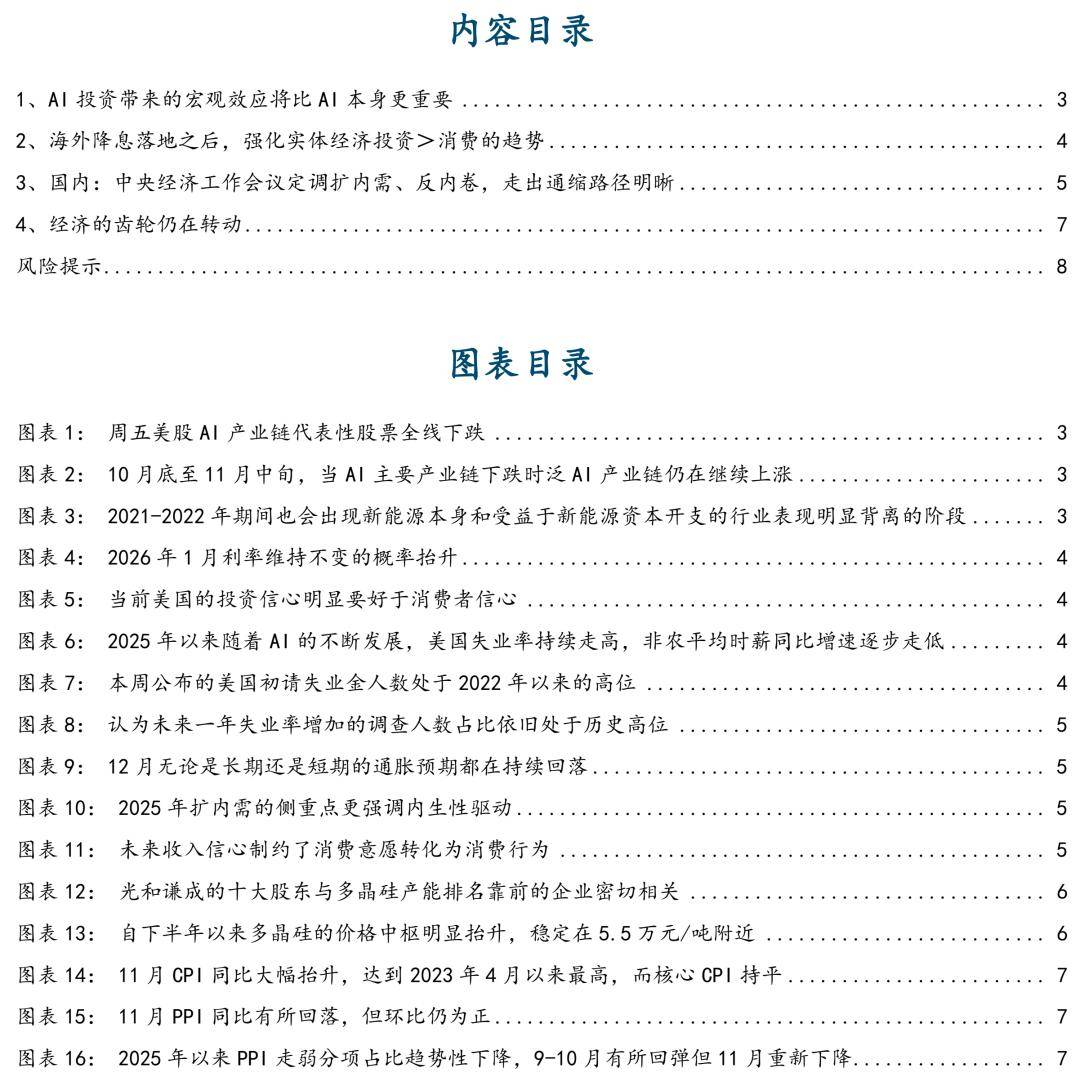
A股策略周报20251214:齿轮仍在转动-20251214
SINOLINK SECURITIES· 2025-12-14 08:26
Group 1 - The core viewpoint of the report emphasizes that the macro effects of AI investment will be more significant than the performance of AI stocks themselves, as evidenced by the recent downturn in AI tech stocks despite an increase in capital expenditure guidance from companies like Oracle [10][11]. - The report highlights that the recent drop in AI stocks is linked to market concerns about future earnings realization, particularly regarding order completion, growth sustainability, and profit margins [10][11]. - It is noted that the investment in AI is expected to continue driving macroeconomic effects, with a shift in focus from AI stock performance to sectors benefiting from AI investment [10][11]. Group 2 - The report discusses the recent interest rate cuts in overseas markets, which are expected to reinforce the trend of investment exceeding consumption, particularly in the context of rising AI investment [16][19]. - It mentions that the Federal Reserve's focus may shift towards unemployment rates rather than inflation concerns, with a potential for multiple rate cuts if unemployment surpasses the 4.5% threshold [19]. - The anticipated pathway from AI investment to monetary policy and then to the real economy is outlined, suggesting that aggressive AI investment could lead to increased unemployment, prompting further rate cuts and stimulating global manufacturing investment [19]. Group 3 - The report summarizes the outcomes of the recent Central Economic Work Conference in China, which emphasizes expanding domestic demand and addressing "involution" in the manufacturing sector as key strategies to combat deflation [24][27]. - It indicates that the focus on expanding domestic demand will shift from government-led initiatives to enhancing residents' income and activating private capital [24][27]. - The report also highlights that the recovery of corporate profits is crucial for improving employment and wages, with signals of a profit bottom emerging in Q3 2025 [27][31]. Group 4 - The report asserts that despite market volatility related to AI stock performance and interest rate expectations, the fundamental impacts of ongoing AI investments and the stimulus from rate cuts on manufacturing demand remain strong [4][43]. - It recommends focusing on sectors that will benefit from increased AI investment and the anticipated recovery in global manufacturing, including industrial resource chains and non-bank financial services [4][45]. - The report also identifies opportunities in China's equipment exports and manufacturing sectors that are poised for a bottom reversal, alongside a recovery in consumer spending driven by increased capital inflows [4][45].


周五跌幅居首的股票当属这只,刚上市2个月,闪崩下跌82%
Sou Hu Cai Jing· 2025-12-13 16:58
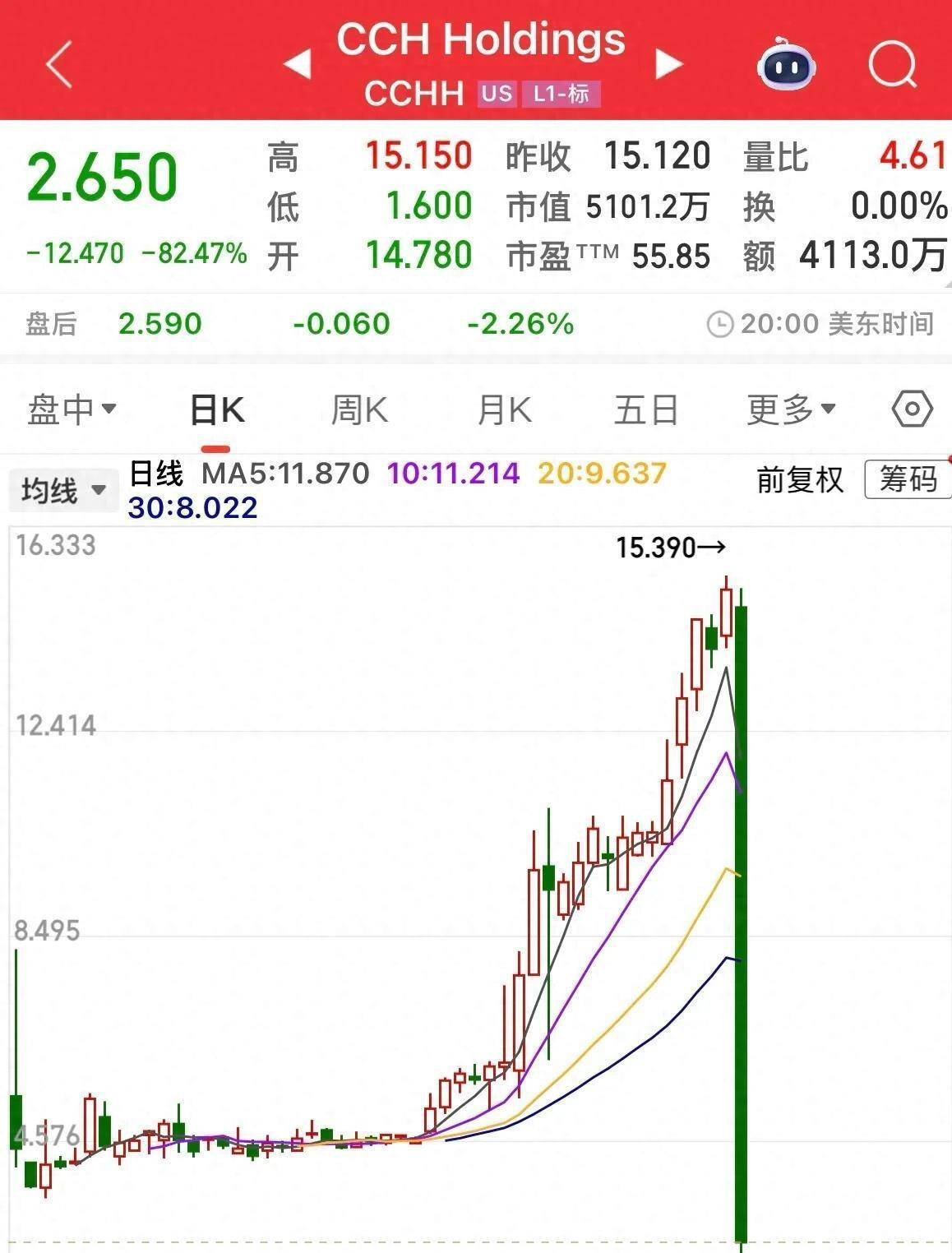
Core Viewpoint - A newly listed hot pot chain experienced a dramatic stock price drop of 82.47% in a single trading day, raising questions about market dynamics and investor behavior [1][2]. Group 1: Stock Performance - The stock price plummeted from $15.39 to $2.65, erasing all gains since its IPO just over two months ago [1][3]. - The stock initially opened lower due to a general market decline but faced a rapid and severe sell-off, with a drop of nearly 90% at one point during the trading session [3][5]. - The closing price of $2.65 fell below the IPO's lowest point of $3.49, leaving all investors who bought shares since the IPO at a loss [5][6]. Group 2: Market Context - The stock's decline occurred in a sensitive market environment, coinciding with disappointing earnings from tech giant Oracle, which raised concerns about the profitability of high-growth companies [7][9]. - The Federal Reserve's mixed signals regarding interest rates contributed to market uncertainty, making investors more risk-averse and leading to a flight from high-risk assets [9]. Group 3: Investor Behavior - The stock's rapid decline was exacerbated by its status as a small-cap stock with low liquidity, making it more susceptible to large sell-offs when market sentiment shifts [9][11]. - Speculation exists regarding potential market manipulation, as the stock had seen a significant increase in value over the past month, raising questions about whether this was driven by genuine business performance or artificial hype [9][11].
刚刚!美股全线杀跌,AI“信仰”崩塌?博通暴跌11%,圣诞行情还有戏吗?
Sou Hu Cai Jing· 2025-12-13 10:42
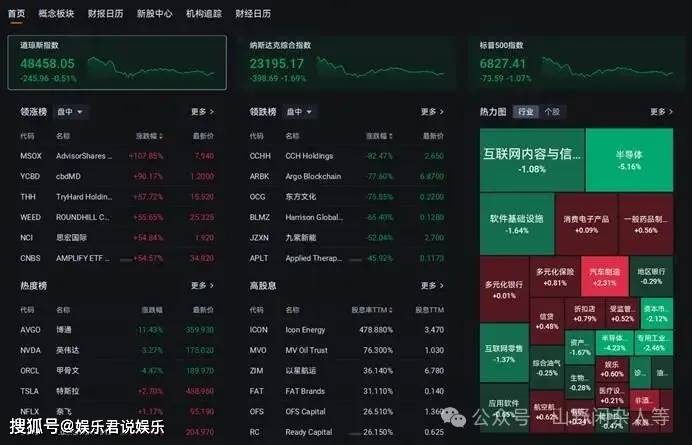
大家好,欢迎回到《美股笔记》。今天是12月12日,周五。 本来以为周五会是平静的交易日,结果华尔街给我们上演了一出"黑色幽默",市场却迎来了超预期的抛 售潮。纳指盘中一度深跌超2%,标普500收跌1.07%,科技股尸横遍野。 | 首页 概念板块 | 财报日历 | 新設中心 | 机构追踪 | 财经日历 | | | | | | | | | | --- | --- | --- | --- | --- | --- | --- | --- | --- | --- | --- | --- | --- | | 通璋斯指数 | | | | 纳斯达克综合指数 | | | | 标值500指数 | | | | | | 48458.05 | | | | 23195.17 | | | | 6827.41 | | | | | | -245.96 -0.511 | | | | -398.69 -1.699 | | | | -73.59-1.075 | | | | | | 倾流榜 盘中 ▼ | | | 更多 > | 领跌榜 盘中 ▼ | | | 更多> | 热力圈 将业 个版 | | | | 更多 > | | 代码 | 名様 | 原鼓楼 # ...
每日机构分析:12月12日
Xin Hua Cai Jing· 2025-12-12 12:35
Group 1 - Societe Generale indicates that Japan's neutral interest rate may slightly rise, but a significant increase in the lower bound of the policy range is unlikely [1] - Morgan Stanley suggests that if the European Central Bank maintains interest rates, the euro may reach 1.30 against the dollar by Q2 2026 [1] - Deutsche Bank warns that the UK economy may face its first quarterly contraction since 2023 [1] Group 2 - Macquarie analysts note that rising interest rates in Australia are significantly adjusting overnight cash rates and swap pricing, providing upward space for banks' net interest margins, although increased competition may offset some benefits [2] - HSBC economists expect the Federal Reserve to maintain the federal funds rate between 3.50% and 3.75% in 2026 and 2027, supported by fiscal measures and a cooling labor market [2] - Howard Marks from Oaktree Capital warns that current Fed rates are low enough, and further cuts would encourage excessive risk-taking in the market [2] Group 3 - UBS Asset Management analysts predict that dovish Fed policies combined with Trump’s stimulus measures may reignite inflation, leading the market to price in rate hikes by the end of 2026 [3] - Morgan Stanley strategists state that if the ECB keeps rates unchanged in 2026, the euro could rise to 1.30 against the dollar, the highest since 2014 [3] - Quilter investment strategists highlight that the UK’s GDP contracted by 0.1% in October, indicating economic fragility, contrasting with overall upward growth expectations in Europe [3] Group 4 - JPMorgan Asset Management strategists emphasize that AI-related capital expenditures are primarily supported by companies' own cash, indicating real demand and profit foundations, unlike the internet bubble [4]