
硬科技

Search documents
光大同创(301387.SZ):拟与专业投资机构共同设立创业投资基金
Ge Long Hui A P P· 2026-01-22 11:19
Group 1 - The core viewpoint of the article is that Everbright Tongchuang (301387.SZ) has signed an investment framework agreement with Hangzhou Jinhuh Capital Management Co., Ltd. to establish a venture capital fund focused on hard technology and key core technologies [1] - The venture capital fund aims to invest in high-quality target companies and key core technologies related to AI computing infrastructure and next-generation communication technologies [1] - The total committed capital for the venture capital fund is tentatively set at no more than RMB 150.01 million, with Everbright Meike as a limited partner intending to contribute up to 65% of the total committed capital, which amounts to no more than RMB 97.5 million [1]
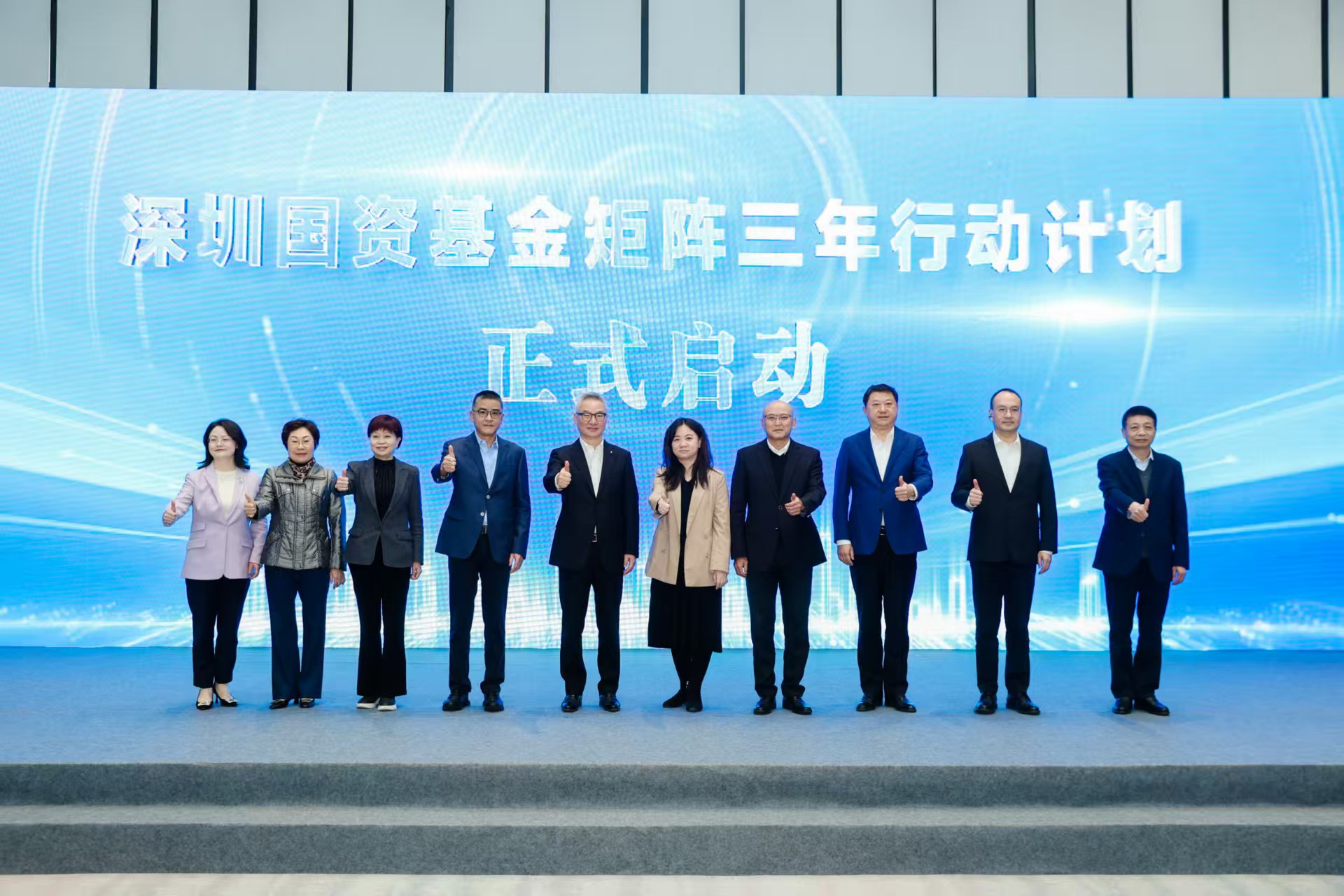
深圳国资基金圈定三大重点支持硬科技领域
Di Yi Cai Jing· 2026-01-22 10:20
Core Viewpoint - Shenzhen has launched a "State-owned Capital Fund Matrix Three-Year Action Plan" to focus on supporting hard technology sectors such as semiconductors, integrated circuits, artificial intelligence, and biomedicine [1] Group 1: Fund Matrix and Strategic Focus - The fund matrix is based on the "Shenzhen Municipal State-owned Enterprises Fund Business Management Measures (Trial)" issued on January 1, 2023, and aims to cover the entire lifecycle of enterprises from seed to maturity [1] - This initiative is expected to concentrate state-owned capital on forward-looking strategic emerging industries, enhancing the long-term guiding and amplifying role of state-owned capital in technological innovation investments [1] - The Shenzhen State-owned Assets Supervision and Administration Commission aims to link innovation elements such as technology, talent, and scenarios to empower sci-tech enterprises throughout their lifecycle [1] Group 2: Collaboration and Ecosystem Development - Shenzhen's state-owned enterprises are transitioning from "resource holders" to "ecosystem builders," collaborating with private enterprises to create a virtuous cycle of innovation [3] - The Shenzhen Capital Group has invested 86% of its funds in early-stage and growth-stage companies, nurturing 288 listed companies to date [3] - The Kunpeng Capital sub-fund group has a cumulative investment scale exceeding 100 billion, covering nearly 2,000 projects, establishing a mature operational foundation for collaborative development in the industrial chain [3] Group 3: Investment Strategies and Fund Scale - Shenzhen is promoting "bold capital" and "patient capital" from state-owned enterprises, with over 500 funds created by the end of 2024, totaling over 700 billion, with more than 90% directed towards the "20+8" industries [4] - The Shenzhen Semiconductor and Integrated Circuit Industry Investment Fund was established with an initial scale of 5 billion, focusing on investments in semiconductor equipment, components, chip design, and advanced packaging [4] - The Shenzhen State-owned Assets Supervision and Administration Commission emphasizes the importance of maintaining the function of patient capital and continuously improving fund collaboration, project cultivation, and ecological service mechanisms [4]

倪正东对话邓锋:2026,中国创投“大”年
创业邦· 2026-01-22 10:19
Core Insights - The Chinese primary market is at a new crossroads, transitioning from dominance by dollar funds to a landscape filled with state-owned capital, reflecting a significant shift in investment dynamics over the past two decades [2][5] - The dialogue at the 18th Chuangyebang Annual Conference highlighted the confidence in the market, predicting that 2026 will be a year of unprecedented capital availability in China, termed "史无钱例" [4][10] - The evolution of entrepreneurs from grassroots innovators to highly educated individuals with strong technical backgrounds is emphasized, indicating a shift towards a more sophisticated entrepreneurial ecosystem [11][12] Market Dynamics - The investment landscape has changed dramatically, with state-owned capital now accounting for over 80% of the market, contrasting sharply with the earlier dominance of foreign venture capital [9] - Despite recent market downturns, there is optimism for recovery, with significant capital inflows expected in 2026, driven by government funds and social security investments [10][18] - The Hong Kong market is becoming increasingly important for Chinese companies, with a notable increase in listings and international capital participation [19][20] Entrepreneurial Evolution - The profile of Chinese entrepreneurs has shifted significantly, with a greater emphasis on technical expertise and international perspectives, moving away from the earlier focus on business models alone [12][13] - Today's entrepreneurs are often seasoned professionals with industry experience, reflecting a maturation of the entrepreneurial landscape [13][14] - Continuous learning and adaptability are now essential traits for entrepreneurs, as the pace of change in technology and market dynamics accelerates [14][15] Investment Strategies - The focus on deep technology and healthcare investments is highlighted as a long-term strategy, with a belief in the sustained growth potential of these sectors [16] - Entrepreneurs are encouraged to prioritize business growth and team development over early concerns about market listings, as the capital market is cyclical [20][24] - There is a call for entrepreneurs to seek opportunities in less crowded, non-consensus areas rather than following trends blindly, which can lead to more sustainable success [21][22]

收益率曲线陡峭化
Qi Huo Ri Bao· 2026-01-22 07:22
Group 1 - The monetary policy has implemented structural interest rate cuts, reducing rates by 0.25 percentage points for various structural monetary policy tools, optimizing some tools, and increasing their quotas to support key strategic areas and weak links [2] - The fiscal policy aims for a more proactive approach, with a budget deficit rate expected to remain around 4% in 2026, and the issuance of special long-term bonds projected to increase by 200 billion to 500 billion, reaching between 1.5 trillion and 1.8 trillion [2] - A package of policies focused on boosting domestic demand has been introduced, including interest subsidies for loans to small and micro enterprises, a special guarantee plan of 500 billion for private enterprise loans, and measures to lower the threshold for private enterprise bond issuance [3] Group 2 - The economy is expected to maintain resilience with a GDP growth rate of 5.0% in 2025, highlighting structural optimization and the growth of new economic drivers, despite weaknesses in traditional sectors like real estate and infrastructure [4] - Consumer price index (CPI) rose by 0.8% year-on-year in December 2025, the highest since March 2023, while core CPI remained above 1% for four consecutive months, indicating a gradual recovery in domestic demand [4] - The bond market is experiencing wide fluctuations due to a combination of loose funding, improving economic conditions, and rising prices, with expectations of a steepening yield curve as long-term bonds underperform relative to short-term bonds [5]
十大基金经理四季报纵览:张坤、刘彦春共话内需前景,郑巍山坚守硬科技,赵诣聚焦“两端配置”
Xin Lang Cai Jing· 2026-01-22 07:09
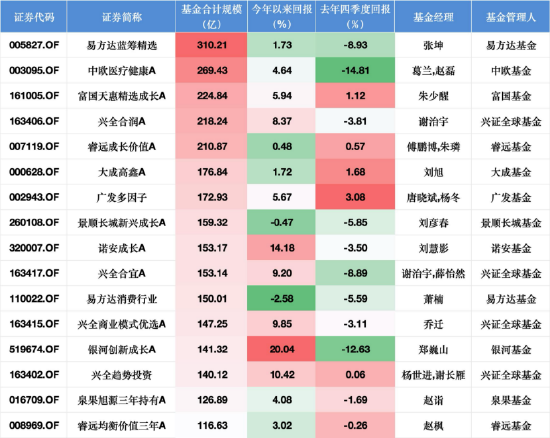
Core Insights - The 2025 fund's fourth quarterly report reveals that only 5 out of 16 large-cap active equity funds achieved positive returns in Q4, indicating significant performance divergence among funds [1][3][19] - Despite the Q4 challenges, many funds showed a rebound in performance since the beginning of 2026, with 14 out of 16 funds reporting positive returns [3][19] Fund Performance Summary - The top-performing funds in Q4 included: - Guangfa Multi-Factor with a quarterly increase of 3.08% - Dachen Gaoxin A with a return of 1.72% - Fuqun Tianhui Select Growth A with a return of 5.94% [2][3][18] - Conversely, the worst performers included: - Zhongou Medical Health A, which fell by 14.81% - Yifangda Blue Chip Select, which dropped by 8.93% [3][18] Fund Manager Insights - Zhang Kun emphasized the importance of domestic consumption and the long-term potential of investing in domestic demand companies, despite current market skepticism [4][19] - Ge Lan highlighted structural opportunities in the pharmaceutical industry, focusing on innovation and consumer recovery, with a positive outlook for Q1 2026 [6][20] - Liu Yanchun pointed out the need for improved domestic demand and stable asset prices, predicting a rise in inflation expectations [7][21] - Zheng Weishan maintained a focus on hard technology investments, particularly in the semiconductor sector, and expressed optimism about AI demand and domestic production [8][22] - Zhao Yi discussed a dual focus on AI growth and sectors like new energy and military, emphasizing the importance of fundamental analysis [10][25] - Qiao Qian stressed the need for a balance between valuation and fundamentals amid market volatility, aiming for long-term certainty [12][26] - Liu Huiying expressed confidence in the semiconductor and AI applications as key mid-term themes, anticipating breakthroughs in domestic technology [13][27] - Zhao Feng focused on the overseas growth potential of leading companies, noting a shift from product export to local manufacturing and services [14][28] - Xie Zhiyu highlighted the opportunities in the global computing wave and domestic breakthroughs, particularly in the semiconductor sector [15][29] Overall Market Sentiment - Fund managers share a common belief in the long-term potential of the Chinese economy, focusing on industrial upgrades, technological innovation, and the enduring value of quality companies [16][30]
国投证券(香港)港股晨报-20260122
国投证券(香港)· 2026-01-22 05:55
Group 1: Market Overview - The Hong Kong stock market showed a positive sentiment with all three major indices rising, led by the Hang Seng Tech Index which increased by 1.11% [1] - The market exhibited characteristics of "policy-driven technology" and "strengthening of safe-haven assets," with total market turnover rising to HKD 250.5 billion [1] - Southbound capital saw a significant rebound, with a net inflow of HKD 13.9 billion, indicating renewed investor interest [1] Group 2: Sector Performance - The technology sector was the main driver of the rebound, particularly stocks related to robotics, which surged following favorable policies from the Ministry of Industry and Information Technology [2] - Semiconductor stocks also performed well, reflecting a recovery in investor confidence towards hard technology sectors [2] - In contrast, the domestic demand and real estate sectors showed weakness, with sportswear stocks declining due to disappointing quarterly results from leading companies [2] Group 3: Company Analysis - Trip.com Group - Trip.com Group is under investigation for potential anti-competitive practices, specifically regarding its "price adjustment assistant" feature, which automatically adjusts hotel prices based on market data [5][6] - Following the announcement of the investigation, the company's ADR fell by 17% and its Hong Kong stock price dropped by 19% [5] - The potential financial impact of the investigation could result in fines ranging from HKD 400 million to HKD 4 billion, which may affect the company's adjusted net profit for 2026 [7] Group 4: Competitive Landscape and Valuation - The investigation's timeline is estimated to be around 4-6 months, with potential penalties based on previous cases indicating fines of 1%-10% of the previous year's sales [7] - Despite the investigation, Trip.com is expected to maintain its leading position in the OTA market, although there may be slight adjustments in commission rates [7] - The target price for Trip.com has been adjusted to HKD 551 (9961.HK) / USD 71 (TCOM.US) based on a revised valuation of 16 times the 2026 earnings, down from 20 times [8]

美德乐IPO审核提速
Bei Jing Shang Bao· 2026-01-21 16:04
Core Viewpoint - The IPO review process at the Beijing Stock Exchange (北交所) has accelerated, reflecting a broader trend in the capital market aimed at supporting innovative small and medium-sized enterprises (SMEs) [1][2][3] Group 1: Company Overview - Meidel (美德乐), established in 2009, specializes in the research, design, manufacturing, and sales of intelligent manufacturing equipment, primarily modular conveyor systems and industrial components [1] - The company plans to issue 16 million shares at a price of 41.88 yuan per share, aiming to raise approximately 670 million yuan, with a net fundraising amount expected to be around 608 million yuan after deducting issuance costs [1] Group 2: Financial Performance - In the first half of 2025, Meidel reported revenues of 712 million yuan and a net profit attributable to shareholders of 152 million yuan [2] - For the full year of 2025, Meidel anticipates revenues between 1.3 billion and 1.4 billion yuan, representing a year-on-year growth of 14.26% to 23.05%, and a net profit forecast of 270 million to 300 million yuan, indicating a growth of 28.11% to 42.34% [2] Group 3: Market Trends and Implications - The acceleration of the IPO review process at the Beijing Stock Exchange signifies its evolving role as a primary platform for innovative SMEs, moving from policy formulation to practical implementation [3] - The North Exchange aims to enhance its service efficiency through institutional innovation, creating a more inclusive and timely listing ecosystem for high-quality manufacturing enterprises [3]
中国经济年报丨2025年A股价值重塑 估值核心转向“硬科技”
Sou Hu Cai Jing· 2026-01-21 14:52
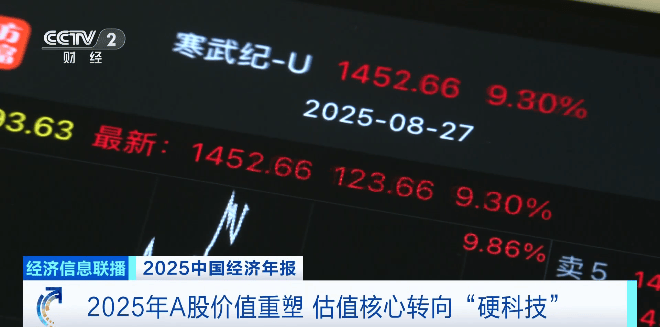
(央视财经《经济信息联播》)2025年,在中国资本市场,科技板块表现亮眼,折射出中国经济的创新 底色。透过资本市场感受2025年中国科技创新的活力。 复旦大学国际金融学院执行院长 钱军:硬科技已成为中国经济增长的核心驱动力,将激励更多企业投 身硬科技研发和发展。 "股王"易主的背后,是硬科技赛道的全面爆发与资本配置的深度重构。2025年10月28日,科创板科创成 长层首批新注册公司——禾元生物、西安奕材、必贝特正式上市,这是A股时隔两年多再次迎来未盈利 企业上市。截至目前,科创板已支持60家未盈利企业上市,其中22家未盈利企业在上市后实现盈利并摘 U,"摘U"不仅标志财务改善,更反映企业技术突破和市场认可度提升。 2025年,A股科创板上市公司总量突破600家,总市值超10万亿元,形成覆盖集成电路、生物医药、新 能源等领域的"硬科技"全产业链集群。以制造业、科学研究和技术服务业为代表的高新技术企业市值变 化最突出,总市值较年初分别增长33.3%和32.1%。市值格局的转型,离不开顶层设计的精准引导。科 创板设立、创业板改革、退市制度优化等一系列举措,逐步畅通了科技、资本与实体经济的高水平循 环。 2025年8 ...
天银机电:公司将努力持续提升技术壁垒、巩固市场占有率、优化财务与公司治理结构
Zheng Quan Ri Bao Wang· 2026-01-21 13:12
Core Viewpoint - The establishment of the National Venture Capital Guidance Fund signifies a new phase of systematic and patient support for hard technology from capital markets [1] Company Summary - Tianyin Electromechanical (300342) views the fund as an expansion of financing channels and an important opportunity to integrate into the national innovation system and gain long-term strategic support [1] - The company aims to continuously enhance its technological barriers, consolidate market share, and optimize its financial and corporate governance structures to meet the strict investment criteria of the fund [1]

科技类企业支撑深圳近三成办公楼租赁市场
2 1 Shi Ji Jing Ji Bao Dao· 2026-01-21 09:33
Core Insights - The new economic sectors represented by consumer electronics, smart manufacturing, brand overseas expansion, and related professional services are becoming significant support for leasing demand [1] Demand Side - Shenzhen's corporate tenants are continuously optimizing real estate strategies through flexible leasing arrangements and strict cost control, with lease renewals and cost-driven relocations remaining dominant strategies [2] - Technology companies dominate market demand, accounting for nearly 30% of transaction area, with the smart manufacturing sector showing particularly strong activity [2] - Major technology and financial companies contribute significantly to net absorption, accounting for over half of the total net absorption for the year [2] Supply Side - The Shenzhen Grade A office market is expected to see a peak in supply in 2025, with 15 new projects entering the market, adding nearly 1.16 million square meters, the highest level in three years [4] - The overall vacancy rate for Grade A offices is projected to rise by 1.8 percentage points to 26.2% due to the combined effects of new supply and tenant adjustments [4] - The Qianhai area is expected to perform relatively well due to competitive rental levels and improved commercial amenities, with a decrease in vacancy rates in the fourth quarter [4] Structural Changes - The supply side is undergoing structural optimization, with some ongoing and existing projects introducing hotel operations to alleviate vacancy pressure [5] - In 2026, over 1.5 million square meters of new supply is anticipated, with a continued focus on hard technology sectors and the expansion of office spaces [5] - Companies are shifting their site selection criteria from a single price focus to a comprehensive evaluation of "extreme cost-performance ratio" and property management, benefiting quality office spaces in core business districts [6]