投资于人

Search documents
投资于人、改善收入分配……多位专家献策“扩内需”
Sou Hu Cai Jing· 2025-12-21 06:12
Group 1 - The central economic work conference emphasized "domestic demand as the main driver" as the top priority for next year's economic tasks [1] - Experts predict that there will be a significant enhancement in demand next year, with expectations for a more balanced economic structure and improved growth quality over the next five years [1] - The chief economist from CITIC Securities highlighted that the transition from "investment in goods" to "investment in people" is crucial for future policies, suggesting a shift in subsidies from durable goods to services [4] Group 2 - The chief economist from Zhongxin JianTou Securities noted that China's per capita GDP is expected to reach $14,000 by the end of this year, indicating a shift from goods consumption to service consumption [4] - Improving income distribution is identified as key to breaking consumption constraints, with recommendations for enhancing human capital and optimizing educational resources [4] - Morgan Stanley's chief economist in China suggested gradually increasing social security subsidies for farmers and migrant workers from 220 yuan to 1,000 yuan to encourage consumption among low-income groups [5]


消费券后下轮“补贴”该补哪?消费提振如何实现投资于人?专家:收入分配改革是关键
Sou Hu Cai Jing· 2025-12-21 04:32
Core Viewpoint - Improving income distribution is crucial for breaking the current constraints on consumer demand and driving economic growth [1][9] Group 1: Economic Context - The current economic situation in China is characterized by a "strong supply and weak demand" dynamic, with insufficient domestic demand being a significant barrier to high-quality development [5] - The Consumer Price Index (CPI) is hovering around zero, and the Producer Price Index (PPI) has experienced negative growth for 27 consecutive quarters, leading to structural deflationary pressures [5] - The gap between actual economic growth (approximately 5%) and nominal growth indicates a persistent issue that requires targeted measures across various sectors [5][9] Group 2: Income Distribution Issues - Experts identify the slowdown in income growth and the need for optimization in income distribution as the core issues behind weak domestic demand [9][10] - The current Gini coefficient is approximately 0.465, indicating a need for improvement in income distribution fairness, with a target of reducing it to around 0.4 by 2030 [10] - The urban-rural income ratio stands between 2.3 and 2.4, which is still considered high compared to international standards, with a goal to reduce it below 2 during the 14th Five-Year Plan [10] Group 3: Recommendations for Income Growth - Implementing proactive employment and human capital investment policies is essential, including extending compulsory education and reallocating educational resources for lifelong training [13][14] - Strengthening redistributive measures through progressive taxation and increasing government spending on social welfare is crucial for improving income distribution [14] - Stabilizing and enhancing residents' property income is vital, with a focus on maintaining stability in the real estate and capital markets [15] Group 4: Consumer Demand Enhancement - Experts suggest moving beyond traditional short-term stimulus measures to enhance consumer demand, advocating for investment in service consumption and areas that promote human development [17][18] - Expanding consumption scenarios and optimizing the consumption environment are key, including promoting the silver economy and reducing unreasonable consumption restrictions [18] Group 5: Long-term Support for Domestic Demand - Expanding domestic demand requires effective investment coordination and deep institutional reforms [20] - Addressing local government investment capacity and promoting long-term sustainable fiscal development through tax reform and the reallocation of fiscal powers are necessary [20] - Fostering technological innovation and industrial upgrading is fundamental for increasing income and creating high-quality employment, ultimately supporting long-term consumption growth [20]
从“产城人”到“人城产”
Xin Lang Cai Jing· 2025-12-20 22:07
Group 1 - The core achievement of Nanjing Haojing Health Technology Co., Ltd. is the mass production of AI-based Traditional Chinese Medicine diagnostic devices, which are set to enter community use, showcasing a rapid development in innovation through collaboration with Nanjing University of Traditional Chinese Medicine [1] - The diagnostic accuracy of the developed models has reached the level of deputy chief physician, indicating a significant advancement in AI applications in healthcare [1] - The Nanjing Hexi Central Innovation Zone is experiencing a surge in high-quality enterprises, with over 100 companies having settled in the Nanjing Ali Center within a few months, reflecting the area's vibrant innovation ecosystem [1][2] Group 2 - The transformation from "production-city-people" to "people-city-production" in Nanjing's Jianye District emphasizes a new urban development logic that prioritizes human needs and integrates industry with urban living [2][6] - The establishment of various innovation centers and partnerships, such as the Alibaba Cloud Big Model Joint Laboratory and Southeast University AI Excellence Engineer Technology Center, illustrates a collaborative approach to fostering innovation [3] - The projected addition of over 100,000 industrial talents by 2027 in the Hexi Central Innovation Zone highlights the area's commitment to attracting and retaining skilled professionals [5] Group 3 - The focus on "investing in people" is evident in the development of supportive environments for young talents, including high-quality living accommodations and cultural activities that cater to the needs of the new generation [4][7] - The integration of urban planning with talent attraction strategies aims to create a sustainable and innovative ecosystem that enhances both living and working conditions for professionals [5][6] - The ongoing initiatives to link key enterprises with educational institutions aim to improve the professional skills and entrepreneurial capabilities of over 5,000 young individuals annually [7]
见“物”见“人”见未来
Xin Hua Ri Bao· 2025-12-20 22:00
Core Viewpoint - The recent national medical security work conference aims to achieve "essentially no cost for childbirth" by next year, emphasizing the importance of "investing in people" as a shift from traditional "investing in material" approaches, which is expected to enhance public well-being and stimulate economic growth [1][2]. Group 1: Investment in People vs. Investment in Material - "Investment in people" is proposed as a complement to "investment in material," reflecting a shift in focus from physical assets to human development, which is crucial for unlocking the potential of over 1.4 billion people in China [1][2]. - The central economic work conference highlights the need to combine both investments, recognizing that material investment provides the necessary infrastructure while human investment activates economic growth through enhanced consumption and human capital [2][3]. Group 2: Practical Examples and Implementation - Examples from Jiangsu province illustrate successful integration of both investment types, such as the Nanjing Electromechanical Vocational Technical College's collaboration on the "Nanjing" satellite project, which combines resource investment in infrastructure with human talent development [2][3]. - The popularity of the "Su Chao" football event demonstrates how investment in sports infrastructure and a people-centered approach can drive public health and create new consumption opportunities, showcasing the benefits of combining both investment strategies [3][4]. Group 3: Systematic Thinking and Future Directions - A systematic approach is essential for aligning investments in material and human capital, ensuring that both are included in national economic and social development plans, while maintaining a balance between the two [3][4]. - The focus should be on high-end, intelligent, and green material investments, alongside targeted human capital development to address talent shortages in industries, fostering a cycle of economic growth and improved living standards [3][4].
【理响中国】为何要坚持投资于物和投资于人紧密结合?
Xin Lang Cai Jing· 2025-12-20 07:47
Core Viewpoint - The concept of "investment in people" is emphasized as a crucial strategy for driving economic growth and enhancing domestic demand, complementing traditional "investment in physical assets" [1][2]. Group 1: Investment in People - "Investment in people" refers to allocating more resources to education, employment, healthcare, and social security, focusing on enhancing human capabilities and driving high-quality economic development [2]. - This approach is a response to the declining returns on "investment in physical assets" and aims to shift the economic growth mechanism towards innovation and demand-driven models [2][3]. - The release of consumer potential and the enhancement of human capital are seen as essential for building long-term economic competitiveness in the face of global industrial competition [2]. Group 2: Domestic Demand and Economic Structure - Recent data indicates that household consumption accounts for approximately 39% of China's GDP, while capital formation accounts for about 41%, highlighting a need for improved consumer demand [3]. - Compared to global averages, where household consumption is around 57% of GDP, China's internal demand issues stem from insufficient consumer demand and the need for better interaction between consumption and investment [3]. - "Investment in people" is identified as a key lever to enhance this interaction, focusing on comprehensive human development to activate endogenous economic momentum [3]. Group 3: Integration of Investments - The emphasis on "investment in people" does not diminish the importance of "investment in physical assets," as there remains significant potential for capital investment in China [4]. - The strategy calls for a shift from scale expansion to quality improvement and precision efforts, focusing on key technology enhancements and optimizing existing assets [4]. - Continuous investment in public services and human resource development is essential, with a focus on education, healthcare, and social welfare to stimulate overall economic growth [4].
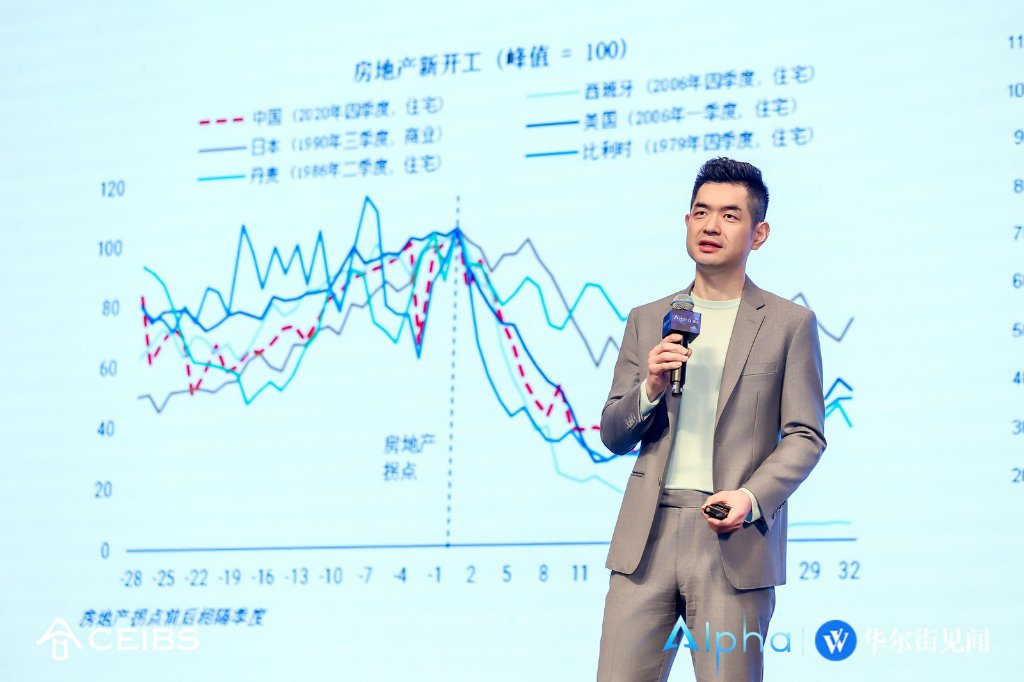
大摩邢自强:提消费、稳楼市、强社保……2026中国经济要走得远,关键还在“投资于人” | Alpha峰会
华尔街见闻· 2025-12-20 04:40
Core Viewpoint - The key to reversing the economic situation in China lies in the policy shift since September 2024, showcasing the resilience and innovation of Chinese enterprises amid complex geopolitical and regulatory challenges [2][4]. Group 1: Economic Policy and Resilience - The policy shift since September 2024 is crucial for reversing the economic situation, with Chinese enterprises demonstrating strong resilience and innovation in various technology sectors [4]. - Relying solely on certain industries' productivity highlights and companies going abroad may not sufficiently drive the economic cycle of a large economy [5]. - To effectively address the low-price cycle, efforts should focus on three areas: resolving existing issues, supporting domestic demand, and reforming to stabilize confidence [5][39]. Group 2: Fiscal and Social Reforms - The fiscal spending structure should shift from "investment in material" to "investment in people," enhancing social security to encourage consumer spending [5][45]. - Strengthening social security and balancing it can help unleash consumption potential, with fiscal burdens addressed through "opening up" and transformation [6][93]. - The current social security expenditure in China is only 10% of GDP, significantly lower than developed countries, indicating substantial room for improvement [93][94]. Group 3: Real Estate Market Dynamics - The real estate sector plays a critical role in China's economy, contributing nearly 30% of GDP at its peak, and its stabilization is essential for overall economic recovery [48][66]. - The adjustment in the real estate market has been significant, with sales and construction volumes dropping by 60%, indicating that the adjustment phase is nearing completion [61]. - The proposal of "fiscal interest subsidies" aims to narrow the gap between rental returns and mortgage costs, which is crucial for market recovery [78][82]. Group 4: Innovation and Technology - Chinese enterprises have achieved significant advancements in various technology sectors, including robotics, electric vehicles, and next-generation batteries, positioning themselves as global leaders [18][19]. - The scale effect of China's industrial clusters is unmatched by any other single economy, emphasizing that "there is no next China" [21]. - The talent pool in China, particularly in STEM fields, is vast, with approximately 11 million university graduates annually, providing a strong foundation for continuous innovation [22]. Group 5: Consumer Behavior and Economic Outlook - Consumer sentiment has shifted positively since the policy changes in September 2024, with increased interest from both international and domestic investors in diversified asset allocations [10][9]. - The high savings rate in China is attributed to an insufficient and unbalanced social security system, which needs reform to enhance consumer confidence and spending [96][97]. - The expectation is that by 2027, with further consensus and policy implementation, the economy will see significant improvements in consumer spending and overall stability [89][105].

人力资源社会保障部:促进高质量充分就业 健全社会保障体系
Ren Min Ri Bao· 2025-12-20 02:58
Core Viewpoint - The article emphasizes the importance of promoting high-quality and full employment and improving the social security system as strategic goals outlined in the 14th Five-Year Plan, highlighting the need for policy support and innovative reforms to address new challenges in employment and social security [1][5]. Employment Promotion - The 14th Five-Year period presents new challenges for employment, including a high supply of urban labor and structural employment issues due to rapid technological advancements [2][3]. - The government aims to implement an employment-first strategy, focusing on creating an employment-friendly development model and integrating high-quality employment into national economic planning [3]. - Structural employment issues will be addressed by developing a human resource demand forecasting mechanism and aligning training programs with industry needs [3]. Targeted Employment Strategies - Specific measures will be taken to promote employment among key groups, such as youth and migrant workers, by expanding job opportunities and providing support for entrepreneurship [3]. - The government will ensure that zero-employment families receive assistance and will focus on the employment of veterans and women [3]. Fair Employment Environment - A unified and regulated human resources market will be established to eliminate barriers to labor mobility and ensure equal employment rights for all workers [4]. Social Security System Optimization - The goal of optimizing the social security system is to align with China's modernization and the common prosperity of all citizens, addressing weaknesses in certain areas [5][6]. - A multi-tiered pension system will be developed, enhancing the basic pension insurance system and promoting enterprise annuities [6]. - The government will improve the mechanism for determining and adjusting benefits, focusing on low-income groups [6]. Protection for New Employment Forms - A new occupational injury protection system will be established, particularly for new employment forms, with pilot programs already expanded to 17 provinces [6]. - Efforts will be made to increase the participation rate of flexible workers and migrant workers in social insurance [7]. Investment in Human Resources - The government will focus on investing in human resources by enhancing talent development and training programs, particularly for young and skilled workers [8][9]. - A large-scale vocational skills training initiative will be launched to meet the needs of emerging industries and improve the overall skill level of the workforce [9]. - The government will also work on improving talent evaluation and compensation mechanisms to attract and retain skilled workers [9].
城乡居民如何实现增收?丨落实会议部署 问答中国经济
Zheng Quan Shi Bao· 2025-12-20 00:15
Group 1 - The central economic work conference emphasizes expanding domestic demand as the primary task for the upcoming year, highlighting the urgency of boosting consumer spending, particularly among residents [1] - Policies such as the trade-in program for consumer goods, increased fiscal investment in people's livelihoods, and financial incentives for loans are expected to support the enhancement of resident consumption [1] - To fundamentally boost consumption, it is essential to continue promoting income growth among residents, thereby solidifying their consumption capacity and confidence [1] Group 2 - Employment stability is crucial for income stability, with wage income being the largest component of residents' income. The focus on employment is vital for the broader "income increase" plan [2] - Policies should favor the service sector, remove unnecessary barriers, and enhance human capital investment to improve residents' skills and enable them to seek higher-paying jobs [2] - Encouraging listed companies to increase cash dividends can significantly enhance residents' property income, which has a greater impact on consumption than other income types [2] Group 3 - Improving income distribution can be achieved through tax adjustments and transfer payments, with the latter being more effective in reducing income disparities [3] - Enhanced public services, such as education and healthcare, can significantly support consumer confidence and willingness to spend [3] - Recent policies include cash subsidies for families with young children and waiving fees for public kindergarten, indicating a push towards direct benefits for residents [3] Group 4 - The social security system, particularly the pension system, has notable shortcomings that need reform to bridge the gaps in funding and benefits between different demographics [4] - The "14th Five-Year Plan" suggests optimizing drug procurement and improving insurance policies to enhance social security's role in income distribution [4] - Consumer spending is not merely an economic tool but a fundamental aspect of residents' lives, reflecting their needs and aspirations for a better quality of life [4]

促进高质量充分就业 健全社会保障体系——访人力资源社会保障部党组书记、部长王晓萍(权威访谈·学习贯彻党的二十届四中全会精神)
Ren Min Ri Bao· 2025-12-19 22:09
Core Viewpoint - The article emphasizes the importance of employment as a fundamental aspect of people's livelihoods and its critical role in economic and social development, highlighting strategic deployments for promoting high-quality and sufficient employment as well as improving the social security system during the 14th Five-Year Plan period [1][2]. Employment Strategy - The employment landscape during the 14th Five-Year Plan period is characterized by both strategic opportunities and challenges, with a complex development environment. The government aims to enhance policy support, service supply, group assistance, and rights protection to effectively improve employment quality and achieve reasonable growth in employment quantity [2][3]. - The government will implement an employment-first strategy, integrating high-quality employment into national economic and social development planning, and promoting new growth drivers in digital, green, and silver economies [3][4]. Structural Employment Issues - There is a need to address structural employment contradictions by establishing a human resource demand forecasting mechanism and aligning training programs with industry needs. The government will focus on skill training in key sectors such as elderly care, advanced manufacturing, and modern services [3][4]. Targeted Employment Policies - The government will implement differentiated policies to promote employment for key groups, including youth, migrant workers, and those facing employment difficulties, ensuring dynamic support for zero-employment families [3][4]. Fair Employment Environment - A unified and standardized human resources market system will be established to eliminate barriers affecting labor mobility and ensure equal employment rights for workers [4]. Social Security System Optimization - The goal of optimizing and making the social security system more sustainable is to enhance public confidence in social welfare. This involves addressing shortcomings in various areas and ensuring the long-term stability of the social security system [5][6]. - The government will accelerate the development of a multi-tiered pension insurance system and improve the mechanisms for determining and adjusting benefits, with a focus on low-income groups [6][7]. Investment in Human Resources - The government will prioritize investment in human resources by enhancing talent development and training mechanisms, particularly for young scientific and technological talents, and implementing large-scale vocational skills training initiatives [8][9]. - Efforts will be made to improve the matching efficiency of human resources supply and demand, with a focus on creating a national employment information resource database and public service platform [10].
大摩邢自强:提消费、稳楼市、强社保……2026中国经济要走得远,关键还在“投资于人” | Alpha峰会
Hua Er Jie Jian Wen· 2025-12-19 12:39
12月19日,在华尔街见闻和中欧国际工商学院联合主办的「Alpha峰会」上,摩根士丹利中国首席经济学家邢自强发表了题为《中国新篇章: 科技 与再平衡》的演讲。 他表示,2024年9月以来的政策转向是扭转中国经济局势的关键,中国企业在复杂的地缘政治与监管环境"严寒大考"后展现出强大韧性和创新能 力,在多项前沿科技领域已取得领先优势。 邢自强同时表示,单靠"星辰大海"的新质生产力和企业出海,难以弥补内需不足这一"柴米油盐"的现实挑战,中国经济破局之道在于通过房地产 企稳、财政从"投资于物"转向"投资于人"、夯实社保与刺激消费,重塑增长动能与市场信心。 以下为演讲精彩观点: 以下为演讲实录: 大家好,我是邢自强。很荣幸来到华尔街见闻Alpha峰会。 关于国际资产配置、地缘政治的种种消息,我相信不管是对于在座的企业家还是中欧的学员都有相当强的帮助。今天我作为第一个开场的嘉宾, 更多起的是抛砖引玉的作用。因为我的本行是进行宏观经济政策研判,以及关于地缘政治、国际资本市场配置的大类方向研究。我相信接下来还 有很多不管是科学家、企业家还是教授,会更多从具体的行业落地,给大家带来一些值得投资、值得进行明年布局的赛道启发。 2 ...