结构性货币政策工具

Search documents
中央经济工作会议最新信号 结构性货币政策工具“加量降价”可期
Di Yi Cai Jing· 2025-12-11 12:49
12月10日至11日,中央经济工作会议在北京举行。会议分析当前经济形势,部署2026年经济工作。 招联首席研究员董希淼也表示,接下来央行将针对结构性矛盾,坚持聚焦重点、有进有退的原则,科学 使用、适时创设结构性货币政策工具,逐步淡化对数量目标的关注,更加注重引导金融资源更多地配置 到科技创新、提振消费、绿色低碳等重点领域和薄弱环节,做好金融"五篇大文章",增强政策的精准性 和有效性。 其中关于2026年货币政策延续适度宽松的基调,显示出宏观政策保持很强的连续性、稳定性。除了总量 政策提出运用降准降息外,会议还要求畅通货币政策传导机制,引导金融机构加力支持扩大内需、科技 创新、中小微企业等重点领域。 (文章来源:第一财经) 东方金诚首席宏观分析师王青认为,着眼于做好"五篇大文章",引导金融资源更多支持科技创新、制造 业转型升级、绿色发展、小微企业,以及促消费稳外贸等国民经济重点领域和薄弱环节,2026年央行将 优化用好各类结构性货币政策工具,总体上是"加量降价",即结构性货币政策工具额度总体上会增加, 操作利率则会跟进降息适度下调。结构性货币政策工具发力,除了推动新旧增长动能转换、助力高质量 发展外,也会起到以 ...
聚焦中央经济工作会议|对降准降息等政策工具首提“灵活高效”,有何考量?
Sou Hu Cai Jing· 2025-12-11 12:24
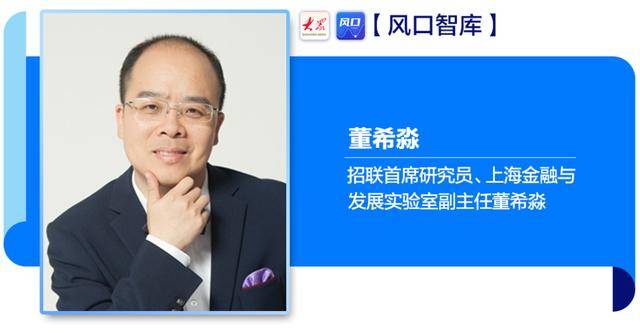
(大众新闻·风口财经记者 刘晓) 编辑:刘晓 "从货币政策看,为继续保持适度宽松的基调,并配合财政政策发力,预计2026年货币政策将有进一步 加大实施力度的空间和可能。"招联首席研究员董希淼对风口财经记者表示。 会议强调,"灵活高效运用降准降息等多种政策工具"。董希淼指出,对降准降息等工具运用的要求 是"灵活高效",是新的提法。"灵活",表明将根据内外部环境变化和经济发展需要,适时运用货币政策 工具,该出手时就出手;"高效",表明运用降准降息等工具时,要更多考虑政策有效性和针对性,既要 加大力度支持经济增长,也要加强防范重点领域风险。 董希淼预计,2026年存款利率和政策利率将进一步下降,贷款市场报价利率(LPR)有望稳中有降,并 更加注重发挥结构性货币政策工具作用,引导金融资源更多流向科技创新、绿色发展、提振消费。未来 一段时间,货币政策将更加注重把握和处理好短期与长期、稳增长与防风险、内部与外部三方面的关 系。 中央经济工作会议12月10日至11日在北京举行。会议提出,"要继续实施适度宽松的货币政策。把促进 经济稳定增长、物价合理回升作为货币政策的重要考量,灵活高效运用降准降息等多种政策工具,保持 流动性 ...

中央经济工作会议最新信号,结构性货币政策工具“加量降价”可期
Di Yi Cai Jing· 2025-12-11 12:11
Core Viewpoint - The central economic work conference held in Beijing from December 10 to 11 emphasizes a continuation of moderately loose monetary policy for 2026, indicating strong continuity and stability in macroeconomic policy [2]. Group 1: Monetary Policy Direction - The conference proposes the use of reserve requirement ratio cuts and interest rate reductions as part of the total policy measures [2]. - The People's Bank of China (PBOC) is expected to optimize and effectively utilize various structural monetary policy tools, leading to an overall increase in the amount and a moderate decrease in operational interest rates [2][3]. - Structural monetary policy tools are aimed at facilitating the transition of growth drivers and supporting high-quality development, while also promoting overall credit and social financing growth [2]. Group 2: Focus Areas for Financial Resources - Financial resources will be directed more towards key areas such as technological innovation, manufacturing transformation, green development, small and micro enterprises, and consumption stabilization [2][3]. - The PBOC will gradually shift focus from quantity targets to enhancing the precision and effectiveness of policies, ensuring that financial resources are allocated to weak links in the economy [3]. - As of the end of September, the balance of structural monetary policy tools supporting the financial "five major articles" reached 3.9 trillion yuan, accounting for approximately 13% of the base currency [3].
招联首席研究员董希淼:预计2026年存款利率和政策利率将进一步下降
Di Yi Cai Jing· 2025-12-11 11:50
Core Viewpoint - The Central Economic Work Conference held on December 10-11 in Beijing outlined the economic work for 2026, emphasizing the continuation of a moderately loose monetary policy and the flexible and efficient use of various policy tools such as reserve requirement ratio (RRR) cuts and interest rate reductions [1] Monetary Policy - The conference highlighted the importance of promoting stable economic growth and reasonable price recovery as key considerations for monetary policy [1] - It was stated that the monetary policy will maintain ample liquidity and facilitate the transmission mechanism of monetary policy to support key areas such as domestic demand expansion, technological innovation, and small and medium-sized enterprises [1] - Chief researcher Dong Ximiao from Zhailian predicts that in 2026, deposit rates and policy rates are expected to decline further, with one to two RRR cuts and interest rate reductions likely to be implemented [1] - The focus will also be on utilizing structural monetary policy tools to direct financial resources towards technological innovation, green development, and boosting consumption, while avoiding a "flood-like" monetary policy approach [1]
甘肃年均社会融资规模增量超2400亿元
Sou Hu Cai Jing· 2025-12-11 00:13
Group 1 - The core achievement of Gansu's financial sector during the "14th Five-Year Plan" is the steady growth of social financing, with an average annual increase of over 240 billion yuan, totaling more than 1.2 trillion yuan, significantly supporting the development of the real economy [1] - By the end of Q3 this year, the balance of deposits and loans in Gansu exceeded 3 trillion yuan, representing a growth of 47% and 36% respectively compared to the end of 2020 [1] - Gansu's bond market financing has expanded, with over 150 billion yuan issued in the interbank market during the "14th Five-Year Plan," marking a 3% increase from the "13th Five-Year Plan" period [1] Group 2 - Financing costs have steadily decreased, with the average interest rates for new corporate loans and personal housing loans in September being 3.04% and 3.26%, down by 2.2 and 1.99 percentage points from December 2020 [2] - The reduction in interest expenses has benefited over 900,000 households, saving approximately 2.9 billion yuan annually [2] - A total of 109.5 million small and micro enterprises and individual businesses in Gansu have received a cumulative reduction of 2.97 billion yuan in payment fees during the "14th Five-Year Plan" [2] Group 3 - The credit structure has been continuously adjusted, with a total of 375 billion yuan allocated for agricultural and small business loans, which is 145 billion yuan more than during the "13th Five-Year Plan" [3] - Loans to small and micro enterprises have grown at an average annual rate of 11.8%, surpassing the growth rate of large enterprises by 6.8 percentage points [3] - Gansu has implemented over 40 measures to facilitate cross-border trade financing, with 87 compliant enterprises benefiting from expedited foreign exchange settlement processes totaling 6.04 billion USD [3]
甘肃跨境结算迈入“分钟时代” 诚信企业享高效服务
Zhong Guo Xin Wen Wang· 2025-12-09 13:59
Core Insights - Gansu Province has become the first in Western China to implement a facilitation policy for foreign exchange receipts and payments for quality enterprises, allowing 87 compliant companies to enjoy efficient cross-border trade settlement services with a cumulative amount of $60.4 billion [1][2] Group 1: Policy Implementation and Benefits - The People's Bank of China Gansu Branch has introduced over 40 measures to facilitate cross-border trade financing since the 14th Five-Year Plan, creating a business environment where "the more honest, the more convenient" [2] - The new policy significantly reduces the time required for cross-border trade payment processing from several days to just minutes for eligible enterprises, requiring only a single payment instruction instead of multiple documents [2] - Online processing has been enhanced, with 65 foreign exchange administrative licensing items now available online, leading to a 72% online business ratio and a 61% same-day completion rate [2] Group 2: Financial Growth and Support - Gansu's social financing scale has seen an average annual increase of over 240 billion yuan, with total new financing exceeding 1.2 trillion yuan since the 14th Five-Year Plan [3] - The loan scale has surpassed 3 trillion yuan, with an average annual growth rate of 6.4%, outpacing the growth of regional GDP [3] - Structural monetary policy tools have been effectively utilized, with 375 billion yuan allocated for agricultural and small business loans, marking an increase of 145 billion yuan compared to the previous five-year period [3] Group 3: Cost Reduction and Risk Management - The average interest rate for newly issued corporate loans in Gansu was 3.04% in September, a decrease of 2.2 percentage points from December 2020, representing a historical low [3] - Financial risk management mechanisms have been established to ensure early identification, warning, and resolution of risks, alongside accelerated reforms in small and medium-sized banks [3] Group 4: Infrastructure and Accessibility Improvements - Gansu has developed a "2+1" payment facilitation service system at key aviation ports to ease payment processes for foreign visitors [4] - 96% of bank branches in the province are equipped with barrier-free facilities, and all mobile banking apps and ATMs have undergone accessibility upgrades [4]
2026年货币政策定调
第一财经· 2025-12-08 15:28
Core Viewpoint - The monetary policy framework for 2026 has been clarified, emphasizing a stable yet progressive approach, with a focus on enhancing quality and efficiency while implementing a more proactive fiscal policy and moderately loose monetary policy [3]. Group 1: Monetary Policy Direction - The Central Political Bureau's meeting on December 8 highlighted the need for a monetary policy that continues to be "moderately loose" and emphasizes "increasing counter-cyclical and cross-cyclical adjustment efforts" [3]. - Recent adjustments by the central bank include lowering the 7-day reverse repo, LPR, SLF, and MLF rates, indicating a shift towards a new regulatory framework [3]. - The central bank's third-quarter report for 2025 indicated a focus on counter-cyclical and cross-cyclical adjustments to enhance macroeconomic governance effectiveness [3]. Group 2: Implementation Strategies - In 2025, the central bank introduced a comprehensive set of monetary policy measures, including rate cuts and the establishment of a 500 billion yuan service consumption and elderly re-loan program, which were implemented within a month [4]. - The chief economist at Guolian Minsheng Securities suggests that the 2026 monetary policy will likely continue this approach, focusing on "financial power" and "cross-cycle adjustment" [4]. - The emphasis on "cross-cycle adjustment" indicates a consideration of medium- to long-term structural issues, which may lead to a reduced frequency of rate cuts compared to a purely counter-cyclical approach [4]. Group 3: Fiscal and Monetary Coordination - The chief economist at CITIC Securities notes that with "central government moderately increasing leverage" becoming a policy consensus, a stable monetary environment is necessary to support proactive fiscal measures [5]. - Maintaining low financing costs and stable liquidity in the banking system is crucial for effective transmission of fiscal expansion to the real economy [5]. - The monetary policy is expected to be more cautious and smooth, balancing sufficient liquidity while avoiding excessive stimulus that could lead to asset price volatility [5].
适度宽松的货币政策持续发力显效
Jin Rong Shi Bao· 2025-12-08 02:10
Group 1 - The core point of the article highlights the successful financing breakthrough of Youqiang Polymer, a high-tech company specializing in modified materials for new energy vehicles, through a supportive monetary policy from the People's Bank of China [2][3] - Youqiang Polymer faced significant challenges in financing due to exhausted collateral and traditional loan difficulties, which is a common issue for many tech companies [2] - The company received a credit loan of 2.5 million yuan at a preferential interest rate of 2.8%, which is 20 basis points lower than the one-year Loan Prime Rate (LPR), with an approval time reduced from 20 days to 5 days [2] Group 2 - The monetary policy implemented in 2025 aimed to provide targeted support to the real economy, with measures including interest rate cuts and increased loan quotas for technology innovation and consumption [3][4] - By October 2025, the broad money supply (M2) grew by 8.2% year-on-year, and the total social financing stock increased by 8.5%, indicating a stable growth in financial liquidity [4] - The financing costs for enterprises have decreased, with the average interest rate for newly issued loans at 3.1%, which is about 40 basis points lower than the previous year [7] Group 3 - Structural monetary policy tools have been increasingly utilized to direct funds towards key sectors such as technology innovation and consumption, with significant loan quotas established for these areas [6] - Financial institutions have innovated products tailored to specific needs, such as a loan product that uses water rights as collateral for financing, demonstrating the adaptability of financial services to local conditions [6] - The overall financing environment has improved, allowing companies to invest more in production and research, thereby enhancing their growth potential [7][9]
东方金诚债市早报-20251205
Dong Fang Jin Cheng· 2025-12-05 08:21
Core Insights - The report highlights a continuation of a loose monetary policy in China, with the People's Bank of China (PBOC) conducting a 3-month reverse repurchase agreement to maintain liquidity in the banking system [4][5] - The bond market is experiencing a downward trend, with yields on major government bonds rising across the board, indicating market panic and selling pressure [12][13] - Several companies, including Vanke and Country Garden, are facing significant challenges, with Vanke's bonds experiencing steep declines and Country Garden's restructuring plans being approved [15][16] Domestic News - The PBOC announced a fixed amount of 1 trillion yuan for a 3-month reverse repurchase operation to ensure ample liquidity in the banking system, effectively rolling over the same amount that is maturing [4] - PBOC Governor Pan Gongsheng emphasized the need to enhance the role of policy interest rates and improve the transmission mechanism of interest rates in the economy [5][6] - Foreign institutions, including OECD and Goldman Sachs, have raised their GDP growth forecasts for China, with projections for 2025 increased from 4.9% to 5.0% [6] International News - In the U.S., planned layoffs in November decreased significantly, but the total number of layoffs for the year remains at a high level, indicating a cautious labor market [7] - The global economic environment is characterized by uncertainty, affecting hiring intentions among employers [7] Bond Market Dynamics - The bond market has seen a significant sell-off, with the yield on the 10-year government bond rising to 1.8500%, reflecting market fears [13] - The report notes that several bonds from Vanke have seen drastic price declines, with some bonds dropping over 82% [15][16] Credit Bond Events - Country Garden's bond restructuring proposal was approved, allowing for a debt reduction of approximately $1.17 billion [16] - Other companies, such as Peng Bo Shi, have reported difficulties in meeting debt obligations, with outstanding bonds totaling around $218.54 million [16] Convertible Bonds - The convertible bond market is also experiencing a downturn, with major indices declining and a significant number of individual bonds falling in value [16][17] - The report mentions specific convertible bonds that have seen notable price movements, with some increasing by over 9% while others have decreased significantly [18][19]
【立方债市通】河南重启土储专项债/渭南城投中票遭变相撤标/机构展望2026年货币政策
Sou Hu Cai Jing· 2025-12-04 13:00
Group 1 - Henan Province plans to issue a total of 30 billion yuan in land reserve special bonds for 36 projects [1] - The issuance of 114.7563 billion yuan in local bonds includes fixed-rate bonds [1] - The first batch of land reserve special bonds is part of a broader strategy to enhance local infrastructure [1] Group 2 - Chongqing Bank modified its bid for the "25 Weinan City Investment MTN001" bond, reducing the subscription rate from 3% to 2.5% [3] - The initial subscription amount was 1 billion yuan, which was later reduced to 500 million yuan [3] - This change occurred just before the subscription period ended, indicating potential market volatility [3] Group 3 - The People's Bank of China will conduct a 10 billion yuan reverse repurchase operation with a term of 3 months [4] - Central bank governor Pan Gongsheng emphasized the need to enhance the role of policy interest rates [4] - The aim is to improve the transmission of interest rates from central bank policies to market rates [4] Group 4 - Hubei Provincial State-owned Assets Supervision and Administration Commission plans to explore professional integration of different levels of enterprises during the 14th Five-Year Plan [7] - The focus will be on optimizing the layout and management of state-owned enterprises [7] - The initiative aims to improve the efficiency of state capital operations [7] Group 5 - The first housing voucher for guaranteed housing in Guangzhou Huangpu has been successfully exchanged, valued at 3.429 million yuan [8] - This voucher can be used to purchase properties in designated projects by December 30, 2025 [8] - The program aims to support homeowners in securing housing amid ongoing market challenges [8] Group 6 - Henan Energy Group completed the issuance of a 5 billion yuan short-term financing bond at a rate of 2.30% [9] - The funds raised will be used to repay interest-bearing debts [9] - The bond is backed by a full unconditional guarantee from China Pingmei Shenma Group [9] Group 7 - China Pingmei Shenma Group plans to issue 10 billion yuan in medium-term notes to repay interest-bearing debts [10] - The issuance will be divided into two tranches, with a total of 7 billion yuan for a 3-year term and 3 billion yuan for a 5-year term [10] - The funds are intended to strengthen the company's financial position [10] Group 8 - Xinyang Investment Group has received approval for a 10 billion yuan corporate bond issuance from the Shanghai Stock Exchange [11] - The bond is rated AA+ with a stable outlook [11] - The issuance aims to attract professional investors [11] Group 9 - Xuchang Weiwu Industrial Investment Group's 5 billion yuan corporate bond has been accepted by the Shenzhen Stock Exchange [12] - The bond is rated AA with a stable outlook [12] - The issuance is part of the company's strategy to enhance its capital structure [12] Group 10 - The Ministry of Finance plans to issue two types of book-entry discount treasury bonds totaling 100 billion yuan [13] - The bonds will have terms of 63 days and 91 days, with competitive bidding for 400 billion yuan and 600 billion yuan respectively [13] - This issuance is aimed at managing government financing needs [13] Group 11 - The appointment of Yin Chunhua and Kang Shuxia as chairman and general manager of Henan Zhongyu International Port Group has been announced [14] - This leadership change is part of a broader strategy to enhance operational efficiency [14] Group 12 - The total asset transfer of 9,470 million yuan to Gongyi Industrial Investment Development Co., Ltd. has been approved [16] - The assets include stakes in various companies and real estate [16] - This transfer is expected to optimize asset management within the company [16] Group 13 - Country Garden's debt restructuring plan for nine bonds totaling over 13.8 billion yuan has been approved by creditors [16] - This restructuring is part of the company's efforts to manage its financial obligations [16] - The approval indicates a potential stabilization in the company's financial situation [16] Group 14 - The Shanghai Stock Exchange issued a written warning to Water Development Group for violations in information disclosure [17] - The company failed to accurately disclose financial information and timely report significant borrowing [17] - This warning highlights the importance of compliance in financial reporting [17] Group 15 - The outlook for monetary policy in 2026 suggests 2-3 potential rate cuts and increased use of structural tools [19][20] - The focus will be on maintaining a low-interest environment to support economic growth [19][20] - Structural monetary policy tools will target key sectors such as consumption and technology [19][20]