量化宽松

Search documents
鸽声鹰影!美联储宣布降息25个基点,怎样布局?
Huan Qiu Wang· 2025-12-11 07:19
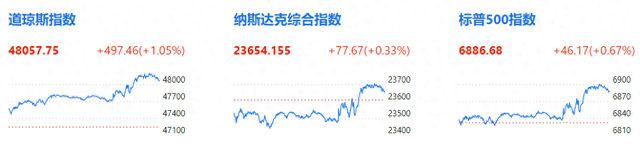
【环球网财经综合报道】北京时间2025年12月11日凌晨,美联储完成了年内第三次降息,将联邦基金利 率目标区间下调至3.50%-3.75%。 美联储宣布降息后,美股短线拉升。截至收盘,道指涨超1%,标普500指数涨0.67%,纳指微涨0.33%。 美元指数应声下跌并跌破关键关口。 东方金诚研究发展部高级副总监白雪认为,美联储此次降息的核心触发因素,是在就业市场出现明显放 缓迹象的背景下,进行一种风险管理式的政策调整。其目的是通过预防性的降息,防范劳动力市场疲软 进一步传导至消费和经济增长,避免经济失速。尽管通胀仍高于2%的长期目标,但其温和回落的趋势 为美联储提供了在"充分就业"与"物价稳定"两大法定职责之间寻求平衡的操作空间。这次降息可被视为 对经济变化的前置响应。 此外,多位分析师将此次会议结果称为"恰到好处"的结果,为亚洲央行货币政策提供了更大操作空间。 脆弱的共识:"鹰派降息"释放出鸽派信号 本次会议的核心特征,被市场分析师精准地概括为"鹰派降息"。所谓"鹰派",并非指向利率行动本身, 而是指向未来路径的谨慎指引。尽管实施了降息,但美联储通过声明措辞和季度经济预测,明确传递出 放缓甚至暂停宽松步伐的信 ...

历史上战争对美元利率 有什么影响
Sou Hu Cai Jing· 2025-12-11 05:57
Group 1: World War II (1939-1945) - During World War II, the U.S. maintained low interest rates (around 0.5%-1%) to support large-scale government borrowing [9][10] - The Federal Reserve implemented a fixed interest rate policy to facilitate government financing, particularly through cheap loans for war expenditures [5][10] - Post-war inflation remained low due to rapid economic growth, despite the accumulation of government debt during the war [5][10] Group 2: Korean War (1950-1953) - Interest rates remained low during the Korean War, with the Federal Reserve allowing significant government borrowing without rapid rate increases [10][11] - The Fed maintained a relatively loose monetary policy to support government debt accumulation, similar to the approach during World War II [10][11] - Inflation began to rise gradually during the Korean War, prompting the government to implement some tightening measures post-war [10][11] Group 3: Vietnam War (1955-1975) - Interest rates gradually increased during the Vietnam War, with the Fed initially attempting to maintain low rates to stimulate the economy [11][12] - The prolonged conflict and high military spending led to significant fiscal deficits and rising inflation pressures [11][12] - The late stages of the Vietnam War saw the U.S. experiencing stagflation, characterized by high inflation and unemployment [11][12] Group 4: Oil Crises (1973-1974, 1979-1980) - The Federal Reserve responded to the oil crises with aggressive interest rate hikes, with rates reaching nearly 20% to combat high inflation [12][13] - The tight monetary policy, while causing short-term economic pain, laid the groundwork for a strong recovery in the 1980s [12][13] Group 5: Gulf War (1990-1991) - During the Gulf War, the Fed adopted a relatively loose monetary policy, lowering interest rates to stimulate economic growth [10][12] - The short duration of the Gulf War resulted in limited economic impact, with interest rates decreasing post-war [10][12] Group 6: Iraq War (2003-2011) - The Fed maintained low interest rates during the Iraq War to support economic growth, although this contributed to a housing bubble [10][13] - Following the 2008 financial crisis, the Fed implemented extremely low interest rates and quantitative easing to stabilize the economy [10][13] - The Iraq War indirectly affected U.S. fiscal deficits and monetary policy, leading to increased government spending and low rates [10][13]
美联储重启QE?RMP来了 市场想重温“2019年的美好回忆”
Hua Er Jie Jian Wen· 2025-12-11 05:11
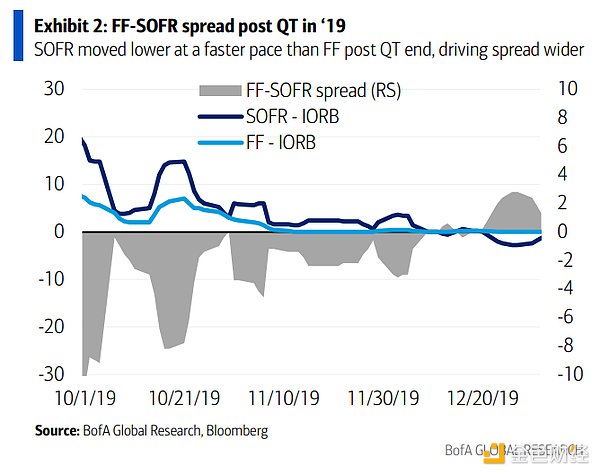
Core Viewpoint - The Federal Reserve has announced the initiation of the Reserve Management Purchase (RMP) program, which aims to inject liquidity into the market by purchasing short-term Treasury securities, amidst concerns over volatility in the repo market and the need to maintain adequate reserves [1][2]. Group 1: RMP Program Details - The New York Fed plans to purchase $40 billion in short-term Treasury securities over the next 30 days, following the cessation of balance sheet reduction [1][2]. - The RMP will adjust its purchasing scale based on expected trends in the Fed's liabilities and seasonal fluctuations, with the first purchase scheduled for December 12 [2]. - The Fed's statement indicates that reserve balances have fallen to a level that requires intervention to maintain adequate liquidity [2][3]. Group 2: Market Reactions - Despite the Fed's insistence that RMP is not quantitative easing (QE), the market has reacted as if it is, with increases in Treasury yields, equities, Bitcoin, gold, and oil, while the dollar weakened [1][4]. - The Bank of America believes that the cash injected through RMP will quickly lower the Secured Overnight Financing Rate (SOFR), while the Federal Funds Rate (FF) will respond more slowly, creating arbitrage opportunities [5]. Group 3: Historical Context - The RMP's current implementation is compared to the 2019 repo crisis, where similar liquidity injections led to a rapid narrowing of the SOFR/FF spread [6][8]. - The expected monthly RMP scale is approximately 0.15% of GDP, lower than the 0.2-0.3% seen in 2019, indicating a less severe liquidity situation [8].

刘福云:美联储利率决议倒计时 谨防暴跌
Xin Lang Cai Jing· 2025-12-11 04:22
此类消息行情,波动快空间大,找到顶底是比较难的,鉴于大周期方向仍然在多头牛市中,即便消息造 成利空也看做回调,因此应对思路实际上不需要太复杂,顺着大周期低多,只不过位置上多留一个心 眼,有可能会出现一些极端的价格。 黄金行情走势分析 从当前市场整体预期来看,本次降息预期已经得到市场完全消化,一旦后续没有能进一步提供降息动 能,金银承压下行概率较大。另外美欧乌近期一再对俄乌冲突进行磋商,随时有终结这3月多冲突的可 能,一旦达成共识,金银还会出现新一轮回撤。具体盘面上当前实际非常明朗,维持小区间盘整就按照 小区间震荡去做。上方短期重点关注4220一线阻力,下方短期重点关注4170-4160一线支撑,重点关注 凌晨美联储利率决议公布。 基本面消息 12月11日,目前华尔街各大投行的主流预期是,会是一次鹰派降息,意思是说虽然降息25基点,但明年 的降息可能会变少,如果的确如投行们说的情形,那最终应该是美元利好,然后金银等其他品种利空。 现在无法去猜测鲍威尔最终会释放什么信号,就在今天川建国又威胁要调查他,显然是在施压。另外, 美联储已经在12月1日结束缩表,重新量化宽松已提上日程,如果在这方面鲍威尔有鸽派暗示,则会演 ...
新浪财经隔夜要闻:2025年12月11日10:31
Xin Lang Cai Jing· 2025-12-11 04:19
Market - The S&P 500 index is approaching its historical record as the market bets on more easing policies from the Federal Reserve next year, following the Fed's approval of its third rate cut this year, lowering the federal funds rate to a range of 3.50% - 3.75% [2] - Major US stocks saw significant trading volumes, with Nvidia at $28.964 billion, Tesla at $28.126 billion, and Netflix facing a collective lawsuit over its $72 billion acquisition of WBD, resulting in a 4.14% drop in its stock price [3] - Popular Chinese stocks showed mixed performance, with TSMC up 2.21% and Pinduoduo down 1.59%, as the Nasdaq Golden Dragon China Index rose by 0.64% [4] Company - Oracle's quarterly revenue and profit fell short of expectations, leading to a 5.5% drop in its stock price after hours. The adjusted profit per share was $2.26, while adjusted operating revenue was $6.7 billion, below Wall Street's target [25] - If SpaceX successfully goes public at a valuation of $1.5 trillion next year, Elon Musk could become the world's first trillionaire, with his stake in SpaceX potentially worth over $625 billion [26] - Meta is shifting its focus towards a closed-source model for its AI initiatives, with a new model expected to launch in spring 2026, indicating a significant strategic change from its previous open-source approach [27]

美降息落地仍存宽松前景、金价反弹多头动力加强
Sou Hu Cai Jing· 2025-12-11 04:09
影响上,日内在美联储利率决议公布前延续近日的震荡区间表现观望,一直到周四凌晨,美联储如期降 息25个基点,虽然一度卖事实走低录得日内低点; 上交易日周三(12月10日):国际黄金触底回升收阳,再度收线在短期均线上方,多头力量加强,暗示后 市仍有继续反弹的动力,再度上探4260美元附近阻力。突破则有望触及4340美元或更高位置。反之继续 遇阻则有维持当下的震荡区间波动继续调整走盘。 具体走势上,金价自亚市开于4207.69美元/盎司,先行盘整后转回落,到欧盘及美盘大部分时段,又处 于4188-4205美元区间内震荡,一直到凌晨3点时段开盘,金价走低触及日内低点4181.85美元,迅速反 弹回升收复日内跌幅,录得日内高点4238.49美元,最终有所回撤,收于4228.35美元,日振幅56.64美 元,收涨20.66美元,涨幅0.49%。 但由于又表示会在未来30天内购买400亿美元短债(变相放水),以及鲍威尔虽未就近期是否再次降息提 供明确指引,但表示"不包含未来加息"情景,被市场解读为存在明年1月进一步降息的可能;再加上特 朗普批评鲍威尔:降息幅度太小,可以翻倍,应降至全球最低。进一步提升了市场对于未来降息前景 ...

2025年12月FOMC会议点评:12月FOMC:轻量扩表启动,发布会信号偏鸽
Soochow Securities· 2025-12-11 03:06
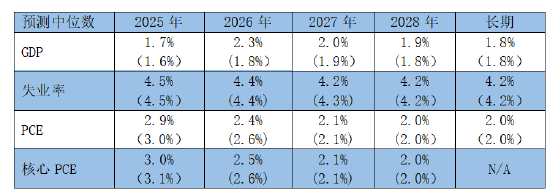
Economic Forecast - GDP growth forecasts for Q4 2025 to Q4 2028 have been revised up by 0.1pct, 0.5pct, 0.1pct, and 0.1pct to 1.7%, 2.3%, 2.0%, and 1.9% respectively[2] - The unemployment rate for 2027 has been lowered by 0.1pct to 4.2%[2] - PCE inflation forecasts for Q4 2025 and Q4 2026 have been reduced by 0.1pct and 0.2pct to 2.9% and 2.4% respectively[2] FOMC Meeting Insights - The December FOMC meeting resulted in a 25bps rate cut, with a 9-3 vote, indicating a slight hawkish stance[4] - Six FOMC members opposed the rate cut, reflecting a more hawkish sentiment overall[4] - The Fed announced a "light expansion" of its balance sheet, purchasing $40 billion in short-term Treasury bills monthly[4] Market Reactions - Powell's dovish comments during the press conference led to a rise in gold, U.S. stocks, and commodities, while U.S. Treasury yields and the dollar index fell[3] - The market is pricing in a 22% chance of a rate cut by January, 78% by April, and 221% by December 2026[5] Risks and Considerations - Risks include a faster-than-expected decline in U.S. employment and prolonged high interest rates potentially leading to liquidity crises[5] - Inflation risks are seen as significantly weakened, while GDP downside risks have eased[2]
金融期货早评-20251211
Nan Hua Qi Huo· 2025-12-11 03:00
Report Industry Investment Rating No relevant information provided. Core Viewpoints of the Report - Overseas markets focus on the Fed's policy trends and the expected appointment of the next Fed Chair. The market anticipates more aggressive rate cuts if Hassett is elected, but there is uncertainty due to Powell's term, economic factors, and inflation. Asset prices will show structural differentiation. Domestically, the economy shows marginal improvement, but the foundation for growth is not yet solid, and attention should be paid to the pace of policy implementation [2]. - The Fed's rate cut and bond - buying are interpreted as "QE - like" measures, which are negative for the US dollar index. The RMB exchange rate is affected by US economic data, the appointment of the next Fed Chair, and domestic economic policies. Seasonal settlement effects may support the RMB's appreciation [4]. - The current inflation data supports low interest rates, and the bond market has rebounded. Although there are rumors of mortgage subsidy policies, the bond market reaction is limited. The medium - term bond market still has room for growth [5]. - The container shipping market on the European route has a mix of long and short factors. There is a possibility of price cuts in late December, and the price of the 02 contract may be pushed up due to the shipping companies' price - holding intentions [6][7]. - In the non - ferrous metals market, platinum and palladium are expected to have their price centers lifted in the medium and long term, while copper prices will be mainly driven by fundamentals after the Fed's rate cut. Aluminum is expected to be volatile and strong in the long term, while alumina is expected to be weak. Zinc will maintain a high - level shock, tin will be in a wide - range shock, and lithium carbonate will have a short - term callback pressure [11][13][15]. - In the energy and chemical market, oil prices are affected by the US - Venezuela tension and the Fed's rate cut. LPG will maintain a shock, PTA - PX will follow the weakening of demand and commodity sentiment, MEG - bottle chips will face a decline in terminal demand, and urea will be in a range between fundamentals and policies [34][37][40]. - In the agricultural products market, the supply and demand of live pigs in the peak season need to be verified, the oilseeds market is in a positive spread, the oil market will continue to be sorted, cotton prices may have room to rise, sugar prices will remain weak, egg prices have a long - term over - capacity problem, apple prices will remain strong, and jujube prices will be in a low - level shock [73][74][76]. Summary by Relevant Catalogs Financial Futures - **Macro**: The Fed cut interest rates by 25 basis points as expected, and the market focuses on the appointment of the next Fed Chair. China's November CPI rose year - on - year, and the real estate sector had a significant rise in the afternoon session [1]. - **RMB Exchange Rate**: The on - shore RMB against the US dollar rose, and the Fed's rate cut and bond - buying are negative for the US dollar index. Attention should be paid to US economic data and domestic economic policies [3][4]. - **Treasury Bonds**: The bond market rebounded, and the current inflation data supports low interest rates. The medium - term bond market still has room for growth [5]. - **Container Shipping on the European Route**: The market has a mix of long and short factors, and there is a possibility of price cuts in late December [6][7]. Commodities Non - Ferrous Metals - **Platinum and Palladium**: Prices oscillated and corrected. The Fed's rate cut and bond - buying are factors, and in the medium and long term, the price centers are expected to be lifted [11]. - **Gold and Silver**: The market generally rose, and in the short term, it is expected to be in shock, while in the long term, it is expected to rise [12][13]. - **Copper**: Prices were strongly sorted, and after the Fed's rate cut, they were mainly driven by fundamentals [14][15]. - **Aluminum Industry Chain**: Aluminum is expected to be volatile and strong in the long term, alumina is expected to be weak, and cast aluminum alloy is expected to be volatile and strong [15][16]. - **Zinc**: Prices maintained a high - level shock [17][18]. - **Tin**: Prices were affected by the conflict in Congo (Kinshasa) and are expected to be in a wide - range shock [18][19]. - **Lithium Carbonate**: There is short - term callback pressure, but in the long term, it has the value of bottom - fishing allocation [21]. - **Industrial Silicon and Polysilicon**: The fundamentals have not improved, and the prices are expected to be weak [22][23]. - **Lead**: Prices are expected to be in shock, with support at the bottom [24]. Steel - **Rebar and Hot - Rolled Coil**: Prices rebounded slightly, and the overall market is expected to be in a range shock, with the rebar in the range of 3000 - 3300 and the hot - rolled coil in the range of 3200 - 3500 [25][26]. - **Iron Ore**: Prices were affected by real - estate news, and the downward space is expected to be limited [27][28]. - **Coking Coal and Coke**: The second - round price cut has started, and coking coal prices are under pressure in the short term, while coke may face inventory accumulation pressure [29][30][31]. - **Silicon Iron and Silicon Manganese**: Demand is gradually weakening, and prices are expected to be weakly shocked [32]. Energy and Chemicals - **Crude Oil**: Prices were lifted due to the US - Venezuela tension, and the Fed's rate cut has a limited impact on prices [34][35][36]. - **LPG**: Prices maintained a shock, with a relatively stable supply and demand situation [37][38][39]. - **PTA - PX**: Prices followed the weakening of demand and commodity sentiment, and the supply - demand structure is relatively good in the energy and chemical sector [40][41][42]. - **MEG - Bottle Chips**: Terminal demand declined comprehensively, and supply - side negative feedback began to appear. Prices are expected to be short - term in shock and long - term in a downward trend [43][44][46]. - **Urea**: Transactions weakened, and prices are expected to be in a range shock [47][48]. - **PP**: The spot market's pessimistic sentiment dragged down prices, and further short - selling is not recommended [49][50][51]. - **PE**: The supply - increase and demand - decrease pattern continued, and prices are expected to maintain a bottom - level shock [52][53][54]. - **Pure Benzene - Styrene**: Prices were weakly shocked, with different supply - demand situations for pure benzene and styrene [55][56]. - **Fuel Oil**: Prices were in a narrow - range shock, with a stable supply and a mixed demand situation [57]. - **Low - Sulfur Fuel Oil**: The cracking spread was low, and the fundamentals have improved, but it is recommended to wait and see [58]. - **Asphalt**: Prices fluctuated in a narrow range, and attention should be paid to the winter - storage policy [59][60]. - **Rubber**: Rubber prices rebounded due to weather disturbances and geopolitical conflicts, and are expected to be in a range shock [61][62]. - **Soda Ash and Caustic Soda**: Soda ash prices are under pressure due to over - supply expectations; glass prices are affected by cold - repair expectations and inventory levels; caustic soda prices are expected to be weakly shocked [65][66][67]. - **Pulp - Offset Paper**: Pulp futures prices reached a four - month high, and both pulp and offset paper are recommended to wait and see [67][68]. - **Log**: Newly registered warehouse receipts suppressed the price, and it is recommended to participate with caution [69][70]. - **Propylene**: Prices were weakly shocked, with a relatively loose supply - demand situation [71][72]. Agricultural Products - **Live Pigs**: The supply and demand in the peak season need to be verified, and the long - term trend can be bullish, but the short - term is mainly based on fundamentals [73]. - **Oilseeds**: The positive spread continued, and the market is affected by import and domestic supply - demand situations [74][75]. - **Oils**: The MPOB report was negative, and prices are expected to continue to be sorted [76]. - **Cotton**: Prices broke through the pressure level, and if they hold steady, there may be further upward space [77]. - **Sugar**: Prices remained weak [78][79]. - **Eggs**: The long - term egg - laying hen capacity is still in excess, and short - term rebounds can be lightly speculated [80]. - **Apples**: The near - month contract was strong, and the overall market remained strong [81][82]. - **Jujubes**: Prices were in a low - level shock, and the short - term downward space may be limited [83][84].

美联储送上“金发姑娘”大礼!“宽松信号”与流动性双管齐下 亚洲资产迎顺风
Zhi Tong Cai Jing· 2025-12-11 02:02
Core Viewpoint - The Federal Reserve's recent policy meeting results were less hawkish than market expectations, with the announcement of monthly purchases of $40 billion in short-term Treasury bonds starting December 12, which is expected to provide relief to Asian markets and boost various assets [1][4][5]. Group 1: Market Reactions - Analysts believe that Asian currencies are likely to benefit from a weaker dollar, and under the backdrop of increased liquidity from the Fed, short-term bonds and high-grade credit bonds will also benefit, along with cyclical stocks and exporter stocks [1][2]. - The FOMC meeting concluded without major concerns, and the upward revision of GDP forecasts for 2026, along with a downward revision of inflation forecasts, is seen as positive for the stock market [1][2]. - The market is betting on further rate cuts from the Fed, as even Powell's optimistic outlook on the economy suggests another rate cut, influenced by external pressures such as Trump's criticism of the Fed [1][2][3]. Group 2: Economic Outlook - The Fed's decision to lower rates and the announcement of short-term bond purchases signal a shift towards a more accommodative monetary policy, which is expected to support risk appetite across Asia [3][5][6]. - The Fed's actions are interpreted as a move towards stabilizing the labor market while maintaining conditions to suppress inflation, with Powell indicating that current inflation is primarily due to tariff impacts [4][5]. - The Fed's liquidity management measures, while not classified as quantitative easing, are seen as a signal of improved liquidity, which is crucial for driving asset prices [5][6]. Group 3: Currency and Bond Market Implications - The expectation of a weaker dollar is likely to support Asian currencies, with specific currencies like the Korean won and Indonesian rupiah expected to perform better due to their attractive valuations [3][5]. - The announcement of purchasing short-term government bonds is expected to lower short-term yields across the region, benefiting Asian bonds and creating a selective stock market environment [2][3]. - The Fed's approach is viewed as a controlled normalization rather than a full-scale easing, indicating that Asian assets will remain sensitive to any data that challenges the Fed's optimistic view on inflation [3][6].
摩根资产管理快评:美联储如期降息25个基点,自本月12日起重启购债
Xin Lang Cai Jing· 2025-12-11 01:59
专题:美联储再降息25基点 3人反对 特朗普仍不满意 鲍威尔排除加息可能 当地时间12月10日下午,美联储12月议息会议宣布降息25个基点,为今年以来的第三次降息。本次降息 后,美联储基准利率下降至3.50%-3.75%区间。最新公布的经济预测摘要上调美国2025-2028年的经济增 长,最新的利率点阵图则暗示2026年和2027年或各仅降息一次;美联储同时宣布自2025年12月12日起, 每月购入400亿美元美国国债。 本次降息符合预期,昨夜美股主要指数收红,美债收益率最初大幅上涨,但随后回落,美元指数则震荡 下行。 根据美联储本次会议决议及会后鲍威尔发言的重点,摩根资产管理认为: 一、本次美联储降息符合预期,但后续展望分歧 美联储本次将联邦基金目标利率下调0.25%至3.50%-3.75%,符合市场预期。然而,未来政策利率走向 分歧加大:本次会议施密德和古尔斯比委员投票反对降息,而米兰委员认为应降50个基点。此外,在19 名美联储议息会议委员中,除了12名有投票权的成员外,有4名明年可能因轮换而拥有投票权的委员表 明未来不应再降息。 二、美联储重启购债略超预期 随着资金市场从足量转向充裕,委员会认为当前已 ...