
中美贸易关系

Search documents
特朗普:中国再停止稀土磁铁出口,征200%关税
日经中文网· 2025-08-26 03:07
Group 1 - The U.S. President Trump mentioned that if China stops exporting rare earth magnets again, the U.S. will impose a 200% tariff as a countermeasure [2] - U.S.-China relations are reportedly improving, with a recent agreement reached in late July regarding the resumption of rare earth magnet exports from China [4] - In July, China's exports of rare earth magnets to the U.S. increased by 5% year-on-year, reaching 619 tons, marking a 70% month-on-month increase and the highest level in six months [4] Group 2 - The U.S. Department of Defense announced a $150 million investment in MP Materials, aiming to enhance domestic production capabilities for rare earth magnets [5] - The new production facility by MP Materials is expected to begin operations in 2028, with the magnets produced being used for both defense and commercial purposes [5]


特朗普政策反复,中方280亿静悄悄撤,美国金融命门被慢刀割开?
Sou Hu Cai Jing· 2025-08-24 14:41
Group 1 - The article discusses the shifting stance of the Trump administration towards China, indicating a softening in attitude following agreements on rare earths and tariffs [3][5] - The U.S. has recently allowed Nvidia to export H20 AI chips to China, which contrasts with previous restrictions, suggesting a potential negotiation strategy to gain more access to Chinese rare earths [5][7] - U.S. Treasury Secretary Mnuchin expressed flexibility regarding the upcoming deadline for tariff negotiations, indicating a desire to avoid a return to high tariffs that could harm U.S. businesses and investors [7][9] Group 2 - Despite the softening approach, the Trump administration continues to impose sanctions and criticisms on China, as evidenced by the signing of the "Comprehensive Fentanyl Control Act" and subsequent accusations against China regarding fentanyl trafficking [9][11] - The U.S. Commerce Department's decision to impose a 93.5% anti-dumping duty on key battery materials from China reflects ongoing protectionist measures that could increase production costs for U.S. electric vehicles, potentially harming their global competitiveness [11] - The article argues that genuine cooperation is necessary for mutual benefit, criticizing the U.S. for maintaining a dual approach of softening rhetoric while simultaneously engaging in discriminatory practices against China [11]

特朗普的3个要求,中国全部拒绝,贝森特:美国总统还没答应访华
Sou Hu Cai Jing· 2025-08-21 07:17
Group 1 - The core issue is the declining market share of U.S. soybeans in China, which has dropped from 40% to 18%, as China increasingly imports soybeans from Brazil, reflecting a shift in market demand and the tensions in U.S.-China trade relations [1][5] - Trump's call for China to triple its soybean orders is seen as unrealistic due to a 10% tariff on U.S. soybeans, making them significantly more expensive than Brazilian soybeans, thus putting U.S. soybeans at a competitive disadvantage [3][5] - The ongoing trade tensions have led to a significant number of soybean farms in the Midwest applying for bankruptcy protection, indicating the economic distress faced by American farmers [5] Group 2 - The U.S. inflation rate and unemployment are rising due to the prolonged tariff war, while China is enhancing its countermeasures, particularly through the control of rare earth exports, which puts pressure on U.S. military and renewable energy sectors [6] - The share of cross-border payments in renminbi is increasing in ASEAN countries, further undermining the global dominance of the U.S. dollar, indicating a shift in economic power dynamics [6] - U.S. Treasury Secretary's comments suggest a recognition that the trade war is unsustainable, highlighting the urgency for a reassessment of trade strategies [6][7]
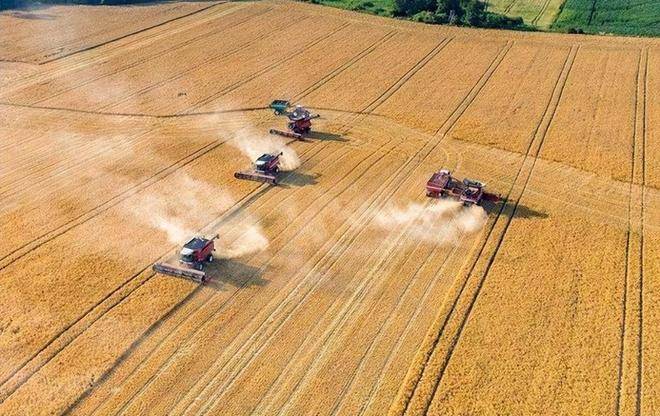
蛋白粕高位盘整,等待田间巡查结果
Zhong Xin Qi Huo· 2025-08-21 00:48
1. Report Industry Investment Ratings | Variety | Rating | | --- | --- | | Oils and Fats | Oscillating Bullish | | Protein Meal | Oscillating | | Corn and Starch | Oscillating Bearish | | Hogs | Oscillating | | Natural Rubber | Oscillating Bullish | | Synthetic Rubber | Oscillating Bullish | | Cotton | Oscillating Bullish | | Sugar | Oscillating Bearish in the long - term, Oscillating in the short - term | | Pulp | Oscillating | | Logs | Oscillating Bearish | [171] 2. Core Views The report provides a comprehensive analysis of various agricultural products including oils and fats, protein meal, corn, hogs, rubber, cotton, sugar, pulp, and logs. It assesses the current market conditions, influencing factors, and offers mid - term outlooks and trading strategies for each product. 3. Summary by Related Catalogs 3.1 Market Views 3.1.1 Oils and Fats - **View**: Short - term focus on the effectiveness of the lower technical support. - **Logic**: Technical selling pressure led to drops in US soybeans and soybean oil on Tuesday. The market is waiting for the Fed Chair's speech, with the US dollar oscillating stronger and crude oil prices falling. US soybean growth is good, and the USDA August report anticipates a record - high yield. There are uncertainties in US soybean exports, and the demand for US soybean oil from biodiesel has decreased this year. Domestic soybean imports are expected to decline seasonally, and the inventory of domestic soybean oil may peak. Palm oil is in the production season, and there is a high probability of inventory accumulation. - **Outlook**: Oscillating bullish [5]. 3.1.2 Protein Meal - **View**: The price is oscillating narrowly at a high level, waiting for the results of the field inspection. - **Logic**: Internationally, US soybean is expected to oscillate around 1050 cents. Domestically, there is a consensus on near - month inventory pressure and far - month supply shortage. Some oil mills will reduce their operating rates, and the import profit is rising. - **Outlook**: The basis may bottom out and rebound. It is recommended that oil mills sell on rallies, and downstream enterprises buy basis contracts or price at low levels. Hold long positions at 2900 - 2910 and add positions on dips [6]. 3.1.3 Corn and Starch - **View**: The sentiment is bearish, and spot and near - month prices are falling rapidly. - **Logic**: Domestic corn prices are generally falling. The supply of old - crop corn is tight, but the purchasing enthusiasm is weak. The new - crop corn production is normal, and foreign supply is abundant. - **Outlook**: Oscillating bearish in the short - term, with supply pressure easing after the new - crop harvest [7][8]. 3.1.4 Hogs - **View**: Stricter transportation policies have weakened the futures price. - **Logic**: In the short - term, the planned slaughter volume in August has increased. In the medium - term, the supply of commercial pigs is expected to increase. In the long - term, anti - involution policies may lead to capacity reduction. - **Outlook**: Oscillating. There is inventory pressure in the short - term, and the far - month prices may be affected by capacity reduction expectations [9]. 3.1.5 Natural Rubber - **View**: The weakening of commodity sentiment dragged down the rubber price. - **Logic**: Although the rubber price dropped due to weakening sentiment, it gradually recovered in the afternoon. The rubber is entering the seasonal rising period, and there are many speculative themes. The short - term supply may decrease, and the demand is rigid. - **Outlook**: Oscillating bullish in the short - term [11][12]. 3.1.6 Synthetic Rubber - **View**: Positive news supported the price rebound after the decline. - **Logic**: The BR price initially followed the market down but rebounded after the news of petrochemical industry reform. The price is mainly affected by natural rubber and the short - term tight supply of butadiene. - **Outlook**: The butadiene price may rise slightly, and the market may oscillate bullishly [13][14]. 3.1.7 Cotton - **View**: Supported by fundamentals, the cotton price corrected during the session but was relatively resistant to decline. - **Logic**: Affected by the overall commodity atmosphere, the cotton price corrected at night but rebounded during the day. The commercial inventory is low, and the demand is improving, but there are also factors restricting the price increase. - **Outlook**: Oscillating between 13500 - 14300 yuan/ton [15]. 3.1.8 Sugar - **View**: The increasing supply has put pressure on the sugar price. - **Logic**: In the international market, Brazil's sugar production is increasing. In the domestic market, the import volume in July reached a high level. The supply is increasing, but the downward space is limited in the short - term. - **Outlook**: Oscillating bearish in the long - term, oscillating between 5600 - 5900 yuan/ton in the short - term [17]. 3.1.9 Pulp - **View**: The price change is small, moving within a range. - **Logic**: The pulp price continued to correct, and the spot price of softwood pulp declined. The supply and demand of wood pulp have both positive and negative factors. - **Outlook**: Oscillating. The price of hardwood pulp may drive the futures price, and the main contract is expected to move between 5100 - 5500 [18]. 3.1.10 Logs - **View**: Try to go long on far - month contracts at low prices. - **Logic**: The fundamentals of logs are marginally improving, with reduced arrival pressure and inventory depletion. However, there are also negative factors such as weak demand and delivery pressure. - **Outlook**: Oscillating between 790 - 840 [19][20]. 3.2 Variety Data Monitoring The report lists the data monitoring of various varieties including oils and fats, protein meal, corn, hogs, cotton, sugar, pulp, and logs, but no specific data analysis is provided in the given text [22][41][54]. 3.3 Rating Standards The report defines rating standards such as bullish, oscillating bullish, oscillating, oscillating bearish, and bearish, with a time - cycle of 2 - 12 weeks and a standard deviation calculation method [171]. 3.4 Commodity Index On August 20, 2025, the comprehensive index, commodity 20 index, and industrial product index all declined. The agricultural product index also declined, with a year - to - date increase of 2.94% [172][173][175].
美国放出消息,中国“破天荒”增持美债,特朗普后退一步,取消对华加税,但有一个前提
Sou Hu Cai Jing· 2025-08-20 01:24
最近国际上这两件事凑一块儿,说巧也巧,说有门道也真有门道——一边是美国财政部8月15日刚放出来 的6月数据,咱中国在连续三个月减持美债后,居然破天荒增持了1亿,虽说这点钱在7564亿的总持仓里连 个水花都说不上,但这动作本身就够让人琢磨的;另一边就是特朗普,前阵子还咋咋呼呼说要因为咱买俄 罗斯石油,给中国输美商品加什么"次级关税",结果15号跟普京在阿拉斯加见完面,转头就跟福克斯新闻 说"现在不用考虑这事儿了",还补了句"两三周后再说"。 先掰扯掰扯特朗普这"改口"。之前他可不是这么说的,路透社都报道了,美方不光威胁中国,还真对印度 动手了——就因为印度买俄罗斯石油,直接宣布要给印度商品额外加税。怎么到中国这儿,就突然"刀下 留人"了?别听他说什么"因为会晤情况好",根子上还是不敢真把事儿闹大。 再说说咱那1亿美债的增持,别觉得这钱少就没意义。从2022年4月起,咱手里的美债就没回到过1万亿美 元,年年都在减持——2022年减了1732亿,2023年508亿,2024年573亿,今年前五个月也是增增减减,3 月到5月还连减了三个月。6月突然加这1亿,为啥? 一方面,6月美国那边放风说可能还要加息,美债价格跟着 ...

NASS vs. FSA —— 再论8月USDA报告
对冲研投· 2025-08-15 12:39
Core Viewpoint - The article focuses on the adjustments made in the August USDA report regarding the new crop soybean balance sheet, emphasizing the flexibility of yield adjustments compared to planting area estimates, and the potential impact of weather conditions on soybean production [4][14]. Group 1: Yield Adjustments - The USDA report indicates that soybean yields in most major producing states have been revised upwards, with some states reaching historical highs due to favorable weather conditions in July [5]. - Historical data shows that there has been no significant bias in the August yield estimates compared to final yields over the past 20 years, suggesting that yield adjustments can be substantial [7]. - Weather forecasts indicate ongoing risks, with dry conditions in early August potentially affecting soybean yields during critical growth stages [10]. Group 2: Planting Area Estimates - The article discusses the differences in planting area estimates between NASS and FSA, with NASS estimating 8.09 million acres and FSA estimating 7.976 million acres for soybean planting in 2025, a difference of approximately 1 million acres [15]. - NASS uses a comprehensive data collection method, while FSA relies on producer reports, leading to differences in data coverage and classification [16][17]. - The article suggests that the FSA's preliminary planting area can be used to estimate NASS's final planting area, with projections indicating a potential reduction of about 1.5 million acres from the June report [27]. Group 3: Market Outlook - The soybean market outlook indicates that if the U.S. and China reach an agreement on tariff reductions, soybean exports could increase, potentially tightening the soybean balance sheet further [14]. - Conversely, if significant yield losses occur, the USDA may reduce export and crushing estimates to stabilize ending stocks [14]. - The pricing dynamics for soybean meal are influenced by U.S.-China trade relations, with potential upward price pressure if trade agreements are reached, despite possible short-term supply pressures [28].

饲料养殖周度报告-20250815
Xin Ji Yuan Qi Huo· 2025-08-15 11:55
Report Summary 1. Report Industry Investment Rating No relevant content was provided. 2. Core Viewpoints of the Report - The USDA供需 report was unexpectedly bullish, causing US soybeans to return above 1000 cents. Under the influence of anti - dumping measures on domestic rapeseed, the performance of double - meal (soybean meal and rapeseed meal) was differentiated, with rapeseed meal showing more volatility and soybean meal remaining relatively stable due to import cost support [35]. - Currently, the domestic soybean supply is abundant, and oil mills have high soybean meal inventories. Downstream feed enterprises maintain high - inventory rolling, resulting in weak short - term follow - up buying willingness and sluggish soybean meal transactions at oil mills [35]. - In the short term, influenced by the cooling sentiment in the rapeseed sector and news of customs inspections in some areas, short - term trading is recommended for soybean meal; rapeseed meal is more volatile, and short - term trading should be accompanied by risk prevention [36]. - In the long term, the global soybean supply is ample, limiting the sustained upward momentum of the soybean sector [37]. 3. Summary by Related Catalogs 3.1 Market Review - **Futures Prices**: As of August 14, the closing price of the main soybean meal futures contract (M2601) was 3157 yuan/ton, up 2.77% from August 6; the main rapeseed meal futures contract (RM509) was 2686 yuan/ton, down 2.15%; the main corn futures contract (C2511) was 2281 yuan/ton, up 0.97%; the main live hog futures contract (LH2511) was 13900 yuan/ton, down 0.79%; the main egg futures contract (JD2510) was 3189 yuan/ton, down 5.60% [4]. - **Spot Prices**: On August 14, the spot price of 43% protein soybean meal in Shandong was 3000 yuan/ton, up 3.81% from August 6; the average price of rapeseed meal in China was 2600 yuan/ton, down 2.26%; the aggregated price of second - grade corn with 14.5% moisture in Bayuquan Port was 2310 yuan/ton, unchanged; the average daily slaughter price of commercial hogs in Henan was 13.76 yuan/kg, down 1.43%; the average price of eggs in the main producing areas in China was 3.07 yuan/jin, up 5.50% [4]. 3.2 Fundamental Analysis - **Cost - end**: In the next 6 - 10 days, most areas in the main US soybean - producing states will have higher - than - normal temperatures, and half of the areas will have precipitation close to the median. The USDA's August report showed that although the 2025/26 US soybean yield per acre increased from 52.5 bushels to 53.6 bushels, the sown area decreased from 83.4 million acres to 80.9 million acres, and the production decreased from 4.335 billion bushels to 4.292 billion bushels, reaching the sixth - highest in history. The USDA lowered the 2025/26 US soybean ending inventory to 290 million bushels, lower than the market expectation of 351 million bushels and the July forecast of 310 million bushels, hitting a three - year low. In July, Brazil's soybean exports reached 12.25 million tons, a record high for the same period. From January to July, Brazil's cumulative exports of oil crops reached 77.2 million tons, the first time to exceed this level in the same period of previous years. As of August 6, Argentine farmers had pre - sold 28.83 million tons of 2024/25 soybeans, 870,000 tons more than a week ago [7]. - **Supply - Import**: Affected by Brazil's strong exports and concerns about supply due to Sino - US trade uncertainties, China's soybean imports in July reached a record high for the same period for the third consecutive month. In July, China imported 11.67 million tons of soybeans, a 4.8% decrease from June but still the highest for the same period in history, an 18.5% increase from the same period in 2024. The total soybean imports in the first seven months of this year reached 61.04 million tons, a 4.6% year - on - year increase. The market expects soybean imports in August and September to remain above 10 million tons, with most coming from Brazil. However, China has not booked any US soybean cargoes for the fourth quarter, raising concerns about a potential supply shortage [7]. - **Demand - Pressing and Transaction**: As of the week ending August 8, the actual soybean crushing volume of oil mills was 2.1775 million tons, with an operating rate of 61.21%. On August 14, the total soybean meal transaction volume was 73,700 tons, 2900 tons less than the previous day, and the spot transaction volume was 28,700 tons. The weekly average showed that the total soybean meal transaction volume was 511,980 tons, and the spot transaction volume was 70,920 tons. Currently, the domestic soybean supply is abundant, oil mills have high soybean meal inventories, and downstream feed enterprises maintain high - inventory rolling, resulting in weak short - term follow - up buying willingness and sluggish soybean meal transactions at oil mills [7]. - **Inventory**: As of the week ending August 8, the soybean inventory was 7.1056 million tons, an 8.38% increase from the previous week and a 0.59% decrease from the same period in 2024; the soybean meal inventory was 1.0035 million tons, a 3.66% decrease from the previous week and a 31.74% decrease from the same period in 2024 [7]. 3.3 Supply - end - **Import**: As of August 14, the CNF price of Brazilian soybeans was 497.00 US dollars/ton, up 12 US dollars/ton from the previous week; the CNF price of US West Coast soybeans was 454.00 US dollars/ton, up 17 US dollars/ton from the previous week [11][12]. - **Pressing**: As of the week ending August 14, the soybean crushing profit was 209.40 yuan/ton, up 56.50 yuan/ton from the previous week. As of the week ending August 8, the domestic oil mill's weekly soybean crushing volume was 2.359 million tons, up 129,500 tons from the previous week. As of August 8, the domestic soybean oil mill operating rate was 60%, an increase of 3 percentage points from the previous week [15]. 3.4 Inventory - end - As of August 14, the imported soybean port inventory was 6.7355 million tons, a decrease of 108,000 tons from the previous week. Seasonally, the soybean port inventory is at a near - five - year low. As of August 1, the oil mill's soybean meal inventory was 960,900 tons, a decrease of 16,700 tons from the previous week. Seasonally, the domestic mainstream oil mill's soybean meal inventory is at a near - five - year medium level [18]. 3.5 Demand - end - As of August 8, the average daily trading volume of soybean meal at domestic mainstream oil mills was 500,700 tons, an increase of 222,400 tons from the previous week. Seasonally, it is at a near - five - year high level [22]. 3.6 Pig - end No specific content was provided for analysis in the given text. 3.7 Strategy Recommendation - Short - term: Due to the cooling sentiment in the rapeseed sector and news of customs inspections in some areas, short - term trading is recommended for soybean meal; rapeseed meal is more volatile, and short - term trading should be accompanied by risk prevention [36]. - Long - term: The global soybean supply is ample, limiting the sustained upward momentum of the soybean sector [37]. 3.8 Next Week's Focus and Risk Warning The focus includes the weather in production areas, trade relations, and the arrival rhythm of imported soybeans [38].
Hedge fund giant Bridgewater pares China bets, offloading stakes in Alibaba and Baidu
CNBC· 2025-08-15 07:35
Core Insights - Bridgewater Associates has divested from U.S.-listed Chinese stocks in Q2 2023, indicating a significant pullback from the market due to geopolitical tensions and declining investor confidence in China's economic outlook [1][2] - The hedge fund has closed out positions in major Chinese companies such as Baidu, Alibaba, JD.com, PDD Holdings, Nio, Trip.com Group, and Yum China, while also reducing its stake in Apple but increasing holdings in Microsoft and Nvidia [2] - Ray Dalio, the founder of Bridgewater, had previously defended investments in China but has expressed concerns about U.S.-China relations and economic challenges facing China [3] Company Actions - Bridgewater Associates has sold its stakes in several prominent Chinese companies, reflecting a strategic shift in investment focus [2] - The fund's adjustments include a reduction in Apple holdings and an increase in investments in Microsoft and Nvidia, suggesting a reallocation towards more stable or promising sectors [2] Geopolitical Context - The extension of the tariff truce between the U.S. and China for an additional 90 days has implications for trade relations, with current tariffs on Chinese imports at 30% and U.S. exports to China at 10% [4] - The potential increase in tariffs, which could have reached 145% on Chinese goods, highlights the ongoing trade tensions and their impact on investment strategies [4]



养殖油脂产业链日度策略报告-20250815
Fang Zheng Zhong Qi Qi Huo· 2025-08-15 02:40
1. Report Industry Investment Rating There is no information provided in the text regarding the report industry investment rating. 2. Core Views of the Report - **Soybean Oil**: The market is in a "weak reality + strong expectation" pattern. The short - term 01 contract may continue to rise based on the 8400 position. It is recommended to hold long positions in the 01 contract, consider 1 - 5 positive spread operations, with support at 8230 - 8300 yuan/ton and pressure at 8800 - 9000 yuan/ton [1]. - **Rapeseed Oil**: Under the uncertain Sino - Canadian rapeseed trade policy, the price once rose significantly, but the high inventory and alternative imports have weakened market concerns. It shows a wide - range shock, with support at 9500 - 9580 and pressure at 10333 - 10343 [1]. - **Palm Oil**: The July Malaysian palm oil ending inventory was lower than expected, and the Indonesian inventory is low. The August production data is poor, and the export demand in early August is good. It is recommended to reduce long positions, with support at 9050 - 9074 and pressure at 9900 - 9990 [2]. - **Soybean Meal and Soybean No.2**: The market is digesting the positive impact of the August USDA report. The Sino - US and Sino - Canadian trade relations are still tense. It is recommended to hold long positions in the 01 contract of soybean meal, with support at 2950 - 2980 yuan/ton and pressure at 3200 - 3250 yuan/ton. The 09 contract of soybean No.2 is expected to fluctuate and adjust, with support at 3640 - 3670 and pressure at 3950 - 4000 [2]. - **Rapeseed Meal**: The 09 contract shows a wide - range shock, with support at 2600 - 2617 and pressure at 2800 - 2823. The 01 contract is affected by the expected reduction of Canadian rapeseed imports [4]. - **Corn and Corn Starch**: The USDA report has a negative impact on the external market. The domestic market is affected by imported corn and relevant policies. It is recommended to shift short positions to far - month contracts [5]. - **Soybean No.1**: The price continues to fall due to the increasing supply of new soybeans. It is recommended to exit short positions in the main contract and wait and see [6]. - **Peanut**: The inventory of the producing areas is low, and the import is affected. The new - season planting area has increased. The 10 - contract may rebound in the short - term, and it is recommended to short the 11 and 01 contracts on rallies [6][7]. - **Pig**: The spot price has adjusted in August, and the slaughter volume has increased. It is recommended to shift long positions of the 09 contract to the 2511 contract and wait for an opportunity to buy the 2605 contract [7]. - **Egg**: The 09 contract price has continued to decline, and the spot price has stabilized in some areas. It is recommended to wait and see, and aggressive investors can buy the 10 - contract at low prices [7]. 3. Summaries According to the Directory 3.1 First Part: Plate Strategy Recommendation 3.1.1 Market Judgment - Different varieties in the feed, breeding, and oil industries have different market logics, including supply - demand relationships, price support and pressure levels, and corresponding trading strategies. For example, the 01 contract of soybean oil is expected to fluctuate strongly, and it is recommended to go long at low prices; the 09 contract of corn is expected to fluctuate and adjust, and it is recommended to shift short positions to far - month contracts [10]. 3.1.2 Commodity Arbitrage - For different varieties' inter - period and inter - variety arbitrage, different reference strategies are provided, such as observing the 9 - 1 spread of soybean No.1, conducting positive spread operations for the 11 - 1 spread of soybean meal, and observing the 09 bean - meal to rapeseed - meal spread [11][12]. 3.1.3 Basis and Spot - Futures Strategies - The spot prices, price changes, and basis changes of various varieties in different sectors are presented, which can help investors understand the relationship between spot and futures prices [13]. 3.2 Second Part: Key Data Tracking Table 3.2.1 Oilseeds and Oils - **Daily Data**: The import costs of soybeans, rapeseeds, and palm oil from different origins and different shipping periods are provided, including CBOT prices, CNF prices, and import - duty - paid prices [14][15]. - **Weekly Data**: The inventory and operating rates of various oilseeds and oils, such as soybeans, rapeseeds, and palm oil, are presented, reflecting the supply - demand situation of the industry [16]. 3.2.2 Feed - **Daily Data**: The import costs of corn from Argentina and Brazil in different months are provided [16]. - **Weekly Data**: The consumption, inventory, operating rate, and inventory of corn and corn starch in deep - processing enterprises are presented [17]. 3.2.3 Breeding - The daily and weekly data of pigs and eggs are provided, including spot prices, price changes, production and sales data, and inventory data, which can help understand the market situation of the breeding industry [18][19][20][21][22]. 3.3 Third Part: Fundamental Tracking Charts - A large number of charts are provided to track the fundamentals of the breeding, oilseeds and oils, and feed sectors, including price trends, inventory changes, production data, and spread changes, which can help investors comprehensively understand the market situation [24][34][52]. 3.4 Fourth Part: Option Situations of Soybean Meal, Feed, Breeding, and Oils - The historical volatilities of various varieties and the trading and holding volume data of corn options are presented, which can help investors understand the option market situation [71]. 3.5 Fifth Part: Warehouse - Receipt Situations of Feed, Breeding, and Oils - The warehouse - receipt data of various varieties are presented, which can help investors understand the market supply situation [74].
宝城期货贵金属有色早报-20250815
Bao Cheng Qi Huo· 2025-08-15 02:02
Report Summary 1) Report Industry Investment Rating No information provided. 2) Report's Core View - Gold is expected to be weak in the short - term due to the easing of Sino - US trade relations and pressure from the overall global macroeconomic warming since August [1][3]. - Copper is expected to be strong in the short - term as the domestic atmosphere warms up and the copper price stabilizes and rebounds, despite some negative factors [1][5]. 3) Summary by Related Catalogs Gold - Short - term view: Downward; Medium - term view: Sideways; Intraday view: Sideways and weak; Overall view: Bearish in the short - term [1][3]. - Core logic: Yesterday, the gold price was under continuous pressure. The US July PPI annual rate reached 3.3%, the highest since February, and the monthly rate was 0.9%, the largest increase since June 2022. After the data release, interest - rate futures traders reduced their bets on Fed rate cuts, and the US dollar index rebounded, pressuring the gold price. Since August, the global macro has generally improved, adding pressure on the gold price [3]. Copper - Short - term view: Upward; Medium - term view: Sideways; Intraday view: Sideways and strong; Overall view: Bullish in the short - term [1][5]. - Core logic: Yesterday, the copper price fluctuated downward, and the night - session maintained a weak trend. The joint statement of the Sino - US Stockholm economic and trade talks was released on August 12, 2025, creating a good macro atmosphere at home and abroad, which is beneficial for the copper price. However, the higher - than - expected US PPI, the cooling of rate - cut expectations, and the rebound of the US dollar index are negative for the copper price. It is the off - season in the industry, and inventories have increased slightly. Overall, the copper price is expected to be strong driven by the macro factors [5].