
对等关税

Search documents
特朗普对华妥协了!中美成了“最大赢家”?欧盟加拿大日本,被中方下重手反制,不留情面
Sou Hu Cai Jing· 2025-08-20 06:38
Group 1 - The core point of the news is that President Trump has signed an executive order to extend the suspension of tariffs on China for another 90 days, which has sparked widespread attention and discussion internationally [1] - The background includes the announcement of a "reciprocal tariff" policy in April, with a goal to reach 90 agreements within 90 days, but only limited progress has been made with countries like the UK and Vietnam [1][3] - The extension of the tariff suspension can be interpreted as a compromise by Trump, as domestic opposition to excessive tariffs is growing and the trade stagnation is putting pressure on U.S. businesses and consumers [3] Group 2 - Some viewpoints suggest that both the U.S. and China may be seen as "winners" from the tariff agreements, as U.S. consumers avoid high prices and Chinese exporters can relieve some pressure [5] - However, the 90-day suspension may only serve as a temporary measure for the Trump administration, and the future situation remains uncertain [5] - In contrast, other countries like the EU, Canada, and Japan have faced strong countermeasures from China, indicating that while U.S.-China relations may be easing, tensions with other nations are escalating [5][6] Group 3 - China has taken retaliatory actions against the EU, Canada, and Japan, including placing two EU banks on a countermeasure list and launching an anti-dumping investigation into Canadian canola oil, with a dumping margin of 75.8% [5][6] - The measures against Canada and Japan are a response to perceived dumping practices that have severely impacted Chinese industries [6] - These actions demonstrate China's commitment to protecting its interests and its unwillingness to tolerate any infringement, especially from countries aligning with the U.S. [6][8]

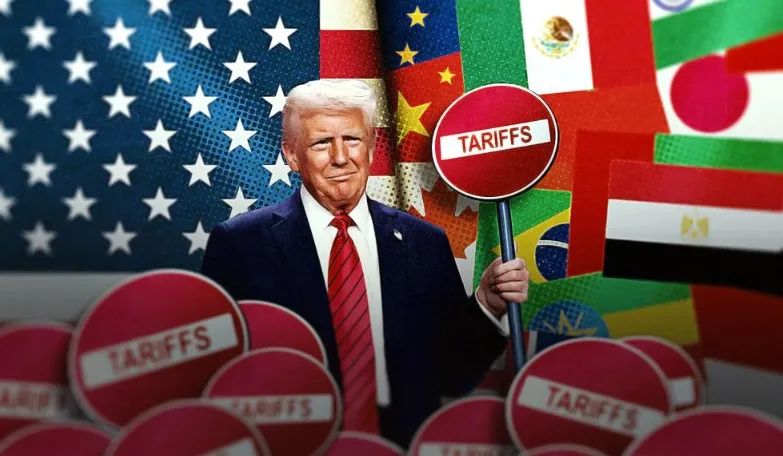
宋雪涛:对等关税 未完待续
Jin Shi Shu Ju· 2025-08-20 05:43
Core Viewpoint - The core variable of U.S. trade policy remains Trump himself, with a highly controversial tariff strategy expected to be prevalent in the coming years, necessitating countries to become the "greatest common divisor" connecting different trade circles to gain future discourse power [2][23]. Group 1: Trump's Tariff System - Trump's tariff strategy has evolved from targeted "surgical strikes" during his first term to a more comprehensive approach in his second term, characterized by four main components: reciprocal tariffs, punitive tariffs for specific reasons, transshipment tariffs to combat tax avoidance, and industry barriers to protect domestic industries [4][8]. - The "reciprocal tariffs" framework establishes different tariff boundaries for countries, with core countries like the UK and Australia enjoying a baseline tax rate of 10%, while others face rates ranging from 15% to over 25% [5][6]. Group 2: Punitive Tariffs - Punitive tariffs are increasingly used as a core tool for handling diplomatic matters, with various justifications, including combating cross-border crime and exerting geopolitical pressure [8][9]. - The U.S. has raised tariffs on Canadian goods from 25% to 35% due to insufficient cooperation in drug trafficking control, while also imposing additional tariffs on Indian goods due to its purchase of Russian oil [8][9]. Group 3: Transshipment Tariffs - The U.S. has implemented transshipment tariffs to prevent circumvention of tariffs through third countries, imposing a 40% tax rate on goods attempting to bypass tariffs [10][12]. - The challenge lies in the ambiguous definition of "transshipment," which complicates enforcement and necessitates a collaborative regulatory framework with partner countries [12][13]. Group 4: Industry Tariffs - The U.S. has invoked the 232 clause of the Trade Expansion Act to impose high tariffs on strategic industries, aiming to reverse the trend of industrial hollowing and promote domestic manufacturing [16][17]. - Tariffs on steel and aluminum products have been set at 50%, with potential future tariffs on semiconductors and pharmaceuticals reaching as high as 300% [17][19]. Group 5: Trade Negotiation Dynamics - Tariffs serve as a preliminary tool in trade negotiations, with the Trump administration relying heavily on verbal agreements, leading to disputes over the interpretation of key terms [20][21]. - The lack of written agreements has resulted in confusion and disagreements in negotiations with countries like Japan and South Korea, affecting the finalization of trade deals [20][21]. Group 6: Economic Impact - The U.S. has entered a high-tariff era, with the average effective tariff rate rising to 18.6%, the highest level since the Great Depression [23]. - The implementation of tariffs has caused fluctuations in import data, with a significant spike in imports prior to tariff enforcement, followed by a decline as companies adjust to the new cost structure [25][28].
关注中国8月LPR报价和欧元区7月调和CPI终值
Hua Tai Qi Huo· 2025-08-20 05:36
Report Industry Investment Rating No relevant information provided. Core View of the Report The report analyzes the market situation in July 2025, including economic data, tariff policies, and geopolitical events. It also provides investment strategies for commodities and stock index futures, suggesting to allocate more industrial products on dips. [3][4][5] Summary by Relevant Catalogs Market Analysis - Global economic data in July remained resilient. China's official manufacturing PMI declined to 49.3, while non - manufacturing remained in expansion. China's exports in July increased by 7.2% year - on - year in US dollars, supported by the low base last year and the "rush to export" effect. US non - farm payrolls in July were below expectations, but the service PMI improved significantly. [3] - The "reciprocal tariff" situation is complex. The US has adjusted tariff policies, and some tariffs have been suspended or extended. The impact on commodities is significant, with different sectors affected differently. The black and new energy metal sectors are sensitive to domestic supply - side changes, while energy and non - ferrous sectors benefit from overseas inflation expectations. [4] - On August 19, A - share indices fluctuated, with the trading volume of Shanghai and Shenzhen stock markets exceeding 2 trillion yuan for five consecutive days. AI hardware stocks were strong, and consumer stocks such as liquor rebounded. Treasury bonds rebounded, and commodities declined. [3] Strategy - For commodities and stock index futures, it is recommended to allocate more industrial products on dips. [5] To - do News - On August 18, Premier Li Qiang emphasized at the State Council's Ninth Plenary Meeting to enhance the effectiveness of macro - policies, boost domestic consumption, and expand effective investment. [6] - The US, Russia, and Ukraine are promoting peace talks. Trump said that if all goes well, there will be a tri - lateral meeting among the US, Russia, and Ukraine, and Putin supports direct negotiations between the two sides. [4][6] - The Japanese Ministry of Defense is coordinating to include a defense budget of about 8.8 trillion yen, the largest in history. [4][6] - The Ministry of Industry and Information Technology and other departments held a symposium on the photovoltaic industry, aiming to standardize the competition order. [4][6]
宋雪涛:对等关税 未完待续
雪涛宏观笔记· 2025-08-20 03:21
Core Viewpoint - The core variable of US trade policy remains Trump himself, and his controversial tariff strategy is expected to be prevalent in the next two to three years, with any country aiming to gain future discourse power needing to become the "greatest common divisor" connecting different trade circles [2][23]. Group 1: Trump's Tariff System 2.0 - During his first term, Trump initiated a trade revolution centered on "America First," using tariffs as a primary weapon, which ignited global trade disputes and altered the existing international trade landscape [4][5]. - In his second term, Trump's tariff tactics evolved into a more structured and comprehensive approach, consisting of four main components: reciprocal tariffs for trade balance, punitive tariffs for specific reasons, tariffs on transshipment to combat tax avoidance, and industry barriers to protect domestic industries [5][6]. Group 2: Reciprocal Tariffs - The "reciprocal tariffs" create a trade circle centered around the US, with countries like the UK and Australia enjoying a baseline tax rate of 10%, while others face higher rates based on their trade relations and concessions made to the US [6][7]. - As of August 29, 2023, new regulations require small packages valued at $800 or less to pay certain taxes upon entry, with specific rates based on the country of origin [7]. Group 3: Punitive Tariffs - Trump increasingly uses punitive tariffs as a core tool for handling diplomatic matters, with various justifications, including combating cross-border crime and exerting geopolitical pressure [9][10]. - The US has implemented significant tariffs on goods from Canada and Mexico, and additional tariffs on Chinese products, with the potential for further increases based on cooperation in drug trafficking issues [9][10]. Group 4: Transshipment Tariffs - To close potential loopholes in tariff policies, the Trump administration established a "transshipment" clause allowing customs to impose a 40% tariff on goods attempting to circumvent tariffs through third countries [11]. - The challenge lies in the ambiguous definition of "transshipment," which complicates enforcement and creates uncertainty for US customs [12][13]. Group 5: Industry Tariffs - The US has invoked the 1962 Trade Expansion Act's Section 232 to impose high tariffs on strategically important industries, aiming to reverse the trend of industrial hollowing and enhance domestic supply chain resilience [16][17]. - Tariffs have been applied to steel, aluminum, and are expected to extend to semiconductors and pharmaceuticals, with a notable exemption for companies investing in the US [16][17][18]. Group 6: Oral Agreements and Execution Discrepancies - Tariffs serve as a preliminary tool in trade negotiations, with the Trump administration relying heavily on oral agreements, leading to confusion and disputes over key terms [20][21]. - Discrepancies in the interpretation of agreements have hindered finalizing trade deals, as seen in negotiations with Japan and South Korea [20][21][22]. Group 7: Transition to Inventory Reduction Cycle - Following the implementation of high tariffs, the US has entered a phase of inventory reduction, with significant declines in inventory growth rates for durable and non-durable goods [28][29]. - The shift in import demand is attributed to the finalization of tariff policies and the completion of pre-tariff procurement, leading to a focus on inventory digestion and price adjustments [29][30]. Group 8: Global Trade Landscape Transformation - The global trade structure is undergoing a profound transformation towards a multipolar development, moving away from reliance on the US-China economic model to a more decentralized network of regional trade alliances [23][30]. - Countries aiming to secure future discourse power must position themselves as essential hubs within these diverse trade networks [23].
贸易专题分析报告:对等关税未完待续
SINOLINK SECURITIES· 2025-08-19 14:49
Group 1: Tariff Strategy - Tariffs are a key tool in Trump's economic policy, evolving from targeted strikes to a comprehensive strategy in his second term[2] - The tariff strategy consists of four main components: reciprocal tariffs, punitive tariffs, transshipment tariffs, and industry protection barriers[6] - The average effective tariff rate in the U.S. has increased by 16.2 percentage points, reaching 18.6%, the highest level since the Great Depression[29] Group 2: Trade Relations and Impact - The U.S. is transitioning to a more decentralized trade structure, moving away from reliance on the U.S.-China economic relationship[3] - The imposition of tariffs has led to a significant increase in import costs, with specific tariffs reaching as high as 50% on steel and aluminum products[21] - The U.S. government is using tariffs as a diplomatic tool, with punitive tariffs being applied to countries like Canada and Mexico, and targeting third-party nations involved in trade with adversaries[11] Group 3: Economic Consequences - Pre-tariff import surges led to a 4.67% month-on-month increase in imports in March, followed by a 1.39% year-on-year decline in June, indicating a demand pullback[29] - U.S. businesses are entering a de-inventory phase, with durable goods inventory growth slowing from 1.52% in March to 0.17% in June[29] - The uncertainty surrounding new tariff tools and potential trade negotiations post-midterm elections poses risks to global supply chains and capital markets[4]
印度、巴西与美国贸易谈判仍无进展,订单季撞上特朗普关税
Di Yi Cai Jing· 2025-08-19 12:11
Group 1: US-Brazil Trade Relations - The US government has imposed a record 50% tariff on Brazilian goods, leading to a stalemate in negotiations between Brazil and the US [1][4] - Brazilian Finance Minister Fernando Haddad emphasized that the resolution depends more on the US's willingness to negotiate [1][4] - Haddad criticized the US for attempting to impose an unachievable solution on Brazil, highlighting the independence of Brazil's Supreme Court [4] Group 2: US-India Trade Relations - The US has started imposing a 25% tariff on Indian goods, with an additional 25% tariff on products imported from India that are linked to Russian oil [1][8] - The new tariffs will significantly impact India's major exports, including textiles, jewelry, and automotive parts, while some electronic and pharmaceutical products remain exempt [1][8] - Fitch Ratings warned that the ongoing tariff increases could lower India's GDP growth forecast for FY2026 by 6.5% and indirectly affect corporate performance [1][8] Group 3: Impact on Indian Industries - Indian pharmaceutical companies, such as Biocon Biologics, derive nearly 40% of their revenue from the US, making them vulnerable to new tariffs [8] - The agricultural chemicals giant UPL faces potential pressure, with 10%-12% of its revenue coming from the US market [9] - The imposition of tariffs could lead to a significant decline in India's exports to the US, with estimates suggesting a potential drop of 60% if the 50% tariff remains [12] Group 4: Manufacturing and Investment Concerns in India - The high tariffs threaten India's manufacturing sector, which the Modi government aims to elevate to 25% of the economy, but current projections suggest it will only reach 13% by 2024 [10] - Companies like Farida Group have frozen expansion plans due to the impact of tariffs, with the chairman indicating that a 50% tariff would eliminate profitability [10] - The uncertainty surrounding tariffs is prompting companies to consider relocating their supply chains away from India, as they seek to mitigate risks [11][12]

印度、巴西与美国贸易谈判仍无进展 26年春夏订单季撞上特朗普关税
Di Yi Cai Jing· 2025-08-19 11:57
Group 1: US-Brazil Trade Negotiations - The US has imposed a record 50% tariff on Brazilian goods, leading to a stalemate in negotiations, with Brazil's Finance Minister Fernando Haddad stating that resolution depends on the US's willingness to negotiate [1][2] - The planned video conference between Haddad and US Treasury Secretary Janet Yellen was canceled due to pressure from Brazil's far-right factions [2] - Haddad emphasized that the US is attempting to impose an unachievable solution on Brazil, as the Brazilian Supreme Court operates independently from the government [2] Group 2: US-India Trade Relations - The US has started imposing a 25% tariff on Indian goods, with an additional 25% tariff set to take effect on August 27, affecting major exports like textiles and automotive parts, while some products like pharmaceuticals remain exempt [1][4] - Fitch Ratings warned that the ongoing tariff increases could lower India's GDP growth forecast for FY2026 by 6.5% and indirectly impact corporate performance [1][4] - The additional tariffs could lead to a significant decline in India's exports to the US, with estimates suggesting a potential drop of 60% if the 50% tariff remains [6][7] Group 3: Impact on Indian Industries - Indian pharmaceutical companies, such as Biocon Biologics, derive nearly 40% of their revenue from the US market, making them vulnerable to new tariffs [4] - The footwear manufacturer Farida Group has frozen a planned investment of ₹10 billion (approximately $114 million) due to the tariff impact, highlighting the immediate consequences of the increased tariffs [5] - The tariffs could push companies to consider relocating their supply chains, with many firms already exploring alternatives to India [6][7] Group 4: Future Trade Agreements - Both the US and India aim to reach a bilateral trade agreement by this fall to mitigate tariff impacts, but uncertainty may drive companies to seek suppliers elsewhere [7] - The EU and Mercosur are expected to finalize a significant trade agreement by the end of the year, which could diversify Brazil's trade relationships amid US protectionism [2][3]
深度 | 关税成本,到底谁在承担?——特朗普经济学系列之二十【陈兴团队·财通宏观】
陈兴宏观研究· 2025-08-19 05:35
Group 1: Tariff Implementation - The Trump administration's tariff policy includes three types of tariffs: national tariffs, industry-specific tariffs, and tariffs to close loopholes in transshipment [5][7] - Four categories of countries are identified based on their trade relations with the US, with tariffs ranging from 10% to over 30% [7][8] - The new tariff system emphasizes additional conditions, such as commitments to invest in the US and open markets [8][9] Group 2: Impact on China and Industries - The implementation of reciprocal tariffs will lead to a decrease in US imports, which may cause a decline in China's export levels in the second half of the year [3][11] - If China manages to limit the cumulative tariff to 10%, its actual import share may rebound, while transshipment tariffs will lead to increased production capacity overseas [3][11] - Industries such as home appliances, light manufacturing, and power equipment are expected to benefit from the tariff changes [3][19] Group 3: Tariff Cost Burden - The effective import tariff rate in the US has reached its highest level since 1934, but the import price index has not shown a significant decline [32][35] - Exporters currently bear about 13% of the tariff costs, with US importers and consumers absorbing the majority [35][41] - The burden on consumers is expected to rise, with projections indicating that up to two-thirds of the tariff costs may eventually be passed on to them [51][53] Group 4: Federal Reserve and Inflation - The impact of tariffs on consumer prices is expected to be limited, with an estimated increase in inflation of only 0.4-0.8 percentage points by the end of the year [62][64] - The focus should shift from inflation concerns to potential job market deterioration, which may lead to unexpected interest rate cuts by the Federal Reserve [64]

美国给了全球一个希望,“对等关税”可能逐步取消,但有两个前提
Sou Hu Cai Jing· 2025-08-19 04:33
Group 1 - The core viewpoint is that U.S. Treasury Secretary Becerra suggests that the "reciprocal tariffs" imposed on imports may disappear if trade imbalances are corrected according to U.S. standards, particularly with a focus on manufacturing returning to the U.S. [2] - Becerra's comments indicate that U.S. politicians are aware of the long-term negative impacts of tariffs imposed during Trump's administration, suggesting a desire to avoid complete disengagement from global trade [2][4] - The article argues that it is unlikely for the U.S. to correct trade imbalances or see a significant return of manufacturing unless it relinquishes its dollar hegemony [4] Group 2 - The ability of the U.S. government to print money undermines the revival of its manufacturing sector, as citizens may prefer not to work in manufacturing jobs when they can benefit from monetary policies [5] - The financialization of the economy leads capital to favor high returns in virtual economies over the lower returns associated with traditional manufacturing, making it less attractive for investment [6] - The revenue generated from tariffs is insufficient to offset the cost disadvantages faced by U.S. manufacturing compared to countries like China and India [7][8][9] Group 3 - The article highlights that the structural trade deficit faced by the U.S. is exacerbated by the unique position of the dollar, which allows the U.S. to purchase goods globally while other countries lack similar capabilities [11] - The root cause of trade imbalances is attributed to the dollar's dominance, which enables the U.S. to overconsume while developing countries struggle to exchange resources for dollars [12] - Becerra's remarks are seen as hypocritical, as they ignore the fundamental issues of trade imbalance caused by dollar hegemony, while also signaling that tariffs could be lifted if certain conditions are met [14]
A股延续强势表现,关注“特泽会”
Hua Tai Qi Huo· 2025-08-19 03:21
Report Industry Investment Rating - Not provided in the content Core Viewpoints - In July, the global economic data still showed resilience, but there were still pressures in domestic monthly economic data. The A-share market was strong on August 18, with the Shanghai Composite Index reaching a near 10-year high, and the Shenzhen Component Index and ChiNext Index breaking through last year's highs. The bond market tumbled, and commodities were divided. Attention should be paid to the impact of "reciprocal tariffs" and the progress of "anti-involution" [1]. - The current tariffs are still in a "stagnant" stage, which will bring certain drag to commodities greatly affected by external demand. After the July interest rate meeting, Powell did not give guidance on a September rate cut, emphasizing the uncertainty of tariffs and inflation [2]. - For commodities, the black and new energy metal sectors are most sensitive to the domestic supply side, the energy and non-ferrous sectors benefit significantly from overseas inflation expectations, and the "anti-involution" space of some chemical products is also worthy of attention. The short - term fluctuation space of agricultural products is relatively limited [3]. - For strategies, it is recommended to allocate more industrial products on dips in commodities and stock index futures [4]. Summary by Directory Market Analysis - In July, China's official manufacturing PMI dropped to 49.3, non - manufacturing remained in expansion, exports increased by 7.2% year - on - year in US dollars, monetary supply exceeded expectations, but financing and loan data were still weak, and investment data had obvious pressure. In the US, the July non - farm payrolls data was below expectations, but the service PMI improved significantly, and the "Great Beauty" bill might support subsequent consumption. On August 18, the A - share market was strong, with the total market turnover exceeding 2.8 trillion yuan, the third - highest in history. Market hotspots focused on AI hardware stocks, brokers, and fintech, while the bond market tumbled and commodities were divided [1]. Tariff Impact - On July 31, the White House re - set "reciprocal tariff" rates. From August 12, 2025, the implementation of a 24% tariff was suspended for 90 days until November 10. On August 15, the Trump administration expanded the scope of a 50% tariff on steel and aluminum imports and might announce a semiconductor tariff of up to 300% within two weeks. Current tariffs are in a "stagnant" stage, dragging down some commodities [2]. Commodity Analysis - The black sector is still dragged down by downstream demand expectations, and the non - ferrous sector's supply constraints have not been alleviated. The medium - term supply of the energy sector is considered to be relatively loose, with OPEC+ accelerating production and increasing production by 548,000 barrels per day in August. The "anti - involution" space of some chemical products is worthy of attention, and the short - term fluctuation of agricultural products is relatively limited. Since the "anti - involution" market started in July, major varieties have retreated to varying degrees [3]. Strategy - For commodities and stock index futures, it is recommended to allocate more industrial products on dips [4]. To - do News - On August 18, the market was strong, with the Shanghai Composite Index reaching a near 10 - year high, over 4000 stocks rising, and the trading volume reaching 2.81 trillion yuan. Trump will meet with Zelensky and European leaders on the 18th. The European Council President emphasized the importance of trans - Atlantic unity, and the EU will introduce the 19th round of sanctions against Russia in early September [5].