品牌出海

Search documents
进博“全勤生”静安:从参展热土到全球企业“首选地”
Guo Ji Jin Rong Bao· 2025-11-10 12:14
Core Insights - Jing'an District has significantly increased its participation in the China International Import Expo (CIIE), growing from 16 exhibitors in the first edition to 53 in the eighth, showcasing its strategic focus on attracting investment and promoting economic development [1][2][3] Investment and Business Development - The district has established a "new and old co-prosperity" ecosystem, with companies like Europharma witnessing rapid growth and establishing strong partnerships with the district government [2][3] - The "Investment Jing'an, Win the CIIE" promotional event highlighted the district's commitment to fostering trade and investment, resulting in multiple procurement agreements signed during the expo [3][4] International Brand Engagement - Notable international brands, such as Aster, have chosen Jing'an for their flagship centers, reflecting the district's appeal and investment potential [4][5] - The district's proactive approach in inviting global companies to participate in the CIIE has facilitated a transformation from "investors" to "exhibitors," enhancing their market presence in China [5][6] Innovation and Technology Integration - Jing'an has launched innovative platforms like the "Beauty Hub" and "Meichuang Jingjie," which integrate technology and beauty, aiming to create a comprehensive ecosystem for the beauty industry [12][13] - The collaboration with top-tier resources, including hospitals and research centers, aims to bridge the gap between scientific research and consumer experience in the beauty sector [12][13] Cultural and Economic Synergy - The district's initiatives, such as the "Jing'an International Reception Hall," aim to create a seamless connection between global resources and local enterprises, enhancing the overall business environment [11][12] - Events like the "CIIE" serve as a platform for cultural exchange and economic collaboration, positioning Jing'an as a hub for international business and innovation [10][11]


轻工制造及纺服服饰行业周报:乐舒适上市,己内酰胺反内卷关注台华-20251110
ZHONGTAI SECURITIES· 2025-11-10 12:00
Investment Rating - The report maintains an "Overweight" rating for the light industry manufacturing sector [3][5]. Core Insights - The report highlights the upcoming IPO of LeShuShi, a leading brand in Africa's sanitary products market, with a projected market cap of approximately 15.9 billion HKD [5]. - The report emphasizes the potential of the African market for baby diapers and sanitary napkins, with a market size of 2.59 billion USD and 850 million USD respectively in 2024, and a penetration rate significantly lower than mature markets [5]. - The report discusses the "anti-involution" measures in the caprolactam industry, suggesting a 20% production cut and a price increase of 100 CNY per ton, recommending attention to Taihua New Materials [5]. Summary by Sections Market Overview - The light industry manufacturing index increased by 1.09% from November 3 to November 7, 2025, ranking 8th among 28 industries [10]. - The textile and apparel index rose by 0.8%, ranking 11th among the same industries [10]. Key Company Insights - LeShuShi is expected to list on November 10, 2025, with an issue price of 26.2 HKD per share, capturing significant market share in Africa [5]. - The report recommends focusing on companies like Jingyuan International and Huayi Group, which are expected to improve their market share and profitability [5]. Industry Trends - The report notes a significant upgrade in global disposable sanitary materials, suggesting a shift from "involution" to "outvolution" in manufacturing [5]. - It highlights the importance of local production and supply chain integration in the African market, where LeShuShi has established a strong presence [5]. Financial Performance - The report provides financial projections for key companies, including expected EPS and PE ratios for 2023 to 2027, indicating growth potential [3][5]. - It mentions the expected revenue and net profit for LeShuShi in 2024 to be 450 million USD and 95 million USD respectively, with a gross margin of 35.2% [5].
中国IP海外受追捧,上海这家企业走出独特的全球化模式
Guan Cha Zhe Wang· 2025-11-10 09:19
Core Viewpoint - The eighth China International Import Expo highlighted the globalization of Chinese enterprises, with Yuyuan Group showcasing its achievements and seeking further global development opportunities [1] Group 1: Globalization Strategy - Yuyuan Group has established globalization as a core development strategy, focusing on the international expansion of its brands, including the jewelry brand Laobian and the restaurant brand Songhelou [1][2] - The company has developed a unique "zero cultural discount" model, emphasizing authentic Chinese cultural expression in its overseas ventures [6][9] Group 2: Southeast Asia Focus - Southeast Asia is a primary target for Yuyuan Group's international strategy, with the opening of the Laobian store in Kuala Lumpur marking a significant step in its overseas expansion [2] - The Yuyuan Lantern Festival has gained traction in Southeast Asia, with successful events in Thailand and interest from multiple countries for hosting the festival [2][8] Group 3: Market Potential - Southeast Asia's growing middle class, projected to reach approximately 330 million by 2030, presents significant opportunities for high-quality cultural products [3] - The demand for gold in Southeast Asia has surged, with notable increases in consumption in countries like Singapore and Malaysia [3] Group 4: Expansion into Europe and the U.S. - Yuyuan Group is also targeting major international cities in Europe and the U.S., leveraging the presence of Chinese communities and diverse consumer demands [4] - The opening of Songhelou's first overseas location in London's Chinatown exemplifies the company's strategy to penetrate international markets [4] Group 5: Cultural Exchange and Recognition - The Yuyuan Lantern Festival serves as a cultural ambassador, enhancing the international visibility of Chinese culture and receiving recognition at diplomatic events [10][11] - The festival's success in various countries has garnered media attention, significantly boosting the global influence of Chinese culture [11][12] Group 6: Market and Social Value - Yuyuan Group's unique approach to cultural globalization has been acknowledged by capital markets, with several institutions expressing optimism about its international strategy [12] - The company's dual focus on cultural and brand globalization is expected to drive significant growth in overseas revenue, establishing it as a benchmark for Chinese cultural exports [12]

“1024|科大讯飞全球红人中国行”:共见中国品牌全球营销新征程
Xin Lang Cai Jing· 2025-11-10 08:32
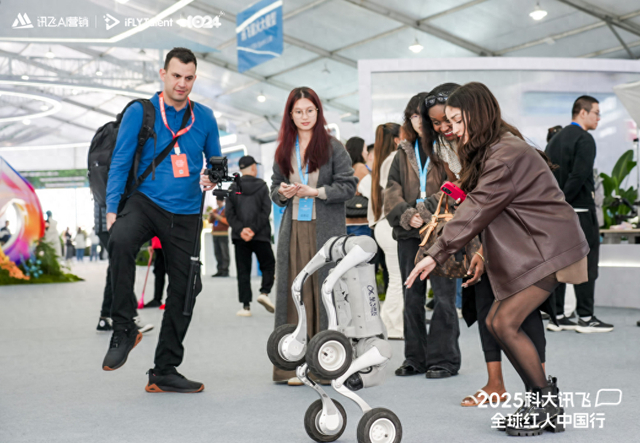
Core Insights - The event "iFLY Global Influencer China Tour" organized by iFLY Marketing aims to explore innovative global marketing strategies for Chinese brands through AI and influencer marketing [1][2] - The initiative highlights the importance of localized content creation and effective storytelling in the global market, emphasizing the role of influencers as key connectors between products and audiences [5][12] Group 1: Event Overview - The "iFLY Global Influencer China Tour" spans seven days and covers 1200 kilometers, featuring six influencers with a combined following of over 12 million [1] - The event serves as a platform for influencers to experience iFLY's AI innovations and engage in discussions about global marketing strategies [2] Group 2: Company Strategy - iFLY has accelerated its global expansion through an "AI hardware + ecosystem" strategy, with overseas AI hardware sales increasing over threefold in the first half of 2025 [4] - The iFLY Open Platform has made 872 AI products available, attracting over 961.6 million developers and covering more than 4.26 billion devices [4] Group 3: Influencer Marketing - Influencer marketing is a core component of iFLY's strategy, with the launch of the iFLYTalent platform addressing challenges in influencer marketing efficiency and tracking [9] - The platform has over 500 exclusive influencers and a resource pool of millions, facilitating effective connections between brands and global influencers [9] Group 4: Insights from Influencers - Influencers emphasize the need for localized content creation to effectively communicate brand values and engage global audiences [5][10] - The combination of AI and influencer marketing is seen as a way to enhance creativity in content creation and energize global marketing strategies for Chinese brands [10][12]

来伊份:“出海”版图已覆盖超18国
Guan Cha Zhe Wang· 2025-11-10 07:33
Core Insights - The company, Laiyifen, showcased its new identity as a "global brand management ecosystem platform" at the 8th China International Import Expo, presenting five core brands collectively instead of a single brand [1] - Laiyifen aims to accelerate its "going out + import" dual circulation system, focusing on both international expansion and local market penetration [1][2] Brand Highlights - The five core brands presented include: - Laiyifen: Focused on high-quality healthy snacks - Yami: Specializing in imported foods - Zui'ai: Concentrating on sauce-flavored liquor - Huwei: Engaged in whiskey - Yangchuanji: Targeting community retail business [1] - The Zui'ai brand made its debut at the expo and is expected to become a significant growth driver within 3-5 years [1] - Yangchuanji has already established over 300 stores and plans to achieve a "thousand-store" target by 2027 [1] International Expansion Strategy - Laiyifen's international strategy follows a three-step approach, starting with targeting Chinese communities, then expanding to Southeast Asian markets, and finally to mainstream markets in North America and Australia [2] - The company has entered over 18 countries, including the USA, Canada, Australia, and Germany, since beginning its overseas market layout in 2019 [2] Product Offerings and Collaborations - At the expo, Laiyifen displayed over 60 export products, including dried fruits, nuts, and sauce-flavored liquor, highlighting its unique Chinese offerings [1] - The company has introduced nearly 40 imported products, including items like Malaysian chocolate and Belgian caramel cookies, marking a shift from simple trade to deep collaborative development [2] - Laiyifen has signed procurement agreements totaling nearly 1.22 billion yuan over the past seven years, with expectations to exceed 250 million yuan in the current expo [3]

电商升级+免税新政!消费龙头ETF(516130)拉升2%!机构:AI融合与出海或成消费景气主线
Xin Lang Ji Jin· 2025-11-10 06:47
Group 1 - The core viewpoint of the articles highlights the performance of the Consumption Leader ETF (516130), which saw a 2.0% increase in price and a transaction volume of 13.71 million yuan, with a total fund size of 150 million yuan [1] - Key stocks within the ETF include China Duty Free, which hit the daily limit, and New Spring Co., which fell to the daily limit, while ShouLai Hotel and YanJin PuZi saw significant gains of 9.88% and 7.6% respectively [1] - The upcoming 2025 Double 11 shopping festival will incorporate instant retail as a core focus, enhancing "minute-level delivery" services, which is expected to benefit companies like Yili and Haier from increased demand for smart home appliances and fast-moving consumer goods [1] Group 2 - The Ministry of Finance and other departments have issued a notice to optimize duty-free shopping policies, which may provide policy benefits to companies like China Duty Free [1] - The consumption sector is under pressure, but four main trends are identified: (1) Brand expansion into emerging markets, (2) Emotional value sectors like trendy toys and pet products, (3) Growth in AI-driven consumer sectors, and (4) The rise of instant retail and cost-effective dining options [1] - The Consumption Leader ETF passively tracks the Consumption Leader Index, with top ten weighted stocks including Kweichow Moutai, Gree Electric, Yili, and others [2]






春雪食品:新增调理品生产线11月投产 加速产品出海
Xin Lang Cai Jing· 2025-11-07 12:59
Core Viewpoint - The white feather broiler industry is experiencing a downturn in 2025, with prices dropping to "10 yuan for 3 jin" and "10 yuan for 4 jin," prompting companies like Chunxue Food to seek high-end market opportunities and expand internationally [1][2] Company Performance - Chunxue Food reported a net profit increase of 1320.44% year-on-year for the first three quarters of 2025, with third-quarter profit growth significantly outpacing revenue growth [1] - The increase in profit is attributed to a rise in export product revenue and a decrease in the costs of purchased chick seedlings and feed materials, leading to improved profit margins [1] Strategic Initiatives - The company is focusing on enhancing fresh product sales management and increasing the value of its chicken products by entering high-end retail channels such as Sam's Club and certain supermarkets [1] - Chunxue Food aims to adjust its product structure to improve the quality of chicken products and increase the sales proportion of high-value-added products [1] Industry Trends - The industry is undergoing a transformation from scale expansion to value reconstruction, shifting from "quantity increase" to "quality change," entering a period of deep reshuffling and integration focused on "quality and branding" [2] - The company plans to advance towards the high-end of the industry chain, facing more "value competition" rather than "price competition" [2] Production Capacity - Chunxue Food is installing two new processing lines for prepared products, which are expected to be operational by the end of November, increasing the annual production capacity for prepared products to 136,000 tons [2] International Market Expansion - The company is accelerating its "brand going global" strategy, focusing on expanding into European and Southeast Asian markets to promote brand internationalization [2] - Chunxue Food is currently engaged in sales activities in Southeast Asia but has no plans to establish production and sales centers or factories there [3] Export Performance - According to customs data, China's chicken meat exports reached 613,800 tons from January to October 2025, marking a year-on-year increase of 37.7%, with October alone seeing exports of 70,800 tons, a record high [3]

上扬曲线折射义乌外贸韧性与活力
Xin Hua She· 2025-11-07 12:30
Core Insights - Yiwu's foreign trade has shown resilience and vitality, with a record import and export value of 631.2 billion yuan in the first three quarters of this year, marking a year-on-year increase of 26.3% [1] Group 1: Trade Growth and Market Expansion - In the first three quarters, Yiwu engaged in trade with 227 countries and regions, with 181 of them experiencing year-on-year growth, an increase of 29 countries compared to the previous year [2] - Yiwu's exports to Africa, Latin America, ASEAN, and the EU reached 111.2 billion yuan, 98.3 billion yuan, 72.24 billion yuan, and 65.51 billion yuan respectively, with year-on-year growth rates of 22.3%, 15.2%, 52.4%, and 32.1% [2] - Trade with Belt and Road countries amounted to 429.39 billion yuan, a growth of 28.9%, accounting for 68% of Yiwu's total import and export value during the same period [2] Group 2: Trade Infrastructure and Innovation - The opening of the Yiwu (Suxi) International Hub Port and the expansion of the Zhejiang-Europe Railway Express have significantly reduced logistics costs and improved trade efficiency [4] - The market procurement trade method allowed Yiwu to export 458.38 billion yuan in the first three quarters, a year-on-year increase of 29.4%, representing 82.7% of the city's total exports [4] - The introduction of a new sales platform, the sixth-generation Global Digital Trade Center, has enabled over 3,700 new merchants to communicate and conduct business with global customers in real-time [5] Group 3: Quality and Competitiveness - Yiwu companies are increasingly investing in research and development, with a reported technical contract transaction value exceeding 5.9 billion yuan in the first half of the year, a year-on-year increase of 26.4% [7] - The R&D expenditure of industrial enterprises above designated size reached 3.031 billion yuan, reflecting a year-on-year growth of 3.54% [7] - Yiwu has initiated a brand overseas expansion plan, successfully establishing 62 overseas projects in 29 countries and regions, covering various business models such as overseas warehouses and exhibition halls [7]
周树春:中国软实力进入下一程
Xin Hua She· 2025-11-07 05:56
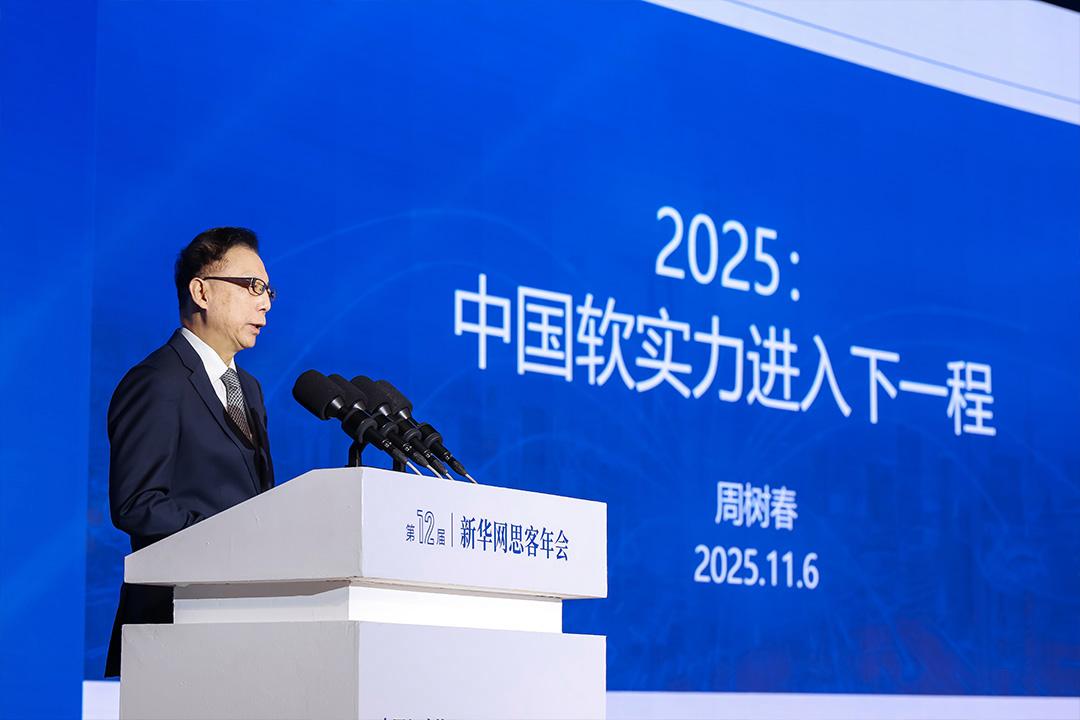
Core Insights - The 12th Xinhua Net Sike Annual Conference was held in Linfen, Shanxi Province, focusing on the theme "The Next Journey of China's Economy: Confidence, Resilience, and Vitality" [1] - The conference gathered hundreds of guests from various sectors to discuss the "14th Five-Year Plan" and explore future development opportunities and challenges [1] Group 1: Soft Power and Economic Development - Zhou Shuchun, Executive Vice Chairman of the China Human Rights Development Foundation, emphasized the importance of soft power in the context of global competition, stating that 2025 is a critical year for China's soft power emergence [3] - He noted that the expansion of Chinese brands into global markets is not only a significant economic achievement but also a vital means of building national image and cultural dissemination [3] - Zhou highlighted that technological advancements are integral to national image and soft power, influencing perceptions of China's political, economic, and cultural landscape [5] Group 2: Integration of Culture and Technology - The integration of cultural and digital technologies is reshaping the global dissemination of Chinese culture, creating a powerful cultural wave [5] - The deep fusion of culture and digitalization is enhancing the development of new cultural productivity, providing strong momentum for cultural outreach [5] - Zhou asserted that both hard and soft power are interconnected, with development being the core principle driving this relationship [7] Group 3: Future Development Phases - The transition from the "14th Five-Year Plan" to the "15th Five-Year Plan" marks a new historical phase for China's development, characterized by the mutual reinforcement of hard and soft power [7] - The upcoming "15th Five-Year Plan" is expected to be a stage where hard and soft power work in synergy, driving collaborative growth [7] - The Xinhua Net Sike Think Tank has been a key platform for high-level dialogue since 2014, focusing on contemporary issues and gathering expert opinions on China's economic future [7]
想布局出海?投资人和创业者必看的中国跨境贸易五大风向标
Sou Hu Cai Jing· 2025-11-07 04:32
Industry Overview - Cross-border trade in China, particularly cross-border e-commerce, is defined as international commercial activities where trading entities from different jurisdictions complete transactions through e-commerce platforms, electronic payment settlements, and cross-border logistics [1] - The focus is on a modern cross-border trade ecosystem that integrates technology, logistics, finance, and data [1] Market Core Characteristics - The market is characterized by significant growth potential, with B2B, B2C, and C2C/M2C models playing crucial roles [5] - China has maintained its position as the world's largest goods trading nation, with cross-border e-commerce import and export volumes showing a compound annual growth rate in double digits over the past five years [5] - Continuous policy support from the government, including the establishment of cross-border e-commerce pilot zones and optimization of retail import lists, provides a solid institutional guarantee for industry development [5] - A mature ecosystem exists, supported by a comprehensive manufacturing supply chain and diverse platforms like Amazon, Alibaba International, and TikTok Shop [5] - The trend of "new brands" and "new markets" is emerging, with companies like Anker Innovations and SHEIN leading the way in brand globalization [5] - Technological advancements, including big data for product selection and AI for customer service, are fundamentally enhancing industry efficiency and user experience [5] Industry Status Analysis - The industry is transitioning from a "price war" to a "brand war" and "quality war," with Chinese companies focusing on R&D and brand building to enhance premium capabilities [6] - The rise of the "independent site + DTC" model allows brands to control user data and consumer experiences, reducing reliance on third-party platforms [6] - The proliferation of overseas warehouses is significantly shortening delivery times and reducing logistics costs, becoming a standard configuration for cross-border B2C [6] - Continuous investment interest in cross-border e-commerce SaaS providers, logistics service providers, and brand globalization projects is injecting vitality into the industry [7] Future Trends - Companies will pursue both globalization and regionalization, focusing on localized operations in specific markets [10] - Social commerce and content commerce are becoming mainstream, with platforms like TikTok integrating deeply with e-commerce [10] - The emphasis on green trade and ESG considerations is increasing, pushing companies to prioritize sustainability in product design and logistics [10] - The evolution from "supply chain globalization" to "brand globalization" will define successful companies that can merge Chinese supply chain advantages with localized brand operations [10] - AI will be comprehensively applied across all aspects of cross-border trade, enhancing efficiency and reducing costs [10] Challenges and Opportunities - The global macro environment remains uncertain, with inflation pressures and potential trade protectionism affecting export growth [10] - Compliance risks associated with platform rules and regulations are increasing, raising operational barriers [10] - Competition is intensifying, leading to rising costs in traffic, advertising, and logistics, which may erode profit margins [10] - Emerging markets in Southeast Asia, the Middle East, and Latin America present significant growth opportunities due to their robust digital infrastructure and young populations [10]