
经济衰退

Search documents
来不及了!2026年利率砍到3%,美联储降息也救不了美国经济?
Sou Hu Cai Jing· 2025-08-23 21:38
Economic Outlook - The probability of the US economy entering a recession within the next 12 months is estimated at 49% according to a prediction by Moody's chief economist Mark Zandi, based on a complex machine learning model [1] - Over half of the industries have initiated layoffs, a phenomenon that aligns closely with historical indicators of impending economic recessions [1] Policy Impact - The negative impacts of tariffs and immigration restrictions from the Trump administration are expected to peak between late 2025 and early 2026, contributing to an "economic winter" [3] - The actual tariff rate in the US has reached 23%, the highest in a century, leading to increased operational costs for businesses and potential price hikes for consumers [6] Economic Indicators - The US GDP growth rate is projected to plummet from 3% in Q2 to 1%, while inflation could rise to a peak of 3.5% [5] - Employment growth has significantly declined, with potential job growth dropping from 206,000 in Q1 to just 28,000 by July, far below the 90,000 needed to maintain economic stability [5] Federal Reserve Actions - The Federal Reserve is expected to implement a series of interest rate cuts, with predictions of three consecutive cuts in September, October, and December, followed by two more in 2026 [6] - There is a notable division among Federal Reserve officials regarding interest rate predictions for 2025, complicating the formulation of a unified monetary policy [7] Market Reactions - The US stock market is experiencing a "high valuation trap," with significant sell-offs occurring despite some companies reporting better-than-expected earnings [8] - Concerns about the US dollar's valuation persist, with Goldman Sachs indicating that the actual exchange rate is overvalued by 15% [8] Broader Economic Challenges - The US economy is facing a confluence of high inflation, rising unemployment, and economic slowdown, presenting one of the most severe challenges since the 1970s [10]

深夜重磅,鲍威尔暗示降息,美股全线大涨
2 1 Shi Ji Jing Ji Bao Dao· 2025-08-22 23:17
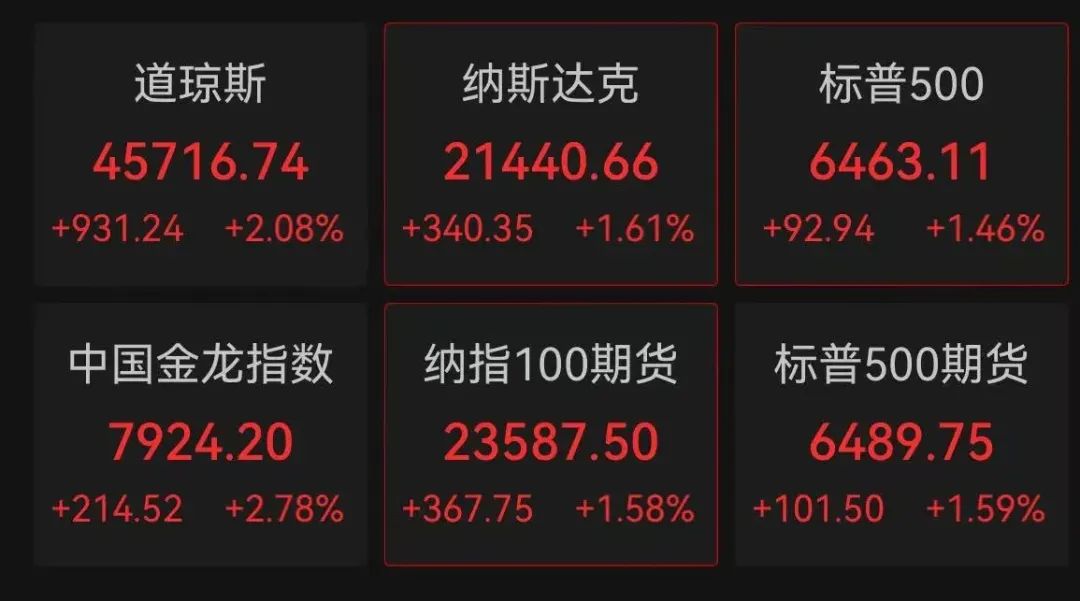
Core Viewpoint - Federal Reserve Chairman Jerome Powell hinted at the possibility of interest rate cuts in response to economic slowdown and rising labor market risks, despite ongoing inflation concerns [1][3]. Economic Indicators - The U.S. economy shows resilience amid high tariffs and tightened immigration policies, but significant slowdowns in labor markets and economic growth have been observed [1][6]. - In July, the U.S. non-farm payrolls added only 73,000 jobs, below expectations, and the unemployment rate slightly rose to 4.2% [6]. - The core consumer price index rose by 3.1% year-on-year in July, exceeding the Fed's long-term target of 2% [6]. Market Reactions - Following Powell's remarks, U.S. stock indices surged, with the Dow Jones reaching a new intraday high of 45,748.82 points [1][2]. - The market interpreted Powell's comments as a strong signal for potential rate cuts in September, leading to significant gains across major indices [1][2]. Political Pressures - Powell faces unprecedented political pressure from President Trump, who has been advocating for aggressive rate cuts and influencing Fed appointments [4][5]. - The upcoming September meeting is expected to be one of the most controversial in recent years, as Powell navigates economic challenges alongside political and market pressures [5]. Regional Implications - A potential rate cut by the Fed could positively impact Asian economies, particularly smaller open economies that rely heavily on trade [8]. - The analysis suggests that while inflation pressures in Asia are low, many central banks are positioned to lower rates, providing opportunities for investment [8].
特朗普赚大了,关税收入超3000亿美元?美联储降息格局再生变数!
Sou Hu Cai Jing· 2025-08-22 09:48
Core Points - The U.S. Treasury Secretary's claim of $300 billion in tariff revenue is misleading, as actual revenue has only reached $100 billion by July, requiring an unrealistic daily collection of $13 billion over the next five months [2][7] - The "see-saw effect" of tariffs leads to reduced imports or increased prices, significantly impacting revenue from tariffs, as seen with U.S. soybean exports to China plummeting from 22 million tons to 3 million tons [4][6] - The "Laffer Curve" indicates that tax revenues can decrease if rates exceed a certain threshold, which the Trump administration underestimated, expecting $600 billion from tariffs but potentially receiving only $280 billion [6][19] Tariff Revenue Challenges - The projected $300 billion in tariff revenue is insufficient to cover the interest on the national debt, which exceeds $35 trillion, with interest payments alone expected to exceed $500 billion in the first half of 2025 [7][19] - Tariff revenues are eroding other tax sources, particularly affecting small businesses, leading to job losses and a potential decrease in personal and corporate tax revenues [9][19] Economic Impact - Tariffs are damaging the U.S.'s international credibility, with agricultural states facing political pressure and requiring government subsidies to offset losses from tariffs [11][19] - The Federal Reserve faces a dilemma between inflation pressures and recession risks, with rising service prices linked to tariffs and agricultural states showing signs of economic decline [12][14] Future Implications - The long-term effects of tariff policies are creating a "lose-lose" situation for the U.S., with rising unemployment in agricultural states and a wave of small business closures [19][21] - China's response includes diversifying supply chains and increasing domestic production, which may lead to a more resilient trade system, while U.S. companies are relocating production to Mexico and Southeast Asia [21][23] Conclusion - The tariff policy is likened to a fleeting spectacle, promising $300 billion in revenue but ultimately leading to significant economic damage, including the decline of agricultural states and small businesses [24][25]
金荣中国:美经济数据高于市场预期,金价触底反弹维持偏多震荡
Sou Hu Cai Jing· 2025-08-22 01:54
美国8月标普全球制造业PMI初值录得53.3,高于市场预期49.5,前值位49.8;美国8月标普全球服务业PMI初值录得55.4,高于市场预期54.2,前值位55.7. 行情回顾: 国际黄金周四(8月21日)维持震荡走势,开盘价3340.68美元/盎司,最高价3352.09美元/盎司,最低价3325.13美元/盎司,收盘价3343.60美元/盎司。 消息面: 周四公布的美国7月咨商会领先指标月率录得-0.1%,符合市场预期,前值位-0.3%;美国7月成屋销售总数年化录得401万户,高于市场预期392万户,前值位 393万户。 谘商会高级经理Justyna Zabinska-La Monica表示:"美国7月领先经济指标仅小幅下降。消费者对商业环境的悲观预期以及新订单疲弱继续拖累该指数。同 时,股价仍然是领先经济指标的重要正面支撑。7月初请失业金人数较6月大幅下降,是LEI的第二大积极因素,此前三个月这一指标对指数产生了负面影 响。"她补充道:"虽然LEI的六个月增速仍为负值,但7月略有改善,不过不足以避免再次触发衰退信号。尽管如此,谘商会目前并未预测会出现衰退,但我 们预计2025年下半年经济将走弱,因为关税 ...

美国领先经济指数小幅下跌 经济增速承压信号显现
智通财经网· 2025-08-21 15:35
Group 1 - The US Leading Economic Index (LEI) decreased by 0.1% in July 2025, reaching 98.7, following a 0.3% decline in June. The cumulative decline from January to July was 2.7%, significantly higher than the 1.0% drop from July of the previous year to January [1] - Justyna Zabinska-La Monica, a senior manager at the Conference Board, noted that consumer pessimism regarding business prospects and weak new orders continue to weigh on the index. However, stock prices remain a significant positive support for the LEI [1] - Despite the negative growth rate over six months, there was an improvement in July, although it is not sufficient to avoid signaling a potential economic recession. The Conference Board does not currently expect a recession but anticipates an economic slowdown in the second half of 2025, with tariffs' negative impacts gradually becoming evident [1] Group 2 - The US Coincident Economic Index (CEI) rose by 0.2% in July, reaching 114.9, while remaining unchanged in June. The cumulative growth from January to July was 0.9%, surpassing the previous six months' growth of 0.6% [2] - The CEI consists of four components: non-farm employment, personal income (excluding transfer payments), manufacturing and trade sales, and industrial production, which are critical indicators for assessing the risk of a recession. In July, three of these indicators improved, except for industrial production [2] - The US Lagging Economic Index (LAG) remained unchanged at 119.9 in both June and July, with a cumulative growth of 0.9% from January to July, reversing the previous six months' decline of 0.1% [2]
美联储哈马克:未看到经济出现显著衰退的任何迹象。
Sou Hu Cai Jing· 2025-08-21 15:25
Core Viewpoint - The Federal Reserve's Harker stated that there are no significant signs of economic recession observed [1] Group 1 - The Federal Reserve is monitoring the economy closely and has not identified any indicators suggesting a downturn [1]
美国关税拖累!日本7月出口创4年来最大降幅,8月更惨淡?
Di Yi Cai Jing· 2025-08-21 05:30
日本汽车业7月对美出口暴跌。 日本7月出口数据惨淡。 日本政府20日公布的数据显示,日本7月出口总额约为9.3万亿日元(约合635亿美元),同比下降2.6%, 创下自2021年2月以来的最大降幅。这一降幅超过了分析师此前预测的2.1%,也远超6月0.5%的降幅。目 前,日本单月对外出口已连续4个月呈下滑态势。 日本内阁府此前数据显示,今年4月至6月,日本国内生产总值(GDP)折合成年率增长1.0%,显著高于 经济学家预测的0.4%。同时,官方将第一季度的经济数据从初步报告的萎缩修正为0.6%的增长。 分析认为,在美国关税政策冲击全球贸易背景下,出口持续下滑加剧了对日本经济能否继续保持增长的 担忧。尽管过去五个季度日本经济在消费疲软下勉强增长,但出口进一步下跌可能使日本经济陷入衰退 的风险。 根据此前的公开信息,美国特朗普政府4月对日本汽车及零部件加征25%关税,多数其他商品加征10%关 税。6月初钢铁进口关税翻倍至50%。8月15日,特朗普政府又宣布扩大对钢铝进口50%关税征收的范 围,将多达407种产品纳入征税范围。 日本财务省公布的2024年贸易统计速报显示,日本2024年出口额107.9万亿日元,较上年 ...

对美出口下降明显,经济增长受到拖累,日本7月出口降幅达4年新高
Huan Qiu Shi Bao· 2025-08-20 22:38
美国4月对日本汽车及零部件加征25%关税,多数其他商品加征10%关税。6月初钢铁进口关税翻倍至 50%。汽车及零部件约占日本对美出口的1/3。根据日美7月底达成的贸易协议,日本对美出口的汽车及 其他商品关税将降至15%,但该税率的实施尚需时日。 凯投宏观亚太区主管马塞尔·蒂利安特在报告中指出,数据表明"美国加征关税开始产生实质影响"。鉴 于"日本出口结构严重偏向资本品",他预测海外投资增长乏力也将冲击出口。路透社援引分析人士的话 表示,在出口额暴跌的同时,日本出口商的出货量相对稳定,但他们最终不得不将成本转嫁给美国消费 者,而这将进一步影响未来数月的销售。 日本对其他贸易伙伴的出口同样疲软。对中国出口下降3.5%,对欧盟出口下滑3.4%,对东南亚国家出 口减少2.9%。 今年4至6月日本经济年化环比增长1%,主要得益于出口的带动,但7月贸易数据公布后,不少媒体对日 本经济能否保持增长感到担忧。 【环球时报特约记者 李明 严格】日本财务省20日发布的7月份贸易统计数据显示,当月日本整体出口额 同比下降2.6%,降幅超出路透社经济学家调查预测的2.1%,是4年多来的最大降幅。其中对美出口额同 比减少10.1%,连 ...
美关税持续冲击 日本7月出口创四年多最大跌幅
Guo Ji Jin Rong Bao· 2025-08-20 16:10
Group 1 - Japan's exports fell by 2.6% year-on-year in July, marking the largest decline in over four years, primarily due to the impact of U.S. tariffs on automobiles, auto parts, and steel [1] - Despite the drop in export value, export volume increased by 1.2%, indicating that exporters are absorbing tariff costs by lowering prices [1] - Japan's trade deficit in July reached 117.5 billion yen, with imports decreasing by 7.5% to 9.48 trillion yen, driven by significant declines in crude oil, coal, and liquefied natural gas imports [1] Group 2 - Exports to the U.S. decreased by 10.1% in July, with automotive exports dropping significantly by 28.4% and auto parts by 17.4%, although the volume of car exports only fell by 3.2% [1] - The U.S. imposed a 25% tariff on Japanese imported cars and parts starting in April, and increased steel tariffs to 50% in June, affecting approximately one-third of Japan's total exports to the U.S. [1] - Toyota warned that U.S. tariffs could lead to a reduction in operating profit by 1.4 trillion yen [1] Group 3 - A trade agreement reached at the end of July is expected to reduce tariffs on cars and most goods to 15%, but implementation will take time [2] - Japan's economy showed unexpected resilience in the second quarter, which may support the Bank of Japan's decision to raise interest rates later this year, although the ongoing impact of U.S. tariffs will be a key consideration [2] - Analysts predict that the Bank of Japan will likely maintain its current policy stance in the upcoming September meeting, as the effects of tariffs on export volumes become more apparent [3]
美关税持续冲击,日本7月出口创四年多最大跌幅
Guo Ji Jin Rong Bao· 2025-08-20 11:59
Group 1 - Japan's exports fell by 2.6% year-on-year in July, marking the largest decline in over four years, primarily due to the impact of U.S. tariffs on automobiles, auto parts, and steel [1] - Despite the drop in export value, export volume increased by 1.2%, indicating that exporters are lowering prices to absorb the costs of U.S. tariffs [1] - Japan's trade deficit in July reached 117.5 billion yen, with imports decreasing by 7.5% to 9.48 trillion yen, driven by significant declines in crude oil, coal, and liquefied natural gas imports [1] Group 2 - Exports to the U.S. decreased by 10.1% in July, with automotive exports dropping significantly by 28.4% and auto parts by 17.4% [1] - Japanese automakers are absorbing some of the tariff costs to maintain sales, as evidenced by a smaller decline of only 3.2% in the volume of car exports to the U.S. [1] - The U.S. imposed a 25% tariff on Japanese imported cars and parts starting in April, with steel tariffs increased to 50% in June, affecting approximately one-third of Japan's total exports to the U.S. [1] Group 3 - The recent trade agreement reached at the end of July suggests that U.S. tariffs on automobiles and most goods may be reduced to 15%, but implementation will take time [2] - Economic analysts warn that Japan could face a recession depending on the extent of the tariff impacts [2] - The Bank of Japan's decision-making may become more cautious due to the ongoing decline in exports, despite the economy showing unexpected resilience in the second quarter [3] Group 4 - Market expectations indicate that the Bank of Japan will likely maintain its current policy stance during the upcoming policy meeting on September 19 [4] - Analysts note that the decline in Japan's auto exports is a clear sign of the tariff impacts, with Japanese goods losing price competitiveness in the U.S. market [4] - The timing of any potential tariff reductions remains uncertain, with significant negative impacts anticipated if no reductions occur [4]