
谷子经济

Search documents
布鲁可(00325.HK):拼搭角色玩具龙头 用户象限拓展可期
Ge Long Hui· 2025-06-20 02:08
Company Overview - The company, established in 2014, focuses on building block character toys, with Ultraman as its core licensed IP, and is continuously expanding its IP product matrix [1] - The company has a stable shareholding structure with a high proportion of shares held by the founder, and the management team is experienced and stable due to deep equity incentives [1] - The company is experiencing rapid revenue growth and has entered an upward trajectory in profitability [1] Industry Insights - The "Guzi Economy," which refers to the secondary economy surrounding two-dimensional culture, is thriving, driven by the demand for emotional consumption and the expansion of quality IPs [1] - The building block character toy market has seen significant growth, with the market size increasing from 13.2 billion to 27.8 billion from 2019 to 2023, representing a compound annual growth rate of 20.5% [1] - The building block character toy sector is highly concentrated, with the company ranked first in China and third globally [1] Core Competitiveness - The company has a rich IP matrix, significant supply chain scale effects, and excellent channel marketing capabilities [2] - The company enhances the building block system by integrating the advantages of character toys and building block gameplay, providing new choices for consumers [2] - The product design, research and development, and production systems are standardized, with high interchangeability of components [2] - The company is expanding its offline presence while leveraging online content marketing to enhance brand influence through the BFC event system [2] Investment Outlook - The company is expected to achieve significant growth in net profit from 1.188 billion to 2.663 billion from 2025 to 2027, with year-on-year growth rates of 396.2%, 61.0%, and 39.3% respectively [2] - The company is rated as "Buy" due to its leading position in the market, rich IP matrix, rapid SKU iteration, and efficient channel management [2]
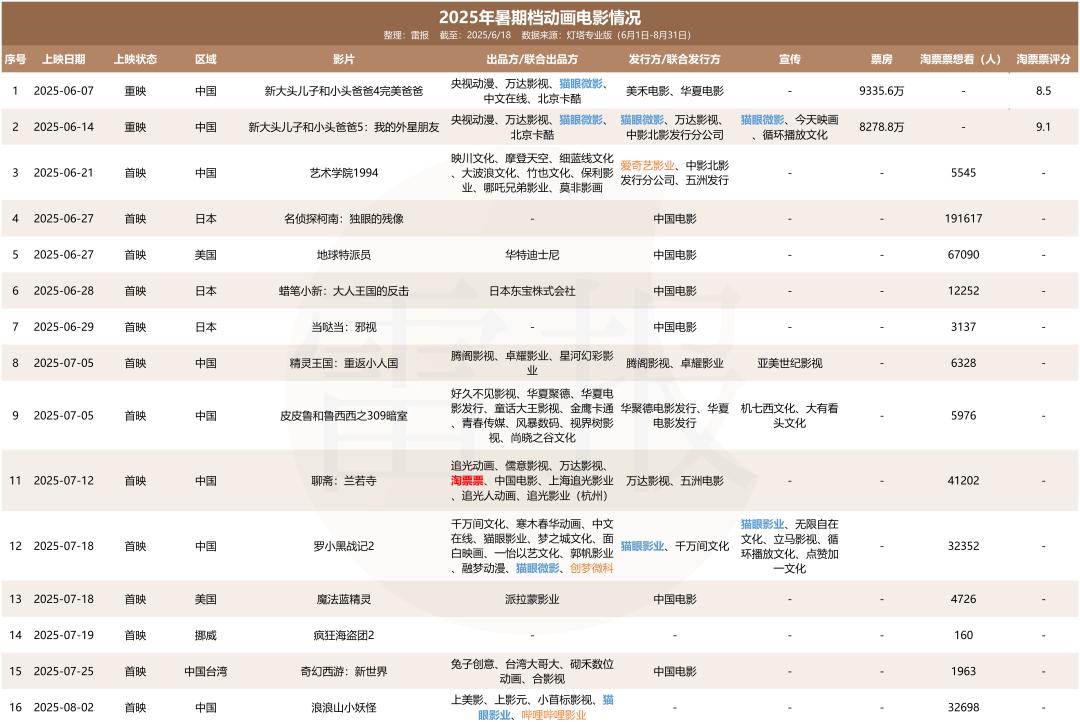
16部动画电影暑期大战,谁能复制哪吒票房+IP授权的百亿战绩?
3 6 Ke· 2025-06-20 01:22
Core Insights - The box office of "Nezha 2" has officially surpassed 15.9 billion RMB, making it the highest-grossing film in Chinese history and the fifth globally [1] - The market is shifting away from mythological themes, with only 7 out of 127 animated films registered for 2024 being based on classic myths, indicating a move towards more sustainable development paths [1] - Youth-oriented IPs are emerging as new growth engines, with several headlining domestic animation projects being registered and developed [1] Industry Trends - The commercial potential of domestic animation IPs is being reassessed, with the "Nezha" series generating hundreds of billions in derivative sales, and the possibility of reaching over a thousand billion in the future [2] - The upcoming summer season (June 1 to August 31) will test the effectiveness of the transformation of domestic animation IPs, with 16 new animated films scheduled for release [2] - The industry is witnessing a diversification of themes, moving away from mythological narratives to youth IPs and new interpretations of traditional culture [2] Market Dynamics - The summer release schedule includes 8 domestic animated films and 8 imported films, indicating a balanced competition [4][6] - The "Nezha" franchise has proven the longevity of low-age-targeted national IPs, with a cumulative box office exceeding 495 million RMB across six films [6][7] - The collaboration between state-owned enterprises and market-oriented teams is enhancing the commercial operation of IPs, covering the entire industry chain [7] IP Development Strategies - Classic children's literature IPs are exploring new cross-industry resource integration models, with "Pipilu and Luxixi" facing challenges in box office conversion despite strong backing [9] - Platforms are shifting from behind-the-scenes capital to leading creative and promotional efforts, as seen with "Art Academy 1994" and "Wang Wang Mountain Little Monster" [9] - The "Liao Zhai: Lan Ruo Temple" is highly anticipated, with significant pre-release interest, indicating strong market potential [12] Derivative Product Strategies - The development of derivative products for major animation IPs is becoming more proactive, with various collaborations and marketing events planned [18][20] - The "Liao Zhai: Lan Ruo Temple" and "Ro Xiao Hei War Record 2" are set to launch multiple derivative products, reflecting the growing market for IP-related merchandise [20][22] - The trend of localizing Japanese IPs for the Chinese market is evolving, with domestic companies gaining more control over design and pricing [22] Conclusion - The summer animation film season is characterized by diverse themes, differentiated IPs, and advanced business models, marking a critical transformation period for the Chinese animation industry [24] - The potential for a non-mythological animated film to reach a 1 billion RMB box office is being closely monitored, alongside the growth of the derivative product market [24]

布鲁可(00325):拼搭角色玩具龙头,用户象限拓展可期
GOLDEN SUN SECURITIES· 2025-06-19 11:26
Company Overview - The report rates the company as "Buy" for the first time, indicating a positive outlook for investment [5] - The company, Blok, is a leading player in the building block toy sector, with significant growth potential [1] - Founded in 2014, Blok focuses on building block toys, with Ultraman as its core licensed IP, and is expanding its IP product matrix [1][14] Industry Insights - The "Guzi Economy," which encompasses the secondary economy around anime, games, and comics, is experiencing robust growth, providing ample market opportunities [2] - The building block toy market has seen a compound annual growth rate (CAGR) of 20.5%, growing from 13.2 billion RMB in 2019 to 27.8 billion RMB in 2023 [2] Core Competitiveness - Blok's competitive edge lies in its rich IP matrix, significant supply chain scale effects, and excellent channel marketing strategies [3] - The company has a diverse product matrix that caters to a wide age range, with rapid iteration speed and a standardized supply chain [3][17] - Blok's marketing strategy is driven by content, enhancing brand influence through a robust online and offline sales network [3][16] Financial Projections and Investment Recommendations - The company is expected to achieve a net profit of 1.188 billion RMB, 1.913 billion RMB, and 2.663 billion RMB from 2025 to 2027, representing year-on-year growth rates of 396.2%, 61.0%, and 39.3% respectively [4] - Revenue is projected to grow significantly, with estimates of 2.241 billion RMB in 2024 and 4.414 billion RMB in 2025, reflecting a year-on-year growth of 155.6% and 97.0% [4][28]
泡泡玛特十倍涨幅背后:潮玩概念股狂欢的产业逻辑与消费变革
Di Yi Cai Jing· 2025-06-18 06:24
Core Viewpoint - The surge in the Hong Kong stock market for trendy toy companies reflects a significant transformation in the Chinese consumer market, with companies like Pop Mart and Blokus achieving remarkable stock price increases and market capitalizations [1][2]. Group 1: IP Economy - The success of IP products in the consumer recovery is attributed to their ability to create "emotional social connections," exemplified by Pop Mart's LABUBU series, which has transformed toys into expressions of individuality for Generation Z [1][2]. - Pop Mart's IP operations have created a unique "nuclear fusion effect," with its Molly series generating related products and even operating a theme park independently of any film IP support [2]. Group 2: Guzi Economy - The rapid rise of trendy toy stocks is driven by the "Guzi economy," which encompasses the peripheral consumer market surrounding anime and game IPs, becoming a growth engine for toy companies [3]. - Collaborations, such as Miniso's partnership with "Jujutsu Kaisen," have led to significant sales, while Blokus has increased its overseas revenue share by tying up with international IPs [3]. - The shift in consumer demographics, particularly among the 18-35 age group, is driving a surge in "self-indulgent consumption," with the market expected to grow significantly by 2024 [3][4]. Group 3: Industry Opportunities and Challenges - The trendy toy market in China is still in its early development stage, with considerable room for growth compared to mature markets like Japan and the U.S. [5]. - Companies are exploring diversified revenue models beyond traditional retail, including online live streaming and NFT initiatives, which could enhance user engagement and create new growth points [5][6]. - Despite the optimistic outlook, the rapid expansion of the industry poses risks, such as the influx of new companies and potential regulatory challenges [5]. Group 4: Cultural Consumption Trends - The journey of Pop Mart symbolizes the shift in the Chinese consumer market from material satisfaction to spiritual consumption, with trendy toys becoming cultural symbols for a generation [7]. - Companies that can consistently create emotional resonance and build IP ecosystems are likely to thrive in the golden age of the trendy toy economy [7].

食品饮料行业2025年中期投资策略:白酒从去库存到去产能,大众品关注新品新渠道
Minsheng Securities· 2025-06-18 05:03
Group 1 - The report highlights that the food and beverage industry is experiencing a shift from inventory reduction to capacity reduction, particularly in the liquor sector, with a focus on new products and channels for mass-market products [1][12][26] - The overall effective demand remains insufficient, with consumption structure adjustments driven by "emotional premium" and "new channel transformation" [2][3] - The report emphasizes the importance of new retail channels, such as instant retail, which are reshaping the value chain for brand owners, distributors, and retailers, with efficiency being a key factor [2][31] Group 2 - In the liquor sector, the report notes a significant decline in government consumption, which has dropped from 30-40% to around 5% since the introduction of the "three public consumption ban" in 2012, impacting business and mass consumption indirectly [18][21] - The report outlines the 2025 operational goals for various liquor companies, indicating a rational approach to growth targets amid industry consensus on deceleration [23][24] - The report forecasts that the market size for instant retail in the liquor sector will exceed 100 billion yuan by 2025, with significant growth observed in online sales during promotional events [32][36] Group 3 - The report indicates that the white liquor sector is undergoing a deep adjustment period, with macroeconomic cycles, supply-demand imbalances, and a lack of consumption scenarios affecting stock performance [40][41] - It highlights that the white liquor index has underperformed compared to the broader market, with a year-to-date decline of 12.1% as of June 12, 2025 [40][39] - The report suggests that the social attributes of white liquor are evolving, with younger generations favoring different social consumption patterns, such as casual gatherings and emotional consumption [26][29]




单链接狂销百万件,叠纸是怎么成为618潮玩销量NO.1的?
Sou Hu Cai Jing· 2025-06-18 03:28
Core Viewpoint - The article discusses the growing importance of merchandise sales for gaming companies, particularly in the context of the rising popularity of "谷子" (merchandise) among young consumers, highlighting the success of the brand "叠纸心意" in this market [2][3]. Group 1: Market Performance - During the 618 shopping festival, "叠纸心意" surpassed competitors like "泡泡玛特" and "万代" to top the "天猫潮玩抢先购成交榜" [2]. - The "全球品牌中国线上500强榜单" (CBI500) included "叠纸心意," "米哈游," and "光与夜之恋," indicating strong online sales performance [3]. - "叠纸心意" achieved over 2 billion yuan in sales on the first day of new product launches before the 2024 Double Eleven event [11]. Group 2: Consumer Demographics - The brand has a significant advantage in the 18-24 age group, with notable growth in transaction amounts and customer retention rates [3]. - The merchandise primarily targets female consumers, leveraging the emotional connection and loyalty associated with popular game IPs [9][30]. Group 3: Product Strategy - "叠纸心意" focuses on low-priced items like keychains and standees, aligning with the consumption trends of young consumers [9]. - The brand has developed products around three major IPs, including "暖暖," "恋与制作人," and "恋与深空," catering to diverse consumer preferences [9][30]. - The merchandise is sold exclusively through an online flagship store on Tmall, allowing the company to maintain control over sales and consumer feedback [9][31]. Group 4: Sales Dynamics - The brand's sales strategy includes limited-time pre-sale models, which create urgency among consumers and stabilize secondary market prices [31]. - Despite mixed consumer feedback, the strong appeal of game characters drives continued sales, with significant volumes reported for new product launches [18][30]. Group 5: Future Prospects - "叠纸心意" is cautiously expanding its merchandise offerings, with plans to enhance its influence both online and offline [41]. - The recent success of the "DearNikki" brand, which features high-quality blind boxes, indicates potential for further growth in the merchandise sector [36][40].

日本IP吸金术:11个IP一年收入429亿,中国成“谷子经济”主战场?
3 6 Ke· 2025-06-18 01:30
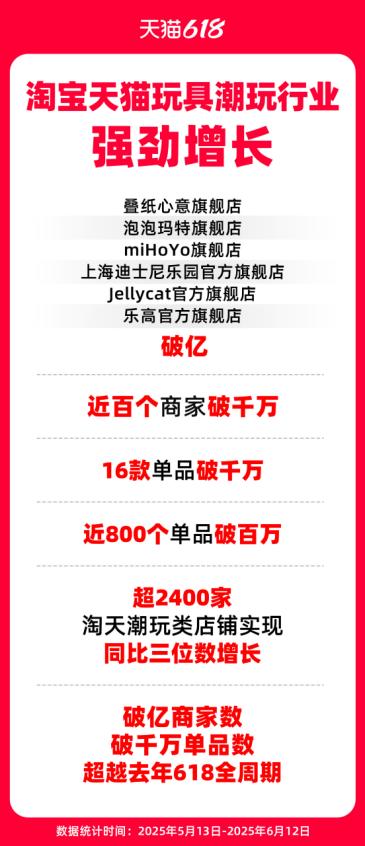
Group 1 - The toy and trendy play industry in China is experiencing explosive growth during the 618 shopping festival, with six merchants surpassing 100 million yuan in sales and nearly 100 merchants exceeding 10 million yuan [1][2] - The top IP products, including Sanrio and Ultraman cards, are performing exceptionally well, indicating a strong demand for Japanese IP in the Chinese market [2][3] - The overall market for trendy toys is expanding, with over 2,400 stores achieving triple-digit growth compared to the previous year [1][2] Group 2 - Major Japanese companies like Bandai, Sanrio, and Tsuburaya have reported significant revenue from their IPs, with Bandai's Dragon Ball generating approximately 9.44 billion yuan, a 35.6% increase year-on-year [4][5] - Sanrio's revenue in China has surged to 816 million yuan, with IP licensing contributing significantly to its growth [5][7] - Tsuburaya's Ultraman IP has generated 260 million yuan in licensing revenue in China, highlighting the strong performance of card sales [7][19] Group 3 - The competitive landscape of the trendy toy market is intensifying, with over 100 stores closing in the first half of 2025, indicating a significant shakeout in the industry [15][16] - The trend of localization is evident, as companies like Sanrio and Bandai are focusing on developing original IPs and collaborating with local partners to enhance their market presence [21][29] - The shift from content output to collaborative ecosystem building is becoming a key strategy for Japanese IP companies in China, aiming for sustainable growth in the competitive market [29][30]

加码情绪价值,孩子王全新Ultra店俘获新生代父母“童心DNA”
Sou Hu Cai Jing· 2025-06-17 22:35
Group 1: Core Insights - The phenomenon of "first store economy" is reshaping consumer markets, acting as a core engine for brand activation and redefining commercial value through innovative experiences [2][5] - The launch of Kidswant Ultra, a flagship store in Shanghai, emphasizes emotional value and shared growth in parenting, catering to the evolving needs of modern parents [3][4] Group 2: Market Trends - The "precise parenting" trend is colliding with "consumer rationality" in the trillion-dollar maternal and child market, calling for new solutions in the first store economy [3][8] - Z-generation parents are redefining necessities, willing to pay a premium for emotional value and personalized experiences [8][11] Group 3: Kidswant Ultra Store Features - Kidswant Ultra store features over 550 solutions and nearly 4000 product SKUs, collaborating with over 21 short-chain suppliers to meet diverse consumer needs [21] - The store includes unique thematic areas such as the "AI Smart Toy Zone" and "Health Snack Pavilion," enhancing the shopping experience through interactive and educational elements [16][17] Group 4: Strategic Initiatives - Kidswant's "three expansion" strategy focuses on expanding product categories, service boundaries, and operational formats to maximize user lifecycle value [23][24] - The company aims to open over 20 new Ultra stores in first and new first-tier cities, leveraging the success of the Kidswant Ultra store as a model for future expansions [23][24]

中国网络文学2024年海外活跃用户约2亿人
Zhong Guo Xin Wen Wang· 2025-06-17 16:36
Group 1 - The user base of Chinese online literature has reached 575 million, with approximately 200 million active users overseas, representing 51.9% of the total internet users in China [1][2] - The core reading demographic is aged between 26 to 45 years, accounting for about 50% of all readers, while the "post-2000" generation constitutes nearly 25% of the readership, driving growth [1] - The "silver-haired" demographic, aged 60 and above, has expanded significantly, now making up over 10% of the reading population, influencing the themes and content of online literature [1] Group 2 - In 2024, there were approximately 30,000 new adaptations authorized for various types of intellectual property (IP), indicating a vibrant downstream industry [1] - The emergence of the "Z generation" as a significant force in online literature creation is highlighted, with 2.8 million new registered authors and 350,000 new signed authors, nearly four-fifths of whom are from this generation [1] - Chinese online literature is transitioning from mere content output to building a global IP ecosystem, with notable works being included in prestigious institutions and achieving global distribution [2]
金融工程日报:A股窄幅整理,稳定币持续活跃、创新药调整明显-20250617
Guoxin Securities· 2025-06-17 14:27
The provided content does not contain any quantitative models or factors, nor does it include their construction, evaluation, or backtesting results. The documents primarily focus on market performance, sector analysis, market sentiment, fund flows, ETF premiums/discounts, block trading, and institutional activity. These topics are descriptive and lack the quantitative modeling or factor analysis required for the task.