
哑铃策略

Search documents
日成交额、规模屡创上市以来新高!港股红利ETF博时(513690)兼备低估值+高股息,备受市场关注
Xin Lang Cai Jing· 2025-06-04 02:51
Core Viewpoint - The arrival of a low interest rate era highlights the importance of dividend assets, particularly in the Hong Kong stock market, where state-owned enterprises play a significant role in dividend distribution [1] Group 1: Dividend Assets in the Market - A-shares are expected to see total dividends exceed 2.4 trillion yuan in 2024, with state-owned enterprises accounting for over 80% of this amount [1] - Hong Kong's central enterprises are positioned as key dividend payers, offering both high yields and valuation advantages [1] - The current trading congestion of Hong Kong dividend assets has decreased, supported by the ongoing pilot programs for long-term capital inflows [1] Group 2: Investment Strategies and Recommendations - The banking sector continues to show mid-to-long-term investment value, with ongoing dividend plans and valuation enhancement initiatives from major banks [1] - High dividend yield and strong asset quality banks are recommended for their absolute return potential and cost-effectiveness in allocation [1] Group 3: Performance of Dividend Indices and ETFs - The leading dividend index in the Hong Kong market is the Hang Seng Hong Kong Stock Connect High Dividend Yield Index, with the corresponding ETF, Bosera (513690), ranking first in both scale and daily trading volume [2] - As of June 4, 2025, the Bosera ETF reached a new high in price and size, totaling 4.043 billion yuan [2] Group 4: Advantages of the Bosera ETF - The Bosera ETF has a leading dividend yield of 8.02%, significantly higher than its peers, making it an attractive option for investors seeking stable income [4] - The top holdings of the ETF focus on energy and financial sectors, with notable performance in recent months, showcasing both cyclical resilience and defensive attributes [5] - The ETF employs strict risk control measures, excluding stocks with significant price declines and ensuring liquidity, thus enhancing the investment experience [7]



资金积极涌入港股ETF 公募扎堆推出相关产品
Shen Zhen Shang Bao· 2025-06-03 23:27
Group 1 - The Hong Kong stock market has seen strong trading activity this year, with southbound capital actively entering the market despite adjustments, leading to a recovery in the Hang Seng Index, which has risen 17.21% year-to-date as of June 3 [1] - Public funds are launching Hong Kong stock ETFs, with significant inflows into innovative drug ETFs, technology ETFs, and dividend ETFs, indicating a strong interest from investors [2] - Analysts suggest that the current market environment favors a structural "barbell strategy," with technology and dividend sectors expected to contribute to excess returns in a rotating manner [3] Group 2 - The number of shares in various Hong Kong stock ETFs has surged, with the ICBC Innovative Drug ETF increasing from under 1.3 billion shares to nearly 3.7 billion shares, a growth of 192% [2] - The market quality of Hong Kong stocks is expected to improve as high-competitiveness technology giants are listed, and policies encourage quality companies to list in Hong Kong [3] - Analysts recommend focusing on leading stocks in cloud computing, new consumption, and pharmaceuticals, as well as opportunities in newly listed companies, which have shown impressive performance [3]
科技叙事带动港股上行 券商看好“哑铃”策略
Zhong Guo Zheng Quan Bao· 2025-06-03 20:44
Group 1 - The Hong Kong stock market has shown strong performance this year, with increasing investor interest and a rise in the number of companies listing in Hong Kong [1][4] - As of May 30, the Hang Seng Index rose by 5.29% in May, while the Hang Seng China Enterprises Index and the Hang Seng Technology Index increased by 4.41% and 1.63% respectively [2] - The energy, financial, telecommunications, and healthcare sectors led the gains among the 12 sub-indices of the Hang Seng Composite Industry Index, with increases of 8.97%, 8.45%, 7.73%, and 7.11% respectively [2] Group 2 - Southbound capital has continued to flow into the Hong Kong market for five consecutive months, with a net inflow of HKD 456.17 billion in May [3] - Financial, discretionary consumption, energy, healthcare, and telecommunications sectors saw the highest net inflows from southbound capital, amounting to HKD 279.7 billion, HKD 104.93 billion, HKD 85.45 billion, HKD 76.58 billion, and HKD 73.34 billion respectively [3] Group 3 - The technology narrative has significantly boosted the Hong Kong market, with a notable increase in IPOs attracting investor interest [4] - Analysts predict that the Hong Kong market will become a strategic location for global capital allocation in Chinese technology assets, with expectations of rapid development over the next three years [4] - The current low valuation of Hong Kong stocks presents a clear advantage in the global market [4][6] Group 4 - The market is expected to trend upwards with structural opportunities, focusing on technology giants and high-dividend assets in sectors like banking, telecommunications, and utilities [6][7] - Analysts suggest that the Hong Kong market may adjust its economic expectations for the second quarter, potentially enhancing risk appetite [6]



超4400股飘红
第一财经· 2025-05-29 04:14
Group 1 - The core viewpoint of the article highlights a positive market trend, with major indices such as the Shanghai Composite Index rising by 0.72%, the Shenzhen Component Index by 1.12%, and the ChiNext Index by 1.16% [1] - There is a notable surge in smart driving concept stocks, with financial technology concepts also showing strength, while sectors like precious metals and food processing manufacturing are experiencing declines [1] - Over 4,400 stocks in the market have seen an increase, indicating a broad-based rally [2] Group 2 - According to institutional perspectives, the recent market rebound is occurring at the 60-day moving average, with a potential challenge to the 3,400-point mark [4] - Growth-oriented sectors such as autonomous driving and controllable nuclear fusion are performing exceptionally well, suggesting that further strengthening of growth styles could attract additional capital into the market [4] - The improvement in the external environment is seen as a catalyst for the A-share market to realize potential benefits, with a focus on changes in trading volume being crucial for future market performance [4]


左手红利低波,防守一波!右手通用航空,放手一搏!
Xin Lang Ji Jin· 2025-05-28 09:12
Group 1 - The article emphasizes a dual investment strategy, likening it to the "Left and Right Fighting Technique" from "The Legend of the Condor Heroes," suggesting a balanced approach of defensive and offensive investments [1] - The suggested investment allocation includes 50% in high dividend and low volatility assets, and 50% in high elasticity and high prosperity low-altitude economy assets, aiming for a balanced portfolio [1] - The 800 Dividend Low Volatility ETF (159355) tracks the CSI 800 Dividend Low Volatility Index, focusing on quality large and mid-cap stocks, making it a stable choice for defensive positioning [1] - The General Aviation ETF (Huabao) (159231) tracks the National General Aviation Index, covering sectors like low-altitude economy and commercial aerospace, presenting a high potential for growth and offensive investment [1] Group 2 - The low-altitude economy sector is experiencing a temporary and healthy correction, with strong long-term investment potential supported by national strategic planning [3] - As of May 28, the General Aviation ETF (Huabao) has seen a decline of over 5% from its peak, indicating a potential buying opportunity for investors looking to capitalize on rebounds [3]
冲高回落,三大股指齐跌
第一财经· 2025-05-26 04:22
Core Viewpoint - The A-share market experienced a decline, with the Shanghai Composite Index falling by 0.30% and the ChiNext Index dropping by 1.28%, indicating a bearish sentiment in the market [1][3]. Market Performance - The A-share market saw a total trading volume of 661.07 billion, with 2,527 stocks rising, 2,624 stocks falling, and 257 remaining unchanged [3]. - The Shanghai Composite Index closed at 3,338.42, down by 9.95 points, while the Shenzhen Component Index closed at 10,060.36, down by 72.06 points [3]. - The ChiNext Index fell to 1,995.61, marking a decline of 25.89 points [3]. Sector Performance - Sectors such as controllable nuclear fusion, cloud gaming, superconductors, and shipping saw significant gains, while innovative drugs and automotive sectors weakened [2]. - Main capital flows showed a net inflow into electronic, mechanical equipment, and computer sectors, while there was a net outflow from pharmaceutical, automotive, and banking sectors [4]. Individual Stock Movements - Notable stocks with net inflows included Shenghong Technology (9.31 billion), Shanghai Electric (8.14 billion), and Wuhan Fanggu (6.57 billion) [5]. - Conversely, stocks like BYD, CATL, and Kweichow Moutai faced significant sell-offs, with net outflows of 16.55 billion, 9.29 billion, and 7.88 billion respectively [6]. Market Sentiment and Strategy - Analysts suggest that the rising volatility in the A-share market indicates an increase in risk aversion among investors, recommending a focus on defensive sectors and a "barbell strategy" for asset allocation [8]. - The market is expected to oscillate within the range of 3,340 to 3,360 points, with key support at 3,316 points [9]. Currency and Economic Indicators - The offshore RMB appreciated against the USD, reaching a midpoint of 7.1833, the highest since April 2 [11]. - The People's Bank of China conducted a 3,820 billion reverse repurchase operation with a rate of 1.40% [11]. Other Market Highlights - The Hong Kong market also faced declines, with the Hang Seng Index dropping by 1% and the Hang Seng Tech Index down by 1.32% [1][12]. - The gaming sector showed strength, with stocks like Ice Age Network and Youzu Network experiencing significant gains [26].

A股跳水原因找到了!银行也跳了,比亚迪新高,巴菲特踏空了?
Sou Hu Cai Jing· 2025-05-23 09:26
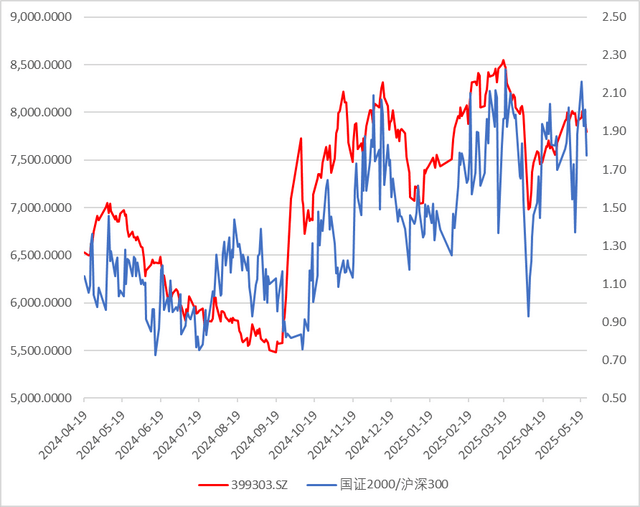
Market Overview - A-shares experienced a sudden drop with over 4,200 stocks declining and 20 hitting the daily limit down [1] - The trading volume ratio between the CSI 2000 and CSI 300 indices has declined, indicating a shift in capital from small-cap stocks to other sectors [1][3] - The banking and power sectors also saw significant declines, suggesting speculative capital may have been concentrated in these traditionally stable sectors [3] Investment Strategies - The "dumbbell strategy" has shifted focus from technology stocks to dividend and small-cap stocks due to changing economic expectations [3] - There is a recurring "end-of-month curse" observed in A-shares, where speculative stocks tend to drop significantly at the end of the month [3][4] Sector Performance - The nuclear energy sector showed strong performance, with stocks like Wangzi New Materials and Rongfa Nuclear Power hitting the daily limit up [11] - BYD's electric vehicle sales in Europe surpassed Tesla for the first time, with a 169% increase in April [13] - The electronic sector faced challenges, particularly with companies like Hengxuan Technology experiencing significant declines due to competitive pressures [12] Economic Indicators - The U.S. reported better-than-expected manufacturing and services PMI for May, indicating a resilient economy despite concerns over debt [6] - Speculation exists that the Trump administration may adopt fiscal policies that could alleviate recession fears [8] Company Developments - DeepSeek's parent company is actively recruiting talent in algorithm research and medical fields, contributing to a temporary boost in the AI medical sector [15] - Seris is set to showcase a humanoid robot demo on June 16, leading to a surge in its stock price [15]

A股市场结构性行情持续!A500ETF(159339)实时成交额突破1.87亿元,跟踪指数4月8日以来反弹超10%
Xin Lang Cai Jing· 2025-05-23 06:08
Group 1 - The A-share market has returned to levels seen before April 2, indicating an upward adjustment in economic expectations for the second quarter, which may enhance risk appetite [1] - The market is expected to focus on structural trends, with a potential rotation between dividend and technology sectors contributing to excess returns [1] - The A500 index, designed with an "industry balance" approach, provides a natural barbell structure by evenly distributing investments between dividend and technology sectors [1] Group 2 - The A500 ETF (159339) has shown a high market activity with an average daily trading volume of 261 million yuan over the past 20 trading days [1] - In the A500 index, stocks such as Betta Pharmaceuticals and Sihuan Pharmaceutical have risen over 9%, while Huahai Pharmaceutical and Tigermed have increased over 7% [1] - The A50 ETF (159592) tracks the A50 index, which focuses on large-cap leading stocks across various industries, benefiting from increased market concentration due to supply-side reforms [2] Group 3 - Recent trade negotiations have led to a temporary recovery in market sentiment, but subsequent pullbacks indicate a return to rationality among investors, focusing more on fundamental support [2] - The previous rise in A-shares was primarily driven by event-based sentiment rather than substantial improvements in corporate earnings or macroeconomic conditions [2] - As short-term sentiment factors fade, capital pricing is expected to align more closely with actual business performance and industry development trends [2]
利率跌破1%!聪明钱都在做"哑铃对冲":左手港股高息率8%,右手科技股翻倍冲锋
Jin Rong Jie· 2025-05-21 03:35
Core Viewpoint - The article discusses the current state of the Hong Kong stock market, emphasizing a cautious approach to investment strategies amid ongoing market fluctuations and the need for a balanced asset allocation strategy. Group 1: Market Overview - Global major stock markets have recovered from the largest declines since April, with the Hong Kong stock market showing significant gains [1] - The southbound flow of the Hong Kong Stock Connect has been cautious since mid-April, indicating a defensive stance among investors [3] Group 2: Investment Strategy - A "defensive counterattack" strategy is suggested for investing in Hong Kong stocks, combining offensive and defensive asset allocations [3] - The strategy involves selecting assets with extreme attributes to hedge against uncertainties and balance risk and return [5] - Offensive assets should include sectors with high growth potential, such as AI and semiconductors, or leading companies with monopolistic advantages [3] - Defensive assets should consist of stable, high cash flow companies, such as utility leaders or sectors supported by government policies like new energy and infrastructure [3] Group 3: Asset Allocation Examples - An example of asset allocation is provided, suggesting a 50/50 split between defensive and offensive assets [4] - The Hong Kong Dividend Low Volatility ETF (SH520550) is highlighted for its high dividend yield of 8.2% and frequent dividend payments [4] - The Hong Kong Technology 50 ETF (SZ159750) is noted for its 27% year-to-date return and coverage of key sectors like innovative pharmaceuticals and AI [4] Group 4: Dynamic Adjustment - Regular adjustments to the asset allocation are recommended to maximize returns, such as selling portions of the technology ETF when it exceeds expectations [7] - The essence of the strategy is to survive with defensive assets while thriving with offensive assets, allowing for simple operations without frequent trading [7] - Both ETFs mentioned are T+0 trading, facilitating easy adjustments to the strategy [7]
关税阶段性缓和,市场焦点或将回归基本面
AVIC Securities· 2025-05-19 04:25
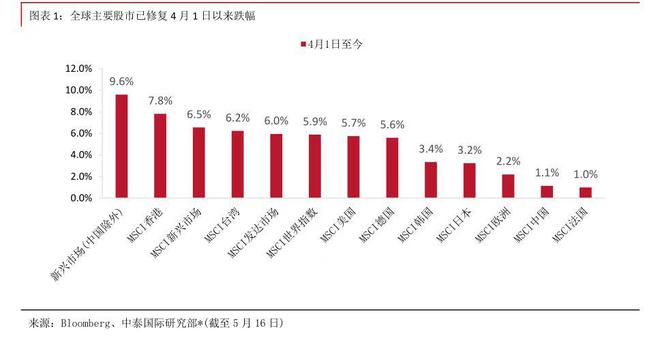
Group 1: Trade Agreement Insights - The US-China trade negotiations have led to a significant reduction in tariffs, with the US's maximum tariff on China dropping from 145% to 30%[9] - Both countries have agreed to suspend the implementation of 24% counter-tariffs for 90 days, marking a shift from "almost embargo" to "tradeable" levels[11] - The reduction in tariffs is expected to alleviate inflation concerns in the US and improve market sentiment, potentially boosting US stock performance[10] Group 2: Market Implications - The easing of tariffs is likely to enhance risk appetite in the market, with expectations for improved economic forecasts in Q2 2025[11] - A-shares and Hong Kong stocks have returned to levels prior to the "equivalent tariffs," suggesting a focus on fundamental market conditions moving forward[11] - The report suggests a structural market strategy, with a focus on dividend and technology sectors potentially providing excess returns[18] Group 3: Economic Outlook - The negative impacts of tariffs on Chinese exports may be delayed until Q3 2025, with Q2 expected to shift from a drag to a boost for exports[11] - The necessity for preemptive domestic fiscal policies has decreased due to improved economic expectations[11] - The ongoing trade conflict is anticipated to enter a prolonged "negotiation phase," indicating that optimism should be tempered[18]