
资本市场

Search documents
国家统计局:8月沪深两市股票成交较为活跃,有利于市场预期改善和发展活力增强
Sou Hu Cai Jing· 2025-09-15 05:18
Core Viewpoint - The National Bureau of Statistics spokesperson, Fu Linghui, emphasized that various regions and departments have intensified the implementation of proactive macro policies to maintain stability and promote steady economic growth in 2023 [1] Group 1: Economic Policies - The macro policies are characterized by continuity, stability, flexibility, and foresight, aimed at fostering a steady and progressive economic development [1] - The active measures taken in the capital market have contributed to a more vibrant trading environment in August, leading to improved market expectations [1] Group 2: Market Activity - In August, the trading volume in the Shanghai and Shenzhen stock markets was notably active, reflecting the positive impact of the policies on market dynamics [1] - The enhanced activity in the stock markets is seen as beneficial for boosting market vitality and overall economic confidence [1]
早盘直击|今日行情关注
申万宏源证券上海北京西路营业部· 2025-09-15 02:24
Group 1 - The macroeconomic data continues to show resilience, with August PPI reading at -2.9%, indicating a marginal improvement in the economy [1] - Financial data is on an upward trend, supporting the real economy and investment environment, which provides significant backing for the domestic capital market [1] - The focus moving forward will be on the Federal Reserve's interest rate cut decision, which currently has a high probability and is expected to positively impact global risk asset prices [1] Group 2 - The market experienced a rebound last week, with the Shanghai Composite Index recovering short-term moving averages and reaching new highs [2] - The Shenzhen Component Index outperformed, indicating strong market elasticity, while average daily trading volume decreased to approximately 23,000 billion [2] - Market hotspots were primarily in the TMT and upstream raw materials sectors, with technology and small-cap stocks leading in gains [2] - The market is attempting to resume an upward trend after technical consolidation, with major indices recovering previous losses and reaching new highs [2] - However, there are concerns regarding declining trading volume and rapid rotation of market hotspots, suggesting potential market divergence and a focus on structural trends [2]


和讯投顾徐梦婧:周末持续释放利好,关注能否放量
Sou Hu Cai Jing· 2025-09-15 02:14
Macro Economic Insights - The macroeconomic news over the weekend is positive, indicating a favorable outlook for the market. August social financing data shows a year-on-year growth of 8.8%, with M0 increasing by 11.7%, M1 by 6%, and M2 by 8.8%, suggesting ample liquidity in the market [1] - The narrowing gap between M1 and M2 indicates that household deposits are continuously flowing into the market, which is beneficial for the stock market [1] - The Ministry of Finance has stated that there is ample room for fiscal policy to exert influence, alleviating concerns in the current market environment [1] Federal Reserve and Interest Rates - The Federal Reserve is expected to announce interest rate cuts on September 17, with mainstream institutions predicting two cuts this year, each by 25 basis points. The market widely anticipates a 25 basis point cut, while a 50 basis point cut would significantly support global capital markets [1] Industry Developments - In the technology sector, the U.S. has taken a confrontational stance against China, which has responded with countermeasures. Additionally, the three major telecom operators in China have announced support for Apple's new products [1] - Positive news has emerged in the energy storage sector, indicating potential growth opportunities [1] - The recent controversy involving Luo Yonghao and Xibei has garnered attention, raising questions about its potential impact on the prepared food sector in the upcoming week [1] Market Trends - Attention should be paid to whether the market can increase trading volume in the coming week. If volume does not increase, the index is likely to remain in a large range below 3900 points. The previous week's market performance exhibited an "N" shape [1]
中国银行业:2025 年宏观、金融与房地产调研要点-China Banks_ Takeaways from 2025 macro, financial and property tour
2025-09-15 01:49
Summary of Key Points from the Conference Call Industry Overview - **Industry**: Chinese Banking Sector - **Date of Conference**: September 3-5, 2025 - **Location**: Hangzhou and Beijing Core Insights 1. **Economic Support and Government Policies**: The Chinese government has prioritized economic support through various policies since September 2024, including rate cuts and consumption stimuli, leading to a recovering capital market and alleviation of local government financing vehicle (LGFV) debt issues [2][3][4] 2. **GDP Growth Outlook**: Despite recent weakening economic data, experts believe China is on track to meet its approximately 5% GDP growth target for 2025, aided by a favorable base effect in the second half of the year. However, 2026 presents heightened risks [3][12] 3. **Monetary and Fiscal Policies**: Further policy rate cuts are deemed unlikely for the remainder of 2025, with a preference for targeted fiscal subsidies. The potential introduction of a consumption tax reform in 2025 is also noted [3][4][12] 4. **Inflation and Economic Structure**: Weak inflation persists, attributed to structural issues and overcapacity in the investment-driven growth model, particularly in manufacturing. Experts emphasize the need for long-term structural reforms [11][13] 5. **Capital Market Recovery**: The capital market is showing signs of recovery, supported by easing US-China tensions and improved global liquidity. The upward momentum is expected to continue [15] Banking Sector Insights 1. **Net Interest Margin (NIM) Outlook**: Banks are less negative about NIM outlooks, with many indicating that NIM is near its bottom and may stabilize soon. However, loan demand remains lackluster, particularly from non-government corporates and retail sectors [5][24] 2. **Dividend Preferences**: In light of macroeconomic uncertainties, banks with higher dividend yields, such as ICBC, CCB, CITIC, and regional banks like BOCD and BOHZ, are preferred [5][24] 3. **Individual Bank Performance**: - **ICBC**: Expects improved earnings in H2 2025, driven by fee income growth and trading gains, despite a slight decline in NIM [25] - **CCB**: Anticipates NIM stabilization, with potential downward pressure from previous LPR cuts [26] - **BOC**: Expects NIM to bottom out and aims to prioritize wealth management and consumer finance [27] - **CITIC**: Predicts stable NIM and improvement in retail asset quality by early next year [28] - **SPDB**: Noted revenue and NPAT growth in H1, with a focus on technology finance and inclusive finance [30] Additional Considerations 1. **Consumption Trends**: Retail consumer goods sales growth has slowed, with services consumption becoming increasingly significant, accounting for approximately 46% of total consumption in 2024. Policies to boost consumption are expected to be emphasized [16][17] 2. **Property Market Dynamics**: The residential property market remains weak, but there is high demand for quality homes. Experts express skepticism about new property policies due to limited room for easing [22][18] 3. **Tariff and Trade Outlook**: Tariffs are expected to remain stable, with potential RMB appreciation driven by trade dynamics. The relationship between China and the US is characterized as tight, with full decoupling seen as unlikely [19][22] Conclusion The conference highlighted a cautious yet optimistic outlook for the Chinese banking sector, with a focus on stabilizing NIMs, improving asset quality, and navigating macroeconomic challenges. The emphasis on structural reforms and consumption growth indicates a strategic shift in policy direction moving forward.




上交所副总经理王泊:进一步打通“科技、资本、产业”良性循环的堵点痛点
Zheng Quan Ri Bao Wang· 2025-09-11 13:16
Core Viewpoint - The Shanghai Stock Exchange emphasizes its commitment to serving the real economy and enhancing support for technological innovation through the STAR Market, which has evolved from a testing ground to a demonstration platform for hard technology [1][4]. Group 1: STAR Market Development - The STAR Market has gathered 589 listed companies with a total market capitalization exceeding 9 trillion yuan [1]. - Over the past six years, the STAR Market has continuously injected capital into enterprises through IPOs and refinancing, acting as a catalyst for hard technology to transition from laboratories to the market [1][2]. Group 2: Inclusive Reforms - The STAR Market has implemented inclusive reforms to break down barriers, allowing unprofitable hard technology companies to access capital without waiting for profitability [2]. - The introduction of the "1+6" policy this year has specifically targeted emerging fields such as artificial intelligence and commercial aerospace, creating a tailored listing pathway for these sectors [1][2]. Group 3: Supportive Measures - The STAR Market has developed a "toolbox" for growth tailored to the needs of technology companies, focusing on their unique characteristics such as light assets and high R&D [2]. - Recent reforms, including the "科八条" initiative, have introduced 35 measures to enhance mergers and acquisitions, resulting in 134 disclosed transactions worth over 40 billion yuan, surpassing the total of the previous five years [2][3]. Group 4: Comprehensive Services - The Shanghai Stock Exchange aims to provide full-chain services to support the growth of STAR Market companies, ensuring that services are delivered where needed [3]. - Key initiatives include on-site regulatory support, customized training, and proactive problem-solving to assist companies in navigating challenges [3]. Group 5: Ecosystem Development - The STAR Market focuses on creating a virtuous cycle of investment and financing, ensuring that funds are directed towards tangible projects while allowing investors to share in the returns [3][4]. - The commitment to continuous reform and service enhancement aims to facilitate a smooth interaction between technology, capital, and industry, contributing to high-quality development and technological self-reliance [4].
关键数据反弹,背后是什么信号?
大胡子说房· 2025-09-11 12:07
Group 1 - The core viewpoint of the article is that while CPI continues to decline, PPI shows signs of stabilization, indicating the effectiveness of recent anti-involution measures on upstream prices [3][9][12] - In August, the CPI decreased by 0.4% year-on-year, while the core CPI, excluding food and energy, increased by 0.9%, marking the fourth consecutive month of growth [3][6] - The average CPI from January to August this year is down 0.1% compared to the same period last year, suggesting a persistent deflationary environment [6][7] Group 2 - Food prices fell by 4.3% year-on-year in August, with a larger decline than the previous month, contributing to a greater downward impact on CPI [8] - PPI's year-on-year decline has narrowed for the first time since March, and the month-on-month data has ended an eight-month downward trend, indicating a potential recovery [10][15] - The article emphasizes that while PPI shows improvement, both CPI and PPI remain negative, making it premature to declare a shift from deflation to inflation [15][16] Group 3 - The article discusses the need to stimulate demand alongside supply-side adjustments to effectively combat deflation [17][18] - It highlights that the capital market is currently being leveraged to increase liquidity and drive asset prices up, which is crucial for reversing deflationary trends [20][21] - The article suggests that the key to increasing investment lies in raising asset prices, particularly in the stock market, which requires less capital than real estate [25][27] Group 4 - The current capital market environment is seen as a critical factor in addressing the issue of insufficient investment, which is identified as a core reason for deflation [21][22] - The article posits that a rise in stock prices can lead to a quicker recovery in CPI and PPI data, thus benefiting the overall economic environment [29][30] - It anticipates that the capital market will experience another upward trend following potential interest rate cuts by the Federal Reserve, which could enhance liquidity and market sentiment [33][34]

国是金融改革研究院刘胜军:用好资本市场有利于解决创新企业融资和激励问题
Xin Hua Cai Jing· 2025-09-10 14:52
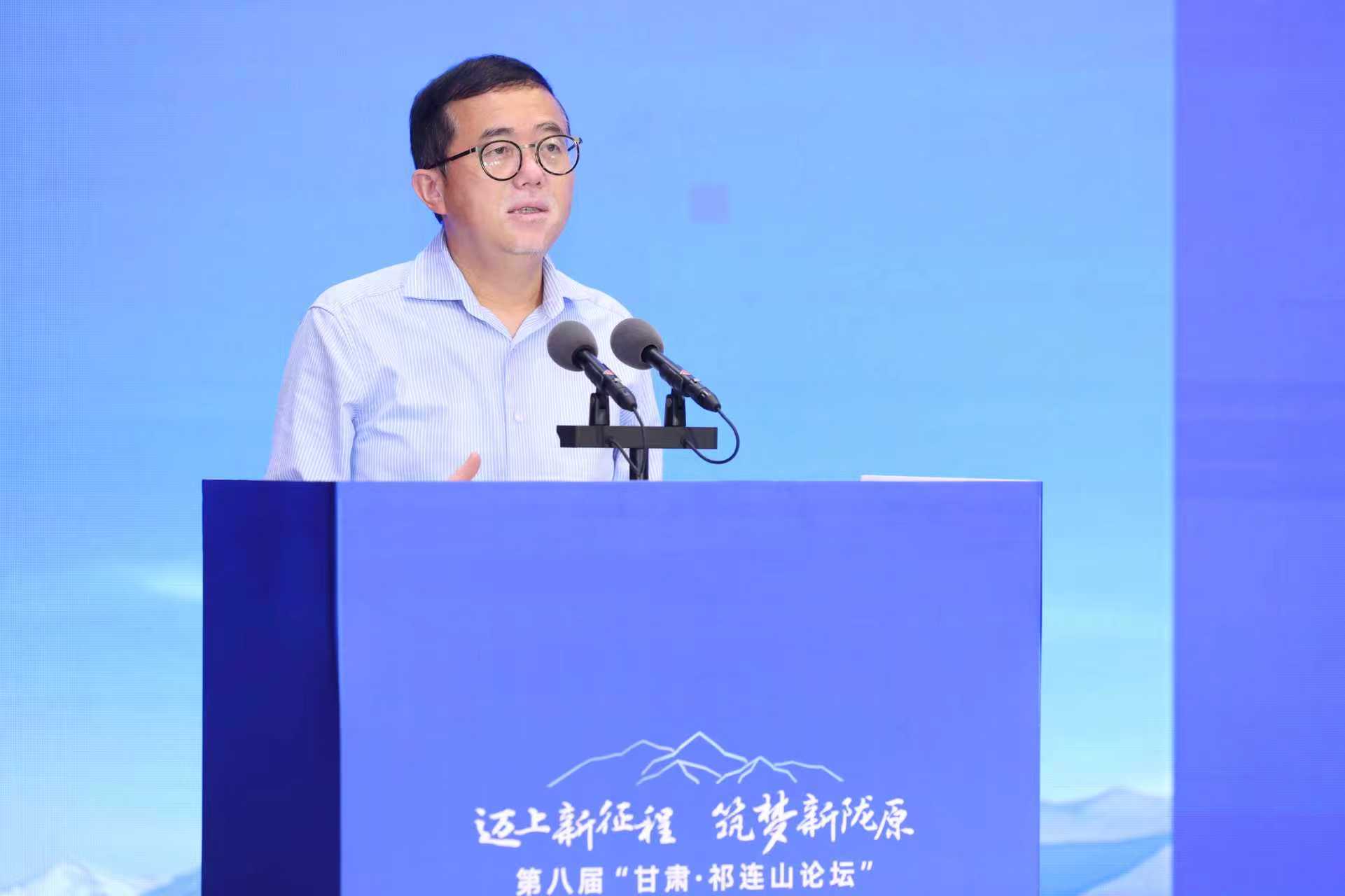
Core Viewpoint - The forum emphasized the importance of financial support for high-quality development of industrial chains, particularly for small and medium-sized enterprises (SMEs) [1][4]. Group 1: Financial Support for Industries - Financial services need to be improved to better support the real economy, especially SMEs, through systemic and mechanistic changes [1][4]. - Capital markets should be leveraged to address financing and incentive issues for innovative enterprises [1][5]. - The development of industrial clusters is crucial for national competitive advantage, with Gansu forming 12 provincial advanced manufacturing clusters [3][4]. Group 2: Challenges in Financing - Despite numerous policies, the financing difficulties for SMEs and private enterprises remain unresolved due to high indirect financing ratios and slow elimination of "zombie" enterprises [4][6]. - Financial institutions need to enhance their risk assessment capabilities using data resources to better serve the real economy [5][6]. Group 3: Recommendations for Improvement - Promote market-oriented private equity and venture capital with a risk appetite to attract innovative talent, especially in artificial intelligence [5][6]. - Establish high-quality data platforms to convert data into credit assessment resources for financial institutions [5][6]. - Encourage financial institutions to provide financing services based on accounts receivable, inventory, and orders for SMEs [6].
中国光大银行以并购贷款业务精准赋能产业升级-银行-金融界
Jin Rong Jie· 2025-09-08 02:09
Core Viewpoint - China Everbright Bank is leveraging its merger and acquisition loan products to support industrial upgrades and resource optimization in key sectors such as technology finance, high-end manufacturing, and capital markets [1]. Group 1: Technology Finance - Everbright Bank has positioned technology finance as the strategic core of its merger loan business, focusing on supporting mergers in critical areas like integrated circuits, biomedicine, new energy, and environmental protection [2]. - In April 2025, the bank provided financing support covering 78% of the transaction price for a Suzhou electronic materials company acquiring a Southeast Asian competitor, reinforcing its leading position in the wet electronic chemicals sector [2]. Group 2: High-End Manufacturing - The bank's merger loans are closely aligned with the transformation towards high-end, intelligent, and green manufacturing, actively supporting mergers in high-end equipment, automotive manufacturing, and new materials [3]. - In January 2025, Everbright Bank issued a merger loan of 670 million yuan to a Shandong new materials company to facilitate the acquisition of a polyolefin elastomer (POE) facility, accelerating the domestic substitution of core raw materials for photovoltaic film [3]. Group 3: Capital Markets - Everbright Bank plays a crucial role in facilitating transactions and financing solutions for listed companies and their affiliates, enhancing the attractiveness of the domestic capital market [4]. - In the first half of 2025, the bank provided merger financing services over ten times to listed companies and their affiliates, contributing to the vibrancy of the capital market [4]. Group 4: Innovation and Brand Development - The bank has established a professional and efficient merger finance team, expanding the application scenarios of merger loans and exploring innovative fields such as equity incentives and public REITs [5]. - In the first half of 2025, Everbright Bank provided a total of 16.6 billion yuan in merger loans to domestic and foreign clients, leveraging the full-spectrum financial capabilities of the Everbright Group to offer comprehensive support for merger transactions [5]. - The bank aims to continue serving the real economy, responding to national strategic directions and market demands, while optimizing merger financial service models to support industrial upgrades and economic structure optimization [5].

杨德龙:市场涨跌起伏就像四季轮换一样 保持平常心方能立于不败之地
Xin Lang Ji Jin· 2025-09-08 00:48
Group 1 - The market is currently experiencing a correction after a significant rally, particularly in popular stocks that have seen large gains [1] - The current market trend is characterized as a slow bull market rather than a fast bull market, indicating a more sustainable growth pattern [1] - The rapid increase in margin trading balances, which have surpassed 2.3 trillion yuan, signals both active investor engagement and potential short-term adjustment risks [1][2] Group 2 - Long-term market growth is supported by government policies aimed at boosting consumption through sustained market performance, which is essential for economic recovery [2] - There is a strong inflow of capital into the stock market from various sources, including funds moving from traditional industries and low-yield savings, indicating a shift in investment strategies [2] - The confidence of foreign investors in Chinese assets is increasing, particularly in high-tech sectors, which may lead to a revaluation of these assets [2] Group 3 - The overall market trend remains upward despite short-term fluctuations, with a recommendation for investors to maintain a positive mindset and focus on long-term growth [3][4] - The current market is in a phase of adjustment, and investors are advised to look for opportunities in undervalued stocks or funds during this period [4] - The combination of economic recovery, policy support, and capital inflow suggests that the long-term upward trend in the market is likely to continue [4]
股指月报:持续上涨后,波动加剧-20250905
Wu Kuang Qi Huo· 2025-09-05 13:24
1. Report Industry Investment Rating No relevant information provided. 2. Core Views of the Report After continuous upward movement, high - level hot sectors such as AI have recently adjusted, and together with the shrinking market trading volume, the short - term index faces certain adjustment pressure. However, in the long - run, policies still support the capital market, and the main strategy is to go long on dips [10][11]. 3. Summary by Relevant Catalogs 3.1 Monthly Assessment and Strategy Recommendation - **Important News**: The Chinese President proposed to build an AI application cooperation center; the joint working group of the Ministry of Finance and the central bank held a meeting; the central bank conducted 100 billion yuan of repurchase operations; Wu Qing aimed to consolidate the stable and positive momentum of the capital market [10]. - **Economic and Corporate Earnings**: In July, industrial added value increased by 5.7% year - on - year, fixed - asset investment from January to July increased by 1.6%, and retail sales rose by 3.7% year - on - year. In August, the manufacturing PMI was 49.4%, up 0.1 percentage points. In July, M1 and M2 growth rates were 5.6% and 8.8% respectively. The social financing increment was 1.13 trillion yuan, and exports and imports increased by 7.2% and 4.1% respectively [10]. - **Interest Rates and Credit Environment**: In August, the stock market rose significantly, causing the 10 - year Treasury bond rate to rebound and the credit bond rate to decline, with a lower credit spread and loose liquidity [10]. - **Trading Strategy Recommendations**: Hold a small number of IM long positions in the long - term due to medium - low valuation and long - term discount; hold IF long positions for six months as a new interest - rate cut cycle may benefit high - dividend assets [12]. 3.2 Futures and Spot Markets - **Spot Market**: The Shanghai Composite Index reached 3857.93, up 7.97%; the Shenzhen Component Index was at 12696.15, up 15.32%, etc. [14]. - **Futures Market**: IF, IH, IC, and IM contracts all showed varying degrees of increase [15]. 3.3 Economic and Corporate Earnings - **Economic Indicators**: In Q2 2025, GDP growth was 5.2%. In August, the manufacturing PMI was 49.4%. In July, consumption growth was 3.7%, exports increased by 7.2%, and investment growth was 1.6% [31][34][37]. - **Corporate Earnings**: In the 2025 semi - annual report, the revenue growth rate was flat year - on - year and up 0.4% quarter - on - quarter, and the net profit growth rate was 2.5% year - on - year and down 1.0% quarter - on - quarter [40]. 3.4 Interest Rates and Credit Environment - **Interest Rates**: The 10 - year Treasury bond rate rebounded, and the 3 - year AA - corporate bond rate is presented in the chart [43]. - **Credit Environment**: In July 2025, M1 and M2 growth rates were 5.6% and 8.8% respectively. The social financing increment was 1.13 trillion yuan, mainly due to government bonds and bill financing growth, while resident and corporate credit data declined [54]. 3.5 Capital Flows - **Inflow**: This week, 20.528 billion shares of partial - stock funds were newly established, and ETF trading volume increased rapidly. In August, the margin trading balance increased by nearly 300 billion yuan, reaching a record high [60][63]. - **Outflow**: In August, major shareholders had a net increase of - 34.467 billion yuan, and the number of IPO approvals was 7 [66]. 3.6 Valuation - The price - to - earnings ratios (TTM) of the Shanghai 50, CSI 300, CSI 500, and CSI 1000 were 11.83, 13.85, 32.09, and 44.68 respectively; the price - to - book ratios (LF) were 1.29, 1.44, 2.13, and 2.37 respectively [70].