量化宽松

Search documents
宏观金融类:文字早评2025/11/24星期一-20251124
Wu Kuang Qi Huo· 2025-11-24 02:26
1. Report Industry Investment Ratings There is no information provided regarding the report's industry investment ratings. 2. Core Views of the Report - The stock market has a certain degree of short - term uncertainty due to previous rises and overseas market adjustments, but the medium - to - long - term strategy is to go long on dips [4]. - The bond market is expected to oscillate and recover in the fourth quarter, with attention to the stock - bond seesaw effect and the increasing allocation power [8]. - For precious metals, it is recommended to hold a bottom position and wait and see, with the Fed's easing policy expected to further drive prices in December [10]. - Most non - ferrous metals are expected to be in a state of shock in the short term, with different support and pressure factors [13][15][18]. - The steel market is expected to be weakly volatile in the short term, but demand may improve with policy implementation [36]. - The energy and chemical market shows different trends, with some products recommended for long - term strategies and others for short - term caution [56][58][60]. - The agricultural product market also has various trends, such as short - term weak operation for some and shock - based operation for others [81][86]. 3. Summary by Related Catalogs Macro - financial Category Stock Index - **Market Information**: The US government may allow NVIDIA to sell H200 chips to China; the SASAC held a central enterprise specialization integration promotion meeting; Changxin Storage released new DDR5 products; a Goldman Sachs partner said the US stock market may continue to sell off [2]. - **Strategy View**: After previous rises and influenced by overseas market adjustments, the short - term index is uncertain, but the medium - to - long - term strategy is to go long on dips [4]. Treasury Bond - **Market Information**: The main contracts of TL, T, and TF decreased on Friday, while TS remained unchanged. The Bank of Japan may raise interest rates, and the US PMI data showed mixed results. The central bank conducted a net injection of 1622 billion yuan [5]. - **Strategy View**: The bond market is expected to oscillate and recover in the fourth quarter, with attention to the stock - bond seesaw effect and the increasing allocation power [8]. Precious Metals - **Market Information**: Gold prices rose slightly, and silver prices fell. The US 10 - year Treasury yield and the US dollar index were reported. Fed officials' "dovish" remarks supported precious metal prices [9]. - **Strategy View**: It is recommended to hold a bottom position and wait and see, with the Fed's easing policy expected to further drive prices in December [10]. Non - ferrous Metals Category Copper - **Market Information**: The copper price rebounded after a decline, with LME copper inventory decreasing and domestic spot premiums rising [12]. - **Strategy View**: The copper price is expected to be in a state of shock in the short term, with strong support at the bottom [13]. Aluminum - **Market Information**: The aluminum price rebounded after a decline, with domestic and overseas inventory changes and improved downstream procurement sentiment [14]. - **Strategy View**: The aluminum price is expected to strengthen after an oscillatory adjustment, with strong support [15]. Zinc - **Market Information**: The zinc price rose slightly, with changes in inventory and basis [16]. - **Strategy View**: The zinc price is expected to be weakly volatile in the short term, with the zinc industry still in an over - supply cycle [18]. Lead - **Market Information**: The lead price fell, with changes in inventory and basis [19]. - **Strategy View**: The lead price is expected to be weakly volatile in the short term, with relatively loose supply [19]. Nickel - **Market Information**: The nickel price continued to fall, with changes in spot premiums and cost [20]. - **Strategy View**: The nickel price is expected to be under pressure in the short term, and it is recommended to wait and see [21][22]. Tin - **Market Information**: The tin price fell slightly, with changes in supply, demand, and inventory. The safety situation in the DRC may affect tin mines [23]. - **Strategy View**: The tin price is expected to oscillate in the short term, and it is recommended to wait and see [24]. Carbonate Lithium - **Market Information**: The carbonate lithium price fell, with changes in spot and futures prices [25]. - **Strategy View**: It is recommended to pay attention to potential disturbances and the reference range of the main contract [26]. Alumina - **Market Information**: The alumina price fell, with changes in inventory and basis [28]. - **Strategy View**: It is recommended to wait and see in the short term, with attention to supply - side policies [29]. Stainless Steel - **Market Information**: The stainless steel price rose slightly, with changes in inventory and cost [30]. - **Strategy View**: The stainless steel price is expected to continue to decline weakly, with an over - supply situation [30]. Cast Aluminum Alloy - **Market Information**: The cast aluminum alloy price fell, with changes in inventory and basis [31]. - **Strategy View**: The price is expected to be in a state of shock in the short term [33]. Black Building Materials Category Steel - **Market Information**: The steel price rose slightly, with changes in inventory and basis [35]. - **Strategy View**: The steel price is expected to be weakly volatile in the short term, but demand may improve with policy implementation [36]. Iron Ore - **Market Information**: The iron ore price fell slightly, with changes in inventory and basis [37]. - **Strategy View**: The iron ore price is expected to oscillate within a range, with strong supply and stable demand [38][39]. Glass and Soda Ash - **Market Information**: The glass price fell, and the soda ash price fell. There were changes in inventory and basis [40][41]. - **Strategy View**: The glass price is expected to oscillate at the bottom, and the soda ash price is expected to be weakly volatile [40][41]. Manganese Silicon and Ferrosilicon - **Market Information**: The manganese silicon price fell, and the ferrosilicon price rose slightly. There were changes in inventory and basis [42]. - **Strategy View**: It is recommended to pay attention to the inflection point of market sentiment and price, and to look for opportunities to rebound [44][45]. Industrial Silicon and Polysilicon - **Market Information**: The industrial silicon price fell, and the polysilicon price rose slightly. There were changes in inventory and basis [46][49]. - **Strategy View**: The industrial silicon price is expected to oscillate, and the polysilicon price is expected to oscillate within a wide range [48][50]. Energy and Chemical Category Rubber - **Market Information**: The rubber price oscillated and adjusted, with changes in tire factory start - up rates and inventory [52][54]. - **Strategy View**: It is recommended to have a bullish strategy with stop - loss settings and partial hedging [56]. Crude Oil - **Market Information**: The crude oil price fell, and there were changes in refined oil prices and inventory [57]. - **Strategy View**: It is recommended to wait and see in the short term and test OPEC's export price - support willingness [58]. Methanol - **Market Information**: The methanol price fell, with changes in inventory and basis [59]. - **Strategy View**: The methanol price is expected to continue to decline weakly, with high inventory pressure [60]. Urea - **Market Information**: The urea price rose slightly, with changes in inventory and basis [61]. - **Strategy View**: The urea price is expected to oscillate at the bottom, and it is recommended to go long at low prices [61]. Pure Benzene and Styrene - **Market Information**: The pure benzene price was unchanged, and the styrene price rose. There were changes in inventory and basis [62]. - **Strategy View**: The styrene price may stop falling in stages, with cost and demand factors [63]. PVC - **Market Information**: The PVC price was unchanged, with changes in inventory and basis [64]. - **Strategy View**: The PVC price is expected to be weak, and it is recommended to go short in the medium term [66]. Ethylene Glycol - **Market Information**: The ethylene glycol price fell, with changes in inventory and basis [67]. - **Strategy View**: The ethylene glycol price is expected to be weak, and it is recommended to go short in the medium term [68]. PTA - **Market Information**: The PTA price fell, with changes in inventory and basis [69]. - **Strategy View**: The PTA price is expected to be affected by supply, demand, and valuation factors [71]. Para - Xylene - **Market Information**: The para - xylene price fell, with changes in inventory and basis [72]. - **Strategy View**: The para - xylene price is expected to have a risk of valuation correction, with high supply and low demand [73]. Polyethylene (PE) - **Market Information**: The PE price fell, with changes in inventory and basis [74]. - **Strategy View**: The PE price is expected to oscillate at a low level, with cost and demand factors [75]. Polypropylene (PP) - **Market Information**: The PP price fell, with changes in inventory and basis [77]. - **Strategy View**: The PP price is expected to be affected by cost and demand factors, and may be supported in the first quarter of next year [78]. Agricultural Products Category Pig - **Market Information**: The pig price fluctuated, with normal supply and limited demand [80]. - **Strategy View**: It is recommended to go short on the near - month contract or do reverse spreads [81]. Egg - **Market Information**: The egg price was stable with partial increases, with reduced inventory pressure and increased replenishment willingness [82]. - **Strategy View**: The egg price is expected to oscillate in the short term, and it is recommended to go short after a rebound in the medium term [83][84]. Soybean Meal and Rapeseed Meal - **Market Information**: The soybean meal price was stable, with changes in import cost, inventory, and demand [85]. - **Strategy View**: The soybean meal price is expected to oscillate, with cost support and pressure on crushing margins [86]. Edible Oils - **Market Information**: The edible oil price fell, with weak palm oil export data and high supply [87]. - **Strategy View**: The palm oil price is recommended to be viewed with an oscillatory perspective, and turn to a bullish strategy if production decreases [88][89]. Sugar - **Market Information**: The sugar price fell, with an expected global surplus in the 2025/26 season and increased imports [90][91]. - **Strategy View**: It is recommended to wait for a rebound and then go short [91]. Cotton - **Market Information**: The cotton price oscillated narrowly, with changes in production, inventory, and demand [92][93]. - **Strategy View**: The cotton price is expected to oscillate in the short term, with no strong driving force [94].
跨境支付破局成功,美元被动放水,人民币升值藏关键底气
Sou Hu Cai Jing· 2025-11-23 23:41
Core Viewpoint - The appreciation of the Renminbi (RMB) against the US dollar is not a short-term trend but a reflection of China's growing economic strength and the shift in the global currency landscape [1][21]. Group 1: RMB Strength - The recent rise of the RMB against the USD is attributed to years of underlying strength, particularly in cross-border payments, which have reduced reliance on Western systems [4][10]. - The Cross-Border Interbank Payment System (CIPS) now has 187 direct participants and 1,559 indirect participants, with 63.7% being foreign entities, covering 122 countries and regions [6]. - The "Multilateral Central Bank Digital Currency Bridge" project utilizes blockchain for real-time cross-border payment settlements, bypassing SWIFT, with 164 transactions completed in 2022, totaling over 150 million yuan [8]. Group 2: USD Weakness - The USD is facing challenges due to high fiscal pressures and rising interest payments, leading to a situation where the Federal Reserve is forced into quantitative easing rather than tightening [15][19]. - The reliance on debt financing for AI industry growth poses risks, as tightening monetary policy could lead to increased financing costs and potential valuation collapses [17]. - The historical over-reliance on printing money without supporting the real economy has led to a decline in the USD's credibility and strength [19]. Group 3: Future Trends - The RMB's appreciation is expected to continue over the next 6 to 12 months, signaling important implications for personal finance and asset allocation [21][26]. - The shift from a USD-dominated currency system to a more diversified one is underway, with the RMB's rise aligning with this trend [24][26]. - Individuals are encouraged to pay attention to RMB-denominated assets, as their attractiveness is likely to increase with the currency's appreciation [26].


三台“抽水机”吸干市场!华尔街资金荒重现,背后藏着什么?
Sou Hu Cai Jing· 2025-11-23 05:46
Core Insights - The article discusses the liquidity crisis on Wall Street, attributing it to three main factors: the U.S. Treasury's massive debt issuance, the Federal Reserve's quantitative tightening, and political disruptions in Congress [1][3][4]. Group 1: U.S. Treasury Actions - The U.S. Treasury is set to issue over $2 trillion in new government bonds by Q3 2025 to cover its significant expenditures, which has led to a substantial cash influx into the Treasury, draining liquidity from the market [1]. - The Treasury's actions are described as a powerful "money pump" that exacerbates the liquidity crisis on Wall Street [4]. Group 2: Federal Reserve Policies - The Federal Reserve has been engaged in quantitative tightening since 2022, allowing previously purchased assets like government bonds and MBS to mature without reinvestment, effectively withdrawing funds from the market [1][3]. - Reserves held by banks at the Federal Reserve have decreased from a peak of $4.3 trillion to $2.85 trillion, nearing a critical point for the financial system [3]. Group 3: Political Factors - Congressional actions, including a recent government shutdown, have led to a pause in federal spending, further tightening liquidity as funds that should have flowed to businesses and individuals are stuck in the Treasury [3][4]. Group 4: Market Reactions and Future Outlook - The Federal Reserve is experiencing internal divisions, with some members advocating for liquidity injections while others prioritize inflation control, creating uncertainty in monetary policy [6]. - Short-term relief may occur as the Treasury reduces bond auction sizes and previously stalled funds are released, but a significant risk looms at year-end when banks may further restrict lending, potentially leading to a severe liquidity crisis [8]. - The underlying crisis is characterized as a systemic cash shortage driven by U.S. debt issues, tightening policies, and political stalemates, with implications for global financing costs and market stability [9].

A股市场暴跌缘由找到了,高盛总结九大因素,前两轮回调皆现历史大底
Sou Hu Cai Jing· 2025-11-21 17:03
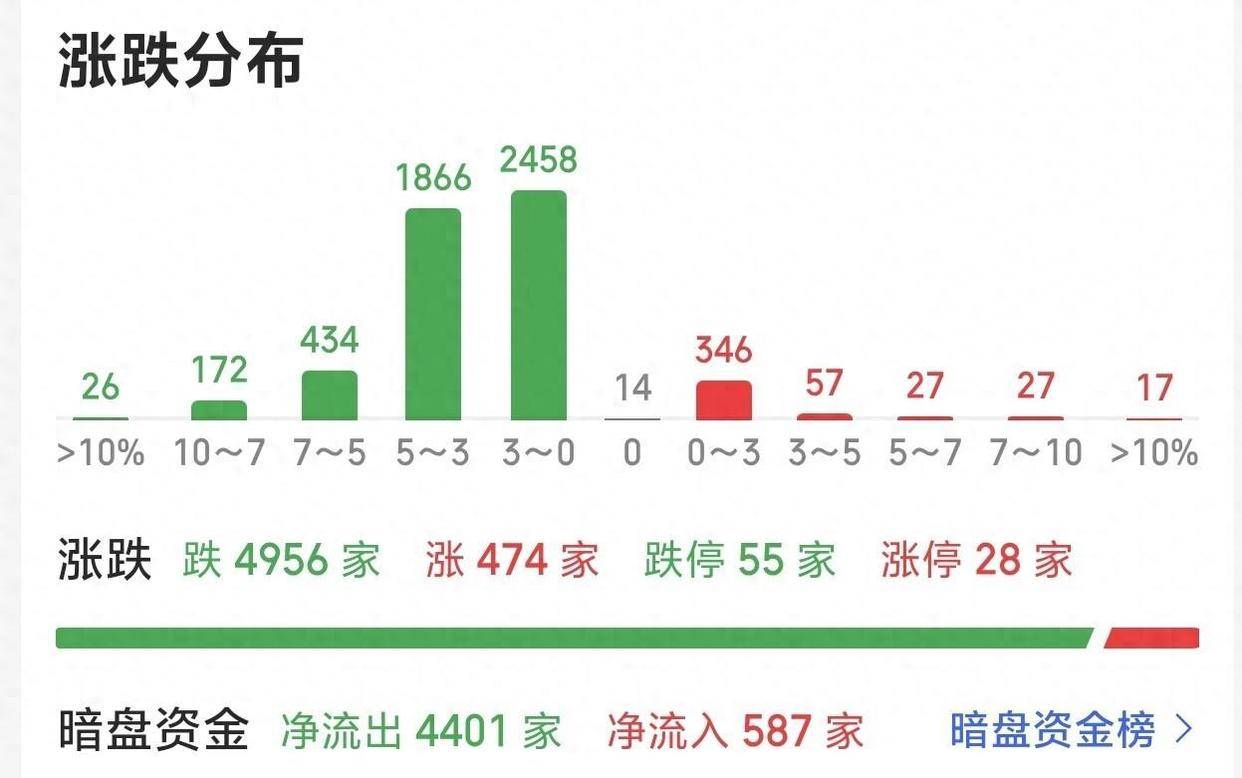
Group 1 - Goldman Sachs faced a dramatic situation in the A-share market, with all 26 major A-shares it heavily invested in declining amid a bull market, with 13 stocks dropping over 20% [1] - The stark contrast between Goldman Sachs' performance in the A-share market and its success in the US market, where its holdings reached a total market value of $740 billion, highlights the unique dynamics of global capital markets [1] - The A-share market experienced its largest single-day drop since April 7, with around 2,500 stocks declining over 3%, particularly in the technology sector [3] Group 2 - Goldman Sachs provided nine reasons for the decline in the US stock market, including the exhaustion of Nvidia's positive news and rising risks in private credit [3] - The adjustment of margin financing rates for popular stocks like SMIC and Baiwei Storage to zero has led to significant deleveraging in the market [5] - Historical data indicates that market bottoms often have identifiable characteristics, with past instances showing a combination of policy and market bottoms [9] Group 3 - The current market environment is supported by policies aimed at stabilizing the market, with sectors like consumption and infrastructure showing relative resilience [12] - The investment difficulties faced by Goldman Sachs in the A-share market reflect the challenges international capital faces in adapting to emerging markets, particularly due to information asymmetry [12] - The collective "water and soil incompatibility" of foreign capital in the A-share market is not limited to Goldman Sachs, as evidenced by other foreign investors experiencing significant losses [14]

A股市场下跌原因找到了,高盛给出9大理由,前两次均为历史大底
Sou Hu Cai Jing· 2025-11-21 16:31
Core Viewpoint - The recent market crash has raised concerns among investors, with Goldman Sachs providing nine reasons for the capital storm, suggesting that similar panic events in the past have marked historical bottoms [1][4]. Market Performance - On November 21, 2025, the A-share market experienced its largest single-day drop since April 7, with over 2,500 companies declining more than 3% [4]. - The Nasdaq index fell over 5%, with major tech stocks, including Nvidia, suffering significant losses [4]. Investor Sentiment - The sell-off was driven by a fragile emotional foundation among investors, exacerbated by worries over domestic policies and geopolitical tensions, leading to a negative market sentiment that spread from offshore to onshore markets [4][11]. - Despite the downturn, there is a perception among some investors that this could represent a rare buying opportunity [3]. Comparison with Global Markets - A-shares exhibit valuation advantages compared to global markets, with many companies trading below book value and offering dividend yields exceeding 4% [7]. - The decline in the U.S. market was more severe, with concerns over AI bubbles and the Federal Reserve's interest rate decisions adding to market uncertainty [7]. Historical Context - Historical parallels are drawn with past market crashes, such as those in April 2020 and April 2025, which were triggered by various global events and led to significant market corrections [9][12]. - The current market conditions share similarities with previous "diamond bottoms," characterized by prolonged declines, low price-to-earnings ratios, and widespread pessimism [12]. Foreign Investment Trends - Despite the negative market atmosphere, foreign capital, represented by northbound funds and QFII, continues to show strong interest in A-shares, with net inflows reaching 161.6 billion yuan from January to July 2018 [14]. - The sectors most affected by the recent downturn include consumer electronics, photovoltaics, lithium batteries, and AI applications, while defensive assets like rare earths, agriculture, and pharmaceuticals have performed well [14]. Investment Strategy - In the current market environment, professional investors are focusing on fundamentally strong companies with sustainable growth potential, emphasizing the importance of patience in identifying undervalued assets [14][15].

有色金属周度报告-20251121
Xin Ji Yuan Qi Huo· 2025-11-21 10:57
1. Report Industry Investment Rating - No information provided 2. Core Viewpoints - In the short - term, alumina is expected to run in a weak and volatile manner, and Shanghai aluminum will run in a high - level volatile manner, with a suggestion to wait and see; in the long - term, in a quantitative easing environment, Shanghai aluminum will run with a slight upward trend, and alumina will run weakly until large - scale production cuts occur [44] - For copper, in the short - term, the game between bulls and bears intensifies, and it will oscillate in a high - level range; in the long - term, there is long - term positive support for demand, and it is expected to be bullish [47] - Regarding lithium carbonate, in the short - term, there may be repeated high - level oscillations; in the long - term, energy storage provides strong demand support, and it is recommended to allocate bullishly [50] 3. Summary by Relevant Catalogs 3.1 Domestic Main Metal Spot Price Trends - Copper: The futures主力合约 (CU2601) closed at 86,900 on November 7th and 85,660 on November 14th, with a weekly change of - 1,240 and a weekly decline of 1.43%. The spot average price of 1 copper in Shanghai dropped from 87,070 to 85,870, a decline of 1.38% [4] - Aluminum: The futures主力合约 (AL2601) decreased from 21,840 to 21,340, a weekly decline of 2.29%. The spot average price of A00 aluminum in Shanghai dropped from 21,900 to 21,370, a decline of 2.42% [4] - Zinc: The futures主力合约 (ZN2601) decreased slightly by 0.33%, and the spot average price of 0 zinc in Shanghai declined by 0.22% [4] - Lead: The futures主力合约 (PB2601) declined by 1.94%, and the spot average price of 1 lead ingot dropped by 2.01% [4] - Nickel: The futures主力合约 (NI2601) declined by 2.75%, and the spot average price of 1 electrolytic nickel dropped by 2.42% [4] - Alumina: The futures主力合约 (AO2601) declined by 3.86%, and the spot price in Foshan dropped by 0.35% [4] - Industrial silicon: The futures主力合约 (SI2601) declined by 0.67%, while the spot average price of 553 silicon increased by 1.05% [4] - Lithium carbonate: The futures主力合约 (LC2601) increased by 4.19%, and the spot average price of battery - grade lithium carbonate (99.5%) increased by 8.77% [4] - Polysilicon: The futures主力合约 (PS2511) increased by 4.83%, while the spot price of N - type polysilicon remained unchanged [4] 3.2 Copper - related - As of November 21st, SHFE copper inventory was 110,600 tons, a 1.10% increase from last week. As of November 20th, LME copper inventory was 157,900 tons, a 16.36% increase, and COMEX copper inventory was 398,500 tons, a 1.84% increase [14][15] - As of November 21st, the spot TC of copper concentrate was - 41.72 dollars/ton, and the spot RC was - 4.17 cents/pound, with the expectation of tight supply at the mine end remaining [18] 3.3 Lithium - related - As of November 21st, the index of spodumene concentrate (CIF China) was 1,089 dollars/ton, a weekly increase of 83 dollars/ton [20] 3.4 Aluminum - related - Aluminum raw material supply: As of November 21st, the port inventory of bauxite was 2,802.36 million tons, a decrease of 498,700 tons from last week. As of the end of October, the bauxite inventory of alumina plants was at a historical high [25] - Alumina supply: As of November 21st, the operating rate of alumina enterprises was 85.46%, a slight increase, and the total inventory was 488,300 tons, an increase of 4,300 tons from last week [32] - Electrolytic aluminum supply: As of the end of October, China's primary aluminum production was 3,766,000 metric tons, imports were 248,400 tons, inventory was 618,000 tons, and the operating rate was 98.24%, remaining at a high level [35] - Aluminum inventory in the three major exchanges: As of November 20th, LME aluminum inventory decreased by 9,100 tons, SHFE aluminum inventory increased by 1,564 tons, and COMEX aluminum inventory decreased by 604 tons. Overall, electrolytic aluminum inventory showed a downward trend this week [37][38] 3.5 Non - ferrous Metal Demand - In September 2025, automobile production and sales reached 3.276 million and 3.226 million respectively, with month - on - month increases of 16.4% and 12.9%, and year - on - year increases of 17.1% and 14.9%. From January to September 2025, automobile production and sales reached 24.333 million and 24.363 million respectively, with year - on - year increases of 13.3% and 12.9% [40] - In September 2025, new energy vehicle production and sales reached 1.617 million and 1.604 million respectively, with year - on - year increases of 23.7% and 24.6%. From January to September 2025, new energy vehicle production and sales reached 11.243 million and 11.228 million respectively, with year - on - year increases of 35.2% and 34.9% [40] - From January to September, the housing construction area of real estate development enterprises was 6,485.8 million square meters, a 9.4% year - on - year decrease. The new housing start - up area was 453.99 million square meters, a 18.9% decrease, and the housing completion area was 311.29 million square meters, a 15.3% decrease [41] - As of the end of September, the cumulative power generation installed capacity nationwide was 3.72 billion kilowatts, a 17.5% year - on - year increase. Among them, the solar power installed capacity was 1.13 billion kilowatts, a 45.7% increase, and the wind power installed capacity was 580 million kilowatts, a 21.3% increase [41] 3.6 Strategy Recommendations Aluminum - Short - term: Alumina runs weakly and volatilely, and Shanghai aluminum runs in a high - level volatile manner. It is recommended to wait and see [44] - Long - term: In a quantitative easing environment, Shanghai aluminum runs with a slight upward trend; alumina runs weakly until large - scale production cuts occur [44] Copper - Short - term: The game between bulls and bears intensifies, and it oscillates in a high - level range [47] - Long - term: There is long - term positive support for demand, and it is bullish [47] Lithium Carbonate - Short - term: There may be repeated high - level oscillations [50] - Long - term: Energy storage provides strong demand support, and it is recommended to allocate bullishly [50]
鲍威尔要下课?特朗普选新人,缩表和低利率的矛盾摆上台面
Sou Hu Cai Jing· 2025-11-20 08:17
Core Viewpoint - The ongoing debate regarding the future leadership of the Federal Reserve, particularly the potential replacement of current Chairman Jerome Powell by Donald Trump, highlights conflicting economic ideologies, especially concerning interest rates and the size of the Fed's balance sheet [1][22]. Group 1: Leadership Change - Trump has expressed dissatisfaction with Powell and is looking to appoint a successor who aligns with his economic views once Powell's term ends [1]. - The selection process for the new Fed chair is influenced by the ongoing discussions about whether to limit the Fed's asset size, which contradicts Trump's preference for low interest rates [3][20]. Group 2: Economic Policies - Trump's focus on low interest rates is aimed at easing government debt servicing and making loans more affordable for consumers [4]. - The Fed's balance sheet, which has exceeded $6 trillion, was expanded through quantitative easing to lower long-term interest rates during economic crises [6][8]. Group 3: Political Opinions - Republican voices have criticized the Fed for injecting too much cash into the financial system, arguing it disrupts market dynamics [10]. - Former Fed Governor Walsh advocates for reducing the Fed's size to lower short-term rates without triggering inflation, resonating with public sentiment against financial institution expansion [12]. Group 4: Future Implications - The debate over the Fed's balance sheet size reflects broader concerns about government spending and wealth inequality, with some arguing that the Fed's actions have exacerbated the wealth gap [23]. - The upcoming leadership decision will significantly impact how the Fed responds to future economic downturns, with a growing influence of the "balance sheet reduction" faction [27][29].
降息潮来袭!美联储利率将跌破3.5%,红利全被少数人收割?
Sou Hu Cai Jing· 2025-11-20 07:25
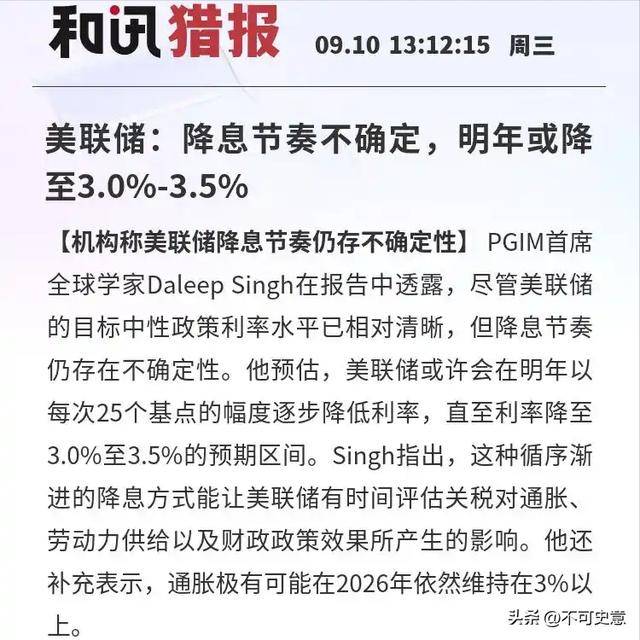
Core Insights - The Federal Reserve's initiation of a rate-cutting cycle has sparked discussions in the market, with the current federal funds rate of 4.11% expected to drop below 3.5% by the end of 2026 [1] - While Wall Street celebrates the anticipated asset appreciation, ordinary households struggle to feel the benefits, highlighting a stark contrast in wealth distribution [1] - The challenge lies in ensuring that more individuals can share in the benefits of the policy adjustments aimed at stabilizing the economy [1] Group 1: Wealth Disparity and Asset Appreciation - Low interest rates combined with high liquidity are driving up financial asset prices, primarily benefiting those who already hold significant stocks and funds [3] - The wealth of the top 0.1% has nearly doubled since 2020, surpassing $23 trillion, with stock investments being the main source of this growth [3] - By 2025, inflows into exchange-traded funds are projected to reach a record $1.25 trillion, further confirming the positive response from asset holders [3] Group 2: Impact on Ordinary Households - The barriers to obtaining mortgages have not significantly decreased due to rate cuts, with most regions requiring six-figure household incomes, far above the median level [7] - The reduction in credit card interest rates is minimal, providing little relief for ordinary workers burdened with small debts, limiting their ability to benefit from the policy [7] - Young individuals, primarily reliant on wage income, hold a low proportion of financial assets, making them less able to share in the asset appreciation benefits [7] Group 3: Savings and Inflation Concerns - Cash savings remain a primary financial strategy for many ordinary families, but lower interest rates reduce savings account yields, slowing wealth accumulation [9] - Borrowing rates closely tied to daily life do not decrease in tandem with the Federal Reserve's rate cuts, leading to delayed benefits for consumers [10] - Inflation pressures persist, disproportionately affecting low-income families and eroding their purchasing power, exacerbating economic strain [11] Group 4: Policy Challenges and Solutions - The Federal Reserve's loose monetary policy aimed to stabilize the economy during crises, but prolonged liquidity injections have inflated asset prices and widened wealth gaps [13] - The Gini coefficient in the U.S. has been rising, indicating increasing wealth inequality, as the elderly rely on returns from monetary market funds totaling $7.5 trillion [15] - Policymakers face a dilemma: excessive easing may trigger inflation, while tightening could hinder economic growth, necessitating a balance between growth and equity [15] Group 5: Future Considerations - Recognizing the inherent limitations of current policies, there is a need for solutions that address wealth disparity while maintaining economic stability [17] - Ordinary families may need to adjust their wealth allocation strategies and increase their financial asset holdings, which requires better financial education and a more favorable investment environment [19] - The ongoing challenge for the Federal Reserve and policymakers will be to find ways to reduce wealth gaps while ensuring economic stability, a critical issue for ordinary households [19]
高市早苗有实力“逞强“吗?深扒日本M型社会困局
Feng Huang Wang Cai Jing· 2025-11-19 10:08
Economic Context - Japan's economy is facing significant challenges, with the latest data showing a 1.8% decline in real GDP for Q3, marking a return to negative growth since Q1 2024 [1] - The decline is attributed to both external and internal pressures, including a four-month contraction in exports due to U.S. tariffs and a slowdown in private consumption growth from 0.4% to 0.1% [1] - Rising living costs have led to stagnant real wages, causing households to cut discretionary spending [1] Inflation and Wages - Tokyo's core consumer price index rose by 2.8% year-on-year in October, exceeding the Bank of Japan's 2% inflation target [2] - The price of rice has surged dramatically, with a 5 kg bag increasing from over 3,000 yen to 5,000 yen within a year [2] - Real wages adjusted for inflation fell by 1.4% in August, marking the eighth consecutive month of decline [2] Social Structure and Inequality - Japan is experiencing a pronounced wealth gap, with average savings for single individuals in their 20s, 30s, and 50s being 1.76 million, 4.94 million, and 10.48 million yen, respectively, while the median savings are significantly lower at 200,000, 750,000, and 530,000 yen [3] - This disparity illustrates the severe reality of wealth inequality in Japan, characterized as an "M-shaped society" where wealth distribution is polarized [4] Policy Responses and Critiques - The new Prime Minister, Sanna Takashi, is attempting to address these structural issues through "responsible active fiscal policy," which resembles the previous Abenomics approach, including quantitative easing and a temporary freeze on fiscal surplus targets [8] - Critics argue that such policies may exacerbate wealth inequality, primarily benefiting high-income earners and large corporations, while failing to address the root causes of economic stagnation [9] - The government's historical missteps in recognizing and addressing the long-term recession have led to a massive public debt of 1,000 trillion yen, which the populace ultimately bears the burden of [5] Societal Implications - The entrenched M-shaped society is leading to deeper social issues, including intergenerational poverty and a declining birth rate, as young people face economic pressures that discourage family formation [6][7] - The cycle of low wages and economic stagnation has created a "failed generation" among educated youth, who may opt out of the workforce or family life due to lack of financial security [6][7]

比特币11月雪崩,谁抽走了市场的梯子?
Tai Mei Ti A P P· 2025-11-19 07:21
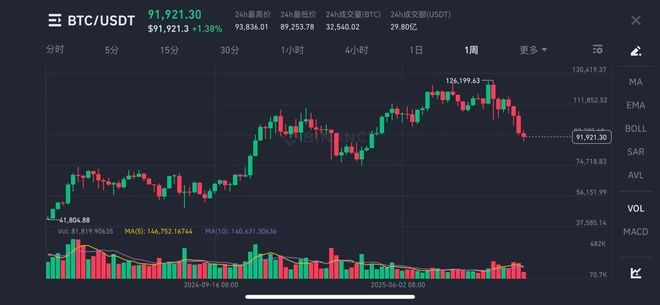
Market Overview - The cryptocurrency market experienced significant volatility in November 2025, with Bitcoin dropping from a peak of $126,000 in October to a low of $89,000, marking a 29% decline [1] - Ethereum fell from $3,918 to $2,946, a monthly drop of 24.8%, while major altcoins like Solana and Cardano saw declines exceeding 30% [1] - The total cryptocurrency market capitalization decreased from $2.9 trillion at the end of October to $2.6 trillion, a loss equivalent to the market value of three Coinbase companies [1] Derivatives Market - A liquidation wave occurred in the derivatives market, with over 180,000 liquidations on November 15, amounting to $430 million, predominantly affecting long positions with leverage above 20x [1][3] - The futures open interest dropped from a peak of $68 billion to $41 billion, indicating an ongoing deleveraging process [4] Economic Factors - The Federal Reserve's policy shift was a key trigger for the market crash, as inflation rates exceeded expectations, leading to a reassessment of interest rate forecasts [3] - Trump's tariff threats on EU imports heightened market fears, prompting a flight to traditional safe-haven assets like the dollar and gold, resulting in a $1.2 billion outflow from Bitcoin on November 16 [3] Institutional Behavior - Institutional investors withdrew significantly, with a total of $2.6 billion exiting the Bitcoin ETF market over five weeks, including a record $420 million outflow from BlackRock's IBIT ETF [3] - Large holders, or "whales," sold off 23,000 Bitcoin in November, exacerbating market weakness and triggering a negative feedback loop of selling [4] Technical Indicators - Bitcoin's Relative Strength Index (RSI) dropped from 78 to 32.14, indicating a potential oversold condition, but the MACD remained in a deep negative zone, suggesting continued downward momentum [5] - A surge in social media discussions around Bitcoin's collapse and a fear index reading of 16 indicated extreme market fear, contributing to a collective sell-off [5] Market Sentiment and Future Outlook - The market is at a critical support level, with Bitcoin needing to hold above $95,000 to trigger a potential rebound; a drop below $89,000 could lead to further declines [7] - Attention is focused on the Federal Reserve's upcoming meeting on December 10, with a 44.4% probability of a 25 basis point rate cut, which could influence market sentiment positively [8] - Structural changes in the market are emerging, with practical cryptocurrencies gaining traction, while speculative tokens face outflows [9] Regulatory Environment - Regulatory uncertainties remain a significant concern, with the European Central Bank planning to launch a digital euro by 2029, potentially impacting the cryptocurrency landscape [10] - The market is showing signs of nearing a short-term bottom, with Bitcoin's MVRV ratio at 1.76, historically associated with rebounds [10]