
产业趋势

Search documents
【公募基金】华宝基金汤慧:以产业趋势为纲,以赔率空间为目
华宝财富魔方· 2025-12-26 09:03
Core Viewpoint - The article analyzes the investment capabilities of Tang Hui, the manager of Huabao Growth Strategy Fund, highlighting her dynamic investment system based on industry trends and stock odds, which has led to superior performance compared to peers [2][3][31]. Fund Manager Information - Tang Hui has a background as a senior strategy analyst at Haitong Securities and joined Huabao Fund in June 2015, currently managing three products [4][30]. - Since taking over the Huabao Growth Strategy Fund on May 9, 2020, it has achieved a total scale of 146 million yuan by September 30, 2025, outperforming 97% of similar funds [6][30]. Performance Analysis - The Huabao Growth Strategy Fund has recorded a cumulative excess return of 83.04% since Tang Hui's tenure, significantly surpassing its performance benchmark [7][8]. - The fund's performance was particularly strong in years other than 2023, where it faced challenges due to market downturns, but is expected to show aggressive performance as the market recovers in 2025 [8][30]. Investment Framework - Tang Hui's investment framework combines a top-down approach focusing on macro trends with a bottom-up stock selection based on valuation and odds, allowing her to identify key positions within industry chains [14][16]. - The investment strategy emphasizes a combination of beta (60%-70%) and alpha (30%-40%) to balance risk and return, focusing on sectors with high growth potential [14][34]. Stock Selection and Portfolio Management - The portfolio management strategy involves dynamic adjustments based on market conditions, with a high turnover rate reflecting active tracking of industry trends and stock valuations [27][29]. - The fund's holdings are diversified across key positions in industry chains, ensuring exposure to multiple growth opportunities while managing risk through strategic stock selection [24][20]. Operational Characteristics - Tang Hui maintains a relatively high stock position and focuses on industry allocation and stock selection for excess returns, with a disciplined approach to portfolio adjustments based on market signals [27][29]. - The fund's operations are characterized by a responsive decision-making process, allowing for quick adjustments in response to changes in market conditions and stock valuations [29][30].


前海开源基金崔宸龙:产业趋势为先 好公司应具备三大标准
Zhong Zheng Wang· 2025-12-18 13:52
Group 1 - The core viewpoint emphasizes the importance of industry trends in identifying good companies, which are often aligned with significant industry developments and technological innovations [1] - The investment value is primarily anchored using the Discounted Cash Flow (DCF) model for evaluation [1] - Three main criteria are highlighted for defining a good company: a clear upward trend in the industry over the next three to five years, a strong product or technological foundation with a deep "moat," and a commitment to high R&D investment and continuous innovation [1]
白银涨疯了,后市如何?
Guo Ji Jin Rong Bao· 2025-12-17 16:04
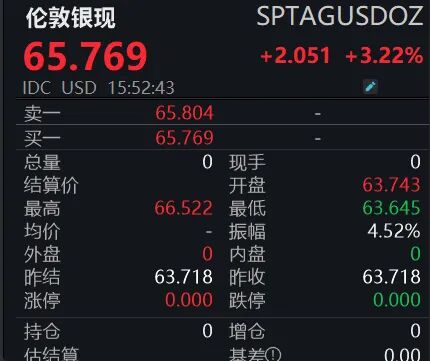
Core Viewpoint - Silver prices have surged dramatically, with both spot and futures prices reaching historical highs, driven by macroeconomic factors, industrial demand, and trading dynamics [1][3][4]. Group 1: Price Movements - As of December 17, silver prices in the international market reached $65.769 per ounce, marking a daily increase of 3.22%, with a year-to-date increase of nearly 130% [1]. - COMEX silver futures also showed strong performance, trading at $66.045 per ounce, with a year-to-date increase exceeding 120% [1][2]. - In the domestic market, the main contract for silver futures on the Shanghai Futures Exchange closed at 15,512 yuan per kilogram, up 5.05%, with an intraday high of 15,555 yuan per kilogram [2]. Group 2: Driving Factors - The macroeconomic environment, particularly expectations of a Federal Reserve interest rate cut by 2025, has significantly increased the attractiveness of silver as a non-yielding asset [3]. - Industrial demand for silver has transformed it from a traditional safe-haven asset to a critical industrial metal, driven by sectors such as photovoltaics, electric vehicles, and AI data centers [3]. - A low inventory level has created a fragile trading structure, leading to significant delivery pressure in the futures market and a risk of short squeezes [3]. Group 3: Investment Dynamics - There has been a notable increase in investment demand for silver, particularly through ETFs, as institutions and high-net-worth individuals accumulate physical silver, further tightening available inventory [4]. - The silver market has shown signs of a futures backwardation structure, indicating extreme tightness in the spot market and high premiums for immediate delivery [4]. - Silver has outperformed gold recently, attributed to a combination of price correction potential in gold and tight silver inventories, alongside geopolitical uncertainties supporting higher silver prices [4]. Group 4: Future Outlook - Analysts suggest that while short-term volatility risks exist, the long-term upward trend for silver remains intact due to ongoing macroeconomic support and robust industrial demand [5][6]. - The anticipated continuation of the Federal Reserve's easing monetary policy and uncertainties surrounding U.S. midterm elections are expected to sustain demand for precious metals [6]. - The ongoing supply-demand gap in silver is projected to widen by 2026, limiting the potential for significant price declines [5][6].
注意!科创50大跌2.2%,资金却在疯狂涌入这两个“避风港”!
Sou Hu Cai Jing· 2025-12-15 07:37
Market Overview - The A-share market experienced a broad adjustment, with major indices closing down: the Shanghai Composite Index fell by 0.55%, the Shenzhen Component Index by 1.10%, and the ChiNext Index by 1.77%. The STAR 50 Index led the decline with a drop of 2.22%, indicating significant profit-taking pressure in the technology growth sector [1] - The total trading volume in both markets was 1.77 trillion yuan, a substantial decrease of 318.8 billion yuan from the previous day, reflecting an increase in market caution [1] - The Hong Kong market also weakened, with the Hang Seng Technology Index dropping over 2% [1] Sector Performance - Defensive sectors showed positive performance, with Agriculture, Forestry, Animal Husbandry, and Fishery rising by 1.24%, and Retail Trade increasing by 1.49%. Non-bank financials rose by 1.59%, primarily driven by the insurance sector, which acted as a stabilizing force in the market [1] - In contrast, previously active TMT sectors such as Electronics (-2.42%), Communications (-1.89%), and Media (-1.63%) saw significant declines, indicating a "high-low switch" and a moderate rotation from growth to value [1] Key Drivers of Sector Performance - The aerospace equipment sector experienced a collective surge, with the Aerospace Equipment Select Index soaring by 10.01%. This was driven by high policy certainty and the opening of new market spaces in commercial aerospace, including satellite internet and space tourism [2] - The insurance sector's strength was attributed to a regulatory easing that lowered risk factors for investments in the CSI 300 and STAR Market stocks, enhancing capital efficiency and potential returns. The insurance sector's performance is supported by a favorable long-term interest rate environment and the appeal of stable cash flow and high dividend assets during market volatility [2] Future Outlook - Systemic risks at the index level are considered low, but structural differentiation is expected to continue. The policy environment aims to stabilize the market, and liquidity conditions are friendly, providing bottom support [2] - Short-term pressures on technology growth sectors need to be addressed, and future opportunities are likely to be characterized by precise structural market conditions rather than a broad bull market [2]
为何高手不谈收益目标?揭秘投资中最重要却被忽视的“原则”
Sou Hu Cai Jing· 2025-12-08 11:33
Market Overview - On December 8, 2025, the A-share market experienced a significant surge with a trading volume exceeding 2.05 trillion yuan, marking a notable increase from the previous day. Major indices saw gains, with the Shanghai Composite Index rising by 0.54%, the Shenzhen Component Index increasing by 1.39%, and the ChiNext Index soaring by 2.6%. Over 3,400 stocks rose, indicating a clear recovery in market sentiment [1] Sector Performance - The telecommunications sector, driven by the CPO (optical module) concept, surged by 4.79%, while technology sectors such as electronics and computers also performed strongly. In contrast, traditional cyclical sectors like coal and oil & petrochemicals experienced slight pullbacks. The non-bank financial sector (brokerage) rose by 1.9%, with a significant increase in trading volume, reflecting the entry of new capital and an increase in risk appetite [1] Market Drivers - The core drivers of today's market performance were the resonance of "policy-driven" and "industry trends." Regulatory policies guided "patient capital" to support technological innovation, while the global AI computing power competition and the fundamental logic of optical module technology upgrades collectively propelled the explosion of the technology sector. The market is transitioning from liquidity recovery to a structurally driven dual-phase [1] Investment Philosophy - The article emphasizes the importance of shifting from a focus on specific annual return targets to a more robust risk management approach. It argues that setting unrealistic return expectations can lead to poor decision-making and unnecessary risks. Instead, investors should concentrate on managing risk and understanding potential losses, which is the true essence of investment [2][3] Risk Management Framework - A systematic risk management framework is essential for effective investment. Key components include: 1. **Asset Allocation**: Define risk ceilings based on personal financial cycles and risk tolerance rather than market predictions [3] 2. **Margin of Safety**: Invest only when prices are significantly below intrinsic value to account for potential errors and unforeseen events [3] 3. **In-depth Research and Diversification**: Conduct thorough research to avoid flawed companies and diversify across uncorrelated opportunities to mitigate individual company risks [3] 4. **Discipline and Position Management**: Adjust overall positions based on market valuations and adhere to pre-set investment criteria to maintain rational risk management [4] Long-term Investment Success - Long-term investment success relies on avoiding significant permanent losses, as the cost of recovering from losses is much higher than anticipated. The article highlights that the art of investing lies in systematically avoiding catastrophic downturns, which ultimately opens the door to potential gains [4][5]
陈果:继续金融打底,耐心逐步布局
Sou Hu Cai Jing· 2025-12-08 09:23
Group 1 - The market is currently experiencing a period of low trading volume and volatility as investors await guidance from the Central Economic Work Conference, with a focus on domestic demand policies [1][13] - The adjustment of risk factors for insurance companies is expected to enhance their capital allocation capabilities, allowing for increased investment in core assets, dividend stocks, and technology innovation sectors [2][3][18] - The financial regulatory authority has proposed to moderately expand the capital space and leverage limits for high-quality brokerage firms, which is seen as a positive signal for the capital market and non-bank sectors [1][2] Group 2 - The upcoming Federal Reserve meeting is anticipated to provide insights into monetary policy, with market expectations leaning towards a potential interest rate cut in December, despite inflationary pressures suggesting a hawkish stance [5][11] - The divergence in monetary policies between the US and Japan may raise liquidity concerns, as Japan's government has announced a significant economic stimulus plan [11][12] - The overall economic environment in China remains weak, with manufacturing PMI and real estate sales showing continued decline, prompting a cautious approach to investment strategies [13][16] Group 3 - The insurance sector's risk factor adjustments are designed to optimize solvency regulation and enhance long-term investment capabilities, supporting the technology and foreign trade industries [2][3][18] - Financial institutions, particularly those with stable earnings and high dividend yields, are recommended as safe investment options during periods of defensive demand [15][18] - The market is advised to focus on sectors with clear growth trends, such as AI-related industries, renewable energy, and international pharmaceuticals, as liquidity conditions improve [15][18]
限购债基新发权益基金 公募逆势布局热情高
Zhong Guo Zheng Quan Bao· 2025-11-25 20:27
Core Viewpoint - The recent adjustment in A-share market has led to increased discussions on risk aversion, with public fund companies showing a tendency to limit large subscriptions for defensive funds while actively launching equity index products [1][2]. Group 1: Fund Subscription Trends - Many public fund institutions have chosen to limit large subscriptions for defensive products such as bond funds, money market funds, and dividend-themed funds, reflecting a cautious approach towards potential inflows of risk-averse capital [2][3]. - Since November 14, over a hundred products, primarily bond funds, have suspended large subscriptions, indicating a trend towards restraint in accepting new capital [2][3]. - Fund managers emphasize the importance of maintaining a balanced approach to fund inflows, as excessive short-term capital can hinder effective investment management and potentially harm investor interests [1][2]. Group 2: Active Equity Fund Launches - Despite the cautious stance on defensive funds, there is a notable enthusiasm for launching equity index products, with several new funds being introduced under major indices like the Shanghai Composite Index and the ChiNext Index [2][3]. - For instance, the Guotou Ruijin Shanghai Composite Index Enhanced Fund raised 971 million yuan during its subscription period from October 22 to November 11, attracting 3,453 investors [2]. - The number of newly established products linked to the Shanghai Index and the North Star 50 Index has reached historical highs this year, with 8 and 23 products respectively, while the ChiNext Index has seen 17 new products, matching last year's total [3]. Group 3: Market Outlook and Sector Focus - Various institutions believe that the recent market fluctuations do not alter the long-term positive trend, suggesting a focus on structural opportunities, particularly in sectors with favorable industry trends such as technology, consumption, high-end manufacturing, and pharmaceuticals [3][4]. - The market is expected to experience a mid-term upward trend, supported by ample liquidity and improving industry conditions, despite potential short-term volatility [3][4]. - Companies are advised to balance their portfolios by increasing allocations to stable dividend assets while also investing in sectors with strong industrial trends, such as AI computing power and new energy [4].
美股三大指数齐涨,苹果市值破4万亿,黄金跌破3900美元
Sou Hu Cai Jing· 2025-10-30 18:05
Group 1 - Microsoft and OpenAI's renewed partnership is viewed positively by the market, providing a sense of security for both institutional and retail investors [1] - Cameco and nuclear stocks experienced a rebound due to government actions and favorable policies, highlighted by an $80 billion nuclear reactor agreement [1] - Strong performance data and collaboration between UPS and PayPal have positively impacted stock prices, reflecting a combination of solid earnings and logical partnerships [1] Group 2 - The market is currently experiencing a divergence, with European stocks opening slightly lower while Asian stocks are generally down, indicating a lack of synchronized global market movements [1] - The USD index is hovering around 98.8, with the Japanese yen strengthening to 151.95, influenced by political dialogues among fiscal officials [1] - Following communication between U.S. and Japanese officials, the yen's short-term strength is interpreted as a potential signal for a weaker dollar [1] Group 3 - There is a calculation among traders and analysts regarding whether interest rate cuts will accelerate stock market gains or inflate bubbles, with a short-term inclination towards the former [3] - Gold prices have retreated from last week's historical highs to around $3,900, attributed to technical corrections and a return to balanced risk aversion [3] - Citigroup and Saxo's bearish perspectives on gold are supported by factors such as easing trade tensions and concerns over U.S. government shutdowns [3] Group 4 - The high price of gold indicates a long-term demand for safe-haven assets, suggesting that prices could rebound quickly if uncertainties arise again [5] - Bitcoin and Ethereum have seen slight declines, with market sentiment shifting towards risk assets, although the enthusiasm remains lukewarm [5] - The current market resembles passengers stretching after sitting for a long time, with key upcoming events like the Federal Reserve meeting and tech earnings acting as critical indicators [5] Group 5 - Investors are advised to adopt a layered approach, participating in growth stocks while maintaining discipline in position sizing and valuation [7] - The narrative surrounding Apple's market capitalization crossing $4 trillion is overly dramatized, reflecting a blend of regulatory risks, market sentiment, and company fundamentals [7] - Collaborations like that of Microsoft and OpenAI serve as concrete indicators of industry trends, highlighting areas with cash flow and potential for valuation premiums [9] Group 6 - The market is not necessarily becoming smarter but is slowly digesting information and re-pricing assets, with numerous short-term opportunities and persistent long-term risks [11] - A cautious optimism is suggested, focusing on growth supported by fundamentals rather than purely chasing momentum, while treating gold and certain safe-haven assets as insurance [11] - The next two weeks are critical, with attention on the Federal Reserve's statements, major tech earnings, and any unforeseen geopolitical events that could rapidly alter market dynamics [13]

金信基金:站稳4000点再出发
Zhong Guo Jing Ji Wang· 2025-10-30 00:48
Group 1 - The Shanghai Composite Index has risen 0.70% and surpassed the 4000-point mark, indicating a recovery in investor confidence regarding the macroeconomic environment [2][3] - The surge in the new energy sector, particularly in photovoltaic and energy storage stocks, is attributed to signs of a bottoming cycle in the industry, with both supply-side and demand-side factors contributing to this growth [1][2] - The third-quarter performance of leading companies in the new energy sector exceeded expectations, triggering an overall rebound in the sector [1][2] Group 2 - The economic recovery is supported by significant growth in industrial output and GDP, with industrial value-added increasing by 6.5% year-on-year in September, and GDP growing by 5.2% in the first three quarters [2][3] - The "14th Five-Year Plan" emphasizes technological self-reliance and advanced manufacturing, positioning these areas as key drivers for economic growth over the next five years [2][3] - The capital market is expected to benefit from the listing and financing of quality technology companies, as well as increased investments from institutional funds [2][3] Group 3 - The A-share market's upward trend is supported by economic recovery, policy enhancements, and improved US-China relations, with the technology sector acting as a core driver for market growth [3] - Investors are encouraged to focus on long-term trends in sectors such as semiconductor equipment, AI computing, high-end manufacturing, and new energy, which align with national strategies and exhibit performance elasticity [3]
金信基金市场点评:站稳4000点再出发
Xin Lang Ji Jin· 2025-10-29 09:47
Group 1: Market Performance - The Shanghai Composite Index rose by 0.70%, surpassing the 4000-point mark, while the ChiNext Index increased by 2.93% and the North Star 50 surged by 8.41%, marking the largest single-day gain in nine months [1] - The surge in the new energy sector, particularly in photovoltaic and energy storage stocks, was driven by signs of an industry cycle bottoming out and strong demand exceeding expectations [1][2] Group 2: Economic Indicators - In September, the industrial added value above designated size grew by 6.5% year-on-year, accelerating by 1.3 percentage points compared to the previous value; GDP growth for the first three quarters was 5.2%, with consumption and manufacturing investment as key drivers [2] - The profits of industrial enterprises above designated size increased by 3.2% year-on-year in the first three quarters, marking the highest cumulative growth rate since August of the previous year [2] Group 3: Policy and Strategic Outlook - The "14th Five-Year Plan" emphasizes technological self-reliance and advanced manufacturing upgrades, indicating that the deep integration of technology and industry will be a primary engine for economic growth in the next five years [2] - The capital market is expected to benefit from the listing and financing of quality technology companies, as well as increased investments from industrial capital and institutional funds [2] Group 4: Investment Strategy - Investors are encouraged to focus on sectors aligned with national strategies and industry trends, such as semiconductor equipment and materials, AI computing power and applications, high-end manufacturing, and new energy storage and lithium batteries [3]