
关税风波

Search documents
华安基金:关税风波再起,中国央行继续增持黄金
Xin Lang Ji Jin· 2025-07-15 08:40
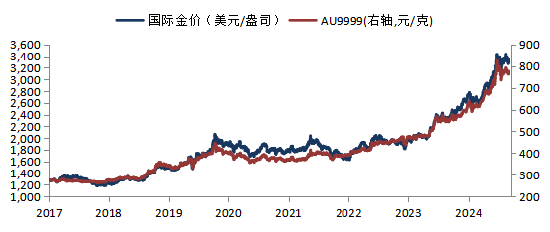
Key Points - Gold prices remained volatile last week, with London spot gold closing at $3,355 per ounce (up 0.5% week-on-week) and domestic AU9999 gold at 770 yuan per gram (down 0.3% week-on-week) [1] - The uncertainty surrounding tariffs remains high, as President Trump announced increased tariffs on several countries but postponed implementation until August 1. Additionally, a 50% tariff on imported copper will take effect in August [1] - The People's Bank of China has increased its gold reserves for the eighth consecutive month, reaching 73.9 million ounces (approximately 2,298.55 tons) by the end of June, reflecting the strategic importance of gold as a "non-credit asset" in the global monetary system [1] - Global gold ETF investment demand remains strong, with $38 billion inflows in the first half of the year, marking the strongest semi-annual performance since the first half of 2020. All regions saw inflows, with North American and European investors leading the trend [1] - The outlook for gold remains positive amid U.S. trade protectionism and potential tariff fluctuations, as well as ongoing central bank gold purchases due to U.S. debt and dollar credit concerns [2] - Key signals to watch for gold ETFs in the coming week include trade negotiations and tariff developments, as well as U.S. inflation data for June [3]

钟爱南方的跨境电商们,正在悄悄“北上”
3 6 Ke· 2025-07-09 09:03
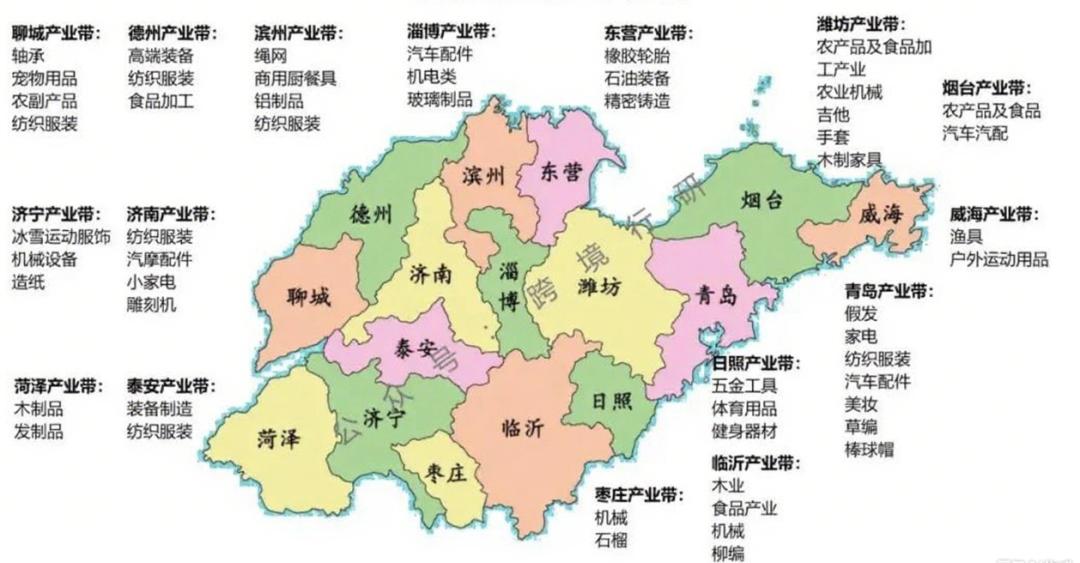
Core Insights - The landscape of cross-border e-commerce in China is shifting from a southern dominance to a more balanced northern presence, with cities like Wuhan and Qingdao emerging as significant players [1][2][3] - In 2024, China's cross-border e-commerce imports and exports are projected to reach 2.63 trillion yuan, marking a 10.8% year-on-year increase [2] - The northern regions are benefiting from lower production costs, abundant labor resources, and improved logistics networks, making them attractive destinations for cross-border e-commerce [3][5] Regional Developments - Southern cities like Guangzhou and Shenzhen have historically dominated cross-border e-commerce, with Guangdong province alone achieving an annual growth rate of 71.4% from 2015 to 2023 [1] - Northern cities such as Ezhou and Qingdao are seeing significant growth, with Ezhou's cross-border e-commerce import and export volume surging by 566% in 2024 [1][2] - The number of cross-border e-commerce enterprises in Shandong province has reached 14,000, indicating a robust growth in the northern market [1] Policy and Infrastructure - The "policy siphon" effect is evident, with cities like Qingdao being designated as cross-border e-commerce pilot zones, attracting a significant number of enterprises [2] - The logistics network in northern China is being upgraded, with Hebei province experiencing a 49% year-on-year increase in foreign trade containers in 2024 [3] - The establishment of over 1,000 cross-border e-commerce industrial parks and 2,500 overseas warehouses across the country is facilitating this growth [2] Market Trends - In the first half of 2024, cross-border e-commerce exports to the U.S. accounted for 34.2%, while exports to the U.K. and Germany were 8.1% and 6.2%, respectively [5][6] - The Asian market is becoming increasingly important, with platforms like Temu gaining traction in South Korea, achieving a 42.8% increase in user downloads [5][6] - The global e-commerce market is projected to reach $6.3 trillion, with cross-border e-commerce accounting for 22% of this total [17] Competitive Landscape - The competition in the cross-border e-commerce sector is intensifying, with many companies facing declining profit margins and increasing operational costs [20][21] - Major players are experiencing significant increases in marketing and warehousing expenses, with some companies reporting over 100% year-on-year increases in these costs [20][21] - The need for differentiated competition and complementary development between southern and northern markets is emphasized as essential for the sustainability of the industry [22]
特朗普掀关税风云第二季,全球股市出奇淡定,机构都说要加仓
Di Yi Cai Jing· 2025-07-08 13:35
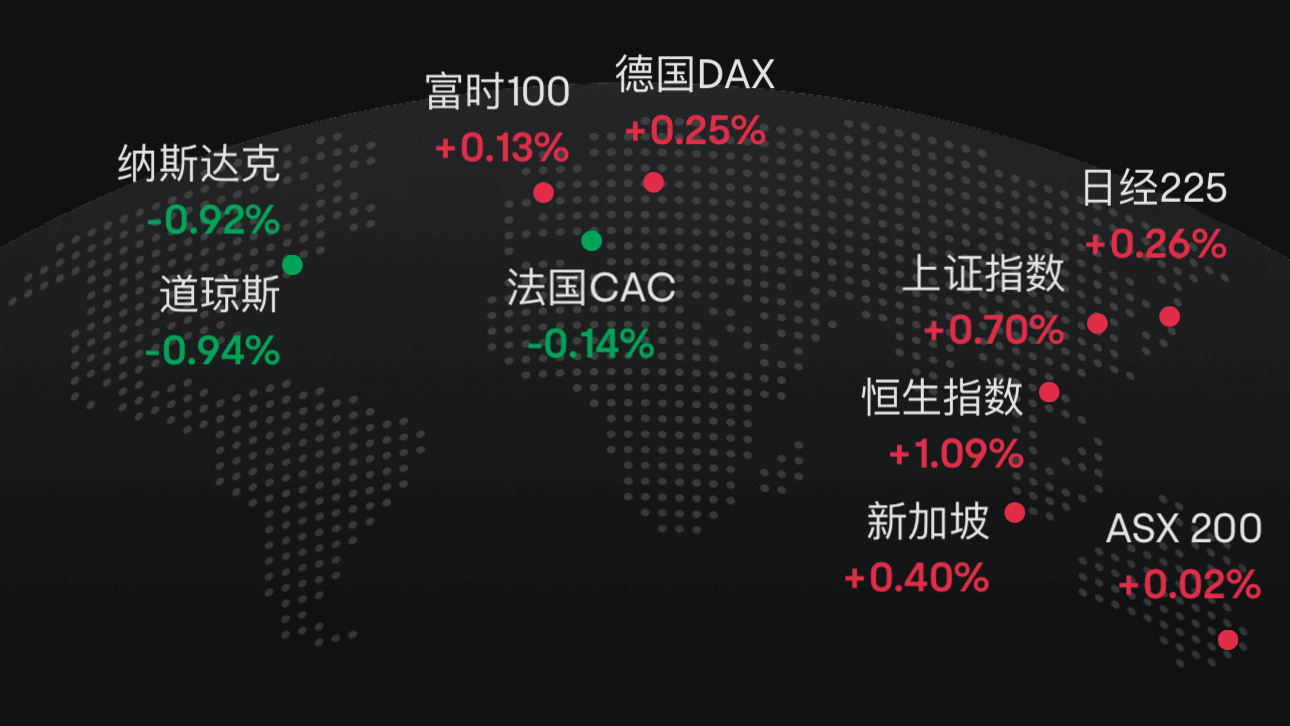
Group 1 - The core point of the news is that President Trump announced new tariffs ranging from 25% to 40% on imports from 14 countries, effective August 1, which has led to a mixed reaction in global markets [1][2][3] - The countries affected by the tariffs include Japan, South Korea, Malaysia, Tunisia, Kazakhstan (25%); South Africa and Bosnia (30%); Indonesia (32%); Serbia and Bangladesh (35%); Thailand and Cambodia (36%); Laos and Myanmar (up to 40%) [1][2] - Despite the announcement, the impact on global markets appears to be less severe than previous tariff announcements, with major indices showing minimal declines and some markets, like Japan and South Korea, even experiencing gains [1][5] Group 2 - Market concerns regarding tariffs have diminished, with institutions like Goldman Sachs increasing their stock market targets and predicting a higher likelihood of trade agreements between the US and Europe [2][9] - The deadline for negotiations has been extended to August 1, allowing more time for potential agreements, with expectations that Europe may accept a 10% tariff on exports to the US [4][7] - The EU is actively seeking to negotiate exemptions and quota management for tariffs on automobiles and steel, but significant breakthroughs have yet to be achieved [7][8] Group 3 - The investment community is showing a preference for US equities, with analysts recommending an overweight position in sectors like technology and consumer discretionary in Asia, particularly in China and South Korea [10][11] - Concerns remain regarding US Treasury bonds, as global investors are shifting funds from dollar assets to euro assets, reflecting a bearish outlook on the dollar [12][13] - Gold is increasingly viewed as a strategic asset for central banks and institutional investors, with ongoing accumulation by countries like China, indicating a long-term bullish trend for gold [14][15]
黄金日内空头趋势显著!特朗普关税风波未平?今夜能否触底反弹或形成有效突破?TTPS交易学长正在直播,立即观看!
news flash· 2025-07-08 12:39
Core Insights - The article highlights a significant bearish trend in gold prices, indicating potential market volatility and investor sentiment [1] Group 1 - The ongoing trade tensions related to Trump's tariffs are contributing to the uncertainty in the gold market [1] - There is speculation about whether the gold market will experience a rebound or a breakthrough in the near future [1] - A live session by TTPS Trading is being conducted to analyze the current trends and provide insights [1]
2025年5月工业企业利润点评:5月工业企业利润缘何大降?
Minsheng Securities· 2025-06-27 06:53
Group 1: Profit Trends - In the first five months of 2025, industrial enterprises achieved a total profit of CNY 27,204.3 billion, a year-on-year decrease of 1.1%[1] - The profit growth rate for industrial enterprises dropped sharply from 3.0% in April to -9.1% in May, indicating a significant impact from tariffs[1] - The decline in revenue profit margin contributed approximately 10.2 percentage points to the profit growth rate decline in May[1] Group 2: Cost and Revenue Factors - Rising costs due to tariffs have led to a decrease in profit margins, particularly affecting downstream industries[2] - Companies are showing a weakened willingness to restock, with both revenue and finished goods inventory growth rates declining in May[2] Group 3: Industry-Specific Impacts - Profit growth rates for upstream, midstream, and downstream industries in May were -21.7%, 3.5%, and -13.3% respectively, indicating increased pressure on upstream and downstream sectors[3] - Downstream industries, particularly entertainment products, textiles, and food manufacturing, experienced significant profit declines of -27.0%, -18.3%, and -7.0% respectively[3] Group 4: Enterprise Type Performance - State-owned enterprises saw a profit decline of -18.1% in May, while private enterprises experienced a smaller decline of 0.8%[6] - The larger impact on state-owned enterprises is attributed to their inability to quickly adjust supply chains in response to tariff changes[6]
美联储降息救市!6月26日,爆出五大消息已袭来!
Sou Hu Cai Jing· 2025-06-27 04:20
Core Viewpoint - The financial markets are experiencing significant turmoil, characterized by a sharp decline in stock indices, rising bond yields, and a weakening dollar, driven by concerns over U.S. Treasury demand and fiscal policy uncertainties [1][3][10]. Group 1: Market Reactions - The Dow Jones index fell nearly 500 points, while the 10-year U.S. Treasury yield surpassed 4.5%, and the dollar index dropped below 100 [1]. - The VIX, a measure of market volatility, surged by 15%, indicating heightened investor anxiety [1]. - Gold prices soared to $3,315 per ounce as investors sought safe-haven assets amid the market chaos [1]. Group 2: Treasury Auction and Demand - A recent auction of 20-year Treasury bonds saw a final yield of 5.047%, which is 24 basis points higher than the previous auction in April [1]. - This auction result highlighted a significant drop in demand for U.S. Treasuries, forcing the Treasury Department to offer higher yields to attract buyers [1][3]. Group 3: Federal Reserve's Dilemma - Federal Reserve Chairman Jerome Powell faces a challenging situation, having maintained the benchmark interest rate at 4.25%-4.50% during the May 7 meeting [3][5]. - Powell emphasized the unpredictability of policy decisions, particularly in light of tariff-related uncertainties stemming from the Trump administration [3][5]. - The Fed's ability to lower interest rates may be constrained by rising inflation pressures and ongoing labor market strength, with wage growth reaching an annual rate of 3.9% [5][7]. Group 4: Fiscal Policy and Tax Cuts - The Trump administration is pushing for lower interest rates, with Treasury Secretary expressing a goal to reduce rates to a ten-year low [5]. - A new tax reform bill passed by the House Budget Committee is expected to reduce household tax burdens by approximately $140 billion annually, equivalent to 0.5% of GDP [5][8]. - Concerns about the lack of fiscal restraint have been voiced by Fed officials, indicating that higher tariffs could limit the Fed's ability to act on interest rates [7][10]. Group 5: Market Sentiment and Future Outlook - The S&P 500 index rebounded by 19.5% from its April lows, but underlying concerns about rising federal spending and long-term bond yields persist [8]. - A stark contrast between tariff revenue and soaring national debt has led to increased selling pressure in the bond market [8][10]. - The upcoming debt ceiling deadline in August and potential fiscal shortfalls from tax cuts may further complicate the Fed's decision-making process [10].
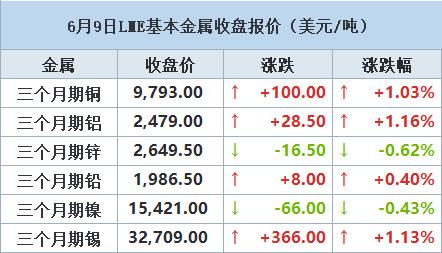
金属普跌 期铜窄幅波动 受库存下降支撑【6月9日LME收盘】
Wen Hua Cai Jing· 2025-06-10 00:22
Group 1 - LME copper prices increased by $100 or 1.03% to $9,793 per ton on June 9, supported by declining inventories and optimistic sentiment regarding US-China trade talks [1][2] - LME reported a decrease in copper inventory by 10,000 tons to 122,400 tons, marking a reduction of over 50% since February [3] - The highest copper price since March 31 was reached at $9,809.5 per ton due to concerns over mine supply and reduced LME registered warehouse stocks [3] Group 2 - China's copper imports in May were 427,000 tons, with a cumulative import of 2,169,000 tons from January to May, reflecting a year-on-year decrease of 6.7% [3] - The copper premium at Yangshan port fell to $41 per ton, the lowest in three months, down from a peak of $103 per ton in early May [3] - Overall, industrial metals were supported by a weaker US dollar, making dollar-denominated commodities cheaper for users of other currencies [3]
股指期货日报:股指低开高走,期指基差再度回落-20250603
Nan Hua Qi Huo· 2025-06-03 13:41
Report Investment Rating - Not provided in the given content Core View - The latest manufacturing PMI in May remained below 50, indicating the impact of tariffs on the domestic economy, but China's economic resilience is strong. Overseas, the US-EU tariff war has escalated, and there is still significant uncertainty in China-US tariff negotiations, which suppresses the A-share market. The upcoming Lujiazui Forum is expected to release financial policies, providing some support to the index. In the short term, the index faces both upward pressure and downward support, and a breakthrough requires external certainties or new domestic favorable policies. The recommended strategy is to hold positions and wait and see [6] Market Review - The stock index opened lower and closed higher today. Taking the CSI 300 index as an example, it closed up 0.31%. The trading volume of the two markets increased by 2231 million yuan. All stock index futures rose with increased volume [4] Important Information - In May, China's manufacturing PMI was 49.5%, up 0.5 percentage points from the previous month; the non-manufacturing PMI was 50.3%, down 0.1 percentage points; the composite PMI was 50.4%, up 0.2 percentage points. The new export order index and import index increased by 2.8 and 3.7 percentage points respectively, and the foreign trade situation of some US-related enterprises improved [5] - US President Trump announced raising the import steel tariff from 25% to 50% starting from June 4. The EU is in the final consultation on expanding countermeasures, and if no solution is reached, existing and additional measures will take effect on July 14 or earlier [5] - The US Trade Representative's Office extended the exemption period for the 301 investigation on China from May 31 to August 31 [5] Index Futures Data Futures Market | Index | Main Contract Intraday Change (%) | Trading Volume (10,000 lots) | Trading Volume MoM (10,000 lots) | Open Interest (10,000 lots) | Open Interest MoM (10,000 lots) | | --- | --- | --- | --- | --- | --- | | IF | 0.11 | 7.5192 | -1.3852 | 23.6192 | 0.5468 | | IH | 0.05 | 4.0069 | -0.9296 | 8.1877 | 0.1863 | | IC | 0.33 | 6.938 | -0.909 | 21.3655 | 0.6257 | | IM | 0.68 | 16.4487 | -2.3121 | 32.1122 | 0.3188 | [7] Spot Market | Indicator | Value | | --- | --- | | Shanghai Composite Index Change (%) | 0.43 | | Shenzhen Component Index Change (%) | 0.16 | | Ratio of Rising to Falling Stocks | 1.90 | | Trading Volume of the Two Markets (100 million yuan) | 11414.09 | | Trading Volume MoM (100 million yuan) | 22.31 | [7]

欧佩克+原油出口不升反降!供应预期存在偏差,地缘溢价短期加持,多头将迎来新一轮机会,如何识别最佳入场时机?关税风波再起,市场反应路径生变,风险资产面临不对称风险。解读市场宏观信息差>>
news flash· 2025-06-03 11:47
欧佩克+原油出口不升反降!供应预期存在偏差,地缘溢价短期加持,多头将迎来新一轮机会,如何识 别最佳入场时机?关税风波再起,市场反应路径生变,风险资产面临不对称风险。解读市场宏观信息差 >> 原油周初强势拉升,6月剧本需要改写? 相关链接 ...
大越期货贵金属早报-20250527
Da Yue Qi Huo· 2025-05-27 02:15
Report Summary 1. Report Industry Investment Rating No relevant information provided. 2. Core Viewpoints - Gold: With the easing of the EU - US trade war and the decline of the US dollar, the gold price is expected to rise. The premium of Shanghai gold remains at around 5 yuan/gram. Due to potential tariff issues and fluctuations in the US tax - cut bill, the gold price remains bullish [4]. - Silver: As the EU - US trade war eases and the US dollar falls, the silver price will oscillate upwards. The premium of Shanghai silver converges to around 520 yuan/kg. With optimistic trade negotiations, the silver price will fluctuate [5]. 3. Summary by Directory 3.1 Previous Day's Review - Gold: The EU - US trade war eased, the US stock market was closed, most European stock markets rose, the US dollar index fell 0.15% to 98.98, the offshore RMB depreciated slightly, and COMEX gold futures fell 0.7% to $3342.2 per ounce [4]. - Silver: The EU - US trade war eased, the US stock market was closed, most European stock markets rose, the US dollar index fell 0.15% to 98.98, the offshore RMB depreciated slightly, and COMEX silver futures rose 0.11% to $33.645 per ounce [5]. 3.2 Daily Tips - **Gold** - Basis: The gold futures price is 777.3, the spot price is 774.33, and the basis is - 2.97, indicating that the spot is at a discount to the futures, a neutral signal [4]. - Inventory: The gold futures warehouse receipts are 17,247 kg, unchanged, a bearish signal [4]. - Disk: The 20 - day moving average is downward, and the K - line is above the 20 - day moving average, a neutral signal [4]. - Main Position: The main net position is long, and the long position of the main force is decreasing, a bullish signal [4]. - **Silver** - Basis: The silver futures price is 8280, the spot price is 8243, and the basis is - 37, indicating that the spot is at a discount to the futures, a neutral signal [6]. - Inventory: The Shanghai silver futures warehouse receipts are 957,380 kg, a daily decrease of 3261 kg, a neutral signal [6]. - Disk: The 20 - day moving average is upward, and the K - line is above the 20 - day moving average, a bullish signal [6]. - Main Position: The main net position is long, and the long position of the main force is decreasing, a bullish signal [6]. 3.3 Today's Focus - Economic data: The preliminary value of US durable goods orders in April, the US housing price index in March [4]. - Speeches: Speeches by the Governor of the Bank of Japan and Federal Reserve members [4]. 3.4 Fundamental Data - **Gold** - Bullish factors: Global turmoil leading to high - risk aversion, rising stagflation expectations in the US and renewed expectations of interest - rate cuts, tense situations in Russia - Ukraine and the Middle East leading to resurgent inflation, and tariff concerns [14]. - Bearish factors: Cessation of interest - rate cuts and improved economic expectations, less - than - expected European fiscal expansion with the US taking the lead again, deterioration of risk appetite, and the end of the Russia - Ukraine conflict [14]. - Logic: After Trump took office, the world entered a period of extreme turmoil. The inflation expectation shifted to a recession expectation, and the gold price was difficult to fall. The verification between the expected and actual policies of the new US government continued, and the gold price sentiment was high, remaining prone to rise and difficult to fall [10]. - **Silver** - Bullish factors: Similar to gold, and the tariff on non - ferrous metals supports the silver price [14]. - Bearish factors: Similar to gold [14]. - Logic: The silver price mainly follows the gold price. Tariff concerns have a stronger impact on the silver price, and there is a risk of an enlarged increase [13]. 3.5 Position Data - **Gold** - Shanghai Gold Top 20 Positions: On May 26, 2025, the long - position volume was 202,103, an increase of 1.22% from May 25; the short - position volume was 81,225, a decrease of 1.55%; and the net position was 120,878, an increase of 3.17% [27]. - SPDR Gold ETF: The ETF position is oscillating and decreasing [31]. - Warehouse Receipts: The Shanghai gold warehouse receipts show a certain trend, and the COMEX gold warehouse receipts are slightly decreasing but still at a high level [35][36]. - **Silver** - Shanghai Silver Top 20 Positions: On May 26, 2025, the long - position volume was 469,661, an increase of 1.13% from May 23; the short - position volume was 321,277, an increase of 2.00%; and the net position was 148,384, a decrease of 0.69% [29]. - Silver ETF: The ETF position continues to increase, higher than the same period last year [34]. - Warehouse Receipts: The Shanghai silver warehouse receipts are slightly increasing, higher than the same period last year, and the COMEX silver warehouse receipts are decreasing [38].