技术突破

Search documents
从“一叶风车”的转动,看风电产业绿色突围
Xin Lang Cai Jing· 2025-12-25 14:16
Core Insights - The article highlights the rapid development and leadership of China's wind power industry, showcasing its significant contributions to green energy and the ongoing energy transition [1][4]. Group 1: Industry Growth and Capacity - China's wind power installed capacity reached 600 million kilowatts by November 2025, maintaining its position as the world's largest and fastest-growing renewable energy system [1]. - The Hebei region has over 37 million kilowatts of wind power capacity, contributing more than 60 billion kilowatt-hours of electricity this year [1]. - Jiangsu's offshore wind power has grown from 100,000 kilowatts in 2004 to over 12 million kilowatts, establishing a strong green energy supply [1]. Group 2: Technological Advancements - Continuous technological breakthroughs are driving high-quality development in the wind power industry, with a complete and leading industrial chain established [2]. - The localization of wind turbine main bearings has increased from 10% in 2021 to over 60%, significantly reducing reliance on imports [3]. - The average cost of onshore wind power has decreased by over 60%, with current costs being 30% lower than coal power, and construction costs around 4,000 yuan per kilowatt [3]. Group 3: Contribution to Energy Security - The share of wind and solar power in total electricity consumption has risen from 9.7% in 2020 to 18.6% in 2024, with projections nearing 25% in the first half of 2025 [5]. - Wind power is becoming a cornerstone for energy supply, supporting the increase in non-fossil energy consumption [6]. Group 4: Economic and Ecological Impact - Wind power is facilitating industrial transformation, with regions like Zhangjiakou leveraging green electricity for competitive advantages [6]. - The production of green ammonia at the Zero Carbon Hydrogen Industry Park in Chifeng is expected to reduce carbon emissions significantly [7]. - The green electricity trading in Inner Mongolia is projected to reach 4.9 billion kilowatt-hours by 2025, enhancing both ecological and economic benefits [7].
从“一叶风车”的转动 看风电产业绿色突围
Xin Hua She· 2025-12-25 14:00
Core Insights - The article highlights the rapid development and leadership of China's wind power industry, showcasing its significant contributions to green energy generation and the ongoing energy transition [1][2][3] Industry Development - China's wind power installed capacity has reached 600 million kilowatts by November 2025, maintaining its position as the world's largest and fastest-growing renewable energy system [1] - The wind power industry has diversified across regions, with Hebei, Jiangsu, Xinjiang, and Inner Mongolia contributing significantly to green electricity supply [2] Technological Advancements - Domestic companies have made breakthroughs in key components, such as wind turbine main bearings, increasing the localization rate from 10% in 2021 to over 60% [3] - The cost of onshore wind power has decreased by over 60%, with the average cost per kilowatt now around 4,000 yuan, making it 30% cheaper than coal power [3] Energy Contribution - The share of wind and solar power in total electricity consumption has risen from 9.7% in 2020 to 18.6% in 2024, with projections indicating it could approach 25% in the first half of 2025 [5] Industrial Empowerment - Wind power is enabling industrial transformation, with regions like Zhangjiakou leveraging green electricity for data centers and manufacturing, thus reducing electricity costs and enhancing competitiveness [6] Ecological and Economic Benefits - Wind power contributes to ecological protection and regional development, with projects like the green ammonia production facility in Inner Mongolia significantly reducing carbon emissions [7] - The trading of green electricity has expanded, with transactions reaching 4.9 billion kilowatt-hours in 2025, enhancing both ecological and economic benefits [7]
市场最前沿丨从“一叶风车”的转动,看风电产业绿色突围
Xin Hua Wang· 2025-12-25 13:49
Core Insights - The article highlights the rapid development and leadership of China's wind power industry, showcasing its significant contributions to green energy generation and the ongoing energy transition [1][2]. Industry Overview - China's wind power installed capacity has ranked first globally for 15 consecutive years, reaching 600 million kilowatts by November 2025, solidifying its position as a major player in clean energy [1]. - The wind power sector is characterized by a diverse regional development, with significant contributions from areas like Hebei, Jiangsu, Xinjiang, and Inner Mongolia, collectively generating substantial green electricity [2]. Technological Advancements - Continuous technological breakthroughs have been pivotal for the wind power industry's high-quality development, with domestic companies achieving a 60% localization rate for wind turbine main bearings, up from 10% in 2021 [3]. - The cost of onshore wind power has decreased by over 60%, with the average cost per kilowatt now around 4,000 yuan, making it 30% cheaper than coal power [3]. Contribution to Energy Security - Wind power's share in total electricity consumption has steadily increased, from 9.7% in 2020 to 18.6% in 2024, with projections indicating it could approach 25% in the first half of 2025 [5]. - The sector not only supports energy supply but also enhances industrial transformation, as seen in regions like Zhangjiakou and Jiangsu, where green electricity is utilized to reduce costs and improve competitiveness [5]. Environmental and Economic Impact - Wind power plays a crucial role in ecological protection and regional collaborative development, with projects like the green ammonia production facility in Inner Mongolia significantly reducing carbon emissions [6]. - The trading of green electricity has expanded, with transactions reaching 4.9 billion kilowatt-hours in 2025, marking a nearly fourfold increase, thus benefiting both ecological and economic outcomes [6].
港股市场2025年终盘点:多项指标创纪录
Zheng Quan Shi Bao Wang· 2025-12-24 23:23
Core Viewpoint - The Hong Kong stock market is expected to fully recover in 2025 after experiencing a significant downturn from 2021 to 2024, where the Hang Seng Index fell over 50% due to a prolonged "valuation kill" trend [1] Group 1 - The period from 2021 to 2024 is characterized as a "cold winter" for the Hong Kong stock market, leading to widespread pessimism [1] - The second half of 2024 saw a buildup of momentum, culminating in a strong market rally starting on September 24 [1] - The launch of DeepSeek at the beginning of 2025 has reinvigorated the Hong Kong stock market, prompting a global reassessment of the value of Chinese technology assets [1] Group 2 - The technological breakthroughs have sparked expectations of industry prosperity, which have quickly transmitted across various segments of the capital market [1] - This market rebound is not only reconstructing valuations in the Hong Kong stock market but also setting historical records in IPOs, refinancing, secondary markets, and cross-border trading [1]
新能源皮卡市场发展:技术突破,渗透率大幅上涨
数说新能源· 2025-12-17 03:52
Market Analysis - Global market overview shows that China leads with 291,000 units sold, accounting for 60.9% of total sales, followed by North America with 92,000 units (19.2%) and Europe with 53,000 units (11.1%) [1][2] - In terms of technology routes, plug-in hybrid electric vehicles (PHEV) dominate with a 48% market share and a year-on-year growth of 186%, while range-extended electric vehicles (REEV) and battery electric vehicles (BEV) hold 24% and 28% shares with growth rates of 217% and 78% respectively [1] China Market Characteristics - The penetration rate of new energy pickups is expected to rise from 0.9% in 2022 to 11.2% by 2025 [2] - Price distribution indicates that commercial models (15-250,000 RMB) make up 68% of the market, with users focusing on load capacity (>1.5 tons) and cargo volume (>1.8 m³), while passenger models (250,000-400,000 RMB) account for 32%, with a preference for smart cockpit features [2] Technology Route Competition - Average range for PHEV is 82 km, REEV is 156 km, and BEV is 312 km, with charging times of 25, 35, and 45 minutes respectively. PHEV is preferred by commercial vehicle owners due to its balance of range and charging efficiency [3] - The cost of lithium iron phosphate (LFP) battery packs has decreased from $138/kWh in 2020 to $62/kWh by 2025, while energy density is expected to improve with the mass production of CATL's new battery [4] Regional Market Differences - In China, policy incentives include the lifting of pickup bans in 90% of prefecture-level cities by 2025, exemption from purchase tax (saving 12,000 RMB per vehicle), and alignment of toll fees with passenger vehicles (saving $1,500 per vehicle annually) [4] - User demographics show that commercial customers (62%) prioritize total cost of ownership (TCO), while private customers (38%) are willing to pay a premium for smart features [5] User Demand Analysis - Economic factors drive 43% of purchasing decisions, with a total lifecycle cost savings of $28,000 compared to fuel vehicles over five years and 500,000 km [7] - 62% of users express range anxiety regarding pure electric pickups, and only 31% of commercial charging infrastructure is covered, significantly lower than the 58% for passenger vehicles [8] Future Trend Predictions - By 2030, multi-modal power systems will integrate hydrogen fuel cells into plug-in hybrid models, allowing seamless transitions between electric, hybrid, and hydrogen power [9] - Short-term projections (2025-2028) indicate that plug-in technology will dominate the commercial market with a penetration rate exceeding 25% [10] Competitive Landscape Evolution - Chinese brands like BYD and Great Wall are targeting Southeast Asia with a goal of achieving a 30% market share by 2030 through high cost-performance and localized production [11] - In North America, Tesla and Rivian are establishing competitive advantages through software subscriptions and innovative battery leasing models [11] Policy Recommendations and Corporate Strategies - Recommendations for policy optimization include establishing a global standard for new energy pickup charging interfaces and mandating integrated charging stations in logistics hubs by 2030 [12] - Corporate strategies suggest product segmentation into economical models (<200,000 RMB) for commercial markets and high-end models (>400,000 RMB) with smart features to compete with Tesla's Cybertruck [13] Conclusion - The new energy pickup market is at a critical turning point characterized by technological breakthroughs, scale effects, and ecological restructuring, with a projected global penetration rate of 35% and a market size exceeding $150 billion by 2030 [14]



新洋丰“双主业”协同攻坚
Zhong Guo Hua Gong Bao· 2025-12-16 02:45
Group 1: Core Business Strategies - New Yangfeng Agricultural Technology Co., Ltd. is focusing on two major battles: stabilizing the supply of phosphate fertilizers and innovating in the new energy material sector, specifically lithium iron phosphate [1] - The company has established a robust diversified raw material supply network to ensure stable supply amidst price volatility of key raw materials like sulfur and potassium fertilizers [2] - New Yangfeng's production system is optimized for efficiency, with scientific scheduling of maintenance during peak seasons to ensure maximum production capacity [2] Group 2: Agricultural Support and Services - The company has developed a comprehensive operational system that includes effective logistics and a dedicated agronomy service team to support farmers with tailored crop nutrition solutions [3] - The agronomy team is actively providing guidance on winter fertilization to help farmers achieve "reduced fertilizer, increased efficiency" in major wheat-producing areas [3] Group 3: New Energy Materials Development - New Yangfeng is transitioning from a fast follower to a leader in the lithium iron phosphate market, with significant advancements in product development and technology [4] - The company has achieved a monthly production capacity of 4,800 tons of lithium iron phosphate, with all production lines operating at full capacity due to high demand [4] Group 4: Strategic Synergies - The company practices a "graded development" model for phosphorus resources, enhancing the overall value of phosphate rock through innovative processing methods [5] - Traditional phosphate fertilizer production experience supports the rapid scaling and stabilization of lithium iron phosphate production, while the demands of the new energy sector drive upgrades in traditional fertilizer production [6] - The non-synchronous market cycles of phosphate fertilizers and new energy materials provide financial stability and risk mitigation for the company [6]

前11个月浙江进出口规模突破5万亿元
Mei Ri Shang Bao· 2025-12-14 22:24
Core Insights - Zhejiang Province's total import and export value reached 5.06 trillion yuan from January to November, a year-on-year increase of 5.3%, surpassing the national growth rate by 1.7% [1] - Exports amounted to 3.83 trillion yuan, growing by 7.1%, while imports were 1.23 trillion yuan, with a slight increase of 0.1% [1] - The province ranked third in total trade, second in exports, and sixth in imports nationally, with a steady increase in its share of the national total [1] Group 1: Emerging Markets as Growth Engine - The ASEAN region solidified its position as Zhejiang's largest trading market, with a trade value of 786.81 billion yuan, a year-on-year increase of 15.4%, contributing 40.9% to the province's export growth [2] - The EU ranked as the second-largest trading market, with a trade value of 770.14 billion yuan, growing by 8.3% [2] - Exports to emerging markets in Latin America, the Middle East, and Africa grew by 10.0%, 12.0%, and 15.4% respectively, indicating a diversification of market strategies [2] - Trade with countries involved in the Belt and Road Initiative reached 2.90 trillion yuan, a year-on-year increase of 8.5%, accounting for 57.3% of the province's total trade [2] Group 2: Private and Foreign Enterprises' Collaborative Growth - Private enterprises accounted for 4.16 trillion yuan in imports and exports, growing by 7.0% and representing 82.1% of the province's total trade, an increase of 1.3 percentage points from the previous year [2] - Foreign-invested enterprises had a trade value of 619.78 billion yuan, growing by 2.8%, further solidifying the dual-driven growth model of private and foreign enterprises [2] Group 3: Intelligent Manufacturing Transformation - Many private enterprises in Zhejiang are achieving "intelligent manufacturing" upgrades through technological breakthroughs and actively expanding into global markets [3] - For instance, Xigema Co., Ltd. has seen a projected annual performance growth of over 30% by overcoming technological barriers in air suspension systems [3] - The company reported exports to Latin America and ASEAN of 10 million yuan and 8 million yuan respectively, with year-on-year growth rates of 15% and 18% [3] Group 4: Policy Empowerment for Global Market Expansion - The customs authority has implemented the "Red Boat Enterprise Navigation - Enterprise Service Platform" to enhance support for enterprises, helping them leverage trade agreements like RCEP [4] - A specialized team was formed to assist companies in navigating complex product classifications and maximizing tariff reductions [4] - Zhejiang's export of electromechanical products reached 1.79 trillion yuan, growing by 8.8%, with high-tech product exports increasing by 10.7% [4]
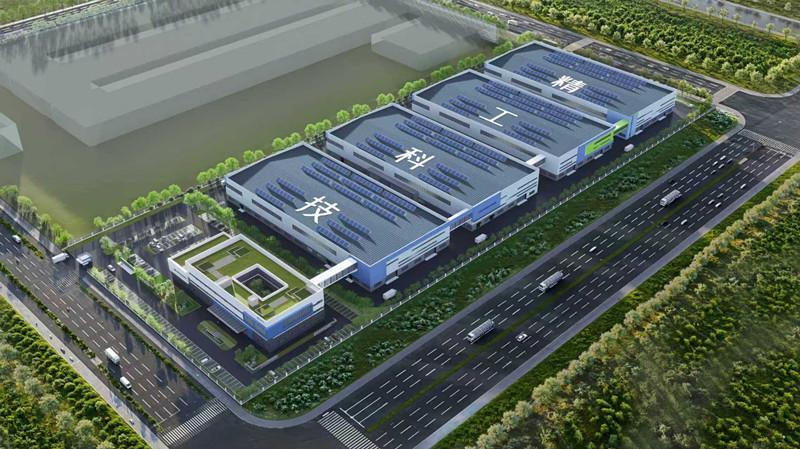
“技术厚土”“市场沃土”引来头部企业,浙江精工在汉建“黑黄金”基地
Chang Jiang Ri Bao· 2025-12-14 00:58
Group 1 - The core project of Jinggong Huazhong Headquarters and Intelligent Manufacturing Industry is progressing steadily, with a carbon fiber composite new material R&D and production base expected to be completed in one year [3][4] - Jinggong Holding Group, a leading enterprise in the steel structure industry in China, has participated in global landmark projects such as the Beijing Olympic "Bird's Nest" and the King Tower in Saudi Arabia [3] - The project was initiated after the company attended an investment promotion conference in Wuhan, leading to a rapid investment agreement and land acquisition process [3][4] Group 2 - The development of aerospace, new energy vehicles, and high-end equipment manufacturing industries in Wuhan provides a rich application prospect for carbon fiber composite materials [4] - The complexity of carbon fiber R&D and production processes necessitates high-end talent and continuous technological innovation, which Wuhan's strong academic and research institutions can support [4] - The carbon fiber produced will be supplied nationwide, with its strength being seven to ten times that of steel, making it essential for high-end manufacturing [4][6] Group 3 - The first phase of the project will focus on the independent R&D and production of carbon fiber composite materials, with ongoing engagement with local enterprises [6] - The project is expected to be fully operational by July 2027, forming an integrated park that will also accommodate the existing Hubei Jinggong Steel Structure Co., Ltd. [6] - The goal is to establish a new development model that emphasizes equipment leadership, material collaboration, and application support, positioning the company as a key R&D source and efficient supply base in the carbon fiber composite materials sector [6][7]
谨慎加仓?
第一财经· 2025-12-11 12:31
Core Viewpoint - The market is experiencing significant differentiation, with strong performance in sectors like commercial aerospace and wind power equipment, while traditional consumption and real estate sectors are facing notable adjustments [4][6][7]. Market Performance - The Shanghai Composite Index failed to maintain the 3900-point threshold, influenced by declines in technology and consumer stocks, while the Shenzhen Composite Index and ChiNext Index saw the largest adjustments due to pressure from sectors like new energy and biomedicine [4][6]. - The trading volume in both markets increased, driven by divergent policy expectations, accelerated thematic rotations, and intensified capital discrepancies [7]. Sector Analysis - New energy and high-end manufacturing sectors emerged as the core strength against the market downturn, supported by policy backing, technological breakthroughs, and growing demand [6]. - Commercial aerospace, nuclear fusion, and wind power equipment sectors showed strong performance, while real estate, retail, and large consumption sectors became focal points for capital outflows [7][9]. Capital Flow - Institutional investors are adjusting their portfolios defensively, increasing positions in policy-driven sectors like commercial aerospace and wind power equipment, while reducing exposure to semiconductor equipment and consumer electronics [9]. - Retail investors are exhibiting a mix of risk aversion and speculative behavior, with funds flowing into banking and public utilities, while some are actively participating in short-term trading in commercial aerospace and nuclear fusion [9].

全球半导体离子注入机行业总体规模、主要企业国内外市场占有率及排名2025版
QYResearch· 2025-12-09 03:06
Core Insights - The semiconductor ion implanter industry is experiencing a critical development phase driven by technological breakthroughs, market expansion, and domestic substitution [4][5] - The global market for semiconductor ion implanters is projected to grow from $3.102 billion in 2024 to $3.530 billion by 2031, with a CAGR of 2.7% from 2025 to 2031 [5] - The Chinese market is rapidly evolving, expected to account for approximately 39.40% of the global market by 2031, up from 38.28% in 2024 [5] Market Overview - The semiconductor ion implanter industry is characterized by high technological barriers and is predominantly led by American and Japanese manufacturers, creating a concentrated and monopolistic competitive landscape [4][11] - Domestic manufacturers have made significant progress in medium and high current platforms, with some equipment already integrated into 12-inch production lines, indicating accelerated domestic substitution [4][5][11] Product and Application Insights - Logic devices are expected to hold a market share of approximately 42.78% in 2024, with a CAGR of about 1.2% in the coming years [8] - High-temperature and hydrogen/helium ion implantation technologies are gaining market share due to the rapid development of power devices [8] Competitive Landscape - The top five global manufacturers, including Applied Materials, Axcelis, and Nissin, dominate approximately 95.6% of the international market share [11] - In the Chinese market, the top five manufacturers hold about 93.6% of the market share, with increasing competition from new entrants [11] Industry Characteristics - The ion implanter is one of the four core equipment in chip manufacturing, with a high degree of system integration and complex technology requirements [12][26] - The market is characterized by a clear differentiation of mainstream technology types, including low-energy and high-energy ion implanters [14][15] Growth Drivers - The demand for ion implanters is driven by the expansion of global wafer manufacturing capacity and the rapid growth of emerging applications such as power devices and image sensors [16][17] - National policies and local government support are fostering a conducive environment for domestic ion implanter manufacturers [18] Challenges - The high technological barriers and long R&D cycles, typically ranging from 5 to 8 years, pose significant challenges for new entrants [20][26] - The international market remains dominated by American and Japanese firms, creating strong customer loyalty and making it difficult for domestic equipment to penetrate high-end markets [21][22] Barriers to Entry - The industry faces significant barriers including high technical requirements, lengthy customer validation processes, and reliance on imported core components [26][27][23] - There is a notable shortage of talent and experience in critical technology areas, limiting the ability of domestic firms to rapidly develop competitive products [24][28]