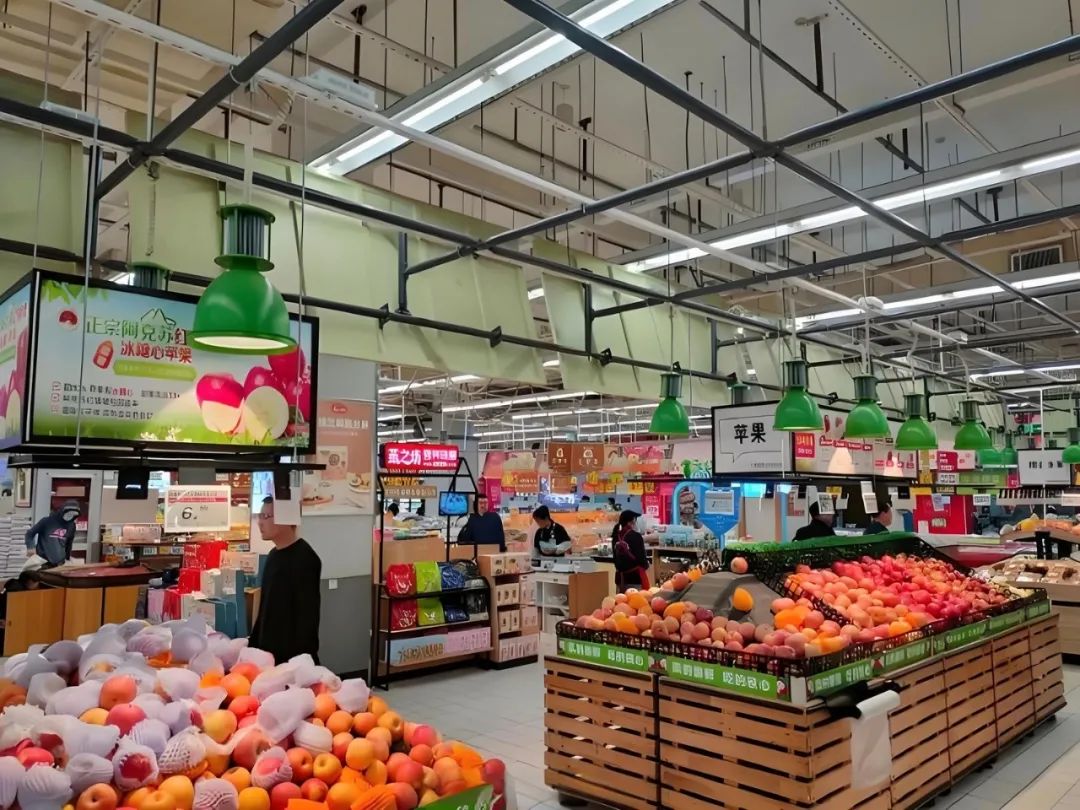
消费回暖

Search documents
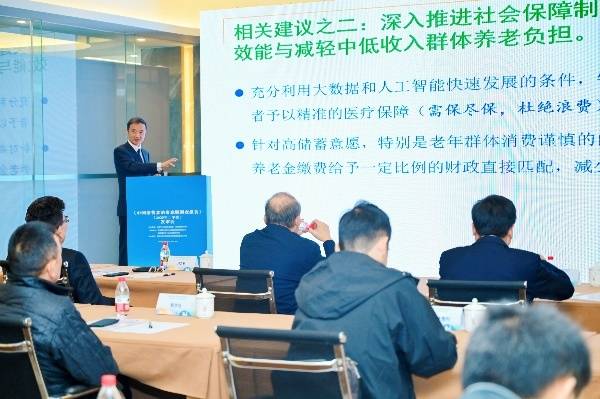
2025年三季度中国消费者消费意愿调查报告在渝发布
Sou Hu Cai Jing· 2025-10-21 10:20
Core Insights - The report indicates a moderate recovery in Chinese consumer spending intentions, with "stable expectations" and "strengthened guarantees" identified as key factors to boost consumer confidence [1][2] Group 1: Consumer Sentiment - The consumer intention index for Q3 2025 stands at 120.6, above the critical threshold of 100, reflecting a slight increase of 0.4 points from the previous quarter [2] - The current consumption intention index is at 112.9, rising by 1.2 points, while the expected consumption intention index is at 128.4, showing a slight decline of 0.4 points [2] - Compared to the same period last year, the overall consumer intention index has decreased by 2.9 points, with the current consumption intention index increasing by 1.2 points and the expected consumption intention index dropping by 6.9 points, indicating that the foundation for recovery still needs to be solidified [2] Group 2: Recommendations for Improvement - The report suggests seven key recommendations to enhance consumer expectations and unleash potential: 1. Implement stronger policy measures to stabilize consumer expectations 2. Advance social security system reforms, focusing on improving healthcare effectiveness and alleviating pension burdens for low- to middle-income groups 3. Create an "anti-involution" institutional ecosystem to shift competition from price wars to value creation 4. Explore the silver economy by transforming aging challenges into new consumption opportunities 5. Promote deep integration of the cultural and tourism industries, evolving from "sightseeing" to "immersive experiences" 6. Restructure the healthy development ecosystem of the catering industry to balance the interests of platforms, businesses, and consumers 7. Recognize the transition of the automotive industry from an "incremental expansion" phase to a "stock optimization" phase, effectively incentivizing differentiated innovation [3]

2025年全球经济大洗牌!中国凭实力甩开美国10万亿,背后藏着这些硬功夫
Sou Hu Cai Jing· 2025-10-20 21:20
Group 1 - The International Monetary Fund (IMF) projects that by 2025, China's economy will surpass 40 trillion international dollars in purchasing power parity (PPP), while the US will remain just above 30 trillion, highlighting a significant gap of over 10 trillion [1][3] - This gap reflects not just numerical differences but also the depth of industry and policy stability between the two nations, indicating a fundamental competition in development models rather than mere rhetoric [3][4] - China's advantages include a robust industrial supply chain, a resilient domestic market with 1.4 billion consumers, and a service sector that is improving in quality and efficiency [4][6] Group 2 - China's economy is expected to experience a turning point in 2025, driven by the simultaneous growth of technology, consumption, and trade, marking a significant moment of resonance among these sectors [6][7] - The automotive sector, particularly in new energy vehicles, has seen substantial growth, with nearly 7 million units sold in the first half of the year, accounting for 44% of total vehicle sales [6] - Consumer spending is recovering without excessive monetary stimulus, as evidenced by a 5% increase in retail sales, with consumption contributing over half to economic growth [7][9] Group 3 - China's trade landscape is diversifying, with increasing exports to ASEAN, Central Asia, and Africa, and trade with Belt and Road Initiative countries surpassing 50% of total trade [10][12] - The country is transitioning from merely selling products to building partnerships and shared standards with its trading partners, indicating a shift towards collaborative development [12][14] - The challenges China faces include ongoing adjustments in the real estate sector and the need for faster service industry reforms, as evidenced by a slowdown in economic growth to 4.8% in the third quarter [9][10] Group 4 - The ability to convert engineering efficiency into affordable products for the public, transform the domestic market into a launchpad for international expansion, and foster regional cooperation into long-term alliances is crucial for China's future [16] - The sustainability of China's fiscal structure, free from the burden of massive interest payments, allows for more investment in education, research, and infrastructure [12][14] - The competition between China and the US is not merely about technological advancement but also about addressing underlying economic challenges, with the potential for significant shifts in the global economic landscape by 2025 [15][16]
国庆中秋假期国内出游总消费达8090亿元,消费呈回暖迹象,聚焦港股消费ETF(513230)布局机遇
Mei Ri Jing Ji Xin Wen· 2025-10-13 03:16
Group 1 - The core viewpoint of the articles highlights a recovery in consumer spending during the recent National Day holiday, with significant increases in domestic travel and retail sales [1][2] - During the 8-day holiday, 888 million domestic trips were made, an increase of 123 million trips compared to the 7-day holiday in 2024, with total domestic travel consumption reaching 809 billion yuan, up by 108.19 billion yuan [1] - The Hong Kong Stock Exchange's consumer ETF (513230) saw a decline of 1.86%, with notable performers including Smoore International and China Resources Beverage, while companies like Bilibili and XPeng Motors faced declines [1] Group 2 - The report from Guotai Junan Securities indicates that self-driving travel has become the mainstream choice, with an increase in long-distance travel, and key cities like Beijing and Shanghai showing a rise in retail sales during the holiday [2] - Data from the Ministry of Commerce shows that sales from key retail and catering enterprises increased by 3.3% year-on-year in the first four days of the holiday, confirming the release of consumer demand during this period [2] - The Hong Kong consumer ETF tracks the CSI Hong Kong Stock Connect Consumer Theme Index, encompassing a wide range of sectors including e-commerce leaders and new consumption brands, highlighting a strong tech-consumer attribute [2]
高频跟踪周报20250920:一线城市新政效果初现-20250920
Tianfeng Securities· 2025-09-20 13:48
Report Industry Investment Rating No relevant content provided. Core Viewpoints of the Report - The real - estate policy support is increasing, and the active real - estate transactions in first - tier cities are expected to promote the market to "stop falling and stabilize". The policy toolbox may be further opened, aiming for a soft landing of the market [2]. - This week, the demand side shows that new - home sales are growing year - on - year, and automobile consumption is marginally improving. The production side has stable industrial production with the PTA operating rate recovering. The investment side sees the apparent consumption of rebar improving and its price rising. The trade side shows an increase in port throughput and a decline in export container shipping prices. The price side has a drop in agricultural product prices and a stable operation of the commodity futures market [1][3][4][5][6][7]. Summary by Directory 1. Demand: New - home sales increase year - on - year, and automobile consumption marginally improves - Real - estate: This week, the transaction area of commercial housing in 20 cities has improved both in terms of week - on - week and year - on - year. First - tier cities have seen a significant year - on - year increase. The transaction area of second - hand housing in key cities has mostly increased week - on - week. For example, in Beijing, Shanghai, and Shenzhen, the second - hand housing transaction areas have increased [3][12]. - Consumption: Automobile consumption has recovered week - on - week, and movie - watching consumption has increased year - on - year. The national migration scale index has decreased week - on - week, and subway ridership has marginally declined [3]. 2. Production: Industrial production runs smoothly, and the PTA operating rate recovers - Mid - and upstream: The operating rate of Tangshan blast furnaces has increased week - on - week. The PTA operating rate has recovered, rising 1.4 pct to 77.2%. The operating rate of polyester filament has slightly increased, while the operating rate of petroleum asphalt plants has decreased [4][51]. - Downstream: The operating rates of automobile all - steel tires and semi - steel tires have increased [4]. 3. Investment: The apparent consumption of rebar recovers, and the rebar price rises - The apparent consumption of rebar has improved, and its price has increased week - on - week. The cement shipping rate has remained flat week - on - week, the cement inventory ratio has increased, and the cement price has remained flat [5][67]. 4. Trade: Port throughput increases, and export container shipping prices decline - Export: Port container throughput has recovered, and the CCFI composite index has decreased week - on - week. The freight rates of European routes have decreased, while those of the US West and US East routes have increased. The BDI index has increased week - on - week [6][78]. - Import: The CICFI composite index has increased 0.4% week - on - week [6][79]. 5. Prices: Agricultural product prices decline, and the commodity futures market operates stably - CPI: The 200 - index of agricultural product wholesale prices has decreased 0.3% week - on - week. Egg prices have risen, while fruit, vegetable, and pork prices have declined [7][90]. - PPI: The Nanhua industrial product price index has increased 1.1% week - on - week. Brent crude oil spot price has increased 1.4%, COMEX gold futures price has increased 0.9%, and LME copper spot price has increased 0.7%. In the commodity futures market, glass, coke, and coking coal have seen relatively large increases, while caustic soda and lithium carbonate have seen declines [7][95][104]. 6. Interest - rate bond tracking: The cumulative issuance progress of replacement bonds this year has reached 99.3% - Next week (9/22 - 9/26), the planned issuance of interest - rate bonds is 447.1 billion yuan, with a net financing of - 138.9 billion yuan. As of September 19, the cumulative issuance progress of replacement bonds this year is 99.3%, the cumulative issuance progress of new general bonds is 82.0%, and the cumulative issuance progress of new special bonds is 79.8% [8][110][115]. 7. Policy Weekly Observation: The central bank adjusts the open - market 14 - day reverse repurchase operation - On September 15, the State Administration of Foreign Exchange stated that relevant foreign exchange management measures need to be optimized and adjusted to adapt to the new situation of the real - estate market. - On September 16, nine departments including the Ministry of Commerce issued measures to expand service consumption. - On September 19, the central bank adjusted the open - market 14 - day reverse repurchase operation to a fixed - quantity, interest - rate tender, and multi - price winning bid [121].
茅台终端动销加速回暖,双节旺季经销商信心大幅修复
Di Yi Cai Jing· 2025-09-18 11:52
Core Viewpoint - The white liquor market is experiencing a recovery in demand as the Mid-Autumn Festival and National Day approach, with Kweichow Moutai, as the industry leader, showing particularly strong market performance [1][2]. Sales Performance - Kweichow Moutai's sales began to improve in July, with August showing a month-on-month increase in terminal sales of approximately 15% to 35%, and September is expected to see year-on-year growth [2][3]. - The company's management indicated that terminal sales have significantly increased since late August, with expectations for further improvement as the traditional double festival approaches [2][3]. Market Sentiment - The recovery in sales is attributed to a noticeable improvement in market sentiment and confidence among distributors, driven by a recovery in dining consumption and the upcoming festive demand [3][4]. - Kweichow Moutai's management has actively engaged with over 200 distributors to boost confidence and stabilize market sentiment [4]. Strategic Initiatives - The company is focusing on long-term strategies, including maintaining production capacity and optimizing product distribution to adapt to market conditions [5][6]. - Kweichow Moutai is enhancing its supply-demand alignment and upgrading its distribution channels, which include traditional distributors, supermarkets, e-commerce, and direct sales [6]. International Expansion - The company has seen a 31.3% year-on-year increase in overseas revenue, indicating significant progress in its international market strategy [6]. - Kweichow Moutai is deepening its international market presence through various initiatives, including cultural events and training for overseas distributors [6]. Financial Confidence - The company has established a three-year dividend plan with a minimum payout ratio of 75% and is planning a new round of share buybacks, reflecting its confidence in future growth [7]. - Kweichow Moutai's recovery is attributed to both the improving consumer environment and its strategic focus on core business fundamentals [7].

报喜鸟(002154):继续充分计提存货减值,轻装上阵静待消费回暖
Shenwan Hongyuan Securities· 2025-08-17 13:02
Investment Rating - The investment rating for the company has been downgraded from "Buy" to "Outperform" [7]. Core Views - The company continues to make sufficient provisions for inventory impairment, positioning itself to wait for a recovery in consumer demand [1]. - The financial performance in the first half of 2025 was below expectations, with revenue of 2.391 billion yuan, a year-on-year decrease of 3.6%, and a net profit attributable to shareholders of 197 million yuan, down 42.7% year-on-year [6][7]. - The company is facing a challenging domestic consumption environment, leading to increased strategic expenses and asset impairment provisions, which have pressured profit margins [7]. Financial Data and Profit Forecast - Total revenue for 2024 is projected at 5.153 billion yuan, with a slight increase to 5.183 billion yuan in 2025, and further growth expected in subsequent years [6]. - The net profit attributable to shareholders is forecasted to decline to 406 million yuan in 2025, with a gradual recovery to 528 million yuan by 2027 [6]. - The gross margin is expected to remain stable around 65%, while the return on equity (ROE) is projected to improve from 4.4% in 2025 to 10.2% by 2027 [6]. Brand and Channel Performance - The HAZZYS brand showed revenue growth of 8.4% in the first half of 2025, while the main brand reported a decline of 9.6% [7]. - Direct sales and online channels experienced growth, while offline franchise and group purchase channels faced pressure [7]. - The company continues to maintain a strong cash position, with over 1.6 billion yuan in cash and cash equivalents, providing a solid buffer against risks [7].

基础设施加快推进、消费市场持续回暖 一组数据感受活力中国
Yang Shi Xin Wen Ke Hu Duan· 2025-08-15 07:33
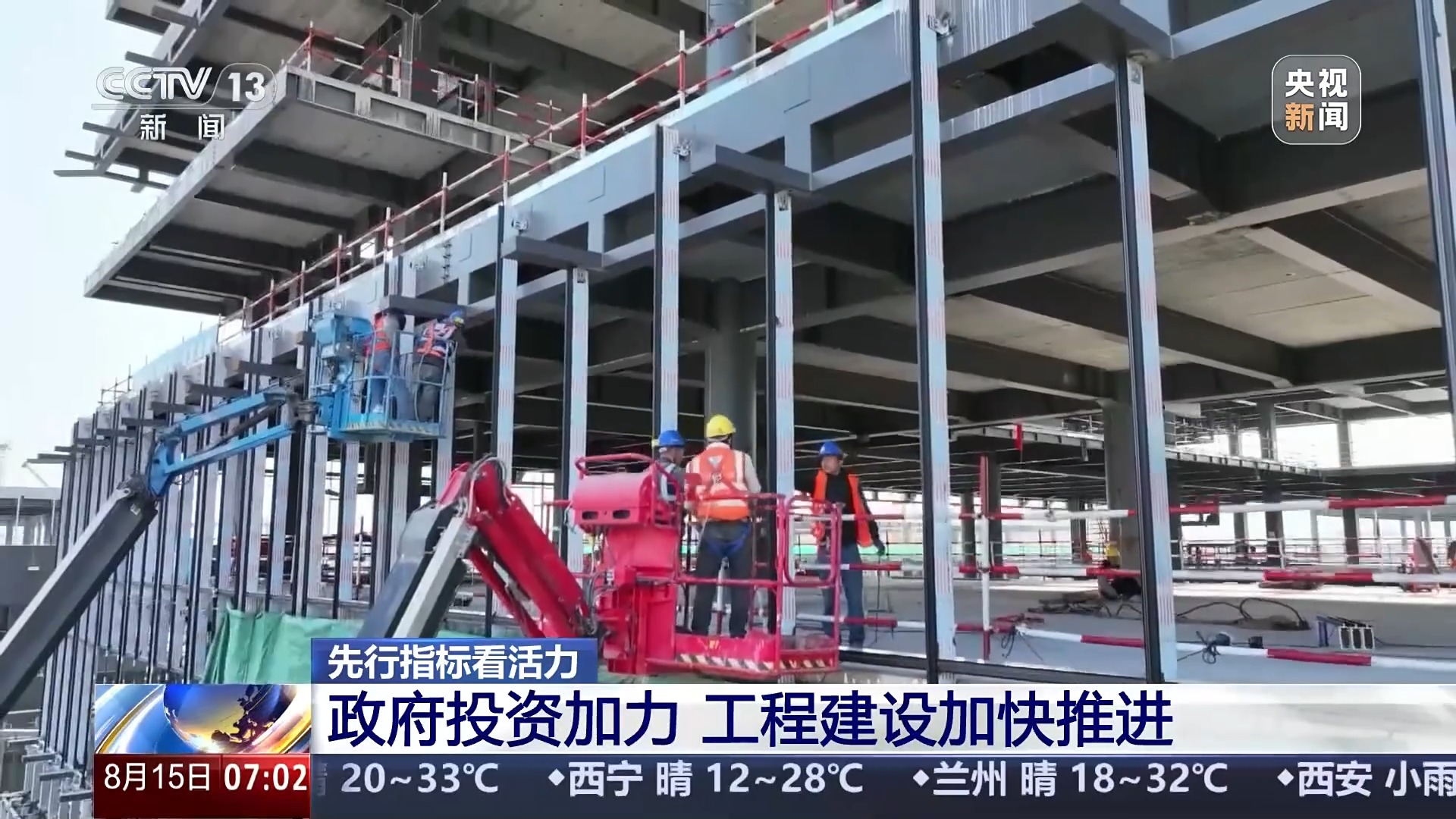
Economic Overview - The overall economic operation in China remained stable in July, with various fiscal policies continuing to exert influence and accelerate infrastructure project construction [1] Government Investment and Infrastructure - Government investment has increased, leading to a faster pace of engineering construction [2] - National engineering machinery workload increased by 4.44% month-on-month, indicating a quicker pace in infrastructure project construction, particularly in road equipment, which reflects ongoing large-scale projects [3] - 20 provinces in China reported a construction start rate exceeding 50%, with 12 provinces, including Hubei, Jiangxi, Guizhou, Qinghai, and Guangxi, showing month-on-month growth [5] - From January to July, the cumulative year-on-year growth of project bidding amounts was 31.9%, indicating a robust investment climate [7] - Major economic provinces like Jiangsu, Guangdong, Zhejiang, Sichuan, and Shandong accounted for nearly 40% of the national project bidding amounts in July, continuing to play a leading role in investment [9] Industrial Production - Industrial production maintained steady growth in July, with strong innovation and development momentum among enterprises [10] - The industrial park production heat index increased by 21.9% year-on-year in July, with the average operating rate of major industrial products rising by 2.6 percentage points compared to the same period last year [11] - The operational vitality index for startups and technology innovation enterprises grew by 35.2% and 24.9% year-on-year, respectively, with five provinces showing over 50% growth in startup vitality [13] Consumer Activity - The consumer market continued to recover in July, with both online and offline consumption showing improvement [14] - The online service consumption heat index increased by 9.7% year-on-year, indicating stable consumer vitality related to daily life [15] - Offline consumption showed even more significant growth, with a year-on-year increase of 20.9% in the consumption heat index, particularly in regions like Ningxia, Guangxi, Anhui, Tianjin, and Henan [17] - Home appliance consumption surged, with key categories seeing a 36.7% year-on-year increase in online retail sales, particularly in air conditioning [19] - The migration scale index increased in July, with a month-on-month rise of 15.3% and a year-on-year rise of 16.1%, reflecting heightened travel enthusiasm among residents [20]
北鼎股份受益消费回暖净利增74.92% 国内外齐发力自主品牌贡献八成营收
Chang Jiang Shang Bao· 2025-08-11 00:41
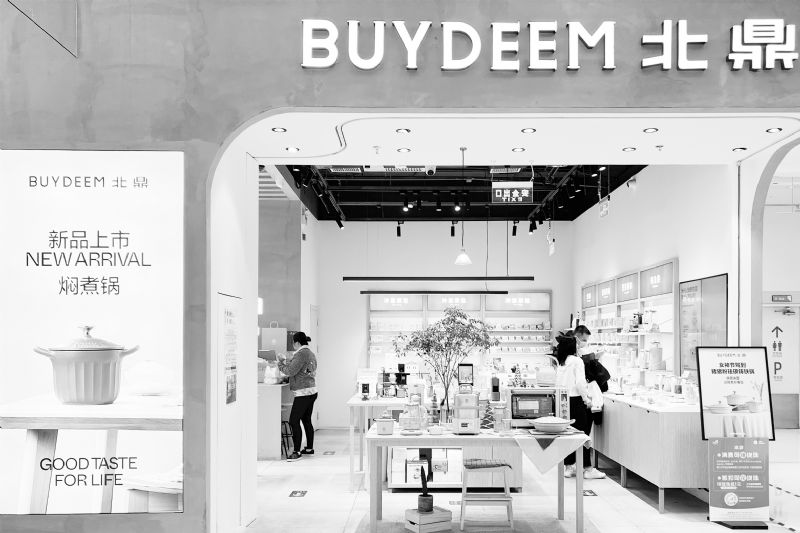
Core Viewpoint - With the recovery of consumer spending, Beiding Co., Ltd. (300824.SZ), focusing on high-end small home appliances, has seen significant growth in its performance in the first half of 2025 [2][5]. Financial Performance - In the first half of 2025, the company achieved operating revenue of 432 million yuan, a year-on-year increase of 34.05% [5]. - The net profit attributable to shareholders reached 55.83 million yuan, up 74.92% year-on-year [5]. - The net profit after deducting non-recurring gains and losses was 53.20 million yuan, reflecting an 86.07% increase year-on-year [5]. - The operating cash flow for the first half of 2025 was 13.04 million yuan, a growth of 79.40% compared to the previous year [5]. Business Segments - The company's core business is driven by its "Beiding BUYDEEM" brand and OEM/ODM operations [6][7]. - The domestic business of the Beiding BUYDEEM brand saw a revenue increase of 48.4%, contributing to an overall revenue growth of 43.6% to 356 million yuan, which accounted for 82.49% of total revenue [6][7]. - The sales expenses increased by 41.17% to 123 million yuan, indicating a significant investment in marketing [5]. Market Trends - The kitchen small appliance market showed signs of stabilization, with a retail value of 609 billion yuan in 2024, reflecting a slight decline of 0.8% year-on-year [4]. - The company is actively expanding its international influence through e-commerce opportunities, with overseas markets covering North America, Japan, and Southeast Asia [8]. Strategic Developments - Beiding Co., Ltd. plans to acquire 100% equity of Zhongshan Keri Automation Technology Co., Ltd. for 156 million yuan to enhance its manufacturing capabilities and meet operational demands [9]. - The company is also increasing its offline experience stores, which play a crucial role in brand exposure and consumer engagement, with a revenue increase of 49.35% to 34.12 million yuan from these stores [7].
珠海上半年GDP同比增长3.8% 外贸规模创历史同期新高
2 1 Shi Ji Jing Ji Bao Dao· 2025-07-31 14:52
Economic Performance - Zhuhai's GDP for the first half of the year reached 224.365 billion yuan, with a year-on-year growth of 3.8% [1] - The primary industry added value was 3.004 billion yuan, growing by 3.7%; the secondary industry decreased by 1.3% to 91.755 billion yuan; the tertiary industry increased by 7.4% to 129.606 billion yuan [1] Industrial Growth - The industrial output value above designated size in Zhuhai grew by 5.5% year-on-year, with an increase of 0.7 percentage points compared to the first quarter [1] - The "4+3" industries saw an increase of 7.2%, with high-end equipment manufacturing, integrated circuits, new energy, and new generation information technology growing by 17.9%, 16.4%, 16.0%, and 15.2% respectively [1] Service Sector - The service sector's added value increased by 7.4%, with information transmission software and IT services growing by 12.1% and leasing and business services by 10.7% [2] - From January to May, the revenue of the service sector above designated size reached 69.681 billion yuan, a year-on-year increase of 10.7% [2] Consumer Market - The total retail sales of social consumer goods in Zhuhai reached 46.946 billion yuan, growing by 5.0% year-on-year [2] - Retail sales of daily necessities increased by 9.3%, with home appliances and audio-visual equipment sales growing by 40.9% and communication equipment by 131.9% [2] Foreign Trade - Zhuhai's total import and export volume reached 168.265 billion yuan, a year-on-year increase of 8.9%, marking a historical high for the same period [2] - Exports totaled 115.417 billion yuan, growing by 4.7%, while imports increased by 19.5% to 52.848 billion yuan [2] Investment Trends - Fixed asset investment in Zhuhai decreased by 38.4% year-on-year, with industrial investment down by 28.0% [3] - Industrial technological transformation investment grew by 10.3%, while infrastructure investment fell by 40.6% and real estate development investment decreased by 42.1% [3] Agricultural Developments - The primary industry saw a year-on-year growth of 4.9%, with fishery output valued at 5.072 billion yuan, accounting for 76.9% of the total agricultural output [3] - Notable projects include the establishment of the first modern marine ranch in the country and the launch of the world's first deep-sea aquaculture vessel [3]
上半年“消费回暖”,即时零售开战引火商超?
3 6 Ke· 2025-07-26 08:03
Group 1: Overall Consumption Trends - The overall consumption market shows a gradual recovery, with a year-on-year growth rate of 4.6% in Q1 and 5.4% in Q2, leading to a total retail sales of 24.5 trillion yuan in the first half of the year, contributing 52% to economic growth [1][5] - However, in June, the year-on-year growth rate of retail sales dropped to 4.8%, lower than the GDP growth rate of 5.3%, indicating a more complex reality in the consumption market [1][5] - The decline in June reflects a shift in consumer behavior, with spending moving from high-ticket dining to more affordable options like snacks and fast food [3][5] Group 2: Consumer Behavior and Spending Patterns - In June, restaurant income growth slowed significantly to 0.9% compared to 5.9% in May, with high-end dining establishments experiencing a 0.4% decline in revenue [3][5] - Retail sales of discretionary items such as beverages, tobacco, and cosmetics also saw a year-on-year decline, indicating consumers are more cautious with non-essential spending [3][5] - Households are increasing savings, with new household deposits rising by 10.77 trillion yuan while loans only grew by 1.17 trillion yuan, reflecting a conservative financial strategy [5] Group 3: Impact of E-commerce and Instant Retail - Online retail sales grew by 8.5% year-on-year in the first half of the year, significantly outpacing overall retail sales growth, with online sales accounting for 24.9% of total retail sales [5] - Instant retail is rapidly gaining traction, with major internet platforms enhancing local merchant partnerships and logistics to offer delivery within 30 minutes, posing a significant threat to traditional supermarkets [6][8] - Traditional supermarkets are losing customer appeal as consumer habits shift towards convenience and immediate fulfillment, leading to a decline in foot traffic [6][8] Group 4: Challenges Facing Traditional Supermarkets - Traditional supermarkets are struggling, with limited growth in sales despite efforts to optimize store experiences and product offerings [9][12] - Financial reports indicate significant losses for major supermarket chains, such as Zhongbai Group and Yonghui Supermarket, highlighting the difficulties in reversing declining trends [8][12] - The fundamental issue lies in the mismatch of business models, as instant retail increasingly meets consumer needs more effectively than traditional supermarkets [11][12] Group 5: Price Trends and Economic Pressures - The Consumer Price Index (CPI) showed a year-on-year decline of 0.1% in the first half of 2025, marking the first negative growth for this period in recent years [13][15] - There is a structural divergence in price trends, with commodity prices declining while service prices are rising, creating challenges for traditional retailers [15][17] - Retailers face pressure from falling prices in core categories like fresh produce and daily necessities, which compresses profit margins and intensifies competition [17][19] Group 6: Strategic Recommendations for Retailers - Retailers need to move beyond simple price competition and focus on enhancing supply chain efficiency, developing private labels, and enriching service experiences to create differentiated competitive advantages [20] - The current market environment necessitates a structural approach to building cost and value barriers to better navigate cyclical changes [20]