消费市场

Search documents
2025年内蒙古经济运行向新向好
Xin Lang Cai Jing· 2026-01-24 18:34
固定资产投资规模持续扩大。"十四五"收官之年,内蒙古紧扣国家发展战略和民生需求,进一步简化投 资审批流程,坚定不移抓高质量项目投资,强化项目储备与要素保障,争取更多项目纳入国家发展大盘 子,充分发挥好各类政府投资工具作用,加快实施一批重点项目、重大项目,带动了投资稳步增长。 2025年,全区固定资产投资(不含农户)比上年增长4.0%。 消费市场平稳运行。今年以来,全区各地持续贯彻落实国家和自治区相关部署与要求,围绕优化消费环 境、增收减负、推动消费品以旧换新等综合发力,并将促消费和惠民生紧密结合,推动消费持续增长。 2025年,全区社会消费品零售总额5375.5亿元,比上年增长4.3%。 农牧业生产质效持续提升。2025年,全区各地以促进农牧业现代化助推乡村全面振兴,并坚持产量产 能、生产生态、增产增收一起抓的思路推进农牧区经济高质量发展,为农牧业稳产增收创造了条件。 2025年,全区粮食总产量840.7亿斤,比上年增长2.5%,实现"二十二连丰";粮食播种面积10567.0万 亩,比上年增长0.5%;粮食作物单产每亩达到397.8公斤,比上年增长2.0%;猪、牛、羊、禽肉产量 315.8万吨,比上年增长5. ...
去年旅游咨询租赁服务等零售额增长两位数以上
Xin Lang Cai Jing· 2026-01-19 23:20
据介绍,2025年居民消费价格(CPI)与上年持平,月度同比变化小幅波动。当前,推动CPI温和回升 的有利因素在累积。今年元旦假期食品消费增加,外出就餐、走亲访友、旅游等服务消费较为活跃,9 天春节假期也在临近,有助于推动CPI季节性回升。1月份以来,飞机票、旅游等商品和服务价格总体 稳中有涨。 据介绍,随着人民生活水平提升,居民消费正从商品消费为主向商品和服务消费并重转变,服务消费潜 力不断释放。从企业销售看,2025年服务零售额比上年增长5.5%,快于商品零售额1.7个百分点。服务 零售额占整体零售额的比重在上升。从居民消费看,2025年服务性消费支出占居民人均消费支出的比重 是46.1%。各地也在持续创新消费场景,优化消费环境,文化、旅游、娱乐、赛事等细分领域多点开 花。 据介绍,2025年,国民经济运行顶压前行、向新向优,高质量发展取得新成效,经济社会发展主要目标 任务圆满实现,"十四五"胜利收官。其中,服务业平稳增长,现代服务业发展良好,全年服务业增加值 比上年增长5.4%,全年服务零售额比上年增长5.5%。 (来源:中国旅游报) 转自:中国旅游报 本报讯(记者 范朝慧)国务院新闻办公室于1月19日 ...
招远农商银行“农商惠e贷”——以金融活水焕新消费活力
Qi Lu Wan Bao· 2026-01-16 06:20
为让金融服务更贴合消费市场脉搏,招远农商银行将"农商惠e贷"与本地消费场景深度融合。一方面,与招远市家电卖场、汽车4S店、家居建材市场等线 下商户开展合作,推出"贷+消费"优惠套餐,客户通过"农商惠e贷"付款可享商户专属折扣;另一方面,对接本地电商平台、生鲜配送等新型消费场景,为 线上消费群体开辟贷款绿色通道,助力新型消费模式发展。此外,针对农村消费市场,产品重点支持农资采购、农机具更新、农村电商创业等需求,推动 农村消费提质升级,同时为低收入消费群体提供合理的信贷支持,通过利率优惠、还款周期调整等方式,助力消费帮扶落到实处。 在消费市场加速复苏、居民消费需求持续升级的背景下,招远农商银行紧扣"好品金融.焕新消费"工作要求,以"农商惠e贷"产品为抓手,聚焦商品消费、 服务消费、新型消费等重点领域,为城乡居民提供便捷、高效的金融支持,用金融活水激活消费市场"一池春水"。 自产品推出以来,"农商惠e贷"已累计为招远市2万余名客户发放消费贷款15亿元,覆盖城乡消费场景超百种,成为当地居民消费升级的"金融好帮手"。下 一步,招远农商银行将持续优化"农商惠e贷"产品功能,深化消费场景融合创新,不断提升金融服务的精准性和 ...


新年新气象 消费市场活力涌动
Yang Shi Wang· 2026-01-15 22:08
Group 1 - The consumer market has shown significant warmth since the beginning of the new year, indicating a positive trend in consumer spending [1] - The demand for traditional New Year goods has increased, leading to a notable rise in orders for production companies [1]
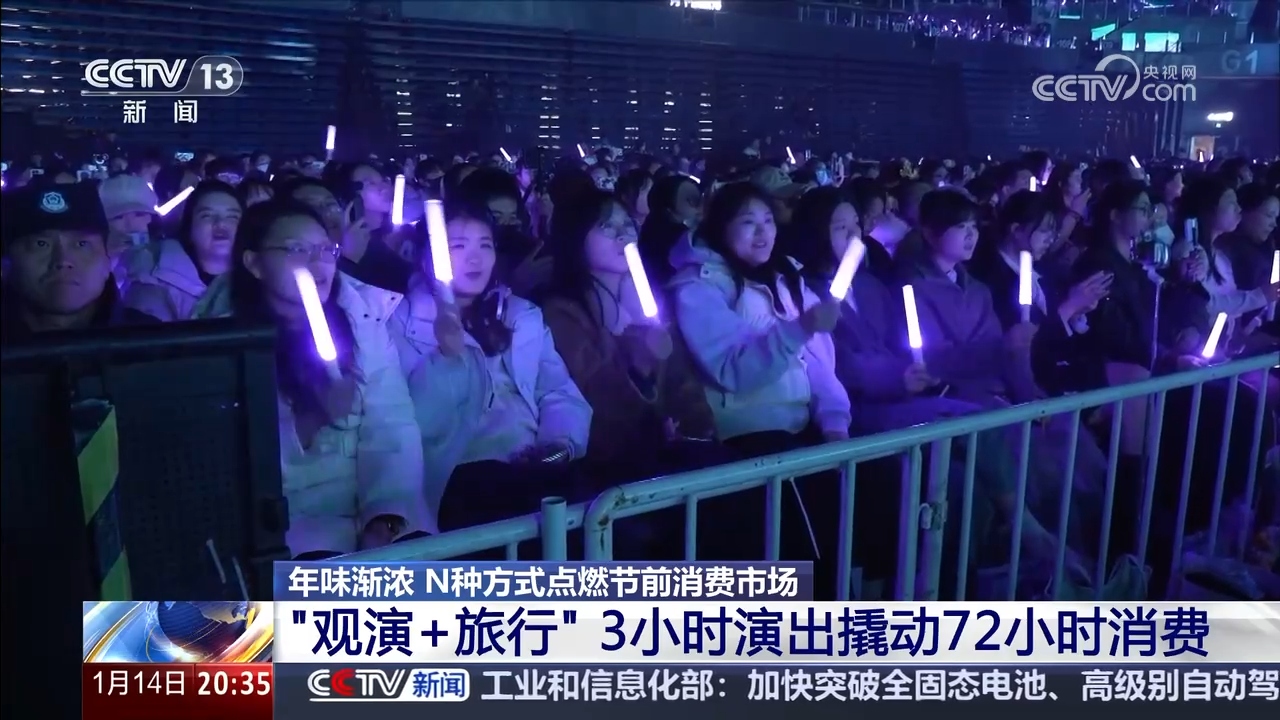
年味渐浓 N种方式点燃节前消费市场
Yang Shi Wang· 2026-01-14 16:57
Group 1: Consumer Market Trends - The consumption market is heating up ahead of the Spring Festival, driven by new national subsidy policies and vibrant consumption scenarios [1][11] - Large-scale performances, such as concerts, are becoming new engines for consumption, transforming single-event attendance into multi-faceted spending experiences [1][3] - The model of "3-hour performance driving 72-hour consumption" is activating the entire tourism and entertainment industry chain [3][4] Group 2: Event-Driven Tourism - Concerts and performances are attracting visitors from various regions, leading to increased hotel bookings and local tourism activities [3][4] - In Jinan, diverse New Year concerts cater to different audience preferences, enhancing cultural engagement and driving local tourism through initiatives like "ticket root economy" [4][6] - Data indicates that by 2025, large-scale performances will generate ticket revenues of 32.448 billion yuan, directly driving over 220 billion yuan in related consumption [4][6] Group 3: Winter Tourism and Cultural Integration - The winter tourism season is thriving, with ice and snow sports integrated with local customs, creating unique experiences for visitors [6][7] - Events in regions like Aba and Inner Mongolia showcase local culture through performances and activities, enhancing the appeal of winter tourism [6][7] Group 4: Revitalization of Historical Spaces - Historical buildings are being revitalized with modern amenities, attracting both locals and tourists, as seen in Lishui's "Jiguang Street Teahouse" [8][10] - The teahouse has quickly become a popular destination, averaging 5,000 visitors daily, blending nostalgia with contemporary social experiences [8][10] Group 5: National Subsidy Policies - The introduction of national "trade-in" subsidies has sparked a new wave of consumer spending, particularly in the automotive and electronics sectors [11][13] - Consumers are benefiting from significant savings through combined national and corporate subsidies, leading to increased sales in various markets [11][13] - The focus on green energy and smart upgrades is driving demand for energy-efficient appliances and tech products among younger consumers [13]
画里有话丨假日经济彰显澎湃活力
Sou Hu Cai Jing· 2026-01-10 09:00
Group 1 - The holiday consumption surge reflects the strong demand and vitality of China's consumer market, showcasing the resilience and potential of the economy [3] - During the New Year holiday, a total of 5.95 billion inter-regional trips were made, with 142 million domestic trips and total domestic spending reaching 84.789 billion yuan [3] - The holiday economy not only boosts growth in tourism, dining, accommodation, and retail sectors but also injects strong momentum into economic and social development [3] Group 2 - The vibrant scenes of holiday consumption illustrate the aspirations and pursuits of the public for a better life, highlighting the dynamic nature of China [3] - Continuous innovation in consumption scenarios, cultivation of consumption highlights, and improvement of consumer experiences are expected to lead from a "good start" at the beginning of the year to a "full house" throughout the year [3]

政策给力,消费争气!博州开年消费旺!
Sou Hu Cai Jing· 2026-01-09 00:48
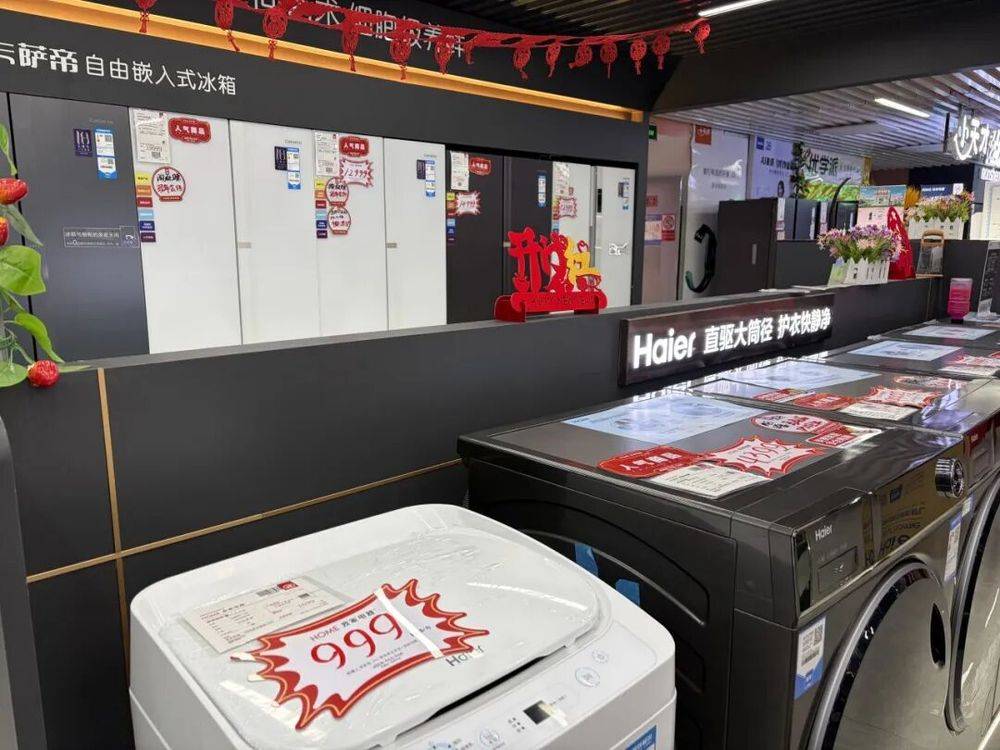
Group 1 - The consumer market in Bole City, Xinjiang, is experiencing a vibrant recovery, driven by both strong demand for daily necessities and an increase in quality consumption [1][4] - The implementation of the "old-for-new" policy by the National Development and Reform Commission and the Ministry of Finance has significantly boosted consumer interest in upgrading home appliances, particularly energy-efficient products [1][2] - The local appliance store has reported a 10% increase in sales due to the previous "old-for-new" policy, with over 4,000 orders placed, indicating a strong consumer acceptance of the dual incentives of trade-in value and government subsidies [2] Group 2 - The local hotpot restaurant has seen a nearly 30% increase in daily customer flow compared to the end of last year, reflecting a growing trend in consumer spending in the dining sector [4][6] - The bustling atmosphere in the hotpot restaurant is indicative of the broader consumer vitality in Bole, with increased foot traffic benefiting surrounding retail businesses [6] - The Bole Statistical Bureau reports a steady growth in the retail sales of consumer goods, particularly in the dining and accommodation sectors, with some indicators leading the region [6]
政策给力,消费争气!博州开年消费旺旺旺!
Sou Hu Cai Jing· 2026-01-08 07:06
Core Insights - The consumer market in Bortala is showing strong vitality, driven by both daily consumption and quality consumption trends, indicating a positive outlook for the local economy [1] Group 1: Home Appliance Sector - The implementation of the "Two New" policy by the National Development and Reform Commission and the Ministry of Finance has significantly increased consumer interest in home appliance upgrades, particularly for energy-efficient products [3] - The previous "old-for-new" policy, which included both trade-in value and government subsidies, led to over 4,000 orders and a 10% increase in sales, with energy-efficient appliances being particularly popular [5] - The store manager anticipates a further 20% growth in order volume as consumer willingness to upgrade continues to rise, driven by upcoming local policy implementations [5] Group 2: Food and Dining Sector - The bustling atmosphere in local hotpot restaurants reflects the growing trend of quality consumption, with a nearly 30% increase in daily customer flow compared to the end of last year [7] - The aggregation effect of food courts is boosting foot traffic to surrounding shops, enhancing the overall consumer experience in the area [9] - The local consumer market has maintained steady growth, with significant increases in retail sales, particularly in the food and accommodation sectors, positioning Bortala's consumption growth among the top in the region [9]

经济表现待验证,贵金属高位运行
Mai Ke Qi Huo· 2026-01-06 13:35
Report Industry Investment Rating No relevant content provided. Core Views - In early 2026, the economic performance needs to be clarified, and domestic and foreign policies remain the focus. In 2025, there were concerns in both the US and Chinese economies. In the US, the focus was on the weak employment market and potential consumption risks, while in China, domestic demand was weak in Q3, and the recovery in Q4 under policy guidance needed to be observed. In the new year, the policy highlights affecting the US economy are the continuation of monetary easing and the intensity of subsequent fiscal spending. In China, the focus is on the effectiveness of stabilizing domestic demand and the policy efforts in promoting investment to stop falling and expanding the consumer market. The market expects the Fed to cut interest rates slightly more than twice in 2026, currently a preventive rate cut. However, if the employment market weakens more than expected, such as a continuous rise in the unemployment rate, it will prompt the Fed to accelerate the rate - cut pace. Unconventional risks in 2026 come from the attitude of the newly - appointed Fed chair, and the impact of monetary policy in Q1 mainly depends on economic performance. There is an expectation of monetary policy easing in Q1, but it remains to be seen. In China, policies to stabilize growth will be gradually introduced at the beginning of the year. The first batch of 62.5 billion yuan in national subsidy funds for consumer goods trade - in programs in 2026 is less than the 81 billion yuan in the first batch in 2025. Based on the tone of the "two new policies" set by the Central Economic Work Conference, the overall investment rhythm in 2026 is expected to be more stable. The risk is that previous consumption demand has been released to some extent, and the high base in the first half of 2025 will put pressure on the year - on - year growth rate. Later, attention should be paid to the scale of the government's on - budget fiscal deficit, ultra - long - term special treasury bonds, and local government special bonds during the Two Sessions. At the beginning of the year, policy expectations are strong, but lacking specific data support, and overall sentiment is expected to fluctuate but remain relatively stable [2]. - Precious metals are fluctuating at high levels, and the upward trend has not been broken. Before the New Year's Day holiday, the prices of precious metals, gold and silver, fluctuated significantly, mainly due to some long - positions leaving the market and the adjustment of margins for COMEX gold and silver. After the holiday, with the increase in risk - aversion sentiment and investors re - entering the market, precious metal prices continued to rise in early January, and the previous high at the end of December needs to be broken. The grand narrative logic affecting precious metal prices has not changed. Frequent global geopolitical risks, alleviated but not eliminated tariff risks, dollar credit risks, government debt risks, and the Fed's continued rate - cut rhythm still have a bullish impact on precious metals. After a continuous rise in December, the silver price fluctuated significantly before the New Year's Day holiday, and the market sentiment recovered and became stronger again after the holiday. The mid - term upward trend of COMEX gold and silver has not been broken. The support for the COMEX gold main contract is around 4270 - 4300, and for the silver main contract, it is around 69 - 70. In the short term, the market sentiment after the holiday remains bullish, but the risks are that a too - rapid price increase may trigger another margin adjustment for COMEX gold and silver, and there is short - term pressure from the annual weight adjustment of the Bloomberg Commodity Index (BCOM). Therefore, gold and silver prices still face significant fluctuation risks. In early January, the market is still trading on geopolitical risks and monetary easing expectations. After the geopolitical risks ease, the market's focus will shift to the performance of US economic data and the corresponding changes in monetary policy expectations, which will affect short - term market fluctuations. In conclusion, at the beginning of the year, the gold and silver prices need to re - evaluate the influencing factors to determine the price direction after the short - term consolidation. It is expected to be bullish. The short - term support for the Shanghai gold main contract is 980, and for the Shanghai silver main contract, it is 17000 [3]. Summary by Related Catalogs Macroeconomic - The Fed has no significant rate - cut expectation in January, and the market expects the next rate cut to be around March. New economic data in the US will be released in early January, including the ISM manufacturing PMI index, non - farm payroll data, and the unemployment rate. It is expected that the economic data will not affect the January monetary policy decision, and the probability of a rate cut in January is low. However, it will affect the probability of a rate cut in March, which is currently around 50%. As time passes, the expectation of a rate cut in March may change significantly under the influence of US economic data [6]. - US employment data is at risk of weakness, but the degree of weakness needs to be determined. Since the second half of 2025, the US labor market has continued to weaken. The monthly new non - farm payrolls have fluctuated significantly, and there have been months with negative new additions. The unemployment rate has gradually risen from a low of 4.1% in June 2025, especially rising to 4.6% in December. If this unemployment rate persists, it may trigger the Sahm Rule again. Therefore, the unemployment rate performance in the next two months is very important. If it rises further, it may accelerate the Fed's rate - cut pace [9]. - The upward amplitude of inflation is temporarily limited. Although inflation has risen in the second half of 2025, the amplitude is temporarily limited and does not currently affect the monetary policy rhythm. From this perspective, the short - term performance of the employment market has a more significant impact on monetary policy. In November 2025, the year - on - year growth rates of the US CPI and core CPI were 2.7% and 2.6% respectively, down from Q3 [13]. - The US manufacturing PMI index is at a low level. In the second half of 2025, the US manufacturing PMI index was at a low level. Overall, the cyclical pattern of the manufacturing PMI index is less obvious, and it fluctuates at a low level. In terms of inventory, the manufacturing inventory growth rate rebounded slightly in Q3, but the inventory growth rates of wholesalers and retailers declined, and there was no consistent inventory replenishment process. Therefore, it is difficult for the manufacturing industry to have an unexpectedly good recovery. Later, attention should be paid to whether the weakening impact of the previous government shutdown and the continuation of monetary policy easing in Q1 to Q2 will have a positive impact on inventory and the manufacturing industry [16]. - The medium - and long - term interest rates of US Treasury bonds are generally stable and have not declined significantly. Although the Fed cut interest rates continuously from Q3 to Q4 in 2025, driving down the short - term interest rate level, the long - term interest rate level remained generally stable. The 10 - year US Treasury bond interest rate fluctuated in a narrow range of 4.0% - 4.2% in Q4. Concerns about the sustainability of the sovereign debt of European and American governments and the weakening of the attractiveness of US Treasury bonds under the dollar credit risk have supported the performance of US Treasury bond interest rates. Precious metals have become more attractive as a safe - haven asset than the US dollar and US Treasury bonds, driving the continuous strength of gold and silver prices in December [20]. - The US dollar index is oscillating at a low level and is expected to gradually break out of the oscillation range. Since the second half of 2025, the US dollar index has stopped its continuous rapid decline and has been oscillating in a narrow range of 96 - 100. Whether the US dollar index can break out of the oscillation range depends on whether the US economy can gradually recover under the influence of monetary easing and whether the US can form a new dominant position to curb the risk of de - dollarization. Currently, such a trend has not been observed, and continuous attention should be paid to the performance of US economic data and whether the US's influence in the Americas region will be further strengthened [24]. - In China, the manufacturing PMI index rebounded in December 2025. After the Sino - US economic and trade relations became tense again in October 2025, the Chinese economy gradually recovered in November and December, and domestic policies also played a role in stabilizing growth. The implementation of policy - based financial tools led to a certain recovery in the manufacturing industry. Based on the December manufacturing PMI index, it is expected that the investment growth rate will recover to some extent. Attention should be paid to the industrial added value, investment, and consumption data to be released in the middle of the month [27]. - It is expected that the total new social financing in 2025 will reach 36 trillion yuan, with a year - on - year growth rate of over 10%. The total new social financing in 2025 was relatively large, expected to reach 36 trillion yuan, significantly higher than the 32.3 trillion yuan in 2024. However, the growth structure and investment rhythm affected the annual economic performance. The increase in social financing in 2025 mainly came from local government bonds, and the year - on - year increase in RMB loans decreased. The overall investment rhythm of social financing also showed a pattern of high in the first half and low in the second half, with the single - month new social financing in August - October significantly less than the same period last year. Attention should be paid to whether the implementation of policy - based financial tools in Q4 2025 will drive an increase in the credit growth rate [31]. - In Q4 2025, the real - estate sales were weak, and housing prices declined month - on - month. The new and second - hand housing transactions in 2025 were significantly weaker than the same period last year, mainly in Q4. Although real - estate stabilization policies were continuously introduced from Q3 to Q4 in 2025, there were no unexpectedly large - scale reserve requirement ratio cuts or interest rate cuts. The new and second - hand housing transactions declined in both volume and price compared to the same period last year, which will affect the real - estate investment performance at the beginning of 2026. Therefore, promoting infrastructure and manufacturing investment and stimulating consumption have become the focus of policies at the beginning of the year [34]. - In 2026, the first - batch funds for the trade - in program were released, and the annual investment rhythm is expected to be more even. The National Development and Reform Commission and the Ministry of Finance issued the "Notice on Implementing the Large - scale Equipment Upgrading and Consumer Goods Trade - in Policy in 2026", officially releasing the national subsidy plan for 2026. The first - batch scale of 62.5 billion yuan to support consumer goods trade - in is less than the 81 billion yuan in the first batch in 2025. However, based on the tone of the "two new policies" set by the Central Economic Work Conference, compared with the situation in 2025 when most of the funds were invested in the first three quarters, especially the first half, the overall investment rhythm in 2026 is expected to be more stable. Therefore, the smaller first - batch investment scale in 2026 does not mean a reduction in the annual scale. The scope of the trade - in subsidy has changed, and the subsidy standards have been further optimized. There is a new subsidy for purchasing new smart products, and the coverage has been expanded to include "elevator installation in old communities" and "off - line commercial facilities such as commercial complexes". However, the number of household appliance subsidy categories has been reduced from 12 to 6. For the subsidy amount, the car subsidy has been adjusted from a fixed amount to a percentage, the single - piece subsidy ceiling for household appliances has been adjusted from 2000 yuan to 1500 yuan, and only first - level energy - consuming products are eligible for the subsidy. The trade - in of electric bicycles and home - improvement consumer goods is no longer included. Overall, the subsidy is still at a certain scale and will help stabilize the consumer market in the new year, in line with the "insisting on domestic - demand - led and deeply implementing the special action to boost consumption" mentioned in the economic work conference. It is expected that the investment rhythm in 2026 will be more stable. The risk is that the implementation of the "two new policies" from the second half of 2024 to 2025 has released some consumption demand, and the high base in the first half of 2025 will put pressure on the year - on - year consumption growth rate [38][39]. - The profits of Chinese industrial enterprises improved from the end of Q3 to the beginning of Q4 in 2025 but weakened again in the second half of Q4. From July to September 2025, the profits of industrial enterprises improved, mainly due to the increase in the prices of some commodities driven by anti - involution. In October, the PPI growth rate did not further increase significantly, and the operating income growth rate of industrial enterprises also declined, affecting the profit performance of industrial enterprises. In November, the single - month profit of industrial enterprises was negative, dragging the cumulative year - on - year growth rate from January to November down to 0.1%, compared with a peak of 3.2% in September [40]. - The RMB has appreciated continuously against the US dollar, and the subsequent economic growth expectation remains the main influencing factor. Since Q4, the long - term Treasury bond yields in both China and the US have remained stable, so the yield spread has not changed significantly. In terms of economic growth expectations, the US has not shown obvious signs of recovery and is performing weakly. In China, investment and consumption have also declined. Therefore, there has been no significant change in economic growth expectations or Treasury bond yield levels. The Fed cut interest rates continuously from Q3 to Q4, while China did not adjust the benchmark interest rate. As a result, the RMB has appreciated against the US dollar, rising from around 7.12 to around 6.98 [43]. Precious Metals - In 2025, the annual increase in the SPDR gold holdings was significant. In 2025, the holdings of the world's largest physical gold fund, SPDR, ended four consecutive years of negative growth since 2021. The annual increase was about 198 tons, and the year - end holdings reached about 1070 tons. The increase in holdings mainly occurred in several stages: from early March to mid - April, from late May to late June, from late September to mid - October, and from late December [47]. - The annual increase in the SLV silver holdings was significant in 2025. The holdings of the physical silver fund, SLV, have had positive growth for the second consecutive year. In 2025, the increase was about 2068 tons, compared with 772 tons in 2024, which is also the largest annual increase in recent years except for 2020 when the increase was 6099 tons. From the perspective of physical fund holdings, the increase in price has boosted investment demand. However, neither the gold nor the silver physical fund holdings have returned to their previous peak levels. Therefore, there is still room for an increase in holdings. The increase in investment demand is usually complementary to the price trend and reinforces each other. Subsequently, the price trend will still affect the holdings, and an increase in holdings will in turn strengthen the price strength [50]. - The gold inventory in futures exchanges remained generally stable in December 2025. In December 2025, the changes in the COMEX futures inventory and the Shanghai Futures Exchange (SHFE) gold inventory were both small, showing a slight increase. However, there were significant changes in the inventories of the two exchanges in 2025. At the beginning of the year, due to market concerns about the US imposing tariffs on gold and silver, the inventory was transferred to COMEX. The COMEX inventory rose from about 550 tons at the end of 2024 to about 1247 tons in early October 2025 and then declined, reaching about 1132 tons at the end of December. The SHFE inventory rose from about 15 tons in May 2025 to 97.7 tons at the end of December [52]. - The COMEX silver inventory decreased in December, while the silver inventories in the SHFE and the Shanghai Gold Exchange (SGE) increased slightly. The rapid increase in COMEX silver inventory started at the beginning of 2025, rising from about 9800 tons at the end of 2024 to about 16543 tons in early October 2025. At the same time, the maximum decline in the SHFE gold inventory in 2025 was about 900 tons, and it recovered slightly in December but remained at a low level overall. The SGE silver inventory was relatively stable, with a slight increase at the end of 2025 compared to the beginning. The domestic exchange inventories are at a low level, while the COMEX silver inventory is at a multi - year high. Concerns about tariff increases and the US adding silver to the critical minerals list have contributed to the increase in the COMEX silver inventory [55]. - Regarding the COMEX gold futures positions, although the gold price reached a new high at the end of December 2025, the total gold positions and non - commercial long positions increased, but they were lower than the levels at the gold price peak from late September to early October 2025. The non - commercial short positions were generally at a low level, and the market structure remained bullish. However, the non - commercial net long positions at the end of December were lower than those from September to early October, indicating a slightly weaker bullish sentiment [58]. - Regarding the COMEX silver futures positions, in December 2025, the silver price rose unexpectedly. The non - commercial short positions were at a low level and did not strongly resist the upward trend. The non - commercial long positions increased, but the increase was limited. The total positions remained generally stable from mid - November to December [61
中国经济进入内需攻坚之年
Jin Rong Shi Bao· 2026-01-05 03:32
Group 1 - In the first half of 2025, China's economy achieved a growth rate of 5.3% due to proactive fiscal measures, effective trade-in policies, and strong export resilience. However, growth momentum slowed in the second half of the year as the effects of stimulus policies diminished and high base effects emerged [1] - The 2026 economic work is under close scrutiny as it marks the beginning of the 14th Five-Year Plan, with a focus on maintaining economic growth as a priority. The Central Economic Work Conference in December 2025 emphasized the need for policies that are not only active but also effective [1] - The 2026 macroeconomic policy will continue to adopt a "more proactive" stance while focusing on enhancing effectiveness, integrating existing and new policies, and increasing counter-cyclical and cross-cyclical adjustments [1] Group 2 - China's export performance in 2026 is expected to exceed market expectations, supported by market diversification and product structure upgrades. From January to November 2025, China's export value increased by 5.4% year-on-year, surpassing the levels of the same period in 2024 [2] - Despite a nearly 20% decline in exports to the United States, exports to emerging markets such as Africa (26.3%), ASEAN (13.7%), and India (11.9%) showed significant growth. The share of exports to Latin America, Africa, and India combined reached 17.5%, matching that of ASEAN [2] - The strong resilience in exports is attributed to stable global economic growth, ongoing fiscal expansion in the US and Europe, and the stabilization of US-China trade relations. Additionally, technological advancements driven by artificial intelligence are expected to support exports [3] Group 3 - Infrastructure investment is projected to rebound in 2026, driven by the commencement of major projects and financial support. From January to October 2025, broad infrastructure investment grew by 1.5% year-on-year, with new policy financial tools and local government debt limits set to enhance project funding [3] - The 14th Five-Year Plan emphasizes the importance of technology innovation and industrial upgrading in driving manufacturing investment. Manufacturing investment grew by 2.7% year-on-year from January to October 2025, with a focus on advanced manufacturing and strategic emerging industries [4][5] Group 4 - The Chinese consumer market is showing strong resilience, with retail sales of consumer goods increasing by 5.0% year-on-year in the first half of 2025, supported by policies promoting trade-in programs. However, growth slowed in the second half due to diminishing effects of these policies [6] - The "14th Five-Year Plan" highlights the importance of enhancing the consumption rate and the role of domestic demand in driving economic growth. There is a focus on whether policies to stimulate consumption will be strengthened in 2026 [6] - The balance between short-term growth stabilization and long-term development tasks is crucial for policy formulation in 2026, with an emphasis on stabilizing the real estate market and improving social security systems [7]