碳关税

Search documents
长江大宗2026年1月金股推荐
Changjiang Securities· 2026-01-04 11:39
Group 1: Metal Sector - Yun Aluminum Co. (000807.SZ) is projected to achieve a net profit of CNY 44.12 billion in 2024, increasing to CNY 75.75 billion by 2026, with a PE ratio decreasing from 25.82 to 15.04[9] - The company has a comprehensive production capacity of 305,000 tons of green aluminum and 140,000 tons of alumina, positioning it as a leader in the green aluminum sector[18] - The company's debt-to-asset ratio is expected to decrease to 23% by 2024, maintaining a strong ROE of 15.6%[24] Group 2: Construction Materials - Huaxin Cement (600801.SH) is forecasted to have a net profit of CNY 24.16 billion in 2024, growing to CNY 36.58 billion by 2026, with a PE ratio dropping from 18.60 to 12.29[9] - China National Materials (002080.SZ) is expected to see its net profit rise from CNY 8.92 billion in 2024 to CNY 25.87 billion in 2026, with a PE ratio decreasing from 68.38 to 23.57[9] Group 3: Transportation Sector - SF Holding (002352.SZ) is projected to achieve a net profit of CNY 101.70 billion in 2024, increasing to CNY 124.78 billion by 2026, with a PE ratio declining from 18.82 to 15.34[9] - The Beijing-Shanghai High-Speed Railway (601816.SH) is expected to see a slight increase in profit, with a PE ratio of 1973.38 in 2024, dropping to 1758.94 by 2026[9] Group 4: Chemical Sector - Senqcia (002984.SZ) is forecasted to have a net profit of CNY 21.86 billion in 2024, with a PE ratio of 10.03, expected to rise to CNY 21.26 billion by 2026[9] - Yara International (000893.SZ) is projected to achieve a net profit of CNY 9.50 billion in 2024, increasing to CNY 39.34 billion by 2026, with a PE ratio decreasing from 46.64 to 11.27[9]



欧美忍不住了,要对中国先下手为强,高市早苗很得意,丢出4个字
Sou Hu Cai Jing· 2026-01-02 11:52
Group 1 - The European Union has officially expanded its "carbon border adjustment mechanism," which now includes a wider range of products, significantly impacting Chinese exports, as the new regulations are expected to cover imports worth over €80 billion annually [1][3] - China is the largest exporter of steel, aluminum, and fertilizers globally, with exports to the EU in these categories exceeding $220 billion in 2025, making it a primary target of the EU's carbon tax [3][5] - The Chinese Ministry of Commerce has condemned the EU's actions as trade protectionism disguised as climate policy, indicating potential retaliatory measures to protect domestic enterprises [3][5] Group 2 - The U.S. has expressed concerns over military activities in the Taiwan Strait, urging China to exercise restraint, which reflects a cautious approach to avoid escalating tensions while maintaining pressure on China [5][7] - Japan's new Prime Minister, in her New Year address, emphasized a nationalistic agenda, marking 2026 as a pivotal year for Japan's resurgence, which has raised alarms in the international community due to its historical implications [7][9] - Japan's defense budget has surpassed 2% of GDP, with plans for further increases, indicating a shift towards a more aggressive military posture and closer security cooperation with allies like the U.S. and Australia [9][11] Group 3 - Japan is actively enhancing military collaboration with the Philippines and Taiwan, indicating a strategic pivot to counter China's influence in the region [11][13] - The Chinese government is responding to external pressures by accelerating the establishment of its own green trade rules, including a national carbon trading market, to counteract the EU's carbon tax [13][15] - China's military strategy remains focused on deterrence, maintaining a professional approach while enhancing its capabilities in response to perceived threats from the U.S. and Japan [15][16] Group 4 - A wave of international support for the "One China" principle has emerged, with numerous countries reaffirming their stance against Taiwan independence, which could influence Japan's approach to regional tensions [17][19] - Economic conditions in the EU and the U.S. are showing signs of strain, with the EU experiencing zero growth and the U.S. facing persistent inflation, contrasting with China's robust economic growth of 5.2% in 2025 [19][20] - Domestic sentiment in Japan regarding the Prime Minister's nationalistic rhetoric is mixed, with a significant portion of the population expressing discomfort, indicating potential political challenges ahead [20]


欧盟碳关税来了,钢铝产业影响几何
2 1 Shi Ji Jing Ji Bao Dao· 2025-12-31 06:44
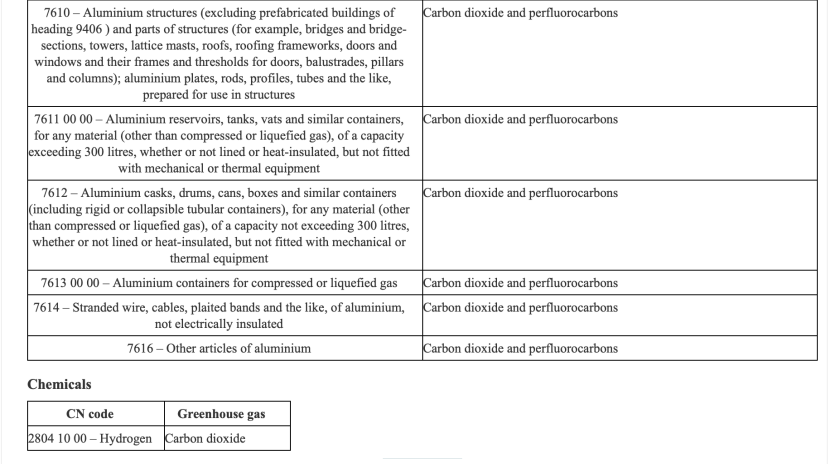
Core Viewpoint - The EU's Carbon Border Adjustment Mechanism (CBAM) will officially enter its charging phase on January 1, 2026, initially covering six product categories: steel, cement, aluminum, fertilizers, electricity, and hydrogen. By 2028, the scope is expected to expand to approximately 180 downstream products, including washing machines and automotive parts [1][3]. Group 1: Implementation and Coverage - The CBAM's product coverage has been clarified, with a temporary agreement reached on December 12, 2022, confirming the initial six product categories [3]. - The implementation of CBAM will follow a phased approach, with a transition period from 2023 to 2025 focusing on carbon data research, leading to formal legislation in 2026 [14]. - The actual payment obligations will primarily affect companies collaborating with large EU importers due to exemption thresholds, which will significantly reduce compliance burdens for small and medium-sized enterprises [17]. Group 2: Product Specifics and Emission Accounting - Different products under CBAM will have varying emission coverage; for instance, indirect emissions from steel and aluminum will not incur charges, while cement and fertilizers will be charged for both direct and indirect emissions [14]. - The CBAM will expand its coverage to include downstream products by 2028, with the cost burden depending on the proportion of steel and aluminum in those products [15]. Group 3: Impact on Chinese Enterprises - Chinese enterprises exporting to the EU, particularly in the steel and aluminum sectors, will need to establish differentiated carbon emission data management systems to comply with CBAM [20]. - The majority of Chinese exporters affected by CBAM will be larger companies, as many small exporters will fall below the 50-ton exemption threshold [17]. - The actual impact on major Chinese aluminum exporters is expected to be limited due to their ability to track production data and lower actual emissions compared to default values set by CBAM [19]. Group 4: Broader Implications and Strategic Responses - The introduction of CBAM and other EU regulations signals a growing trend of green trade barriers, pushing for low-carbon transitions globally [24]. - Chinese companies are encouraged to adapt to EU standards and develop low-carbon supply chains to mitigate compliance risks while participating in international carbon rule-making [24][25]. - China's proactive approach to low-carbon transformation and its relatively better energy structure compared to other developing countries may provide a competitive advantage in the face of stringent EU regulations [25].

欧盟“碳关税”真的来了!钢铝产业影响几何?
2 1 Shi Ji Jing Ji Bao Dao· 2025-12-31 04:33
Core Viewpoint - The European Union's Carbon Border Adjustment Mechanism (CBAM) will officially enter its charging phase on January 1, 2026, initially covering six product categories: steel, cement, aluminum, fertilizers, electricity, and hydrogen. By 2028, the scope is expected to expand to approximately 180 downstream products, including washing machines and automotive parts [1][5]. Group 1: CBAM Implementation and Scope - CBAM will begin charging for carbon emissions on January 1, 2026, with a phased approach to implementation [1]. - The initial product coverage includes steel, cement, aluminum, fertilizers, electricity, and hydrogen, with specific customs codes provided for clarity [1][4]. - By 2028, the coverage will expand to include around 180 additional products, particularly in the steel and aluminum-intensive downstream sectors [5][6]. Group 2: Impact on Chinese Enterprises - Chinese companies exporting to the EU need to establish differentiated carbon emission data management systems to comply with CBAM [1][9]. - The actual payment obligations under CBAM will primarily affect large Chinese exporters working with major EU importers, while many small and medium-sized enterprises may be exempt due to a 50-ton annual import threshold [6][7]. - The impact on major Chinese aluminum companies is expected to be limited, as they can track their production data and often have lower actual emissions than the default values set by CBAM [8]. Group 3: Compliance Strategies - Chinese enterprises are advised to develop targeted data management strategies to meet CBAM requirements, focusing on direct and indirect emissions based on product categories [9]. - The establishment of a sustainable support alliance is underway to assist companies in understanding and managing their carbon footprints effectively [9]. - Companies should prioritize high carbon intensity products for compliance management and prepare for potential future regulatory changes [9]. Group 4: Broader Regulatory Context - In addition to CBAM, the EU has introduced new battery regulations that emphasize carbon footprint labeling, which will also affect exports [10][11]. - The carbon footprint labeling will require detailed disclosures about the lifecycle carbon footprint of batteries, further complicating compliance for exporters [11][12]. - The evolving regulatory landscape indicates a trend towards stricter green trade barriers, which may impact global trade dynamics [12][13]. Group 5: Competitive Advantages for China - China has made significant progress in low-carbon transitions, which may provide a competitive edge in adapting to EU regulations compared to other countries [13]. - The country's proactive measures in low-carbon transformation and compliance capabilities position it favorably in the face of stringent EU regulations [13].
全线下跌!钢市价格暴跌10.9%,出口增幅却逆势上涨,释放啥信号
Sou Hu Cai Jing· 2025-12-30 09:20
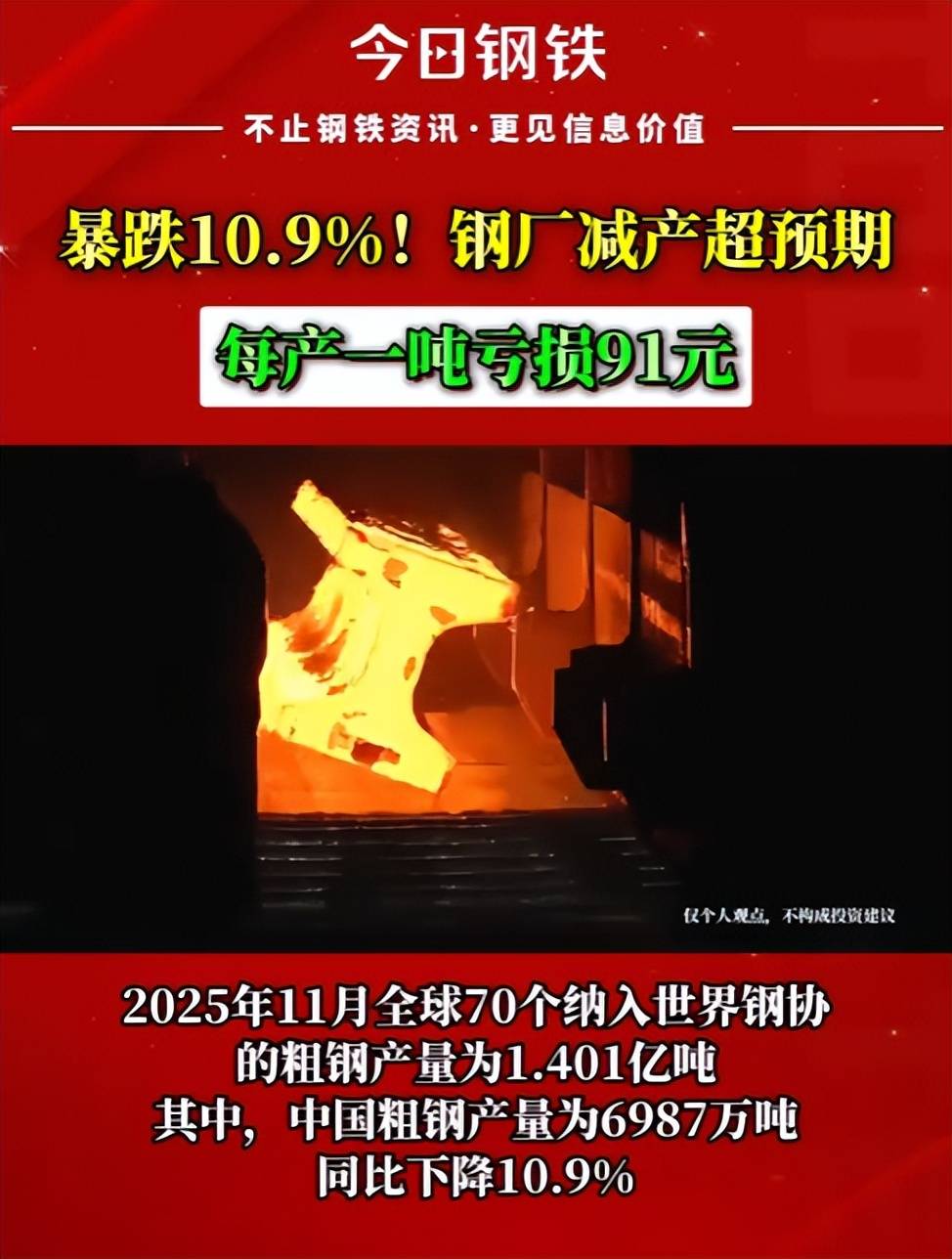
Core Insights - The Chinese steel industry is facing a significant downturn, with crude steel production in November dropping by 10.9% year-on-year, marking a historical peak in decline [3] - Despite the production drop, steel exports have paradoxically increased by 8%, indicating a mismatch between domestic demand and export performance [3][5] - The underlying issue is a severe deterioration in domestic steel demand, leading to excess capacity that cannot be absorbed locally, forcing companies to seek overseas markets [5][7] Group 1: Production and Demand Dynamics - China's steel production decline is attributed to a sharp drop in domestic demand, particularly in the construction and infrastructure sectors, which account for 63% of steel consumption [13] - The report from Morgan Stanley highlights that the current situation is not indicative of improved industry conditions but rather a reflection of domestic demand weakness [7][5] - The global steel production fell by 4.6% year-on-year in November, primarily driven by the decline in China's output, while other regions like India and Turkey saw production increases [9][11] Group 2: Export Challenges and Policy Implications - The upcoming EU carbon tariff, set to take effect on January 1, 2026, will impose additional costs on Chinese steel exports, significantly impacting their competitiveness in the European market [18][19] - The EU is also considering reducing steel import quotas by 50% and doubling safeguard tariff rates, which could severely restrict Chinese steel exports [19] - Current export growth is misleading, as it is driven by preemptive actions taken by companies before the implementation of new regulations, rather than genuine demand recovery [15][21] Group 3: Future Outlook and Strategic Shifts - The global steel market is expected to see a slight rebound in demand by 1.3% in 2026, contrasting with a projected 1% decline in Chinese steel demand [27] - The recovery of the Chinese steel industry hinges on the real estate market's rebound, which constitutes over 40% of steel end-demand [33] - Companies are increasingly focusing on high-end and green transformation to enhance product value and reduce reliance on low-end capacity, indicating a strategic shift in response to current challenges [38][40]
欧盟征收碳关税再加固碳边界
Jing Ji Ri Bao· 2025-12-29 22:21
Group 1 - The EU plans to officially implement a carbon border tax (CBAM) starting January 1, 2026, marking a significant policy shift in international trade and global climate policy [1] - The European Commission has proposed a comprehensive reform package to enhance the carbon tax framework, aiming to close regulatory gaps, expand coverage, and strengthen oversight against evasion [1][2] - The reform will significantly broaden the regulatory scope by including approximately 180 downstream products in the carbon tax regime starting in 2028, targeting high-carbon production transfer and ensuring carbon reduction rather than carbon leakage [1][2] Group 2 - The proposal aims to enhance the operational feasibility and credibility of the carbon tax by addressing issues of underreporting and misreporting of emissions data by importers [2] - A temporary decarbonization fund will be established to mitigate the impact on industries facing high carbon leakage risks, providing limited compensation linked to demonstrated decarbonization efforts [2][3] - The fundamental goal of the carbon tax is to ensure a fair competitive environment between EU and non-EU producers, preventing European companies from being disadvantaged due to higher climate costs [3] Group 3 - Concerns have been raised by the international community and EU industries regarding the carbon tax, particularly its impact on UK steel exports and the potential burdens on manufacturers [4] - Countries in the Western Balkans, heavily reliant on coal-fired electricity exports to the EU, face significant challenges due to the implementation of the carbon tax [4] - Agricultural producers in Bulgaria express fears that the carbon tax will undermine the global competitiveness of EU agricultural products, with potential profit declines of 25% to 50% for farmers due to increased fertilizer costs [5] Group 4 - The European Steel Association believes that while expanding the carbon tax coverage helps address carbon leakage, the current reform may not sufficiently protect the European steel industry from capacity relocation and job losses [6] - The inclusion of pre-consumer scrap aluminum in the carbon accounting system has been welcomed by some industry players, though concerns remain about the operational feasibility of carbon pricing in complex supply chains [6] - The establishment of the temporary decarbonization fund has sparked debate over whether the carbon tax is evolving into a trade protection tool, potentially conflicting with World Trade Organization rules [6]
锂矿股强势拉升,盛新锂能涨停!有色龙头ETF(159876)猛拉3.37%!机构:看好“避险三剑客”!
Xin Lang Cai Jing· 2025-12-17 12:04
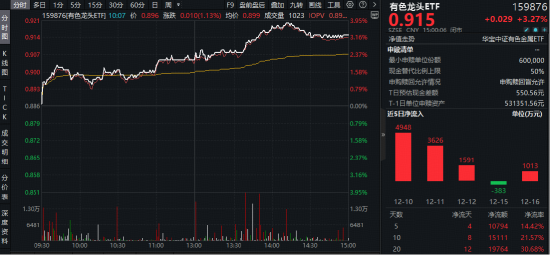
Core Viewpoint - The non-ferrous metal sector showed strong performance on December 17, with the leading non-ferrous metal ETF (159876) rising over 3.8% during the day and closing up 3.27%, indicating positive market sentiment towards the sector [1][10]. Fund Flows - The non-ferrous metal ETF attracted significant capital, with a single-day inflow of 10.13 million yuan and a total of 198 million yuan over the past 20 days, reflecting investor confidence in the sector's future performance [1][10]. Stock Performance - Lithium stocks surged, with Shengxin Lithium Energy hitting the daily limit, Zhongmin Resources rising over 8%, Tianqi Lithium increasing by 6%, and Ganfeng Lithium up nearly 5%. In the lead zinc sector, Guocheng Mining also hit the daily limit, while Xingye Silver Tin rose over 6%. In the aluminum sector, Zhongfu Industrial increased by over 5%, Huafeng Aluminum by over 4%, and China Aluminum by over 3% [3][12]. Macro Factors - In the macroeconomic context, the U.S. added 64,000 non-farm jobs in November, with the unemployment rate unexpectedly rising to 4.6%, the highest in four years. This weak job market increases the likelihood of interest rate cuts by the Federal Reserve, which could support non-ferrous metal prices [4][13]. Industry Insights - Lithium carbonate futures saw a significant spike, rising over 8% to reach 109,860 yuan/ton. The cancellation of 27 mining licenses may impact the supply-demand dynamics of lithium, potentially driving prices higher. CITIC Securities expressed optimism about copper, aluminum, and gold as key investment options, citing limited new copper capacity and increasing demand from renewable energy and AI data centers [5][14]. Investment Strategy - Given the current market conditions and geopolitical tensions, non-ferrous metals are viewed as core assets for medium to long-term investment. The non-ferrous metal ETF (159876) and its linked funds provide comprehensive exposure to various metals, allowing for risk diversification compared to investing in single metal sectors [6][14].






欧盟拟强化高排放进口产品碳关税政策 严打避税行为
Xin Lang Cai Jing· 2025-12-17 08:53
Core Viewpoint - The European Union (EU) is expanding the scope of its carbon border tax to include automotive parts and washing machines, aiming to protect local industries from low-priced imports from countries with less stringent climate regulations [1][5][6]. Group 1: Carbon Border Tax Expansion - The carbon border tax will now cover downstream products that heavily use steel and aluminum, such as construction products, grid components, and machinery [2][7]. - The carbon border adjustment mechanism (CBAM) is the world's first carbon border tax, currently taxing the carbon emissions of imported products like steel, aluminum, cement, and fertilizers [1][5]. Group 2: Addressing Compliance and Evasion - The EU plans to implement strict measures against foreign companies that underreport emissions to evade carbon taxes, potentially imposing "default emission values" on products from non-compliant countries [3][8]. - This initiative aims to prevent foreign companies, particularly from China, from strategically exporting low-carbon products to Europe while continuing to produce high-carbon products for other markets [3][8]. Group 3: Implementation Timeline and Subsidies - The carbon border tax will require importers to pay for the emissions of their imported products starting in 2026, with a compliance grace period until September 2027 [4][9]. - The EU plans to allocate 25% of the carbon border tax revenue to subsidize European manufacturers to offset additional costs incurred due to the tax, specifically targeting industries investing in low-carbon manufacturing processes [4][9].
环保公用-2026年度策略:仓庚于飞,熠燿其羽 - 价值+成长共振,双碳驱动新生!
2025-12-17 02:27
Summary of Key Points from the Conference Call Industry Overview - The conference call focuses on the **environmental public utility sector** and its strategies for 2026, emphasizing the dual carbon (双碳) drive and the impact of European carbon tariffs and domestic renewable energy assessments on the industry [1][2]. Core Insights and Arguments - **Investment Opportunities**: The environmental sector is expected to see significant investment opportunities due to the implementation of carbon tariffs in Europe and strengthened assessments of non-electric renewable energy in China, which will enhance the dual carbon drive [2]. - **Profitability in Waste-to-Energy**: The waste incineration industry is projected to improve profitability due to increased garbage treatment fees, with current ROE in domestic waste-to-energy companies around 10-15%, compared to 30% overseas [3]. - **Rising Slag Prices**: An increase in slag prices is identified as a new growth point, with a price increase of 50 RMB leading to over 10% profit elasticity [3]. - **Cash Flow Improvement**: The cash flow situation in the waste incineration sector has significantly improved, with companies like Guangda Environment receiving substantial national subsidies, indicating a trend towards faster reimbursement of subsidies [12]. Emerging Growth Opportunities - **New Policies**: The introduction of green electricity direct connection policies is expected to enhance power supply capabilities for data centers, while the solid waste sector has vast overseas expansion potential, particularly in ASEAN markets [5]. - **Hydrogen and Biofuels**: Strengthened dual carbon constraints are creating investment opportunities in hydrogen production via electrolysis, biofuels (SAF), and green alcohol, with a notable demand for second-generation biofuels and SAF [6]. - **Equipment Sector Growth**: Companies like Meier Technology and Dingjin Equipment are benefiting from capital expenditures in semiconductors and lithium batteries, indicating a positive outlook for the equipment sector [7][8]. Notable Companies and Their Performance - **Key Players**: Companies such as Huanlan Environment and Green Power are highlighted for their strong cash flow performance in the solid waste sector, while Longjing Environmental is noted for its growth in green electricity due to strategic partnerships [9]. - **International Expansion**: Chinese companies like Kangheng Environment and China Tianying are successfully expanding into international markets, particularly in Indonesia, where significant projects are underway [17]. Financial Metrics and Projections - **Dividend Potential**: The sector's dividend potential is projected to increase from 100%-120% to 140% due to reduced capital expenditures and improved subsidy reimbursement rates [4][12]. - **Future Cash Flow**: The expected increase in waste treatment fees and market-driven pricing mechanisms will enhance overall profitability and cash flow for companies in the sector [20][21]. Challenges and Risks - **Market Dynamics**: The dual carbon policy is a significant driver for industry development, but companies will face stricter carbon emission assessments as more industries are included in the national carbon market [32][33]. - **Supply Chain Issues**: The supply-demand imbalance in the CCER market and the impact of European carbon tariffs on export-oriented companies pose risks that need to be managed [34][35]. Conclusion - The environmental public utility sector is poised for growth driven by regulatory changes, market dynamics, and international expansion opportunities. Companies that adapt to these changes and leverage their strengths in technology and market positioning are likely to thrive in the evolving landscape.


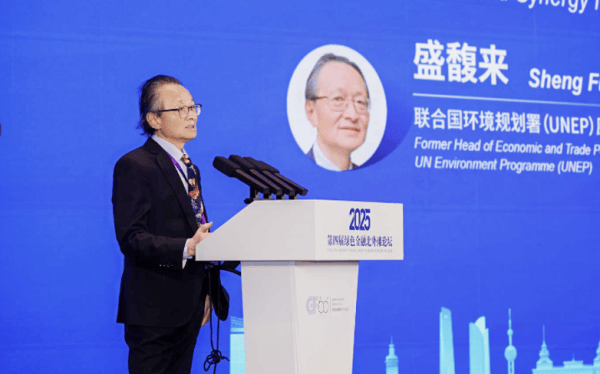
盛馥来:金融与企业“血肉相连”,共同应对欧盟绿色贸易规则挑战
Sou Hu Cai Jing· 2025-12-16 11:20
Group 1 - The forum focused on exploring new opportunities for green sustainable development and establishing an international green finance hub [1] - The former director of the UN Environment Programme's Economic and Trade Policy Division emphasized the interdependent relationship between finance and enterprises, stating that finance is the lifeblood of the economy and that both sectors are in a symbiotic relationship [3] - The EU will implement a carbon border adjustment mechanism (CBAM) in January 2026, affecting high carbon leakage risk products, which will require importers to declare the carbon emissions embedded in their products [4] Group 2 - The digital product passport (DPP) is expected to be implemented in 2027, requiring products entering the EU market to have a unique QR code that includes information on their entire lifecycle, including carbon footprint and water resource usage [4] - In 2024, China's exports to the EU are projected to reach $516.46 billion, a 3.0% increase year-on-year, making China the largest source of imports for the EU [4] - Export enterprises must proactively meet EU requirements and internalize green and low-carbon transformation as a core competitive advantage and long-term development strategy [4][5] Group 3 - Financial institutions are required to understand standards and pathways, meaning they must research and master EU green regulations and convert them into quantifiable assessment metrics [5] - Financial institutions should identify credible third-party evaluation agencies to provide reliable assessment reports for enterprises and design feasible pathways for compliance, risk control, and incentive mechanisms [5] - The forum included collaboration with various organizations focused on sustainable development and green finance [6]