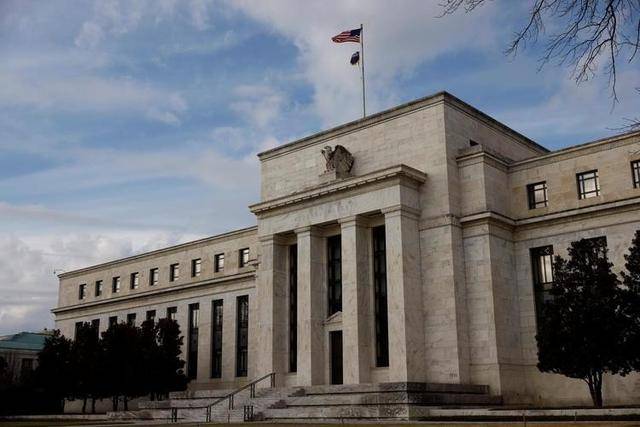
美元降息

Search documents
美元降息,对我们投资有什么影响?|第414期直播回放
银行螺丝钉· 2025-10-31 13:56
Core Viewpoint - The article discusses the impact of the recent interest rate cuts by the Federal Reserve on various asset classes, including U.S. stocks, bonds, and international markets, highlighting the relationship between interest rates, inflation, and economic growth [1][12][36]. Group 1: Factors Influencing Interest Rates - The primary long-term factor affecting interest rates is the economic growth rate. A slowdown in economic growth typically leads to lower interest rates [4][5]. - In the short term, inflation rates also significantly influence interest rates. High inflation often necessitates higher interest rates to control it [6][7]. Group 2: Historical Inflation Trends - U.S. stock market inflation rates surged from around 0% in 2020 to a peak of 9.1% in mid-2022, prompting the Federal Reserve to implement the most significant interest rate hikes in the last 20 years [9][10]. - As of September 2025, the Consumer Price Index (CPI) for the U.S. stock market has decreased to approximately 3% [10]. Group 3: Recent Interest Rate Cuts - The Federal Reserve initiated a new cycle of interest rate cuts in September 2024, with the first cut occurring in October 2025 [12][36]. - Following the initiation of the rate cut cycle, A-shares and Hong Kong stocks have seen significant gains, ranking among the top globally [13]. Group 4: Impact of Interest Rates on Asset Prices - Higher interest rates generally exert downward pressure on asset prices, while lower rates can lead to price increases across various asset classes, including stocks, bonds, and real estate [15]. - The U.S. stock market has experienced a 22.41% increase, while the global stock market rose by 23.01% since the onset of the rate cut cycle [19]. Group 5: Effects on Different Markets - The decline in U.S. interest rates has led to a narrowing interest rate differential between the U.S. dollar and the Chinese yuan, contributing to the appreciation of the yuan [25]. - The changes in U.S. interest rates also affect the A-share and Hong Kong markets, with the recent rate cuts leading to increased capital inflows into these markets [29][30]. Group 6: Common Questions and Answers - The benefits of interest rate cuts are often reflected in the market weeks before the actual announcement, as investors anticipate the changes [32]. - The Federal Reserve is expected to continue lowering interest rates due to significant fiscal pressures, including rising national debt and interest payments [36][38].


[10月30日]指数估值数据(美元降息落地,对市场有啥影响;红利指数估值表更新)
银行螺丝钉· 2025-10-30 14:06
Core Viewpoint - The article discusses the recent market trends, particularly focusing on the impact of the Federal Reserve's interest rate decisions on global and domestic stock markets, highlighting the performance of various indices and sectors. Market Performance - The overall market experienced a decline, with the CSI All Share Index down approximately 1% [2] - Large-cap stocks showed less volatility compared to small-cap stocks, which experienced a more significant decline [3] - The growth style of stocks saw a notable drop, while value styles remained strong [4][7] - The ChiNext Index fell by 1.8%, indicating a trend of high valuation followed by declines [8][10] Federal Reserve's Interest Rate Decision - The Federal Reserve announced a 25 basis point rate cut, aligning with market expectations, but indicated that a rate cut in December is not guaranteed [14][15][16] - This uncertainty regarding future rate cuts has raised concerns in the market, leading to a short-term decline in U.S. stocks [19] - Since the Fed's first rate cut announcement in September 2024, global stock markets have risen by approximately 28%, with A-shares increasing over 50% and Hong Kong stocks rising over 55% [23][24] Impact of Rate Cuts on Markets - Rate cuts are generally seen as beneficial for the stock market, as lower dollar rates favor global assets [21] - The positive effects of rate cuts are often reflected in the market weeks before the actual announcement, as investors anticipate these changes [25] - The article suggests that the dollar interest rates are likely to continue decreasing, which would benefit RMB assets and potentially lead to further increases in A-shares [26][27] Valuation Insights - The article provides a valuation table for dividend and free cash flow indices, indicating various metrics such as earnings yield, price-to-earnings ratio, and dividend yield for different indices [6][27] - The valuation insights suggest that certain indices are undervalued and suitable for investment, while others are overvalued [42] Additional Resources - The article mentions a live session scheduled for October 31 to discuss investment strategies and insights related to the current market conditions [34] - A free investment guide is offered to help readers understand fund advisory services better [30]

10.23日报
Ge Long Hui· 2025-10-24 05:09
Group 1 - In September, China's foreign exchange settlement surplus reached 55 billion USD, indicating a trend where companies and individuals are bringing overseas income back to China, contributing to the stock market's rise [1] - China Unicom reported Q3 revenue of 92.78 billion CNY, flat year-on-year, with a net profit of 2.42 billion CNY, up 5.4% year-on-year. The significant profit increase is attributed to the release of profits from previous large-scale investments [2] - Sands China experienced a Q3 revenue increase of 7.5% year-on-year and a net profit increase of 1.5%. Although the recovery speed of Macau casinos is slower than expected, the market remains optimistic due to the return to growth and dividends [3] Group 2 - The Shanghai Composite Index approached a 10-year high, nearing the 4000-point mark, despite other indices showing an average decline of over 5% this month. The market's strength was attributed to the announcement of important economic discussions with the West [1][3] - The total trading volume for the day was 1.7 trillion CNY, indicating a weak market sentiment as investors await a return to a trading volume of over 2 trillion CNY [3]
体验了一把激烈的过山车
Sou Hu Cai Jing· 2025-10-15 14:53
Group 1 - The A-share market is expected to show only a slight decline despite the announcement of a potential 100% tariff increase, indicating a lack of significant concern among investors [1][2] - The Shanghai Composite Index experienced a minor fluctuation, with a decrease of 0.19% on Monday, 0.62% on Tuesday, and a recovery of 1.22% on Wednesday, closing at 3912 points, which is a 0.38% increase from the previous Friday [2] - The long-term outlook for the Chinese capital market remains positive, drawing parallels to the real estate market over the past 20 years, suggesting a prolonged upward trend [3] Group 2 - The Federal Reserve has signaled potential interest rate cuts, which is expected to positively influence global markets and provide more room for domestic rate adjustments [4] - A recent portfolio adjustment resulted in mixed performance, with profits fluctuating from a peak of 3.1% down to 0.5%, but the outlook for the favored sector remains optimistic for long-term holding [4]
人民币为何不升值,美元降息风险加剧,美联储面临最大挑战
Sou Hu Cai Jing· 2025-10-05 17:54
Core Viewpoint - The financial market during the 2025 National Day holiday is unusually calm, resembling a "breath-holding contest" as participants await significant movements in response to the Federal Reserve's interest rate decisions [1][12]. Group 1: Market Reactions - The Federal Reserve's announcement of a 25 basis point interest rate cut has led to a muted response in the currency markets, with the onshore RMB closing around 7.12 and the offshore RMB showing slight fluctuations without major trading activity [3][7]. - Despite expectations of RMB appreciation following the Fed's rate cut, both the USD and RMB are in a state of observation, with market participants hesitant to act and reveal vulnerabilities [5][11]. Group 2: Market Sentiment - Market sentiment is characterized by a high level of caution and mutual distrust among participants, leading to a lack of significant trading activity and a stable exchange rate environment [7][11]. - The current market dynamics reflect a departure from the previously close relationship between the RMB and USD, as the RMB is now influenced by a basket of currencies from developing countries, complicating the expected correlation [9][11]. Group 3: Future Outlook - The consensus among market participants is to maintain stability, with a focus on avoiding drastic fluctuations that could impact export profits and import costs [9][11]. - The future trajectory of the RMB is uncertain, with analysts suggesting that appreciation may only occur when the USD shows significant weakness, indicating a cautious wait-and-see approach [11][12].
A股:大盘突然放量下跌,是主力利好兑现出货,还是强势洗盘?
Sou Hu Cai Jing· 2025-09-25 17:09
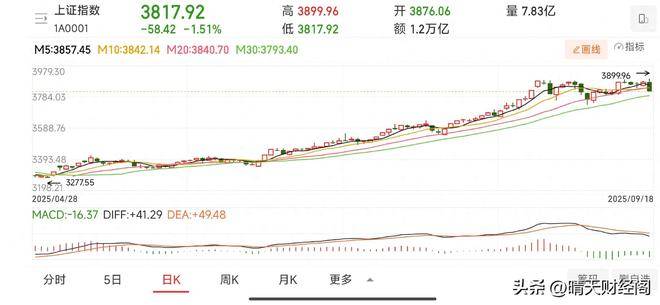
Group 1 - The Shanghai Composite Index experienced a significant drop from 3899 points to 3820 points, breaking through key psychological support levels of the 10-day and 20-day moving averages, causing concern among investors [1] - Despite a net outflow of 110 billion in main funds, the market saw an influx of 600 billion in new capital, indicating a contrasting narrative in market dynamics [1] - The trading volume reached an astonishing 3 trillion, which often correlates with market corrections, suggesting a potential manipulation of market temperature by major funds to prevent congestion from short-term capital inflows [3] Group 2 - The financial sector, particularly securities and banking stocks, showed clear signs of control, as they declined in unison, hinting at a deliberate strategy to manage market conditions [3] - Historical patterns indicate that after the last four Federal Reserve rate cuts, the market typically undergoes a significant washout, suggesting that the current downturn may be a planned reshuffling rather than a trend reversal [3] - The outlook for RMB assets remains positive, bolstered by the anticipated influx of liquidity from the Federal Reserve's rate cuts, which is expected to benefit both Hong Kong and A-share markets [3]
金价再创新高!年内已涨近43%
Sou Hu Cai Jing· 2025-09-24 04:49
Group 1 - Gold prices have reached new historical highs, with London gold spot prices hitting $3748.88 per ounce and New York futures surpassing $3770 per ounce on September 22, 2023 [2] - As of September 23, 2023, gold prices continued to rise, with London gold reaching $3759.16 per ounce and Shanghai gold trading at 850 yuan per gram [2] - Since 2025, international gold prices have increased by nearly 43%, while domestic gold prices have risen approximately 38% [3] Group 2 - The primary driver of rising gold prices is the Federal Reserve's shift to a rate-cutting cycle, leading to a weaker dollar and a potential upward trend in gold prices [6][7] - Geopolitical conflicts, such as the Russia-Ukraine war and Middle Eastern tensions, have increased demand for gold as a safe-haven asset [8] - Central banks around the world have significantly increased their gold reserves, with global central bank purchases exceeding 1000 tons annually over the past three years, nearly double the previous decade's average [11] Group 3 - The current economic environment, characterized by a weak U.S. labor market and ongoing geopolitical tensions, supports a favorable outlook for gold prices [14] - Investment strategies for ordinary investors include diversifying into gold through paper gold or gold ETFs, rather than purchasing physical gold due to high storage and transaction costs [18][20] - Silver prices have also reached a near 14-year high, with prices hitting $43.788 per ounce on September 22, 2023 [23]
中国抛售257亿美债,特朗普发出警告,美国政府或在10月1号就关门
Sou Hu Cai Jing· 2025-09-21 16:44
Core Viewpoint - China has been actively reducing its holdings of U.S. Treasury bonds, selling $25.7 billion in July, bringing its total holdings down to $730.7 billion, the lowest level since 2009 [1][3]. Group 1: China's Actions - In 2022, China sold $173.2 billion in U.S. Treasury bonds, followed by $50.8 billion in 2023, and an additional $57.3 billion by July 2024 [3]. - The recent large-scale sale of over $200 billion indicates China's firm stance on reducing its U.S. bond holdings due to concerns over the reliability of U.S. economic and fiscal policies [3][5]. Group 2: U.S. Economic Concerns - The stability of the U.S. economy and government finances is crucial for maintaining confidence in the dollar and U.S. Treasury bonds [5]. - Concerns about a potential government shutdown due to budget disagreements between Democrats and Republicans have been raised, with a deadline approaching on September 30 [7]. Group 3: Global Financial Trends - The share of the dollar in global foreign exchange reserves has declined from over 70% in 2000 to 57.7% currently, indicating a downward trend in dollar dominance [13]. - Countries are increasingly seeking alternatives to the dollar for transactions, as evidenced by initiatives like the INSTEX system in the EU and currency swap agreements between China and the European Central Bank [13]. Group 4: Geopolitical Implications - The reduction of U.S. Treasury holdings by major buyers like China sends a significant signal to the U.S., indicating a shift in financial power dynamics [17]. - The use of financial instruments as a means of political leverage has transformed the nature of international relations, with countries exploring ways to reduce reliance on the dollar [15].
没有选择的必选项~
Sou Hu Cai Jing· 2025-09-19 10:34
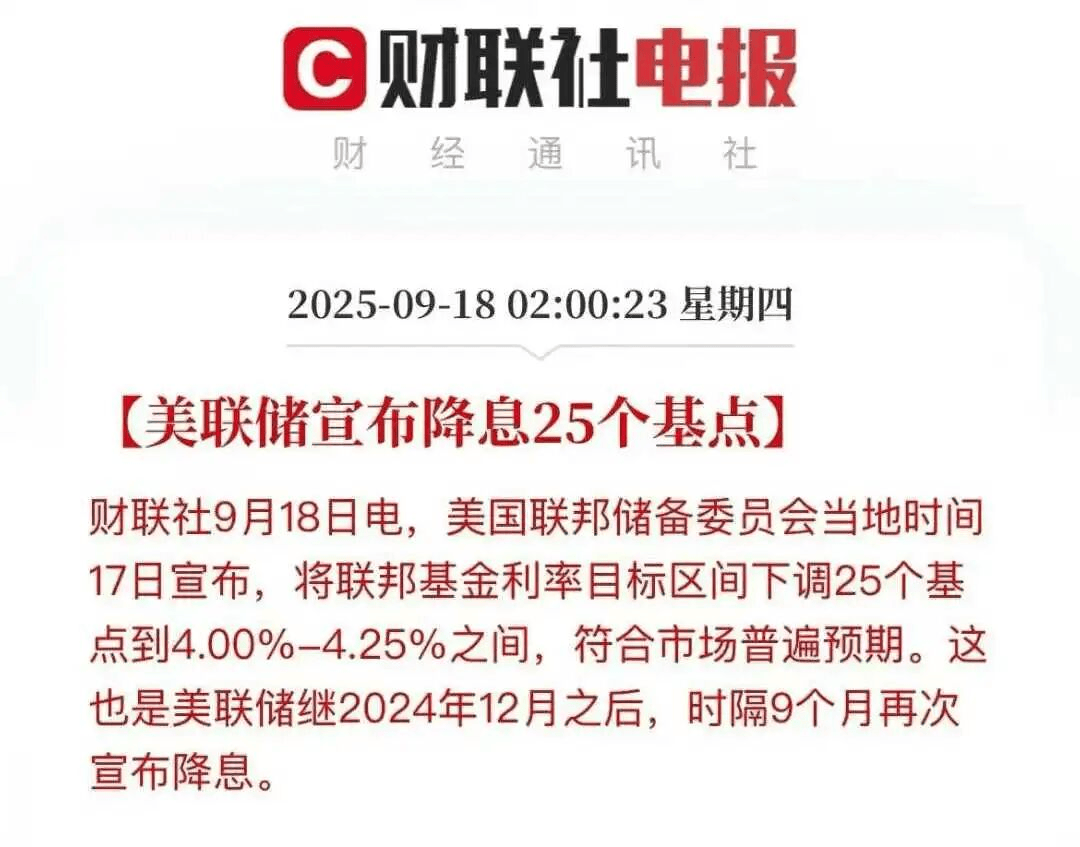
Group 1 - The Federal Reserve announced a 25 basis point interest rate cut, marking the first rate cut for the dollar in 2025, although it was less than the anticipated 50 basis points [1] - Over the past year, the Federal Reserve has experienced extreme monetary policy fluctuations, initiating three rate cuts in 2024 totaling 100 basis points after a series of aggressive rate hikes totaling 525 basis points [3] - The interest rate decisions of the Federal Reserve have led to immediate actions from the Hong Kong Monetary Authority, which reduced its discount window rate by 25 basis points to 4.5% [5] Group 2 - The current domestic economic growth rate is approximately 5-6%, and the mortgage rates are aligned with this growth, indicating a potential stagnation in investment if rates do not decrease [6] - A necessary condition for meaningful investment is for the mortgage rates to be lower than the economic growth rate, which would restore the value of assets and drive investment [6][7] - The expectation is that interest rates in China will need to be lowered to support economic growth and prevent a potential economic crisis due to stagnation in investment [8]
重磅消息,美元大降息在即,中国楼市“泼天富贵”一触即发
Sou Hu Cai Jing· 2025-09-17 16:17
Group 1 - The Federal Reserve is expected to implement significant interest rate cuts, with the federal funds rate currently at 4.5% to 4.75% after previous reductions [2][3] - The U.S. economy shows a GDP growth of 2.7% in 2025, but faces challenges such as a 2.5% inflation rate and a rising unemployment rate of 4.2% [3] - The anticipated interest rate cuts are likely to stimulate global capital flows, benefiting emerging markets like China, particularly in the real estate sector [3][4] Group 2 - The reduction in interest rates directly impacts mortgage rates in China, with the central bank's LPR decreasing from 3.95% to 3.6%, potentially leading to further cuts [4] - A decrease in mortgage rates can save homebuyers significant amounts, encouraging them to enter the market, as evidenced by a 12% year-on-year increase in second-hand home transactions in first-tier cities in the first half of 2025 [4][5] - Improved financing conditions for developers, particularly those burdened by high-interest overseas debts, can lead to a revival in project completions and reduced risks of unfinished projects [4][5] Group 3 - The anticipated interest rate cuts are expected to boost market confidence, leading to increased transaction volumes in the real estate market, especially in first- and second-tier cities [7][11] - The differentiation in real estate performance across cities is notable, with first- and second-tier cities benefiting more from the rate cuts compared to third- and fourth-tier cities, which face high inventory and population outflows [9] - The overall sentiment in the real estate market is shifting positively, with expectations of a 4.8% GDP growth in China and a projected 5% increase in sales area in the real estate sector in 2025 [10][11]