颠覆式创新

Search documents
对话中科创星李浩:硬科技投资要挖掘原始创新,找到愿意和技术“打交道”的企业|科创资本论
Di Yi Cai Jing· 2025-07-20 06:04
Core Viewpoint - The article emphasizes the need for more focus on original innovation in technology and the importance of supporting core technology innovation enterprises in the context of the Science and Technology Innovation Board (STAR Market) and the evolving capital market environment [1][5][14]. Group 1: Development of the STAR Market - The STAR Market has seen significant development over the past six years, with a comprehensive registration system implemented for over two years, creating a more favorable environment for hard technology investments [1][5]. - The support for hard technology enterprises from the capital market is increasing, with a clearer positioning of hard technology on the STAR Market [6][9]. - Recent reforms, including the introduction of the "1+6" measures by the China Securities Regulatory Commission, aim to enhance the financial ecosystem for technology innovation [9][10]. Group 2: Investment Trends and Opportunities - The rise of hard technology investment has been driven by policy support and the active role of private equity and venture capital (PE/VC) firms [6][7]. - In 2024, over 80 projects related to optoelectronic chips, new energy materials, and biomedicine are being pursued by investment firms like Zhongke Chuangxing [7]. - The issuance of technology innovation bonds (科创债) has provided additional funding channels for investment institutions, helping them navigate the current fundraising challenges [17][19]. Group 3: Focus on Original Innovation - Investment firms are encouraged to focus on enterprises with original innovation capabilities that are willing to engage with technology and core technological innovation [6][14]. - The distinction between incremental innovation and disruptive innovation is highlighted, with a call for more support for disruptive innovation projects [14][15]. - The establishment of the Zhongke Chuangxing Pioneer Venture Capital Fund aims to assist core technology enterprises facing early-stage financing difficulties [15][16]. Group 4: Market Dynamics and Future Outlook - The market for unprofitable enterprises is expected to stabilize, with new regulations facilitating their listing on the STAR Market and the ChiNext [10][11]. - The overall investment ecosystem is anticipated to improve gradually, with a positive outlook for the primary market as conditions begin to warm up [18]. - The issuance of科创债 is seen as a crucial step in promoting a healthy cycle of fundraising, investment, management, and exit for venture capital institutions [19].

周鸿祎:颠覆就是马后炮的总结
创业家· 2025-07-08 10:07
Group 1 - The concept of disruptive innovation can often seem intimidating and is sometimes viewed as a theoretical construct rather than a practical approach in innovation and entrepreneurship. It is emphasized that the focus should be on understanding user needs rather than solely on competitors in the industry [1] - A recommendation is made for a course titled "Consumer Reconstruction Selected Course," which aims to provide insights from top practitioners in the consumer sector from Japan and China, focusing on methods and experiences relevant to local markets [2] - The course will feature prominent figures from the Japanese consumer industry, sharing their experiences and strategies for adapting to the Chinese market [2] Group 2 - The course fee is originally set at 12,800 yuan per person, with an early bird price of 9,800 yuan available until July 15 [3] - The event is scheduled to take place in Shanghai from August 7 to August 9 [4]

龙门架下造船忙——广东船舶制造业一线走访记
Xin Hua Wang· 2025-07-02 08:27
Group 1 - The shipbuilding industry in Guangdong is experiencing growth, with a 2.5% increase in completed shipbuilding volume and a 29.3% rise in orders from January to May this year, despite a global decline in shipbuilding orders [1] - Companies like Guangzhou Shipyard International and Huangpu Wenchong are seeing a surge in orders, with Guangzhou Shipyard holding over 90 orders, 80% of which are high-tech, high-value green ship types, with delivery schedules extending to 2028 [2] - Huangpu Wenchong has secured 16 gas carrier orders and reported a revenue increase of over 111% year-on-year, with total contracts exceeding 13.7 billion yuan from January to April [2] Group 2 - Guangzhou Marine Engineering Equipment Co., Ltd. has developed a leading electric propulsion system, the shaftless wheel-edge electric propeller, which is gaining international market traction and has led to a significant increase in orders [3] - The Guangdong Provincial Shipbuilding Industry Association forecasts a 60.7% year-on-year increase in new ship orders for 2024, totaling 6.347 million deadweight tons, and a 37.1% increase in hand-held orders, reaching 11.276 million deadweight tons [3] - Guangzhou is recognized as one of China's three major shipbuilding bases, focusing on building a complete industrial chain and aiming to become a hub for marine innovation, targeting deep-sea, green, and intelligent marine sectors [3]
李善友:纯粹就是不藏私
混沌学园· 2025-06-12 07:33
Core Viewpoint - The article discusses the journey of Li Shanyou, the founder of Chaos, emphasizing the importance of pure thought and the pursuit of knowledge in a chaotic world [2][12][21]. Group 1: Educational Philosophy - Li Shanyou was influenced by Wang Dongyue and began exploring the essence of internet thinking, leading to discussions on disruptive and non-continuous innovation [9][10]. - His experience at Stanford University inspired him to create a wall-less internet university, reflecting his educational dreams [14][21]. - The transition from Chaos University to Chaos Academy was a tribute to Plato's Academy, emphasizing a focus on pure academic inquiry [22][26]. Group 2: Personal Growth and Learning - Li Shanyou's learning journey included diverse subjects beyond business, such as philosophy and physics, which shaped his understanding of interdisciplinary studies [15][16]. - He believes that true wisdom comes from the flow of knowledge, akin to financial liquidity, where stagnant knowledge becomes unproductive [34][35]. - The act of teaching is seen as a sacrificial process, where sharing knowledge leads to personal discovery and growth [30][32]. Group 3: Community and Collaboration - The importance of surrounding oneself with pure individuals is highlighted, as it fosters a resonant environment that encourages personal and collective growth [43][44]. - Li Shanyou advocates for open sharing of knowledge, suggesting that it enhances team growth and innovation culture [40][41]. - The article emphasizes the need for positive feedback in business to support individuals with pure intentions, ensuring they remain grounded in their values while navigating commercial challenges [45][46].

巨头麦肯锡裁员10%:人类最聪明的大脑,也要被AI“优化”了?
3 6 Ke· 2025-06-11 07:30
Group 1 - Huawei has become a model for large company management, but faced internal strife in 1998, leading to a significant investment in consulting services from IBM costing 2 billion [1][25] - McKinsey has laid off over 10% of its workforce in the past 18 months, reducing its employee count from 45,100 to approximately 40,000 [1][2] - The consulting industry is experiencing a downturn, with McKinsey's layoffs marking one of the largest in its history, reversing previous expansion plans [2][3] Group 2 - McKinsey's layoffs included 1,400 employees in March 2023, representing 3% of its workforce, and new hires' salaries have been frozen [5][6] - The company has faced legal challenges, agreeing to pay $650 million and $122 million in fines related to opioid marketing and bribery allegations [6] - McKinsey's revenue reached $16 billion in 2023, but it did not disclose revenue figures for 2024, marking a significant change in its reporting practices [6] Group 3 - The consulting industry is undergoing significant changes, with predictions of disruption affecting traditional business models [8][28] - The economic downturn in 2008 led to reduced consulting budgets, and clients are now more focused on short-term, targeted projects rather than large-scale consulting engagements [28][30] - The average fee rates for consulting projects have decreased by 15%-20% from 2015 to 2020, impacting profit margins and consultant salaries [29] Group 4 - The rise of AI and the availability of information have diminished the traditional value of consulting services, necessitating a redefinition of the industry's value proposition [30][34] - Scandals and failures have led clients to question the value of consulting, with notable cases involving McKinsey and Accenture highlighting performance issues [32][33] - The consulting industry is at a crossroads, facing challenges that require adaptation to survive in an era of information abundance [35][36]

大模型“考生”破题全国一卷高考作文,听听人工智能专家怎么说
Xin Jing Bao· 2025-06-10 02:50
Core Viewpoint - The article discusses the performance of various AI models in writing high school entrance exam essays, highlighting their strengths and weaknesses in understanding materials and generating coherent, insightful content [1][15]. Group 1: AI Model Performance - The selected AI models for the essay evaluation include DeepSeek, Baidu Wenxin Yiyan, Zhiyu Qingyan, and ChatGPT-4o, all of which are general-purpose models [2][3]. - The models struggled with understanding the deeper connections between the provided materials and the exam prompt, often resulting in superficial interpretations [3][4]. - Notably, DeepSeek and ChatGPT-4o deviated from the historical context of the materials, while Zhiyu Qingyan and Baidu Wenxin Yiyan managed to incorporate relevant themes [2][3]. Group 2: Evaluation Criteria - Key evaluation criteria for the essays included topic relevance, language expression, logical structure, and cognitive alignment with the prompt [4][15]. - The essays were scored by experienced language teachers, with scores ranging from 40 to 50, indicating varying levels of understanding and expression [5][6][14]. Group 3: Expert Insights - Experts noted that while AI models can generate grammatically correct and logically structured essays, they often lack emotional depth and unique personal insights [15][18]. - The consensus among educators is that AI models can enhance writing skills but should not be overly relied upon, as they may lead to cognitive outsourcing and a lack of critical thinking [17][19]. - AI models are seen as tools to promote educational equity and facilitate personalized learning experiences, but their limitations in creativity and emotional expression remain a concern [17][18].
重回主航道,OPPO做对了什么?
远川研究所· 2025-05-29 12:27
Core Viewpoint - The article discusses OPPO's journey in the semiconductor industry, particularly its chip development initiative, Zheku, which was launched in 2020 but was ultimately terminated due to market challenges and the need for better cash flow management. The narrative emphasizes the importance of user experience and long-term competitiveness in the smartphone market, highlighting OPPO's strategic pivot back to core business after the setback [1][2][4]. Group 1: Zheku's Development and Termination - Zheku was established in 2020 as part of OPPO's self-developed chip initiative, named after the Mariana Trench, indicating the challenges ahead [1]. - Over two years, Zheku released several products, including the NPU "Mariana X" and Bluetooth audio SoC "Mariana Y," but the initiative was halted in mid-2023 due to declining smartphone sales and unsustainable R&D costs [1][2]. - The decision to terminate the chip development was seen as a necessary move for OPPO to maintain healthier cash flow and enhance its risk resilience [1]. Group 2: Market Recovery and Strategic Focus - Following the dissolution of Zheku, OPPO launched the Find X7 series, featuring a SoC co-developed with MediaTek, which led to a rapid recovery in market share, reclaiming the third position in the domestic market by Q1 2023 [2]. - OPPO's ability to quickly regroup and return to its main business path serves as a reference for other industry players struggling between innovation and survival [2]. Group 3: Long-term Strategy and User Experience - The smartphone market has seen a decline in shipment volumes since 2017, with longer replacement cycles leading to increased market concentration among major brands [4]. - OPPO's approach to chip development was driven by the need for long-term competitiveness rather than short-term gains, emphasizing that chip production is a means to enhance user experience rather than an end goal [4][6]. - The company focuses on system integration, where multiple technologies work together to meet user needs, rather than merely producing components [4][6]. Group 4: Innovation and Market Positioning - OPPO has adopted a systematic approach to innovation, continuously iterating on hardware to improve user experience, as seen in the Find X8 Ultra's camera system [6][9]. - The Find N5 foldable phone achieved a record low thickness of 8.93mm, showcasing OPPO's commitment to pushing technological boundaries and enhancing user experience [7][9]. - OPPO's market share in the premium segment (over $600) ranks among the top three globally, with significant presence in the $400-$500 range in Mexico, indicating strong brand positioning [9].

下一个极氪001,要回到吉利里找
Xin Lang Cai Jing· 2025-05-11 03:10
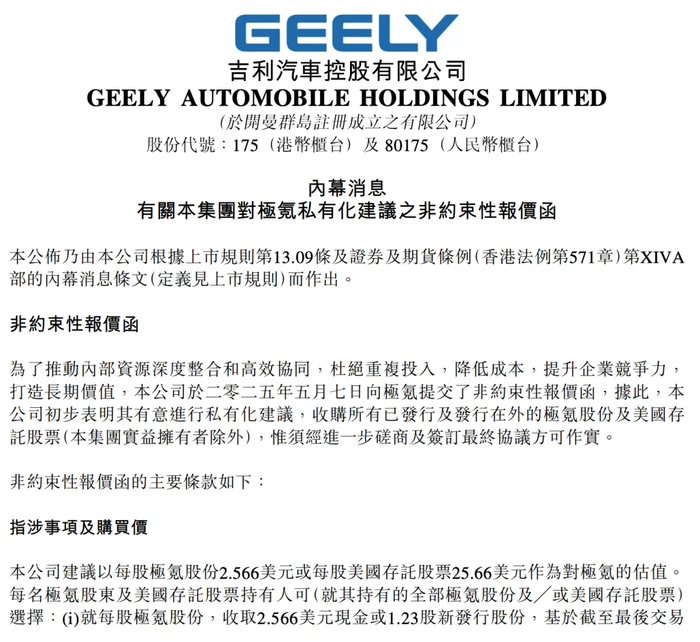
Core Viewpoint - The ongoing turmoil surrounding Zeekr, a subsidiary of Geely, highlights the intense competition in the new energy vehicle market, with recent executive changes and a proposal for privatization indicating a strategic shift to enhance operational efficiency and market positioning [1][3][4]. Group 1: Executive Changes and Strategic Moves - Zeekr has undergone significant executive restructuring, with reports indicating the integration of its smart cockpit team into Geely's central research institute [3]. - Geely's chairman Li Shufu introduced the "Taizhou Declaration" in September 2024, emphasizing strategic focus and resource integration, which has led to rapid consolidation within the company [3][4]. - The privatization proposal aims to streamline operations and eliminate internal competition between Zeekr and Lynk & Co, allowing for better resource allocation and brand synergy [4][5]. Group 2: Sales Performance and Market Challenges - Zeekr set a sales target of 710,000 units for 2025 but achieved only 23.28% of this target in the first four months of 2024, with the Zeekr brand specifically reaching only 17.19% of its goal [3]. - In contrast, Lynk & Co, which retains some fuel vehicle offerings, has shown stronger performance, indicating a disparity in market success between the two brands [4]. - The recent launch of Lynk & Co's new hybrid SUV has garnered significant consumer interest, further highlighting Zeekr's struggles in maintaining market momentum [8]. Group 3: Financial Implications and Market Position - Following the announcement of privatization, Zeekr's stock price rose by 11.51%, yet its market capitalization has decreased by $3.397 billion since its IPO [9]. - The merger is expected to reduce R&D costs by 10%-20% and supply chain expenses by 5%-8%, enhancing overall operational efficiency [7]. - Zeekr's financial health is under scrutiny, with only approximately $9 billion in cash flow compared to competitors like NIO and Li Auto, which have significantly higher cash reserves [10]. Group 4: Product Development and Innovation - Zeekr's flagship model, the Zeekr 001, initially gained popularity but has seen a decline in sales, with recent figures dropping from 14,000 units to 3,000 units per month [12]. - The company aims to leverage its newly integrated smart cockpit team, which includes talent from Huawei, to enhance its technological capabilities and product offerings [13]. - The focus on finding the next successful model akin to the Zeekr 001 is critical for the brand's future, as the competitive landscape intensifies [13].

混沌创新院25级开启|“AI时代的EMBA”
混沌学园· 2025-03-28 12:47
Core Viewpoint - The article emphasizes the transformative power of AI as a foundational element for future prosperity, urging entrepreneurs to engage with this new era actively [2][3]. Group 1: Embracing AI Era - The transition from Web2 to the AI era is marked by unprecedented speed, with tools like ChatGPT achieving significant user milestones in a short time [2]. - Entrepreneurs are encouraged to connect with emerging technologies and trends to stay ahead in the AI landscape [2][3]. Group 2: Innovation Institute Overview - The Chaos Innovation Institute's 25th cohort offers a newly iterated curriculum focused on "AI × Innovation Methodology," aiming to equip business leaders with essential operational frameworks [5][6]. - The program includes six interactive modules designed to develop capabilities necessary for thriving in the AI era [6]. Group 3: Course Modules - The first module focuses on the first principles of human wisdom and AI, helping participants model their businesses amidst uncertainty [9]. - The second module addresses disruptive innovation, encouraging participants to identify core competencies and essential market needs [11]. - The third module explores opportunities for reconstructing industry paradigms using AI, emphasizing the analysis of value creation in typical industries [13]. Group 4: Community and Networking - The Chaos Innovation Institute has gathered over 2000 entrepreneurs and executives from diverse industries, fostering a collaborative environment for innovation [19][20]. - Alumni have successfully applied the institute's methodologies to create impactful businesses, demonstrating the effectiveness of the program [21][22]. Group 5: Target Audience - The program is tailored for individuals who have completed initial business validation and seek continuous growth, particularly founders, CEOs, and key decision-makers [23].
仅四年,产量增26倍!中国汽车第一城,藏着一个“雨林”
21世纪经济报道· 2025-03-11 02:53
Core Viewpoint - The article emphasizes Shenzhen's rapid transformation into a leading hub for the new energy vehicle (NEV) industry, highlighting the city's unique ecosystem and the pivotal role of key players like BYD and Huawei in driving innovation and growth in the automotive sector [2][18]. Industry Overview - The automotive industry is experiencing a significant shift, with Shenzhen emerging as a key player in the NEV market, achieving a production volume of 2.9353 million NEVs in 2024, a year-on-year increase of 69.2% [4][5]. - The city aims to solidify its position in global markets by enhancing its competitiveness in electronics, automotive, and new energy sectors through initiatives like the "ICT+" action plan [3]. Key Players and Innovations - BYD has established itself as a leader in the global NEV industry, with a focus on vertical integration of core components such as batteries, motors, and electronic controls, enhancing its resilience to market changes [6][10]. - Huawei, while not manufacturing vehicles, has become an integral part of the automotive supply chain, leveraging its ICT expertise to provide solutions for various car manufacturers [4][6]. Technological Advancements - The article discusses the emergence of a "networked" supply chain structure in the NEV sector, allowing for "emergent innovation" where more supply chain companies take on leading roles [6][16]. - Innovations such as BYD's blade battery and the e-platform 3.0 are highlighted as key technological advancements that contribute to the competitive edge of Shenzhen's automotive industry [10][12]. Infrastructure Development - Shenzhen has built a comprehensive charging infrastructure, becoming the world's first "supercharging city" with over 13,400 new charging piles and 1,030 supercharging stations [8]. - The city is also advancing in smart transportation, with initiatives like the "car-road-cloud integration" project, which aims to enhance the synergy between vehicles, infrastructure, and digital technologies [14][15]. Future Outlook - The Shenzhen government plans to achieve an industrial output value of over one trillion yuan for the automotive sector by 2025, indicating strong growth potential [18]. - The article concludes that Shenzhen's unique innovation culture and engineering talent will continue to drive the city's automotive industry forward, positioning it as a model for the future of global NEV development [19][20].