
AI泡沫论

Search documents
王江平:用上善AI的东方智慧,平衡技术发展的激进与焦虑
Nan Fang Du Shi Bao· 2025-12-20 05:26
Core Viewpoint - The forum focused on the governance of AI, emphasizing the need for a balanced approach that aligns AI development with human values and societal norms, as articulated by Wang Jiangping's concept of "Shangshan AI" [2][10]. Group 1: AI Governance Challenges - The transition of AI systems from "technical tools" to "intelligent entities" is leading to exponential growth in both positive and negative impacts, while governance progress remains limited [5]. - AI safety risks are increasingly manifesting across various domains, including content ecology and physical safety, potentially affecting economic and social stability [3][5]. - The complexity and dynamism of human values make it challenging to establish a universal and actionable value target function for AI systems [6]. Group 2: Human-Machine Alignment - Human-machine alignment is identified as a core issue in the intelligent era, aiming to ensure AI systems' goals and outputs are consistent with human values and societal norms [5][6]. - Current mainstream models utilize techniques like Reinforcement Learning from Human Feedback (RLHF) and Retrieval-Augmented Generation (RAG) to enhance alignment with human preferences [5]. Group 3: Cultural and Value Alignment - The concept of "sovereign AI" has gained traction, highlighting the importance of aligning AI with national cultural and economic interests [7]. - Value alignment should consider a multi-structured approach, incorporating a "common baseline + diverse branches + dynamic evolution" principle [8]. Group 4: Addressing the AI Divide - The disparity in AI technology access and application among different countries and groups raises concerns about an "intelligent divide" [11]. - To bridge the AI divide, strategies such as open-source sharing, technology transfer, and capacity building are recommended [12]. Group 5: Regulatory Perspectives - The debate on whether to impose strict or lenient regulations on AI technology development is ongoing, with a call for establishing solid ethical boundaries while allowing innovation [12]. - The potential for an AI investment bubble exists, driven by concentrated capital and unclear business models, necessitating a focus on genuine societal needs to mitigate risks [13]. Group 6: Practical Implementation of Governance - Implementing the "Shangshan AI" philosophy requires collaborative efforts from developers, regulators, and society to prioritize social value and inclusivity in AI technology [13]. - The governance approach should be flexible and open, encouraging experimentation while maintaining clear ethical and safety boundaries [13].


2026科技投资怎么投?长城基金韩林:AI上游算力基础设施环节确定性更高
Xin Lang Cai Jing· 2025-12-19 08:28
Core Insights - The technology sector has undergone significant changes in 2025, with AI, chips, and new energy themes driving market trends. The debate over the AI bubble has resurfaced, making the investment landscape for 2026 a focal point for market participants [1][6]. Group 1: AI Bubble Discussion - The discussion around the AI bubble has evolved through three phases since 2023, with concerns gradually alleviated by ongoing capital expenditures and revenue growth from major cloud service providers (CSPs) [1][6]. - Fears regarding computational power deflation from late 2024 to mid-2025 have been mitigated by the North American market's continued success in model training [1][6]. - The investment cycle concerns at the end of 2025 have been eased as leading CSPs develop proprietary ASIC chips for training high-quality models [1][6]. Group 2: Current Stage of AI Industry - The AI industry is characterized as being in an early growth phase, with a more solid performance foundation compared to the 2000 internet cycle [2][7]. - The current market is focused on infrastructure development, with application monetization still in an exploratory phase, indicating significant future growth potential [2][7]. - Investors can assess the economic cycle of specific sectors through three dimensions: supply-demand dynamics, financial metrics, and performance indicators [2][7]. Group 3: Investment Opportunities and Challenges for 2026 - The upstream computational infrastructure segment presents strong investment opportunities, driven by a competitive landscape for computational resources [3][8]. - Challenges in this segment include supply chain bottlenecks and geopolitical uncertainties that could impact the entire industry [3][8]. - The midstream model or platform segment's key opportunity lies in the competitive positioning of platforms, with CSPs potentially monetizing their models through SaaS and PaaS [3][8]. Group 4: Downstream Application Opportunities - The downstream application segment shows promise, particularly in AI+SaaS applications for B2B, as improved efficiency can lead to stronger willingness to pay from enterprise users [4][9]. - Challenges in this segment include difficulties in commercializing AI applications, which may hinder customer willingness to pay if model capabilities are not closely integrated [4][9].
突然,跳水!刚刚,日本两大重磅来袭!
券商中国· 2025-12-19 03:53
Group 1 - The Bank of Japan raised the benchmark interest rate from 0.5% to 0.75%, marking a 30-year high and the first rate hike in 11 months since January 2025 [1][4] - The Japanese government plans to increase income tax rates by 1 percentage point for all income brackets starting January 2027, with the additional revenue aimed at meeting defense needs [1][4] - The market had already priced in the interest rate hike, and the Bank of Japan's decision was made with a unanimous 9-0 vote [2][4] Group 2 - Analysts predict that the terminal interest rate for the Bank of Japan may be around 1%-1.5%, with potential rate hikes in 2026 [4] - The Japanese Finance Minister indicated that the next fiscal year's budget will consider fiscal sustainability, aiming to reduce the debt-to-GDP ratio to boost market confidence [4] - The anticipated tax changes are expected to result in a revenue decrease of 650 billion yen, higher than the previous estimate of 400 billion yen [4] Group 3 - The liquidity impact from the interest rate hike is expected to be less severe than in the past due to the closure of active "carry trade" positions [6] - Concerns about the "AI bubble" in the U.S. stock market may amplify the effects of Japan's rate hike on global liquidity [6][7] - Despite potential liquidity shocks, the long-term trend of global monetary easing is expected to continue, with a favorable outlook for A-shares and strategic positioning in gold [7]

最近的市场为何总在反复?
Sou Hu Cai Jing· 2025-12-19 01:54
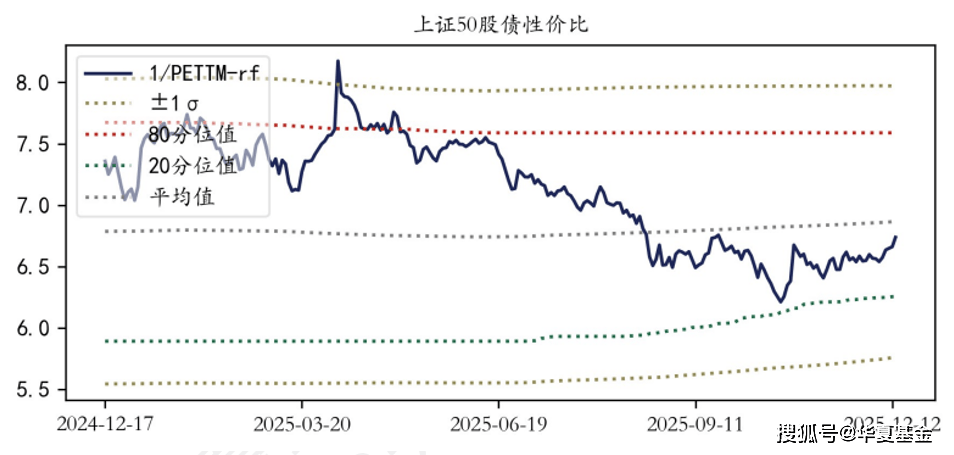
Group 1 - The market is experiencing fluctuations between adjustments and rebounds, with mixed sentiments among investors regarding whether to cut losses or buy more [1] - The external environment is not optimistic, with the Federal Reserve's recent interest rate cut highlighting internal divisions, particularly concerning stagnant inflation and a cooling job market [2] - The A-share market has shown a structural performance with seamless transitions between sectors, leading to the Shanghai Composite Index reaching new highs despite some volatility [2] Group 2 - As the year-end approaches, there is a decrease in risk appetite among investors, which explains the recent market adjustments [3] - The stock-bond valuation ratio indicates that major indices are in a middle state, neither particularly cheap nor overly expensive, based on the PE-TTM and ten-year government bond yield [3] - The number of new individual stock accounts is not at a high level, suggesting that the current market conditions do not reflect the typical signals of a market peak [6] Group 3 - The core driving force behind the recent market rally since April 7 is attributed to positive domestic signals, including policy support for the capital market, technological innovation, and new domestic capital inflows [8] - Despite external influences and geopolitical tensions, the fundamental logic of the current market rally remains intact, encouraging a cautious yet confident outlook for medium to long-term investments [8]
AI细分产品需求有望爆发,这家公司已成为了芯片及半导体封测厂商的重要客户
摩尔投研精选· 2025-12-18 10:50
Group 1 - The Bank of Japan is expected to raise interest rates by 25 basis points on the 19th of this month, with limited impact on global liquidity due to previous rate hikes since March last year [1] - The most dangerous phase of liquidity shock has passed, as the futures market has already closed the most active "carry trade" positions, and the Federal Reserve's expansionary policy is stabilizing market liquidity expectations [1] - Concerns about the "AI bubble" in the US stock market and the overall vulnerability of the market may lead to a liquidity shock triggered by the yen's interest rate hike [1][2] Group 2 - The technology sector in the US stock market may experience adjustments that could prompt the Federal Reserve to resume quantitative easing, leading to a quick recovery in capital markets [2] - The outlook for major asset allocation remains positive for gold and RMB assets, driven by China's expanding export surplus and the potential for the Federal Reserve to restart interest rate cuts, which will support the long-term appreciation of the RMB [2] Group 3 - The optical fiber and cable industry is showing signs of recovery, with prices entering an upward channel, as retail prices for scattered fibers have rebounded by approximately 15%-20% [3] - The demand for high-value products such as multimode and ultra-low loss fibers is surging due to the explosion of AI computing power, leading manufacturers to shift capacity towards high-end products [3][4] - The growth in overseas demand is driving a strong "volume and price increase" trend in exports, with export values for optical rods, fibers, and cables expected to grow by over 50% year-on-year by October 2025 [3] Group 4 - Domestic manufacturers are maintaining restraint in expanding core optical rod capacity due to previous years of capacity clearing and management, which will limit short-term supply amid rapidly increasing demand [4] - The mismatch between supply and demand in the context of sustained demand growth will support continued price increases in the optical fiber industry [4]

几乎腰斩!甲骨文跌势不止,AI行业泡沫风险加剧
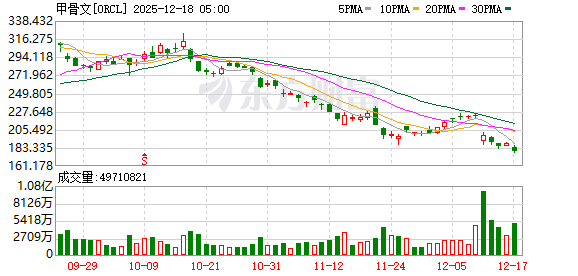
第一财经· 2025-12-17 23:29
2025.12. 18 在今年9月10日以创纪录的涨幅刷新历史新高后,甲骨文股价便开始一路走低。本月以来,公司连遭 利空突袭,进一步加剧了外界对于人工智能行业前景和估值泡沫的担忧。 截至周三收盘,甲骨文报178.45美元,下跌5.4%,近三个月累计跌幅48.5%。 作为近两年推动美股 牛市的关键因素,该行业对于明年市场的走向依然至关重要。 甲骨文否认融资泡汤传闻 据媒体报道,蓝猫头鹰资本(Blue Owl Capital)为甲骨文公司密歇根州100亿美元数据中心项目 提供融资的计划宣告泡汤,知情人士指出,此事源于市场对甲骨文债务规模及支出水平的担忧。受该 消息影响,曾一度大热的这家人工智能(AI)概念股大幅跳水。不过,甲骨文随后对该报道予以否 认,并表示该项目正在稳步推进。 本文字数:2015,阅读时长大约3分钟 作者 | 第一财经 樊志菁 近几周来,与企业数据中心建设计划相关的高风险融资方案一直让投资者感到紧张不安。甲骨文在最 新季度财报文件中披露,截至11月30日,该公司未来15年在数据中心租赁及云服务容量方面的承诺 支出高达2480亿美元,较今年8月的数据增长了近148%。 美国证券交易委员会SEC文件 ...

几乎腰斩!甲骨文跌势不止 AI行业泡沫风险加剧
Di Yi Cai Jing· 2025-12-17 23:14
在今年9月10日以创纪录的涨幅刷新历史新高后,甲骨文股价便开始一路走低。本月以来,公司连遭利 空突袭,进一步加剧了外界对于人工智能行业前景和估值泡沫的担忧。 截至周三收盘,甲骨文报178.45美元,下跌5.4%,近三个月累计跌幅48.5%。作为近两年推动美股牛市 的关键因素,该行业对于明年市场的走向依然至关重要。 甲骨文否认融资泡汤传闻 周三,其他与人工智能相关的个股也纷纷跟随下跌。芯片制造商博通下挫4.4%,近5个交易日累计跌幅 超20%,进入技术性熊市,超威半导体AMD跌幅超过4%,也陷入熊市泥潭。 "我们显然已经看到市场出现了非常明显的轮动,资金正从大盘成长股转向大盘价值股。我认为,这实 际上是投资者在为明年的市场走势调整仓位,转向更具防御性的配置。"扎克斯投资管理公司客户投资 组合经理马尔伯里(Brian Mulberry)表示,"当前市场真正的疑问是:'谁能从这些规模庞大的人工智 能投资中实现盈利?'" 马尔伯里预计,资金从高估值个股向 "估值更合理板块"的轮动趋势将持续至2026年。他认为,这一趋 势叠加货币政策的不确定性,可能会引发市场出现一定的波动。"在当前阶段,关注某些特定指标以判 断人工智 ...
几乎腰斩!甲骨文跌势不止,AI行业泡沫风险加剧
Di Yi Cai Jing· 2025-12-17 23:05
该行业对于明年美股走向依然至关重要。 在今年9月10日以创纪录的涨幅刷新历史新高后,甲骨文股价便开始一路走低。本月以来,公司连遭利 空突袭,进一步加剧了外界对于人工智能行业前景和估值泡沫的担忧。 截至周三收盘,甲骨文报178.45美元,下跌5.4%,近三个月累计跌幅48.5%。作为近两年推动美股牛市 的关键因素,该行业对于明年市场的走向依然至关重要。 甲骨文否认融资泡汤传闻 据媒体报道,蓝猫头鹰资本(Blue Owl Capital)为甲骨文公司密歇根州100亿美元数据中心项目提供融 资的计划宣告泡汤,知情人士指出,此事源于市场对甲骨文债务规模及支出水平的担忧。受该消息影 响,曾一度大热的这家人工智能(AI)概念股大幅跳水。不过,甲骨文随后对该报道予以否认,并表 示该项目正在稳步推进。 近几周来,与企业数据中心建设计划相关的高风险融资方案一直让投资者感到紧张不安。甲骨文在最新 季度财报文件中披露,截至11月30日,该公司未来15年在数据中心租赁及云服务容量方面的承诺支出高 达2480亿美元,较今年8月的数据增长了近148%。 美国证券交易委员会SEC文件显示,这家云计算巨头在今年9月新发行了180亿美元债券。 ...
西部证券晨会纪要-20251217
Western Securities· 2025-12-17 02:52
Core Conclusions - The report highlights the potential impact of Japan's interest rate hike on global liquidity, suggesting that while there are concerns, the actual shock may be limited due to previous adjustments in the market [7][8][9] - The medical device and healthcare sectors are expected to rebound, driven by innovation and international expansion, despite current pressures from macroeconomic factors [2][14] - The energy storage industry is poised for growth, supported by favorable policies and increasing demand, with key players identified for investment [3][18][19] Group 1: Strategy and Market Outlook - The report suggests a continued positive outlook for AH shares, with strategic allocations in government bonds and gold, while US stocks and bonds may remain volatile [1][13] - Japan's potential interest rate hike is seen as a catalyst for global liquidity concerns, but the actual impact may be mitigated by prior market adjustments and the current economic environment [7][8][9] Group 2: Medical Device and Healthcare Sector - The medical device sector is currently undervalued, with significant potential for recovery driven by innovation and government support for healthcare services [2][14] - Key areas of focus include domestic device upgrades, international market expansion, and the recovery of hospital services, with specific recommendations for investment in leading companies [14][15][16] Group 3: Energy Storage Industry - The energy storage sector is experiencing robust growth, with a projected global installed capacity of 329 GWh by 2025, reflecting an 87% year-on-year increase [19] - Key recommendations include investing in leading battery manufacturers and energy storage system providers, as demand continues to outpace supply [20][19] Group 4: Real Estate Market Analysis - The real estate market is facing challenges, with a notable decline in sales volume and prices, indicating ongoing pressure in the sector [21][22] - The report anticipates a continued low-level fluctuation in the market, with potential policy adjustments expected after the Spring Festival [23]
西部证券:美股“AI泡沫论”担忧或将放大日本加息影响 建议多看少动
Ge Long Hui A P P· 2025-12-17 01:01
格隆汇12月17日|西部证券称,美股"AI泡沫论"担忧可能会放大日本加息的影响,如果美国连续出现2- 3次股债汇三杀,建议可以卖出资产,持有货币,等待流动性冲击倒逼美联储明确的量化宽松之后,再 相机增持资产。策略师曹柳龙团队在报告中指出,日本央行决策基本明牌,但资金的选择难以预测,这 种情况下建议多看少动不过,即便日本加息导致流动性冲击,也不会改变全球中长期宽松的趋势。大类 资产继续看好A和H股,中国国债把握修复机会,战略配置黄金,美股和美债或维持震荡。 ...
