贸易战

Search documents
英国媒体一语道出真相:美国攻击中国是一场“错误战争”
Sou Hu Cai Jing· 2025-11-30 10:38
Core Viewpoint - The Financial Times argues that the U.S. trade confrontation with China is based on misperceptions, leading to ineffective strategies and negative consequences for both economies [2][22]. Group 1: Economic Misjudgments - The U.S. has misjudged China's economic strength, believing it to be on the verge of collapse due to trade wars, while in reality, China has increased R&D investments and surpassed the U.S. in patent applications [4][9]. - Since 2018, the U.S. has imposed tariffs on hundreds of billions of dollars worth of goods, failing to reduce the trade deficit and instead increasing costs for American consumers by hundreds of billions [5][17]. Group 2: Global Trade Dynamics - The U.S. actions reflect a disregard for international trade rules, imposing tariffs without evidence and linking trade issues to national security, which disrupts global supply chains [7][19]. - China, in contrast, adheres to multilateral mechanisms and emphasizes mutual benefits, with predictions indicating that U.S. policies could lower global growth rates significantly [7][19]. Group 3: Technological and Economic Shifts - The trade conflict has inadvertently accelerated China's technological self-sufficiency, with the semiconductor industry moving from reliance on imports to achieving a 30% self-sufficiency rate [9][12]. - China's renewable energy production has surged, with wind power capacity expected to grow from 200 GW in 2018 to 500 GW by 2025, and solar exports accounting for 80% of the global market [9][19]. Group 4: Domestic Economic Resilience - China's shift from an export-driven economy to one focused on domestic consumption is evident, with retail sales projected to grow by 8% by 2025, reflecting a strong internal circulation [17][21]. - The digital economy in China is expected to grow from 30 trillion to 50 trillion by 2025, marking a 60% increase, while U.S. restrictions have led to companies relocating [17][19]. Group 5: Long-term Implications - The ongoing trade war is seen as a counterproductive move against globalization, with China's free trade agreements covering over 20 countries and contributing significantly to global growth [19][21]. - The Financial Times emphasizes that the U.S. needs to abandon its containment mindset and shift towards cooperation for mutual benefit [21][22].


李光满:中国对美反击,直击美国命门!
Sou Hu Cai Jing· 2025-11-30 07:40
Core Points - The trade war initiated by the U.S. against China has escalated significantly, with both countries imposing tariffs on each other's goods, impacting global trade dynamics [1][3][5][7] - China's response to U.S. tariffs has been strategic and coordinated, targeting key industries such as energy, automotive, and high-tech sectors, demonstrating its resilience and ability to counteract U.S. measures [3][5][7] - The trade conflict has led to a shift in global supply chains, with companies increasingly looking towards ASEAN countries to mitigate risks associated with U.S.-China tensions [5][7] Summary by Category Tariff Measures - The U.S. imposed a 10% tariff on Chinese goods and 25% on Canadian and Mexican goods, which was later increased to 20% and then 34% [1][5] - China retaliated with tariffs on U.S. coal, LNG, and agricultural products, including a 10% to 15% tariff on U.S. soybeans, directly affecting American farmers [3][5] Strategic Responses - China implemented export controls on critical minerals essential for military and high-tech industries, impacting U.S. missile and chip production [3][5] - The Chinese government placed U.S. companies like PVH Group on an unreliable entity list, restricting their market access [3][5] Global Trade Impact - The trade war has resulted in a 1% reduction in global trade, with the most vulnerable countries suffering the most [5][7] - The conflict has highlighted the limitations of unilateral trade policies, as U.S. allies like the EU and Japan have not joined in the actions against China [7] Long-term Implications - The trade war reflects deeper issues within the U.S. economy, such as manufacturing hollowing out and rising debt, while underestimating China's strategic resilience [7] - The ongoing conflict is pushing the global economic landscape towards multipolarity, challenging the effectiveness of unilateralism [7]
美国被反击,全世界集体沉默,为什么越被打压,中国反而越稳?
Sou Hu Cai Jing· 2025-11-28 12:32
Group 1 - The trade war initiated by the U.S. under Trump's administration has intensified, with significant tariffs imposed on Chinese electric vehicles and solar batteries, leading to increased costs for American companies and consumers [2] - Despite the tariffs, China's exports of photovoltaic components and batteries have seen substantial growth, with a 25% increase in solar component exports and a 23% increase in battery exports in the first half of the year [2] - In response to U.S. sanctions, China has implemented export controls on rare earths and permanent magnets, which are critical for high-tech and defense applications, potentially impacting U.S. military capabilities [4][6] Group 2 - The U.S. has faced challenges in its manufacturing sector, with the manufacturing purchasing managers' index dropping below 48, indicating contraction, while China maintains a strong position in the global supply chain, particularly in the renewable energy sector [8] - China's dominance in the global supply chain is evident, with 90% of the global market share in the renewable energy sector, and significant export figures, including $52 billion in electric vehicle exports and $7.6 billion in battery exports in the first eight months [8] - The response from other countries to China's export controls has been muted, as many nations rely on Chinese markets and materials, with significant trade volumes between China and "Belt and Road" countries [12][14] Group 3 - The U.S. strategy of "friend-shoring" has not yielded the expected results, as countries like Vietnam and India face logistical challenges and infrastructure bottlenecks, while China continues to strengthen its supply chain resilience [16][20] - China's Belt and Road Initiative is expanding, with investments in green energy projects and mineral supply chains, indicating a long-term strategy to enhance its global trade network [18][22] - The resilience of China's supply chain is attributed to its comprehensive policies and strong partnerships, positioning it favorably in the face of U.S. trade pressures [22]
2025 年第四季度市场展望:从贸易战到降息与刺激政策
Sou Hu Cai Jing· 2025-11-28 07:16
Core Insights - The global economy is seeking a new balance amid trade easing and policy stimulus, with significant market rebounds observed in Q3 2025 driven by improved US-China trade relations, optimism in artificial intelligence, and expectations of Federal Reserve rate cuts [1][2][5]. Market Performance - Global stock markets saw a notable rebound in Q3 2025, with emerging markets outperforming developed markets, particularly in Asia, where China (+20.8%), Taiwan (+14.7%), South Korea (+12.8%), and Thailand (+17.6%) led the gains. In contrast, India experienced a decline of 6.6% due to valuation pressures and foreign capital outflows [5][6]. - The fixed income market showed volatility but overall upward movement, with US Treasury yields declining across the board, particularly the 10-year yield which fell by 8 basis points to 4.16%. Emerging market dollar bonds performed strongly, achieving a 4.8% increase [6][11]. - The commodity market saw significant gains in gold (+16.4%) and precious metals (+17.4%), while energy and agricultural sectors lagged [11]. Economic Outlook - Future months may see a slowdown in global economic growth, but policy stimulus is expected to drive a rebound in early 2026. The US economy may weaken due to stagnant job growth and rising tariff costs, although investments in new infrastructure and technology sectors provide some support [2][14]. - China's recent credit growth slowdown indicates a need for stronger domestic demand, but upcoming policy measures may inject new momentum into the economy. The government is expected to set a GDP growth target of at least 4.5% for the next year [15][34]. Monetary Policy - The Federal Reserve is likely to continue cutting rates, with expectations of a 25 basis point cut in October and another in December. Other major central banks are anticipated to follow suit with easing measures [3][20]. - Asian countries are implementing new rounds of stimulus to counter economic pressures, with China expanding credit support, India reforming tax policies, and Indonesia providing cash transfers to households [32][33]. Inflation Trends - Inflation patterns are diverging globally, with the US expected to see a gradual rise in inflation to around 3.1%-3.2% due to tariff effects, while many Asian economies maintain lower inflation levels, allowing for more room for monetary easing [2][16]. - In China, inflation is projected to remain low, while Japan and India are managing inflation within target ranges through policy adjustments [16][34].

38万亿债务压力,特朗普盼降息受阻,中国成最后救星?
Sou Hu Cai Jing· 2025-11-26 16:21
Core Viewpoint - The article discusses the complex interplay between U.S. debt, interest rates, and trade policies under Trump's administration, highlighting the shift from a hardline stance on China to a more conciliatory approach as economic pressures mount. Group 1: Economic Context - The U.S. currently has approximately $38 trillion in debt, with interest payments becoming a significant burden [5] - Inflation surged to high levels in 2022, prompting the Federal Reserve to begin a series of interest rate hikes to control it [3][5] - Trump's call for the Federal Reserve to lower interest rates reflects the need to alleviate the financial burden of debt interest [5] Group 2: Trade Policies and Their Impact - Trump's initial strategy involved imposing high tariffs on China to encourage manufacturing to return to the U.S., but this led to rising domestic prices [3][15] - The trade war has significantly impacted U.S. companies, particularly those like Apple and Tesla that rely heavily on the Chinese market, resulting in increased costs and squeezed profits [7] - The reality of manufacturing returning to the U.S. is complicated by high labor costs and incomplete supply chains, making it difficult to compete with China [9] Group 3: Public Sentiment and Political Pressure - Public opinion is shifting towards improving relations with China, adding pressure on policymakers to reconsider trade strategies [13] - The stock market is at risk due to a few tech giants dominating market capitalization, making it vulnerable to any missteps in trade or monetary policy [13] Group 4: Policy Shifts and Future Outlook - The shift in Trump's approach to China in 2023-2024 reflects a pragmatic response to economic realities, balancing political needs with economic pressures [17][21] - The failure of tariff strategies highlights deeper systemic issues within the U.S. economy, such as income inequality and the long-term decline of manufacturing [19][23] - The interconnectedness of fiscal pressure, inflation, and trade policies has led to a more pragmatic approach in U.S.-China relations [23][25]
从挨打到主动出牌,中国王牌反制,美国终承认:离不开该合作伙伴
Sou Hu Cai Jing· 2025-11-26 07:32
Group 1 - The article discusses the dramatic impact of the U.S. tariff policy, particularly the increase to 125%, which has led to significant price hikes for basic goods, costing American households an additional $2,400 annually [3][5][6] - The U.S. isolation strategy has backfired, as attempts to decouple from global supply chains have resulted in negative consequences for the U.S. economy, while China has shown resilience and adaptability [5][6][10] - By 2025, China's foreign trade has grown by 4%, with exports to Africa increasing by 56.4%, indicating a shift in global trade dynamics and a more diversified trade network [13][15] Group 2 - Despite high tariffs, China's response has evolved from passive defense to proactive strategies, utilizing key resources like rare earths and semiconductors to counter U.S. actions [16][18] - The capital markets reflect a growing recognition of China's integral role in the global economy, with companies like Tesla and Volkswagen continuing to invest in China despite geopolitical tensions [18][19] - The article emphasizes that the international order is shifting towards a more complex interdependence, where the costs of excluding China from global supply chains are becoming increasingly untenable for the U.S. [21][24][27]
谈不拢了!稀土坚决不给美国军工,中国必须保持军事领先
Sou Hu Cai Jing· 2025-11-25 15:05
Group 1 - The U.S. government announced a 34% reciprocal tariff on goods from major trading partners, including China, affecting shipping, logistics, and shipbuilding, which violates WTO rules and disrupts the U.S.-China maritime agreement [1] - This policy has led to a more than 30% increase in bilateral trade costs, reflecting a typical unilateralism aimed at reshaping global supply chains and promoting manufacturing return to the U.S. [1] - China responded swiftly by imposing equivalent tariffs on U.S. imports and implementing export controls on seven categories of rare earth elements, emphasizing national security and international non-proliferation responsibilities [4] Group 2 - The U.S. and China engaged in high-level economic talks in Geneva, agreeing to gradually reduce tariffs within 90 days and temporarily suspend some non-tariff countermeasures, showcasing a willingness to dialogue [6] - However, the U.S. quickly violated the agreement by suspending the supply of LEAP-1C engines needed for China's C919 aircraft, tightening restrictions on chip and design software exports, which impacts China's aviation supply chain [6][8] - The ongoing trade tensions have led to an 8.1% year-on-year decline in bilateral trade, while China's export structure has improved, with high-tech products now accounting for 35% of exports [10] Group 3 - Rare earth elements are crucial for high-tech industries, with China controlling 60% of global extraction and 90% of refining, particularly dominating the heavy rare earth sector at 99% [12] - U.S. automakers have already reduced production by 20% due to supply disruptions, with General Motors and Ford warning of potential factory relocations to China if the situation does not improve [12] - China's export control measures are efficient, with a tiered approval system for exports, ensuring that any product containing over 0.1% Chinese rare earths requires a license, particularly for military applications [15] Group 4 - The U.S. military faces significant challenges, with the F-35 fighter jet requiring 920 pounds of rare earths, and Virginia-class submarines needing over 9,000 pounds, leading to increased production costs and delays [17] - The Pentagon's reserves are only sufficient for 18 months, and development of the F-47 sixth-generation fighter has been paused due to supply issues [17] - In contrast, China's military prioritizes domestic supply, achieving an 85% recovery rate of rare earths at one-third of the cost compared to the U.S., highlighting the asymmetrical nature of the ongoing competition [17]
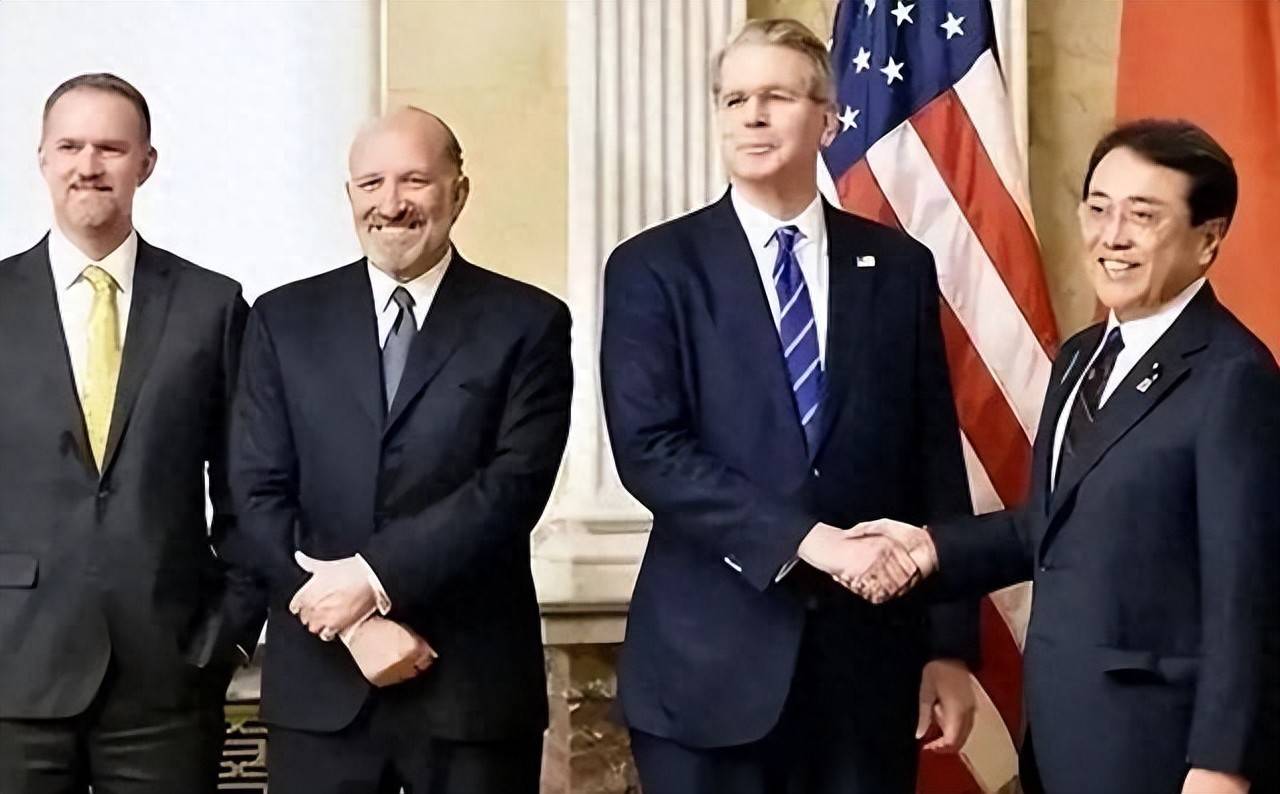
挑起贸易战损人也伤己 美国自己也开始疼了
Ren Min Ri Bao Hai Wai Ban· 2025-11-24 04:09
Group 1: Tariff Increase and Industry Impact - The U.S. government is considering raising tariffs on $200 billion worth of Chinese imports from 10% to 25%, with public commentary extended to September 5 [1] - The technology and chemical industries are shocked by the proposed tariff increase, with the Information Technology Industry Council calling it "irresponsible and counterproductive" [2] - The American Retail Federation expressed anger, stating that the new tariffs are a reckless bet on a trade policy that is already causing harm [2] Group 2: Agricultural Sector Struggles - The trade war has led to a significant decrease in demand for U.S. meat products, resulting in a backlog of nearly 1.2 billion kilograms of meat in warehouses [2] - U.S. soybean prices have dropped approximately 15% due to trade concerns, impacting farmers' profits by 8% to 10% [2] - Goldman Sachs warned that the trade war could reduce earnings for several U.S. companies by 15% due to decreased export revenues and increased costs [2] Group 3: Consumer Impact and Price Increases - Tariffs are expected to raise costs for manufacturers, which will ultimately be passed on to consumers, leading to increased prices for various goods [4] - Companies like Polaris Industries have already raised prices to offset anticipated tariff costs, indicating a direct impact on consumer prices [5] - Analysts predict that the trade conflict could lead to a loss of 250,000 jobs and an average increase of $210 in expenses for American households [5] Group 4: Economic Outlook and Political Implications - Concerns are growing about the potential economic slowdown due to the trade war, which could pose a political challenge for the Republican Party ahead of the midterm elections [6][7] - Predictions indicate that a 10% increase in tariffs could result in a 2.5% decrease in U.S. GDP over three years, with a full-blown trade war potentially doubling this impact [7] - The ongoing trade tensions are disrupting global supply chains and increasing uncertainty, which could push the economy towards recession [7][8]
美国大豆对华出口未明显进展,农民忧虑
日经中文网· 2025-11-24 03:20
运往美国俄亥俄州储藏设施的美国大豆(reuters) "绝对是异常事态",美国大豆出口协会CEO在接受采访时承认,中国对美国大豆的采购重启仍停滞。10 月底的中美首脑会谈中就恢复出货达成一致,并启动部分出口,但仍未出现大量采购的迹象。背景是中 国的替代采购…… 美国对中国的大豆出口依然停滞不前。大豆在作为鸡和猪饲料的粮食采购中属于重要品类之一。作为世 界最大消费国的中国在贸易战中一直通过抵制向美国特朗普政府施压。虽然在10月底的中美首脑会谈中 就恢复出货达成一致,并启动部分出口,但仍未出现大量采购的迹象,美国的农业相关人士对此忧心忡 忡。 美国农业相关人士发出担忧的声音 "绝对是异常事态",美国大豆出口协会(USSEC)首席执行官(CEO)吉姆·萨特(Jim Sutter)在接受 日本经济新闻的独家采访时承认,中国对美国大豆的采购重启仍在停滞。他表示"想耐心等待"中国方面 的应对。 "(美国的)贸易商和农民等开始担心美国产大豆的采购能否如约进行",美国中西部伊利诺伊州的谷物 期货交易商Allendale的首席策略师Rich Nelson如此指出。 中国通过抵制击中了"美国农民"这一特朗普政府的要害,在贸易战中 ...

倘若贸易战失败,美国会选择用武力摧毁中国吗?
Sou Hu Cai Jing· 2025-11-23 06:31
中美贸易摩擦进入2025年,已从单纯关税博弈演变为全球供应链的全面重塑。年初,美国政府签署行政 令,对中国商品加征10%额外关税,到4月总税率攀升至54%,涵盖电子元件、机械设备和汽车零部 件。中国则以对等措施回应,5月启动对美进口商品关税调整,重点针对农产品和能源。 10月30日,两国领导人在釜山会晤,达成涵盖关税调整、出口管制和农产品采购的协议,美国同意降低 部分电子产品税率至30%,中国承诺增加能源进口20万吨。目前,协议执行平稳,首批大豆船货抵达中 国港口,价格稳定在每吨420美元左右。这种进展显示,贸易摩擦虽未彻底结束,但已从对抗转向有限 缓和。 从经济数据看,美国的关税策略并未如预期般重振制造业。2025年上半年,美国对华出口下降25%,大 豆和能源类产品积压严重,中西部农场库存创历史新高。通胀率升至4.5%,消费者支出增速放缓0.8个 百分点。 相比之下,中国出口结构优化,对"一带一路"沿线国家贸易额同比增长15%,高科技产品占比升至 28%。欧洲国家对美实施25%农产品反制关税,导致美国鸡肉出口受阻,中西部"蛋荒"现象频发。 东南亚虽承接部分转移订单,但物流延误和质量不稳问题突出,实际成本仅降 ...