
人车家全生态

Search documents
氪星晚报|美的与华为达成深度合作,深化“人车家全生态”战略;壳牌公司考虑部分或全部关闭其在欧洲的化工部门;贝莱德在欧洲推出首款比特币产品
3 6 Ke· 2025-03-25 10:42
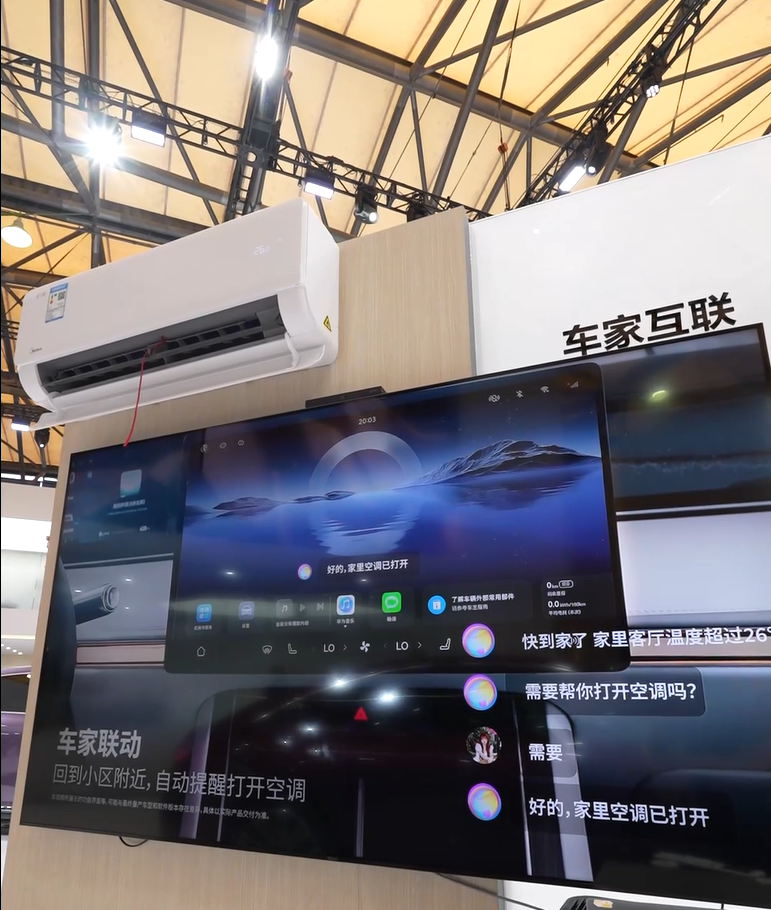
Group 1: Company Collaborations and Strategies - Midea has announced a deep collaboration with Huawei to enhance the "Human-Vehicle-Home" ecosystem strategy, integrating Huawei's HarmonyOS products into Midea's smart home stores and creating a commercial loop through mutual empowerment [1] - Midea and Huawei plan to expand their cooperation in energy management, health care, and audio-visual verticals as part of their strategy to deepen the "Human-Vehicle-Home" ecosystem [1] Group 2: Financial Performance and Growth - Xiaoma Zhixing reported a total revenue of 548 million yuan for 2024, marking a year-on-year growth of 4.3%, with significant increases in passenger fare income [2] - The adjusted R&D expenses for Xiaoma Zhixing reached 1.006 billion yuan, a 14% increase year-on-year, primarily for the development of the seventh-generation Robotaxi [2] - Xiaoma Zhixing's cash and short-term investments totaled 6.023 billion yuan as of December 31, 2024 [2] Group 3: Market Trends and Consumer Behavior - Fliggy reported a nearly 50% increase in theme park ticket bookings for the Qingming holiday, with domestic car rental bookings up 33% year-on-year [3] - The platform also noted a significant rise in outbound travel train ticket bookings, exceeding 200% year-on-year, indicating a robust recovery in the travel market [3] Group 4: Corporate Developments and Product Launches - Shell is considering partial or complete closure of its chemical divisions in Europe due to challenging market conditions, including high energy costs and CO2 emissions [4] - BlackRock has launched its first Bitcoin exchange-traded product in Europe, following a successful launch in the U.S. that attracted over $50 billion in investments [4] - Vivo has established a Robotics Lab and showcased its latest mixed reality headset at the Boao Forum, focusing on developing consumer-grade robots [6] - Hisense has released the world's first 4-in-1 heat pump washing and drying machine, featuring AI capabilities to optimize washing and drying processes [7] Group 5: Regulatory and Legal Issues - India has ordered Samsung and its executives to pay $601 million in back taxes and fines for evading import duties on telecommunications equipment [5]
美的携手华为以鸿蒙生态重塑全场景智慧体验
Cai Fu Zai Xian· 2025-03-25 10:05
Core Viewpoint - Midea and Huawei are collaborating to reshape the smart home experience through the HarmonyOS ecosystem, aiming to create a comprehensive "human-vehicle-home" interconnected environment as the smart home and smart vehicle markets rapidly grow [1][11]. Market Trends - The smart home market in China is projected to reach 784.8 billion yuan in 2024 and exceed 800 billion yuan in 2025 [1]. - The penetration rate of new energy vehicles in China is expected to rebound to 54.1% by March 2025 [1]. Technological Collaboration - Midea has fully adapted its product line to the HarmonyOS since 2021, enabling seamless device connectivity through Huawei's NFC technology [3]. - The collaboration has evolved to enhance user experience, transitioning from passive responses to proactive sensing, exemplified by Midea's air conditioning system that adjusts airflow based on user positioning [3][5]. Standardization Efforts - Midea and Huawei are advancing the standardization process in the smart home sector by co-authoring the "Huawei HarmonyOS Smart Home Ventilation Gateway White Paper," which sets technical standards for smart ventilation device connectivity [6][7]. - Midea's split air conditioning system serves as a benchmark for this standardization, allowing users to optimize indoor air quality through integrated control of ventilation and air monitoring devices [7]. Ecosystem Development - The partnership aims to create an open ecosystem, enhancing the user experience through AI technologies and deepening collaboration across various sectors [10][11]. - Midea is integrating AI models to improve user interaction and energy efficiency in its air conditioning products, focusing on user habits and environmental conditions [10]. - The collaboration includes mutual channel access, with Midea introducing Huawei's products in its smart home stores and Huawei facilitating Midea's sales channels [10]. Future Outlook - The "human-vehicle-home" ecosystem exemplifies a model for the industry, with Midea expected to deepen partnerships and enhance the smart home service chain, driving high-quality development in the sector [13].


雷军的狂飙之路与成长的烦恼
Sou Hu Cai Jing· 2025-03-25 10:03
雷军的狂飙之路与成长的烦恼 3月18日这天,小米集团可太猛了,堪称 "高光炸裂"。 先是发布了一份被雷军称为 "史上最强" 的财报,直接在商业圈里投下一颗重磅炸弹。紧接着,小米汽车也不甘示弱,不仅交付量突破20万辆,还把2025年 的交付目标一口气提升到 35 万台。 史上最强财报,小米汽车C位出道 先来看看这份财报,它不仅仅是一堆数字的堆砌,简直就是小米集团实力的 "铁证"。 2024年,小米集团实现总收入3659亿元,同比增长35.0% ,经调整净利润达到272亿元,同比增长41.3%。增长速度,就像坐了火箭一样。更厉害的是,第四 季度单季营收首次突破千亿大关,达到1090亿元,同比增长48.8%,创下近四年最高增速。这数据一公布,资本市场瞬间沸腾,截至3月18日收盘,小米港 股报收 57.650 港元,股价一年内涨了近 3 倍,最新市值1.45万亿港元。 | | 截至12月31日止年度 | | | | --- | --- | --- | --- | | | 2024年 | 2023年 | 同比變動 | | | (人民幣百萬元,除非另有説明) | | | | 收入 | 365.906.4 | 270,97 ...

小米集团-W(01810):全年业绩创历史新高,手机及汽车业务稳步提升助力公司发展
Great Wall Securities· 2025-03-20 11:10
Investment Rating - The report maintains a "Buy" rating for Xiaomi Group [4][8][18] Core Viewpoints - Xiaomi Group achieved record-high annual performance in 2024, with total revenue reaching RMB 365.9 billion, a year-on-year increase of 35% [2][3] - The company reported an adjusted net profit of RMB 27.2 billion for 2024, up 41.3% year-on-year, with Q4 alone surpassing RMB 100 billion in revenue for the first time [2][3] - The smartphone and AIoT business segments showed robust growth, while the electric vehicle segment is expected to contribute significantly to future revenue [3][8] Financial Performance Summary - **Revenue Forecast**: Projected revenues for 2024-2027 are RMB 365.9 billion, RMB 483.0 billion, RMB 576.1 billion, and RMB 673.4 billion respectively, with growth rates of 35.04%, 32.00%, 19.28%, and 16.89% [1][8] - **Net Profit Forecast**: Expected net profits for the same period are RMB 23.7 billion, RMB 31.0 billion, RMB 40.1 billion, and RMB 50.2 billion, with growth rates of 35.38%, 31.12%, 29.22%, and 25.36% [1][8] - **Key Ratios**: The report indicates a projected P/E ratio of 47.11 for 2025, decreasing to 29.09 by 2027, and a P/B ratio of 6.65 in 2025, dropping to 4.71 by 2027 [1][8] Business Segment Performance - **Smartphone Business**: In 2024, Xiaomi's smartphone revenue reached RMB 191.8 billion, a 21.8% increase, with a market share of 13.8% globally [3][8] - **Electric Vehicle Business**: The electric vehicle segment generated RMB 32.8 billion in revenue, with a delivery target of 350,000 units for 2025 [3][8] - **R&D Investment**: Xiaomi's R&D expenditure for 2024 was RMB 24.1 billion, expected to rise to RMB 30 billion in 2025, reflecting the company's commitment to innovation [2][3]

小米集团-W(01810):全年业绩超预期,高端化战略持续兑现
Shenwan Hongyuan Securities· 2025-03-20 06:15
Investment Rating - The report maintains a "Buy" rating for Xiaomi Group [4][7][8] Core Insights - Xiaomi Group's 2024 and Q4 performance reached historical highs, with 2024 revenue of 365.9 billion RMB, a year-on-year increase of 35%, and adjusted net profit of 27.2 billion RMB, up 41% [7][8] - The company has raised its 2025 delivery target for electric vehicles to 350,000 units, up from 300,000, with a projected revenue of 32.8 billion RMB from this segment [7][8] - The smartphone segment continues to validate its high-end strategy, targeting 180 million units shipped in 2025, with a revenue of 191.8 billion RMB in 2024, a 22% increase [7][8] - The IoT segment saw a significant revenue increase, surpassing 100 billion RMB, with a target of 50% growth in 2025 [7][8] - The internet services segment achieved record revenue and gross margin, with a total revenue of 34.1 billion RMB in 2024, a 13.3% increase [7][8] - Xiaomi's retail strategy includes expanding its store count to 20,000 by 2025, with a focus on AI and core technologies [7][8] Financial Data and Profit Forecast - Revenue projections for Xiaomi Group are as follows: - 2023: 270.97 billion RMB - 2024: 365.91 billion RMB - 2025E: 469.36 billion RMB - 2026E: 572.04 billion RMB - 2027E: 684.43 billion RMB - Net profit projections are: - 2023: 19.27 billion RMB - 2024: 27.31 billion RMB - 2025E: 37.62 billion RMB - 2026E: 45.74 billion RMB - 2027E: 55.77 billion RMB [3][8]
科技龙头专题巡礼(四):爆款突围与生态扩张:小米手机、可穿戴及汽车业务的协同效应与产业重构启示录
Dongxing Securities· 2025-03-14 11:43
Investment Rating - The report gives a positive investment rating for the industry, indicating a structural opportunity for related companies due to Xiaomi's comprehensive ecosystem strategy [5][66]. Core Insights - Xiaomi has successfully established itself as a major player in the smartphone market through a focus on high cost-performance ratio, expanding into overseas markets, and leveraging AIoT as a second growth engine [3][4][18]. - The wearable business has also thrived on the principle of extreme cost-performance, with Xiaomi maintaining a top-three global market share for nine consecutive years [3][32]. - In the automotive sector, Xiaomi is entering the new energy vehicle market with a strong emphasis on self-research and development, aiming to provide high cost-performance vehicles targeted at young consumers [4][43][45]. Summary by Sections 1. Smartphone Business - From 2011 to 2014, Xiaomi rapidly captured the mid-to-low-end market with high cost-performance models, achieving significant sales growth [11][12]. - In 2015-2016, Xiaomi faced challenges but expanded its product line to include high-end and low-end models, stabilizing its market position [14][15]. - Between 2017 and 2020, Xiaomi's overseas market contributions grew, with AIoT becoming a significant growth driver [16][18]. - From 2021 to 2024, Xiaomi aims to shift from a technology-led approach to an experience-led strategy in the high-end market, focusing on imaging capabilities [20][22]. 2. Wearable Business - The initial Xiaomi Mi Band opened the market with a low price point, achieving over 10 million sales within a year, validating the cost-performance strategy [29][32]. - Xiaomi's wearable devices have consistently ranked among the top three globally from 2015 to 2023, demonstrating sustained market leadership [32][33]. 3. Automotive Business - Xiaomi's entry into the new energy vehicle market is marked by the launch of the SU7, which emphasizes high cost-performance and advanced technology [43][44]. - The company has committed significant resources to R&D, with investments expected to reach $10 billion over the next decade [45][46]. - Early investments in the automotive supply chain have positioned Xiaomi favorably within the industry [49]. 4. Profit Model Analysis - Xiaomi's profit model is driven by high cost-performance hardware and internet services, with hardware sales contributing approximately 90% to revenue [54][56]. - Internet services, characterized by high margins, have become a core component of Xiaomi's profitability, with a gross margin exceeding 70% in recent years [59][62]. 5. Investment Recommendations - The report suggests that Xiaomi's ecosystem strategy will create structural opportunities for various related companies, including Xiaomi Group-W and several technology suppliers [5][66].
小米计划2025年在日本开5~10家“小米之家”
日经中文网· 2025-03-14 02:46
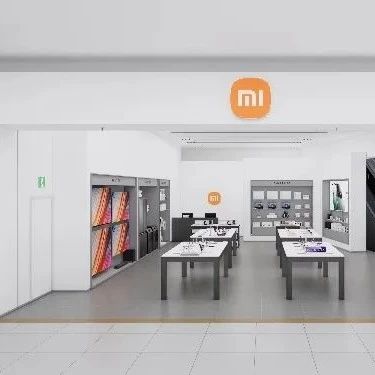
Core Viewpoint - Xiaomi is expanding its presence in Japan by opening physical stores, aiming to introduce its smart home ecosystem and increase its market share in the country [1][3]. Group 1: Store Openings - Xiaomi announced the opening of two stores in Saitama Prefecture, with the first store set to open on March 22 at "Aeon Mall Urawa Misono" and the second on April 5 at "Aeon Mall Kawaguchi" [2]. - The total area of the two stores will be approximately 130 square meters and 100 square meters, respectively, with a target of attracting 10,000 to 20,000 customers per month [2]. Group 2: Product Offering and Strategy - The stores will feature over 160 products, including smartphones, smartwatches, TVs, and robotic vacuum cleaners, showcasing a smart home experience centered around smartphones [1][3]. - Xiaomi plans to open 5 to 10 stores in the Tokyo area by 2025 and is considering expanding its business across Japan [1][3]. Group 3: Market Position and Future Plans - According to MM Research Institute, Xiaomi's smartphone market share in Japan is projected to be 4.7% in 2024, ranking fifth [3]. - The company aims to shift its focus from online sales, primarily targeting young consumers, to attracting family users through physical stores, leveraging the success of its previous limited-time store in Shibuya [3].
冲上热搜!雷军回应,曾是受害者!
21世纪经济报道· 2025-03-09 04:29
Core Viewpoint - The rapid advancement of artificial intelligence (AI) technology has led to significant societal challenges, particularly concerning issues like AI-generated face and voice manipulation, which can result in legal violations and personal harm [2][5][3]. Group 1: AI Technology and Legal Concerns - AI technology has seen rapid breakthroughs, leading to popular applications such as AI face-swapping and voice imitation, but these have also created new legal challenges [2]. - The misuse of AI face-swapping and voice imitation can lead to serious legal issues, including violations of portrait rights and personal information, as well as potential fraud [5][3]. - There is a call for proactive legislation to address the challenges posed by AI technology, as the current legal framework may not adequately cover the emerging risks [3][5]. Group 2: Xiaomi's Strategic Developments - Xiaomi's long-term strategy focuses on creating an integrated ecosystem involving people, vehicles, and homes, with significant investments in core technologies [7]. - Over the past five years, Xiaomi has invested approximately 105 billion yuan in research and development, leading to transformative changes within the company [8]. - The recent launch of the Xiaomi SU7 Ultra, priced at 529,900 yuan, exceeded sales expectations, indicating a successful entry into the luxury car market [8]. Group 3: Market Performance - As of the latest market close, Xiaomi's stock price was 54.35 HKD, with a market capitalization of 1.3 trillion HKD, reflecting a 57% increase since the beginning of the year [9].

3月金股:政策暖风,科技慢牛
Yong Xing Zheng Quan· 2025-03-04 07:39
Core Insights - The report recommends several stocks, including Tencent Holdings, Xiaomi Group, Leap Motor, Mingyang Electric, Dongmu Co., Bojun Technology, Jinggong Technology, and Xinjie Electric, indicating a focus on sectors such as media, automotive, and new energy [1] - The upcoming Two Sessions are expected to emphasize fiscal support for the development of new productivity, with the government likely to issue long-term special bonds to support strategic emerging industries [1] - The report anticipates that significant investments will flow into advanced manufacturing sectors, including semiconductors and artificial intelligence, to accelerate technological breakthroughs and industrial upgrades [1] Company Summaries Tencent Holdings (00700.HK) - Tencent is the largest social platform in China, with a robust user base supporting its various business segments, including a gaming market share of 48.2% in 2023 [9][11] - The company is expected to benefit from the growth of its gaming sector, with projected net profits of 1,703.64 million, 1,911.76 million, and 2,162.84 million for 2024-2026, reflecting growth rates of 47.86%, 12.22%, and 13.13% respectively [11] Xiaomi Group (01810.HK) - Xiaomi is a leading global smartphone company, with smartphone revenue consistently exceeding 50% of total revenue, reaching 54.67% in the first three quarters of 2024 [13] - The company is advancing its "human-vehicle-home" ecosystem strategy and aims to become a global leader in hard technology, with projected adjusted net profits of 253.15 million, 319.16 million, and 383.86 million for 2024-2026 [14] Leap Motor (09863.HK) - Leap Motor focuses on the high cost-performance market, with a product matrix that includes five models and monthly sales exceeding 20,000 units as of June 2024 [15][17] - The company has partnered with Stellantis to expand into overseas markets, with plans to launch products in nine European countries by the end of 2024 [16] Mingyang Electric (301291.SZ) - Mingyang Electric anticipates a net profit of 600-700 million for 2024, driven by growth in the renewable energy sector and data center construction [18] - The company is expected to benefit from the increasing demand for offshore wind power, with projections of 10-15 GW of new installations in 2025 [19] Dongmu Co. (600114.SH) - Dongmu Co. is a leading manufacturer in powder metallurgy and soft magnetic materials, with a revenue of 2.353 billion in the first half of 2024, reflecting a year-on-year growth of 33.50% [23] - The company is positioned to benefit from the growing demand for foldable screens, with a projected CAGR of 30% in foldable smartphone shipments from 2024 to 2028 [24] Bojun Technology (300926.SZ) - Bojun Technology has seen significant growth, with revenues of approximately 2.6 billion in 2023, a year-on-year increase of about 87% [27] - The company is expanding its modular business and has secured orders totaling 7.1 billion, ensuring high growth potential for the next three years [27] Jinggong Technology (002006.SZ) - Jinggong Technology is a leader in carbon fiber equipment, with a market share of over 50% in China, benefiting from the increasing demand in commercial aviation and new energy vehicles [31][32] - The company expects revenues of 1.776 billion, 2.019 billion, and 2.504 billion for 2024-2026, with corresponding net profits of 212 million, 258 million, and 357 million [32] Xinjie Electric (603416.SH) - Xinjie Electric has shown a revenue growth of 10.93% in the first half of 2024, with a net profit increase of 21.74% [33] - The company is positioned to benefit from the recovery of high-end manufacturing and increased capital expenditure in the manufacturing sector [34]



港股科技股Big7
Western Securities· 2025-03-01 15:26
Investment Rating - Industry Rating: Overweight [1] - Previous Rating: Overweight [1] - Rating Change: Maintained [1] Core Insights - DeepSeek represents the transition of domestic AI technology from catching up to leading, indicating a potential revaluation of Chinese tech assets [1] - The selected "Big 7" Hong Kong tech stocks include Alibaba, Tencent, Xiaomi, Meituan, SMIC, BYD, and Horizon Robotics, based on industry influence and technological innovation capabilities [1] Summary by Company Alibaba - Alibaba is one of China's largest tech companies, with a business scope covering e-commerce, cloud computing, local services, and international digital commerce [12] - The core competitiveness lies in the "data-technology-scenario" closed loop, with significant advantages in AI model training due to massive consumer behavior data [12][13] - Collaboration with Apple to develop localized AI features for the Chinese version of the iPhone may lead to a revaluation of Alibaba's cloud and AI business [13] Tencent - Tencent is a leading player in China's internet ecosystem, with a strong "social + content" super-ecosystem that forms a solid barrier to entry [2][14] - Future growth is expected to be driven by innovations powered by AI technology, with applications in enterprise services and consumer-facing products [15] Xiaomi - Xiaomi is a leading consumer electronics and smart manufacturing company, focusing on smartphones, smart hardware, and IoT platforms [3][17] - The company has connected 822.2 million IoT devices, showing a 25.6% year-on-year growth, and aims to deepen its "human-vehicle-home" ecosystem strategy [17][18] - The automotive sector is expected to become a second growth curve, with AI integration enhancing user experience and creating new revenue streams [18] Meituan - Meituan is a super platform in China's local service sector, focusing on the digitalization of various scenarios including food delivery and travel [4][19] - The company's competitive edge lies in its super app ecosystem and instant delivery system, which creates a high-frequency traffic entry point [19][20] - Future growth will benefit from structural upgrades in the local service market and technological innovation [20] SMIC - SMIC is a leader in China's integrated circuit manufacturing, focusing on both mature and advanced process chip production [5][22] - The company has a strong manufacturing capability and localized supply chain, which positions it well to meet the growing semiconductor demand [22][23] - Future growth is expected to be driven by the continuous demand for semiconductors and technological upgrades [23] BYD - BYD is a global leader in the new energy vehicle sector, with a projected sales volume of over 4.27 million vehicles in 2024 [6][24] - The company has significant advantages in technology, cost, innovation, and distribution channels, which solidify its leadership position [24][25] - The "smart driving equality" strategy is expected to deepen BYD's leadership in the automotive industry [25] Horizon Robotics - Horizon Robotics is a leading supplier of advanced driver-assistance systems (ADAS) and high-level autonomous driving solutions [7][27] - The company has a competitive advantage through software-hardware collaboration, high efficiency, and an open ecosystem for customized development [27][28] - Future prospects include a strong entry into the high-performance computing market with its J6P chip, marking a significant leap in capabilities [29]