
价值投资

Search documents
翻倍基“出现又离开”!港股基金突围
券商中国· 2026-01-13 10:48
Core Viewpoint - The Hong Kong stock market has been underperforming compared to the A-share market since Q4 2025, with liquidity issues and a lack of strong rebounds in key sectors like innovative drugs and technology being significant factors [1][2]. Group 1: Market Performance - The Hong Kong stock market has seen a correction trend since Q4 2025, with previously leading sectors like innovative drugs and technology struggling to rebound [1]. - By the end of last year, the Hang Seng Innovation Drug Index experienced a pullback, resulting in a lack of performance from related thematic funds, with only one fund, Huatai-PineBridge Hong Kong Advantage Selection, rising over 112% [2]. - The Hang Seng Technology Index also faced a high-level pullback, dropping approximately 15% in a single quarter, leading to an overall annual increase of only about 20% [2]. Group 2: Liquidity Issues - Liquidity has been identified as a core factor suppressing Hong Kong stock valuations, with many fundamentally strong stocks experiencing significant price drops due to low trading volumes [1][4]. - In 2025, the total fundraising amount from IPOs in Hong Kong reached approximately HKD 280 billion, with predictions of over HKD 300 billion in 2026, posing a challenge to market liquidity [4]. - The net inflow of southbound funds significantly slowed in December, with only HKD 23 billion entering the market, which is substantially lower than previous months [4]. Group 3: Investment Strategies - Fund managers emphasize the importance of prioritizing "win rate over odds" in Hong Kong stock investments, advocating for value investing and diversification to mitigate liquidity risks [7][8]. - Investors are advised to focus on the fundamentals and quality of companies, as historical integrity issues can significantly impact valuations [8]. - The current trend of RMB appreciation may provide a buffer against liquidity concerns, potentially attracting more capital into the Hong Kong market [6]. Group 4: Sector Focus - Fund managers are increasingly optimistic about the value proposition of Hong Kong stocks, particularly in technology and high-end manufacturing sectors, which are seen as having significant growth potential [9][10]. - There is a growing interest in consumer sectors, particularly in high-quality cultural products and competitive tea beverage companies, which are expected to achieve stable long-term growth [10].


汇添富基金邵佳民:2026年固定收益投资,心动还是幡动
Sou Hu Cai Jing· 2026-01-13 09:18
Group 1 - The year 2025 is marked by significant geopolitical changes and economic developments, with China demonstrating strong national power amidst tariff frictions, the Shanghai Composite Index surpassing 4000 points, and the renminbi appreciating significantly [1] - Wealth disparity is evident globally, with high housing prices becoming a common feature in major cities, and the AI and semiconductor industries thriving compared to traditional sectors [1] - The ongoing geopolitical tensions, such as the Russia-Ukraine conflict, have led to increased military spending in the EU and a focus on manufacturing revival in the US [2] Group 2 - The renminbi is showing resilience and is positively evaluated based on government stability, policy continuity, fiscal sustainability, and trade surplus, which enhances its attractiveness for internationalization [2] - Global liquidity is on the rise despite wealth and cognitive disparities, with traditional credit demand declining due to varying industry performances [2] - The adjustment of long-term bonds in 2025 reflects concerns over potential mild inflation and the need for sufficient liquidity compensation in a secure investment environment [3] Group 3 - The public fund industry in 2025 is undergoing profound changes, emphasizing investor returns and a return to performance benchmarks [3] - Fixed income investments are expected to remain attractive in a stable renminbi environment, despite the changing risk preferences of investors [3] - The bond market in 2026 is anticipated to experience wide fluctuations influenced more by expectations and investor behavior than by fundamental conditions [3]
天塌下来,有高个子顶着:别为可能造成市场波动的任何大事焦虑
雪球· 2026-01-13 08:14
Core Viewpoint - The article emphasizes the importance of focusing on controllable factors in investment strategies rather than being overwhelmed by external events and market noise [4][6][14]. Group 1: Investment Strategy - Establish a "anti-fragile" asset allocation structure to mitigate risks from market fluctuations, ensuring that investments are diversified across different assets, regions, and cycles [9][10]. - Maintain a cash reserve to avoid the "All in" scenario, which can lead to a loss of options during market extremes [10][11]. - Implement an "automatic pilot" system for decision-making, such as regular investments, rebalancing, and disciplined stop-loss and take-profit strategies to reduce emotional responses to market news [11][12]. Group 2: Long-term Perspective - Cultivate a long-term investment mindset, recognizing that many market-moving events are temporary blips in the broader economic growth trend [13]. - Understand that while external uncertainties will persist, a resilient financial structure can turn potential disasters into mere noise [13][14]. - The focus should be on building a strong financial foundation, allowing time and external factors to play out without panic [15][16].

信用利差周报2026年第1期:公募基金销售新规正式落地,利率债与信用债收益率表现分化-20260113
Zhong Cheng Xin Guo Ji· 2026-01-13 06:15
Report Industry Investment Rating No relevant content provided. Core Views - The official release of the new regulations on public - offering fund sales is expected to smooth policy disturbances, ease market sentiment, and guide long - term and value investment, but it may also lead to institutional allocation adjustments and test the demand in the bond market. The bond market may continue to fluctuate in the short term. [3][10][13] - In December 2025, the official manufacturing PMI returned to the expansion range, indicating an improvement in both supply and demand in the manufacturing industry. [4][14] - The central bank maintained a net capital injection last week, leading to a comprehensive decline in capital prices. [5][17] - In the primary market of credit bonds, the issuance scale decreased, and the issuance cost mostly increased. [6][21] - In the secondary market of credit bonds, trading activity cooled down, and the yields of interest - rate bonds and credit bonds showed different trends. [7][32] Summary by Directory Market Hotspots - On December 31, 2025, the new regulations on public - offering fund sales were officially released, with key revisions including relaxed redemption fee requirements for bond funds and an extended transition period from 6 months to 12 months. [10] - Relaxing redemption fee requirements helps stabilize market sentiment and reduce the short - term redemption pressure on bond funds, while the new regulations may also lead to adjustments in institutional allocation and a possible diversion of bond market investment funds. [11][12] Macroeconomic Data - In December 2025, the official manufacturing PMI was 50.1%, up 0.9 percentage points from the previous month, returning to the expansion range after 8 months. The production index and new order index both increased, but only large - scale enterprises' PMI was in the expansion range. [4][14] - China's RatingDog manufacturing PMI in December was 50.1%, up 0.2 percentage points from the previous month, rising above the boom - bust line again. [4][14] Money Market - Last week, the central bank net injected 7374 billion yuan through open - market operations, including 13601 billion yuan of 7 - day reverse repurchases, while 4227 billion yuan of 7 - day and 2000 billion yuan of 14 - day reverse repurchases matured. [5][17] - Due to the central bank's net injection and a decrease in cash demand after the New Year, capital prices declined comprehensively, with the decline of pledged - repo rates ranging from 1bp to 21bp. [5][17] Primary Market of Credit Bonds - Last week, the issuance scale of credit bonds was 634.04 billion yuan, with a daily average of 158.51 billion yuan, showing a decline in all bond types and industries compared to the previous period. [6][21] - In terms of net financing, the infrastructure investment and financing industry had a net outflow of 72.08 billion yuan, and most industries in industrial bonds had net outflows, except for the power production and supply industry with a net inflow of 139 billion yuan. [6][22] - The average issuance cost of credit bonds mostly increased, with the cost of 3 - year bonds changing significantly, while only the average issuance cost of 1 - year AA + and 5 - year AA bonds decreased. [6][30] Secondary Market of Credit Bonds - Last week, the secondary - market trading volume of bonds was 38369.15 billion yuan, a decrease of 46421.76 billion yuan from the previous value, indicating continued cooling in trading activity. [7][32] - Interest - rate bonds: The yields of treasury bonds and policy - bank bonds increased across the board, with the 10 - year treasury bond yield rising slightly by 1bp to 1.84%. [7][32] - Credit bonds: The yields of credit bonds varied by term, with the yields of 1 - year and 5 - year bonds mostly decreasing and those of other - term bonds mostly increasing, with a maximum increase of 6bp. [32][35] - Credit spreads: The credit spreads of AAA - rated bonds of various terms showed mixed trends, with the spreads of 3 - year and 10 - year bonds slightly expanding, and most of the other - term spreads narrowing, with a maximum change of 8bp. [32][39] - Rating spreads: The spreads between different ratings mostly widened, with a maximum increase of 2bp. [32][39] Supplementary Tables - There were several bond credit risk events, including the extension of principal and interest payments for bonds issued by companies such as Guangzhou Fangyuan Real Estate, Fantasia Group, and Rongxin Investment Group. [42] - There were regulatory and market innovation dynamics, such as the launch of the ChinaBond - ICBC Panda Bond Index series and the release of relevant business guidelines by the Shanghai Stock Exchange. [43] - The table shows the monthly net financing amounts of major credit bond types from January 2024 to December 2025. [44]
瑞博生物登陆港交所:高瓴创投六年耐心陪伴,再获一个百亿IPO
IPO早知道· 2026-01-13 02:56
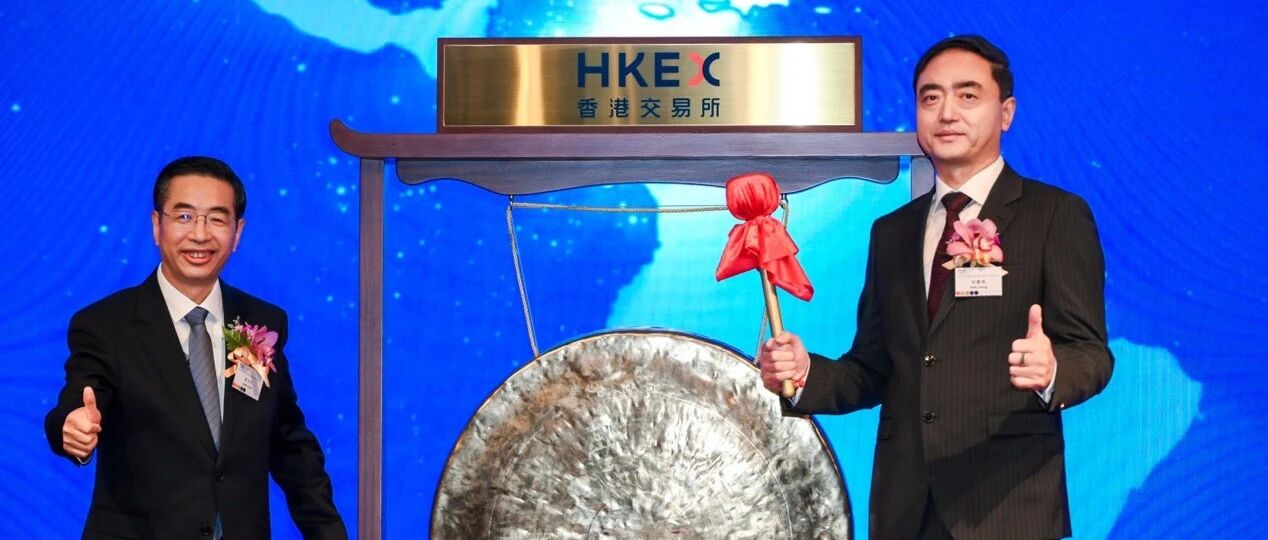
Core Viewpoint - Suzhou Rebio Technology Co., Ltd. (Rebio) officially listed on the Hong Kong Stock Exchange on January 9, 2026, with a market capitalization exceeding HKD 14 billion, marking it as the first Chinese small nucleic acid drug company [3] Group 1: Company Overview - Rebio was founded in 2007 by Liang Zicai and Zhang Hongyan, who aimed to promote original research and innovation in China [5] - The company established China's first small nucleic acid base and has developed a comprehensive technology system covering target discovery to clinical development [5] - Rebio has created one of the largest siRNA drug pipelines globally, with seven self-developed drug assets currently in clinical trials [5] Group 2: Investment and Support - Hillhouse Capital has been a significant investor in Rebio since leading its Series C financing in March 2020 and further participating in the Series C+ round [3][6] - Hillhouse's long-term support has been crucial in clinical development discussions and strategic partnerships, including collaborations with Boehringer Ingelheim and Qilu Pharmaceutical, valued at over USD 2 billion [7] - The investment strategy emphasizes the importance of "patient capital" in the long and uncertain journey of innovative drug development [7] Group 3: Industry Context - The development of innovative drugs in China has become clearer, with patient capital playing an irreplaceable role in this process [8] - The industry faces challenges such as long research cycles, high costs, and low overall success rates, which test the research and post-investment capabilities of investment institutions [7]
现在技术分析还有用吗?
集思录· 2026-01-12 14:04
Core Viewpoint - The article discusses the diminishing effectiveness of traditional technical analysis in the current market environment, emphasizing the need for investors to adapt to new strategies and methodologies as market dynamics evolve [1][4]. Group 1: Technical Analysis - Traditional technical analysis is becoming obsolete, as it often fails to account for the influence of quantitative funds and retail investors using similar tools [1][7]. - Technical indicators serve primarily as supplementary tools for identifying better entry and exit points rather than as definitive predictors of market movements [2][14]. - The reliance on technical analysis can lead to significant losses, especially when market conditions do not align with historical patterns [9][10]. Group 2: Value Investing - Value investing is portrayed as a challenging approach that often results in lost time and capital, suggesting that it may not be suitable for all investors [3][8]. - The article advises against the misconception that small capital can yield large returns, warning that such thinking often leads to losses [8]. Group 3: Alternative Strategies - The article recommends focusing on practical strategies such as convertible bonds, dividend stocks, and low-leverage ETFs, which can be more effective for average investors [4]. - Emphasis is placed on risk management and understanding personal investment psychology to align strategies with individual characteristics [4][5]. - Learning to manage positions and having contingency plans are highlighted as essential skills for successful investing [4].

2026年金属如何投?基金经理给出三大关键词:稀缺资源、结构机遇、估值健康
Hua Xia Shi Bao· 2026-01-12 12:35
Core Viewpoint - The current surge in the non-ferrous metal sector is driven by a combination of reasonable valuations, structural differentiation, and supply scarcity, indicating long-term investment value despite short-term market emotions [2][6]. Group 1: Gold Market Insights - Gold's recent price increase is attributed to its role as a pricing tool for global monetary stability rather than traditional notions of "safe haven" or "interest rate expectations" [3]. - The ongoing expansion of the U.S. fiscal deficit is weakening dollar credibility, which supports gold's upward trend [3]. - Institutional investors, particularly through ETFs, have become the primary buyers of gold since 2025, indicating its integration into diversified asset allocation frameworks [3]. Group 2: Copper as a Strategic Resource - Copper is transitioning from a traditional cyclical commodity to a strategic resource with growth attributes, impacting the valuation and investment duration of related companies [4]. - The depletion of high-quality copper mines and rising extraction costs are extending the supply release timeline, suggesting that high copper prices may persist longer [4]. - The market is increasingly valuing companies based on sustained profitability rather than short-term performance, leading to a revaluation of copper firms [4]. Group 3: Sector Health and Valuation - The non-ferrous metal sector remains in a healthy valuation state, with current PE ratios around 10-12, which is lower than historical averages compared to other high-valuation sectors [5]. - A PE ratio of 20-30 would signal potential overheating in the sector, as it would imply a lengthy payback period for investments [5]. - The market is expected to shift towards a more selective approach in 2026, focusing on companies with favorable supply-demand dynamics [5][6]. Group 4: Future Outlook - The outlook for the non-ferrous metal sector in 2026 is summarized by three keywords: valuation, structure, and scarcity, emphasizing the importance of maintaining focus on quality amid market volatility [6].

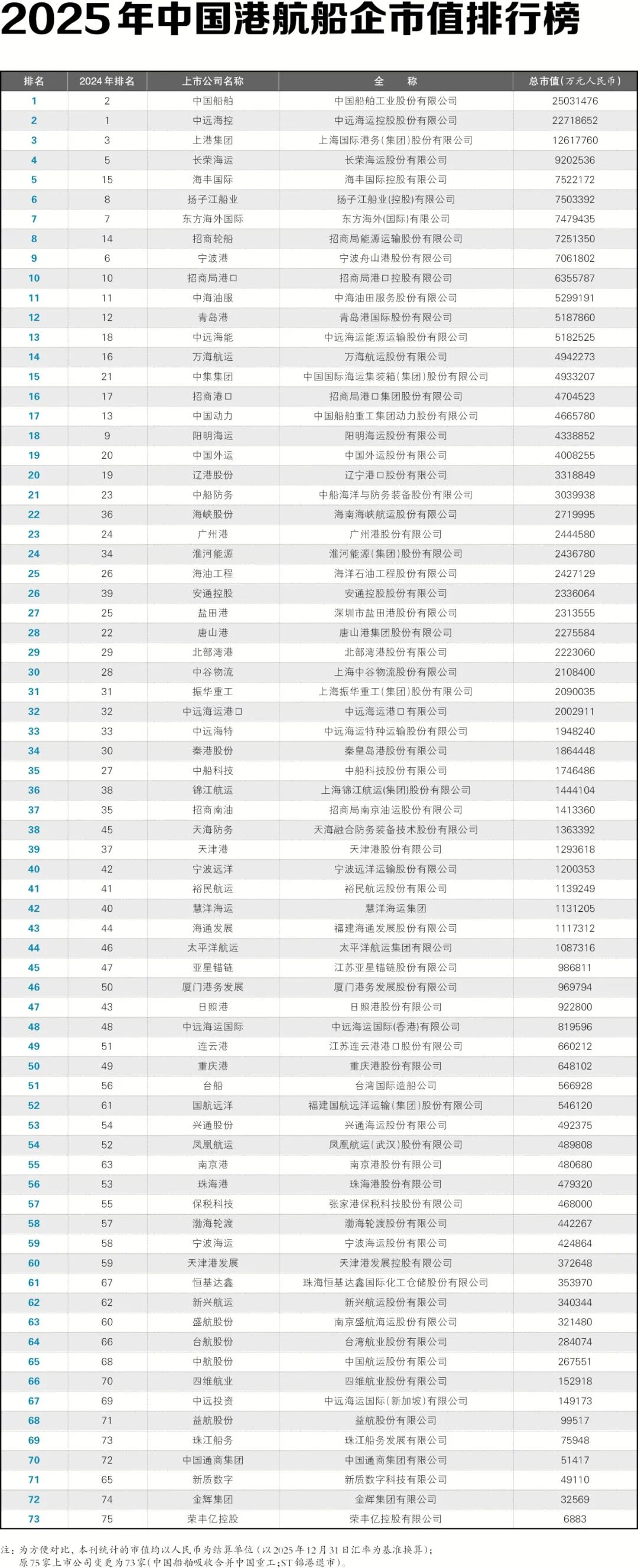
【原创】资本市场盘点:双向奔赴 行稳致远—— 《2025年中国港航船企市值排行榜》与解读
Xin Lang Cai Jing· 2026-01-12 12:28
Group 1 - The core viewpoint of the article highlights the annual market value changes of shipping, port, and shipbuilding companies in China, revealing that the overall performance of the shipping industry was weaker than the market average in 2025 [1][5] - As of December 31, 2025, the total market value of stocks in the Shanghai, Shenzhen, and Beijing markets was approximately 118.88 trillion yuan, a year-on-year increase of 26.99%. In contrast, the total market value of 73 listed Chinese shipping companies was about 2.16 trillion yuan, reflecting a year-on-year growth of 8.68% [5][6] - The China Maritime Enterprises Index (CMEI) closed at 1944.75 points, up 1.34% year-on-year, with the China Shipping Enterprises Index (CSII) rising 2.44%, while the China Port Enterprises Index (CPII) fell by 1.87% [5][6] Group 2 - The largest listed company in the Chinese shipping sector is China Shipbuilding, with a total market value of 250.31 billion yuan, followed by COSCO Shipping Holdings at 227.19 billion yuan, and Shanghai International Port Group at 126.18 billion yuan [2][6] - The market performance of shipping companies is closely linked to their industry fundamentals, with varying market conditions across different shipping segments in 2025. Container shipping showed resilience, while bulk shipping attracted capital for smaller vessels, and oil transportation outperformed in terms of market value [2][6] - The valuation logic in the capital market is shifting towards "value investing," with factors such as stable profitability, cost control, dividend policies, and green transformation strategies becoming core influences on market value [2][6]



中国人寿:优化投资布局,服务国家发展大局
Zheng Quan Shi Bao Wang· 2026-01-12 10:14
Core Viewpoint - China Life Insurance Company has demonstrated significant growth in net profit and investment assets, reflecting its commitment to national development strategies and robust investment management practices [2][3]. Financial Performance - In the first three quarters of 2025, China Life achieved a net profit attributable to shareholders of over 167.8 billion yuan, a 60.5% increase year-on-year [2]. - Shareholder equity reached 625.83 billion yuan, up 22.8% from the previous year [2]. - Investment assets doubled from 3574.9 billion yuan at the end of 2019 to 7282.9 billion yuan by the end of Q3 2025 [3]. Investment Strategy - The company adheres to a long-term, value-oriented, and stable investment philosophy, focusing on asset-liability matching principles [3]. - Total investment income for the first three quarters of 2025 was 368.55 billion yuan, an increase of 107.13 billion yuan (over 40%) compared to the same period in 2024 [3]. - The total investment return rate was 6.42%, up 104 basis points year-on-year [3]. Innovative Investment Models - In 2024, China Life launched the Honghu Fund, a 50 billion yuan private equity fund aimed at long-term capital investment [4]. - The company became a pioneer in insurance capital investment in gold, completing its first gold inquiry transaction in March 2025 [5]. - China Life also initiated the first data center asset-backed securities (ABS) in the market, enhancing the investment landscape for insurance funds [5]. Support for the Real Economy - China Life has invested 11.8 billion yuan in the "China Life-Hu Fa No. 1 Equity Investment Plan" to support state-owned enterprises in Shanghai [6]. - The company has strategically invested in green energy projects, becoming a major investor in companies like China Nuclear Power and Huadian New Energy [7]. - Investments in regional development projects, such as the 17 billion yuan investment in Yunnan's state-owned enterprises, demonstrate the company's commitment to local economic growth [8]. Focus on Emerging Industries - China Life has established a 4 billion yuan technology innovation fund targeting sectors like semiconductors and healthcare [9][10]. - The company has increased its equity market presence, adding over 150 billion yuan in public market equity by mid-2025 [10]. Future Outlook - As the "14th Five-Year Plan" progresses, China Life aims to leverage its long-term capital advantages to enhance its operational capabilities and contribute to China's modernization efforts [11].

新产品|农银致远价值混合基金正在发行
Sou Hu Cai Jing· 2026-01-12 01:47
Core Viewpoint - The article discusses the launch of the Agricultural Bank of China Asset Management's new mixed securities investment fund, emphasizing a performance-based fee structure that aligns the interests of fund managers with investors [2][8]. Fund Overview - The fund is named "Agricultural Bank of China Zhiyuan Value Mixed Securities Investment Fund" with A-class (025930) and C-class (025931) shares currently being issued [2][18]. - The fund aims to achieve returns that exceed its performance benchmark through selective stock picking and risk control [17]. Fee Structure - The fund introduces a flexible fee structure where management fees are linked to performance, with a standard management fee of 1.2% per year for holdings under one year [6][22]. - For holdings over one year, the management fee varies based on performance, ranging from 0.6% to 1.5% per year depending on the annualized return relative to the benchmark [6][22]. - The fund encourages long-term holding by requiring a minimum holding period of one year to enter the performance-based fee structure [11]. Investment Strategy - The fund will invest 60%-95% of its assets in stocks, with up to 50% of stock investments in Hong Kong Stock Connect stocks [16][18]. - The investment philosophy focuses on long-term value, targeting sectors such as technology and consumer goods, with a belief in sustainable development [16]. Manager Profile - The proposed fund manager, Gu Chao, has a strong background with 13 years of experience in the securities industry and has invested 500,000 yuan of his own funds in the fund, demonstrating confidence in its potential [13][15].
