积极财政政策

Search documents
货币政策持续发力 营造适宜总量环境
Zhong Guo Zheng Quan Bao· 2025-12-12 20:17
Core Viewpoint - The People's Bank of China reported that by the end of November, the social financing scale and M2 growth rates are significantly higher than the nominal GDP growth, indicating a moderately loose monetary policy that supports high-quality economic development [1][2]. Social Financing and Government Bonds - As of the end of November, the social financing scale reached 440.07 trillion yuan, with a year-on-year growth of 8.5%, which is 0.7 percentage points higher than the previous year [1]. - The cumulative increase in social financing for the first eleven months was 33.39 trillion yuan, exceeding the previous year's figure by 3.99 trillion yuan [1]. - The contribution of government bonds to social financing has notably increased, with new government debt totaling 11.86 trillion yuan this year, an increase of 2.9 trillion yuan from last year [1]. Direct Financing Channels - Other direct financing channels, such as corporate bonds and equity financing, are also developing rapidly, with corporate bond financing amounting to 2.24 trillion yuan, an increase of 3.125 billion yuan year-on-year [2]. - Non-financial corporate domestic stock financing reached 420.4 billion yuan, up 178.8 billion yuan compared to the same period last year [2]. Credit Structure Optimization - The balance of RMB loans stood at 271 trillion yuan at the end of November, with a year-on-year growth of 6.4%, slightly lower than the previous month [2][3]. - The growth rate of loans is influenced by various factors, including the substitution effect of diversified financing methods and the impact of local government debt [2][3]. - The balance of inclusive small and micro loans was 35.88 trillion yuan, growing by 11.4%, while medium to long-term loans in the manufacturing sector reached 14.94 trillion yuan, with a growth of 7.7% [3]. Interest Rates and Financial Support - The weighted average interest rate for newly issued corporate loans was approximately 3.1%, down about 30 basis points year-on-year [3]. - The low financing cost indicates that the financing needs of the real economy are being reasonably met, and the increase in credit allocation to key sectors reflects better alignment with high-quality economic development [4]. Overall Financial Stability - Financial data as of November indicates a reasonable level, with social financing scale, M2, and RMB loans all significantly above the nominal economic growth rate [4][5]. - Maintaining reasonable growth in financial totals is crucial for constructing a robust monetary policy framework, which should focus on optimizing the mechanisms for basic currency supply and enhancing the market-oriented interest rate system [5].
渣打丁爽:明年上半年中国央行有望降息10个基点、降准25个基点
Guo Ji Jin Rong Bao· 2025-12-12 14:34
12月11日,渣打银行召开全球及中国经济展望线上媒体座谈会。渣打银行大中华区及北亚首席经济 学家丁爽指出,随着外部环境变化,中国的经济工作已经从短期的风险应对模式转换成长期的经济转型 模式,更加倾向于通过技术投资、产业升级培育新的经济增长点。 消费方面,服务消费预计保持平稳增长;商品消费受此前"以旧换新"政策带动的部分需求提前释放 影响,增速或出现小幅回落。 投资方面,2026年作为"十五五"规划开局之年,财政资金对基建投资的投入将有所增加;制造业投 资在政策引导下有望得到恢复;服务业投资受益于对内对外开放将持续深化;房地产投资或仍将负增 长。综合来看,投资对GDP的贡献有望小幅上升。 具体而言,财政政策方面,丁爽预计2026年赤字率将回落至3.8%,广义财政赤字占GDP比重将回 调至8.5%,中央和地方政府的一般债、专项债发行规模预计仍接近2025年水平。 "适度宽松的货币政策更多是配合财政政策,降息空间相对有限。"丁爽预计,2026年一季度将降准 25个基点;二季度将降息10个基点,更多发挥信号作用。同时,央行在二级市场买卖国债的操作将常态 化,以此保持流动性合理充裕。 在部署2026年重点任务时,中央经 ...
中信建投竺劲:着力稳定房地产市场,财政与货币政策趋于积极-中央经济工作会议地产相关表述点评
Xin Lang Cai Jing· 2025-12-12 14:13
Core Viewpoint - The Central Economic Work Conference emphasizes the need to stabilize the real estate market, continuing previous policy directions, with a clear stance on stabilizing the housing market [2][4][12]. Real Estate Market - The conference highlights the importance of stabilizing the real estate market through targeted policies, including controlling new supply, reducing inventory, and improving supply quality [3][12]. - In the first ten months of this year, the national commercial housing sales area decreased by 6.8% year-on-year, a reduction from the previous year's decline of 12.9%, indicating a stabilization trend in the housing market [4][11]. - Policies aimed at optimizing both supply and demand are expected to further support the stabilization of the housing market [4][11]. Fiscal and Monetary Policy - The conference proposes to continue implementing more proactive fiscal policies, maintaining necessary fiscal deficits, total debt scale, and overall expenditure [4][12]. - A moderately loose monetary policy will be maintained, with expectations for further reductions in the Loan Prime Rate (LPR) to alleviate repayment pressures for homebuyers and support demand release [4][11]. - The policies will enhance counter-cyclical and cross-cyclical adjustments, promoting economic growth alongside real estate market stability [4][11]. Domestic Demand and Commercial Real Estate - The conference emphasizes expanding domestic demand, with expectations for continued growth in offline retail sales, benefiting commercial real estate companies with strong operational capabilities [5][14]. - Initiatives to boost consumer spending and improve income expectations for residents are anticipated to further release consumption potential [5][14]. - The focus on high-quality urban renewal and the construction of "good housing" is expected to create new opportunities in the real estate sector [3][12].



碳酸锂市场周报:需求韧性库存去化,锂价或将有所支撑-20251212
Rui Da Qi Huo· 2025-12-12 09:21
碳酸锂市场周报 瑞达期货研究院 「2025.12.12」 需求韧性库存去化,锂价或将有所支撑 研究员:陈思嘉 期货从业资格号 F03118799 期货投资咨询 从业证书号 Z0022803 取 更 多 资 讯 业务咨询 添加客服 关 注 我 们 获 目录 1、周度要点小结 2、期现市场 3、产业情况 「 周度要点小结」 行情回顾:碳酸锂主力周线震荡偏强,涨跌幅为+6.03%,振幅11.39%。截止本周主力合约收盘报价97720元/吨。 后市展望:宏观方面,中央经济工作会议在北京举行,定调明年经济工作,强调要继续实施更加积极的财政政策,保 持必要的财政赤字、债务总规模和支出总量,重视解决地方财政困难。要继续实施适度宽松的货币政策,灵活高效运 用降准降息等多种政策工具。基本面原料端,由于碳酸锂盘面走强,拉动矿价上行,海外矿山挺价持续,冶炼厂亦有 一定采购需求,故矿价支撑较稳固。供给端,由于锂价较优,冶炼厂利润情况向好,生产积极性较高,加之新增产线 的逐渐投产,锂盐厂生产保持稳定增长。需求端,下游电芯厂订单排产仍处高位,虽传统消费旺季已过,但动力以及 储能行业的供需两旺,令碳酸锂需求保持较强韧性,产业链持续去库存, ...

八大券商首席最新发声
中国基金报· 2025-12-12 07:00
Core Viewpoint - The Central Economic Work Conference held on December 10-11, 2025, outlines key tasks for 2026, emphasizing the need to explore economic potential, ensure policy support, and enhance domestic demand stability, marking a shift towards a more coordinated approach between supply and demand [2][3][4]. Group 1: Economic Growth and Policy Direction - The conference aims for a GDP growth target of around 5% for 2026, focusing on "qualitative effective improvement and reasonable quantitative growth" [11][12]. - The emphasis on "domestic supply strong, demand weak" indicates a shift in policy focus towards expanding domestic demand and optimizing supply coordination [8][12]. - The five new "musts" introduced in the conference reflect a deeper understanding of economic work, highlighting the need for effective demand stimulation and structural reforms [5][6][7]. Group 2: Fiscal Policy - The conference advocates for a more proactive fiscal policy, maintaining a necessary fiscal deficit and increasing the scale of special bonds to support economic stability [14][16]. - The expected fiscal deficit rate for 2026 is projected to remain around 4%, with an increase in special bonds to support local governments and address fiscal challenges [14][16]. - Emphasis is placed on optimizing fiscal expenditure structure and ensuring that fiscal policies effectively support economic growth and structural adjustments [14][16]. Group 3: Monetary Policy - A moderately loose monetary policy will be continued, with a focus on using various policy tools to support economic stability and reasonable price recovery [18][19]. - The conference highlights the importance of maintaining liquidity and guiding financial institutions to support key areas such as domestic demand and technological innovation [18][19]. - The potential for interest rate cuts and reserve requirement ratio reductions is acknowledged, although the space for such actions may be limited [18][19]. Group 4: Domestic Demand and Market Development - The conference prioritizes domestic demand, emphasizing the need to build a strong domestic market and implement measures to boost consumption and increase residents' income [20][22]. - The focus on a "urban and rural residents' income increase plan" indicates a strategic shift towards enhancing income levels to stimulate consumption [22]. - The commitment to expanding domestic demand is seen as essential for maintaining economic resilience in a complex international environment [20][22]. Group 5: Real Estate Market Stability - The conference stresses the need to stabilize the real estate market through targeted policies, including inventory reduction and supply optimization [23][24]. - Supportive measures for the demand side, such as tax reductions and increased access to housing loans, are anticipated to continue [24]. - The emphasis on "controlling increment, reducing inventory, and optimizing supply" suggests a focus on sales rather than investment in the real estate sector [24].

证券ETF(159841)跟踪指数逆市翻红,实时净申购已超1500万份!重要会议定调明年货币政策,灵活高效运用降准降息等工具
Sou Hu Cai Jing· 2025-12-12 03:05
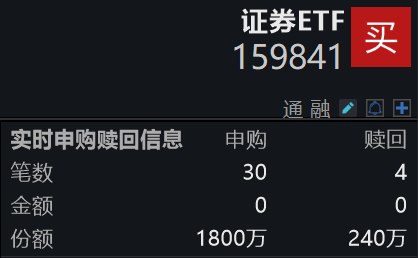
值得一提的是,证券ETF(159841)获资金积极布局,盘中净申购已达1560万份。 | | 证券ETF 159841 | द्रेन | | --- | --- | --- | | | 土の > 品 照 | | | 实时申购赎回信息 | 申购 | 岐口 | | 笔数 | 30 | 4 | | 金额 | 0 | 0 | | 份额 | 1800万 | 240万 | 拉长时间看,截至12月11日,证券ETF(159841)最新资金净流入3579.55万元。拉长时间看,近22个交易日内有18日资金净流 入,合计"吸金"2.10亿元。 【产品亮点】 预计后续资本市场活跃度维持高位,深市规模最大、流动性最好的证券ETF(159841)助力把握证券板块投资机遇。 【相关产品】 证券ETF(159841),对应场外联接基金(A:008590,C:008591)。 【热点事件】 截至2025年12月12日 10:32,证券ETF(159841)成交7602.96万元。跟踪的中证全指证券公司指数(399975)一度拉升翻红。成分股 方面涨跌互现,国联民生(601456)领涨3.50%,中原证券(601375)上涨1.40%,华 ...
泽连斯基:若获安全保障,愿支持在战时举行大选;马斯克:若重来,不会领导“政府效率部”
Sou Hu Cai Jing· 2025-12-12 02:52
今日推荐 中央经济工作会议中关于2026年货币政策延续适度宽松的基调,显示出宏观政策保持很强的连续性、稳 定性。除了总量政策提出运用降准降息外,会议还要求畅通货币政策传导机制,引导金融机构加力支持 扩大内需、科技创新、中小微企业等重点领域。 当地时间11日,乌克兰总统泽连斯基在会见记者时表示,在获得国际伙伴提供充分安全保障前提下,他 愿意支持在战时状态下举行大选,并已要求议员着手准备相关立法修订。泽连斯基在与记者会面时表 示,"最重要的是确保选举的合法性。如果我们的合作伙伴能够帮助我们在安全条件下、在合理时间内 组织选举,我将予以支持。为避免这仅仅成为我发出的一个媒体信号,我已正式请求乌克兰议员起草允 许在战时状态期间举行选举的法律修正案。"泽连斯基强调,当前关键目标是以乌克兰的强势地位结束 冲突。 美国电动车制造商特斯拉公司、太空探索技术公司创始人埃隆·马斯克日前表示,如果重来,他不会领 导"政府效率部",而是专注运营自己的企业。马斯克说:"我想我总体上会在我的公司工作,而不是领 导'政府效率部'。这样他们(反对者)就不会烧车了。" 编辑 | 格蕾丝 在11日召开的商务部例行新闻发布会上,新闻发言人表示,今 ...
首席点评:继续实施更加积极的财政政策:重点品种:白糖,股指,铜
Shen Yin Wan Guo Qi Huo· 2025-12-12 02:36
1. Report Industry Investment Rating The report provides a bias assessment for various varieties, with "√" indicating a bullish bias and "V" (assuming it's a typo and should be "√") indicating a bullish bias as well: - Bullish: Index futures (IH, IF, IC, IM), Treasury bonds (TS), Rubber, Rebar, Hot - rolled coil, Iron ore, Gold, Silver, Copper, Aluminum, Lithium carbonate, Cotton, Corn [5] - Bearish: Crude oil, Methanol, Apple, Container shipping to Europe [5] 2. Report's Core View - The Central Economic Work Conference emphasizes continuing to implement a more proactive fiscal policy and a moderately loose monetary policy, aiming to promote economic development and stabilize the market [1][7][11] - Under multiple positive factors, the long - term and slow - rising trend of the A - share market is expected to be consolidated, and the resonance of positive policy signals and the Fed's interest rate cut may boost market risk appetite [3][10] - Different futures varieties show different trends based on their own supply - demand fundamentals and macro - economic factors 3. Summary by Relevant Catalogs 3.1当日主要新闻关注 - **International News**: The US initial jobless claims for the week ending December 6 reached 236,000, the highest since the week of September 6, 2025 [6] - **Domestic News**: The Central Economic Work Conference held in Beijing on December 10 - 11 pointed out the overall requirements and policy orientation for next year's economic work, including continuing proactive fiscal and moderately loose monetary policies, stabilizing the real estate market, and resolving local government debt risks [7] - **Industry News**: In November, China's monthly automobile production exceeded 3.5 million for the first time, and the production and sales of new energy vehicles both approached 15 million, with exports of new energy vehicles doubling year - on - year [7] 3.2外盘每日收益情况 - The report shows the daily returns of various overseas futures on December 10 - 11, 2025, including the S&P 500, FTSE China A50 futures, ICE Brent crude oil, etc. For example, the S&P 500 rose 0.21% to 6,901.00 points, and ICE Brent crude oil fell 1.55% to $61.55 per barrel [9] 3.3主要品种早盘评论 3.3.1 Financial - **Stock Index Futures**: After the previous trading day's decline, with the improvement of the system, the expansion of funds, and the empowerment of industries, the long - term and slow - rising trend of the A - share market may be consolidated. The Fed's expected interest rate cut in December and the positive policy signals are expected to boost market risk appetite [3][10] - **Treasury Bonds**: Treasury bonds rose slightly, with the yield of the 10 - year Treasury bond active bond falling to 1.831%. The market liquidity is loose. The Fed's interest rate cut and the expected introduction of domestic policies support the short - term Treasury bond futures [11] 3.3.2 Energy and Chemicals - **Crude Oil**: The sc night - session fell 1.27%. The IEA raised the forecast for oil demand growth in 2026, but the overall downward trend is difficult to reverse due to factors such as weak European demand [13] - **Methanol**: Methanol's night - session fell 1.83%. The domestic coal (methanol) to olefins plant operating rate decreased, and the coastal methanol inventory decreased. It is expected to be weak in the short term [14] - **Rubber**: Natural rubber futures fluctuated. Overseas supply is increasing, and domestic supply elasticity is weakening. The demand side supports the stable operation of all - steel tire production. It is expected to fluctuate widely in the short term [15] - **Polyolefins**: Polyolefin futures declined. The downstream demand has reached a high level, and the previous price decline was affected by the weakening of crude oil and the overall commodity market. After the Fed's interest rate cut, the price continued to be weak [16] - **Glass and Soda Ash**: Glass futures continued to be weak, and soda ash futures mainly declined. Both are in the process of inventory digestion. Attention should be paid to the potential changes in industrial production and the recovery of the real estate industry chain [17] 3.3.3 Metals - **Precious Metals**: Gold and silver prices rose. The Fed's interest rate cut and balance - sheet expansion are expected to boost market liquidity and support the long - term upward trend of precious metals [18] - **Copper**: The night - session copper price rose more than 2% due to the Fed's unexpected action. The concentrate supply is tight, and the global copper supply - demand is expected to turn into a deficit. Attention should be paid to changes in the US dollar, copper smelting output, and downstream demand [19] - **Zinc**: The night - session zinc price rose nearly 3% due to the Fed's action. The zinc concentrate supply is temporarily tight, and the supply - demand difference is not obvious. Attention should be paid to market sentiment and related factors [20] - **Aluminum**: The night - session Shanghai aluminum rose 0.82%. The Fed's interest rate cut and balance - sheet expansion support the aluminum price. In the short - to - medium term, the supply is stable, and the demand is okay in the off - season. The upward momentum is weakening in the short term, but the long - term outlook is optimistic [21] - **Lithium Carbonate**: The supply is expected to increase in December, and the demand is expected to decline. The short - term supply disturbance is the focus. It is recommended to take a bullish view after a callback [22][23] 3.3.4 Black Metals - **Coking Coal and Coke**: The night - session coking coal and coke futures continued to be weak. The steel mill's production reduction expectation and the increase in Mongolian coal imports put pressure on the price, but the strong policy expectation in December may provide upward momentum. It is expected to fluctuate in the short term [24] - **Iron Ore**: The iron ore price declined. The shipping volume increased slightly, and the port inventory increased slightly. The steel mill's demand is weak, and it is expected to fluctuate slightly stronger in the short term [25] - **Steel Products**: The steel price volatility increased. The supply and demand are both weak, and the inventory decline has narrowed. The steel price has short - term rebound momentum but is expected to be weak in the medium term [26] 3.3.5 Agricultural Products - **Protein Meal**: The night - session soybean and rapeseed meal futures rose slightly. The Brazilian soybean sowing progress is slower than last year, and the US soybean export is slow. The domestic supply is sufficient, and the price is expected to be weak [27] - **Oils and Fats**: The night - session soybean and palm oil futures were weak, and rapeseed oil rose. The Malaysian palm oil inventory increased, and the rapeseed oil is expected to be strong in the short term due to positive news [28] - **Sugar**: Zhengzhou sugar futures fluctuated narrowly and are expected to be weak in the short term. The international raw sugar price is affected by Brazil and India, and the domestic supply is increasing, but the cost provides some support [29] - **Cotton**: The overnight cotton price was weak but still above the upper limit of the range. It is expected to be strong in the short term due to factors such as fast sales progress, potential reduction in planting area, and improved Sino - US relations [30] 3.3.6 Shipping Index - **Container Shipping to Europe**: The EC fluctuated, and the 02 contract rose 2.04%. The shipping companies' price - holding intention is strong in December and early January. The 02 contract is expected to fluctuate, and the 04 contract may decline due to supply surplus and potential red - sea route resumption [31]
中央经济工作会议解读:稳地产,去库存,方向大于方式
中银证券· 2025-12-12 02:13
Investment Rating - The industry investment rating is "Outperform the Market," indicating that the industry index is expected to perform better than the benchmark index over the next 6-12 months [25]. Core Insights - The central economic work conference emphasized stabilizing the real estate market, controlling inventory, and optimizing supply, with a focus on city-specific policies. This reflects an urgent need to address the ongoing decline in market volume and prices [5][10]. - The report highlights the need for stronger fiscal and monetary policies to support the real estate sector, especially in light of declining consumer confidence and rising inventory levels [5][12]. - The introduction of reforms to the housing provident fund system is noted as a significant development, aiming to enhance the utilization of funds and improve housing supply [5][10]. Summary by Sections Industry Overview - The report discusses the central economic work conference held on December 10-11, which addressed the need for high-quality urban development and stabilizing the real estate market through targeted measures [5][10]. - It notes that the inventory cycle for new and second-hand homes in 42 cities has reached 28.3 months, indicating significant pressure on the market [5]. Policy Recommendations - The report suggests that future policies may include lowering the Loan Prime Rate (LPR), reducing housing loan rates, and expanding the use of the housing provident fund across regions to stabilize the real estate market [5][12]. - It emphasizes the importance of fiscal policies, such as issuing special bonds and long-term bonds, to address funding needs for real estate policy implementation [5][12]. Investment Opportunities - The report identifies three main investment themes: 1. Real estate companies with stable fundamentals and high market share in core cities, such as Binjiang Group and China Merchants Shekou [5]. 2. Smaller, agile firms that have made significant breakthroughs in sales and land acquisition since 2024, like Poly Real Estate Group [5]. 3. Commercial real estate companies exploring new consumption scenarios and operational models, such as Joy City and China Resources [5].
继续实施更加积极的财政政策:申万期货早间评论-20251212
申银万国期货研究· 2025-12-12 00:34
Group 1: Economic Policy and Market Outlook - The Central Economic Work Conference emphasized the continuation of a more proactive fiscal policy, maintaining necessary fiscal deficits, total debt scale, and expenditure levels, while addressing local fiscal difficulties [1][7] - The meeting highlighted the need for a flexible and efficient monetary policy, utilizing various tools such as reserve requirement ratio cuts and interest rate reductions [7][11] - The A-share market is expected to maintain a long-term bullish trend supported by policy backing, capital flow, and industrial empowerment, with a potential increase in market risk appetite following the Federal Reserve's interest rate cut [3][10] Group 2: Commodity Market Insights - Sugar prices are expected to remain weak in the short term due to increased supply pressure from domestic sugar factories and high production costs, despite some international price rebounds [2][29] - Copper prices rose over 2% due to expectations from the Federal Reserve's actions, with supply disruptions leading to a shift in global copper supply-demand expectations towards a deficit [3][19] - The aluminum market is supported by the Federal Reserve's interest rate cut, while short-term price momentum may weaken due to seasonal demand fluctuations [21] Group 3: Industry-Specific Developments - The automotive industry in China saw a record monthly production exceeding 3.5 million vehicles in November, with significant growth in new energy vehicle production and exports [8] - The international sugar market is influenced by Brazil's faster-than-expected sugarcane processing and India's production recovery, which may impact global sugar prices [2][29] - The domestic methanol market is experiencing a slight increase in production capacity, but overall supply remains under pressure due to import delays and stable demand [14][29]