绿色转型

Search documents
远景张雷在达沃斯为中国新能源正名:这是文明级输出
中国能源报· 2026-01-22 10:39
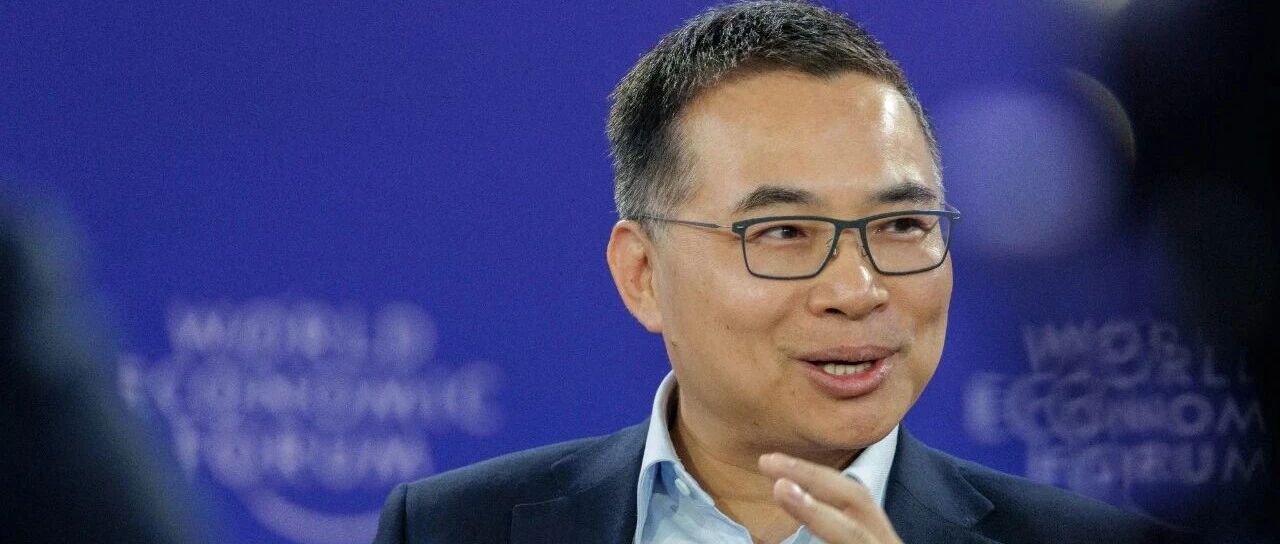
当地时间1月21日,在2026年世界经济论坛(达沃斯)期间,远景科技集团董事长张雷出席以"如何避免气候衰退"为主题的圆桌对话。 本次圆桌对话由美国前副总统、诺贝尔奖得主阿尔·戈尔主持,与会嘉宾涵盖世界500强企业领袖、高级官员及顶尖学术机构学者。围绕 全球气候行动的路径与挑战,各方展开深入交流,其中中国新能源产业的快速发展成为焦点。 针对国际上对中国新能源产业的一些误解,张雷在发言中积极回应并纠正。他指出, 中国新能源是"文明级输出",本质上是为全球构 建新型能源基础设施的先进生产力工具——正如工业革命时期的蒸汽机,为世界工业体系奠定基础一样 。 "得益于这一基础,各国才能更好地发展高附加值制造业、建设人工智能训练体系等面向未来的产业。"张雷表示,"中国新能源产品以 极具竞争力的成本,成为全球能源转型的重要基石。这意味着,中国正通过自身的产业规模与技术能力,为全世界的绿色转型'补贴', 并推动这一进程加速实现。" 新南威尔士大学国际政治经济学教授伊丽莎白·瑟本也呼应张雷的观点,她表示:"全球2/ 3的能源投资已流向清洁能源,这意味着可再 生能源转型趋势逆不可挡。中国将能源转型视为推动经济发展和保障能源安全的重 ...

中金:供需延续弱势 26年消费建材“反内卷”政策预期升温
智通财经网· 2026-01-22 09:08
Group 1: Cement Industry - National cement production in December 2025 decreased by 6.6% year-on-year to 144 million tons, with an average national cement shipment rate of 41% [1] - December cement prices showed resilience, with a nationwide average price of 354 RMB per ton, up by 5 RMB month-on-month, leading to a recovery in industry profitability with a gross profit of 63 RMB per ton, an increase of 11 RMB [1] - The industry is expected to continue capacity replacement policies in 2026, which may lead to ongoing supply clearance; recommended companies include Conch Cement (600585.SH), Shangfeng Cement (000672.SZ), and China Resources Cement Technology (01313) [1] Group 2: Glass Industry - The glass price continued to decline, with the average price of float glass at 1124 RMB per box as of January 15, 2026; companies are facing profitability pressure, leading to an accelerated cold repair process [2] - The housing completion area in 2025 decreased by 18.1% year-on-year to 603 million square meters, and the processing days for glass in December decreased by 17% to 9 days [2] - Recommended companies in the glass sector include Qibin Group (601636.SH) and Xinyi Glass (00868) [2] Group 3: Steel Industry - In December, crude steel production was 68.18 million tons, down by 10.3% year-on-year, with apparent domestic crude steel consumption at approximately 61.15 million tons, a decrease of 8.5% [3] - The steel industry is experiencing weak supply and demand, with daily molten iron production dropping below 2.3 million tons, leading to fluctuations in black series spot prices [3] - The industry is expected to focus on structural opportunities in 2026, with recommendations for Hualing Steel (000932.SZ) for its differentiated production management and Tiangong International (00826) for its high-growth potential in specialty steel [3]

商务部就中芬经贸合作情况答问
Shang Wu Bu Wang Zhan· 2026-01-22 08:55
Group 1 - Finland is an important economic partner for China in Europe and was the first European country to sign a government trade agreement with China [1] - The bilateral trade volume between China and Finland is expected to exceed 8 billion USD by 2025, with mutual investment stock surpassing 23 billion USD [1] - Finnish Prime Minister Orpo will visit China with over 20 business executives from key sectors such as machinery, forestry, innovation, clean energy, and food, indicating Finland's strong desire to deepen economic relations [1] Group 2 - During the visit, the Ministry of Commerce will sign a Memorandum of Understanding to strengthen the work of the China-Finland Innovation Enterprise Cooperation Committee, and multiple business cooperation agreements will be signed [2] - There is significant potential for cooperation in green transformation, information technology, and digital economy, leveraging the complementary advantages of both countries [2] - The Ministry of Commerce aims to enhance policy communication and provide service guarantees for enterprises, promoting deeper and more practical economic cooperation between China and Finland [2]
商务部:中芬在绿色、创新等领域优势互补,合作潜力巨大
Xin Lang Cai Jing· 2026-01-22 08:53
据了解,芬兰总理奥尔波此次将率20余家企业高管随访,涵盖机械、森工、创新、清洁能源、食品等芬 优势领域,充分体现了芬方对深化双边经贸关系的强烈意愿。中方高度重视对芬经贸合作,正与芬方积 极筹备中芬创新企业合作委员会第六次会议,为双方企业开展对话交流、共谋合作发展提供良好契机。 中芬企业十分积极踊跃,目前已有约50家企业代表报名参会。 访问期间,商务部将与芬方签署《关于加强中芬创新企业合作委员会工作的谅解备忘录》,双方企业还 将签署多项商业合作协议。这些都充分表明,中芬双方有意愿、有信心、有能力推动双边经贸合作持续 向好发展。 着眼未来,中芬在绿色、创新等领域优势互补,合作潜力巨大。欢迎双方企业抓住中国坚定不移推进高 水平对外开放带来的新机遇,进一步深化在绿色转型、信息技术、数字经济等领域合作。商务部愿与芬 方有关部门一道,共同落实好两国领导人达成的重要共识,加强经贸政策沟通,为双方企业做好服务保 障,推动中芬经贸合作走深走实。 人民财讯1月22日电,商务部新闻发言人就中芬经贸合作情况答记者问,有记者问:芬兰总理奥尔波将 于1月25日至28日对中国进行正式访问。请问双方届时在经贸领域将有哪些活动安排,有望取得哪 ...
远景张雷:中国新能源是“文明级输出”,正如工业革命时期的蒸汽机
Xin Lang Cai Jing· 2026-01-22 08:17
Core Viewpoint - The chairman of Envision Group, Zhang Lei, emphasized the importance of China's renewable energy industry as a "civilization-level output" that serves as an advanced productivity tool for building new energy infrastructure globally, akin to the steam engine during the Industrial Revolution [1][2] Group 1 - Zhang Lei stated that the foundation provided by China's renewable energy allows countries to better develop high-value-added manufacturing and build AI training systems for future industries [2] - He highlighted that Chinese renewable energy products, offered at highly competitive costs, have become a crucial cornerstone for global energy transition [2] - The statement indicates that China is effectively "subsidizing" the global green transition through its industrial scale and technological capabilities, thereby accelerating this process [2] Group 2 - The Envision Chifeng green hydrogen and ammonia project was selected for inclusion in the World Economic Forum's (WEF) white paper on green transformation experiences, marking the fourth time Envision has been featured in WEF's industry cluster transformation report [2]

收益率曲线陡峭化
Qi Huo Ri Bao· 2026-01-22 07:22
Group 1 - The monetary policy has implemented structural interest rate cuts, reducing rates by 0.25 percentage points for various structural monetary policy tools, optimizing some tools, and increasing their quotas to support key strategic areas and weak links [2] - The fiscal policy aims for a more proactive approach, with a budget deficit rate expected to remain around 4% in 2026, and the issuance of special long-term bonds projected to increase by 200 billion to 500 billion, reaching between 1.5 trillion and 1.8 trillion [2] - A package of policies focused on boosting domestic demand has been introduced, including interest subsidies for loans to small and micro enterprises, a special guarantee plan of 500 billion for private enterprise loans, and measures to lower the threshold for private enterprise bond issuance [3] Group 2 - The economy is expected to maintain resilience with a GDP growth rate of 5.0% in 2025, highlighting structural optimization and the growth of new economic drivers, despite weaknesses in traditional sectors like real estate and infrastructure [4] - Consumer price index (CPI) rose by 0.8% year-on-year in December 2025, the highest since March 2023, while core CPI remained above 1% for four consecutive months, indicating a gradual recovery in domestic demand [4] - The bond market is experiencing wide fluctuations due to a combination of loose funding, improving economic conditions, and rising prices, with expectations of a steepening yield curve as long-term bonds underperform relative to short-term bonds [5]
5%和140万亿背后,经济增长的N个密码
21世纪经济报道· 2026-01-22 05:19
记 者丨 周 亦 洋 编 辑丨张 星 2025年我国经济总量突破140万亿元,经济发展实现新跨 越。这不仅是五年连跨四个10万亿级台阶的稳健轨迹,更是"十 四五"规划收官之年交出的硬核答卷。 回望"十四五"时期,我国发展成色更足、动能更劲,在多 个领域取得重大进展,创新发展取得新突破,全球百强科技创新 集群数量,我国已经连续3年位居世界第一;改革开放迈出新步 伐,全国统一大市场建设纵深推进,营商环境持续优化,制度型 开放"含金量"持续提升;绿色转型展现新面貌,我国构建起了 全球最大、发展最快的可再生能源体系,建成了全球最大最完整 的新能源产业链;民生改善取得新成效,全球规模最大的教育、 医疗和社会保障体系持续巩固。 1 >> 140万亿GDP背后的中国经济底气 2025年,中国国内生产总值首次跃上140万亿元新台阶,五 年间连续迈过110万亿、120万亿、130万亿、140万亿元四个关 键关口,以年均5.4%的增速在全球主要经济体中持续领跑,对世 界经济增长的贡献率预计达到30%左右,成为世界经济增长的主 要动力源。 从需求方面来看,社会消费品零售总额突破50万亿元,进出 口总额连续四年超过40万亿元,反映出 ...

欧洲光伏90%靠中国,欧盟要强推禁令?德法西会反弹吗
Sou Hu Cai Jing· 2026-01-22 05:06
Group 1 - The EU is preparing a new proposal to shift from voluntary guidelines to mandatory regulations targeting Chinese suppliers, including telecom networks, security equipment, and solar systems [1] - The previous 5G security toolbox allowed member states to make their own decisions, leading to inconsistent implementations across countries, with some like Sweden and Germany tightening regulations while others like Spain and Greece continued using Huawei and ZTE due to cost and reliability [1] - The new proposal aims to unify regulations and impose penalties for using high-risk Chinese equipment in critical infrastructure, potentially leading to lawsuits and fines at the EU level [1] Group 2 - The EU's energy transition goals are at odds with the current supply chain realities, as over 90% of solar panels installed in the EU come from China, raising concerns about the feasibility of replacing these supplies without significant cost increases and project delays [3] - The push for strategic autonomy from China and the US is complicated by the lack of viable alternatives, leading to fears that a forced decoupling could harm the EU's green transition efforts [3] - The proposal's success depends on the reactions of member states, as national security is traditionally managed by individual countries, and the EU's attempt to enforce compliance may face strong resistance from nations like Germany and Spain [3] Group 3 - Telecom operators are particularly concerned about the financial burden of replacing Chinese equipment, which could cost billions of euros and slow down network development, ultimately impacting consumers through higher fees and reduced service quality [5] - Some countries, like Spain, are taking a pragmatic approach, with contracts in place that assert no security risks associated with Chinese suppliers, contrasting with the EU's more aggressive stance [5] - Germany's situation is sensitive due to the significant presence of Huawei equipment, and any forced timeline for equipment removal could lead to backlash from the government and industry, especially in a fragile economic environment [5] Group 4 - The proposal will undergo a lengthy legislative process, requiring approval from the EU Parliament and negotiations with member states, indicating that the path to implementation will be complex and contentious [7] - The debate reflects a clash between political correctness and economic rationality, with stakeholders weighing the importance of security against the potential costs and inefficiencies of strict regulations [7] - The overarching risk lies in potentially missing opportunities for digital and green advancements due to a focus on security, which could lead to greater inefficiencies and costs in the long run [7]


专访申万宏源赵伟:向“改革”要红利,这些动作可重点关注
Nan Fang Du Shi Bao· 2026-01-22 04:50
Group 1 - The core viewpoint of the article emphasizes that 2026 marks the beginning of China's "14th Five-Year Plan," which will accelerate reforms and development, focusing on areas such as the construction of a unified market, social welfare reforms, and green transformation [2][5] - The article highlights that the "14th Five-Year Plan" aims to optimize traditional industries while fostering emerging and future industries, with a focus on strategic sectors like new energy, new materials, and aerospace [6][7] - It discusses the shift in focus from the proportion of primary, secondary, and tertiary industries to prioritizing technological innovation and R&D investment, indicating a transition from labor-intensive industries to high-tech sectors [7][8] Group 2 - The article outlines the need for supply-demand adaptation in industrial structure adjustments, emphasizing the "anti-involution" policy to address the oversupply in manufacturing [8] - It mentions the proposal for "moderately advanced new infrastructure construction," which includes the development of information communication networks and major technological infrastructure, reflecting the rapid expansion of new infrastructure's scope [9][10] - The article details the financial and regulatory support for new infrastructure, including increased policy financial tools and optimized central budget investments to enhance the effectiveness of fiscal support [11]

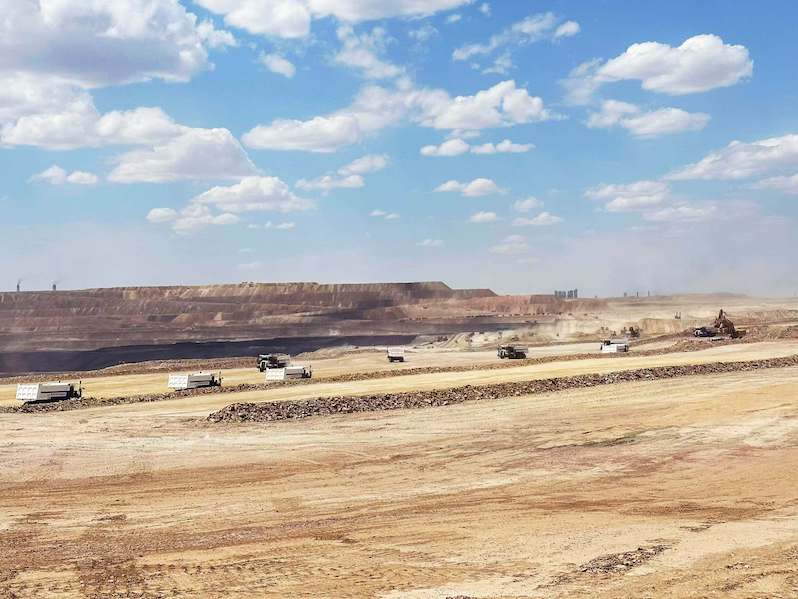
无人矿卡部署总量已达4000台 “智慧矿山”商业效益初显
Zhong Guo Jing Ying Bao· 2026-01-22 03:34
Core Insights - The article highlights the rapid advancement and increasing adoption of autonomous mining trucks in China's open-pit mining sector, emphasizing their efficiency and safety benefits [2][4][6]. Industry Growth and Trends - The number of autonomous mining trucks in China's open-pit coal mines is projected to grow from 88 units in 2020 to over 4,000 units by 2025, marking 2025 as the year of large-scale application for autonomous mining technology [2][8]. - The penetration rate of autonomous mining technology is expected to further increase in 2026 and beyond, with a focus on original design, electrification, and full automation [12][13]. Efficiency and Safety Improvements - Autonomous mining technology addresses significant industry challenges, such as high operational costs, safety risks, and low productivity, by enabling stable operations in extreme environments [4][5]. - Compared to manual driving, autonomous systems can operate continuously, overcoming human physiological limits and significantly reducing the risk of accidents [5][7]. Technological Advancements - The autonomous mining trucks have achieved operational efficiency comparable to manual driving, with a long-term goal of reaching 120% efficiency of manual operations [7][9]. - The technology has been validated in various extreme conditions, including high altitudes and severe weather, showcasing its adaptability [5][6]. Business Model Evolution - The industry is transitioning from a heavy asset model to a lighter asset service model, with companies focusing on providing autonomous driving technology and services rather than owning the vehicles [9][10]. - The shift to a "driverless as a service" model is redefining operational efficiency and resilience in mining transportation [9][10]. Green Transition - The integration of autonomous driving with electrification is driving the mining industry towards a greener transformation, aligning with national goals for sustainable development [12][13]. - The use of electric autonomous trucks is expected to significantly reduce carbon emissions, with one company reporting a reduction of nearly 11,000 tons of carbon [13]. International Expansion - Chinese autonomous mining technology is expanding into international markets, particularly Australia, where local partnerships are being formed to meet stringent operational standards [14][15]. - The strategy includes collaboration with both international and domestic manufacturers to enhance the global competitiveness of China's high-end equipment manufacturing [15].