
下沉市场

Search documents
浦银国际:下沉与细分赛道驱动OTA行业持续增长
智通财经网· 2025-05-23 08:11
Group 1 - The core viewpoint is that Chinese companies have a clear insight into consumer trends and market dynamics, which drives their continuous expansion in the stable lodging and ticket booking sectors [1] - The domestic tourism market is experiencing rapid recovery post-pandemic, with four key factors expected to drive growth: lower-tier market consumers, the affluent elderly demographic, the enthusiastic Z generation, and the recovery of inbound and outbound tourism [1] - The current competitive landscape among OTA platforms is stable, and there is optimism regarding the diversification of domestic OTA platforms to enhance business growth [5] Group 2 - Despite the pressure on travel prices due to the rapid recovery of flights and hotel availability, it is anticipated that the decline in travel prices will stabilize by 2025, aided by structural changes in the travel demographic [2] - The OTA platform industry has become an integral part of daily life for Chinese consumers, with increasing penetration rates leading to rapid market growth [3] - Chinese OTA platforms are expanding their business scope through acquisitions and self-built initiatives, particularly in overseas markets, while also launching vacation services to capitalize on the recovery of inbound tourism and the popularity of customized travel [4]

下沉市场外卖新势力,跑腿快车在巨头阴影下的本土创新
Zhong Guo Chan Ye Jing Ji Xin Xi Wang· 2025-05-22 08:10
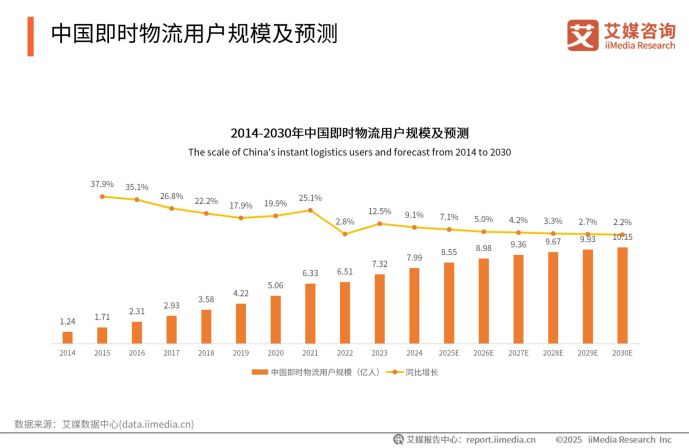
Core Viewpoint - The rise of instant delivery services is significantly driven by consumption upgrades and digital transformation, making it an essential part of life in lower-tier markets [1][2]. Group 1: Market Trends - The lower-tier market, including third-tier cities and rural areas, is becoming a new growth area for the food delivery industry, with a user base expected to grow from 124 million in 2014 to 799 million by 2024 [2]. - The online food delivery market in China is projected to reach a scale of 1.6357 trillion yuan in 2024, with a year-on-year growth of 7.2% and a penetration rate of 28% [4]. - Retail sales in urban areas are expected to reach 42.1166 trillion yuan in 2024, growing by 3.4%, while rural retail sales are projected at 667.29 billion yuan, with a growth rate of 4.3% [7]. Group 2: Policy and Competitive Landscape - Government policies are enhancing the commercial infrastructure in rural areas, promoting initiatives like "delivery to villages" to improve service coverage and reduce costs [10]. - Major players like Meituan, JD, and Ele.me are fiercely competing for market share in lower-tier cities, employing strategies such as zero commission and substantial subsidies [11]. - Local platforms like "Runter Kuaiche" are emerging to cater to specific needs in rural markets, leveraging their local knowledge and community ties to provide personalized services [16][17]. Group 3: Consumer Behavior - The primary consumer group in the lower-tier market consists of individuals aged 25-44, with a significant female user base of 67.01%, who prefer a blend of online and offline shopping experiences [19]. - Over 60% of users order food delivery more than three times a week, with social recommendations playing a crucial role in their decision-making process [19]. Group 4: Future Outlook - The lower-tier market is anticipated to become the "second growth curve" for China's instant delivery industry, driven by ongoing policy support and technological advancements [21].

四年五闯港交所,杭州“初代网红”IPO了
Sou Hu Cai Jing· 2025-05-17 21:41
Core Viewpoint - The article discusses the successful IPO of the Green Tea Restaurant Group, highlighting its journey and the challenges it faced in the competitive restaurant industry in China, particularly in the context of changing consumer preferences and market dynamics [5][6][8]. Company Overview - Green Tea Restaurant, founded in 2008 in Hangzhou, has become a prominent player in the Chinese casual dining sector, ranking third in terms of the number of restaurants and fourth in revenue among casual Chinese restaurant brands in mainland China as of 2024 [2][5]. - The restaurant is known for its innovative dishes such as "Bread Temptation," "Green Tea Roasted Chicken," and "Flame Shrimp," which have contributed to its popularity and reputation as an "initial internet celebrity" restaurant [5][13]. IPO Journey - The company faced multiple setbacks in its IPO attempts, with four previous attempts since March 2021 before finally being approved for listing on May 16, 2024 [5][6][7]. - The IPO has allowed the founders, Wang Qinsong and Lu Changmei, to significantly increase their wealth, with their net worth exceeding 3 billion HKD post-IPO [7]. Market Position and Strategy - Green Tea Restaurant has adopted a strategy focused on affordability and value, with average prices decreasing from 60.5 RMB in 2021 to 57.7 RMB in the first three quarters of 2024, reflecting a shift towards catering to lower-tier cities [16][19]. - The company plans to use the funds raised from the IPO to expand its presence, targeting the opening of 120 to 213 new restaurants annually from 2024 to 2027, primarily in second and third-tier cities [17][20]. Industry Context - The restaurant industry in China has faced challenges, with many listed companies experiencing significant stock price declines due to reduced consumer spending and changing dining preferences [22][23]. - Despite these challenges, Green Tea Restaurant's focus on high-value offerings and its ability to adapt to market demands may position it favorably in the evolving landscape of the restaurant industry [19][23].

卡片机在拼多多翻红,国产相机如何迎战海外大牌
Nan Fang Du Shi Bao· 2025-05-16 04:55
Core Viewpoint - The resurgence of compact cameras, driven by Generation Z's preference for their unique aesthetic and affordability, has created significant market opportunities for Guangdong camera manufacturers [1][2][4]. Group 1: Market Trends - Generation Z favors the retro aesthetic and lower quality of compact cameras over the perfection of smartphone photography, leading to increased demand in the second-hand market [1][2]. - The popularity of CCD (Charge-Coupled Device) technology has transformed compact cameras into trendy items, with prices in the second-hand market rising due to high demand [2][4]. - Guangdong camera manufacturers have identified a niche market among students, offering high-quality yet affordable compact cameras that meet their needs for documenting daily life [4][5]. Group 2: Business Strategies - Guangdong camera manufacturers have leveraged e-commerce platforms like Pinduoduo to reach consumers directly, reducing operational costs and allowing for competitive pricing [4][7]. - The introduction of targeted products for students, such as compact cameras priced around 100 yuan, has proven successful, with significant sales figures reported [5][6]. - Manufacturers are focusing on product innovation, such as adding features like dual screens and various filters, to cater to the preferences of younger consumers [6][7]. Group 3: Financial Impact - The "Hundred Billion Subsidy" and "Thousand Billion Support" initiatives from Pinduoduo have significantly lowered operational costs for manufacturers, enabling them to offer products at prices 20% lower than competitors [7][8]. - Sales figures for compact cameras have surged, with some manufacturers reporting annual sales exceeding 30 million yuan, driven by the popularity of their products among the student demographic [4][5].
“下沉”市场释放“向上”潜能成为消费新引擎
Xin Hua Cai Jing· 2025-05-15 03:02
不少业内人士指出,下沉市场不断释放"向上"消费潜能,或成为拉动我国消费的新引擎。 刚刚过去的"五一"假期,县域旅游再度"出圈"。美团旅行的数据显示,"五一"假期,县城高星酒店预订 量同比增长超80%。浙江桐庐县、安徽怀宁县、安徽凤台县、湖南新化县等成为人们寻找"松弛感"的热 门之选。此外,"国门游"走热也带动部分小城市迎来客流高峰。4月中旬以来,"广西东兴口岸附近酒 店"搜索量同比上涨255%,"东兴口岸附近美食"搜索量上涨171%,"云南磨憨口岸附近酒店"搜索量上涨 366%。 去哪儿大数据显示,今年"五一"假期,县城成为"反向旅游"最火目的地,平台酒店预订遍布1230个县, 覆盖全国近9成的县。 在贵州遵义,海底捞火锅遵义吾悦广场店开业首日迎来大批顾客。"许多市民期待已久,商场一开门就 直奔店里。恰逢'五一'假期,来遵义旅游的人也多,中午12点10分左右,店内已坐了两轮。"该店相关 负责人说。 在下沉市场吸引大量游客的同时,其自身消费能力也不断提升。 海底捞截至2024年全年业绩公告显示,2024年,海底捞在三线及以下城市的单店平均销售额为8万元/ 天,与二线城市8.32万元/天和一线城市8.94万元/天 ...
奥乐齐昆山首店单日破110万,“社区超市战”打响?
3 6 Ke· 2025-05-14 23:56
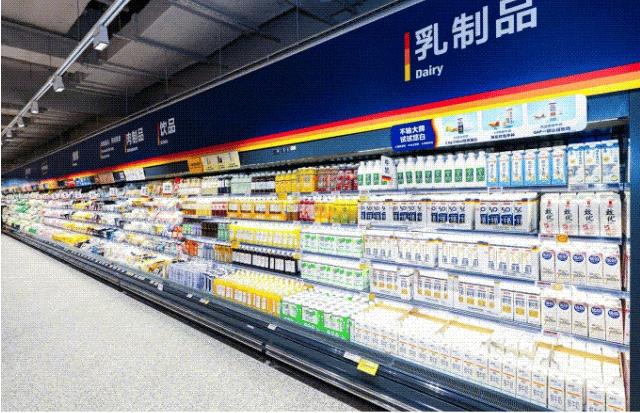
Group 1 - Aldi's first store in Kunshan opened on May 10, attracting over 100,000 visitors and achieving sales of 1.1 million yuan in a single day, setting a new record for the company [1] - Kunshan, a county-level city with a GDP of 538 billion yuan and a per capita disposable income exceeding 70,000 yuan, demonstrates significant consumer potential comparable to some provincial capitals [1] - The rise of Aldi in Kunshan reflects a broader trend of retail revolution in county markets, with various supermarket brands increasing their presence in these areas [1] Group 2 - Aldi's transformation in China involved shifting from a high-end boutique supermarket to a budget community supermarket, with a key turning point in 2023 when it reduced its SKU count to 1,600 and increased its private label share to 90% [2] - Aldi has developed 13 private label series in China, including a value series priced at 9.9 yuan, with over 500 low-priced items making up about 25% of its total SKU [2] - Unlike Sam's Club and Costco, Aldi employs a community store strategy with smaller store sizes (500-1,000 square meters) and no membership fees, catering to daily shopping needs within a 3-kilometer radius [2] Group 3 - Aldi's competitive advantage lies in its global supply chain and localization efforts, exemplified by its direct sourcing and cold chain logistics, which significantly reduce costs and enhance efficiency [4] - Over 80% of Aldi's suppliers are local, with major supply bases in the Yangtze River Delta and Shandong, allowing for cost advantages through scale procurement and local sourcing [4] - Aldi's partnerships with local farms and cooperatives in Jiangsu help maintain low fresh product costs, supporting its reputation for "low price without low quality" [4] Group 4 - The rise of Aldi signifies a trend where the perception of "low price does not equal low quality" is becoming possible in a rational consumption era, with vertical supply chain integration and regional closures forming core barriers to entry [6] - The community supermarket sector is experiencing intense competition, with major players like Hema NB rapidly expanding their footprint in the Yangtze River Delta [7] - Hema NB's smaller, more flexible stores have become a key format for penetrating lower-tier markets, with over 200 stores planned by March 2025 [9] Group 5 - The competition in community retail has entered a phase driven by efficiency, with Aldi and Hema NB leveraging their strengths to build competitive moats [10] - The awakening of consumer power in county markets is evident, with retail sales in these areas projected to exceed 22 trillion yuan in 2024, growing at a rate of 8.7% [11] - Aldi's strategies include upgrading fresh supply chains, multi-channel layouts, and differentiated product offerings to enhance customer experience and reduce fulfillment costs [13][14]
南京“孩子王”,母婴童赛道带头“冲”
Nan Jing Ri Bao· 2025-05-14 23:44
Core Insights - The company "Kidswant" reported a significant increase in net profit for Q1, achieving a net profit of 31.01 million yuan, representing a year-on-year growth of 165.96% [1] - The company aims to leverage its strong Q1 performance to enhance its ecosystem in Q2, with plans to open new stores targeting young parents and introducing new product categories [1][2] Company Overview - Kidswant has evolved over 16 years from a controversial startup to a leading player in the mother and baby retail sector, with a focus on creating a multifunctional offline community for parents and children [1][2] - The company has implemented a membership system and replaced traditional sales staff with parenting consultants to better meet customer needs [2] Market Trends - The Chinese mother and baby market has seen substantial growth, expanding from 1 trillion yuan in 2010 to over 3 trillion yuan in 2018, with an average annual growth rate of approximately 14.8% [2] - There is a notable increase in demand for high-quality and cost-effective products, particularly in lower-tier cities, where sales growth outpaces that of first-tier cities [3] Strategic Initiatives - Kidswant is expanding its presence in lower-tier markets by opening franchise stores and piloting warehouse store models, with successful sales increases reported in newly opened stores [4] - The company is enhancing its supply chain efficiency through centralized logistics and has launched a digital system for instant retail services, aiming to provide faster delivery options [5] Future Plans - In 2024, Kidswant plans to complete the full acquisition of the northern mother and baby chain, Leyou International, and collaborate with educational firms to develop customized products [7] - The company is focused on building a comprehensive service network rather than just being a retailer, emphasizing the importance of teamwork and collective effort in achieving its goals [7]
2025年县域经济扶持:鲲鹏共享科技如何实现三四线城市铺设计划?
Sou Hu Cai Jing· 2025-05-14 23:29
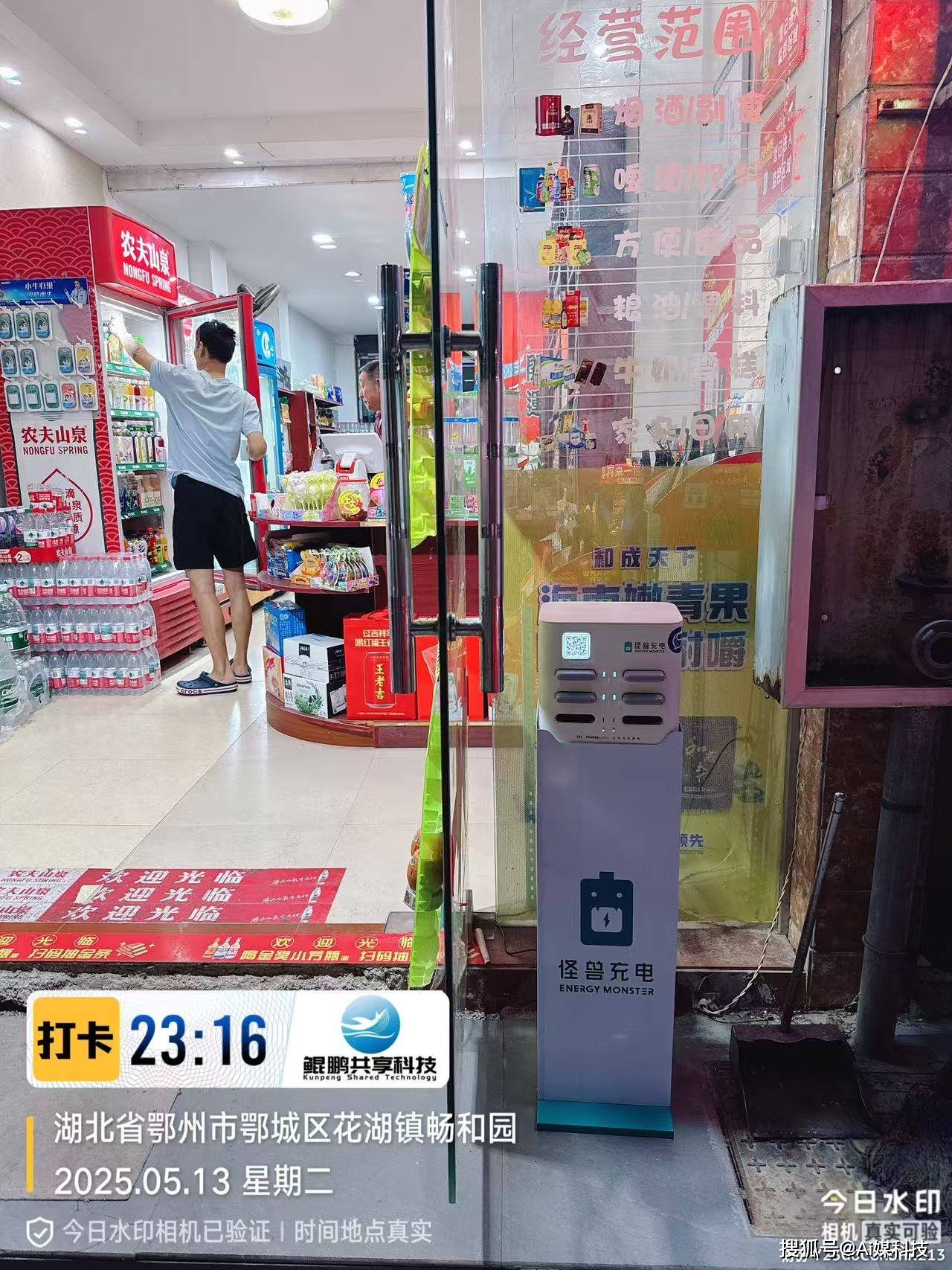
Core Insights - The shared charging treasure market in first- and second-tier cities has become saturated, while third- and fourth-tier cities present untapped opportunities for growth [1][3] - Kunpeng Shared Technology aims to leverage county-level economic support policies to penetrate these lower-tier markets with a unique operational strategy [1][6] Market Potential - The spending growth rate for residents in third- and fourth-tier cities on local life services is 18% annually, significantly outpacing that of first- and second-tier cities [3] - The penetration rate of shared charging treasures in county towns is below 30%, indicating a substantial market opportunity as 70% of potential users may not find available devices [3][8] Strategic Approach - Kunpeng's strategy involves positioning itself as a "digital economic infrastructure" provider in counties, utilizing a dual structure of "city agents + regional partners" to expand its reach [6][15] - The company employs dynamic pricing to balance user experience and revenue, charging 1 yuan per hour during off-peak times and 2 yuan during peak times [8] Collaboration and Local Engagement - Partnerships with local governments to build "convenient charging networks" allow Kunpeng to apply for subsidies of 50,000 yuan for every 100 devices installed [8] - The company utilizes local knowledge through regional partners, who are small business owners responsible for device maintenance and customer service, sharing 70% of the revenue [8] Case Studies - A case in a county-level city in Sichuan shows a local partner successfully installed 80 devices within three months, generating over 60,000 yuan in monthly revenue, significantly above the local average [11] - The operational strategy reflects an understanding of the "human economy" prevalent in lower-tier cities, focusing on community relationships and local engagement [11] Solutions to Challenges - To address operational costs in dispersed locations, Kunpeng implements a grid management system, assigning a "charging steward" to each 500m x 500m area for device maintenance and user support [12] - The company has developed customized devices with local cultural elements to enhance user familiarity and acceptance [12] Future Vision - By 2025, Kunpeng plans to establish a network effect across 1,000 county towns, enabling a potential return to first- and second-tier cities to capture niche markets [14] - The company's approach combines risk mitigation through an agent model, localized operations, and technology to convert policy advantages into business momentum [15]
新茶饮江湖风云再起:洗牌、突围与未来之战!
市值风云· 2025-05-14 12:53
Investment Rating - The report indicates a slowdown in the expansion of the new tea beverage industry, with a net decrease of 17,000 stores in the past year, highlighting a significant market consolidation [1][2]. Core Insights - The new tea beverage market in China has grown rapidly, with the market size increasing from RMB 187.8 billion in 2018 to RMB 517.5 billion in 2023, reflecting a CAGR of 22.5% [2]. - The competition among new tea brands is evolving from scale and price wars to a more complex, multifaceted competition focusing on product innovation and brand differentiation [1][2]. - The top five brands in the ready-to-drink tea market have increased their market share from 38.5% in 2020 to 46.8% in 2023, indicating a trend towards market concentration [1]. Summary by Sections Product Innovation and Marketing - New tea brands are focusing on health-oriented product innovations, with companies like沪上阿姨 launching over 100 new products annually [4][6]. - The marketing strategies of brands are diversifying, with successful collaborations and IP creations enhancing brand recognition and consumer engagement [8][15]. - The demand for healthier and higher-quality options is driving the evolution of ready-to-drink tea products, with brands prioritizing differentiation [7][19]. Franchise and Supply Chain Dynamics - The franchise model is becoming increasingly important, with 56.1% of tea beverage stores being part of a chain as of 2023, projected to rise to 72% by 2028 [17][20]. - The initial investment cost for opening a new store under沪上阿姨 is approximately RMB 275,000, which is lower than the industry average, making it attractive for potential franchisees [18]. - A robust supply chain is critical for maintaining product quality and customer loyalty, with沪上阿姨 achieving extensive national coverage for fresh ingredient delivery [21][19]. Market Trends and Future Outlook - The report highlights that the fastest growth in the ready-to-drink tea market is occurring in third-tier and lower cities, with沪上阿姨 having 49.4% of its stores in these areas as of 2023 [28][31]. - The overall revenue for沪上阿姨 in 2024 is projected to be RMB 3.28 billion, with 48.2% of this revenue coming from third-tier and lower cities [31]. - The industry is expected to continue evolving, with brands that can innovate and differentiate themselves likely to thrive, while those lacking in these areas may face significant challenges [39].
沪上阿姨在港交所上市
Zhong Guo Jing Ji Wang· 2025-05-14 08:33
Group 1 - The core point of the article is that Hu Shang A Yi has successfully listed on the Hong Kong Stock Exchange, raising approximately HKD 195 million through its IPO, with a share price set at HKD 113.12 [1] - From 2022 to 2024, Hu Shang A Yi is projected to achieve steady revenue growth, with revenues of CNY 2.199 billion, CNY 3.348 billion, and CNY 3.285 billion respectively, and adjusted net profits of CNY 154 million, CNY 416 million, and CNY 418 million [1] - The company has developed a multi-tiered and differentiated product matrix under three brand concepts: "Hu Shang A Yi," "Hu Ka," and "Light Enjoy Version," effectively targeting diverse consumer groups [1] Group 2 - The company plans to allocate approximately 25% of the IPO proceeds to enhance digital capabilities, including optimizing membership management systems and upgrading infrastructure [2] - About 20% of the funds will be invested in product research and development, focusing on innovation and equipment upgrades for best-selling products [2] - The remaining funds will be used for strengthening supply chain capabilities, brand building, marketing, and operational expenses, positioning Hu Shang A Yi to enhance its competitive advantage in the new-style tea beverage market [2]