
新型能源体系

Search documents
加快建设新型能源体系
Jing Ji Ri Bao· 2025-12-14 22:46
Core Viewpoint - The article emphasizes the importance of accelerating the construction of a new energy system in China as a strategic decision to ensure energy security and promote high-quality development in the context of global energy transformation [1][2]. Group 1: Significance of Accelerating the New Energy System - Accelerating the construction of a new energy system is a necessary requirement for advancing the energy revolution and building an energy powerhouse [2]. - It is a strategic choice to ensure energy security and gain an advantage in major power competition, especially given the complex global energy landscape influenced by geopolitical factors and climate change [3]. - Achieving carbon peak and carbon neutrality goals is essential, as nearly 90% of carbon emissions in China are due to fossil fuel combustion, necessitating a shift to a low-carbon energy system [4]. Group 2: Current Foundations for New Energy System Construction - China has made significant progress in energy reform and development, establishing a solid foundation for the new energy system, including becoming the world's largest producer of solar panels and wind power equipment [5]. - The country has built the largest clean power supply system globally, with renewable energy installations expected to surpass coal power by 2024 [5]. Group 3: Basic Requirements for New Energy System Construction - The new energy system aims to gradually establish non-fossil energy as the main supply source, with fossil energy serving as a backup [6]. - A new power system is crucial for supporting high proportions of renewable energy, requiring the development of a flexible and intelligent grid [7]. - Advocating for green and smart energy consumption is essential, especially with the integration of digital technologies into the energy sector [8]. Group 4: Key Tasks for Implementing the New Energy System - Increasing the share of renewable energy supply is a priority, with a focus on diverse energy sources and the development of clean energy bases [10]. - Enhancing the clean and efficient use of fossil energy while controlling its consumption is necessary to ensure energy security [11]. - Constructing a new power system that promotes coordinated development of energy sources, grids, loads, and storage is vital [12]. - Promoting green and low-carbon energy consumption across various sectors, including transportation and buildings, is essential for achieving energy transition goals [13]. - Accelerating energy technology innovation and strengthening the energy market system and pricing mechanisms are critical for supporting the new energy system [14].
政策定调明年打法,哪些行业有暖风?
Hu Xiu· 2025-12-14 11:15
Group 1 - The Central Economic Work Conference has set the economic policy direction for 2026, emphasizing high-quality development rather than aggressive growth [3][4] - The meeting aligns with the previous Politburo meeting, providing more specific execution details while maintaining a cautious approach to economic expectations [3][4] - Different industries will experience varying impacts from the policy signals, with some sectors benefiting while others may face challenges [3][4] Group 2 - Fixed asset investment is prioritized to "stop the decline and stabilize," focusing on quality over quantity, with an emphasis on projects that align with industrial upgrades and local needs [4] - The conference highlights the need for a new energy system to support emerging industries, particularly in artificial intelligence, indicating potential growth in the new energy sector [4] - The real estate sector received limited attention, with policies expected to be more about stabilizing the market rather than aggressive support, leading to potential short-term pressures on real estate stocks [4]
电新行业周报:首个省内特高压项目获批,可控核聚变商业化进展加速-20251214
Western Securities· 2025-12-14 10:22
Core Insights - The approval of the first provincial UHV project in Zhejiang and accelerated progress in controllable nuclear fusion commercialization are significant developments in the power equipment sector [2][63] - The total investment for the Zhejiang UHV AC ring network project is 29.3 billion RMB, marking it as the highest investment and largest single project in China's UHV AC engineering history [63] - The report recommends companies such as Pinggao Electric, Shunhua Electric, and Huaming Equipment in the power equipment sector, while suggesting attention to Tebian Electric [2] - For controllable nuclear fusion, Xuch Electric is recommended, with additional focus on companies like New Wind Power, Saijing Technology, Guoguang Electric, Hailu Heavy Industry, and Yongding Co [2] Industry Developments - The global opening of the ITER organization's core simulation tool IMAS is expected to accelerate the commercialization of fusion energy [2] - Huadian Energy has released new regulations for wind and solar investment mergers, requiring a minimum internal rate of return of 6.5% for capital in domestic and foreign wind and solar projects [3] - The energy storage sector saw a significant year-on-year increase of over 80% in procurement capacity in November, with a total scale of 11.5 GW/33.5 GWh [3] - The establishment of a photovoltaic storage platform company aims to regulate the photovoltaic industry by storing approximately 1 million tons of outdated capacity [4] Market Trends - In November, the sales of new energy vehicles in ten major European countries increased by 38.8% month-on-month, with a total of 290,000 units sold [25] - The report highlights the stable pricing of polysilicon, silicon wafers, battery cells, and modules, indicating a steady market despite fluctuations in demand [10][11][14] - The report notes that the prices of lithium salts and ternary materials have shown mixed changes, with battery-grade lithium carbonate prices rising to 94,500 RMB per ton [47]
中央财办:新能源汽车市场渗透率11月接近60%
Cai Jing Wang· 2025-12-14 02:35
Core Viewpoint - The "trade-in" policy for consumer goods has significantly boosted sales, with the penetration rate of the new energy vehicle market nearing 60% as of November [1] Group 1: Consumer Market - The implementation of the "trade-in" policy has led to rapid growth in sales of related consumer goods [1] - There is a plan to further implement special actions to boost consumption and eliminate unreasonable restrictions in the consumer sector [1] Group 2: Energy Sector - There is an emphasis on accelerating the construction of a new energy system and improving the clean and efficient use of fossil energy [1] - The development of new growth points such as hydrogen energy and green fuels is highlighted [1] - Plans include the establishment of zero-carbon parks and zero-carbon factories [1]
真抓实干奋力开创中国式现代化建设新局面——中央经济工作会议激励社会各界凝心聚力奋进新征程
Xin Hua Wang· 2025-12-14 01:29
Group 1 - The Central Economic Work Conference highlighted the importance of maintaining confidence in economic development and outlined key tasks for the upcoming year [1][2] - The conference emphasized the need to focus on domestic demand and build a strong domestic market as a priority for economic work [6][10] - The meeting set forth eight key tasks for economic work in the coming year, including boosting consumption and enhancing innovation-driven growth [6][10] Group 2 - The conference recognized the achievements of the past five years in economic development, despite facing various challenges [2][4] - The meeting called for a focus on high-quality development and the transformation of advantages into practical effectiveness [6][9] - The importance of regional coordinated development and the integration of urban and rural areas was underscored as essential for modernization [9][12] Group 3 - The conference discussed the need for macroeconomic governance to stabilize economic operations and enhance policy effectiveness [10] - Specific measures were proposed to support agriculture and rural revitalization, emphasizing the importance of food security [5][9] - The meeting highlighted the role of investment in infrastructure projects as a key measure for stabilizing growth [5][10]
开好局、起好步!透过中国经济年会 多角度感知中国经济蓬勃“脉动”
Yang Shi Wang· 2025-12-13 10:19
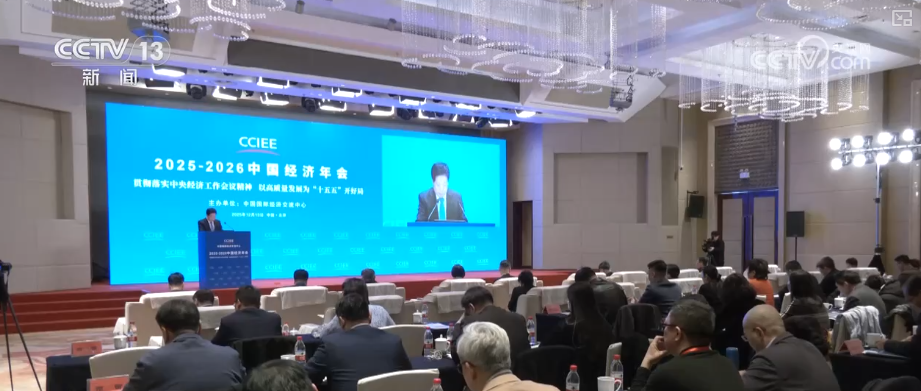
央视网消息:12月13日,在中国国际经济交流中心举办的2025—2026中国经济年会上,中央财办分管日常工作的副主任、中央农办主任韩文秀 表示,2025年是中国式现代化进程中具有重要意义的一年,是很不平凡的一年。全年经济社会发展主要预期目标将顺利实现,"十四五"即将圆 满收官。 中央财办分管日常工作的副主任、中央农办主任韩文秀表示,一年来,我国经济顶压前行,向新向优发展,展现出了强大的韧性和活力。主要 经济指标表现好于预期,许多机构预测,全年经济增长5%左右,我国仍然是全球经济增长的最大引擎。我们的就业形势总体稳定,外贸较快 增长,出口多元化成效明显,现代化产业体系建设加快推进。新质生产力稳步发展,人工智能、生物医药、机器人等研发和应用处在全球第一 梯队。改革开放迈出新步伐,纵深推进全国统一大市场建设,综合整治内卷式竞争,光伏等行业的供求关系和价格走势出现积极的变化。资本 市场交投活跃,国内外投资者信心增强,自主开放有序推进,安全、稳定、自信、包容的中国形象展现在世界的面前。 重点领域风险化解取得积极进展 在12月13日举行的中国经济年会上,韩文秀表示,2025年以来,重点领域风险化解取得积极进展。 韩文秀表 ...

坚持“双碳”引领为明年重点任务 方向不变力度不减
Zhong Guo Xin Wen Wang· 2025-12-13 06:22
中新社北京12月12日电 (记者 王梦瑶)今年中央经济工作会议将"坚持'双碳'引领,推动全面绿色转型"作 为明年经济工作八项重点任务之一,释放出"方向不变、力度不减"的政策信号。 中国宏观经济研究院能源研究所副所长孙颖指出,"双碳"是发展新质生产力、构建现代化产业体系的重 要支撑,同时,坚持"双碳"引领有助于增强中国在全球绿色规则制定中的话语权,并提升产业链韧性与 安全性。将"双碳"列为八项重点任务之一,释放出"方向不变、力度不减"的明确政策信号,有利于稳定 企业投资预期、促进产业发展。 在对来年"双碳"工作的具体部署中,中央经济工作会议提到"制定能源强国建设规划纲要,加快新型能 源体系建设,扩大绿电应用",其中能源强国和新型能源体系建设成为受访专家的关注焦点。 华北电力大学国家能源发展战略研究院执行院长王鹏指出,"十五五"规划建议中同样强调建设能源强国 和加快建设新型能源体系。经过几年探索实践,国家基本摸清新型能源体系的框架,为"十五五"期间加 快建设奠定了基础。强化能源强国战略,将为中国未来能源发展提供更高远的目标引领和更强大的战略 动力,推动实现从能源大国向能源强国的历史性跨越,有力支撑社会主义现代化强 ...
经济观察|坚持“双碳”引领为明年重点任务 方向不变力度不减
Zhong Guo Xin Wen Wang· 2025-12-13 03:28
中新社北京12月12日电 (记者 王梦瑶)今年中央经济工作会议将"坚持'双碳'引领,推动全面绿色转 型"作为明年经济工作八项重点任务之一,释放出"方向不变、力度不减"的政策信号。 中国宏观经济研究院能源研究所副所长孙颖指出,"双碳"是发展新质生产力、构建现代化产业体系 的重要支撑,同时,坚持"双碳"引领有助于增强中国在全球绿色规则制定中的话语权,并提升产业链韧 性与安全性。将"双碳"列为八项重点任务之一,释放出"方向不变、力度不减"的明确政策信号,有利于 稳定企业投资预期、促进产业发展。 中国自2020年提出碳达峰碳中和目标以来,在应对气候变化和"双碳"工作方面取得一系列成就:非 化石能源消费比重由2020年的16.0%增至2024年的19.8%,"十四五"前四年单位国内生产总值能耗累计 下降11.6%,构建起全球最大、发展最快的可再生能源体系,全球一半以上的新能源汽车行驶在中 国…… 华北电力大学国家能源发展战略研究院执行院长王鹏指出,"十五五"规划建议中同样强调建设能源 强国和加快建设新型能源体系。经过几年探索实践,国家基本摸清新型能源体系的框架,为"十五五"期 间加快建设奠定了基础。强化能源强国战略,将 ...
定调2026!全面绿色转型
中国能源报· 2025-12-12 13:44
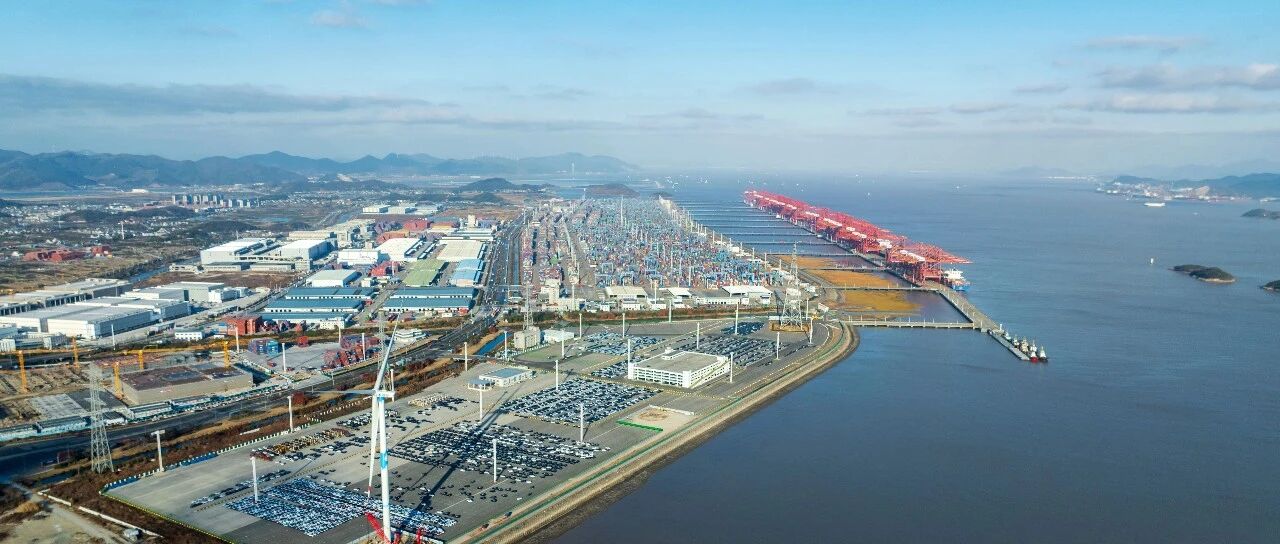
2026年中国能源行业将沿着绿色低碳道路笃定前行。 ▲ 浙江首座"绿电码头"宁波舟山港梅山低碳码头。许天长/摄 12月10日至11日,中央经济工作会议(以下简称"会议")在北京举行。习近平总书记出席会议并发表重要讲话,总结2025年经济工 作,分析当前经济形势,系统部署2026年经济工作,为确保"十五五"开好局、起好步提供科学指引。 良好的开局是成功的一半。2026年是"十五五"开局之年,做好经济工作意义重大。会议将"坚持'双碳'引领,推动全面绿色转型"列入 八项重点任务之一,将"围绕发展新质生产力,推动科技创新和产业创新深度融合"列入五个关键着力点之一。 当一条条特高压线路将输电网络越织越密,当戈壁荒漠的光伏蓝海点亮万家灯火,当"绿电码头"的龙门吊无声起降,当碳市场交易数 据跳动出减排的经济价值……2026年中国能源行业将沿着绿色低碳道路笃定前行。 新型能源体系建设按下"快进键" 会议确定,坚持"双碳"引领,推动全面绿色转型。深入推进重点行业节能降碳改造。制定能源强国建设规划纲要,加快新型能源体系 建设,扩大绿电应用。加强全国碳排放权交易市场建设。实施固体废物综合治理行动,深入打好蓝天、碧水、净土保卫战,强 ...
中央经济工作会议在北京举行 “十五五”开局之年中国经济怎么干?
Yang Guang Wang· 2025-12-12 11:55
央广网北京12月12日消息(记者张棉棉 李思默 王泽华)据中央广播电视总台中国之声报道,中央 经济工作会议12月10日至11日在北京举行。会议指出,今年是很不平凡的一年,经济社会发展主要目标 将顺利完成。我国经济顶压前行、向新向优发展,现代化产业体系建设持续推进,改革开放迈出新步 伐,重点领域风险化解取得积极进展,民生保障更加有力。 会议认为,通过实践,我们对做好新形势下经济工作又有了新的认识和体会:必须充分挖掘经济潜 能,必须坚持政策支持和改革创新并举,必须做到既"放得活"又"管得好",必须坚持投资于物和投资于 人紧密结合,必须以苦练内功来应对外部挑战。 会议强调,做好明年经济工作,要坚持稳中求进工作总基调,更好统筹国内经济工作和国际经贸斗 争,更好统筹发展和安全,实施更加积极有为的宏观政策,增强政策前瞻性针对性协同性,持续扩大内 需、优化供给,做优增量、盘活存量,因地制宜发展新质生产力。 明年将纵深推进全国统一大市场建设,持续防范化解重点领域风险,着力稳就业、稳企业、稳市 场、稳预期,推动经济实现质的有效提升和量的合理增长,保持社会和谐稳定,实现"十五五"良好开 局。2026年中国经济怎么干? 会议认为, ...