
智能化

Search documents
建科智能(300823.SZ):目前公司尚未有自主研发产品的机械臂、减速器
Ge Long Hui· 2026-02-04 06:31
Group 1 - The company, JianKe Intelligent (300823.SZ), focuses on the research, design, production, and sales of various intelligent mid-to-high-end CNC rebar processing robotic equipment and supporting software [1] - The company provides comprehensive solutions for intelligent CNC rebar processing robots and intelligent rebar processing factories, aiming to meet customer demands for automation and improve work efficiency [1] - Currently, the company does not have self-developed robotic arms or reducers, relying instead on externally sourced components for some products [1] Group 2 - The company plans to increase its efforts in technological innovation to launch more intelligent rebar processing robot products suitable for intelligent and digital construction [1]
透过税收看制造强国建设丨财金纵横
Xin Lang Cai Jing· 2026-02-04 05:06
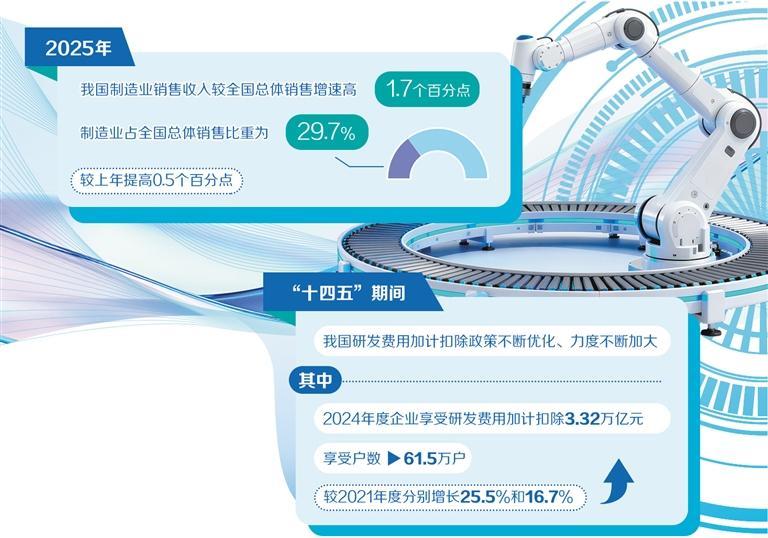
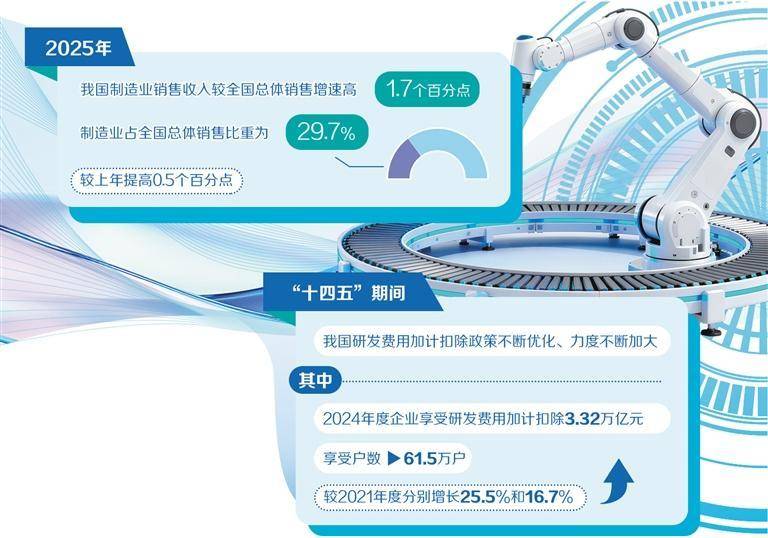
Core Insights - The manufacturing sector in China is expected to see a sales revenue growth rate that exceeds the national average by 1.7 percentage points by 2025, with its share of total sales rising to 29.7% [3] - The transition towards intelligent, green, and integrated manufacturing is accelerating, highlighting the sector's role as an economic stabilizer [3] Intelligent Upgrade - By 2025, the procurement of automation and digital equipment by manufacturing enterprises is projected to increase by 11.3% and 10% year-on-year, respectively [3] - The sales revenue of the intelligent equipment manufacturing sector is expected to grow by 28.1%, with industrial robots and special operation robots seeing year-on-year growth of 17.4% and 42.1% [3] Tax Incentives and Support - Tax policies are being tailored to support the intelligent, green, and integrated development of the manufacturing sector, focusing on technological innovation and reducing R&D costs [4] - The R&D expense deduction policy is being optimized, with an expected deduction of 3.32 trillion yuan for 2024, benefiting 615,000 enterprises, marking increases of 25.5% and 16.7% from 2021 [5] Green Development - The sales revenue of the new energy vehicle industry is projected to grow at an annual rate of 49.5%, while clean energy generation is expected to grow by 13.9% annually during the 14th Five-Year Plan period [6] - By 2025, the new energy vehicle manufacturing sector is anticipated to grow by 14.3%, and the clean energy generation sector's revenue is expected to increase by 17.3%, accounting for 38.5% of total electricity production revenue [6] Digital Integration - The sales revenue of the digital product manufacturing sector is expected to grow by 9.4% year-on-year, with manufacturing enterprises' procurement of digital technologies increasing by 10.4% [9] - The automotive industry is set to enhance its digital transformation, with policies aiming for significant improvements in smart manufacturing capabilities by 2027 and overall digital development by 2030 [9] Local Tax Administration Initiatives - Local tax authorities are implementing tailored services to support green and low-carbon initiatives, including customized tax incentive packages for enterprises [7] - Collaborative platforms between tax and environmental departments are being established to enhance compliance and streamline tax reporting processes [8] Future Directions - Continued focus on intelligent, green, and integrated manufacturing is essential, with a need for targeted support based on regional industrial characteristics [10] - The integration of compliance guidance and risk prevention into tax services is crucial for enhancing the competitiveness of manufacturing enterprises [10]

全力推动产业体系整体跃升 龚正参加黄浦代表团联组审议 要求打造更宜居美丽幸福城区典范
Jie Fang Ri Bao· 2026-02-04 02:02
Core Viewpoint - The article emphasizes the importance of implementing the strategic directives from Xi Jinping's inspection of Shanghai, focusing on innovation and development to enhance the overall industrial system and improve the quality of life in Huangpu District [1][2]. Group 1: Economic Development - The city successfully completed its economic and social development goals last year, marking a satisfactory conclusion to the 14th Five-Year Plan [2]. - Huangpu is expected to take a leading role in consolidating and expanding the positive economic momentum, particularly in the context of the new 15th Five-Year Plan [2]. Group 2: Consumer Market Expansion - The strategy focuses on expanding domestic demand, aiming to establish Huangpu as a world-class consumer destination by enhancing consumption experiences and promoting new consumption dynamics [2]. - There is an emphasis on innovative promotional methods to effectively convert consumption into economic growth [2]. Group 3: Industrial Transformation - Shanghai aims to accelerate the construction of a modern industrial system centered on advanced manufacturing, with Huangpu expected to lead in this transformation [2]. - The strategy includes strengthening traditional industries while developing new growth sectors, particularly through technology and cultural empowerment [2]. Group 4: Social Welfare and Urban Development - The government is committed to enhancing public welfare and addressing urgent community needs, focusing on urban renewal and the development of park cities [2]. - There is a strong emphasis on meeting the diverse and quality demands of citizens, ensuring that social welfare initiatives are prioritized [2].
水利水电事业部:以起势之进夯实发展之基
Xin Lang Cai Jing· 2026-02-04 02:01
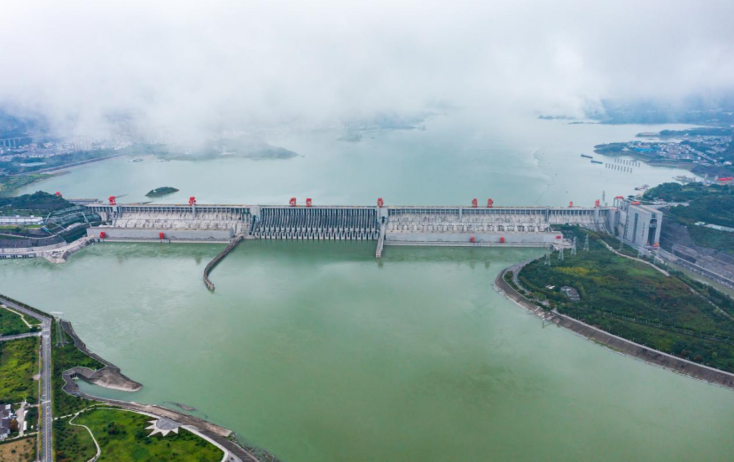
Core Viewpoint - The article highlights the continuous improvement of the intelligent operation and maintenance system in the hydropower sector, emphasizing the integration of smart technologies to enhance efficiency and safety in operations [1][3]. Group 1: Intelligent Operations - The Yangtze River mainstream hydropower stations are enhancing their intelligent levels through the use of smart inspection robots, underwater robots, and monitoring robots, creating an integrated system for perception, analysis, and decision-making [1]. - The Three Gorges Group's 2026 work meeting stressed the importance of hydropower as the foundation for survival, development, and profitability, aiming for a digital and intelligent upgrade in hydropower operations [1]. Group 2: Performance and Achievements - In 2025, the hydropower sector faced the strongest autumn rains since 1961, leading to a historic operational adjustment that resulted in a water-saving increase of 140 billion kilowatt-hours during peak summer, with energy storage exceeding 340 billion kilowatt-hours by year-end [1]. - The Taizhou pumped storage power station in Zhejiang, a key project for the 14th Five-Year Plan, successfully completed a 15-day trial run for its second unit, marking it as the highest rated head and largest single-unit capacity pumped storage station under construction globally [3]. Group 3: Future Goals and Strategies - The hydropower sector aims to achieve breakthroughs in resource management, optimize layouts, enhance power generation, and improve operational efficiency by 2026 [5]. - The department plans to strengthen core capabilities in joint scheduling of river basins and management of large hydropower stations, ensuring high-quality development and safety [5].
研判2026!中国儿童滑板车行业发展背景、产业链、发展现状及发展趋势分析:行业规模持续上涨,智能化与环保化是行业未来发展的重要方向[图]
Chan Ye Xin Xi Wang· 2026-02-04 01:17
Core Insights - The children's scooter market in China is projected to reach a scale of 2.12 billion yuan in 2024, reflecting a year-on-year increase of 6.5% [1][3][8] - The industry is experiencing strong growth due to upgraded family consumption concepts and the popularity of outdoor activities for children [1][3] Industry Overview - Children's scooters, also known as toy scooters, are designed for children weighing up to 50 kg, enhancing balance and coordination skills [3][5] - The market is characterized by various types of scooters, categorized by wheel count (two, three, or four wheels) and weight groups (under 20 kg and 20-50 kg) [3][4] Market Dynamics - The industry is supported by a solid consumer base, with over 220 million children aged 0-14 in China, despite a 3.6% year-on-year decline in this population segment [5][6] - The upstream supply chain includes materials like aluminum alloy, plastic, and rubber, which are crucial for the quality and performance of scooters [6][7] Competitive Landscape - The market features a mix of international giants (e.g., Micro, Razor), domestic leaders (e.g., Goodbaby International, Zhonglu Co., Shanghai Phoenix), and emerging brands that drive innovation [9][10] - Goodbaby International reported a revenue of 4.301 billion yuan in the first half of the 2025 fiscal year, a 2.71% increase year-on-year, while its net profit decreased by 43.17% [10] - Shanghai Phoenix achieved a revenue of 1.835 billion yuan in the first nine months of 2025, a slight increase of 0.15%, with a significant net profit growth of 131.69% [10] Development Trends - The product evolution is moving towards multifunctionality and adaptability for various scenarios, with features like adjustable height and foldability being introduced [11][12] - Smart and eco-friendly innovations are becoming mainstream, incorporating features like tracking and speed control while using recyclable materials [11][12] - The sales model is shifting towards an omnichannel approach, integrating online and offline platforms to enhance consumer experience and brand differentiation [12]


主导权交接之后:2025汽车产业的核心命题与答案
Xin Lang Cai Jing· 2026-02-04 01:13
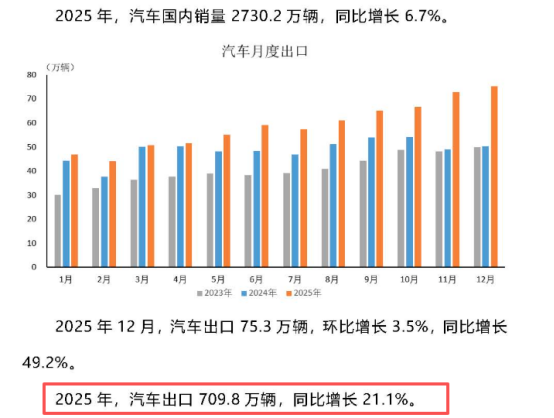
Group 1 - The core point of the article is that the Chinese automotive industry underwent significant transformation in 2025, marked by the integration of electrification and intelligence, leading to a restructured global competitive landscape [2][3][40] - The penetration rate of new energy vehicles (NEVs) in China surpassed 50% for the first time, indicating a shift from optional to mainstream status, driven by policy support, corporate efforts, and consumer acceptance [4][41] - The automotive export volume reached 7.098 million units in 2025, a year-on-year increase of 21.1%, reflecting a structural change in the export market towards higher-end models and a focus on established markets like Europe [7][44] Group 2 - The issuance of L3 autonomous driving licenses marked a transition from technical demonstrations to commercial availability, indicating that L3 technology is now accessible to consumers [10][49] - The establishment of the new Changan Automobile Group represents a significant milestone in the Chinese automotive industry's evolution, aimed at enhancing global competitiveness and driving high-quality development [12][52] - The trend of internal restructuring among automotive companies signifies a shift from expansion to efficiency, focusing on resource optimization and reducing redundancy in operations [14][55] Group 3 - The rapid growth of the six-seat SUV market in 2025, with monthly sales increasing from 25,000 to nearly 100,000 units, reflects changing family travel needs in China [22][68] - The decline of the range-extended electric vehicle (EREV) market, with a cumulative sales growth of only 10.2% compared to 34.2% for battery electric vehicles (BEVs), indicates a clear shift towards pure electric vehicles as the dominant technology [30][75] - The introduction of new battery safety standards emphasizes the importance of safety in the development of new energy vehicles, marking a maturation of the industry [21][65][66]
透过税收看制造强国建设
Sou Hu Cai Jing· 2026-02-03 23:08
Core Insights - The manufacturing sector in China is expected to see a sales revenue growth rate that exceeds the national average by 1.7 percentage points by 2025, with its share of total sales rising to 29.7% [2] - The acceleration of intelligent, green, and integrated development in manufacturing is highlighted as a key focus for future growth [3][6] Intelligent Upgrading - By 2025, the procurement of automation and digital equipment by manufacturing enterprises is projected to increase by 11.3% and 10% year-on-year, respectively [3] - The sales revenue of the intelligent equipment manufacturing sector is expected to grow by 28.1%, with industrial robots and special operation robots seeing increases of 17.4% and 42.1% [3] - Tax incentives are being utilized to support the intelligent transformation of manufacturing, with a focus on technology innovation and reducing R&D costs [4][5] Green Development - The sales revenue of the new energy vehicle manufacturing sector is projected to grow by 14.3% year-on-year by 2025, while the clean energy generation sector is expected to see a 17.3% increase [6] - The share of clean energy generation in total electricity production revenue is anticipated to rise to 38.5%, an increase of 6.9 percentage points since 2021 [6] Digital Integration - The sales revenue of the digital product manufacturing sector is expected to grow by 9.4% year-on-year by 2025, with a 10.4% increase in the procurement of digital technologies by manufacturing enterprises [9] - The automotive manufacturing sector is set to enhance its digital capabilities significantly by 2027, with a focus on improving smart manufacturing maturity [9] - Tax authorities are enhancing digital services to improve compliance and efficiency in tax reporting for manufacturing enterprises [10][11]
九号公司迎来千万台里程碑,净利预增超54%彰显高成长动能
Nan Fang Du Shi Bao· 2026-02-03 13:41
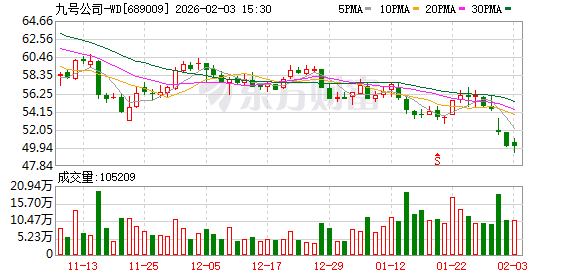
Core Viewpoint - The company, Ninebot, is expected to achieve a net profit of between 1.67 billion to 1.85 billion yuan in 2025, representing a year-on-year growth of 54.04% to 70.64%, showcasing strong operational resilience and growth quality in a challenging industry environment [2][3]. Group 1: Financial Performance - Ninebot's net profit is projected to increase significantly by 54% to 71% in 2025, highlighting the maturity of its profit model and operational efficiency despite industry pressures [3]. - The company has invested heavily in research and development, with R&D spending reaching 872 million yuan in the first three quarters of 2025, a 59% increase year-on-year, indicating a commitment to innovation [3]. Group 2: Market Position and Strategy - Since entering the electric two-wheeler market in 2019, Ninebot has focused on a "smart" core strategy, achieving a 70% market share in the domestic smart electric two-wheeler segment, reinforcing its position as a leader in smart mobility [4]. - Ninebot has established a dual-brand strategy with "Ninebot" and "Segway" to expand globally, aiming to transition from "product export" to "brand export" and capture high-value markets traditionally dominated by fuel-powered vehicles [6]. Group 3: Product Development and Innovation - The launch of the "Nimble OS" has strengthened Ninebot's technological moat in software and systems, contributing to its competitive edge in the market [3]. - The company has successfully transitioned its product structure to focus on the mid-to-high-end market, leading in sales within the 4,000 yuan and above price segment, reflecting a shift from "cost performance" to "quality-price performance" [4]. Group 4: Future Outlook - With the milestone of over 10 million units sold, Ninebot is expected to reveal more positive details regarding gross margins, regional growth, and ecosystem revenue in its upcoming annual report, indicating a promising future [6]. - The ongoing dual-brand globalization and continuous AI technology integration are anticipated to unlock greater long-term value for Ninebot in the capital market [6].
全球首个汽车门把手安全强制性标准正式发布 明年起施行
Zheng Quan Ri Bao Wang· 2026-02-03 12:59
Core Viewpoint - The Ministry of Industry and Information Technology has officially released the mandatory national standard "Safety Technical Requirements for Automotive Door Handles" (GB48001—2026), which will be implemented starting January 1, 2027. This is the world's first safety standard specifically for automotive door handles, emphasizing safety over design preferences in the automotive industry [1][2]. Group 1: Standard Overview - The new standard sets clear requirements for the structure, mechanical redundancy, and emergency usability of door handles, marking a shift towards safety-centric design in the automotive sector [1][2]. - It mandates that each side door of a vehicle must have an independent mechanical release function that remains operational even if the vehicle's power is cut or the control system fails [2][3]. Group 2: Implementation and Transition - The standard allows for a necessary transition period, requiring new model approvals to comply by January 1, 2027, and existing models to meet the standards by January 1, 2029 [3][4]. - This phased implementation will influence vehicle platform development, component selection, and design processes, raising the bar for automakers' engineering capabilities [3][4]. Group 3: Safety Implications - The standard aims to ensure that door handles are accessible and identifiable in emergencies, reducing the cognitive and operational burden during critical situations [2][3]. - It reflects a broader trend in automotive safety regulation, moving from merely meeting normal usage conditions to addressing extreme scenarios [3][4].
牧原股份:公司持续关注前沿技术发展动态
Zheng Quan Ri Bao Wang· 2026-02-03 11:11
证券日报网讯2月3日,牧原股份(002714)在互动平台回答投资者提问时表示,公司持续关注前沿技术 发展动态,不断加大在智能化、数字化方面的研发投入,积极探索将各项新技术应用到养猪生产全流 程,基于业务场景研发各类智能装备,以更好地服务养猪生产,提升养殖效率,降低养殖成本。 ...
