新旧动能转换

Search documents
货币基金收益率全面“破1”大势所趋,扩容潜力仍存
Xin Lang Ji Jin· 2025-10-27 06:13
财通证券认为,我国货币基金中长期看仍具发展潜力和空间。因为我国的财富管理市场仍在发展之中, 可供普通投资者选择的、兼具低波动与良好流动性的理财产品并不多。货币基金因独特的产品特性,正 成为政策引导下的潜在受益者,对低风险偏好的投资者吸引力较大,在政策和市场需求的双重驱动下, 预计将继续受益。此外,线上支付场景深度绑定,平台构筑"活钱入口"与"支付即理财"的生态闭环,大 幅提升了货基的竞争优势。 事实上,尽管收益率持续下行,货币基金的规模却在逆势增长。中国证券投资基金业协会数据显示,截 至2025年8月31日,我国货币基金总规模为14.81万亿元,较6月底增长约5800亿元,较年初增长了约1.2 万亿元。这组数据表明,货币基金作为闲钱理财工具仍具备相当的生命力,未来在广大普通投资者的理 财体系里,依然有望扮演重要的角色。 近日,中美关税博弈再起波澜,市场对外需不确定性的担忧加剧。对此,多家机构认为,四季度货币 宽松或超预期。伴随政策利率不断向下,货币基金收益率规模性"破1%"或是大势所趋,但仍具扩容潜 力。 10月17日,银河证券研报认为,四季度货币宽松或超预期。原因在于美国对中国加征关税可能给中国出 口带来一 ...
“十五五”,绘就煤炭清洁高效利用“新图景”
中国能源报· 2025-10-27 04:00
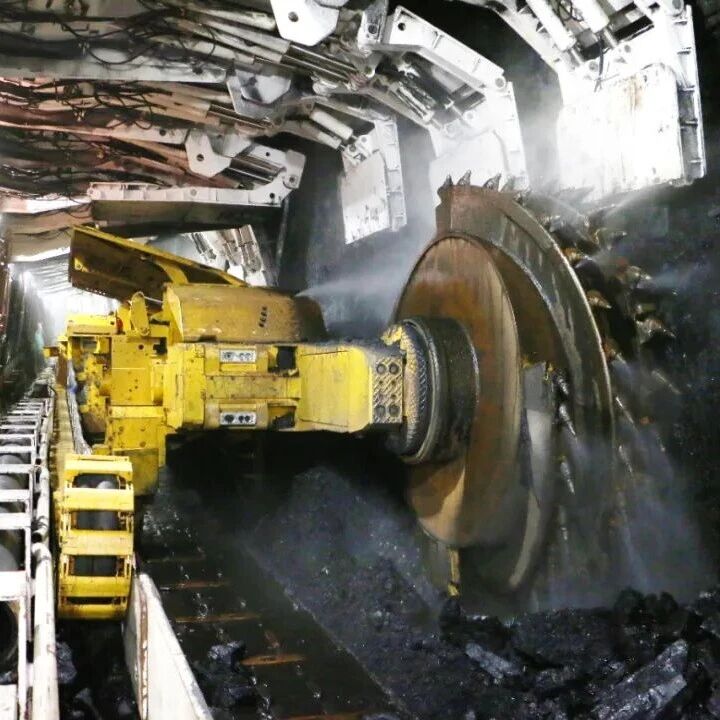
Core Viewpoint - The coal industry in China is at a critical juncture as it approaches peak consumption, necessitating a shift towards technological innovation and green development to ensure clean and efficient utilization of coal resources [1][3][10]. Group 1: Industry Performance and Trends - During the "14th Five-Year Plan" period, China's coal production has consistently increased, with a total output reaching 4.78 billion tons in 2024, an increase of 880 million tons compared to 2020 [5]. - The coal mining sector has seen significant investment, with approximately 2.1 trillion yuan allocated, leading to the establishment of modern and intelligent coal mines [5][7]. - The coal transportation network has expanded, with coal railway shipments rising from 2.36 billion tons to 2.82 billion tons, enhancing the national coal distribution capacity [6]. Group 2: Structural Optimization and Technological Advancements - The number of coal mines has decreased from over 4,600 to around 4,300, while the average production capacity per mine has increased to over 1.4 million tons [7]. - The focus of coal production is shifting towards the central and western regions, with the four provinces of Shanxi, Shaanxi, Inner Mongolia, and Xinjiang projected to produce 3.9 billion tons in 2024, accounting for 81.6% of national output [7][8]. - The coal chemical industry is transitioning towards high-quality and efficient development, with a significant increase in the production of polyolefins, reaching 3.61 million tons over five years [8]. Group 3: Future Outlook and Strategic Goals - The coal industry is expected to reach a consumption peak around 2028, with a subsequent plateau period characterized by slight fluctuations in demand [10]. - Companies are encouraged to focus on green development and technological advancements to explore new growth avenues while maintaining energy supply responsibilities [10][11]. - The industry aims to enhance competitiveness by integrating upstream and downstream enterprises, with plans to establish two major industrial clusters by 2030 [11].

管涛:年内宏观政策或需适时加力 | 立方大家谈
Sou Hu Cai Jing· 2025-10-26 12:50
Core Insights - China's economy has shown overall stability in 2023, with GDP growth of 5.2% year-on-year in the first three quarters, which is 0.4 percentage points higher than the same period last year, laying a solid foundation for achieving the annual growth target of around 5% and the successful completion of the 14th Five-Year Plan [2][10] - There are notable strengths in both production and demand, but since the third quarter, there has been a clear weakening in both consumption and investment, highlighting insufficient internal growth momentum [1][6] Economic Performance - Industrial production has improved, with the value-added of industrial enterprises above a designated size increasing by 6.2% year-on-year in the first three quarters, and high-tech manufacturing growing by 9.6% [2][3] - The retail sales of consumer goods increased by 4.5% year-on-year, with significant growth in categories like home appliances and furniture, indicating a recovery in consumer spending [4][7] External Trade and Policy Response - Despite external pressures, China's exports have shown resilience, with a 6.1% year-on-year increase in the first three quarters, even as exports to the U.S. fell by 16.9% [3][10] - The government has implemented proactive macroeconomic policies to support external trade and stabilize economic growth, including a broad deficit rate of 8.7% and a macro leverage ratio increase of 9.1 percentage points [3][10] Consumption and Investment Trends - Consumption recovery is fragile, with retail sales growth slowing to 3% in September, the lowest since December of the previous year, reflecting the diminishing effects of previous policies and weak consumer confidence [7][8] - Fixed asset investment has been declining, with a 0.5% year-on-year decrease in September, marking the first negative growth since September 2020, particularly in real estate development, which fell by 13.9% [8][9] Future Outlook and Policy Adjustments - The fourth quarter is traditionally a peak season for consumption, and the government is expected to enhance policies to stimulate consumption and investment, including the issuance of special bonds and financial tools [11][12] - The recent Central Committee meeting emphasized the need for sustained macroeconomic policy efforts to stabilize employment, businesses, and market expectations, indicating a focus on maintaining economic momentum [12][13]
宏观经济宏观周报:三季度经济的两大惊喜-20251026
Guoxin Securities· 2025-10-26 02:50
Economic Growth Insights - The GDP growth rate for Q3 reached 4.8%, significantly higher than the internal estimate of 4.1%[1] - Infrastructure investment growth fell by 13.3 percentage points compared to Q2, while real estate investment growth decreased by 7.2 percentage points[1] - The importance of traditional sectors like real estate and infrastructure in economic statistics is declining, indicating a structural change in the economy[1] Export Performance - Q3 export growth was unexpectedly strong at 6.6%, surpassing Q2's 6.2%[2] - The resilience in exports is attributed to the rise of emerging market demand and the rapid reconstruction of global supply chains[2] - Despite trade tensions, China's manufacturing continues to adapt, allowing for smoother exports to major markets[2] Structural Transition - The economic data suggests a profound "shift" in China's economy, moving away from traditional drivers towards new growth engines[3] - The combination of government support, resilient exports, and emerging new drivers is expected to provide a valuable transition period[3] - Risks remain due to uncertainties in overseas markets, which could impact the overall economic stability[3]
重大信号!“寒王”登顶,外资:上调!
券商中国· 2025-10-25 07:35
Core Viewpoint - The article highlights the resurgence of Cambricon Technologies, which has surpassed Kweichow Moutai to reclaim the title of "King of A-shares," reflecting a shift in investment preference towards high-tech and innovative industries in China's economy [1][9]. Group 1: Stock Performance and Market Dynamics - Cambricon's stock price reached 1525 CNY per share on October 24, 2023, marking a 9.01% increase and a market capitalization of approximately 638 billion CNY [1]. - Year-to-date, Cambricon's stock price has surged over 130%, with a previous peak of 1595.88 CNY per share in August [3]. - Foreign investment banks, such as Goldman Sachs, have raised Cambricon's target price to 2104 CNY per share, citing strong performance and increased AI chip shipments [3][4]. Group 2: Financial Performance - Cambricon's Q3 revenue was 1.727 billion CNY, a year-on-year increase of 1332.52%, with a net profit of 567 million CNY, marking a turnaround from previous losses [4]. - For the first three quarters, revenue reached 4.607 billion CNY, up 2386.38% year-on-year, with a net profit of 1.605 billion CNY [4]. Group 3: Investment Trends and Fund Involvement - As of Q2 2023, 403 funds held shares in Cambricon, accounting for 15.09% of its total shares, with significant holdings from major ETFs [6]. - On October 24, ETFs focused on communication equipment and tech chips saw gains exceeding 5%, driven by Cambricon's performance [5]. - Cambricon's recent private placement raised approximately 3.985 billion CNY at a price of 1195.02 CNY per share, with participating funds already seeing a floating profit of over 27.6% [7]. Group 4: Economic Transition and Future Outlook - The shift in investment preference from traditional heavy asset industries to technology-driven sectors reflects a broader economic transition in China [9]. - Fund managers emphasize the importance of understanding industry cycles, AI opportunities, and domestic substitution as key investment themes in the semiconductor sector [9]. - The Chinese government's support for high-level technological self-reliance is expected to bolster the semiconductor and AI industries, creating a favorable environment for growth [10].

山东公布“十四五”经济社会发展“成绩单”
Zhong Guo Xin Wen Wang· 2025-10-24 12:00
Core Insights - Shandong Province has achieved significant economic and social development during the "14th Five-Year Plan" period, focusing on high-quality growth and innovation [1][4]. Economic Performance - Shandong's GDP increased from 7.44 trillion yuan in 2020 to 9.86 trillion yuan in 2024, raising its share of the national economy from 7.19% to 7.31% [4]. - Per capita GDP rose from 73,400 yuan in 2020 to 97,600 yuan in 2024, while the urban-rural income ratio improved from 2.33 to 2.14 [4]. - The average education years for the working-age population increased from 10.8 to 11.44 years, and life expectancy rose from 79.1 to 80.5 years [4]. Innovation and Technology - Shandong is accelerating its transformation into a high-level innovative province, with 222 national-level enterprise technology centers, the highest in the country [6]. - The province allocates over 14 billion yuan annually to tackle key core technologies, achieving significant milestones in nuclear power and rocket technology [6]. Industrial Upgrading - The output of high-tech industries as a percentage of industrial output rose from 45.1% in 2020 to 55.2% in the first half of this year [6]. - Shandong has made substantial progress in clean energy, with non-fossil energy generation capacity reaching 134 million kilowatts and a cumulative reduction of 18.5% in energy consumption per unit of GDP over four years [6]. Regional Development - The province has implemented the Yellow River strategy, reducing water consumption per unit of GDP by 21.3% compared to 2020 [7]. - Shandong's agricultural output remains robust, with total grain production stable above 110 billion jin for four consecutive years, and the province leads in agricultural product processing enterprises [7]. Reform and Opening Up - Shandong has deepened reforms in key areas such as state-owned enterprises and financial sectors, achieving a 90% online service rate for government affairs [8]. - The province's import and export volume is projected to reach 3.38 trillion yuan in 2024, more than 1.5 times that of 2020, with exports surpassing 2 trillion yuan for the first time [8].
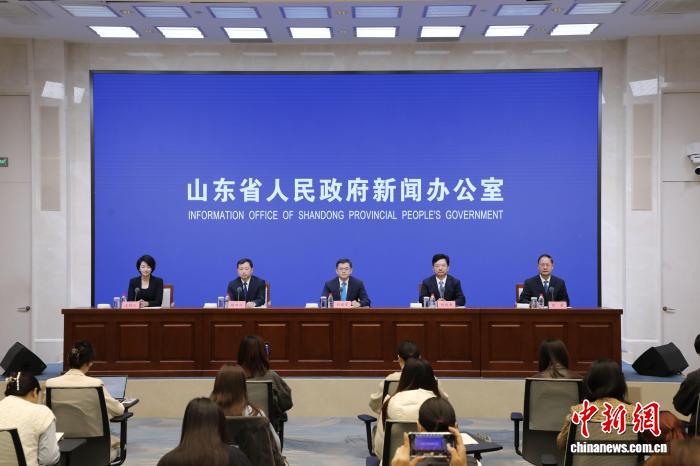
“十四五”看山东:主要目标任务即将圆满完成!经济社会发展取得历史性成就
Qi Lu Wan Bao· 2025-10-24 02:58
Core Viewpoint - The article highlights the significant achievements and progress made by Shandong Province during the "14th Five-Year Plan" period, emphasizing economic growth, innovation, and social development. Economic Development - Shandong's GDP is projected to increase from 7.44 trillion yuan in 2020 to 9.86 trillion yuan in 2024, with its share of the national economy rising from 7.19% to 7.31% [3][4] - The province's per capita GDP is expected to rise from 73,400 yuan in 2020 to 97,600 yuan in 2024, while the urban-rural income ratio has improved from 2.33 to 2.14 [3][4] Innovation and Technology - Shandong has established a national laboratory in the marine field and has seen significant advancements in research and development, with 222 national-level enterprise technology centers [5][6] - The province has allocated over 14 billion yuan annually for tackling key technological challenges, resulting in notable achievements in nuclear power and aerospace [5][6] Industrial Growth - The proportion of high-tech industries in Shandong's industrial output has increased from 45.1% in 2020 to 55.2% in the first half of 2024 [6] - Shandong has seven national-level strategic emerging industry clusters and 235 manufacturing champions, leading the nation in both categories [6] Energy Transition - Non-fossil energy generation capacity has reached 134 million kilowatts, accounting for 53.4% of total capacity, marking a 22.6 percentage point increase since 2020 [7] - The province's energy development is characterized by a significant reduction in carbon emissions, with a decrease of 1.6 billion tons of CO2 expected due to clean energy initiatives [7] Regional Development - The Shandong Peninsula urban agglomeration has seen enhanced competitiveness, with three cities surpassing a trillion yuan in economic output [8][9] - Agricultural production remains strong, with grain output stable at over 110 billion jin for four consecutive years, reinforcing Shandong's status as a major agricultural province [9] Maritime Economy - The marine economy is projected to grow from 1.3 trillion yuan in 2020 to 1.8 trillion yuan in 2024, with Shandong maintaining a 17.1% share of the national marine economy [10] - The province has made strides in developing world-class marine infrastructure, including significant advancements in offshore wind energy and aquaculture [10] Reform and Openness - Shandong has implemented extensive reforms to improve the business environment, achieving a 90% online service rate for government affairs [11] - The province's foreign trade is expected to reach 3.38 trillion yuan in 2024, a 50% increase from 2020, with exports surpassing 2 trillion yuan for the first time [12] Social Welfare - Shandong's social spending is projected to exceed 1 trillion yuan in 2024, with significant investments in public services and social security [13] - The province has made strides in education and healthcare, with a focus on equitable access and improved quality of services [13] Cultural Development - Shandong has actively promoted cultural initiatives, enhancing its cultural heritage and community engagement through various programs and events [14]

前三季度全省经济运行总体平稳
Liao Ning Ri Bao· 2025-10-24 01:19
Economic Overview - The province's GDP for the first three quarters reached 24,283.9 billion yuan, with a year-on-year growth of 4.3% at constant prices [1] - The primary industry added value was 1,611.5 billion yuan, growing by 4.3%; the secondary industry added value was 8,367.7 billion yuan, growing by 2.1%; and the tertiary industry added value was 14,304.7 billion yuan, growing by 5.4% [1] Industry Performance - The industrial added value for large-scale enterprises increased by 2.2% year-on-year, with high-tech manufacturing growing by 6.1% [1][2] - Among 40 major industrial categories, 24 saw a year-on-year increase in added value, resulting in a growth rate of 60.0% [2] - Notable product growth included transformers, civilian steel ships, synthetic ammonia, and new energy vehicles, all showing double-digit growth [2] Service Sector - The service sector's added value grew by 5.4% year-on-year, with wholesale and retail, and accommodation and catering sectors increasing by 6.0% and 5.4%, respectively [2] - The transportation and postal sectors also showed growth, with cargo turnover increasing by 4.3% and postal business volume growing by 20.9% [2] Consumer Trends - Social retail sales totaled 7,866.0 billion yuan, with a year-on-year growth of 4.1% [3] - Urban retail sales reached 6,835.5 billion yuan, growing by 4.2%, while rural retail sales were 1,030.4 billion yuan, growing by 3.3% [3] - Significant growth in retail sales was observed in home appliances (51.0%), furniture (49.2%), and communication equipment (33.2%) [3] Investment Insights - First industry investment grew by 12.1%, while second industry investment increased by 1.6%, with manufacturing investment rising by 12.0% and high-tech manufacturing investment by 11.7% [3] Fiscal Performance - General public budget revenue reached 2,309.1 billion yuan, growing by 0.7%, while expenditure increased by 3.0% to 4,960.3 billion yuan [4] - Per capita disposable income for residents was 31,441 yuan, with urban residents at 37,493 yuan (4.5% growth) and rural residents at 18,691 yuan (5.1% growth) [4] Price Trends - Consumer prices remained stable, while industrial producer prices declined [5]
回答关于“十五五”时期的几个关键问题
Jing Ji Guan Cha Bao· 2025-10-23 15:39
Group 1 - The core objective of the "15th Five-Year Plan" is to achieve significant results in high-quality development, enhance self-reliance in technology, deepen reforms, improve social civilization, and elevate the quality of life for the people [1][2] - The "15th Five-Year Plan" is a critical period for solidifying the foundation for achieving socialist modernization by 2035, with a focus on stability and progress amid external challenges [2][3] - The external environment for China's development is becoming increasingly complex, with rising challenges such as increased tariffs from the U.S. and a global trend towards "de-risking," necessitating a focus on technological self-reliance and domestic demand [3][4] Group 2 - The main policy focus during the "15th Five-Year Plan" will be on self-innovation and technological self-reliance, which are seen as the three pillars for high-quality development alongside expanding domestic demand [4][5] - The manufacturing sector will remain a key focus, with an emphasis on maintaining a reasonable proportion of manufacturing in the economy, which currently accounts for about 25% of GDP [6][7] - The fiscal and monetary policies during the "15th Five-Year Plan" will aim to support major national strategies and provide resources for modern industrial system construction while implementing counter-cyclical adjustments to stabilize the economy [8][9] Group 3 - The "15th Five-Year Plan" emphasizes the importance of investing in people, with a focus on improving public services and addressing social issues to enhance consumption capacity and willingness [11][12] - Future fiscal resources are expected to shift from investment-focused spending to more balanced investments in employment, social security, education, and healthcare, aligning with the goal of improving living standards [12]
回答关于“十五五”时期的几个关键问题
经济观察报· 2025-10-23 15:15
Group 1 - The core viewpoint of the article emphasizes that the "15th Five-Year Plan" period is crucial for achieving the 2035 long-term goals, requiring a focus on stability and progress amidst external challenges [5][6]. - The "15th Five-Year Plan" aims for significant achievements in high-quality development, technological self-reliance, deepening reforms, and improving people's living standards [5][6]. - The period is characterized by a complex and changing development environment, necessitating a focus on self-reliance in technology and strengthening the security of industrial chains [7][8]. Group 2 - The main policy focus during the "15th Five-Year Plan" will be on independent innovation and technological self-reliance, which are seen as the three pillars of high-quality development [8][9]. - The emphasis on technological self-reliance is driven by both external pressures, such as increased tariffs and restrictions from other countries, and internal limitations of the previous growth model [9][10]. - Maintaining a reasonable proportion of the manufacturing sector is essential, as it represents a significant part of the economy and is crucial for sustaining growth [10][12]. Group 3 - Fiscal and monetary policies during the "15th Five-Year Plan" will focus on providing resources for major national strategies and implementing counter-cyclical adjustments to stabilize the economy [13][14]. - The fiscal policy is expected to maintain a high budget deficit to support economic growth, with specific targets set for deficit rates and special bonds [14]. - There will be a shift in fiscal spending towards improving people's livelihoods, emphasizing investment in education, healthcare, and social security [15][16]. Group 4 - The "15th Five-Year Plan" will prioritize human development, with a focus on improving living standards and addressing urgent social issues [15][16]. - Investment in human capital will be crucial, shifting from a focus on physical investment to enhancing social services and public welfare [16][18]. - The government will aim to stimulate consumption and improve income distribution to support economic growth and social stability [15][16].