
红利资产

Search documents
千亿险资私募“大基金”动向曝光
3 6 Ke· 2025-09-02 00:42
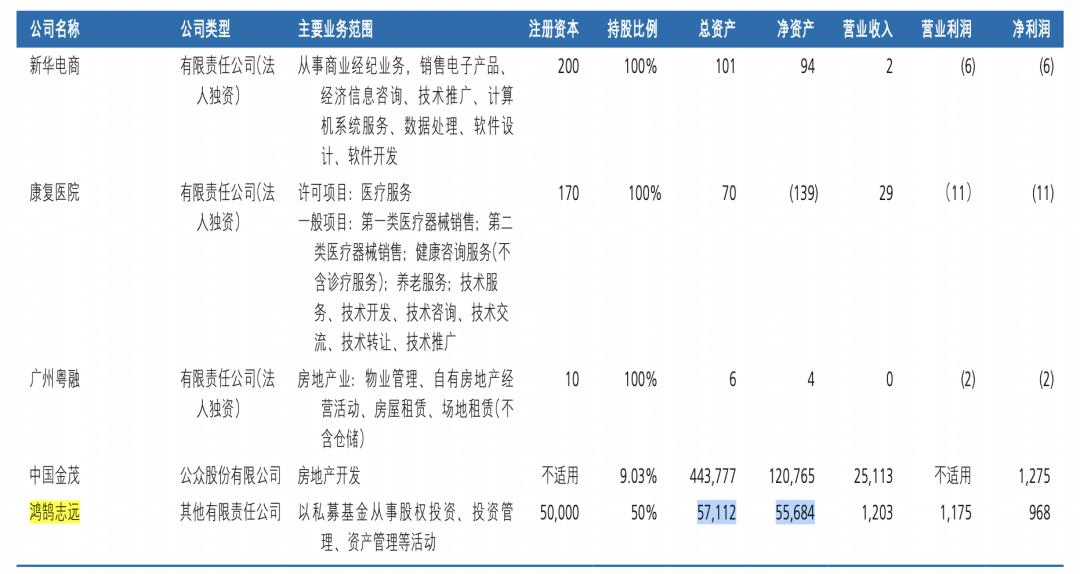
Core Viewpoint - The article highlights the performance and investment strategies of the Honghu Fund, particularly focusing on its long-term investment approach and the significant role of insurance capital in the A-share market. Group 1: Fund Performance - As of June 30, 2025, the total assets of Honghu Fund I reached 57.112 billion yuan, with net assets of 55.684 billion yuan and a total comprehensive income of 5.684 billion yuan [1][3] - The fund has fully invested its initial capital of 50 billion yuan, achieving a performance that is lower in risk and higher in returns than the benchmark [3] - The fund's operating income for the period was 1.203 billion yuan, with a net profit of 968 million yuan [3] Group 2: Investment Holdings - Honghu Fund I is among the top ten shareholders of Yili Group, Shaanxi Coal, and China Telecom, with a total market value of holdings amounting to 12.04 billion yuan as of the end of Q2 2025 [1][5] - The fund increased its holdings in Yili Group to 153 million shares, raising its ownership percentage from 1.88% to 2.42%, ranking it as the 7th largest shareholder [5] - In Shaanxi Coal, the fund's holdings increased to 116 million shares, with a shareholding percentage rising from 1.04% to 1.2%, making it the 5th largest shareholder [5] Group 3: Investment Strategy - The investment strategy of Honghu Fund II focuses on long-term investments in large listed companies that meet specific criteria, particularly those in the CSI A500 index [1][10] - The fund aims to achieve stable dividend income through low-frequency trading and long-term holding [10] - The emphasis on high-dividend and strong cash flow assets is seen as a core logic for insurance capital allocation, particularly in energy sector leading stocks [11] Group 4: Market Trends - The proportion of long-term capital entering the market is increasing, positioning insurance capital private equity as one of the largest private equity institutions holding A-shares [2][12] - The total scale of the Honghu Fund series has reached 92.5 billion yuan, nearing the target of 100 billion yuan, with ongoing operations of the 222 billion yuan long-term investment reform pilot [13][14] - Analysts predict that as long-term capital increases, the A-share market may enter a more sustainable slow bull phase [12]







A股喜迎九月开门红 三大股指齐头并进
Mei Ri Shang Bao· 2025-09-01 23:15
Market Performance - A-shares experienced a strong opening in September, with all three major indices closing higher, marking a "bull market" sentiment [1][5] - The Shanghai Composite Index rose by 0.12%, the Shenzhen Component by 0.11%, and the ChiNext Index by 0.55% [1] - The total market turnover was 1.85 trillion yuan, slightly lower than the previous day, with over 3,100 stocks rising [1] Sector Performance - Key sectors that performed well included precious metals, innovative pharmaceuticals, film and television, tourism, and storage chips [1] - Notable stocks with high trading volumes included Cambrian, with a turnover of 18.6 billion yuan, and several other popular stocks exceeding 10 billion yuan [1] - The market saw significant gains in the non-ferrous metals and pharmaceutical sectors, with multiple stocks hitting the daily limit or rising over 10% [3] Investment Outlook - Institutions are optimistic about the market, suggesting that the conditions for a bull market are gradually being established, driven by cyclical improvements in the economy and potential new capital inflows [5][6] - The market is expected to continue a trend of oscillating upward, with a focus on high-growth sectors for short-term investment opportunities [5] - Long-term investment strategies should consider sectors benefiting from domestic consumption, technology independence, and industries with improved supply-demand dynamics [5][7]
千亿险资私募“大基金”动向曝光
财联社· 2025-09-01 13:24
Core Viewpoint - The article highlights the performance and investment strategies of the Honghu Fund, particularly focusing on its long-term investment approach and the significant role of insurance capital in the A-share market [1][2][3]. Fund Performance - As of June 30, 2025, the total assets of Honghu Fund I reached 57.112 billion yuan, with net assets of 55.684 billion yuan and a total comprehensive income of 5.684 billion yuan [1][3]. - The fund has fully invested its initial capital of 50 billion yuan, achieving a performance that is lower in risk and higher in returns than the benchmark [3]. Investment Holdings - Honghu Fund I is among the top ten shareholders of Yili Co., Shaanxi Coal, and China Telecom, with a combined market value of 12.04 billion yuan as of the end of Q2 2025 [1][5]. - The fund increased its holdings in Yili Co. from 1.88% to 2.42% and in Shaanxi Coal from 1.04% to 1.2% during the first half of the year [5][6]. New Fund Initiatives - Honghu Fund II has entered the top ten shareholders of China Petroleum and China Shenhua, while Honghu Fund III has invested in Sinopec [1][8][10]. - The second and third phases of the Honghu Fund are progressing well, with Fund II nearly completing its main investment and Fund III starting in July 2025 [8][11]. Investment Strategy - The investment strategy emphasizes long-term holdings and low-frequency trading to achieve stable dividend income, focusing on large A+H share companies that meet specific criteria [1][11]. - The funds are targeting high-dividend stocks with strong cash flow, particularly in the energy sector, which is seen as a core logic for insurance capital allocation [12][13]. Market Outlook - The increase in long-term capital entering the market is expected to lead to a more sustainable slow-bull market in A-shares [13]. - The total scale of the Honghu Fund series has reached 92.5 billion yuan, approaching the target of 100 billion yuan, with ongoing operations of newly approved private funds [13][14].



国泰海通:未来股指还会有新高
天天基金网· 2025-09-01 10:23
Group 1 - The core viewpoint is that the Chinese stock market is expected to reach new highs, driven by economic transformation, declining risk-free rates, and capital market reforms [2][3]. - The market is currently experiencing a phase of adjustment, but overall valuation levels remain low, indicating that the market is not overheated [3]. - The anticipated interest rate cuts by the Federal Reserve may provide opportunities for the Chinese central bank to implement easing measures, supporting the upward momentum of the stock market [3]. Group 2 - The A-share market is likely to continue a trend of oscillating upward, with a focus on short-term volatility risks [4]. - Key investment themes include the improvement of supply-demand dynamics, consumer spending driven by policy support, and advancements in technology sectors such as AI and semiconductors [4]. - The market is expected to maintain active trading volumes, supported by positive policy expectations and capital inflows [4]. Group 3 - The technology sector is anticipated to perform well in September due to concentrated industrial catalysts, despite recent market fluctuations [5][6]. - The focus should be on sectors benefiting from macroeconomic recovery, including AI, pharmaceuticals, and military technology [6]. - The consumer electronics sector, particularly companies in the Apple supply chain, is expected to see renewed growth following product launches [7]. Group 4 - Key areas of focus for September include resources, innovative pharmaceuticals, consumer electronics, chemicals, gaming, and military sectors [7]. - The potential for a weaker dollar due to Federal Reserve rate cuts may catalyze further growth in resource commodities, especially precious metals and copper [7]. - The upcoming increase in innovative pharmaceutical events is expected to drive upward momentum in that sector [7].

“金九”行情来临,别错过!行情发生质变,还有哪些投资机会?
Sou Hu Cai Jing· 2025-09-01 08:46
Group 1: Apple Supply Chain Companies - Over 30 Apple supply chain companies, including Crystal Optoelectronics, Industrial Fulian, and others, have been intensively researched by institutions since the third quarter [1] - iPhone 17 has entered large-scale production, and related companies in the supply chain are expected to benefit from the new device's inventory [1] - 10 Apple supply chain companies received over 50 institutional investigations each [1] Group 2: Investment Trends and Market Sentiment - Insurance institutions are optimistic about the CSI 300 index-related stocks, focusing on sectors such as pharmaceuticals, electronics, banking, and communication [1] - The top five sectors for net inflow include pharmaceuticals, innovative drugs, non-ferrous metals, chemical raw materials, and gold [1] - The top ten individual stocks for net inflow include Zhongji Xuchuang, Xian Dao Intelligent, and others [1] Group 3: Alcohol Industry Insights - The liquor industry is rapidly bottoming out, with leading companies adjusting channel structures to enhance market capabilities [3] - If consumption gradually improves, companies that have made positive adjustments are expected to seize more development opportunities [3] - The beer sector is expected to maintain stable performance in Q3 despite the impact of alcohol restrictions [3] Group 4: Gold Market Analysis - Gold prices continue to decline, significantly suppressing consumption [3] - In the first half of 2025, China's gold consumption is projected to reach 505.205 tons, a year-on-year decrease of 3.54% [3] - Jewelry consumption is expected to drop by 26%, while investment demand for gold bars and coins is anticipated to increase by 23.69% [3] Group 5: Brokerage Sector Dynamics - The brokerage sector is experiencing collective excitement due to increased trading activity and continuous capital market reforms [5] - The sector's valuation remains low, and institutional holdings are also low, indicating potential opportunities [5] - Recent market activity has led to a significant increase in margin trading, with new account openings rising over 30% month-on-month [5] Group 6: Market Performance and Trends - The short-term market trend is strong, with noticeable inflow of new capital and a strong profit-making effect [7] - The Shanghai Composite Index continues to rise, with expectations for new highs [10] - More than 140 companies have announced cash dividends exceeding 100 billion yuan during the semi-annual report period [10]

“光模块双巨头”,大涨!创新高
Zhong Guo Zheng Quan Bao· 2025-09-01 08:37
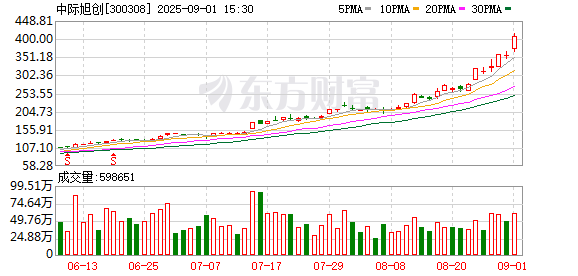
Group 1 - CPO (Co-Packaged Optics) concept stocks saw significant gains, with major players like Zhongji Xuchuang and Xinyi Sheng reaching historical highs, closing at 406.10 CNY and 388.50 CNY per share, respectively [2][4] - The gold sector remained strong, with multiple stocks such as Zhejiang Fu Holdings and Zhongjin Gold hitting the daily limit up, indicating robust market interest [2][8] - The A-share market experienced a positive start in September, with the Shanghai Composite Index rising by 0.46%, Shenzhen Component by 1.05%, and the ChiNext Index by 2.29%, reflecting overall market optimism [3] Group 2 - China Galaxy Securities highlighted three main investment themes: improvement in supply-demand dynamics and industry profitability, consumer spending under policy support, and technological self-sufficiency in sectors like AI and semiconductors [4][8] - Zhongji Xuchuang reported a 36.95% year-on-year increase in revenue to 14.789 billion CNY and a 69.40% increase in net profit to 3.995 billion CNY for the first half of 2025, driven by high-end optical module demand [8] - Xinyi Sheng's revenue surged by 282.64% to 10.437 billion CNY, with net profit increasing by 355.68% to 3.942 billion CNY, benefiting from data center investments [8][11]

A股大概率将延续震荡上行走势,但需关注短期波动风险
Mei Ri Jing Ji Xin Wen· 2025-09-01 00:50
Group 1 - The current market trading sentiment has entered an overheated phase, with a noticeable tendency for crowding, necessitating attention to the deterioration of trading structure [1] - The TMT sector's crowding is approaching a warning line, indicating that low-heat sectors like consumption and cyclical industries may offer higher cost-performance ratios in the next market phase [1] - The first half of 2025 is expected to see revenue and net profit turn positive year-on-year, marking a clear turning point in the profit cycle and a mild recovery path for companies [1] Group 2 - The A-share market is likely to continue a volatile upward trend, but short-term volatility risks should be monitored [2] - Future focus areas include short-term rebound opportunities, mid-to-long-term themes such as "anti-involution" concepts driven by improved supply-demand dynamics, and dividend assets with safety margins [2] - The domestic consumption sector, particularly service consumption under supportive policies, presents investment value, with a recommendation to focus on undervalued targets [2] Group 3 - Coal prices have risen significantly since July due to a shift from a loose supply-demand balance to a slightly tighter one [3] - Although recent prices have shown some easing, strict safety regulations and production checks are expected to limit supply increases, leading to a gradual stabilization and potential recovery of coal prices [3] - Leading companies in the coal sector are managing costs effectively, showing strong profit resilience, with expectations of volume and price increases in the second half of the year [3]
养老金“抄底”路线图
阿尔法工场研究院· 2025-09-01 00:05
Core Viewpoint - The article discusses the increasing allocation of insurance funds into equity assets driven by "asset scarcity" and policy relaxation, highlighting a significant trend in the investment landscape [4][5]. Group 1: Insurance Fund Activities - Since August, insurance companies have intensified their stake acquisitions, with notable instances including China Ping An purchasing approximately 1.74 million shares of China Pacific Insurance, and Minsheng Life increasing its stake in Zheshang Bank [6]. - The number of stake acquisitions by insurance funds has approached 30 this year, with banks being the most favored sector, including multiple acquisitions in Postal Savings Bank and Agricultural Bank by Ping An Life [7]. - Public utility sectors are also attracting insurance funds, with companies like Great Wall Life and China Life making significant investments in water utility firms [8]. Group 2: Insurance Fund Growth and Challenges - The insurance sector is experiencing robust growth in premium income due to increased awareness among residents regarding insurance, leading to a rise in the balance of insurance fund investments [11]. - By mid-2025, the balance of insurance fund investments is projected to exceed 36 trillion, with a year-on-year growth of 17.39% [12]. - However, the investment structure is facing challenges, particularly with declining net investment yields, as major insurers have seen their yields drop below 4% [15]. Group 3: Dividend Low-Volatility Strategy - The article emphasizes the appeal of dividend low-volatility assets, which provide stable cash flows and long-term returns, making them attractive in both bear and bull markets [19]. - The dividend low-volatility index has outperformed the CSI 300 index, with an annualized return of 13.74% since inception, showcasing its defensive characteristics during market downturns [19]. - The current environment, with a 10-year government bond yield around 1.8%, makes the 4% dividend yield of the low-volatility index particularly appealing compared to other asset classes [22]. Group 4: Pension Investment Trends - Pension investments align closely with the characteristics of insurance funds, focusing on long-term stability and security rather than short-term high returns, which complements the dividend low-volatility strategy [23]. - The growth of pension index products indicates a significant shift towards dividend low-volatility strategies, with the Hua Tai Bai Rui Dividend Low-Volatility ETF seeing a substantial increase in scale [24]. - The Y-share of the Hua Tai Bai Rui Dividend Low-Volatility ETF offers tax benefits for individual pension contributions, enhancing its attractiveness as a long-term investment option [26].
大佬最新调仓曝光!张坤大举买入这一板块!还表示:这样的市场机会不常见!主动权益基金大丰收!21只翻倍,平均收益23.83%!
雪球· 2025-08-31 05:04
Group 1 - The core viewpoint of the article highlights the significant performance of actively managed equity funds in the A-share market, with many funds achieving substantial returns due to the market rally [2][3] - The main indices showed strong upward trends in the first eight months, with the North Exchange 50 index rising by 51.49%, while other indices like the ChiNext and the STAR Market also saw increases exceeding 30% [4][5] - Actively managed equity funds recorded an average net value growth rate of 23.83% in the same period, with ordinary stock funds and mixed equity funds achieving even higher growth rates of 28.38% and 28.79% respectively [5][6] Group 2 - A remarkable 98.19% of actively managed equity funds reported positive net value growth, with 603 funds achieving over 50% growth, and 21 funds exceeding 100% [6] - Notable funds with exceptional performance include Yongying Technology Smart Selection A, which achieved a net value growth of 175.68%, and other funds like Zhonghang Opportunity Leading A and Changcheng Pharmaceutical Industry Selection A also performed well [7] Group 3 - Prominent fund manager Zhang Kun expressed optimism about domestic consumption and highlighted the importance of long-term investment opportunities in high-quality companies, despite prevailing market pessimism [8][12] - Other well-known fund managers, such as Zhu Shaoxing and Ge Lan, have also made significant adjustments to their portfolios, focusing on sectors like pharmaceuticals and technology, indicating a positive outlook for the market [13][15][17]

上半年新增超6400亿险资入市 重仓股浮出水面
Zhong Guo Jing Ying Bao· 2025-08-29 18:27
Core Viewpoint - The A-share market is experiencing a "slow bull" trend, with significant inflows from various funds, particularly insurance capital, leading to a new high in the Shanghai Composite Index and total market capitalization [1][2]. Insurance Capital Investment Trends - As of the end of Q2 2025, the balance of insurance company funds reached 36.23 trillion yuan, a year-on-year increase of 17.4% [1]. - Insurance capital's stock investment balance exceeded 3 trillion yuan, with a net increase of 640.6 billion yuan in the first half of the year, marking a significant rise [1][2]. - In 2024, insurance capital saw a substantial increase in stock investments, totaling 485.5 billion yuan, reversing a cautious trend from previous years [2]. Investment Structure and Strategy - The proportion of insurance capital allocated to stocks has been increasing for five consecutive quarters, with a notable 8.9% growth from Q1 to Q2 2025 [2]. - The investment strategy is shifting towards equities due to low long-term bond yields and the need to enhance returns amid declining net investment income [2][3]. - Regulatory changes have created a more favorable environment for insurance capital to enter the stock market, including increased investment limits for equity assets [3]. Sector Preferences and Stock Characteristics - Insurance capital has shown a preference for high-dividend and high-growth potential stocks, particularly in sectors like banking, chemicals, machinery, and new energy [6][8]. - The banking sector has been particularly favored, with 14 instances of insurance capital increasing stakes in seven banks, attributed to their stable dividends and solid performance [7]. - Notable companies attracting insurance capital include Yuntianhua, Dongmu Co., and Zhongjian Technology, which are seen as benefiting from economic recovery and industry upgrades [8]. Future Investment Outlook - Insurance institutions are optimistic about sectors such as pharmaceuticals, electronics, banking, and new energy, with a focus on high-dividend and innovative companies [9][10]. - The investment approach is expected to evolve towards a "dumbbell" strategy, balancing traditional stable investments with growth opportunities in new sectors [9][10]. - Major insurance companies like China Life and China Ping An are committed to enhancing their equity allocations, focusing on high-quality stocks and sectors aligned with national strategies [10][11].

