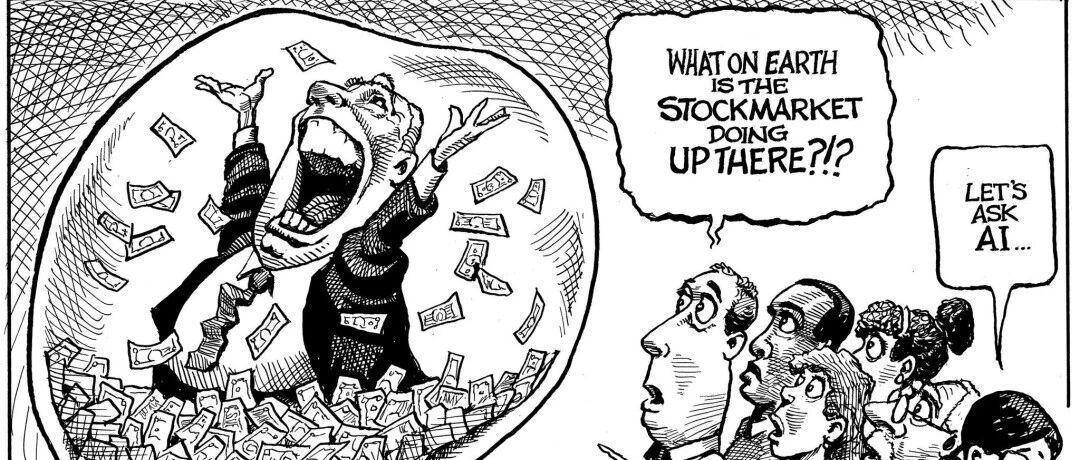
AI泡沫

Search documents
AI巨头暴跌背后的真相
格隆汇APP· 2025-12-14 10:06
作者 | 哥吉拉 数据支持 | 勾股大数 据(www.gogudata.com) 甲骨文绩后股价暴跌引发美股对AI板块大跌的市场情绪还没平复,周五晚的博通带来更大的惊魂夜。 因为部分数据没能让狂热的市场预期满意,博通绩后单日重挫11.43%,一举击溃市场信心。 雪上加霜的是,除了甲骨文和博通的业绩利空冲击,彭博也同时报道了甲骨文将部分为Open AI开发的数据中心的竣工时间从2027年 推迟至2028年的消息。 还有一家网红AI基建公司Fermi被爆重要客户取消租约导致股价盘中崩盘暴跌46%,引发更大恐慌。 联合冲击下,一股极为强烈的抛售潮迅速蔓延,光模块、交换机、电力、存储等一众AI产业链股跟随跳水,多只此前热门概念股如 Astera Labs、Core Weave、Coherent 等跌幅都超过了10%,最终美股纳指大跌1.91%。 一时间,"AI泡沫崩盘"的担忧在市场蔓延。 对于这一次越发强烈的AI抛售潮,我们应该更关注什么? 暴跌真相 01 如何认真去研判甲骨文和博通的财报数据,其实可以发现AI行业的基本面还很稳固。 此次AI板块的全线大跌,核心逻辑绝非AI需求的突然收缩。 博通财报显示,未来18个月 ...



2025科技与资本报告|对话王仲远:警惕具身智能“伪需求”泡沫
Bei Jing Shang Bao· 2025-12-14 07:40
鼎好大厦A座2楼的具身智能训练场内,机械臂和人形机器人正在精准地执行着各种复杂任务。这里是智源研究院具身智能组探索人工智能边界的试验田。 在这里,能看到智源研究院30余家具身智能合作伙伴的机器,也能看到同一项任务更通用的解法。 去啃那些更前瞻性的研究,成为人工智能创新引领者,是智源研究院创立之初就定下的愿景。跟着智源研究院的科研布局,可以看到行业发展的趋势。作为 新型研究机构,智源研究院负责向创业公司提供"安卓操作系统",让企业专心做硬件。这样的定位让其对模型、硬件、产业有着更清晰、中立的观察。 "具身智能的发展,应该先通过专用模型在特定场景落地,形成数据闭环,再逐步向通用化发展,而不是一开始就追求'万能具身'",在与北京商报记者的交 流中,智源研究院院长王仲远多次表达了这一核心观点。让他担忧的是,具身智能订单的需求真伪、创业公司能否活下来。让他欣喜的是,资本市场用实际 行动证明了各方对具身智能的未来有了共识,技术、产业都在螺旋式上升。 Q:11月,黄仁勋、约书亚·本吉奥、李飞飞等六人同台讨论了AI泡沫等话题,您怎么看待AI泡沫? A:和某些其他赛道不同,AI赛道本身是没有泡沫的,AI技术确实在实实在在地便利 ...

全线跳水!鬼故事越来越多了…
Ge Long Hui· 2025-12-13 11:25
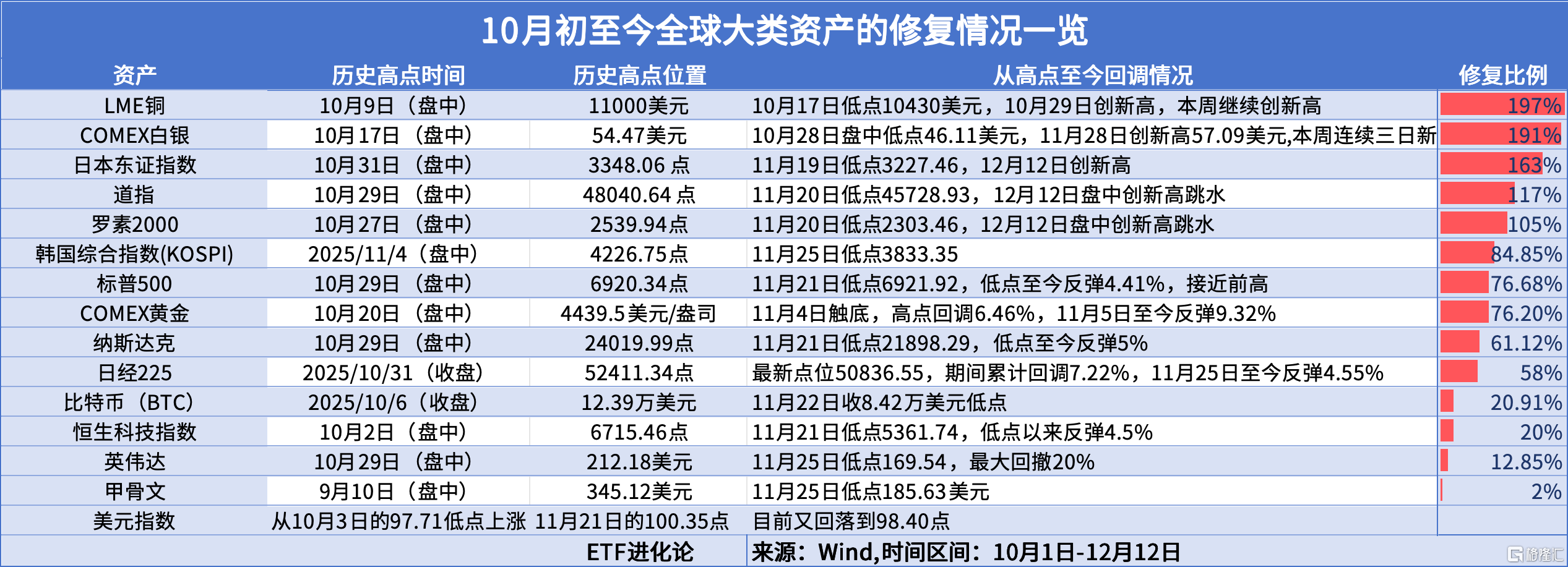
过去靠信仰,看准一个方向,单压一类资产就能躺赢的时代,或许真的已经走远。 深夜看似平静,资金却在暗涌。 当市场还在惊叹白银凌厉的涨势——年内飙涨近120%,直逼1979年以来最强表现。周五,一盘冷水就迎头浇下,COMEX白银自高位跳水5%。而早在11 月,市场就已流传摩根大通【囤积白银,空美元信用】的传言。风暴,从来不是突然降临。 黄金触及4386美元高位后急速回落100美元,率先修复的道指、罗素2000刷新历史高点后集体跳水。 AI赛道更是抛售重灾区:业绩超预期的博通暴跌11%,被爆出"数据中心建设推迟竣工"鬼故事的甲骨文再跌4%,较高点已回撤42%…… 黄金、白银、美股全线跳水的背后,资金的抛售情绪骤然浓郁,市场究竟在恐惧什么? 草蛇灰线,伏脉千里。 与其被杂音干扰:一会儿"流动性紧张",一会儿"鹰派降息",一会儿"日本央行加息",一会儿"AI泡沫"——不如回归最诚实的语言:K线。 真金白银画出的走势里,埋藏着当下全球市场几个关键变量。 1 10月高点后,谁在悄悄收复失地? 从10月高点算起,不同资产的复苏节奏已经悄然分化: 最先收复失地的是白银、LME铜、日本东证指数、道指和罗素2000。标普500、C ...
德银深度报告:真假AI泡沫,究竟谁在裸泳?
美股IPO· 2025-12-13 11:14
Core Viewpoint - Deutsche Bank believes the current AI boom is not a single bubble but rather an intertwining of valuation, investment, and technology bubbles [1][2][3] Valuation Bubble - The report indicates that the Shiller Cyclically Adjusted Price/Earnings ratio has exceeded 40, nearing the 44 times level seen at the peak of the 2000 internet bubble, signaling potential market overheating [4] - Despite high overall valuations, these are primarily driven by profit growth rather than pure speculation, with the S&P 500 index operating within a 22.7% annual growth trend since October 2022 [6] - Large tech stocks have a valuation premium of about 60%, supported by over 20% profit growth differences [8] - Private companies exhibit significantly higher valuations, with OpenAI's revenue forecast for 2025 leading to a price-to-sales ratio of 38 times, and Anthropic at 44 times, while public tech giants like Nvidia, Microsoft, Google, and Amazon have more reasonable valuations [11][13] - Current AI investments are primarily supported by free cash flow, contrasting with the debt-driven nature of the internet bubble era [15] Investment Bubble - The report highlights that global tech capital expenditure has maintained a growth rate of 12.3% since 2013, indicating that current growth is still within this trend [16] - Large tech companies have seen a continuous rise in investment returns since the onset of the AI cycle, driven by cloud customer demand and cost savings from AI tools [17] Technology Bubble - There are concerns regarding the usability and scalability of generative AI, which still faces issues like errors and hallucinations, potentially hindering large-scale application [19] - However, advancements such as Google's Gemini 3 demonstrate that AI has not yet reached its ceiling, achieving significant progress in multimodal capabilities [21] - Demand for AI is robust, with Google processing 130 trillion tokens monthly, a substantial increase from 9.7 trillion in April 2024, and less than 10% of U.S. businesses currently utilizing AI, indicating vast growth potential [23] - The cost of the cheapest large language models has decreased by 1000 times, driving consumption growth and ensuring no chip idleness [25] Potential Triggers for Bubble Burst - Complex financing structures, such as OpenAI's $1.4 trillion computing purchase commitment over eight years, may introduce systemic risks and valuation opacity [28] - Even cash-rich cloud service giants are beginning to issue more debt, with investment-grade bond issuance exceeding $35 billion in 2025, raising concerns about rising net debt to EBITDA ratios [30] - The report notes diminishing returns on scale, with training costs for AI models skyrocketing from $10 million to over $1 billion, while the probability of developing AGI within five years is declining [32] - Growing skepticism towards AI is evident, with over 20% of respondents in the UK and EU expressing significant concerns about job displacement due to AI [34] - Energy supply may become a major barrier to AI adoption and monetization, with projected electricity demand by 2030 expected to be four times that of 2020 [36]





海外策略周报:美股科技股回调,全球多数市场波动加大-20251213
HUAXI Securities· 2025-12-13 11:09
Global Market Overview - The US tech stocks experienced a significant pullback this week, with increased volatility across global markets due to concerns over an AI bubble and hawkish signals from the Federal Reserve regarding interest rate cuts [1][11] - The TAMAMA technology index has a current P/E ratio of 36.98, while the Philadelphia Semiconductor Index's P/E ratio has risen to 45.72, and the Nasdaq index remains at 42.01, indicating elevated valuations in US tech stocks [1][11] - The S&P 500 Shiller P/E ratio stands at 40.22, close to historical highs, suggesting potential for further pullback in US tech stocks [1][11] US Market Performance - The S&P 500 and Nasdaq indices fell by 0.63% and 1.62% respectively, while the Dow Jones Industrial Average rose by 1.05% this week [2][11] - Within the S&P 500, the materials sector saw the largest gain of 2.44%, while the communications services sector experienced the largest decline of 3.2% [11] Hong Kong Market Performance - The Hang Seng Index, Hang Seng China Enterprises Index, and Hang Seng Hong Kong Chinese Enterprises Index all declined, with respective drops of 0.42%, 1.29%, and 2.58% [22][30] - The Hang Seng Technology Index decreased by 0.43%, indicating a mixed performance within the tech sector [22][35] Emerging Markets Performance - The Brazilian IBOVESPA index increased by 2.16%, while the Vietnamese VNINDEX fell by 5.42%, highlighting mixed performance across emerging markets [10][22] Key Economic Data - Japan's GDP growth rate for Q3 was -0.6%, lower than the previous value of 0.5%, indicating economic contraction [3][37] - The US Sentix Investor Confidence Index rose to 9.7%, up from 4%, suggesting improved investor sentiment [37][39]
黑天鹅突袭!“AI交易”,全线重挫!
券商中国· 2025-12-13 02:38
Core Viewpoint - The US stock market experienced a significant downturn, particularly in the technology sector, driven by concerns over an "AI bubble" and hawkish signals from Federal Reserve officials [2][9]. Market Performance - On December 12, US stock indices collectively fell, with the Dow Jones down 0.51%, the Nasdaq down 1.69%, and the S&P 500 down 1.07% [3]. - Major tech stocks saw substantial declines, with Broadcom dropping over 11%, Oracle and TSMC ADR down over 4%, and Nvidia down over 3% [4]. AI Sector Concerns - Oracle's stock plummeted after reports indicated delays in data center construction for OpenAI due to labor and material shortages, which Oracle later denied [2][8]. - Broadcom's AI market sales outlook failed to meet investor expectations, raising fears about the sustainability of the AI sector [8]. Federal Reserve Influence - Hawkish comments from multiple Federal Reserve officials led to increased bond yields and a sell-off in tech stocks. Kansas City Fed President Esther George noted persistent inflation and a need for restrictive monetary policy [9][10]. - The market is anticipating key employment and inflation data that will influence the Fed's January policy decisions [10]. Future Rate Expectations - Current predictions suggest a 24.4% chance of a 25 basis point rate cut in January, with a 75.6% probability of maintaining current rates. By March, the cumulative probability of a 25 basis point cut rises to 41.9% [10][11].

“中国可能都做不到”!AI泡沫充斥得州:超220GW大项目申请到2030年入电网
美股IPO· 2025-12-13 02:19
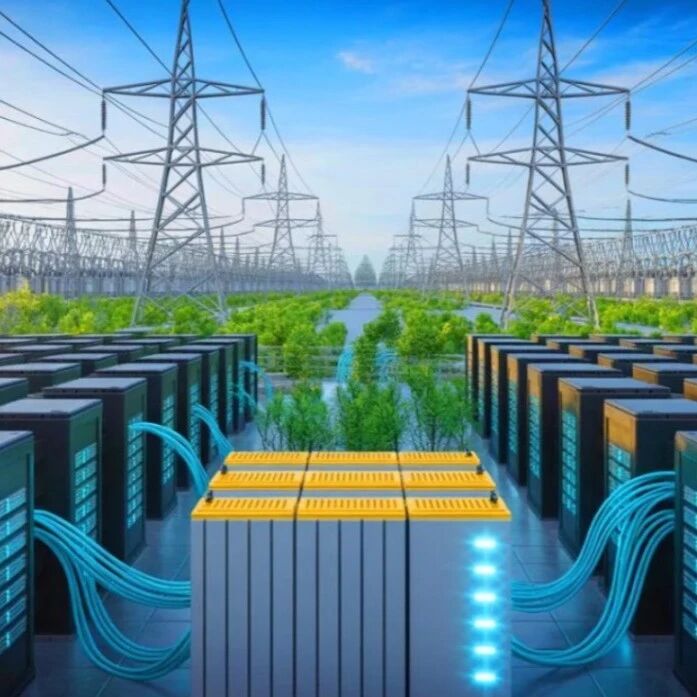
Core Viewpoint - Texas is experiencing a significant surge in data center construction, with over 220 GW of large projects applied for connection to the Texas grid by 2030, primarily driven by the AI boom, raising concerns about a potential bubble in the industry [1][3][7]. Group 1: Project Capacity and Demand - The total capacity of large projects applying for connection to the Texas grid has exceeded 220 GW, more than double the state's peak summer demand of approximately 85 GW [2][8]. - Over 70% of the projects are data centers, with more than half, approximately 128 GW, yet to be submitted for ERCOT review [1][2][8]. - The number of large projects applying for power connection in Texas has nearly quadrupled this year [1][8]. Group 2: Industry Concerns and Risks - Experts warn that the scale of applications is unsustainable, with insufficient infrastructure to meet such high demand, leading to concerns about potential oversupply and financial instability in the sector [3][7][9]. - The Texas Public Utility Commission has implemented measures to differentiate serious data center projects from speculative ones, requiring developers to pay significant fees and demonstrate site control [11]. - The risk of overbuilding is compounded by rising infrastructure costs, as data centers compete for the same limited resources [12][13]. Group 3: Financial Market Dynamics - The financing environment for data centers is characterized by aggressive lending practices, with some borrowers seeking loans exceeding project costs, raising concerns about the formation of a financial bubble [14][15]. - There have been at least $175 billion in credit transactions related to data centers in the U.S. this year, indicating a robust but potentially risky investment climate [15]. - Regulatory scrutiny is increasing, particularly in the UK, regarding the levels of spending and financing for data centers [15].
2026美股展望:AI泡沫的内部熔点与外部拐点
智通财经网· 2025-12-13 01:35
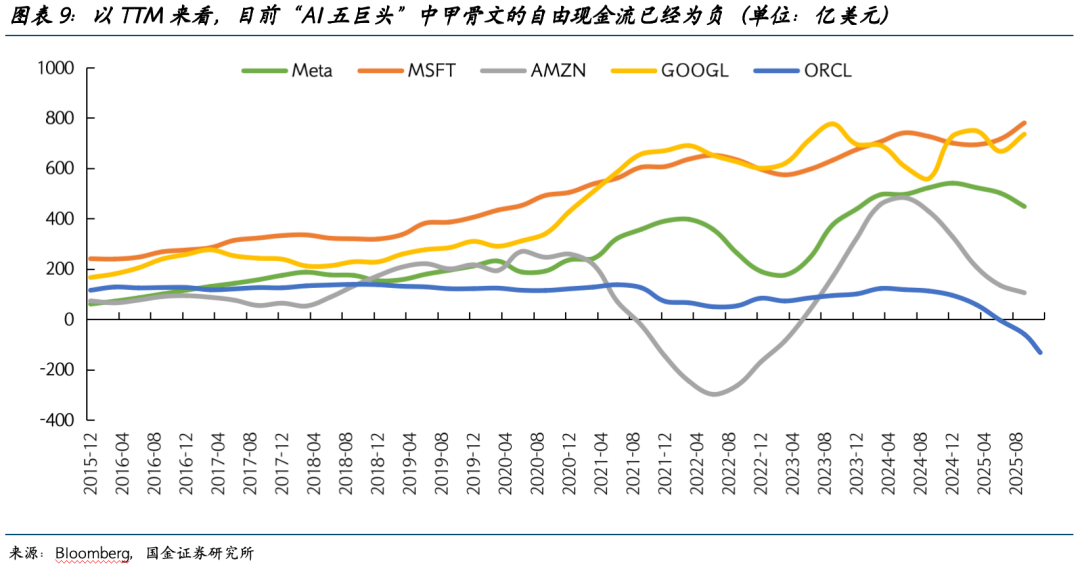
Core Viewpoint - The U.S. stock market in 2025 faced significant challenges from tariff impacts, fiscal shifts, and industrial trends, yet demonstrated resilience post-shock, particularly with the influence of AI investments and favorable monetary policies [1][2]. Group 1: AI Investment and Market Dynamics - The scale and concentration of AI investments today far exceed those during the 2000 tech bubble, indicating that issues with major AI companies could have catastrophic effects on the financial and tech ecosystems [2]. - The current AI investment landscape is characterized by a consensus among market participants, with various stakeholders motivated to inflate the bubble, including tech firms, financial institutions, and media [3]. - The potential bursting of the AI bubble could create a fertile ground for new innovations, similar to the aftermath of the 2000 internet bubble, where excess infrastructure became affordable for future growth [3][4]. Group 2: Industry Structure and Profitability - The AI industry is segmented into three layers: chip manufacturers, cloud service providers, and model developers, with profitability and cash flow varying significantly across these segments [5][7]. - Chip manufacturers, exemplified by Nvidia, are currently enjoying high profitability due to strong demand for AI chips, while cloud service providers like Amazon and Microsoft have established resilient business models [7]. - Model developers face intense competition and higher costs, with companies like OpenAI incurring substantial R&D expenses, leading to a notable disparity in profitability across the AI value chain [7][8]. Group 3: Financial Health and Capital Expenditure - The capital expenditure of major AI firms has surged, with the top five AI companies collectively spending $105.77 billion in Q3 2025, a 72.9% increase year-over-year, raising concerns about cash flow sustainability [9]. - The average capital expenditure to cash flow ratio for these firms reached 75.2%, indicating a significant strain on financial health as they continue to invest heavily in AI [9][12]. - Companies like Oracle are facing challenges with negative free cash flow, relying on external financing to support their capital expenditures [9][13]. Group 4: Risks from Financing Structures - The reliance on off-balance-sheet financing and complex investment structures among tech giants poses significant risks, as these methods can obscure true financial health and lead to systemic vulnerabilities [16][17]. - Historical precedents suggest that such opaque financing practices can lead to major financial crises, raising concerns about the potential for similar outcomes in the current AI investment landscape [18]. Group 5: Political and Economic Influences - Political uncertainty, particularly surrounding the upcoming elections, is expected to impact liquidity and market sentiment, potentially exacerbating vulnerabilities in the AI narrative [19][21]. - The interplay between political decisions and monetary policy will be crucial in shaping the future of AI investments and the broader stock market, with potential implications for economic stability [20][21].
中金研究 | 本周精选:宏观、策略、保险
中金点睛· 2025-12-13 01:08
Group 1 - The core viewpoint of the article emphasizes the importance of addressing economic challenges in China, with a clear focus on consumption, investment, real estate, corporate accounts, and market competition as key issues raised during the Central Economic Work Conference held on December 10-11 [5] - The policy direction for the upcoming year is characterized by "stability while seeking progress, and improving quality and efficiency," indicating a shift towards policies that prioritize effective implementation rather than merely expanding total volume [5] - The Central Political Bureau meeting on December 8 highlighted the need for a more proactive macroeconomic policy, aiming to expand domestic demand and optimize supply, with a focus on both increasing and decreasing measures to enhance policy efficiency [7] Group 2 - Recent changes in global liquidity have impacted risk assets, with upcoming events such as the FOMC meeting and economic data releases expected to influence liquidity conditions [9] - The article discusses the potential for gold to replace the dollar as a central currency in the international monetary system, noting that the recent surge in gold prices reflects a shift in the global economic and political landscape rather than a return to the gold standard [12] - The insurance industry is projected to enter a new growth cycle by 2026, with a more positive trend in liabilities and a shift in investment logic towards valuing growth capabilities [14]

2026美股展望:AI泡沫的内部熔点与外部拐点(国金宏观陈瀚学)
雪涛宏观笔记· 2025-12-13 00:57
Core Viewpoints - The fragility of capital expenditure will manifest through deteriorating liquidity, with potential financial risks arising from interconnected transactions and off-balance-sheet financing. The "political-liquidity-narrative" framework is identified as a key source of external volatility [2] Group 1: AI Investment Bubble - Many believe that there is no bubble in the AI investment sector, citing the healthy revenue and cash flow of tech giants compared to the dot-com bubble era. However, this comparison overlooks fundamental differences in scale and concentration of AI investments today [7] - The value of AI in enhancing productivity across industries will take a long time to materialize, as organizational and process changes lag behind technological advancements. AI currently serves more as a predictive tool rather than a decision-making replacement [9] - Despite the long-term nature of AI's impact on productivity, investment in AI has become a market consensus, driven by various stakeholders including tech companies, financial institutions, and media [10] Group 2: Capital Expenditure Vulnerability - From Q3 2025, capital expenditures among major tech firms investing heavily in AI reached $105.77 billion, a 72.9% year-on-year increase. This surge raises concerns about cash flow sustainability, with the average Capex/CFO ratio rising by 29.7 percentage points to 75.2% [24] - Projections indicate that by Q2 2027, the average Capex/CFO ratio for these firms could reach 95.9%, nearing the peak levels seen during the dot-com bubble [25] - The potential for negative free cash flow could deepen vulnerabilities, particularly for firms like Meta, which may face a cash flow crisis by Q4 2026 [32] Group 3: Financial Risks from High Leverage and Off-Balance-Sheet Financing - In the first 11 months of the year, the total issuance of corporate bonds by hyperscaler companies reached $103.8 billion, significantly exceeding previous years. This surge has led to increased bond spreads and heightened financial risk [39] - Companies like Meta are employing off-balance-sheet financing strategies to manage massive capital needs while maintaining favorable financial statements. This approach poses significant risks, especially if technology bubbles burst or market conditions shift [42][43] Group 4: Political Uncertainty and Liquidity Risks - The sustainability of the AI narrative is closely tied to liquidity conditions, which have been bolstered by recent interest rate cuts. However, political uncertainties, particularly surrounding upcoming elections, could tighten liquidity and impact market sentiment [44][48] - The interplay between political decisions and liquidity will likely lead to increased volatility in the stock market, particularly for AI-related investments [50]