关税战

Search documents
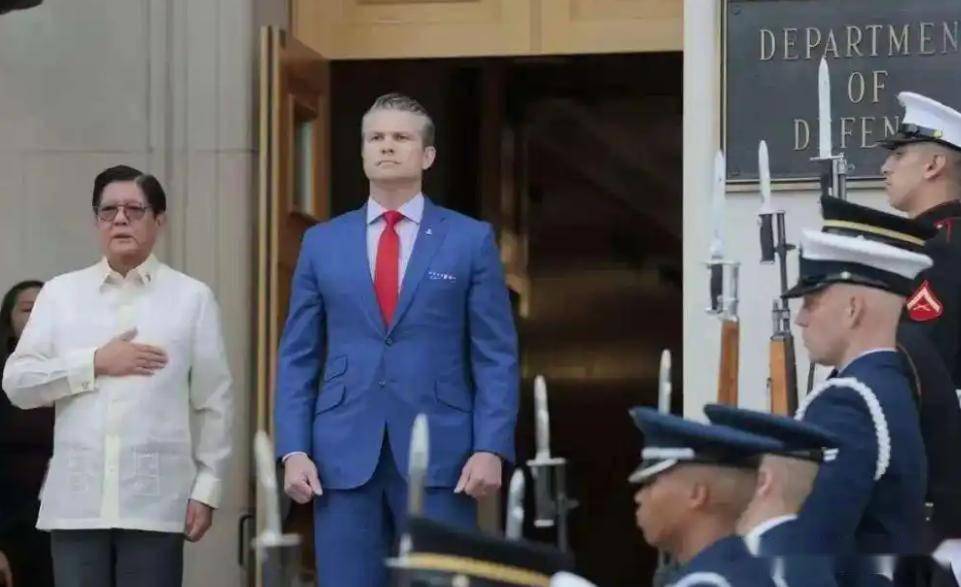
又有27国向美国“跪了”?特朗普开始摆架子,中美还没谈妥,先逼中国掏钱做一件事?
Sou Hu Cai Jing· 2025-08-28 05:29
Group 1 - The new trade framework between the US and the EU appears to be a move towards easing trade tensions, but it heavily favors US interests with high tariffs on EU imports [3][5] - The agreement includes a commitment from the EU to purchase $750 billion worth of US natural gas, oil, and nuclear products by 2028, along with $40 billion in AI chips [3][5] - European media and analysts criticize the agreement as a one-sided concession from the EU, highlighting the lack of mutual benefits and unresolved issues such as tariffs on steel and aluminum [3][5][6] Group 2 - The US is leveraging its market position and the global dominance of the dollar to impose high tariffs, effectively forcing the EU to increase purchases and investments in the US [5][6] - The agreement lacks legal binding, raising concerns about its implementation and the potential for the US to change terms unilaterally [5][6] - The dynamics of US-China trade negotiations contrast sharply with US-EU discussions, as the US faces challenges in maintaining agricultural exports to China while simultaneously imposing tariffs [6][8]

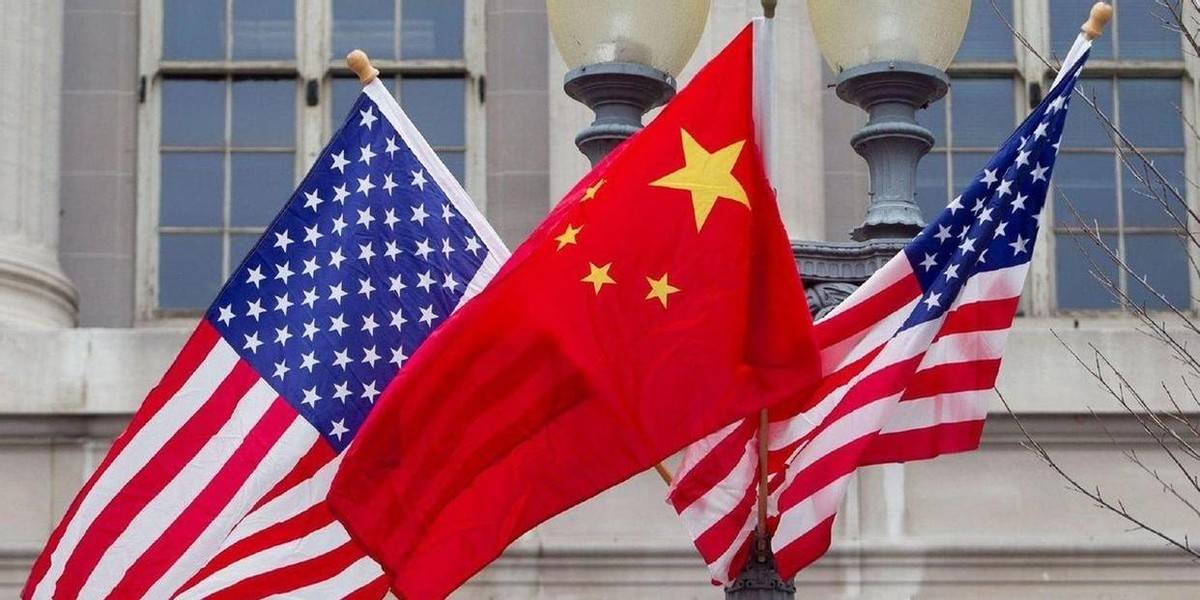
美方要禁止中国用美元结算,还对华加税600%?网友:还有这好事?(3)
Sou Hu Cai Jing· 2025-08-28 05:24
Core Viewpoint - The actions of American politicians and experts are perceived by many Chinese netizens as inadvertently supporting China, highlighting the shift in global power dynamics and the potential decline of U.S. hegemony [2] Group 1: Economic Dynamics - The U.S. has maintained its global dominance primarily through "dollar hegemony," which facilitates a cycle of consumption, production, and resource acquisition [2] - The U.S. can print large amounts of money and invest in resources, while other countries are required to conduct trade in dollars, benefiting from this "dollar cycle" for 50 years [2] - China has emerged as the world's largest industrial nation and is developing its own payment systems, challenging the existing dollar-dominated framework [2] Group 2: Geopolitical Shifts - China is taking a leading role in the development of BRICS nations, indicating a shift in global alliances and economic power [2] - In military technology, China has gained advantages in specific areas such as early warning systems and sixth-generation fighter jets, showcasing its advancements [2] - The U.S. has initiated a tariff war in an attempt to maintain its global influence, but this approach may backfire as countries reconsider their alignment with Washington [2] Group 3: Future Implications - The actions of U.S. politicians and experts may accelerate the decline of American hegemony, as countries recognize the lack of benefits in aligning with the U.S. [2]
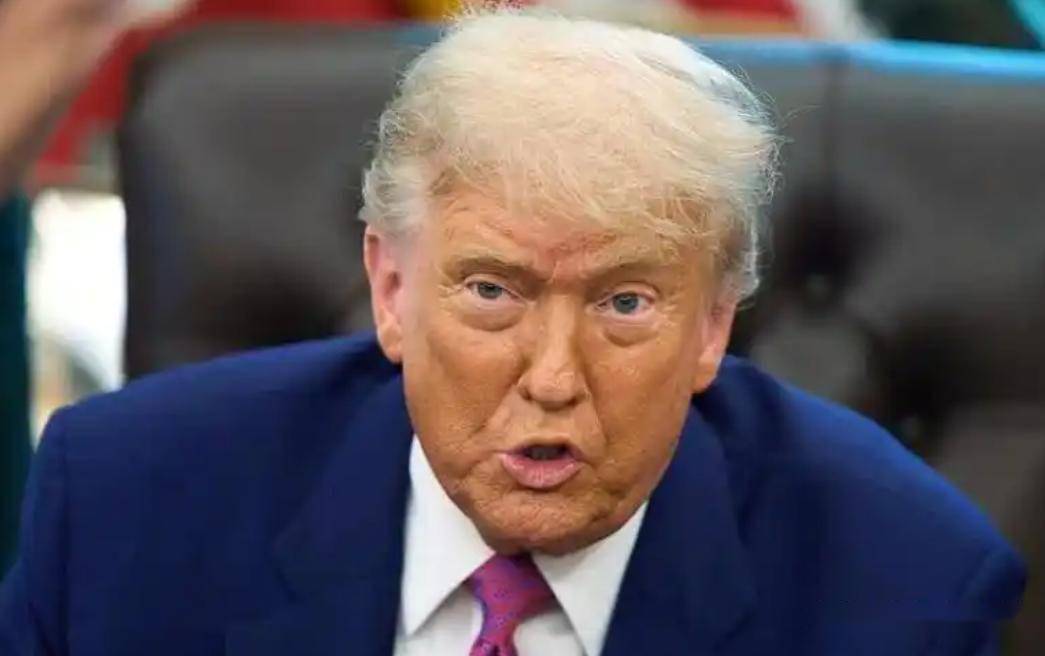
美媒:特朗普总统露怯,中美关税战休战再休战,特朗普这一通忙,直接把巴西卢拉和印度莫迪惹恼了
Sou Hu Cai Jing· 2025-08-27 22:31
Group 1 - The article discusses the diminishing effectiveness of Trump's trade policies, particularly regarding tariffs on China, suggesting that his recent actions indicate a lack of confidence [1][3] - The U.S.-China trade war has resulted in significant financial burdens on American importers and consumers, with an estimated additional cost of $156 billion due to tariffs by 2023 [3] - Trump's initial strategy to use tariffs as leverage in the upcoming elections appears to be faltering, as he faces potential backlash from American businesses affected by high import costs [3][8] Group 2 - Brazil and India are shifting their trade strategies, with Brazil's president criticizing U.S. trade dominance and India increasing imports from China to $101 billion in 2023, indicating a move towards closer economic ties with China [4] - The European Union is experiencing economic stagnation, with the IMF predicting a growth rate of only 0.9% for the Eurozone in 2024, complicating the U.S.'s ability to rely on European support [6] - Japan and South Korea are also looking to strengthen economic ties with China, despite their political alliances with the U.S., highlighting a trend of regional countries balancing their economic interests [6] Group 3 - The ongoing U.S.-China tensions are characterized as a prolonged struggle rather than a decisive conflict, with both sides unlikely to make significant concessions [9] - The article suggests that the U.S. may be pushing its allies further away as it attempts to rally support against China, potentially leading to a new geopolitical landscape where countries like the EU, Japan, and India seek greater autonomy [11] - There is speculation that future tariff threats from Trump may be disregarded by the market, as the reality of economic interdependence becomes more apparent [11]
贵金属日报-20250827
Guo Tou Qi Huo· 2025-08-27 09:55
Group 1: Report Industry Investment Rating - Gold investment rating: ☆☆☆, indicating a clearer long - term trend with relatively appropriate investment opportunities currently [1] - Silver investment rating: ☆☆☆, indicating a clearer long - term trend with relatively appropriate investment opportunities currently [1] Group 2: Core Viewpoints of the Report - The precious metals market is oscillating. The market has priced in that the Fed will cut interest rates in September, but the subsequent economic outlook remains uncertain [1] - Trump's dismissal of Fed officials has brought back the issue of the Fed's independence, which may further weaken the US dollar's credit [1] - International gold and silver are in an oscillating trend, continuing to test the upper key resistance levels. It is recommended to maintain the idea of buying on dips and holding long positions [1] Group 3: Summary by Related Catalogs Fed - related - The Trump administration is weighing plans to influence regional Feds and strengthening the review of the selection method of regional Fed presidents [2] - Cook's lawyer has sought a judicial ruling on Trump's dismissal. Both the Fed and Trump said they will follow the court's ruling. Trump has a candidate to replace Cook and may transfer Milan to other long - term positions in the Fed. Trump said he will soon have a majority on the Fed [2] - Former White House Economic Council Director Brainard said that Trump's dismissal of Fed Governor Cook is an unprecedented attack on the Fed, which may lead to rising inflation and long - term interest rates [2] - Barkin predicted that interest rates will be moderately adjusted [2] Tariff War - related - Trump said that furniture tariffs will be introduced soon and the tariffs will be very high. He will implement export restrictions and tariff measures against foreign digital taxes [2] - Indonesian officials said that the US has in principle agreed to exempt Indonesian palm oil, cocoa, and rubber from 19% tariffs [2] - German media reported that Trump has called Modi at least four times recently but was rejected each time [2]
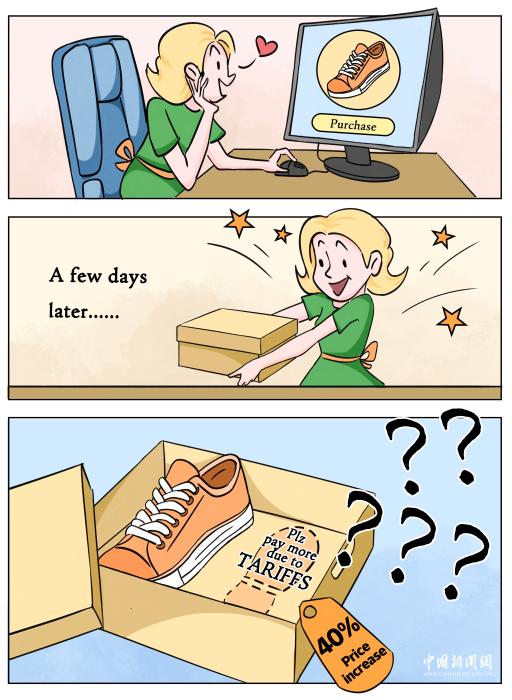
美国关税之履,岂合民生之足?|新漫评
Zhong Guo Xin Wen Wang· 2025-08-27 08:26
Core Viewpoint - The article highlights that American consumers are likely to face significant price increases across a wide range of products, from automobiles to everyday items like shoes and bananas, due to government tariffs and inflationary pressures [2] Price Increases - Predictions from Yale University's Budget Lab indicate that prices for essential consumer goods will see substantial increases, with fresh produce expected to rise by 7% [2] - Footwear prices are projected to surge by 40%, while clothing costs may increase by 38% [2] - The average price of new cars could jump by $5,800, further straining household budgets already struggling with inflation [2] Impact of Tariffs - The article describes the U.S. government's tariffs as a heavy burden on consumer purchasing power, likening them to a poorly fitting and overpriced shoe that forces consumers to spend more [2] - The so-called "protective tariffs" are portrayed as detrimental to the wallets of ordinary citizens, with rising prices on shopping receipts serving as a tangible proof of the harm caused by the tariff war [2]
重要压力未破谨防黄金再回落
Jin Tou Wang· 2025-08-27 02:56
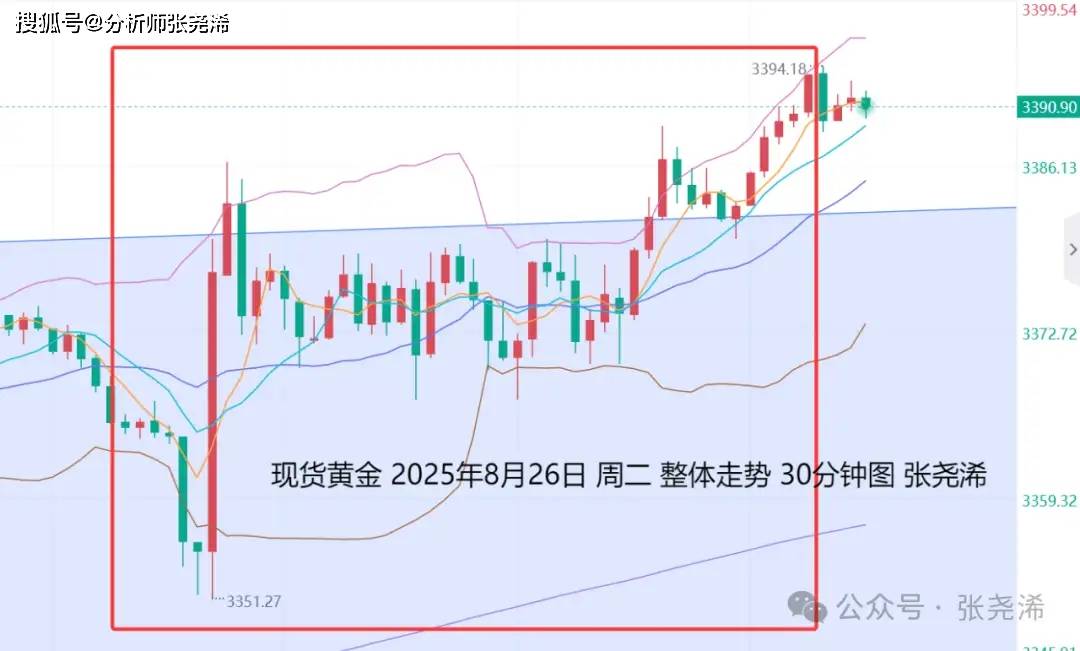
【技术分析】 周三(8月27日)亚市早盘,现货黄金走势回落,目前暂处3385美元附近,虽然美元指数依然处于低位 震荡之中,但并未能使得金价向下破位,主要市场依然在美联储降息预期定价之中,且避险情绪略有升 温,不过目前黄金价格并未突破重要压力区间,谨防再次回落,日内维持区间震荡,中期维持震荡上 行。 从技术面来看,黄金重拾看涨姿态。根据日线图上的技术读数,黄金处于中性至看涨状态,金价守在所 有移动平均线之上。事实上,持平的20日简单移动平均线(SMA)在3350美元/盎司附近构成盘中支撑。 与此同时,技术指标转向上行,尽管动量指标仍处于中性水平,反映出有限的买家力量。 【要闻速递】 在短期内,根据4小时图表,黄金行情前景看涨。金价从看涨的20周期SMA反弹,该移动均线在已经突 破200周期SMA之后,目前正越过平坦的100周期SMA。与此同时,技术指标恢复上涨势头,进入积极 区间,支撑金价后市录得更高的高点。 摘要周三(8月27日)亚市早盘,现货黄金走势回落,目前暂处3385美元附近,虽然美元指数依然处于 低位震荡之中,但并未能使得金价向下破位,主要市场依然在美联储降息预期定价之中,且避险情绪略 有升温,不过目 ...
张尧浠:不定因素担忧不断累积、金价前景仍以看涨为主
Sou Hu Cai Jing· 2025-08-27 00:41
Core Viewpoint - The outlook for gold prices remains bullish despite ongoing uncertainties, with potential for long-term gains driven by geopolitical risks and monetary policy shifts [1][5][7]. Market Performance - On August 26, gold opened at $3365.68 per ounce, dipped to a low of $3351.20, and rebounded to a high of $3393.49, closing at $3393.43, marking a daily increase of $27.75 or 0.82% [1][3]. - The trading range for gold was noted to be between $3370 and $3380, with significant volatility influenced by U.S. political developments and trade tensions [3][5]. Technical Analysis - Gold prices are currently supported by the 60-day and 100-day moving averages, indicating a bullish trend despite short-term resistance [1][9]. - Historical patterns suggest that after a period of consolidation, gold prices are likely to rise again, with potential support levels identified at $3270 and $3220 [7][9]. Economic Indicators - Recent comments from Federal Reserve Chairman Jerome Powell hint at possible policy adjustments, reinforcing market expectations for interest rate cuts, which are generally favorable for gold [5]. - The potential for increased tariffs and trade tensions under the Trump administration adds to the uncertainty, further supporting gold as a safe-haven asset [5][10]. Long-term Outlook - The long-term forecast for gold suggests a possibility of reaching historical highs around $4200 within the next year, driven by economic recession risks and ongoing geopolitical tensions [5][7].
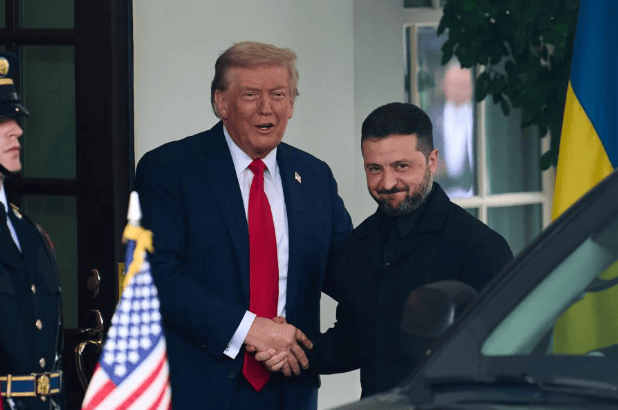
先薅日本、再割欧洲,特朗普兜一圈回头瞄准俄乌:10天不谈就加税100%,这回普京真扛得住?
Sou Hu Cai Jing· 2025-08-26 16:18
Group 1 - The core strategy of Trump involves leveraging tariffs and sanctions to pressure Russia into negotiations regarding the Ukraine conflict, with a specific ultimatum of a 100% tariff if no ceasefire is reached within 10 days [3][4][7] - The recent agreement between the US and the EU includes significant energy purchases and military spending commitments, indicating a shift in European alignment towards US interests [3][6] - The situation in Russia is precarious, with the ruble's appreciation negatively impacting exporters and leading to economic difficulties for the populace, which could further strain the Russian economy [6][7] Group 2 - The US is not merely seeking financial gain but aims to assert Western dominance in global discourse, particularly in the context of rising Chinese influence in East Asia [9][14] - The timeline for negotiations is unrealistic, as territorial disputes and geopolitical tensions cannot be resolved quickly, suggesting that prolonged conflict may provide the US with strategic advantages [11][12] - Trump's approach is characterized by a systematic dismantling of adversaries, first targeting Japan and Europe before focusing on Russia, indicating a broader geopolitical strategy [10][14]
智通港股解盘 | 美联储独立性遭质疑黄金发力 人工智能利好政策再起
Zhi Tong Cai Jing· 2025-08-26 12:21
Market Overview - US stock indices experienced adjustments, with European markets also facing challenges, particularly in France where the CAC 40 index fell over 2% [1] - Hong Kong stocks corrected after a strong rally, closing down 1.18% [1] - Optimism regarding potential Fed rate cuts was tempered by concerns over Trump's threats to dismiss Fed Governor Lisa Cook, which could undermine confidence in USD assets [1] Gold and Mining Sector - Gold stocks surged, with China Gold International reporting a turnaround in its mid-year results, showing strong growth and significant capacity expansion potential [1] - Other gold stocks like Lingbao Gold and Zhaojin Mining also saw substantial gains, reflecting a broader trend in the sector [1] Trade and Tariff Implications - Trump threatened to impose approximately 200% tariffs on rare earth magnets from China and additional tariffs on countries implementing digital taxes, impacting major US tech companies [2] - The US government proposed adding copper, silicon, and silver to a list of critical minerals, indicating a shift in tariff strategy to protect domestic industries [2] Automotive Industry Dynamics - The automotive sector is undergoing rapid changes, with Chinese electric vehicle companies and Tesla significantly shortening the development cycle for new models to about two years [3] - Traditional players like Puma are exploring strategic options, including potential sales, indicating a shift in competitive dynamics within the industry [3] AI and Technology Sector - The Chinese government announced plans to integrate AI with six key sectors by 2027, which will drive capital expenditure towards AI-related technologies [6] - Companies like SMIC and SenseTime are positioned to benefit from increased investment in AI and related technologies [6] Company Performance Highlights - Angelalign reported a 33.1% increase in revenue to $161.4 million, with a significant rise in net profit, indicating strong performance in the orthodontics market [4] - Meituan was included in the MSCI China Index, leading to an 8% increase in its stock price [5] Individual Stock Insights - SenseTime is expected to report improved financial results, with projected revenue growth and a potential narrowing of losses, reflecting a positive outlook for the company [7] - The company has a strong competitive position in AI technology, with significant advancements in model capabilities and market share in various applications [8]


这次,中国极有可能是来真的了,美国却还在挥舞着陈旧的关税大棒,一旦中国来真的,那么整个世界也就有很大概率会和美国来真的
Sou Hu Cai Jing· 2025-08-25 15:11
Group 1 - The article highlights the diminishing effectiveness of U.S. tariffs as a tool for trade leverage, suggesting that other countries are beginning to retaliate against U.S. policies [1][3][9] - Since the onset of the trade war in 2018, the average tariff level imposed by the U.S. on China has reached 19.3%, while China's tariffs on the U.S. remain around 20.7% [3] - In 2022, the U.S. trade deficit reached a record high of $950 billion, indicating that the trade war has not yielded the intended benefits for the U.S. [3] Group 2 - China's industrial upgrades and transition to renewable energy are significant, with 4.91 million electric vehicles exported in 2023, marking a 57% year-on-year increase [5] - China's total goods exports reached $3.38 trillion in 2023, despite a slight contraction in the U.S. market, showing a shift towards other markets such as Europe and Latin America [5] - In July 2023, China's electricity consumption grew by 9.7% year-on-year, indicating robust industrial activity and technological advancements [5] Group 3 - The U.S. retail market is struggling, with a mere 0.7% month-on-month increase in retail sales in July, primarily driven by automotive and fuel sales [7] - U.S. consumer purchasing power is declining, evidenced by credit card debt surpassing $1.08 trillion, a historical high [7] - The article suggests that the U.S. is running out of effective trade strategies, while China is developing more countermeasures, including leveraging rare earths and critical minerals [7][9] Group 4 - The article posits that the global focus is shifting from the U.S. market to opportunities in China and other emerging markets, with the IMF predicting a 5% economic growth for China compared to less than 2% for the U.S. [9] - The immediate backlash from other countries to Trump's new tariff policy on small packages indicates a growing frustration with U.S. trade practices [9][11] - The potential for a breakdown in U.S.-China trade relations raises concerns about supply chain stability and market access for U.S. companies [11]