
产能优化

Search documents
晶科能源获2亿元火灾险预付赔款 2026年储能系统发货目标将翻倍
Zhong Guo Jing Ying Bao· 2025-12-01 09:17
Group 1: Financial Impact and Insurance Compensation - Jinko Solar's subsidiary, Shanxi Jinko Energy, received an advance insurance payment of 200 million yuan related to a fire incident, totaling 220 million yuan received to date [1] - The fire incident in April 2024 caused damage to equipment and assets, and the company has accounted for the corresponding losses in its 2024 annual report [1] - The advance payment is expected to positively impact the company's performance in 2025, subject to audit results, amidst ongoing financial pressure with a net loss of approximately 3.9 billion yuan in the first three quarters of 2025 [1] Group 2: Product Development and Market Strategy - Jinko Solar's Tiger Neo 3.0 module has officially entered mass production, achieving an efficiency of over 24.8% and a power output of up to 670W, with a bifacial rate of up to 90% [2] - The company secured contracts totaling 15GW during a global signing event, aligning with its strategy to optimize production capacity and upgrade efficiency [2] - The company aims to enhance competitiveness through technological iteration and capacity optimization in a highly competitive market [1][2] Group 3: Energy Storage Business Outlook - Jinko Solar views its energy storage business as a crucial second growth curve, currently having a capacity of 17GWh for storage systems and 5GWh for battery cells, with plans to exceed 30GWh by the end of 2026 [2][3] - The company targets a shipment goal of 6GWh for energy storage systems in 2025, with over 80% expected to come from overseas markets, particularly high-margin regions like Europe and the U.S. [2][3] - Despite not being profitable in the first three quarters, the company anticipates significant improvement in profitability due to large-scale overseas order deliveries in the fourth quarter and next year [3]

牵手腾讯广告共筑Z世代品牌心智,全球化产能+IP情绪价值双轮驱动哈尔斯价值提升
Zheng Quan Shi Bao Wang· 2025-12-01 09:01
Core Insights - The company, Hars, is optimistic about the domestic cup and kettle market, noting that the current CR4 is below 20%, indicating significant brand landscape benefits [3] - Hars has received approval from the China Securities Regulatory Commission for a specific issuance of A-shares in 2023, planning to proceed based on market conditions [3] Group 1: Brand Strategy and Market Positioning - The collaboration with Tencent is a core brand strategy aimed at enhancing content co-creation, upgrading membership services, and driving business growth [2] - The company emphasizes the transformation from "traffic cooperation" to "value co-creation" to strengthen brand influence among Generation Z [2] Group 2: Operational Performance and Supply Chain - The company reported strong performance during this year's Double Eleven shopping festival, with continuous optimization of operational capabilities [3] - The Thai production base is in a ramp-up phase, but the company is confident in cost optimization due to local supply chain development and automation [3] Group 3: Growth Opportunities and Global Expansion - The OEM business is seeing steady growth in market share from leading clients, with non-U.S. markets (Europe, Japan, Middle East) emerging as new growth points [3] - The company aims to leverage scale and certification barriers to capture a larger share in the global supply chain restructuring [3] Group 4: Governance and Shareholder Returns - The company has established a modern corporate governance structure with clear responsibilities and stable core management [3] - A share buyback plan will be implemented based on market conditions, with specific progress to be announced monthly [3]


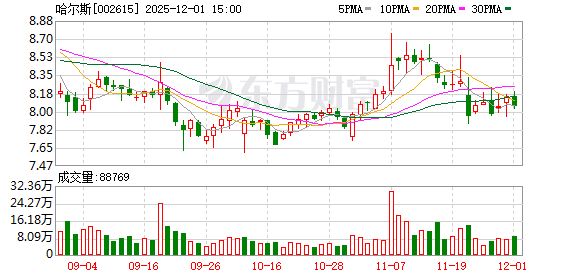
投资者提问:尊敬的董秘您好: 关注到化纤行业下半年通常因客户备货迎来旺季...
Xin Lang Cai Jing· 2025-11-20 09:09
Core Viewpoint - The company expresses confidence in achieving significant year-on-year growth in Q4, driven by the upcoming peak season in the chemical fiber industry and the gradual production ramp-up at the new Zhuhai facility [1] Group 1: Company Performance and Strategy - The Zhuhai production base is progressing steadily, which is expected to enhance the company's financial strength post-IPO in August 2025 [1] - The company's operational results will be influenced by multiple factors including macroeconomic conditions, downstream demand, and raw material prices [1] - The company aims to optimize production capacity and product structure, focusing on differentiated and high-value-added areas to steadily improve its overall competitiveness [1] Group 2: Market Demand and Product Lines - The company is assessing the alignment of new production capacity release with market demand [1] - Specific product lines that will drive growth have not been detailed, but the focus remains on high-value segments [1]
钢铁行业2025年三季报总结:潮落至极,浪头暗生
Minsheng Securities· 2025-11-19 06:12
Investment Rating - The report maintains a "Buy" rating for the steel industry, highlighting the potential for profit recovery and capacity optimization as key investment themes [4][5]. Core Insights - The steel sector has shown a significant recovery in profitability, with the SW Steel index rising by 24.00% in Q1-Q3 2025 and 14.19% from October 2025 to date, outperforming major indices [1][11]. - The report emphasizes the importance of differentiated production restrictions to promote industry consolidation and the transition towards high-value, low-carbon, and intelligent production methods [2][3]. - Manufacturing and direct export demand remain resilient, supporting steel consumption despite a weak construction sector [2]. Summary by Sections Steel Sector Performance - In Q1-Q3 2025, the steel sector's net profit saw a year-on-year increase of 747.63%, with a gross margin recovery to 7.59% and a net margin of 2.19% [17][21]. - The performance of the steel sector has been strong, with the SW Steel index ranking 4th among all sectors since October 2025 [1][11]. Supply-Side Policies - The introduction of differentiated production restrictions aims to eliminate inefficient capacity and enhance industry concentration [2][3]. - New policies are expected to drive the optimization of production capacity, with a focus on high-end, green, and intelligent manufacturing [3][51]. Demand-Side Dynamics - The manufacturing sector, particularly in machinery and commercial vehicles, continues to show strength, while direct exports have increased significantly, supporting steel demand [2][3]. - The construction sector remains weak, but early indicators suggest a stabilization in demand for construction steel [2]. Investment Recommendations - The report suggests focusing on leading steel companies that are well-positioned to benefit from policy support and capacity optimization, such as Hualing Steel, Baosteel, and Nanjing Steel [3][4]. - For special steel, companies benefiting from downstream demand in automotive and energy sectors are recommended, including Xianglou New Materials and Jiuli Special Materials [3]. - In the raw materials sector, companies with clear growth in non-ferrous resources, such as Dazhong Mining and Hebei Steel Resources, are highlighted [3].


华利集团(300979):3Q25毛利率环比改善,降本增效与新工厂盈利带动修复
Haitong Securities International· 2025-11-06 04:02
Investment Rating - The report maintains an "Outperform" rating for Huali Industrial Group [2][8]. Core Insights - Huali Group's gross margin improved sequentially in 3Q25, driven by cost optimization and profitability from new plants [3][5]. - The company experienced a slight revenue decline in 3Q25 due to customer inventory destocking, but average selling prices (ASP) increased [4][12]. - Management expects a potential restocking cycle to begin in 2026 as inventory destocking continues through 2025 [7][13]. Financial Performance Summary - For the first three quarters of 2025, Huali Group reported revenue of RMB 18.68 billion, a 10.4% year-on-year increase, while 3Q25 revenue was RMB 6.02 billion, down 0.3% year-on-year [3][11]. - Gross profit for 9M25 was RMB 4.10 billion, down 15.8% year-on-year, with a gross margin of 22.0%, a decrease of 5.8 percentage points year-on-year [3][11]. - Operating profit for 9M25 was RMB 3.21 billion, down 11.8% year-on-year, and net profit attributable to shareholders for 9M25 was RMB 2.44 billion, down 14.3% year-on-year [3][11]. Revenue and Profit Forecast - Revenue forecasts for 2025, 2026, and 2027 are RMB 24.84 billion, RMB 27.74 billion, and RMB 30.82 billion, respectively, with year-on-year growth rates of 3.5%, 11.7%, and 11.1% [8][14]. - Net profit forecasts for the same period are RMB 3.29 billion, RMB 3.96 billion, and RMB 4.50 billion, with year-on-year growth rates of -14.4%, 20.4%, and 13.6% [8][14]. Operational Insights - The company has implemented cost-control measures, reducing total headcount by about 2,000 despite ongoing factory ramp-ups [7][13]. - New factories in Sichuan and Indonesia are ramping up production as planned, contributing to improved shipment volumes [4][12]. - Management indicated that the peak of capacity expansion will occur in 2024-2025, after which capital expenditure intensity is expected to decline [7][13].
江山欧派收缩产能求变
Bei Jing Shang Bao· 2025-11-05 16:29
Core Viewpoint - Jiangshan Oupai, a leading door manufacturer, is undergoing significant capacity adjustments due to continuous performance declines, with a 43.11% year-on-year revenue drop and a net loss of 42.06 million yuan in the first three quarters of 2025 [1][6]. Group 1: Company Performance - Jiangshan Oupai's revenue for the first three quarters of 2025 was 1.284 billion yuan, a decrease of 43.11% year-on-year, with a net loss of 41.49 million yuan [6]. - The company reported a net profit decline of over 70% for the entire year of 2024, with no signs of recovery in 2025 [7]. - The operational challenges faced by its subsidiaries in Henan and Chongqing reflect the overall performance decline of Jiangshan Oupai [6][7]. Group 2: Strategic Adjustments - The company has decided to halt production at its subsidiaries in Henan and Chongqing, transferring operations to its Zhejiang base to optimize resource allocation and reduce losses [4][5]. - This decision is part of a broader industry trend where companies are consolidating core capacities to enhance operational efficiency during a period of deep industry adjustment [3][4]. - The closure of these "low-efficiency" factories is a strategic move to address insufficient orders and low capacity utilization, aiming to lower operational costs [4][5]. Group 3: Industry Context - The current market environment, characterized by oversupply and fluctuations in the real estate market, has significantly impacted companies focused on hard decoration materials like doors [5][8]. - The industry is experiencing a critical transition, requiring companies to shift from being "single product suppliers" to "comprehensive service providers" to adapt to changing market demands [7][8]. - There is a growing trend towards personalized, customized, and environmentally friendly home products, necessitating increased R&D investment and optimization of sales channels [9].


古井贡酒“功守道”:行业寒冬中寻突围
Zhong Guo Jing Ying Bao· 2025-10-31 05:40
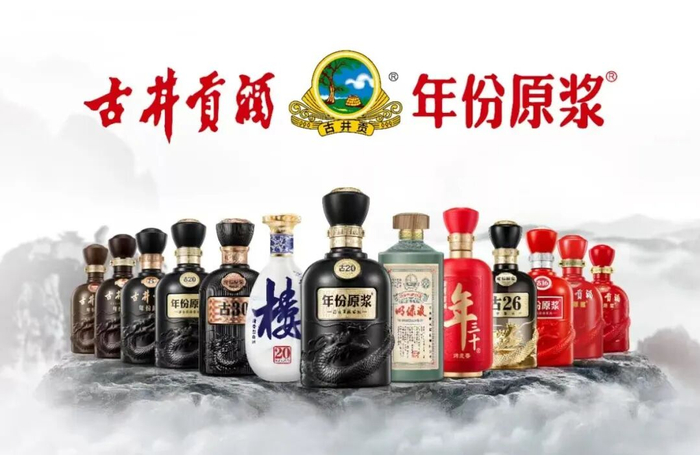
Core Insights - The Chinese liquor industry is undergoing a significant adjustment phase, characterized by a "cold wave" as highlighted in the report by the China Alcoholic Drinks Association, indicating a shift from high growth to a period of stock competition by 2025 [1][3] - The industry faces a "three-phase overlap" situation, with increasing production capacity juxtaposed against slowing demand, leading to insufficient consumption momentum and declining prices [3] - Leading companies, such as Gujing Gongjiu, are demonstrating resilience during this adjustment period by exploring innovative strategies to navigate the challenges [1][4] Industry Challenges - The report indicates that the liquor industry is entering a new phase of stock competition, with the contradiction between production capacity growth and demand slowdown becoming a core challenge [3] - Data shows that the best-performing price range for liquor is shifting down to 100-300 RMB, while products priced between 500-800 RMB are struggling, with 60% of companies experiencing price inversion [3] - Gujing Gongjiu has shifted its focus from growth targets to quality development, reflecting a strategic adjustment in response to market conditions [3] Company Strategies - Gujing Gongjiu has adopted a dual strategy of "nationalization + next-high-end" to capture market share, focusing on its core product, the aged raw liquor "G20," while also consolidating its offerings in the mass market [3][6] - The company has achieved over 70% coverage in its nationalization strategy, employing a "base camp model" for expansion rather than a broad-based approach [3][4] - In response to the industry's downturn, Gujing Gongjiu has proactively alleviated pressure on distributors by relaxing payment terms and enhancing financial support in key regions [4][5] Operational Innovations - Gujing Gongjiu has been focusing on capacity optimization and product upgrades, integrating traditional brewing methods with digital technology, achieving 96% connectivity in its production equipment [6] - The company has shown agility in product innovation, launching new products like the "G20 Light Aged Raw Liquor" targeting younger consumers, aligning with the trend of "self-indulgent consumption" [6][7] - The company is also exploring potential growth avenues by launching health-oriented products and herbal whiskey, diversifying its offerings [7][10] Market Expansion - Gujing Gongjiu has established a deep distribution network through its "Three Connections Project" (hotels + distribution + group purchases), enhancing its market presence [8] - The company has made strides in international markets, with its core product "Aged Raw Liquor" reaching over 30 countries and regions across Asia, Europe, America, Africa, and Oceania [10] - The company is actively pursuing a "liquor +" model, expanding into health technology and collaborating on whiskey projects, indicating a strategic diversification [10]

Smurfit WestRock plc(SW) - 2025 Q3 - Earnings Call Transcript
2025-10-29 12:32
Financial Data and Key Metrics Changes - The company reported adjusted EBITDA of $1.3 billion for Q3 2025, with an adjusted EBITDA margin of 16.3% [4][14] - Operating cash flow was $1.1 billion, and adjusted free cash flow was approximately $850 million [7][14] - Net sales for the group reached $8 billion, with North America contributing $4.7 billion in net sales and an adjusted EBITDA of $810 million, reflecting a margin of 17.2% [14][15] Business Line Data and Key Metrics Changes - North America showed an adjusted EBITDA margin improvement to 17.2%, despite a 7.5% decline in box volumes [15] - EMEA and APAC reported an adjusted EBITDA margin of 14.8%, with net sales of $2.8 billion, demonstrating resilience in a challenging market [16][17] - Latin America achieved an adjusted EBITDA margin of over 21%, with net sales of $500 million, driven by strong market positions in Brazil and central clusters [18] Market Data and Key Metrics Changes - The North American market experienced a 3% to 4% decline in demand, while the company’s volume loss was approximately 5% due to strategic decisions [42] - In Latin America, demand showed marked improvement, with significant growth in Colombia (8%), Chile (15%), and Peru (25%) [11][18] - The European market remains challenging, particularly in Germany, which continues to lag behind other regions [62] Company Strategy and Development Direction - The company is focused on optimizing its asset base through the closure of inefficient operations and transitioning to a value-over-volume strategy [5][8] - A synergy program is in place, aiming for $400 million in full run-rate savings by the end of the year [21] - The company plans to maintain a flexible capital allocation framework, with a CapEx target of $2.4 billion to $2.5 billion for 2026 [20][23] Management's Comments on Operating Environment and Future Outlook - Management expressed confidence in the company's positioning for future growth despite a muted economic outlook [25] - The company anticipates that the current economic challenges will eventually lead to a sharp recovery in demand [31] - Management highlighted the importance of continuous cost reduction programs to mitigate wage inflation and operational challenges [32] Other Important Information - The company has initiated global and regional leadership programs for over 300 managers to enhance performance and accountability [12] - A significant headcount reduction of over 4,500 employees has been implemented to streamline operations [24] Q&A Session Summary Question: Can you expedite cost takeout in Europe given the current market weakness? - Management indicated that they have optimized capacity in Europe and are actively pursuing cost reduction programs, although the market remains challenging [30][32] Question: How did demand trend in September and October? - Management noted that they expected an uptick in October but did not see it, attributing some of the lost business to previous unprofitable contracts [36][37] Question: What is the expected EBITDA impact from the economic downtime in Q4? - The estimated EBITDA impact from the downtime is between $60 million and $70 million, primarily affecting North America [43] Question: How is the company addressing inventory levels in North America? - Management acknowledged that inventory levels are higher than desired but expect improvements as they optimize supply chains [45][46] Question: What factors are driving the shift from CRB to SBS? - The shift is driven by the competitive pricing of SBS and its superior qualities, such as brightness and printability [34][75] Question: What are the uncertainties affecting the revised guidance? - The uncertainties primarily revolve around demand trends and the performance in December, which is typically a swing factor for the quarter [92]
连获两项“第一” ,英科医疗全方位布局深耕一次性手套市场
Zhong Guo Jin Rong Xin Xi Wang· 2025-10-21 10:55
Core Insights - Company has been awarded the "National Sales Leader in Disposable Gloves" and "National Sales Leader in Disposable Nitrile Gloves" by a renowned market research firm, confirming its leading position in the domestic disposable glove market [1][5]. Group 1: Market Position - The market position statements were based on sales volume data from January 1 to December 31, 2024, across all channels in mainland China, excluding Hong Kong, Macau, and Taiwan [5]. - The recognition of being the top seller in both categories reflects the company's deep investments in technology, production, and marketing [5]. Group 2: Production and R&D - The company has over 16 years of R&D and production experience, with a strong focus on building a comprehensive R&D innovation system [5]. - The company and its subsidiaries hold a total of 300 patents, showcasing its commitment to innovation [5]. Group 3: Production Capacity - The company operates six major production bases in China, ensuring optimized capacity and efficiency [6]. - The annual production capacity in the core disposable glove business reaches 87 billion units [6]. Group 4: Marketing and Sales Performance - The company has expanded its retail channels, establishing a strong online presence across platforms like Tmall, JD.com, Douyin, and Pinduoduo, as well as offline partnerships with major supermarkets [8]. - In 2025, the company reported a revenue of 4.913 billion yuan, with a year-on-year net profit growth of 21.02%, and domestic sales revenue increased by approximately 35% [8].
绿色转型与产能优化齐头并进!钢铁行业力稳基本盘
Sou Hu Cai Jing· 2025-10-18 06:45
Core Viewpoint - The Ministry of Industry and Information Technology and other departments have issued the "Steel Industry Stabilization and Growth Work Plan (2025-2026)", providing policy guidance for the development of China's steel industry, which is currently facing significant downward pressure due to oversupply and insufficient effective demand [1][3]. Industry Growth Targets - The plan sets an average annual growth target of approximately 4% for the steel industry's added value over the next two years, aiming for economic benefits to stabilize and recover [3]. - The China Iron and Steel Association indicates that while steel consumption demand is expected to decline in 2025, the reduction in supply will be more significant, optimizing the supply-demand relationship and boosting industry expectations [3]. Structural Improvement - 2024 is projected to be a turning point for the structure of China's steel products, with the output of medium-thick wide steel strips expected to exceed 200 million tons, surpassing rebar for the first time [5]. - The proportion of construction steel and industrial steel is expected to achieve a "50-50" split, reflecting a shift driven by adjustments in the real estate sector and industrial upgrades [5]. Production and Consumption Trends - In 2024, China's crude steel production is forecasted to be 1.005 billion tons, a decrease of 1.7% year-on-year, while domestic consumption is expected to drop by over 4% [6]. - The long-term trend indicates a decline in the demand for ordinary steel, but a slight recovery is anticipated in the coming years after adjustments [6]. Technological Advancements - The steel industry has made significant technological progress, overcoming previous challenges in producing high-end steel products, with 153 new products launched by leading steel companies by 2025 [7]. - The industry has entered a phase of quality leadership, focusing on high-end, intelligent, and green production rather than merely scaling up [6][7]. Environmental Upgrades - The steel industry has made notable advancements in ultra-low emissions, with significant investments leading to improved environmental performance, surpassing global standards [8]. - By the end of 2025, the industry aims to complete ultra-low emission transformations for over 80% of its capacity, reflecting a strong commitment to environmental sustainability [8]. Corporate Transformations - Many steel companies are actively transforming to adapt to changes in steel demand driven by economic restructuring, focusing on high-value-added products [9][10]. - Companies like Shagang and Hualing Steel have successfully shifted from traditional construction steel to manufacturing steel, maintaining stable sales even in a challenging market [10][11]. - Baosteel is leveraging AI technology to optimize processes and reduce costs, demonstrating the industry's embrace of digital transformation [11].
