
全球流动性

Search documents
每日投资策略-20251219
Zhao Yin Guo Ji· 2025-12-19 03:55
Core Insights - The report highlights that the macroeconomic environment in 2026 will be influenced by U.S. midterm election pressures, defense demands in Europe and Japan, and China's focus on stable growth, leading to continued policy easing in the first half of the year [2] - The AI boom is expected to enhance efficiency and stock valuations but may also exacerbate job losses and economic K-shaped divergence [2] - The report suggests that the second half of 2026 may see a rebound in inflation due to global liquidity easing, a weaker dollar, and China's anti-involution efforts, potentially causing volatility in high-valuation assets [2] Industry Outlook Chinese Internet Software - 2026 is seen as a critical year for competing for user attention in the AI era, with a focus on lowering usage barriers, enhancing decision-making efficiency, and creating real value [2] - Companies with stable cash flows supporting AI investments and strong operational capabilities are expected to have higher long-term investment value [5] Semiconductor - The report maintains four core investment themes for 2026: AI-driven structural growth, China's semiconductor self-sufficiency trend, high-yield defensive allocations, and industry consolidation [7] - The global semiconductor market is projected to grow by 26% to $975 billion in 2026, with AI-related segments leading the growth [7] Technology - The global tech industry is expected to experience demand differentiation and accelerated AI innovation, with a focus on AI computing infrastructure and end-user AI products [8] - Key companies to watch include Apple, which is anticipated to have a year of innovation with new AI products [8] Consumer Sectors Essential Consumption - The report identifies three main investment themes: deepening consumption stratification, focusing on essential survival needs, and leveraging overseas expansion to hedge against domestic uncertainties [10][20] - Companies in the food and beverage sector, such as Nongfu Spring and China Resources Beverages, are recommended due to their stable demand and attractive valuations [21] Discretionary Consumption - The outlook for the discretionary consumption sector is cautious, with expected retail sales growth of about 3.5% in 2026, slightly down from 4% in 2025 [11] - The report suggests a focus on survival-type consumption and low-cost emotional comfort products, with recommendations for companies like Luckin Coffee and Bosideng [11][21] Automotive - The Chinese automotive industry is expected to show resilience despite pressures from subsidy reductions and tax incentives, with retail sales of passenger vehicles projected to remain stable [12] - Key trends include intensified competition and the introduction of new models, particularly in the new energy vehicle segment [12] Pharmaceuticals - The innovative drug sector has seen significant growth driven by overseas licensing deals, but future catalysts are expected to shift from upfront payments to milestone achievements [13] - The CXO industry is anticipated to continue its recovery in 2026, supported by a rebound in domestic R&D demand [13] Real Estate - The report forecasts a continued contraction in the real estate market, with total residential sales expected to decline by 8% in 2026 [16][17] - Investment themes include focusing on stock market service providers and companies with strong operational capabilities in commercial assets [18][19]





Delphi Digital:黄金与流动性领先信号或利好比特币
Sou Hu Cai Jing· 2025-12-19 02:56
(来源:吴说) 来源:市场资讯 吴说获悉,Delphi Digital 在其 2026 年市场前瞻报告中指出,全球宏观环境正由分化走向收敛,主要央 行已转向降息,财政赤字推动流动性需求上升。报告认为,随着美联储量化紧缩接近结束、财政部一般 账户可能回落及中国央行加大支持,全球流动性有望在 2026 年改善。报告还提到,全球 M2 与黄金价 格创出新高、央行持续购金,显示货币贬值趋势延续;在历史上黄金与流动性指标通常领先比特币的情 况下,比特币等资产可能受益。 ...
中信证券:日本央行即将再次加息,“黑色星期一”不太可能重演
Xin Lang Cai Jing· 2025-12-19 00:12
Core Viewpoint - The report from CITIC Securities suggests that Japan's benign inflation cycle is becoming more stable, and the Bank of Japan is likely to raise interest rates again soon [1] Group 1: Economic Context - The global market turmoil following Japan's interest rate hike last summer was primarily driven by rising recession expectations and shifts in the AI narrative in the U.S., rather than the reversal of carry trades, which only exacerbated risk aversion [1] - The "Black Monday" of last year is unlikely to be repeated this year due to the different economic conditions [1] Group 2: Market Dynamics - In the context of the policy divergence between the U.S. and Japan, U.S. factors are currently the main narrative influencing global liquidity and the pricing of U.S. dollar assets [1] - Market skepticism regarding the AI narrative is mainly focused on a few companies with aggressive business models, while most financially stable AI leaders are expected to maintain market confidence [1] Group 3: Investment Insights - The ongoing trend of industrial intelligence is anticipated to continue supporting the performance of leading U.S. stocks in the medium to short term [1] - Long-term U.S. Treasury bonds are considered to have a low cost-performance ratio in the current risk management-driven rate cut cycle, while short-term U.S. Treasury bonds may benefit from technical improvements in liquidity due to reserve management purchasing operations [1]

每日看盘|调整中渐现结构性背离,纠偏能量正在聚集
Sou Hu Cai Jing· 2025-12-16 11:32
前段时间,由于美联储的降息等因素,一度驱动着各路资金对年底的全球资本市场的流动性宽松寄予了 厚望。但从本周以来的走势来看,流动性宽松的预期基础似乎正在瓦解。比如说美国联储隔夜逆回购 (ONRRP)余额仍处于枯竭状态,上周五只有8亿美元左右,这是美元短线流动性的蓄水池,也是全球 流动性的总蓄水池。因此,这个指标不佳,往往意味着美元流动性收紧,也意味着全球流动性收紧。 因此,这可能既是美股在近期再度疲态的诱因之一,也是周二亚太股市继续调整的诱因之一。如此就使 得A股市场各路资金再度重新评估全球流动性,随之也在重构风险偏好,毕竟在前段时间的风险偏好主 要是建立在美联储降息后全球流动性宽松的基础之上。 来源:智通财经 周二A股市场出现了弱势态势。其中,周一相对强硬的资源主线、核聚变板块等强势股出现了补跌态 势,从而挫伤了市场补仓意愿,主要股指相继走低。不过,人民币汇率仍然坚挺,这与以A股、港股为 代表的人民币资产的疲态走势形成背离态势,这或将说明A股后续调整空间不宜过于夸大。 重构风险偏好 与此同时,A股自身的风险偏好似乎也在重构。在前段时间,因为逆周期调整、去库存等表述一度让市 场参与者对未来的稳增长措施有了新的期 ...
港股速报|港股继续下跌 原因找到了!后市如何操作?
Mei Ri Jing Ji Xin Wen· 2025-12-16 09:09
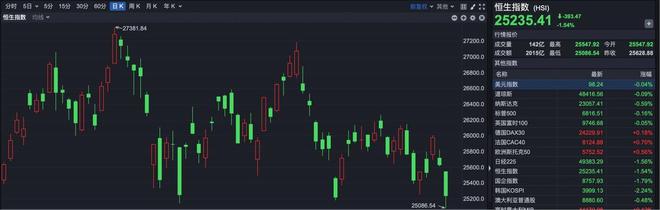
Market Performance - The Hong Kong stock market experienced a significant decline, with the Hang Seng Index closing at 25,235.41 points, down 393.47 points, representing a drop of 1.54% [1] - The Hang Seng Technology Index also fell, closing at 5,402.51 points, down 95.91 points, a decrease of 1.74% [2] Market Influences - The decline in the Hong Kong market was attributed to overall low market sentiment and a collective drop in the Asia-Pacific markets, notably the Nikkei 225 index down 1.56% and the KOSPI index down 2.24%, which negatively impacted both A-shares and H-shares [4] - Anticipation of the Bank of Japan's monetary policy meeting on December 18-19, where a potential interest rate hike from 0.5% to 0.75% is expected, may lead to foreign capital returning to Japan, increasing risk aversion and affecting the Hong Kong market [7] Sector Performance - The market saw widespread declines across various sectors, with notable drops in technology stocks such as Alibaba down nearly 3%, and other major players like Xiaomi, JD.com, and Bilibili down over 2% [7] - Gold stocks also faced declines, with Zijin Mining down over 4%, and other gold companies like Shandong Gold and Lingbao Gold down over 3% [7] Capital Flow - There was a net inflow of southbound funds into Hong Kong stocks, amounting to over 80 million HKD by the end of the trading day [8] Future Outlook - Analysts suggest that the Hong Kong market is at a potential rebound phase, with attractive long-term positioning despite existing risks. The focus remains on the economic fundamentals of China and the inflow of southbound capital [10] - The market is expected to remain volatile until the end of the year, with a consensus on a strong policy opening in the first quarter of the next year, particularly favoring sectors like technology and metals [10]






asyMarkets易信:加密市场静候日银决议 波动再压缩
Xin Lang Cai Jing· 2025-12-11 09:37
Group 1 - Bitcoin remains stable above $91,000 after the Federal Reserve's 25 basis point rate cut, with overall volatility nearly frozen [1][2] - The calm in the market is attributed to a continued reduction in on-chain selling pressure, as exchange inflows of Bitcoin have significantly decreased since November [1][2] - Large holders have reduced their transfers to exchanges, leading to a significant contraction in short-term selling pressure, keeping the market within a narrow range [1][2] Group 2 - CryptoQuant reports that whales incurred over $600 million in realized losses when Bitcoin first dropped below $100,000, with total estimated losses reaching $3.2 billion [3][4] - Short-term holders have been selling at a negative profit margin since mid-November, indicating that market sentiment has undergone significant release [3][4] - EasyMarkets suggests that this structural signal often corresponds to a stage where selling pressure is nearing exhaustion, explaining Bitcoin's stability around $92,000 [3][4] Group 3 - Market attention is shifting towards Tokyo, with predictions that the Bank of Japan will raise rates by 25 basis points at its December 19 meeting [4] - The rise in long-term Japanese government bond yields has raised concerns among policymakers, making local policy changes a key variable for global liquidity direction [4] - EasyMarkets believes that the Bank of Japan's decision could reshape global risk appetite, potentially leading to a trend breakthrough in the currently calm cryptocurrency market [4]

如何评价美联储再度出手,降息25个基点?可能会有什么影响?
Sou Hu Cai Jing· 2025-12-11 04:27
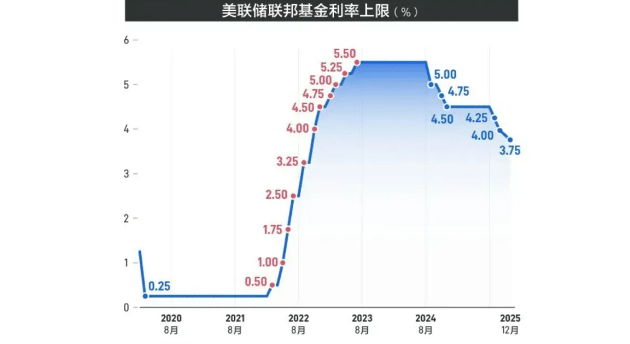
维持我前几天一直说的观点:2026年的价格高点很可能是2025年的收官价!降息25bp,2026预计降息 一次的判断不该是让金银党们狂欢的理由,相反是预期和现实之间割裂加大的信号!2026年很可能是全 球流动性紧缩的开始!不管你是用金银本位稳定本币,还是拉升大宗商品变相抑制实体生产和消费,抑 或是BIS深虑的黄金和美股同涨同跌现象加剧!实际上都证明了,市场流动性已经不再,满足于长期投 资或对冲,相反都沉浸在了短期投机之中, 至于降息的结果和前面预期的一样,2025年12月11日,美联储联邦公开市场委员会(FOMC)以9票赞 成、3票反对的结果,宣布将联邦基金利率目标区间下调25个基点至3.50%-3.75%。这是年内第三次降 息,累计降幅达75个基点,这种动作看似延续宽松节奏,实际上都是在透支后续的降息空间,哪怕哈塞 特再鸽派,其可以不单独依赖核心PCE数据,但不代表其真的会放任滞胀不管,因此,大概率,如果通 胀稳健,2026年的降息更可能出现在6月,因此,这次的降息实际上是对是错2026年大幅降息的预期抑 制! 并且会议释放的鹰派信号与六年来首次出现的三张反对票,更让此次政策调整充满复杂性! 而在利率市场的 ...
突然熄火!集体跳水,发生了什么?
天天基金网· 2025-12-10 05:41
Market Overview - Recent global market volatility has increased, with Japanese and Korean stock markets experiencing significant declines after initial gains, leading to a drop in the A50 index and affecting A-shares and Hong Kong stocks [2][3] - The Australian stock index has also shown weakness, with the ChiNext index dropping over 2% and the Shanghai Composite Index declining nearly 30 points, reflecting a broader market downturn [3] Economic Indicators - Japan's 10-year government bond yield has surpassed 1.96%, with the Bank of Japan signaling a potential interest rate hike in December, which has contributed to market fluctuations [3] - China's November CPI showed a year-on-year increase of 0.7%, the highest since March 2024, primarily driven by rising food prices, while the core CPI (excluding food and energy) rose by 1.2% [3] Liquidity and Policy Implications - The tightening of liquidity in the Japanese bond market has been noted, with indicators showing a deterioration in market conditions since April, leading to concerns about the impact of potential interest rate hikes [5] - Historical responses to previous tightening by the Bank of Japan suggest that the yen typically appreciates in anticipation of policy changes, followed by stabilization post-announcement, indicating a potentially muted impact on liquidity this time [5]

美联储降息在即,日本释放加息信号,如何影响全球流动性
Sou Hu Cai Jing· 2025-12-10 04:33
国际投资者长期以来借入低息日元,转换为港币或美元后投资于高收益资产。日本加息可能会直接推高 日元借贷成本,并可能引发日元升值,从而触发这些套息交易大规模平仓,海外股市面临一定抛压。 港股通科技ETF(159101):高度聚焦科技龙头,高弹性特征突出。 美联储将于12月10日进行议息会议,制造业PMI数据、就业数据、通胀数据均支持本次降息,市场认为 本次降息已无较大悬念,但美联储或将释放鹰派信号。美联储降息将带动无风险利率下行,短期内有望 提振全球市场流动性。 【免责声明】本文仅代表作者本人观点,与和讯网无关。和讯网站对文中陈述、观点判断保持中立,不 对所包含内容的准确性、可靠性或完整性提供任何明示或暗示的保证。请读者仅作参考,并请自行承担 全部责任。邮箱:news_center@staff.hexun.com 恒生科技指数ETF(513180):跟踪旗舰指数,覆盖AI+芯片+造车新势力; 从港股市场来看,恒生科技指数自10月高位调整超17%,估值重回历史低位区间。在AI研发投入增加、 大模型应用落地、美联储降息背景下,市场有望重新聚焦AI主线。 相关ETF: ...
数量篇:全球流动性处于何种水平?
China Post Securities· 2025-12-08 10:16
证券研究报告:宏观报告 发布时间:2025-12-08 研究所 分析师:袁野 SAC 登记编号:S1340523010002 Email:yuanye@cnpsec.com 研究助理:苑西恒 SAC 登记编号:S1340124020005 Email:yuanxiheng@cnpsec.com 近期研究报告 《价格传导扭曲制约企业利润修复, 非制造业景气度收缩》 - 2025.12.1 宏观研究 全球流动性处于何种水平?---数量篇 核心观点 全球流动性表示为国际金融市场上的融资难易程度。全球流动性 的测度可以从数量和价格两个维度测算。英国金融学家迈克尔·J·豪 厄尔在《资本战争:全球流动性的涨潮》一书中强调,"经济周期是 由资金流-储蓄和信贷的数量驱动的",强调流动性数量维度的重要 性。本篇报告着重从数量维度测算全球流动性,并判断当前全球流动 性处于什么水平。 全球流动性呈现新特征:发达经济体是全球流动性的主导,但主 导性有所弱化;新兴经济体影响力有所提升,特别是中国对全球流动 性的影响力正在显著提升,成为推动全球流动性结构转型的关键力 量,这背后反映了中国经济崛起,人民币与美元、欧元、日元、英镑 的博弈日 ...