国债买卖

Search documents
国泰海通|固收:买卖国债如何理解:从“长”计议
国泰海通证券研究· 2025-10-28 12:00
Core Viewpoint - The resumption of government bond trading is more significant for long-term logic than for short-term market points, indicating a potential shift in monetary policy and market stability [1][2]. Group 1: Short-term Market Reactions - The People's Bank of China (PBOC) announced the resumption of government bond trading, which may serve as a response to recent market conditions and the Fourth Plenary Session's directives [1]. - The bond market showed a stronger performance in long-term bonds compared to short-term ones, with 10-year and 30-year government bonds declining over 5 basis points [1]. - The strengthening of the RMB in the night market suggests that foreign capital may interpret the resumption as an expansionary economic stimulus policy [1]. Group 2: Long-term Implications - The primary significance of resuming government bond trading is to provide a safety net for the bond market, establishing an upper limit on long-term interest rates and enhancing the safety cushion for long-term bond investments [2]. - The resumption allows for better coordination with fiscal policies, especially as government leverage increases, preventing rapid upward movement of bond market interest rates that could constrain fiscal space [2]. Group 3: Flexible Operations Post-Resumption - The operations following the resumption of government bond trading are expected to be more flexible, with uncertainty regarding the pace, direction, duration, and scale of transactions [3]. - The approach may resemble the reform of reverse repos and MLF, allowing for adjustments based on market conditions rather than a fixed strategy [3]. Group 4: Broader Market Impact - The resumption of government bond trading is not only beneficial for the bond market but is also expected to support the stock market in the medium to long term [4]. - The fundamental nature of government bond trading as a liquidity management tool can complement fiscal issuance, potentially benefiting equity assets in a broader economic context [4]. - The current bond market conditions validate the expectation of a "weak front, strong back" scenario for the fourth quarter, with opportunities for capital gains in long-term bonds [4].



国泰海通 · 晨报1029|买卖国债如何理解:从“长”计议
国泰海通证券研究· 2025-10-28 12:00
Core Viewpoint - The resumption of government bond trading by the People's Bank of China (PBOC) is seen as a significant move to stabilize the bond market and provide a safety net for long-term interest rates, enhancing the attractiveness of long-term bond investments and trading opportunities [4][5]. Group 1: Short-term Market Reactions - The recent announcement of resuming government bond trading comes amid a strong stock market and stable bond market, indicating a potential response to the Fourth Plenary Session's directives [4]. - The bond market's short-term reaction shows that long-term bonds (10-year and 30-year) have seen yields drop by over 5 basis points, reflecting accumulated bullish sentiment rather than immediate PBOC actions [4]. - The strengthening of the RMB in the night market suggests that foreign investors may interpret the resumption of bond trading as an expansionary economic stimulus policy [4]. Group 2: Long-term Implications - The primary significance of resuming government bond trading is to provide insurance for the bond market, establishing an upper limit on long-term interest rates and improving the safety cushion for long-term bond investments [5]. - The PBOC's stance indicates a favorable overall bond market pricing, which opens up space for downward adjustments in long-term interest rates while maintaining control over potential disturbances from a strengthening stock market [5]. - In the context of increasing fiscal efforts and government leverage, the bond market's interest rate center should not rise too quickly, necessitating PBOC's bond purchases to support liquidity [5]. Group 3: Flexible Operations Post-Resumption - The operations of government bond trading post-resumption are expected to be more flexible, with uncertainty regarding the timing, direction, duration, and scale of transactions [6]. - The approach may resemble the reform of reverse repos and Medium-term Lending Facility (MLF), allowing for adjustments based on market conditions rather than fixed strategies [6]. - Given the ample medium- to long-term funding already available, the release of significant funds through government bond trading is not anticipated, limiting the speculative value of short-term bonds [6]. Group 4: Broader Market Impact - The resumption of government bond trading is not only beneficial for the bond market but is also expected to support the stock market in the medium to long term [7]. - As a liquidity management tool, government bond trading can complement fiscal issuance, potentially benefiting equity assets under conditions of liquidity easing and fiscal stimulus [7]. - The short-term bond market is expected to validate the assessment of a "weak front, strong back" scenario for the fourth quarter, with the current 30-10 bond yield spread still having room for convergence [7].

重启国债买卖影响几何?:固定收益点评
Guohai Securities· 2025-10-28 09:31
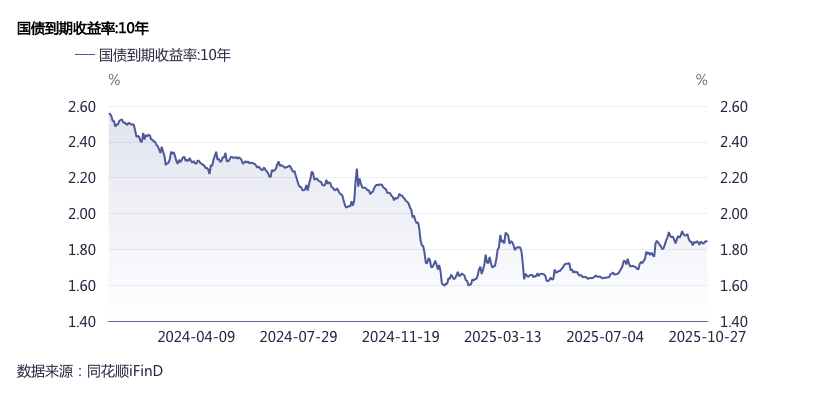
1. Report Industry Investment Rating No relevant content provided. 2. Core View of the Report - The resumption of Treasury bond trading by the central bank has short - term emotional boosting effects on the bond market, but its signaling significance may be greater than the substantial impact. The medium - to - long - term trend of the bond market still awaits the substantial implementation of key policies such as the reform of fund redemption fees and the overall downward shift of the interest rate center brought about by reserve requirement ratio cuts and interest rate cuts. The central bank may also adjust its operation intensity and rhythm according to the downward rhythm of market interest rates [5][14]. 3. Summary by Relevant Catalogs Why the Resumption? - In January 2025, the central bank suspended Treasury bond trading due to the rapid decline of bond market interest rates (the 10Y Treasury bond yield dropped from 2.14% in early November 2024 to 1.63% at the end of January 2025 and once hit a historical low below 1.6%) and the pressure on the RMB exchange rate (the USD/CNY exchange rate once rose above 7.3). The central bank aimed to suppress excessive speculation in the bond market and maintain exchange rate stability [12]. - The reasons for the resumption at the current time include: the bond market has returned to a relatively high level (the 10Y Treasury bond fluctuates in the range of 1.8% - 1.9%); the need to inject liquidity into the market (only one reserve requirement ratio cut this year and year - end seasonal pressure); some short - term bonds bought by the central bank last year may mature this year; and the need to hedge potential supply pressure from policies such as "pre - allocating part of the new local government debt quota for 2026" and "accelerating the implementation of policy - based financial instruments" [13]. Impact on the Bond Market - In terms of the purchase term, the central bank may continue the "buy - short" mode and the necessity of "sell - long" has decreased. Since June, large banks have continuously increased their holdings of short - term interest - rate bonds, which may be preparing for the central bank's operation. Currently, the 10Y Treasury bond yield is at a relatively reasonable level, so the central bank's need to "sell - long" to regulate yields has declined. The bond - buying behavior of large banks can be tracked to judge the central bank's operation [14]. - Although the resumption of Treasury bond trading has boosted market sentiment in the short term (the yield of the active 10Y Treasury bond dropped by 5BP on October 27), this emotional impact may be short - lived and difficult to fundamentally change the bond market's operation logic [14].
央行宣布恢复国债买卖点评:债市震荡格局或更明确
Bank of China Securities· 2025-10-28 07:48
Report Industry Investment Rating - The report does not provide an industry investment rating [1][3] Core Viewpoints - The central bank's suspension and resumption of treasury bond trading may reflect its policy intention to maintain yield stability, and the bond market's long - term yield may fluctuate within a range in the next stage [1][3] - The price discovery significance of treasury bond trading operations is stronger than the liquidity adjustment significance, and the current interest rate and spread levels may be within the central bank's desirable range [3] - If the base money injection scale formed by treasury bond trading is close to or higher than the same period last year, it may replace reserve requirement ratio cuts [3] Summary by Related Content Reasons for the Central Bank's Actions - At the beginning of this year, considering the large imbalance pressure in the bond market supply - demand and accumulated market risks, the central bank suspended treasury bond trading. Now, with the change in supply - demand contradictions, the central bank will resume the operation. On the supply side, the proportion of government bonds in social financing has been increasing; on the demand side, due to the blocked decline in interest rates and higher expected returns in the stock market, the bond market has lost its previous strong position among major asset classes [3] Impact on M2 Growth - As of September this year, the year - on - year growth rate of China's base money injection was 1.86%. Assuming the year - end base money year - on - year growth rate remains at 1.86% and the money multiplier reaches 8.9 (the highest in August this year), the corresponding M2 year - on - year growth rate is only 6.4% (Scenario 1) [3] - If an additional 50 billion yuan of base money is injected on the basis of Scenario 1, the year - end M2 year - on - year growth rate will reach 7.8% (Scenario 2), lower than the 9 - month growth rate (8.4%) but higher than the 2024 M2 growth rate (7.3%) [3] - To keep the year - end M2 year - on - year growth rate at 8.4% (the same as in September) without reserve requirement ratio cuts, an additional 70 billion yuan of base money needs to be injected on the basis of Scenario 1 (Scenario 3) [3]

【申万固收|利率】央行将恢复国债买卖,做多重启还是利多出尽?
申万宏源证券上海北京西路营业部· 2025-10-28 02:25
申万宏源固收研究 【申万固收|利率】央行将恢复国债买卖,做多重启还是利多出尽? 原创 阅读全文 ...

固定收益点评:重启国债买卖,如何理解,影响几何?
GOLDEN SUN SECURITIES· 2025-10-28 01:24
Report Summary 1) Report Industry Investment Rating No industry investment rating is provided in the report. 2) Core Viewpoints - The resumption of treasury bond trading by the central bank is a positive for the bond market, with the 10 - year and 30 - year treasury bond yields dropping by over 5bps, and other maturities also seeing significant declines [1][7]. - It is a routine operation. The suspension earlier this year was due to market supply - demand imbalance and risk accumulation, while the resumption indicates regulatory approval of the current bond market interest rate level, limiting the risk of further rate hikes [1][7]. - To maintain the scale of the central bank's treasury bond holdings, it is estimated that the central bank needs to buy between 0.7 - 1 trillion yuan of treasury bonds this year [2][8]. - The central bank may choose one of three trading methods, with the first method (buying from large banks) being the most likely to control the impact on the bond market [3][12][13]. - The resumption of treasury bond trading may reduce the possibility of a reserve requirement ratio cut this year, but interest rate cuts are still necessary to promote financing growth [4][13]. - In the fourth quarter, the bond market will be in a trend - based recovery. A dumbbell strategy is recommended, and the 10 - year treasury bond yield is expected to recover to around 1.65% [4][14]. 3) Summary by Related Contents Reasons for Resuming Treasury Bond Trading - It is a routine operation to implement the deployment of the Central Financial Work Conference, enhancing the synergy between monetary and fiscal policies and ensuring smooth policy transmission and market stability [1][7]. - The suspension earlier this year was due to large supply - demand imbalance and accumulated market risks in the bond market, while the resumption is because the bond market is running well [1][7]. - To maintain the scale of the central bank's treasury bond holdings. Last year, the central bank bought 1 trillion yuan of treasury bonds, and the scale has decreased from 2.88 trillion yuan in December 2024 to 2.22 trillion yuan in September this year. It is estimated that 0.7 - 1 trillion yuan needs to be bought this year [2][8]. Possible Trading Methods - The central bank buys from large banks at once or multiple times, and large banks do not immediately buy from the market. This is more of a short - term fund injection, with a limited impact on bond market supply - demand, and a gradual and controllable positive impact later [2][12]. - The central bank gradually entrusts large banks to buy from the market, focusing on the short - end. Considering last year's experience where short - term rates dropped sharply, the possibility of this method is low [3][12]. - The central bank entrusts large banks to buy across the curve, which will lead to a decline in the overall interest rate center, benefiting the long - end more [3][12]. Impact on Monetary Policy and the Bond Market - The resumption of treasury bond trading may reduce the need for a reserve requirement ratio cut this year, but interest rate cuts are still necessary to lower real interest rates and promote financing, especially before the peak financing season next year [4][13]. - Treasury bond trading is more beneficial to the short - end, and the central bank's signal will improve market sentiment, driving down long - term yields. In the fourth quarter, the bond market will recover, and a dumbbell strategy is recommended [4][14].
【新华解读】恢复购债“提上日程” 债市年末平稳运行将获重要支撑
Xin Hua Cai Jing· 2025-10-27 19:33
新华财经北京10月27日电(王菁)货币政策工具箱在债市关键时刻再次开启,这一双向灵活调节举措为 市场注入长期流动性,促进货币政策与财政政策协同发力。 中信证券首席经济学家明明对新华财经表示,"今年以来,国债和地方债发行量明显增加。年末地方政 府债动用结存限额,宽财继续政发力的环境下,央行重启国债买卖,既有效配合财政端发力,也有助于 稳定债市利率运行。" "年初央行暂停国债买卖,主要源于国债市场供不应求。"明明指出,从全年看,政府债供给整体高于往 年同期,央行恢复国债买卖,一方面有利于增加中长期流动性供给,另一方面也是为了强化央行对债市 收益率曲线的引导,"保障货币政策顺畅传导和金融市场平稳运行"。 信达证券研究员李一爽在报告中曾预测:"央行重启购债已经渐行渐近,我们认为四季度甚至10月有较 大的概率落地。" 这一预测如今得到验证。李一爽提到,"近三年政府债净融资复合增速达到了24%,债 券付息支出在财政支出中的比重也持续上升,2024年已接近5%。" "当然,随着国债买卖恢复,国债收益率曲线也将更加平稳,期限利差有望收窄,实体经济融资成本有 效下降。"明明补充道。 李一爽也强调称,"央行通过国债买卖平抑利率的 ...
如果国债买卖重启,债市怎么走?
2025-11-04 01:56
Summary of Conference Call on Government Bond Trading Resumption Industry Overview - The discussion revolves around the government bond market and its dynamics in the context of monetary policy and market expectations. Key Points and Arguments Government Bond Trading Resumption - The resumption of government bond trading in Q4 is not urgently needed as the central bank has other liquidity tools like MLF and OMO available [1][2][4] - The market has already priced in a 5 basis point benefit from the resumption, with actual results expected to be between 4 to 6 basis points [1][6] - The decision to resume trading in Q4 rather than September may be due to uncertainties in policy timing and coordination between fiscal and monetary authorities [4] Market Expectations and Trends - The bond market is expected to exhibit a healthy state of bidirectional fluctuations in 2025, with periods of both increases and decreases [5] - The anticipated yield for the ten-year government bond by the end of the year is around 1.75%, with no-tax bonds expected to be between 1.65% and 1.70% [3][15] - The overall impact of the government bond trading policy is seen as neutral, but it may push the market towards a more favorable trading direction [6] Future Bond Market Dynamics - Over the next few years, the volume of government bond trading is expected to gradually increase, replacing the need for reserve requirement cuts [7] - Large banks are primarily purchasing short-term bonds, with a balanced approach towards medium to long-term bonds [8] - The bond market is predicted to perform better in Q4 compared to Q3, with opportunities for long-duration bond trading [9] Interaction Between Stock and Bond Markets - There exists a certain degree of a seesaw effect between the stock and bond markets, but it is not absolute [10] - The transfer of household deposits to the stock market has limited impact on the bond market, with non-bank investors being the main source of fund diversion [10] Local Government Bond Rates - Future local government bond rates are expected to be around 2.4% to 2.5%, which may exert pressure on the equity market by setting a ceiling on bond yields [11] Fund Redemption Fee Policy - The impact of the fund redemption fee policy is limited, as funds have not truly exited the bond market but have instead been reinvested [12] Trade Friction and Market Impact - Trade friction has been partially priced into the market, and the resumption of government bond trading is seen as a clear trend despite ongoing pressures [14] Predictions for Q4 and Beyond - The bond market is expected to experience a rebound and correction in Q4, with specific yield targets set for various bonds by year-end [15] Other Important Insights - The central bank may take measures to balance liquidity if irrational downward movements occur in the bond market [4] - The transparency of government bond trading operations is expected to lead to more rational market reactions [6]
重磅发声!事关货币政策、稳定币、金融开放|金融街论坛聚焦
Sou Hu Cai Jing· 2025-10-27 14:39
Group 1: Monetary Policy and Financial Stability - The People's Bank of China (PBOC) has maintained a supportive monetary policy stance, utilizing various tools to ensure ample liquidity in the financial system, which has contributed to economic recovery and market stability [3][5] - The PBOC has implemented bond trading operations in the secondary market to enhance the functionality of government bonds and improve the transmission of monetary policy [6] - The PBOC plans to resume government bond trading operations in the open market, as the bond market is currently operating well [6] Group 2: Financial Regulation and Development - The Financial Regulatory Administration aims to enhance the adaptability of the financial system to better support sustainable economic development and deepen reforms [8][10] - The administration will promote a new financial service model that balances direct and indirect financing, supports key sectors, and enhances financial resource allocation for traditional and emerging industries [10] - The administration will also focus on inclusive finance, ensuring that financial services reach small and micro enterprises, rural areas, and underserved communities [10] Group 3: Capital Market Reforms - The China Securities Regulatory Commission (CSRC) emphasizes Beijing's role as a key hub for capital market reforms and will implement policies to attract quality financial resources to the capital [12][14] - The CSRC plans to deepen reforms in the ChiNext market and enhance the attractiveness and competitiveness of the capital market [14] - The CSRC has launched an optimized scheme for Qualified Foreign Institutional Investors (QFII), aiming to provide a more transparent and efficient environment for foreign investors [14] Group 4: Trade and Foreign Exchange Policies - The State Administration of Foreign Exchange (SAFE) will introduce new policies to promote trade innovation and facilitate cross-border trade [16][17] - China is expected to maintain a strong global trade presence, with the total global trade volume projected to exceed $33 trillion this year [17] - SAFE will continue to deepen reforms in the foreign exchange sector, aiming to create a more convenient, open, and secure foreign exchange management system [18]

央行将恢复国债买卖操作:为什么,有何影响?
Xin Lang Cai Jing· 2025-10-27 13:49
Core Viewpoint - The People's Bank of China (PBOC) is set to resume government bond trading after a nine-month suspension, indicating a shift in market expectations and a need to stabilize the bond market amid rising yields [1][2][3] Group 1: Reasons for Resuming Bond Trading - The resumption is driven by a reversal of the one-sided downward yield expectations, with the 10-year government bond yield rebounding to over 1.8% from a low of 1.6% earlier this year [3][6] - The PBOC's decision aligns with the need to increase its bond holdings, which have significantly decreased during the suspension, as part of its goal to build a strong central bank and financial system [1][7][10] - The bond market's overall stability is crucial, especially in the context of a strong stock market, to prevent negative feedback loops that could exacerbate market volatility [1][11] Group 2: Market Reactions and Implications - Following the announcement, bond yields across various maturities fell by approximately 3 basis points, reflecting market optimism about the resumption [1][11] - Analysts suggest that while the resumption may provide temporary relief and stabilize the market, it may not fundamentally alter the long-term interest rate trends due to broader economic factors [11][12] - The PBOC's approach to bond trading will likely involve a mix of strategies, including "buy short, sell long," to manage yield curves effectively [10][11] Group 3: Broader Economic Context - The PBOC has emphasized the importance of macro-prudential management in observing and assessing bond market conditions, indicating a proactive stance in maintaining financial stability [12][13] - The current liquidity transmission mechanism involves multiple layers, with non-bank institutions facing challenges in accessing funds, highlighting the need for structural adjustments in liquidity provision [13]