惠民生

Search documents
扩内需、稳增长、促转型、惠民生 优化后的“两新”政策将更加注重提质增效
Yang Shi Wang· 2025-12-31 03:25
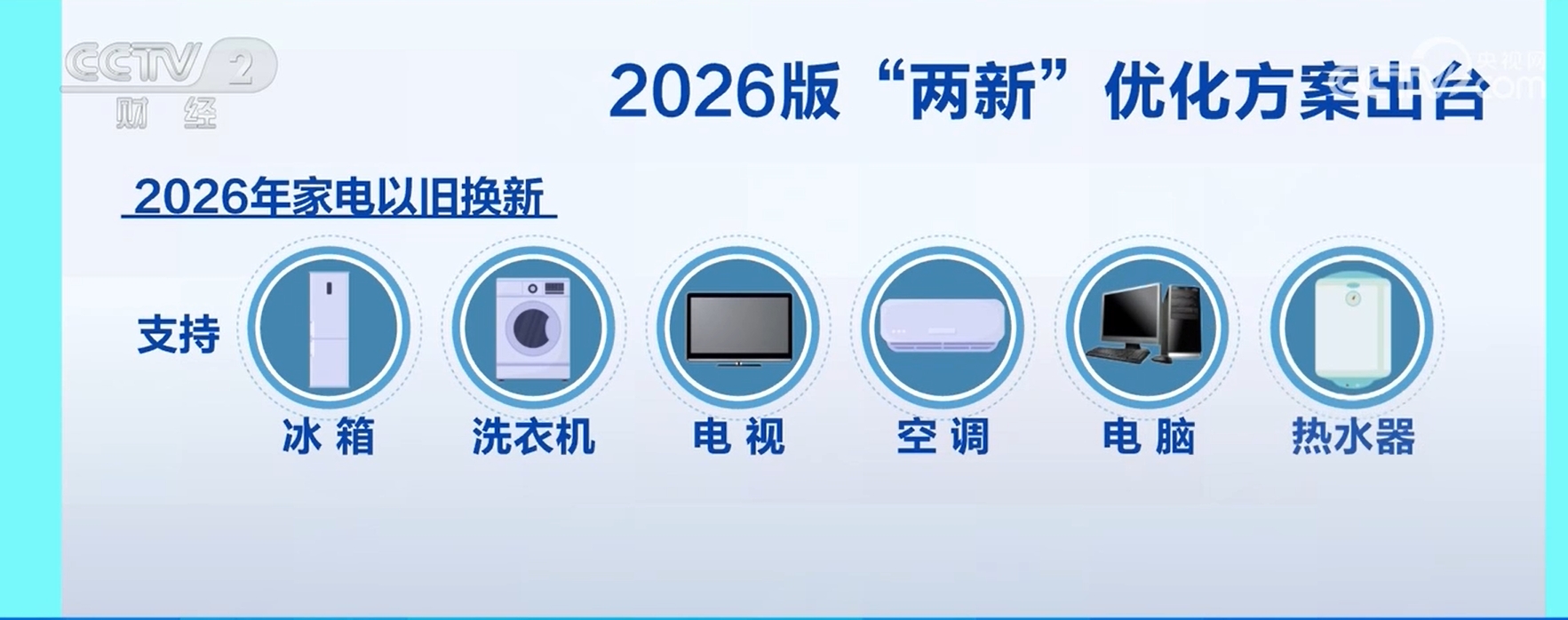
央视网消息:近日,国家发展改革委、财政部联合印发《关于2026年实施大规模设备更新和消费品以旧换新政策的通知》,对2026年"两新"工作作出系 统部署。与2025年相比,优化方案呈现出"精准发力,提质增效"的特征。 2026版"两新"优化方案出台 消费品以旧换新"得补率"将更高 2026版"两新"优化方案出台 设备更新领域支持范畴更广 在设备更新领域,《通知》在保持总体延续的基础上,进一步将民生关切、公共安全及线下消费领域关键设备纳入支持范畴。包括老旧小区加装电梯, 养老机构设备更新;消防救援设施、检验检测设备更新,支持商业综合体、购物中心、大型超市等线下消费商业设施设备更新。《通知》加大对中小企业设 备更新的支持力度,大幅降低申报相关领域设备更新项目的投资额门槛,实现政策红利"应享尽享"。 2026年,优化后的"两新"政策将更加注重提质增效, 扩内需,稳增长,促转型,惠民生。 在消费品以旧换新领域,《通知》明确,2026年汽车以旧换新将此前定额补贴优化调整为按车价比例补贴,报废更新补贴最高2万元,置换更新补贴最 高1.5万元。2026年家电以旧换新支持冰箱、洗衣机、电视、空调、电脑、热水器等六大类产品,通过 ...

2026年“国补”新变化:优化补贴范围和标准
Xin Hua She· 2025-12-31 01:48
Core Viewpoint - The 2026 "Two New" policy aims to enhance equipment updates and promote the replacement of consumer goods, addressing key social issues and supporting economic development through targeted subsidies and optimized implementation mechanisms [1][2][7]. Group 1: Policy Changes - The 2026 "Two New" policy expands the support scope to include the installation of elevators in old residential areas, equipment updates in elderly care institutions, and updates for commercial facilities like shopping centers and supermarkets [2][4]. - The policy continues to support the replacement of old vehicles and household appliances, including cars, washing machines, refrigerators, and extends subsidies to digital and smart products such as smartphones and smart home devices [2][3]. Group 2: Subsidy Standards - The subsidy standards for equipment updates have been optimized, with a shift to differentiated subsidies based on the number of floors for old residential elevators, potentially easing financial burdens for high-rise buildings [4]. - For automotive subsidies, the policy adjusts from fixed amounts to a percentage of the vehicle price, with specific rates for new energy vehicles and fuel-efficient cars, ensuring better alignment with consumer needs [5][6]. Group 3: Implementation Mechanisms - The policy introduces an optimized project application and review process, lowering the investment threshold for project applications and increasing support for small and medium-sized enterprises [7]. - A unified subsidy standard will be implemented nationwide for various categories, addressing discrepancies in local subsidy standards and ensuring that more consumers benefit from the policy [7].
“双节”将至 西安多场特色活动营造节日消费氛围
Sou Hu Cai Jing· 2025-12-29 15:28
Core Viewpoint - The Xi'an Municipal Bureau of Commerce is implementing a series of consumer promotion activities to boost consumption during the "Double Festival" period, focusing on expanding domestic demand, promoting consumption, and benefiting people's livelihoods [1][3]. Group 1: Promotion Activities - The Bureau is organizing a variety of large-scale promotional events, including the "21st Xi'an New Year Goods Fair," "Good Things Ahead, Happy Shopping in Chang'an," and the "National Online New Year Goods Festival," featuring over a thousand merchants and more than ten thousand types of products [1][3]. - Activities will include discounts, giveaways, and a special "New Year Goods Zone" in key commercial areas, combining live demonstrations, creative product sales, and food tastings to enhance the festive shopping atmosphere [1][3]. Group 2: Online and Offline Integration - The Bureau is coordinating with major commercial enterprises to create a seamless online and offline shopping experience, focusing on food, travel, and home appliances, with a series of integrated promotional activities [1][3]. - The initiative aims to meet diverse consumer needs through various discount measures and rich shopping scenarios [1][3]. Group 3: Consumer Environment Optimization - To ensure the smooth execution of promotional activities, the Bureau emphasizes both service enhancement and regulatory oversight, aiming to optimize the consumer environment for residents and visitors [1][3].
2026年更加积极的财政政策将着力扩内需惠民生
Yang Shi Wang· 2025-12-29 12:41
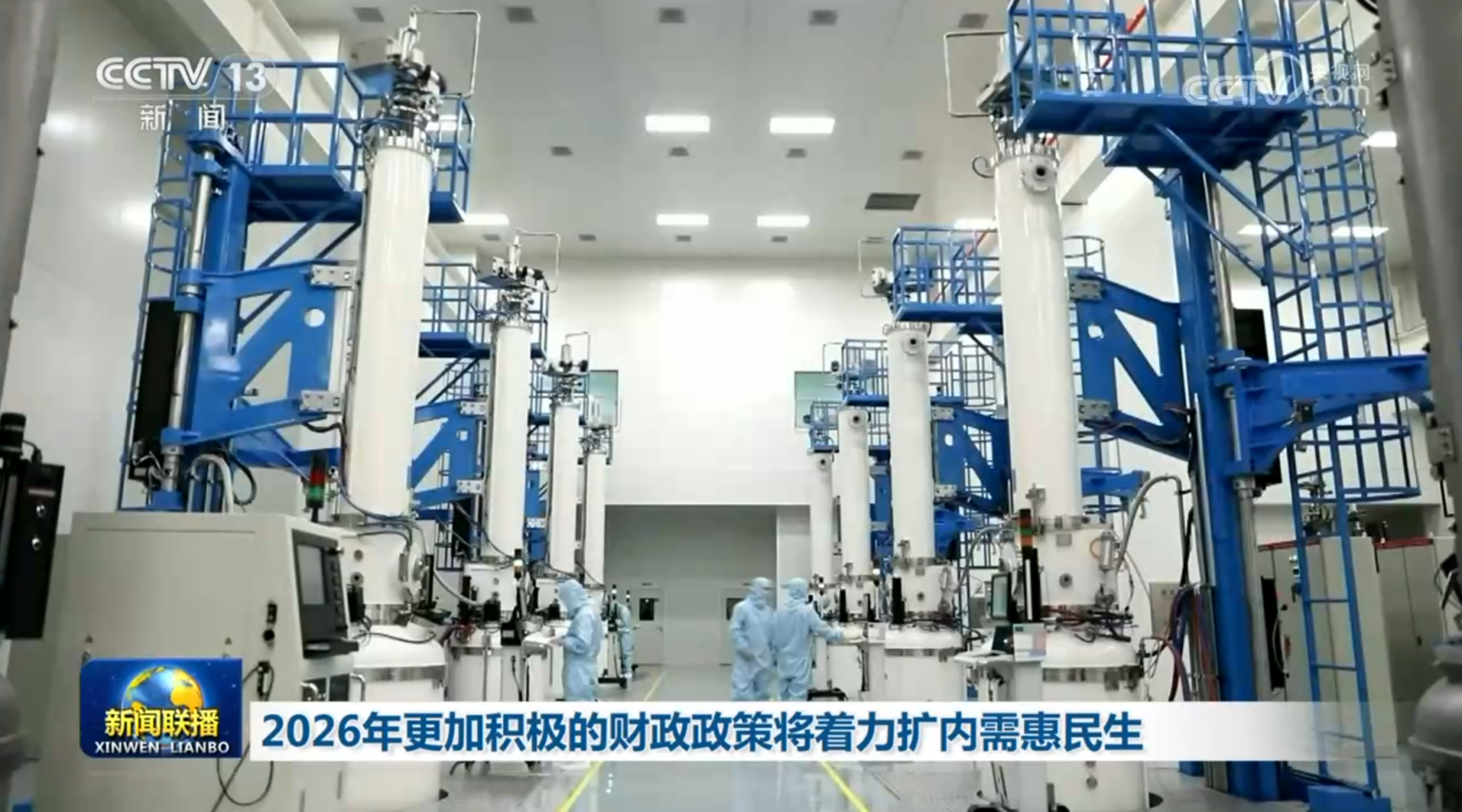
Group 1 - The core viewpoint is that China will implement a more proactive fiscal policy in 2026 for the second consecutive year, focusing on expanding domestic demand, optimizing structure, increasing momentum, and benefiting people's livelihoods [1][3] - The fiscal expenditure will be expanded to ensure necessary spending, optimize the government bond tool mix, and improve the efficiency of transfer payment funds [1][3] - The policy aims to support the construction of a strong domestic market, boost consumption, and implement special actions to stimulate consumption [3] Group 2 - There will be an active expansion of effective investment, with increased funding for key areas such as new productive forces and comprehensive human development [3] - The fiscal policy will also support the deep integration of technological innovation and industrial innovation, promote urban-rural integration, and enhance regional collaboration [3] - The focus will be on strengthening social welfare and promoting a comprehensive green transformation of economic and social development, enhancing economic development momentum and public well-being [3]
更大力度支持惠民生和提振消费
Sou Hu Cai Jing· 2025-12-16 02:07
Core Viewpoint - The recent joint notification by the Ministry of Commerce, the People's Bank of China, and the Financial Regulatory Bureau aims to enhance collaboration between commerce and finance to boost consumer spending and improve living standards [2][3]. Group 1: Policy Measures - The notification outlines three main areas with eleven policy measures to strengthen cooperation between the commerce and financial systems [3]. - It encourages local departments to enhance communication and collaboration, promoting a coordinated approach involving fiscal funds, credit, and social capital [3]. - Financial institutions are urged to support five key areas: upgrading product consumption, expanding service consumption, fostering new consumption types, innovating diverse consumption scenarios, and assisting consumption support [3][4]. Group 2: Financial Support Initiatives - Financial institutions are encouraged to collaborate with platforms and key merchants to improve payment options such as installment plans, credit cards, and digital currencies to meet consumer upgrade demands [4]. - The notification emphasizes the need for tailored personal consumption loan policies based on customer repayment capabilities and credit status, aiming to accelerate the development of personal consumption loans [4]. - It also highlights the integration of financing, settlement, and insurance services to support new consumption models and enhance financial backing for various consumer activities and urban development projects [4]. Group 3: Implementation and Future Steps - The Ministry of Commerce plans to work with the People's Bank of China and the Financial Regulatory Bureau to guide local departments and financial institutions in implementing these measures effectively [4]. - The initiative aims to address barriers to consumer potential and provide targeted policy recommendations based on experiences from various local commerce departments and financial institutions [4].

整治“微腐败” 守护“大民生”(治理者说)
Ren Min Ri Bao· 2025-12-14 22:30
(责编:杨光宇、胡永秋) 整治"微腐败"是营造良好发展环境的重要基础。经济发展和民生改善相互牵动、互为条件。"微腐败"既 损害群众利益,更破坏发展环境。我们每年开展优化营商环境专项监督,常态整治"担当作为不尽心、 争创一流缺雄心、服务群众不贴心、遵规守纪缺戒心"等作风问题。优良作风是良好营商环境的"金字招 牌"。近年来,达州成功引进10个百亿级制造业项目,"3+3+N"现代产业集群整体重塑,高质量发展步 伐更加坚实,为保障和改善民生夯实物质基础。以清风正气护航经济发展,还需进一步构建亲清政商关 系,杜绝靠企吃企谋私利等现象。 整治"微腐败"关键在于管住"微权力"。我们梳理形成乡镇(街道)、村(社区)履职事项清单,聘请群 众担任村级党风政风监督员,从小事入手铲除腐败滋生土壤。阳光是最好的防腐剂,群众是最好的监督 者。要充分发挥群众监督作用,畅通参与渠道,让"蝇贪蚁腐"无处遁形。 反腐败是否见成效,惠民生是否见真功,群众最有发言权。持续推动反腐败斗争向基层延伸、向群众身 边延伸,扎紧制度笼子,深化以案促改,涵养廉洁文化,引导党员干部将遵规守纪体现到增进群众感 情、维护群众利益上来,监督执纪的力度就能更好转化为造福 ...
2025年中央经济工作会议学习体会:“扩内需”的战略地位进一步提升
Bank of China Securities· 2025-12-12 00:42
Economic Strategy - The strategic position of "expanding domestic demand" has been further elevated, emphasizing its role in addressing "old problems and new challenges" in the economy[1] - The meeting highlighted the need for a more proactive macroeconomic policy, with a focus on enhancing policy foresight, targeting, and coordination[1] - "Expanding domestic demand" is seen as a crucial measure to counter external demand uncertainties and stimulate domestic supply, leading to improved corporate profits and household income[1] Fiscal and Monetary Policy - The fiscal deficit target for 2025 is set at 4.0%, an increase of 1.0 percentage point from 2024, with an estimated actual deficit rate of 5.3% when including special government bonds[4] - The meeting called for continued implementation of a proactive fiscal policy, maintaining necessary fiscal deficits and total debt levels[4] - Monetary policy will remain moderately accommodative, with a focus on using various tools like reserve requirement ratio cuts and interest rate reductions to support economic stability and reasonable price recovery[4] Investment and Consumption - The meeting proposed the formulation of a plan to increase urban and rural residents' income, which is fundamental to boosting consumer spending[4] - Investment strategies will focus on stabilizing and revitalizing investment through both project and local fiscal funding[4] - The emphasis on "doing better with incremental policies and revitalizing existing resources" aims to align new policies with the existing economic foundation[12]
焦点访谈|读懂“十五五”规划建议 感知政策里的民生“温度”
Yang Shi Wang· 2025-11-30 14:07
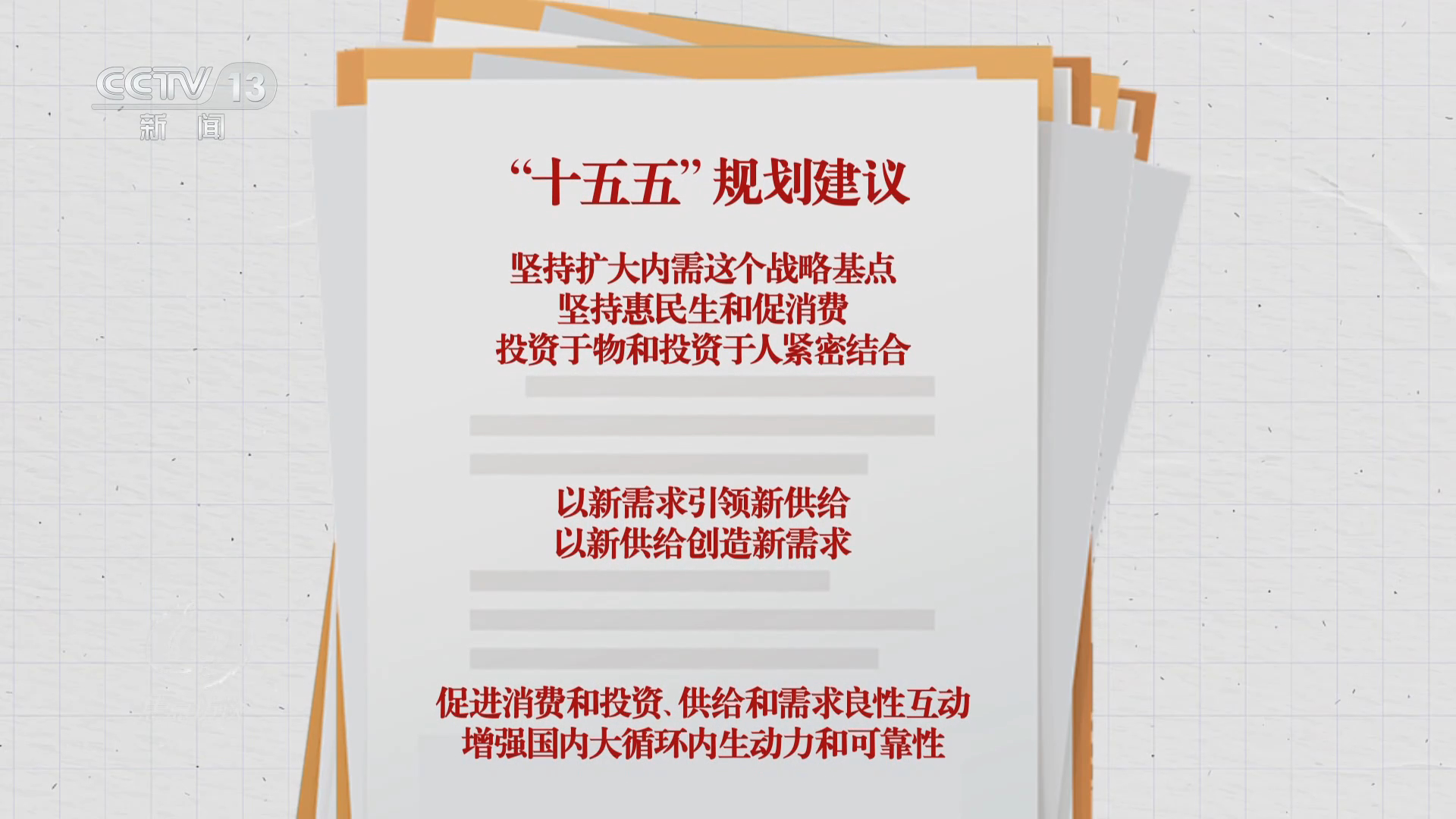
Group 1 - The core viewpoint of the article emphasizes the importance of expanding domestic demand and optimizing investment as outlined in the "14th Five-Year Plan" [3][5] - The new proposal highlights the integration of "investment in material" and "investment in people," aiming to enhance the quality of life and stimulate consumption [3][11] - The article discusses the shift in investment focus from physical infrastructure to human capital, indicating a strategic decision to prioritize investments that directly benefit people's lives [5][15] Group 2 - The "14th Five-Year Plan" suggests that investment in people includes funding for education, healthcare, and elderly care, which are crucial for improving living standards [5][19] - The article provides examples of successful integration of investments in both material and human resources, such as the Shenzhen Guangming Cloud Valley project, which has attracted high-tech enterprises and created job opportunities [11][13] - It highlights the need for a long-term vision in investments, focusing on talent development and innovation as key areas for future growth [25][27] Group 3 - The article notes that the total fixed asset investment in China is projected to reach 52 trillion yuan, emphasizing the scale of investment compared to global standards [9] - It discusses the necessity of increasing residents' income to boost consumption, with specific goals set in the "14th Five-Year Plan" to align income growth with economic growth [19][21] - The article mentions that the government aims to direct more resources towards social welfare, with over 70% of fiscal spending in various regions allocated to the livelihood sector [21][23]
多部门最新回应,关于促进家电家居等大宗消费
Sou Hu Cai Jing· 2025-11-30 12:09
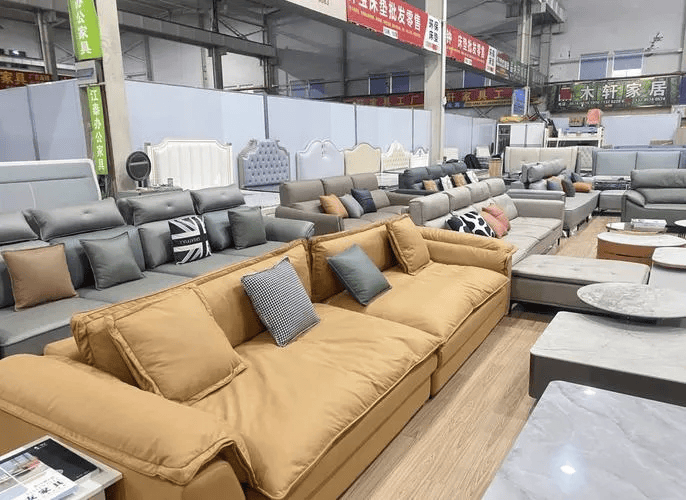
Core Insights - The Chinese government has introduced a plan to enhance the adaptability of supply and demand in consumer goods, aiming to create three trillion-level consumption sectors and ten hundred-billion-level consumption hotspots by 2027, with a focus on high-quality development by 2030 [1] Group 1: Development Goals - By 2027, China aims to establish three trillion-level consumption sectors and ten hundred-billion-level consumption hotspots [1] - By 2030, the goal is to achieve a high-quality development pattern where supply and consumption interact positively, with a steady increase in consumption's contribution to economic growth [1] Group 2: Key Consumption Areas - The three trillion-level consumption sectors include elderly products, smart connected vehicles, and consumer electronics [1] - The ten hundred-billion-level consumption hotspots cover categories closely related to daily life, such as baby products, smart wearables, cosmetics, fitness equipment, outdoor products, pet food, civilian drones, trendy toys, jewelry, and national fashion apparel [1] Group 3: Current Market Trends - In the first ten months of this year, the trade-in policy for consumer goods has generated over 2.4 trillion yuan in sales, benefiting more than 360 million people [3] - Retail sales of home appliances, furniture, and communication equipment have seen approximately 20% year-on-year growth, maintaining a rapid growth rate [3] Group 4: Regulatory and Standardization Efforts - The State Administration for Market Regulation has released 22 national standards related to energy and water consumption for daily consumer goods, enhancing the supply of quality products to meet consumer demand [3] - The plan emphasizes the development of energy-efficient and environmentally friendly products suitable for rural areas, including efficient range hoods, gas stoves, water heaters, and bathroom products [3][4]
国泰海通:预计2026年狭义财政赤字率仍需突破4%,新增地方专项债或在4.6万亿左右
Sou Hu Cai Jing· 2025-11-23 06:25
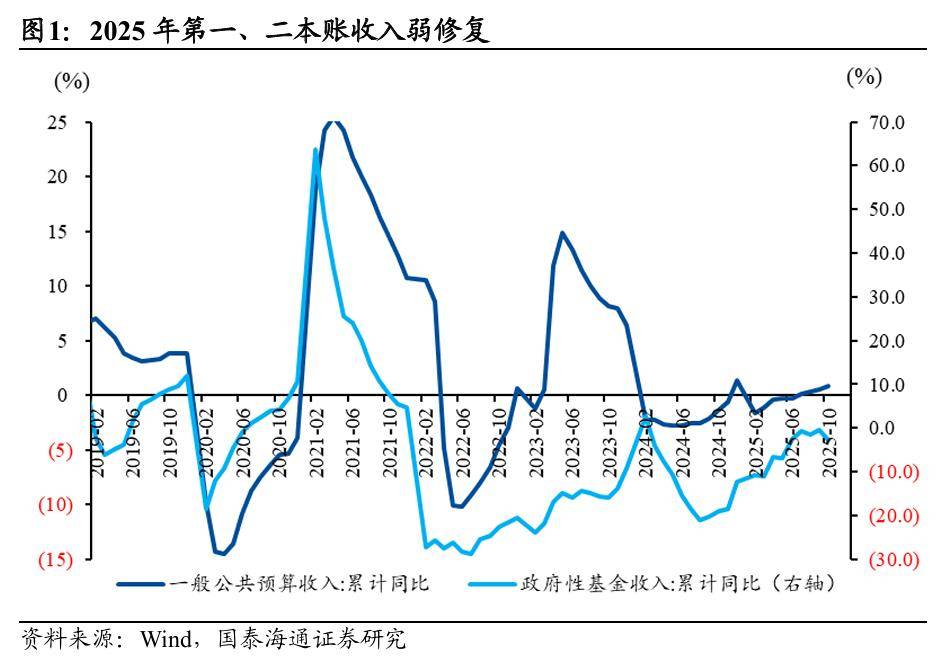
Core Viewpoint - The fiscal policy for 2026 will focus on promoting stable growth, improving people's livelihoods, and managing risks under the "15th Five-Year Plan," with a projected narrow fiscal deficit rate exceeding 4% and new local special bonds around 4.6 trillion yuan [1][5][43]. Group 1: Fiscal Policy Characteristics - The core feature of China's fiscal policy in 2025 is a shift towards a "people-oriented" expenditure structure, which is reflected in the resilience of consumption and the decline in infrastructure investment since July [1][5]. - On the revenue side, there is a weak recovery in the two accounts, with tight constraints still present. The income from individual income tax and securities transactions has improved, while land transfer income has seen a narrowing decline [5][11]. - On the expenditure side, there is a moderate expansion in total fiscal spending, with a structural shift towards social welfare. The central government's financial support is increasing, but the alignment of financial resources and responsibilities still needs optimization [1][11][15]. Group 2: Key Tasks for 2026 - The fiscal policy for 2026 will focus on three key tasks: promoting the synergy between social welfare and consumption incentives, addressing the slowdown in external demand, and resolving funding constraints for infrastructure investment [1][21][22]. - Policies such as trade-in programs and childbirth subsidies are expected to continue and be enhanced, with a focus on service consumption, projecting a retail sales growth rate of around 4.5% [2][25]. Group 3: Infrastructure Investment and Debt Management - For infrastructure investment and debt management, it is essential to clarify the scale and path of debt management funding, with an estimated need for around 3 trillion yuan in special bonds for debt management and clearing overdue accounts in 2026 [3][29]. - The pressure of interest payments after debt replacement is expected to be manageable due to a low-interest environment, which will help offset the visible interest payment pressure [3][37]. - The growth rate of infrastructure investment is projected to be around 3.5% in 2026, influenced by the constraints of debt management and the pursuit of effective investment [3][41]. Group 4: Fiscal Data Projections for 2026 - The growth rate of broad fiscal spending is expected to be around 4.6%, with a narrow fiscal deficit rate still needing to exceed 4%, and new local special bonds projected at approximately 4.6 trillion yuan [5][43][49]. - The general public budget revenue growth rate is estimated at about 1%, while government fund revenue is expected to decline by around 5% [43][46].