
疗愈经济

Search documents
2025年第27周:美妆行业周度市场观察
艾瑞咨询· 2025-07-09 08:11
Industry Environment - The beauty industry in China is expected to draw lessons from the success of collectible toys, focusing on emotional marketing and cultural influence to enhance user connection and differentiation [1] - The "healing economy" is emerging as a new trend, with the aromatherapy market growing rapidly, driven by increasing consumer demand for wellness services [2] - A potential IPO wave is anticipated in the domestic beauty sector, with several companies like Lin Qingxuan and Gu Yu moving towards public offerings, supported by favorable policies [3][4] Market Trends - The Chinese cosmetics market is undergoing a transformation, with a noticeable "K-shaped" differentiation where high-end international brands are expanding while mid-range and local brands are contracting [5] - The sports beauty segment is projected to reach $31.4 billion by 2028, with brands launching high-performance products to cater to women's needs in fitness scenarios [6] - Recent product launches from luxury brands like Louis Vuitton and Chanel reflect a trend towards innovative and sustainable beauty products [7] Celebrity Influence - The acquisition of Hailey Bieber's brand Rhode by E.l.f. Beauty highlights the importance of product strength and user engagement over mere celebrity endorsement in the beauty market [8][9] Sales Performance - Despite a general decline in consumer spending during the 618 shopping festival, the beauty sector saw a significant increase in sales, with a year-on-year growth of 63.35%, driven by domestic brands [10] Brand Dynamics - The beauty market is entering a "technology equity" era, where brand identity and consumer trust are becoming more critical than product differentiation [11] - During the 618 shopping festival, brands like Pechoin and Natural Hall achieved top rankings, showcasing the effectiveness of technological innovation and cross-industry collaboration [12] Corporate Developments - Estée Lauder's strategic appointment aims to revitalize its makeup brands in response to declining sales [13] - The unique business model of Mao Geping's cosmetics company, with a high repurchase rate, demonstrates the potential for non-standardized services to enhance brand loyalty [14] - L'Oréal's acquisition of Medik8 for approximately €1 billion underscores the growing importance of scientific skincare in the beauty industry [15] Market Entry - The successful IPO of Ying Tong Holdings marks a significant milestone for the Chinese fragrance market, with plans for further brand expansion and channel development [17] Industry Challenges - Major cosmetic companies like Coty and Procter & Gamble are restructuring and downsizing to cope with declining sales and market pressures [18] Strategic Moves - Anta's acquisition of the outdoor brand Jack Wolfskin aims to position it in the mid-range market, leveraging the brand's existing recognition in Europe [19] - The acquisition of the sensitive skin brand Bai Zhi Cui by Juyi Group reflects a trend towards integrating scientific research with skincare, enhancing the brand portfolio [20][21]


小小观赏鱼,游出400亿大市场
36氪· 2025-07-08 13:30
Core Viewpoint - The ornamental fish industry in Guangzhou has evolved from a niche market to a billion-dollar industry, with new growth opportunities emerging through live-streaming e-commerce, driven by consumer interest and social media engagement [4][5][28]. Industry Overview - The ornamental fish industry in Guangzhou had an annual output value of 540 million yuan in 2022, with the entire Guangdong aquatic industry nearing 40 billion yuan, employing nearly 300,000 people and covering over 100,000 acres of farming area [4][5]. - The industry has seen a significant increase in interest, with social media topics related to "aquarium landscaping" and "ornamental fish" garnering billions of views on platforms like Xiaohongshu and Douyin [7][9]. Live-Streaming E-commerce Impact - The introduction of live-streaming e-commerce has allowed ornamental fish businesses to reach a broader audience, overcoming geographical limitations and enhancing customer engagement [10][22]. - Companies like Qianhai Aquatic have reported a 20-fold increase in breeding varieties and a significant rise in daily revenue, indicating the effectiveness of live-streaming as a sales channel [10][28]. - The interactive nature of live-streaming has improved customer trust and satisfaction, with businesses able to showcase the quality of their products in real-time [16][19]. Consumer Behavior and Market Trends - The rise of the "healing economy" has led to increased consumer interest in hobbies like "planting grass tanks," which has further popularized ornamental fish [7][9]. - Consumers are increasingly willing to invest in high-quality products, with some individuals spending thousands on equipment and fish, reflecting a growing commitment to the hobby [9][27]. - The live-streaming format has proven effective in converting viewers into buyers, with businesses reporting high transaction rates and repeat purchases [15][16]. Challenges and Opportunities - While the ornamental fish industry has low entry barriers, operating in the live-streaming e-commerce space presents challenges such as logistics and the need for consumer education on fish care [22][24]. - The high standards required for product quality and customer service are driving the industry towards higher quality offerings, creating a sustainable growth environment [24][27]. - The market is expected to continue expanding, with Douyin e-commerce for aquatic pets showing a year-on-year growth rate exceeding 175% in 2025 [28].

00后情绪消费更大方?南都发布情绪经济社会认知度调研报告
Nan Fang Du Shi Bao· 2025-06-27 08:47
Group 1 - The rise of emotional economy is reshaping consumer behavior, with 64% of Chinese consumers prioritizing emotional satisfaction as their primary need [3][5][11] - The emotional economy is becoming a new economic engine, with significant growth in sectors like trendy toys, pets, and sports, as evidenced by the explosive sales during events like the Tmall 618 shopping festival [3][30] - Over 80% of surveyed consumers reported engaging in emotional consumption in the past year, with preferences varying by age group [6][8][10] Group 2 - Emotional consumption is defined as purchasing behavior aimed at achieving psychological compensation, indicating a shift from functional to emotional-driven consumption [5][10] - The "谷子经济" (Goods economy) market is projected to reach 168.9 billion yuan in 2024, reflecting a 40.63% increase from 2023, driven by the popularity of trendy toys and related products [30][34] - The pet industry is evolving into an emotional compensation system, with Gen Z spending an average of over 1,200 yuan per month on pet-related products and services [34][35] Group 3 - The silver economy is expected to reach a market size of 50 trillion yuan by 2050, driven by the new retired demographic who are financially stable and seeking quality experiences [35][36] - The healing economy is gaining traction, with a projected market value exceeding 240 billion yuan this year, fueled by rising demand for emotional wellness and immersive experiences [37][40] - Emotional marketing is widely accepted, with over 80% of respondents recognizing its influence on purchasing decisions, particularly among younger consumers [22][23]

洗浴中心成年轻人新宠:100元享12小时娱乐住宿
第一财经· 2025-06-14 06:32
Core Viewpoint - The Chinese bathing service industry is entering a golden development period from 2025 to 2030, driven by consumption upgrades, technological innovations, and policy support, presenting unprecedented opportunities for growth [1][8][9]. Industry Development - The bathing and foot massage industry has seen a surge in new supply and business models, with online transaction volume and orders growing over 30% year-on-year in the past three years [4][5]. - The market size of the bathing industry is expected to exceed 700 billion yuan, with a projected compound annual growth rate of 10%-12% until 2030 [8][9]. Consumer Trends - Young female consumers and the Z generation (born 1995-2009) are emerging as the core customer base, with significant growth in their participation in the bathing services [5][8]. - The average age of consumers is decreasing, with young users (especially college students) showing a transaction growth rate of 162.26% year-on-year [5][8]. Regional Market Dynamics - The growth rate of the bathing service market in third- and lower-tier cities is over 40%, significantly outpacing that of first-tier cities [9]. - Urbanization is accelerating, with the urbanization rate expected to exceed 66% by 2025, leading to increased demand for leisure services [9]. Business Strategies - Companies are focusing on extreme cost-performance ratios to attract consumers, with some businesses significantly reducing prices while increasing customer flow [11][12]. - The shift from a business-oriented model to a "volume-based" model is evident, with businesses adapting to consumer preferences for affordability and value [11][12]. Service Diversification - The industry is moving towards a "multi-entertainment" phase, where the focus is on enhancing customer stay duration and overall experience rather than just fulfilling bathing needs [16][18]. - New service offerings include diverse entertainment options such as gaming, dining, and social spaces, catering to the evolving preferences of younger consumers [16][18]. Gender and Demographic Shifts - The gender ratio among consumers is becoming more balanced, with female customers now slightly outnumbering male customers, reflecting a shift in service focus towards female clientele [17][18]. - The average stay duration of customers has increased significantly due to the enhanced entertainment and social atmosphere in bathing centers [18].
疗愈不等于“买了即治愈”
Ren Min Ri Bao· 2025-06-09 07:30
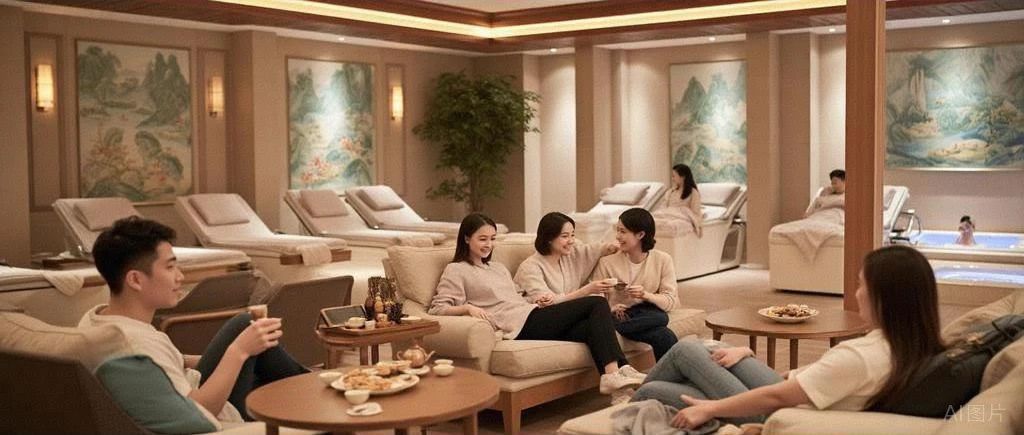
Core Insights - The healing economy is emerging as people increasingly focus on their emotional needs and pursue mental and physical well-being [1][2] - There is a lack of market access and industry regulatory standards, leading to high-cost healing projects with questionable effectiveness, necessitating regulation [1][2] Group 1: Market Trends - A diverse range of healing products and services has been introduced, from essential oils to meditation apps, catering to various emotional needs [1] - Topics related to sound healing have garnered over 3.5 billion views on a platform, while topics like spiritual healing and hypnosis have also exceeded 100 million views [1] Group 2: Consumer Behavior - Consumers are attracted not only to the products and services but also to the emotional value behind them [1] - Fragmented offerings, such as "spiritual SPA packages" and "7-day stress relief courses," simplify consumer psychological needs but lack depth in healing effects [1] Group 3: Industry Challenges - Over-commercialization and superficial healing offerings have led to a devaluation of emotional comfort, with consumers equating healing to mere consumption [1][2] - Some businesses exploit the healing concept to sell overpriced products, creating anxiety rather than alleviating it, due to the lack of quantifiable emotional value and quality standards [2] Group 4: Recommendations for Improvement - Consumers need to enhance their understanding of the essence of healing, shifting from expectations of quick fixes to a more patient approach to personal growth [2] - There is a call for policy-level regulation to establish qualification certification mechanisms, industry access standards, and strengthen market oversight to ensure product and service quality [2] - The establishment of a domestic professional association and a transparent industry credit evaluation system is suggested to help consumers improve their discernment [2]
深圳出台“扩消费39条”,这些提法有新意
Di Yi Cai Jing· 2025-06-08 06:15
Group 1: Core Insights - Shenzhen has launched a comprehensive plan to boost consumption, focusing on four key product categories: artificial intelligence terminals, whole-home smart devices, modern fashion, and outdoor equipment [1] - The plan includes 39 specific measures aimed at addressing consumption market expansion and resolving existing bottlenecks [1][3] - Shenzhen's retail sales of consumer goods reached 1,063.77 billion yuan in 2024, marking a 1.1% increase from the previous year, with a notable recovery in the second half of the year [2] Group 2: Enhancing Consumer Capacity and Willingness - The plan emphasizes enhancing residents' income and employment, with measures including high-quality job promotion and multi-channel income increases [3] - Specific financial incentives are provided for talent recruitment, with subsidies of up to 30,000 yuan for undergraduates and 100,000 yuan for doctoral graduates [3] - The plan also aims to adjust minimum wage standards and support collective bargaining to improve wage levels for workers [3] Group 3: Expanding Quality and Diverse Consumption Supply - Shenzhen aims to promote artificial intelligence terminal consumption by rewarding high-quality products and supporting flagship stores in key locations [7] - The city encourages local fashion brands to enhance their market presence and develop limited edition products [7] - Outdoor equipment consumption will be fostered through events and the establishment of service centers, leveraging Shenzhen's natural resources [7][8] Group 4: Policy Support and Infrastructure Development - The plan includes measures to support foreign trade enterprises affected by tariffs, such as establishing themed display areas in shopping centers [11] - Shenzhen will facilitate participation in international exhibitions, providing financial support for companies attending overseas events [11] - The city is also promoting the use of REITs to enhance investment in consumption and cultural tourism infrastructure [12]
“装货”带火了Bistro
3 6 Ke· 2025-05-27 09:19
Core Insights - The rise of "Yun Gui Chuan Bistro" reflects a shift in urban consumer behavior towards a blend of cultural experience and social interaction in dining [2][10][27] Group 1: Market Trends - The "Yun Gui Chuan Bistro" concept has seen explosive growth, with a reported annual increase of over 150% in cities like Shanghai and Chengdu since 2022 [6][7] - The popularity of bistros indicates a new dining trend where consumers seek both casual dining and a sense of ritual in their eating experiences [10][27] Group 2: Consumer Behavior - Urban consumers are increasingly engaging in "装货式消费" (showing off consumption), which emphasizes the importance of aesthetic and experiential dining [10][18] - The bistro atmosphere, characterized by dim lighting and cultural decor, enhances the dining experience, encouraging social media sharing and personal branding [11][13] Group 3: Culinary Innovation - "Yun Gui Chuan Bistro" offers a unique flavor system that combines traditional regional dishes with creative presentations, such as pairing Guizhou sour soup fish with Sichuan spicy rabbit heads [5][19] - The menu features innovative dishes that attract consumers, with names and presentations designed to be visually appealing for social media [14][19] Group 4: Social Dynamics - The bistro dining experience fosters social interaction, with diners exchanging dipping sauce recipes and engaging in lively discussions about food [13][19] - The concept serves as a "third space" for consumers, allowing them to escape the fast-paced urban lifestyle while enjoying a relaxed yet stylish dining environment [16][21]

花45元假装上班,当代年轻人的“体面生存”实录
3 6 Ke· 2025-05-20 11:39
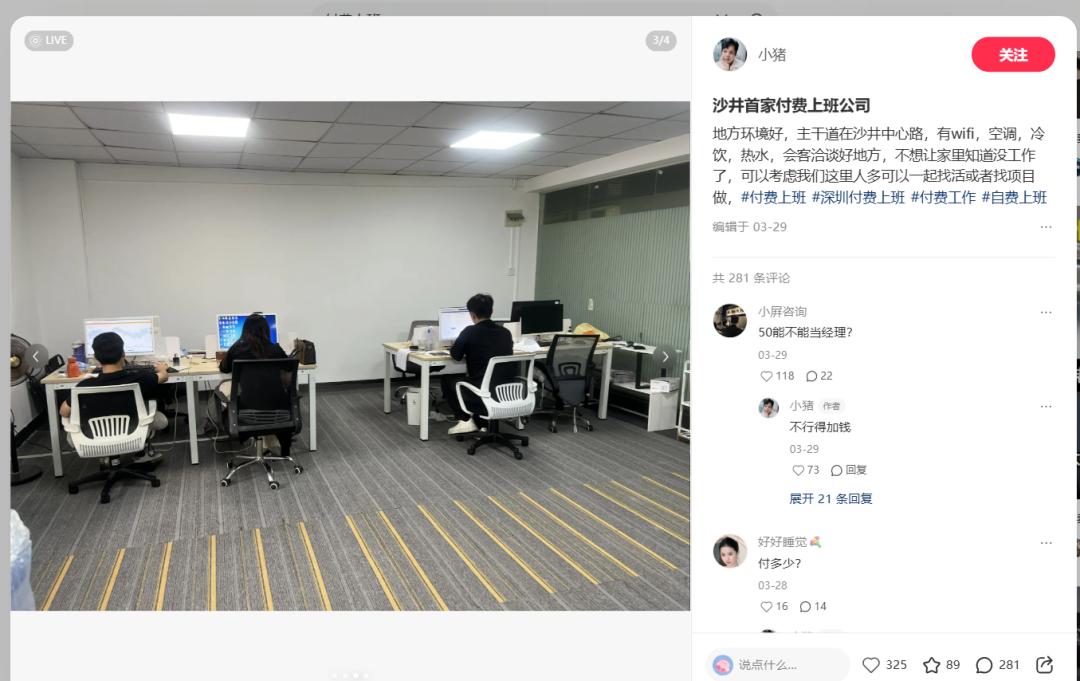
Core Insights - The phenomenon of "paid office" services reflects the deep-seated anxiety and structural changes in consumption behavior among contemporary youth during a period of social transformation [2][10][12] - The "paid office" market has evolved from a psychological comfort to a scalable consumer demand, indicating a shift in how young people cope with unemployment and identity crises [9][13][20] Group 1: Paid Office Services - The concept of "paid office" allows individuals to maintain a semblance of normalcy and social identity while unemployed, with costs ranging from 40 to 1000 yuan depending on the service duration [1][5][8] - The service has gained traction on platforms like Xiaohongshu and Xianyu, with users sharing experiences and referring to it as a "utopia for the unemployed" [5][8][18] - The pricing structure varies significantly between first-tier and second-tier cities, reflecting economic disparities and employment pressures [8][9] Group 2: Youth Anxiety and Consumption Behavior - Young people's anxiety has transformed from singular job-related concerns to a broader existential crisis, with many feeling pressured to maintain a facade of employment [10][12] - The average starting salary for 2025 graduates is reported at 2800 yuan, with a significant gap between expectations and reality, leading to heightened anxiety [10][12] - The rise of "emotional consumption" indicates a willingness to spend on services that provide psychological comfort, as seen in the increasing popularity of "healing economy" services [14][16][20] Group 3: Social Dynamics and Market Trends - The emergence of "paid office" services has led to new social dynamics, with online platforms becoming spaces for mutual support among the unemployed [18][20] - The trend of flexible employment and side jobs is on the rise, with participation rates in side jobs reaching 43.7% in early 2025 [20] - The market for career training and self-improvement courses has expanded, driven by the anxiety of young individuals seeking to enhance their employability [20]
冥想班正在收割白领
投资界· 2025-05-12 09:17
Core Viewpoint - The article discusses the explosive growth of the healing economy in China, highlighting the increasing anxiety among urban youth and the rise of various healing services, particularly meditation and yoga, as a response to this anxiety [4][16]. Group 1: Healing Economy Growth - The healing economy in China has reached a scale of 10 trillion RMB, with approximately 60% of urban youth experiencing anxiety, and 18% suffering from moderate to severe anxiety [4]. - Various meditation classes, particularly those using singing bowls, have become extremely popular as urbanites seek mental relief [4]. Group 2: Consumer Behavior and Industry Dynamics - The typical setup of a trendy yoga healing center includes a cave-like design, organic meals, and sessions led by psychology graduates, creating a one-stop service for consumers [5]. - The article questions whether these meditation classes serve as genuine mental retreats or are merely cleverly designed consumer traps [5]. - Influencers and consumers often showcase their meditation experiences on social media, turning relaxation into a performance for followers, which can undermine the authenticity of the experience [11][12]. Group 3: Psychological Insights and Challenges - Many individuals struggle to achieve the intended mental clarity during meditation, often distracted by work-related thoughts, indicating a disconnect between the practice and its intended benefits [9][15]. - Research indicates that mindfulness meditation can provide moderate relief from psychological distress, but requires genuine engagement rather than superficial participation [14]. Group 4: Market Trends and Consumer Awareness - The healing industry is rapidly expanding, driven by a market demand for emotional value and psychological support, but there is a risk that consumers may not critically assess the value of the services they purchase [10][13]. - The article suggests that the commodification of rest and relaxation may lead to a false sense of well-being, as individuals may end up paying for the illusion of self-improvement rather than achieving true mental peace [16].

风口财评|情绪消费爆火,折射消费需求变革
Sou Hu Cai Jing· 2025-04-28 01:37
Group 1 - The core viewpoint of the articles highlights the rise of emotional consumption among young consumers, driven by the need for stress relief and emotional connection in a fast-paced society [1][2] - The global healing economy is projected to reach $7 trillion by 2025, with China's emotional consumption market expected to exceed 2 trillion yuan, indicating a shift of emotional economy from the margins to the mainstream [1] - The development of technology supports the rise of emotional economy, with products like AI companionship and specially designed plants catering to consumers' emotional needs [1] Group 2 - Despite rapid growth, the emotional economy faces challenges such as poor product quality and privacy concerns, with reports of substandard products causing health issues [2] - Industry experts emphasize the need for high-quality products and strict regulatory measures to ensure the healthy development of the emotional economy, which is crucial for protecting consumer rights and achieving sustainable market value [2] - The emotional economy reflects the diversification and layering of consumer demands, creating new business opportunities and emphasizing the importance of emotional value in a material-rich era [2]