
美元反弹

Search documents
在岸人民币对美元开盘走低 报7.0670
Sou Hu Cai Jing· 2025-12-04 02:08
Core Viewpoint - The onshore RMB against the USD opened lower at 7.0670, while the offshore RMB was at 7.0624, indicating a slight depreciation of the RMB against the USD [1] Group 1: Exchange Rate Movements - The RMB/USD central parity rate was adjusted up by 21 basis points to 7.0733 [1] - The USD index stood at 98.9553 as of 9:30 AM [1] Group 2: Future Outlook - The future trend of the USD/RMB exchange rate is expected to be characterized by a depreciation trend (appreciation of RMB against USD) along with volatility risks [1] - Factors supporting the previous strong appreciation of the RMB, such as expectations of Fed rate cuts, stable Chinese economic fundamentals, and seasonal settlement demand, are likely to continue providing upward momentum for the RMB exchange rate in the short term [1] Group 3: Risks and Uncertainties - Potential risks include the possibility of a change in the Fed's policy path if US economic data improves unexpectedly, which could temper rate cut expectations and lead to a rebound in the USD [1] - The global economic environment remains complex and variable, with geopolitical risks and trade frictions potentially impacting market sentiment [1] - Technically, the rapid appreciation of the RMB in the short term has accumulated some correction pressure [1]
星展银行:美债收益率攀升或支撑美元反弹,日元面临财政风险考验
Sou Hu Cai Jing· 2025-11-15 00:13
Core Insights - The recent decline of the US dollar may be reversing due to rising long-term US Treasury yields and a decrease in expectations for Federal Reserve rate cuts [1] - Increased volatility in the Japanese yen is anticipated due to uncertainties surrounding the domestic fiscal budget [1] Group 1: US Dollar and Treasury Yields - Demand for the recent 30-year US Treasury auction was weak, contributing to higher long-term Treasury yields, which supports the US dollar [1] - Market expectations for a Federal Reserve rate cut in December have decreased from 66% to 50% [1] - Recent statements from Federal Reserve officials indicate a cautious stance on rate cuts, with Daly suggesting it is too early to decide on cuts and Hammack expressing concerns about persistent inflation [1] Group 2: Economic Indicators - Upcoming US economic indicators, particularly non-farm payroll data, are deemed increasingly important in light of the current economic context [1]
特朗普冲击彻底退潮?美元波动突然降温,美国牛市即将回归?
Sou Hu Cai Jing· 2025-11-11 12:23
Core Viewpoint - The foreign exchange market has stabilized significantly after a tumultuous period earlier in the year, with the dollar index recovering close to pre-election levels, indicating a return to normalcy in currency valuation [1][3]. Group 1: Market Dynamics - In April, the foreign exchange market experienced unprecedented volatility due to Trump's announcement of increased tariffs, leading to a record daily trading volume of nearly $10 trillion [3]. - The dollar index faced its worst annual start since the 1970s, driven by concerns over trade policies and the independence of the Federal Reserve [3][5]. - The subsequent recovery of the dollar began in the summer, attributed to several stabilizing factors [5]. Group 2: Supporting Factors - Three main supportive factors for the dollar's rebound include: 1. A de-escalation in trade tensions, with agreements reached between the U.S. and major trading partners like the EU and China [5]. 2. The resilience of the U.S. economy, which has performed better than many institutions expected in the face of tariff impacts [5]. 3. The nearing end of the global central bank rate-cutting cycle, which has reduced uncertainty in the currency markets [5][9]. Group 3: Unexpected Boosts - Two unexpected factors that contributed to the dollar's stability include: 1. The prolonged U.S. government shutdown, which delayed the release of key economic data, thereby reducing volatility in the dollar and U.S. bond markets [7]. 2. The Federal Reserve's recent meeting, which, while resulting in a rate cut, signaled that future cuts are not guaranteed, providing a boost to the dollar [7][9]. Group 4: Long-term Outlook - Institutional investors remain optimistic about the dollar's long-term trend, viewing the earlier declines as a minor correction rather than the end of a strong cycle [11][12]. - The underlying logic for the dollar's strength remains intact, supported by the relative resilience of the U.S. economy, global interest rate differentials, and its dominant role in global trade and as a reserve currency [14]. - The market has learned to rationally assess policy news, moving away from emotional trading, which has allowed the dollar to return to a more stable valuation based on fundamental factors [14][16].

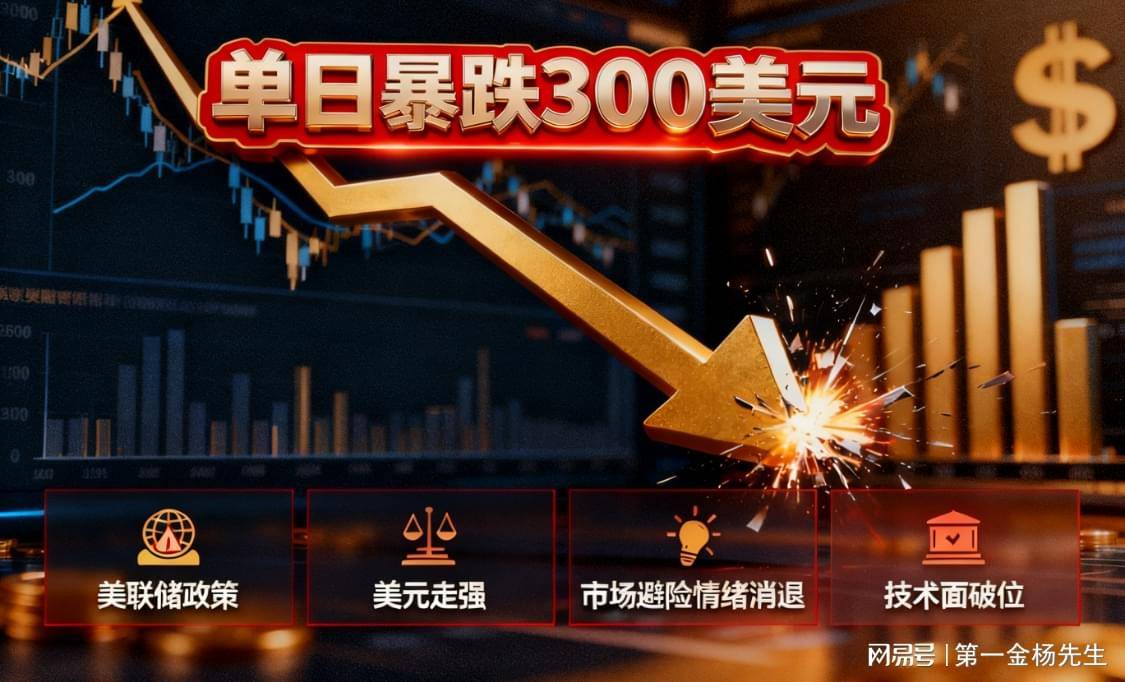
香港第一金:黄金单日跌幅300美元,解析黄金暴跌的四大因素
Sou Hu Cai Jing· 2025-10-21 17:34
Core Viewpoint - The recent sharp decline in gold prices from a historical high of $4381 to $4182, with a single-day drop of $300, is attributed to a combination of technical corrections, macroeconomic conditions, market sentiment, and capital flows [2] Group 1: Technical Factors - The gold price had risen for nine consecutive weeks prior to the drop, with an annual increase exceeding 57%, indicating an overbought condition. Key technical indicators, such as the Relative Strength Index (RSI), suggested a strong need for technical correction [3] - Following the peak at $4381, many investors who entered at lower levels opted to sell to lock in profits, which directly triggered the price plunge [3] Group 2: Macroeconomic Environment - Geopolitical tensions and trade issues have eased, as European leaders called for an immediate ceasefire in the Russia-Ukraine conflict, reducing the market's expectations of geopolitical risks. Additionally, signals of a temporary easing in global trade tensions, such as President Trump's remarks on tariffs against China, have diminished gold's appeal as a safe haven [4] - Expectations of a resolution to the U.S. government shutdown may lead to a withdrawal of safe-haven funds that had previously flowed into gold due to political uncertainties [5] Group 3: Currency and Asset Competition - The recent strengthening of the U.S. dollar has made gold more expensive for buyers using other currencies, thereby suppressing demand [6] - If market risk aversion continues to decline, some funds may shift from gold to other assets, such as equities, putting additional pressure on gold prices [7] Group 4: Market Structure and Data Expectations - There is a divergence in institutional views, with some major institutions warning of risks. For instance, Bridgewater's analysts noted that demand for gold at prices above $4000 per ounce heavily relies on continued purchases by Western individual investors. A reduction in this demand could pressure gold prices [8] - The market is cautious ahead of key economic data releases on October 24, including the U.S. September CPI and non-farm payrolls, which are critical for Federal Reserve policy decisions. Until these data are clear, market sentiment is likely to remain cautious, with some investors choosing to stay on the sidelines [8] Group 5: Market Outlook and Key Monitoring Points - Following the significant correction, market sentiment towards gold reflects a mix of short-term caution and long-term optimism [9] - The core logic supporting long-term gold price increases remains intact, including global de-dollarization trends, ongoing central bank gold purchases, concerns over U.S. government debt and fiscal deficits, and expectations of future Federal Reserve rate cuts [10] - Key economic data, particularly the CPI on October 24, will be closely monitored. A moderate inflation reading could strengthen rate cut expectations, benefiting gold prices, while stronger-than-expected data may exert downward pressure [11] - Important support levels to watch include $4180-$4150, $4130, and $4100 per ounce, as stability around these levels will be crucial for assessing market strength [11]
突然之间,“空美元”成了“痛苦交易”
Hua Er Jie Jian Wen· 2025-10-10 03:06
Core Viewpoint - The US dollar has experienced a rebound against major currencies, challenging the previously dominant short positions held by hedge funds, despite ongoing government shutdowns [1][2]. Group 1: Market Dynamics - The forex market's daily trading volume reached $9.6 trillion, with shorting the dollar being a leading strategy this year, but this is now facing setbacks as the dollar rises to a two-month high against most currencies [1]. - Hedge funds are increasing their options positions, betting on a continued dollar rebound through the end of the year, influenced by overseas market movements and cautious statements from Federal Reserve officials regarding further rate cuts [1][2]. - The Bloomberg Dollar Spot Index has risen approximately 2% since mid-year, following a steep decline earlier, indicating a shift in market sentiment towards the dollar [2]. Group 2: Political and Economic Influences - Political instability in Japan and France has renewed demand for the dollar as a safe haven, with the yen and euro facing downward pressure due to these developments [3]. - The potential rise of a pro-inflation Japanese prime minister and ongoing crises in the French government are contributing to the dollar's strength against these currencies [3][4]. Group 3: Market Sentiment and Positioning - There is a growing bullish sentiment in the options market, with hedge funds increasing their long positions on the dollar against most G10 currencies, indicating expectations of continued strength [5]. - The demand for bullish structures in the options market has surpassed that for bearish structures, reaching the highest level of optimism since April [5]. - Despite a significant reduction in short positions since mid-year, there remains considerable pain potential for those holding short positions if the dollar continues to appreciate [5].
一片看空声中,美元的“意外反弹”正在进行中
Hua Er Jie Jian Wen· 2025-10-09 00:34
Core Insights - A potential dollar rebound is emerging against the backdrop of widespread market expectations for a weaker dollar, driven by signals from the yen, euro, and options markets [1] Group 1: Yen Dynamics - The yen's recent performance is breaking historical norms, as it has not recovered from a significant drop at the start of the week, marking the longest consecutive rise for the dollar against the yen this year [2] - Market sentiment is pressured by Japan's wage growth slowing to its lowest level in three months, prompting investors to adjust their positions [2] Group 2: Euro Weakness - Political risks in France, particularly following the sudden resignation of Prime Minister Le Maire, have led to a significant decline in the euro's upward momentum [3] - The market's short positions on the euro have reached a one-month high, indicating a loss of investor confidence and a shift in market narratives [3] Group 3: Federal Reserve Influence - The dollar is gaining support from domestic factors, as several Federal Reserve officials have publicly countered aggressive rate cut expectations, bolstering the dollar's position [4] - The unexpected impact of the U.S. government shutdown and delays in economic data releases has also contributed to the dollar's strength, contrary to typical trends during such events [4][5]
《周末小结系列》:从数据到交易:美元延续反弹,美股要靠三季报接力
Xin Lang Cai Jing· 2025-09-30 00:15
Group 1 - The overall market trends for the past week aligned with previous expectations, with the US dollar, US Treasury yields, and crude oil showing rebounds, while US stocks experienced a slight decline [2][25] - Key US economic indicators showed resilience, including initial jobless claims dropping to 218,000, below the expected 233,000, and PCE inflation aligning with forecasts [3][4] - The Citigroup US Economic Surprise Index rebounded significantly, indicating a strong economic backdrop, although short-term interest rates lag behind the improving fundamentals [5][10] Group 2 - Upcoming focus for the market includes the US labor market, with significant data releases such as ISM Manufacturing PMI and non-farm payrolls expected to show notable rebounds compared to September [7][10] - The US dollar and interest rates are expected to continue their upward trend, with short-term rates rebounding from 2.9% to 3.17% [11][10] - The Federal Reserve's dot plot suggests potential rate cuts in 2025, with a reasonable range for US interest rates projected between 3.25% and 3.5% [13][15] Group 3 - US stock markets faced selling pressure from hedge funds, attributed to profit-taking and quarterly rebalancing, but this pressure is expected to ease as October approaches [20][21] - The upcoming earnings season is crucial, with market expectations for earnings growth around 6%, lower than the previous quarter's 11% growth, indicating a potential for positive surprises [24][23] - The current market valuation has increased, with forward P/E ratios rising from 21 to 23, suggesting that further upward movement in stock prices will require earnings growth to support valuations [23][25]
美银Hartnett:关键指标显示AI还没有风险,警惕美元反弹对热门交易的冲击
华尔街见闻· 2025-09-29 11:12
Core Viewpoint - The discussion around a potential bubble in the market is increasing, but Bank of America strategist Michael Hartnett indicates that the credit spread of tech stocks is at a multi-year low, suggesting that the AI-driven tech stock rally has not yet reached a dangerous level [1][4][5]. Group 1: Credit Spread and AI Bubble Concerns - The current credit spread for tech stocks is at its lowest point in 18 years, indicating that investors are not pricing in potential risks for tech companies in the credit market [4][5]. - This low credit spread contrasts sharply with typical late-stage asset bubble scenarios, which usually see a sharp rise in credit risk [5][6]. - The EPFR fund flow data supports this optimism, showing significant inflows into various asset classes, including $24.7 billion into bond funds and $19.6 billion into equities [6][7]. Group 2: Dollar Strength and Market Risks - Hartnett warns that the primary risk for investors is not a bubble burst but an unexpected strengthening of the dollar, as the consensus trade of "shorting the dollar" has become prevalent [1][11]. - If the dollar index experiences a chaotic rebound and surpasses the critical level of 102, it could trigger a collective risk-off response among investors [11]. - Despite the short-term risk of a dollar rebound, Hartnett believes the long-term trend of dollar depreciation remains unchanged, providing structural support for assets like gold [12]. Group 3: Asset Performance and Market Dynamics - Year-to-date, gold has been the best-performing asset with a gain of 41.3%, while international stocks have risen by 24.7% and the dollar index has declined by 9.2% [8][9]. - The negative correlation between a weakening dollar and rising risk assets is evident, suggesting that as long as the consensus trade of "shorting the dollar" remains intact, the macro environment for asset appreciation will continue [11]. - Although gold is currently viewed as "overbought" tactically, it remains a "underweight" asset structurally, with only 0.4% of private client assets and 2.4% of institutional client assets allocated to gold [12].

黄金首破3800美元心理大关 多重推力助推涨势延续
Jin Tou Wang· 2025-09-29 09:35
Group 1 - Gold prices have surged to a historic high, breaking the psychological barrier of $3,800 per ounce, driven by multiple factors including U.S. inflation data aligning with market expectations and geopolitical tensions increasing demand for safe-haven assets [1] - The market anticipates an 88% probability of a rate cut by the Federal Reserve in October and a 65% probability for another cut in December, which enhances the attractiveness of gold as a non-yielding asset [2] - The Japanese gold market leader, Tanaka Kikinzoku Kogyo, has raised its gold sales price to 20,018 yen per gram, surpassing the 20,000 yen mark, reflecting the impact of the Fed's potential rate cuts and the depreciation of the yen [2] Group 2 - Political uncertainty in the U.S. due to potential government shutdown if Congress fails to agree on funding could provide additional support for gold prices [3]
贵金属强势延续 白银领涨创历史新高
Jin Tou Wang· 2025-09-29 08:29
Core Viewpoint - The recent U.S. inflation data met expectations, strengthening market bets on potential interest rate cuts by the Federal Reserve later this year, leading to significant increases in precious metal prices, particularly gold and silver [1][2]. Market Review - On the last Friday, spot gold saw a substantial rise, reaching above $3780 during intraday trading but ultimately closed up 0.31% at $3760.53 per ounce, marking a six-week consecutive increase [2]. - Spot silver also surged, breaking above $46 and hitting a 14-year high, closing up 1.98% at $46.06 per ounce, similarly recording six consecutive weeks of gains [2]. Key News Summary - U.S. personal consumption expenditures (PCE) have increased for the third consecutive month, with the core PCE price index remaining at a stubborn year-on-year increase of 2.9%, which is a key inflation indicator for the Federal Reserve [3]. - The consumer confidence index from the University of Michigan has dropped to a four-month low, indicating rising concerns over income [3]. - The precious metals market has continued its strong upward trend, with both gold and silver futures reaching historical highs, particularly silver, which has shown stronger momentum [3]. - As of September 26, the COMEX silver futures have surpassed the $46 mark, driven by market sentiment following anticipated interest rate cuts by the Federal Reserve [3]. - Economic data indicates a significant upward revision of the U.S. second-quarter GDP growth rate to 3.8%, up from a previous estimate of 3.3%, with consumer spending growth also revised upward [3]. - Despite the strong economic data supporting a rebound in the dollar, silver continues to reach new highs, suggesting a robust trend [3]. - Short-term expectations indicate silver may challenge the historical high of $50, with a forecast for increased volatility in the market [3]. - Mid-term target prices are set at $4000 for COMEX gold and $50 for COMEX silver [3].