AI算力革命

Search documents
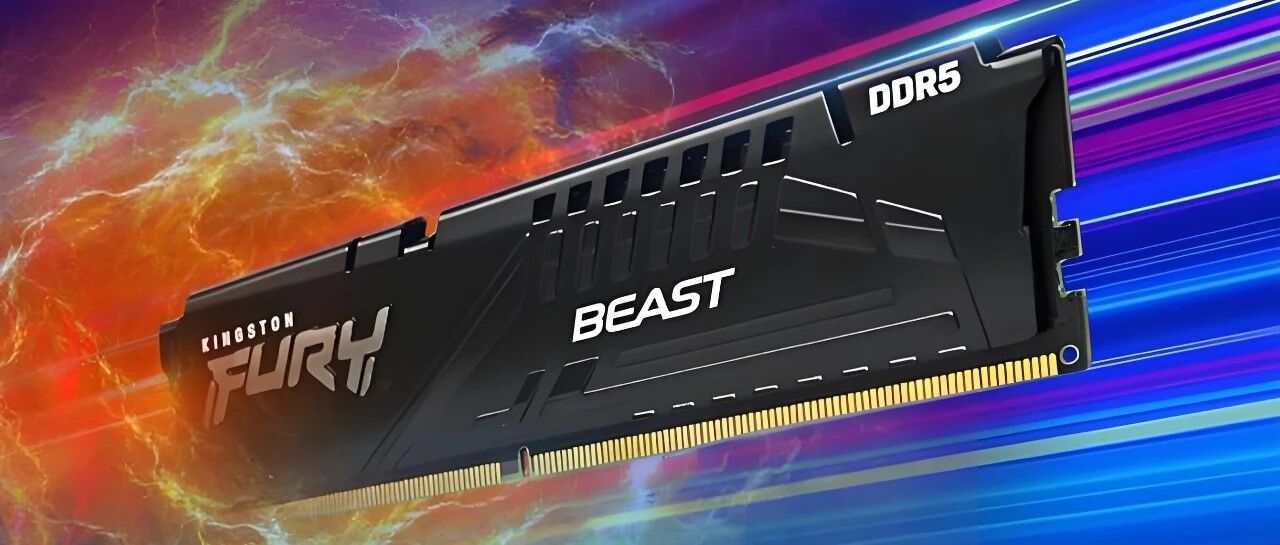
金士顿传暂停DDR4/DDR5接单,DDR4内存现货已一'条'难求
是说芯语· 2025-09-28 08:15
Core Viewpoint - The DRAM market is experiencing significant fluctuations due to Kingston's suspension of DDR4 and DDR5 product orders, leading to supply shortages and price increases across the industry [1][3]. Group 1: Market Dynamics - Kingston's decision to pause orders has resulted in a noticeable shortage in the terminal market, with DDR4 memory becoming increasingly difficult to obtain [1]. - The price of Kingston's DDR4 3600MHz 16GB memory module surged from 197 yuan to 267 yuan within a week, marking an increase of over 30%, with some channels reporting overall price hikes of 85% to 90% for DDR4 products [1][3]. - A rare price inversion occurred in late June 2025, where the price of DDR4 16Gb reached $12.3, surpassing DDR5's $6.05 [1]. Group 2: Supply and Demand Factors - Major manufacturers like Samsung, SK Hynix, and Micron have shifted production from DDR4 to DDR5 and other high-bandwidth memory types, leading to a continuous supply gap for DDR4 [3]. - SK Hynix reduced its DDR4 production capacity from 30% to 20%, while Samsung plans to cease production of 8GB and 16GB DDR4 modules by the end of the year [3]. - The AI computing revolution is driving demand, with companies like Nvidia upgrading their AI server SSD configurations, significantly increasing storage needs [3]. Group 3: Opportunities for Domestic Players - As international giants reduce their product lines, domestic storage companies are poised to capture market share, with Omdia predicting that Chinese manufacturers could hold over 30% of the global DDR5 market by 2025, up from less than 5% [4]. - Domestic firms such as Demingli, Wanrun Technology, and Baiwei Storage are gaining attention in the capital markets due to their technological advancements amid rising prices [4]. Group 4: Consumer Guidance and Market Outlook - Channel partners emphasize that the price gap between DDR5 and DDR4 has narrowed, urging consumers to avoid chasing prices and to adapt to the technological upgrade trend [5]. - Current price increases are attributed to a combination of recovering demand, supply-demand rebalancing, and technological iteration, with expectations that the market will gradually return to rationality as production capacity adjusts [5].

存储芯片掀涨价潮,重点关注的概念股有哪些?
Xin Lang Cai Jing· 2025-09-17 11:03
Core Insights - The global storage chip market is experiencing a new wave of price increases, with Micron Technology signaling potential price hikes of 20%-30% due to surging demand from data centers and supply chain constraints [1][3] - The demand for high-performance storage chips, particularly HBM (High Bandwidth Memory), is growing exponentially driven by the AI revolution, with Micron's HBM orders already booked until 2027 [3][5] - Major investment banks are optimistic about the storage chip industry, with Citigroup and Morgan Stanley highlighting a "super cycle" driven by a 35% annual growth rate in AI data center investments [5] Industry Dynamics - The supply of storage chips is concentrated among three major players: Samsung, SK Hynix, and Micron, but various factors are causing supply constraints, including geopolitical tensions and natural disasters [3][5] - The inventory cycle has reversed after a low in 2023, leading manufacturers to adopt a "low inventory, high turnover" strategy, making them more sensitive to price fluctuations [3] Investment Opportunities - **Leading Storage Manufacturers**: Companies like Micron, Samsung, and SK Hynix are positioned to benefit directly from the price surge, with Micron expected to achieve a gross margin exceeding 55% in fiscal 2025 [7][8] - **Equipment and Materials**: Domestic companies such as Northern Huachuang and Yake Technology are accelerating domestic substitution in the equipment and materials sector, responding to the increased demand for HBM packaging materials [8][9] - **Packaging and Testing**: Companies like Tongfu Microelectronics and JCET are capitalizing on the growing HBM market, with high utilization rates in their packaging capacities [9]

存储芯片市场迎来新一轮涨价潮 国产替代迎机遇(附相关核心标的)
Xin Hua Cai Jing· 2025-09-16 14:22
Core Viewpoint - The storage chip industry is entering a new price increase cycle driven by changes in supply and demand dynamics, strategic adjustments within the industry, and the AI computing revolution reshaping the market [1][6]. Price Increase Dynamics - Micron has notified customers that it will suspend quotes for all storage products, including DDR4, DDR5, LPDDR4, and LPDDR5, with potential price increases of 20%-30% [2][3]. - SanDisk has already announced a price increase of over 10% for its storage products, citing strong demand in AI applications and data centers [2]. - The price index for DRAM has risen approximately 72% in less than six months, with DDR4 and LPDDR4X experiencing significant price hikes [3][4]. Supply-Side Factors - Major manufacturers have reduced production, shifting capacity from traditional products to high-end products, leading to a tight supply of traditional storage products [4]. - Companies like Samsung, SK Hynix, and Micron have announced plans to stop producing DDR4 memory, focusing instead on DDR5 and HBM products [4]. - The withdrawal from DDR4 production has created a significant supply gap, with DDR4 prices surging above those of DDR5 [4]. Demand-Side Factors - The explosion of AI has led to a substantial increase in demand for high-end storage chips, particularly in AI servers and data centers [5]. - Major Chinese internet companies are significantly increasing their capital expenditures for AI infrastructure, with Alibaba planning to invest over 380 billion yuan in the next three years [5]. - The global server DDR5 module penetration rate is expected to reach 85% by 2025, with a compound annual growth rate of 10.8% from 2025 to 2030 [5]. Market Opportunities for Domestic Companies - The contraction of overseas giants' product lines presents a historic opportunity for Chinese storage companies, with predictions that they could capture over 30% of the global DDR5 market by 2025 [7]. - Domestic companies are beginning to establish themselves in the niche DRAM market, benefiting from the shift in demand towards high-end products [7][8]. - Several A-share listed companies are actively developing storage chip technologies, with notable advancements in DDR4 and DDR5 products [8]. Industry Outlook - The global storage industry is undergoing a historic transformation driven by technology, with the current price increase reflecting a turning point in the industry [6]. - The AI-driven demand is expected to reshape the performance and capacity requirements for storage chips, indicating a structural change in the market [6].

矿业巨头合并引爆市场热情!矿业ETF(159690)飙涨超4%,云南铜业、北方铜业双双10CM封板
Sou Hu Cai Jing· 2025-09-12 07:03
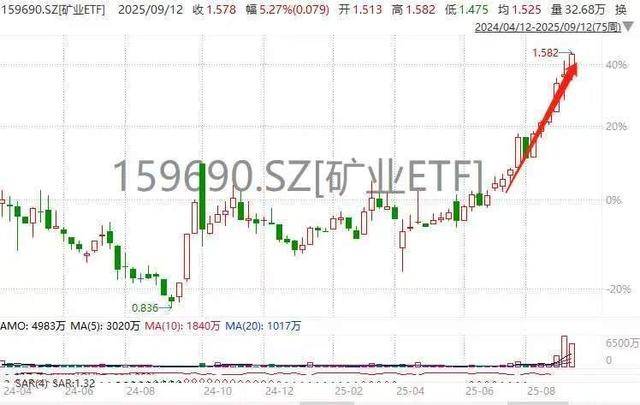
Group 1 - The mining sector experienced a significant surge, with the mining ETF (159690) rising by 3.82% and reaching a peak increase of 4.28% as of 10:46 AM on September 12, 2023. Year-to-date, the ETF has accumulated a gain of 62.87% [1][3] - Key stocks such as Yunnan Copper and Northern Copper both hit the 10% limit up, while Hunan Silver, Xingye Silver Tin, Jiangxi Copper, and Yun Aluminum also showed notable gains [1] - Trading activity intensified, with a turnover rate of 25.88% and a transaction volume exceeding 12 million, representing an 88.40% increase compared to the previous day [1] Group 2 - The strong rise in the mining sector is primarily driven by the $53 billion merger between Canadian Teck Resources and Anglo American, indicating a high recognition of copper's long-term prospects within the mining capital [3] - The merger highlights the ongoing transformation in copper demand driven by the AI computing revolution and global military spending expansion, further solidifying copper's status as a "strategic metal" [3] - The continuous momentum from the energy transition is reinforcing copper's position as a core target for capital investment [3]


净利暴跌707.55%,“老兵”南都电源,以亏损换空间?
3 6 Ke· 2025-08-31 23:49
Core Viewpoint - Nandu Power has reported significant financial losses in the first half of the year, continuing a trend of declining performance since 2020, with a net loss of 2.32 billion yuan and a revenue drop of 31.67% year-on-year [1][2][10] Financial Performance - The company's revenue for the first half of the year was 3.923 billion yuan, down 31.67% year-on-year, while the net loss reached 2.32 billion yuan, a drastic decline of 225.48% [1] - Cumulative losses from 2020 to 2023 amount to 3.011 billion yuan, with quarterly revenue showing a stark contrast between Q1 and Q2 [1][2] - The first quarter saw a revenue of 1.139 billion yuan, down 61.81%, while the second quarter's revenue surged to 2.784 billion yuan, a 200% increase quarter-on-quarter, but still resulted in a profit drop of 67% year-on-year [1] Business Transformation - Nandu Power has been undergoing a strategic transformation since 2021, shifting focus from traditional lead-acid batteries to lithium-ion and energy storage solutions [2][3] - The company has established three core segments: energy storage, resource recycling, and solid-state batteries, aiming to optimize its product matrix [2][5] - Despite the challenges in the energy storage sector, the company is accelerating its lithium battery transition, with a focus on large-capacity lithium batteries [3][5] Revenue Breakdown - The primary revenue source in the first half was from communication and data center storage, generating 1.89 billion yuan, a 34.09% increase, although the gross margin fell by 10.21% to 12.32% [4][8] - The energy storage business revenue declined by 18.46% to 947 million yuan, but it maintained the highest gross margin among all segments at 27.11% [4] - Resource recycling revenue plummeted by 65.74%, resulting in a negative gross margin of -5.52% [4] Strategic Choices - The company has adopted a strategy of selectively abandoning low-margin orders to focus on high-value lithium products, leading to a temporary revenue contraction but improved overall profitability [5] - Nandu Power is actively expanding its lithium battery production capacity, with ongoing projects to increase output significantly [5] Market Position and Competition - The solid-state battery market is seen as a potential growth area, with expectations for significant market expansion by 2030 [6] - Nandu Power is not alone in pursuing opportunities in the data center storage sector, facing competition from other established companies [8][9] Debt and Future Outlook - The company faces high debt levels, with total liabilities reaching 14.59 billion yuan and an asset-liability ratio of 80.04% [9][10] - Plans for an IPO in Hong Kong are underway, aimed at raising funds to support the company's transformation, although the success of this endeavor remains uncertain given the current financial challenges [10]

ASIC的时代即将到来?
Zheng Quan Zhi Xing· 2025-08-12 08:41
Group 1 - Nvidia has built a strong moat with its GPU and CUDA ecosystem, leading many companies to accept high hardware costs and margins due to the stability of computing power during the technology exploration phase [1] - As AI applications enter large-scale commercial use, tech giants are shifting focus towards more efficient customized solutions, similar to the evolution from CPU to GPU to ASIC in Bitcoin mining [1][6] - The demand for customized ASIC chips is driven by the need for performance and cost balance in the context of exploding computing power requirements [1][6] Group 2 - The cost of training large models has surged, with Grok3 requiring approximately 200,000 H100 GPUs (costing about $590 million) and ChatGPT5 costing $500 million, compared to only $1.4 million for early GPT-3 [2] - The limitations of the Transformer architecture are becoming apparent, as the complexity of the attention mechanism leads to increased computing power demands, indicating a potential bottleneck in large model algorithms [2] - The industry is facing a challenge in translating the advantages of large models into practical application value, which will be crucial for future market dynamics [3] Group 3 - ASICs are seen as the optimal solution for specific tasks, offering significant efficiency improvements over GPUs, which are more general-purpose [4] - ASICs can achieve over ten times the energy efficiency compared to GPUs by dedicating all circuit resources to core operations, making them suitable for stable, long-term tasks [4][5] - The operational cost difference is stark, with NVIDIA GPUs consuming about 700 watts and costing approximately 0.56 yuan per hour, while ASICs can operate at around 200 watts and cost only 0.16 yuan per hour [5] Group 4 - The global market for customized accelerated computing chips (ASICs) is projected to reach $42.9 billion by 2028, with a compound annual growth rate of 45% from 2023 to 2028 [7] - Major tech companies are accelerating their development of proprietary ASICs to gain a competitive edge, with Google, Amazon, Meta, and Microsoft all investing in custom chip designs [8] - Chip design firms are also poised for growth, with companies like Broadcom and Marvell seeing significant revenue increases from AI semiconductor sales [9]

德福科技14亿元“吃下”英伟达供应链企业
高工锂电· 2025-07-30 10:09
Core Viewpoint - The article discusses the strategic acquisition of Circuit Foil Luxembourg by Defu Technology, highlighting its significance in enhancing Defu's position in the high-end IT copper foil market and its global expansion efforts. Group 1: Acquisition Details - Defu Technology signed a share purchase agreement to acquire 100% of Circuit Foil Luxembourg for approximately €1.74 billion (around ¥14.43 billion) after adjustments [2][3]. - The acquisition is expected to facilitate Defu's entry into the high-end IT copper foil sector, marking a critical milestone in its development [3]. Group 2: Market Context - The demand for high-end PCB copper foil is projected to grow at a CAGR of 10% from 2023 to 2030, with the market size expected to reach ¥36 billion by 2030 [4]. - The high-frequency very low profile (HVLP) copper foil is identified as a key material for PCB high-end applications, essential for maintaining signal integrity in high-speed environments [5]. Group 3: Competitive Landscape - Circuit Foil Luxembourg is recognized as a non-Japanese "invisible champion" in the high-end IT copper foil industry, with a strong technological advantage and a diverse product range [5][6]. - The company has established a significant customer base, including major global PCB manufacturers [6]. Group 4: Strategic Implications - The acquisition is seen as a win-win situation, providing Circuit Foil with Defu's resources for capacity expansion and market development, while Defu gains access to advanced technology and a mature customer network [7]. - Defu Technology is also focusing on high-end copper foil trends, with ongoing collaborations to develop ultra-thin copper foil for advanced packaging substrates [9]. Group 5: Global Expansion Plans - Defu Technology plans to establish a subsidiary in Luxembourg and aims to build production lines and service centers in Europe and Southeast Asia over the next three years [10]. - The company has initiated preparations for a factory in Thailand, supported by stable orders from leading companies in the photovoltaic and consumer battery sectors [10].
石英纤维电子布产业链、需求与投资逻辑(附企业清单)
材料汇· 2025-07-15 13:31
Core Viewpoint - The article discusses the importance of electronic cloth in the production of copper-clad laminates (CCL) and its impact on the performance of printed circuit boards (PCB), highlighting the growing demand for specialized electronic cloth in high-performance applications such as AI hardware and data centers [5][16][21]. Group 1: Electronic Cloth and CCL - Copper-clad laminates (CCL) are essential materials for manufacturing printed circuit boards (PCB), composed of electronic cloth, resin matrix, and copper foil [5]. - The dielectric constant (Dk) and dielectric loss (Df) of electronic cloth significantly influence the signal integrity in PCBs, affecting the electromagnetic field distribution and energy loss during signal transmission [8][9]. - The dielectric properties of electronic cloth, such as Dk and Df, are critical for high-speed signal transmission, with lower values indicating better performance [9][10]. Group 2: Market Trends and Demand - The demand for specialized electronic cloth, including low dielectric (Low-DK) and low expansion (Low-CTE) glass fiber cloth, is increasing due to the rising requirements for AI hardware and high-speed data communication [20][21]. - The global PCB industry is entering a new growth cycle, with an expected compound annual growth rate (CAGR) of 5.2% from 2024 to 2029, driven by high-end applications in AI, servers, and automotive electronics [41][42]. - The market for high-end CCL is projected to outperform the overall market, with manufacturers maintaining a cautious expansion strategy amid strong demand [43][50]. Group 3: Competitive Landscape - The market for Low-DK second-generation glass fiber cloth is characterized by limited suppliers, with major players including Nitto Denko, AGY, and Huagong Technology actively expanding production capacity [54]. - The top ten manufacturers in the CCL market account for approximately 75% of global sales, with the leading four companies holding nearly 48% market share [51]. - Companies like Feilihua and Zhongcai Technology are focusing on developing quartz fiber electronic cloth, which offers superior dielectric performance compared to traditional glass fibers [60][79].


爆了!延续一季度高增长态势,闻泰科技H1净利预增178%-317%!
Ge Long Hui· 2025-07-14 10:23
Core Viewpoint - The semiconductor industry is experiencing significant growth driven by AI computing power and the electrification and intelligence of automobiles, with Wentech Technology (600745.SH) announcing a strong earnings forecast for the first half of 2025, projecting a year-on-year increase in net profit attributable to shareholders of 390 million to 585 million yuan, continuing its high growth momentum from the first quarter [1][2]. Group 1: Strategic Transformation and Financial Performance - Wentech Technology's semi-annual earnings forecast indicates a net profit increase of 178% to 317% year-on-year, with a projected net profit attributable to shareholders of 390 million to 585 million yuan and a net profit excluding non-recurring items of 260 million to 390 million yuan, reflecting the effectiveness of its strategic focus [2]. - The completion of significant asset transactions will allow Wentech to allocate surplus funds to enhance its semiconductor business, particularly in domestic R&D and supply chain development, thereby strengthening its competitive position [2]. Group 2: Governance and Management Changes - Alongside the earnings forecast, Wentech announced changes in its board and senior management to align governance structure with strategic direction, bringing in experienced personnel from the semiconductor sector to provide targeted strategic guidance [3]. - The new board member, Yang Mu, has extensive experience in semiconductor management and investment, which is expected to facilitate long-term strategic implementation [3]. Group 3: Industry Trends and Technological Advancements - The demand for power semiconductors is surging due to the AI computing revolution, with Wentech's semiconductor products already integrated into critical areas such as data centers and AI server power systems, significantly enhancing their market position [4]. - Wentech is proactively investing in third-generation semiconductor technologies like GaN and SiC to prepare for future power system upgrades, positioning itself to capture ongoing industry benefits [4]. Group 4: Automotive Sector Engagement - The penetration rate of new energy vehicles in China has surpassed 50%, marking a significant shift in the automotive industry, with Wentech's semiconductor products meeting automotive standards and expected to contribute 62.03% of its semiconductor revenue from the automotive sector in 2024 [6]. - Wentech's products are deeply integrated into automotive drive, power, control, and intelligent cockpit systems, establishing a differentiated advantage in high-barrier areas such as electric drive and control [6].

中国产业叙事:海光信息
新财富· 2025-06-16 11:05
Core Viewpoint - The article discusses the evolution and strategic significance of Haiguang Information in the Chinese semiconductor industry, highlighting its role in breaking through the X86 architecture dominance and fostering domestic chip development amidst geopolitical tensions [1][2]. Group 1: Haiguang's Strategic Moves - Haiguang's collaboration with AMD in 2016 is noted as a pivotal "technology for market" case, establishing joint ventures to gain permanent X86 architecture licensing and Zen microarchitecture support [3]. - The establishment of Haiguang's R&D system, leveraging expertise from the Chinese Academy of Sciences, aimed to break the cycle of dependency on foreign technology through a structured training approach [3][4]. - The launch of Haiguang's first CPU, Haiguang 1, in 2018 marked a significant milestone, achieving mass production with a 14nm process and compatibility with X86 instruction sets, targeting the financial sector [4]. Group 2: Technological Advancements - Haiguang's subsequent CPUs, including Haiguang 2 and Haiguang 3, demonstrated continuous performance improvements, with the latter achieving a 45% performance increase over its predecessor [5]. - The introduction of the Haiguang 4 in October 2023 further solidified its technological advancements, with each generation showing over 30% performance enhancement [5]. - Haiguang's approach of "architecture licensing - absorption - independent iteration" has created a balance between ecological compatibility and technological control, contributing to a significant increase in the domestic X86 server market [5][6]. Group 3: Market Impact and Ecosystem Development - The rise of Haiguang has influenced international semiconductor regulations, prompting the U.S. to revise export control laws regarding X86 technology transfer to China [6]. - Haiguang's dual strategy of focusing on both CPU and DCU (Deep Learning Computing Unit) development has positioned it well in the rapidly evolving AI computing landscape [8]. - The establishment of the "Light Organization" in 2021 aimed to foster a collaborative ecosystem among over 5,000 members, significantly reducing adaptation costs and enhancing the integration of hardware and software [17][18]. Group 4: Financial Milestones and Future Outlook - Haiguang's IPO in 2022 raised 10.8 billion yuan, marking the largest semiconductor IPO of the year and reflecting strong market confidence in domestic chip development [12]. - The anticipated merger with Zhongke Shuguang aims to deepen integration within the domestic computing power industry, enhancing capabilities across various sectors [19]. - The article concludes that Haiguang's journey exemplifies a shift in the Chinese semiconductor industry from policy-driven to market-driven growth, positioning it as a key player in the global semiconductor landscape [20].