去美元化

Search documents
“美债崩盘?中国狂抛6826亿换黄金!美财长急吼:绝不能断链,美元信用碎了一地!”
Sou Hu Cai Jing· 2026-02-13 17:09
Core Viewpoint - The article discusses the significant reduction of U.S. Treasury holdings by China, which has dropped to $682.6 billion, the lowest level in 17 years, indicating a shift in global financial dynamics and a move towards de-dollarization [1][3][5]. Group 1: China's Actions - China has reduced its U.S. Treasury holdings from a peak of $1.3 trillion in 2013 to $682.6 billion, a decrease of over $500 billion, marking a "halving" of its investments [3]. - The Chinese central bank has been increasing its gold reserves for 18 consecutive months, reaching 74.19 million ounces by the end of January 2026 [4]. Group 2: U.S. Debt Situation - The total U.S. national debt has surpassed $38 trillion, with annual interest payments exceeding $1.2 trillion, which is more than the military budget [4]. - Credit ratings for the U.S. have been downgraded by Moody's and Fitch, reflecting concerns over fiscal management and rising debt levels [4]. Group 3: Global Financial Trends - The trend of de-dollarization is gaining momentum, with countries like India and Saudi Arabia also reducing their U.S. Treasury holdings, leading to a decline in the dollar's share of global foreign exchange reserves to 40%, the lowest in 20 years [4]. - The article suggests that the global monetary system is undergoing a transformation, with the internationalization of the renminbi becoming an inevitable trend [5].

中国再抛美债,不再救美元,美财长:中美绝不能脱钩断链
Sou Hu Cai Jing· 2026-02-13 16:12
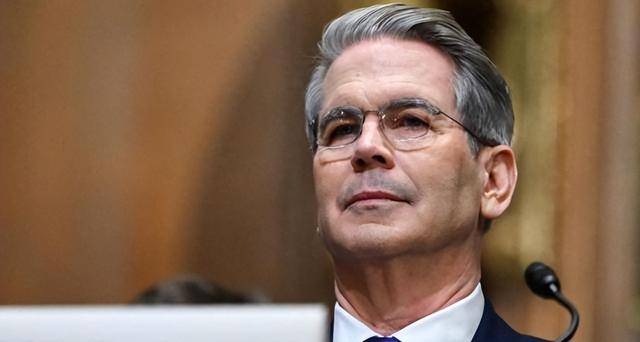
Core Viewpoint - China's foreign exchange management authority has issued guidelines for banks to adjust asset allocations based on market fluctuations, gradually reducing the proportion of U.S. Treasury holdings, which have decreased from a peak of $1.3 trillion in 2013 to $682.6 billion, the lowest since September 2008 [2][4] Group 1: U.S. Treasury Holdings and China's Strategy - The reduction in U.S. Treasury holdings is part of a long-term strategy, with funds being redirected towards gold reserves and essential material procurement to diversify risks [2][4] - As of January 2026, China's gold reserves have increased to 74.19 million ounces, marking 15 consecutive months of growth, with over 1,200 tons imported [4][6] - The share of U.S. Treasuries in China's reserves has fallen below 15%, reflecting a significant shift in asset allocation [4][12] Group 2: Global Market Reactions - The U.S. debt has surpassed $38 trillion, with annual interest payments of $1.2 trillion, leading to credit rating downgrades by Moody's and Fitch [4][6] - Major global holders of U.S. debt, including India and Saudi Arabia, have also reduced their holdings, indicating a broader trend of divestment from U.S. Treasuries [4][12] - The reduction in U.S. Treasury holdings has led to a slight decline in prices and an increase in yields, putting short-term pressure on the dollar index [2][4] Group 3: U.S.-China Economic Relations - U.S. Treasury Secretary Scott Bessenet emphasized the importance of stable U.S.-China relations, acknowledging the deep economic interdependence and the need for a balanced approach to competition [6][10] - Bessenet's statements reflect a shift in U.S. strategy from confrontation to a more pragmatic engagement with China, aiming to mitigate risks while maintaining economic ties [10][12] - The U.S. is also focusing on rebuilding domestic production capabilities, particularly in critical sectors like semiconductors and pharmaceuticals, to reduce reliance on foreign supply chains [10][12] Group 4: Global Financial Landscape - The global landscape for U.S. Treasuries is changing, with central banks increasingly turning to gold, which now constitutes over 30% of their reserves, surpassing U.S. Treasuries [12][14] - The dollar's share of global foreign exchange reserves has fallen to 40%, the lowest in 20 years, indicating a decline in its dominance as a primary reserve currency [12][14] - The ongoing divestment from U.S. Treasuries and the shift towards alternative currencies like the yuan and euro suggest a gradual end to the era of dollar hegemony [14]
你准备补仓吗?近期金价银价波动剧烈,深夜跳水现象频发
Sou Hu Cai Jing· 2026-02-13 15:44
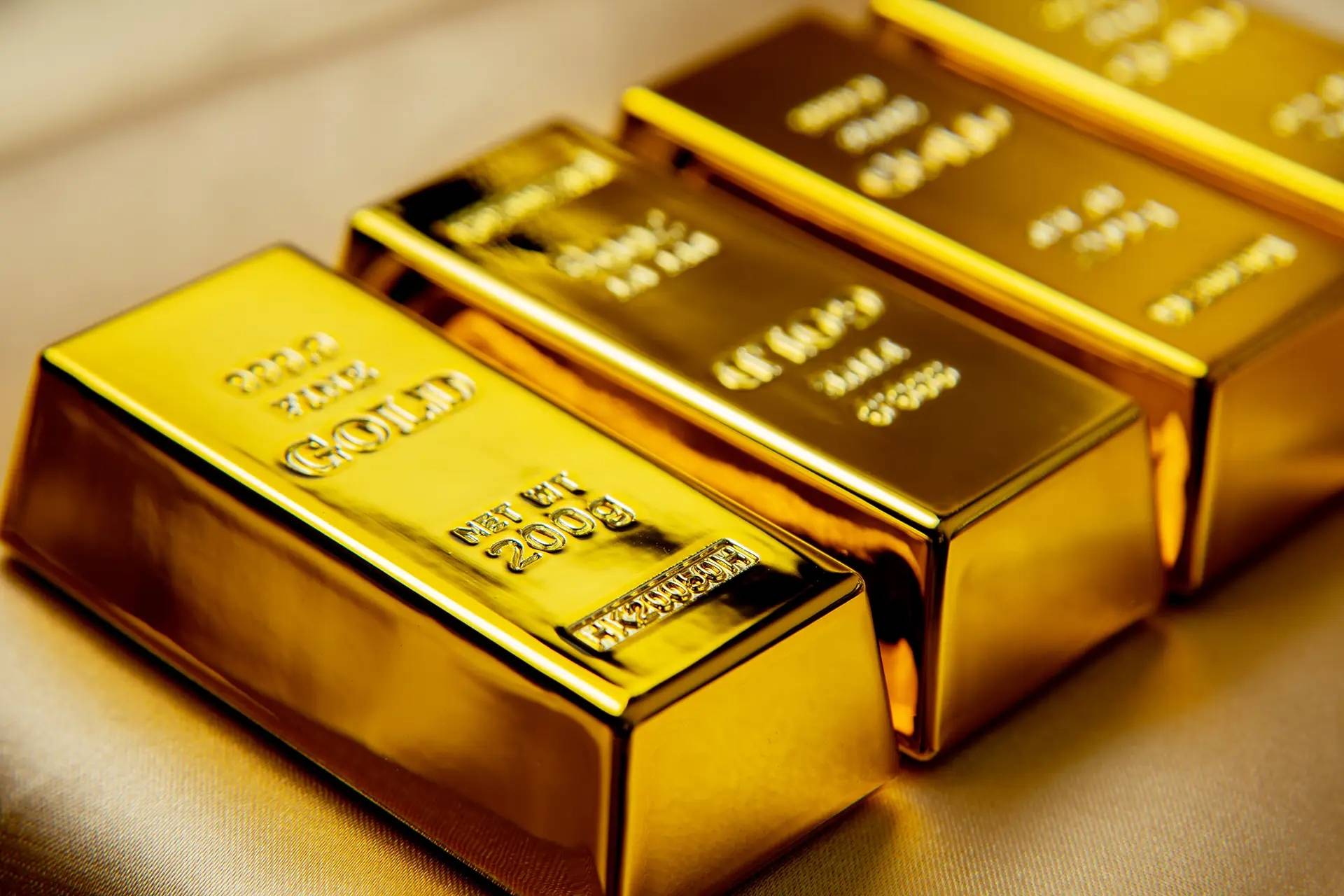
Core Viewpoint - The market is divided into two camps regarding gold prices: the bearish camp, which holds a pessimistic view and advises against entering the market, and the bullish camp, which is optimistic about long-term trends and sees current adjustments as buying opportunities [1]. Group 1: Bearish Perspective - Gold prices have surged to historical highs, indicating a severe valuation bubble, and a correction is inevitable [2]. - If the Federal Reserve maintains high interest rates and delays rate cuts, the strength of the dollar and U.S. Treasury yields will increase, significantly reducing gold's attractiveness [2]. - Geopolitical conflicts are likely to ease, leading to a gradual decline in risk aversion, which will remove core support factors for gold prices [2]. - Institutions have already taken profits, while retail investors are chasing prices at high levels, making entry at this point akin to catching a falling knife [2]. Group 2: Bullish Perspective - The trend of de-dollarization globally is irreversible, with central banks continuing to purchase large amounts of gold, providing solid long-term demand support [2]. - The weakening of the dollar's credibility and the restructuring of the monetary system will highlight gold's monetary attributes [2]. - Persistent global inflation and geopolitical risks ensure that the rigid demand for gold as a safe-haven asset will not disappear [2]. - The recent price drop is viewed as a short-term fluctuation rather than a trend reversal, with the long-term price center expected to continue rising [2]. Group 3: Short-term Outlook - The upcoming U.S. CPI data will be crucial in determining short-term trends; if inflation remains high, gold prices may continue to face pressure, seeking the next support level around $4,800 [4]. - For ordinary investors, it is advisable to wait for market sentiment to stabilize and for gold prices to regain the $5,000 level before considering entry [4].
FXGT:金银高位震荡 宏观避险新趋势
Xin Lang Cai Jing· 2026-02-13 15:18
Group 1: Market Overview - Recent volatility in gold and silver prices has stabilized above $5000 and $80 respectively, indicating a potential consolidation phase in the market [1][3] - Despite the current market adjustment, there is a possibility of a new round of fluctuations in precious metals in the coming months as the market enters a deeper integration phase [1][3] Group 2: Gold Market Dynamics - Gold's role is evolving from a traditional inflation hedge to a representation of "macro distrust," driven by complex global geopolitical situations and long-term concerns over monetary policy independence [1][3] - This transformation enhances gold's strategic value, providing solid support for prices even amid speculative trading pressures [1][3] - Data indicates that the price of gold is likely to fluctuate around the $5000 mark in the first quarter, establishing a key pivot point [1][3] Group 3: Silver Market Characteristics - The silver market is expected to exhibit significantly higher volatility compared to gold, with potential price swings between $70 and $100 due to its higher beta coefficient and sensitivity to capital flows [4] - Elevated silver prices may suppress producers' hedging activities, amplifying the impact of investment demand on price volatility [4] - The ongoing theme of "de-dollarization" allows silver to share in the macro benefits of gold, but its price movements are anticipated to be more challenging [4] Group 4: Economic Catalysts - The potential risk of a U.S. economic recession is a significant concern, with recent data showing January job additions of 130,000, surpassing expectations of 66,000 [2][4] - Analysts note a trend of slowing job growth that may extend into 2025, with the current Sam Rule indicator at 0.35, approaching the 0.5 recession warning threshold [2][4] - The current recovery is expected to be gradual and not momentum-driven, with short-term pullbacks likely reflecting portfolio rebalancing rather than a trend reversal [2][4] - Even with signs of labor market recession leading to increased market volatility, the strategic appeal of gold and silver remains strong [2][4]

商品与宏观系列之二:原油,金属下一站?
Yin He Zheng Quan· 2026-02-13 12:54
Group 1: Commodity Price Trends - Since August 2023, precious metals and industrial metals have shown significant price increases, with gold rising by 45.6% and silver by 103% since August 2025, while COMEX copper has increased by 15% since September 2023, raising expectations for oil price increases[2] - Historical analysis of commodity cycles from 1992-2021 indicates a valid transmission logic from precious metals to industrial metals and then to oil, driven by monetary easing and economic recovery[2] - The current commodity cycle differs from previous ones, with precious metal price increases occurring ahead of monetary easing, driven by de-dollarization expectations and geopolitical risks[2] Group 2: Key Support Factors for Oil Prices - Two main support factors for oil prices are identified: the desire of oil-producing countries to raise prices and geopolitical premiums due to global political and economic challenges[2] - The U.S. is seen as a key player in oil price dynamics, with potential motivations to raise prices post-midterm elections, as inflation concerns may ease[2] - OPEC countries, particularly Saudi Arabia, are also inclined to raise oil prices to ensure fiscal stability, especially under increasing financial pressures[2] Group 3: Investment Insights - Brent crude oil prices are projected to rise to the range of $75-80 per barrel within the year, driven by the dual logic of rising expectations and geopolitical premiums[3] - Upstream resource sectors are expected to directly benefit from rising oil prices, enhancing profitability and dividend stability, making high-dividend stocks more attractive in a declining interest rate environment[3] - Oil price increases are likely to boost capital expenditures in oil companies, creating lagging benefits for oil service and high-end equipment sectors[3]
资产大轮动正在发生!美银Hartnett:美国政策催生“一切皆可、美元除外”交易!
Hua Er Jie Jian Wen· 2026-02-13 11:45
Core Viewpoint - Michael Hartnett, a strategist at Bank of America, warns of a structural rotation in global assets as funds flee the dollar at an unprecedented pace due to the "overheating" policies of the Trump administration and tariff impacts [1][2] Fund Flows - Since the beginning of 2026, $104 billion has flowed into developed market funds in Europe and Japan, while only $25 billion has entered U.S. funds, indicating a significant shift in capital away from dollar assets [1][7] - The disparity in fund flows reflects a broader trend of capital outflow from the U.S., with notable inflows into the South Korean stock market, which saw its strongest four-week inflow since 2002, totaling $14.3 billion [7] Asset Performance - Year-to-date asset performance shows gold up 13.4% and oil up 9.5%, while U.S. stocks have slightly declined by 0.2%, and the dollar has dropped by 1.4% [5][12] - Bitcoin has experienced a significant drop of 24%, marking it as a clear loser in the current asset rotation [5] Historical Context - Hartnett draws parallels with historical market shifts, noting that major political and geopolitical events have historically triggered changes in asset leadership [8] - He suggests that the current environment marks the beginning of a new world order, with emerging markets and small-cap stocks poised to take the lead [12] Economic Indicators - The U.S. national debt is increasing at an alarming rate, with projections indicating that annual interest payments could rise from $1 trillion to $2.1 trillion over the next decade [13] - This growing debt burden may lead to the implementation of yield curve control, establishing a weak dollar as a new norm [13] Market Sentiment - Despite the outflow of funds from the U.S., market sentiment remains highly exuberant, with the Bank of America Bull & Bear Indicator at 9.4, significantly above the sell threshold of 8 [14] - Conditions for a reversal of this sell signal include a significant increase in cash levels, large-scale short covering in bonds, and a reduction in tech stock positions to neutral levels [17]
去美元化、波动性加剧,美元、日元、瑞郎避险“光环”褪色?
第一财经· 2026-02-13 09:49
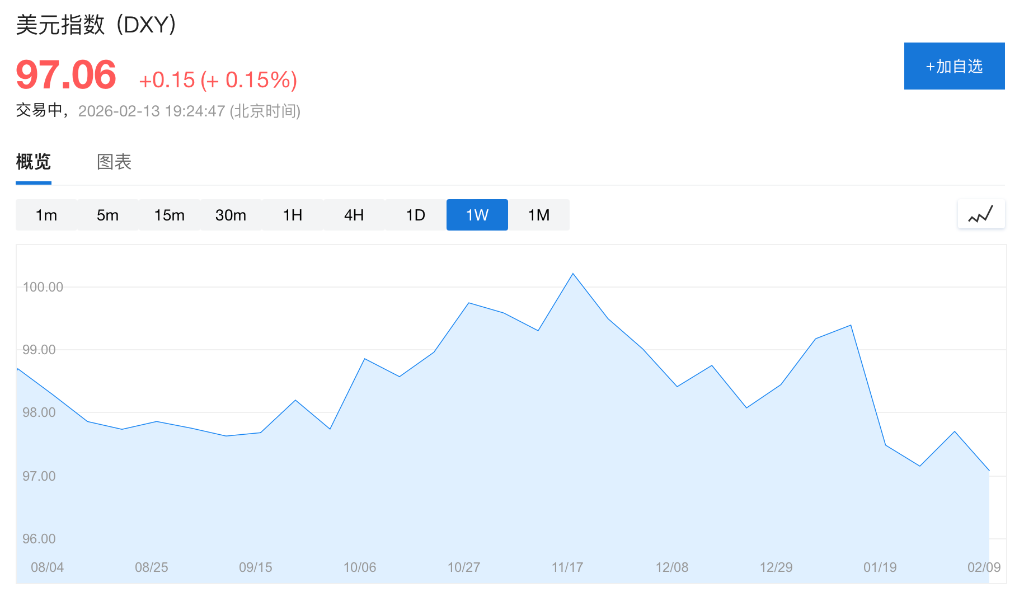
Core Viewpoint - The article discusses the varying performances of traditional safe-haven currencies—USD, JPY, and CHF—highlighting the ongoing shift in their status as safe-haven assets, with CHF emerging as the most stable option among G10 currencies [3][12]. Group 1: USD Analysis - The process of de-dollarization is accelerating, influenced by U.S. policies under the Trump administration, leading to a significant decline in the dollar's status as a global reserve currency. The dollar index fell by 9.37% in 2025 and continued to decline in 2026 [4][5]. - The IMF reports that the share of dollar reserves held by global central banks has dropped from over 60% in the early 2000s to below 40% by the end of 2025, indicating a trend towards non-dollar assets [5]. - The expectation of interest rate cuts by the Federal Reserve is contributing to the dollar's weakness, with projections indicating a potential average value of 94-96 for the dollar index in 2026, a decrease of about 3%-5% from current levels [6][7]. Group 2: JPY Analysis - The Japanese yen has experienced increased volatility, with significant fluctuations in its exchange rate against the dollar, influenced by political changes and monetary policy signals from the Bank of Japan [9][10]. - Market expectations regarding the yen's future are mixed, with potential for further depreciation against the dollar if the ruling party's fiscal policies lead to increased inflation pressures [10][11]. Group 3: CHF Analysis - The Swiss franc has shown remarkable stability, appreciating nearly 13% against the dollar in 2025 and reaching an 11-year high in early 2026, driven by Switzerland's political stability and low debt levels [12][13]. - However, the strong franc poses challenges for Switzerland's export-driven economy, with inflation remaining low at 0.1%, raising concerns about deflationary pressures [13][14]. - The Swiss National Bank is cautious about intervening in the currency market, with predictions suggesting a slight depreciation of the franc against the dollar by the end of the year [14].
白银“闪跳”,市场逻辑变了吗?
Jing Ji Guan Cha Wang· 2026-02-13 09:34
Group 1 - The silver market is experiencing extreme volatility characterized by rapid price increases followed by sharp declines, indicating a potential shift in the underlying dynamics driving silver prices [1][2][3] - As of February 13, 2026, silver prices reached $77 per ounce, with a significant increase in the gold-silver ratio to 64.6, suggesting a shift in market sentiment towards gold as a safer asset [1][2] - The World Silver Association forecasts a structural supply shortage in the silver market for the sixth consecutive year, with a projected deficit of 67 million ounces in 2026 [4] Group 2 - Industrial demand for silver is expected to decline by 2% in 2026, primarily due to cost-saving measures and the adoption of alternative materials in the photovoltaic sector, leading to a decrease in silver processing volume [4][5] - The rising cost of silver, which constitutes over 40% of the total cost of photovoltaic cells, is prompting manufacturers to seek lower-cost alternatives, such as copper and aluminum pastes, to maintain competitiveness [5] - The financial attributes of silver may continue to play a significant role in its price dynamics, especially in the context of global de-dollarization and geopolitical risks, suggesting potential for further price increases [5][6]

中方接连减持美债引发关注,美国财长对华表态明显缓和,强调中美两国绝不能走向脱钩断链
Sou Hu Cai Jing· 2026-02-13 08:56
Core Viewpoint - China has been strategically reducing its holdings of US Treasury bonds over the past decade, moving from over $1.3 trillion in 2013 to approximately $688.7 billion by October 2025, reflecting a significant shift in its asset management strategy [1][3][19]. Group 1: Reduction of US Treasury Holdings - China has consistently reduced its US Treasury bond holdings, selling $173.2 billion in 2022, $50.8 billion in 2023, and $57.3 billion in 2024, with a further reduction of $11.8 billion expected by October 2025 [3][19]. - The reduction is not a panic sell but a planned strategic adjustment, with a simultaneous increase in gold reserves, which reached 74.19 million ounces by January 2026 [3][5][19]. - The shift in asset allocation reflects a broader strategy to diversify away from US dollar dependence, as the internationalization of the renminbi increases and the reliance on US Treasury bonds diminishes [7][19][30]. Group 2: Global Financial Dynamics - The reduction in US Treasury holdings by China has created a ripple effect, with other countries like India, Norway, and Canada also decreasing their US bond holdings, indicating a growing global trend away from dollar dependency [13][15][19]. - The US Treasury market is facing pressure as foreign investors withdraw, leading to increased domestic reliance on banks and the Federal Reserve to absorb new debt, which could raise long-term financing costs [9][10][19]. - The volatility in the US Treasury yields, with a notable fluctuation of 22 basis points in October 2025, undermines market confidence and reflects the instability in US fiscal policy [11][12][19]. Group 3: US-China Relations and Strategic Adjustments - The US has recognized the need to stabilize relations with China, as evidenced by Treasury Secretary Yellen's softened rhetoric regarding decoupling and the emphasis on risk reduction and fair competition [17][19][30]. - The ongoing diplomatic engagements between the US and China, including high-level visits, aim to maintain economic cooperation despite underlying tensions in other areas such as technology and trade [24][30][42]. - China's strategic asset diversification is seen as a response to the US's financial weaponization and the erosion of trust in US fiscal stability, positioning itself to mitigate risks associated with US Treasury reliance [5][19][36]. Group 4: Future Outlook - China's ongoing reduction of US Treasury holdings is expected to continue, with a focus on building a more resilient and diversified foreign exchange reserve structure, which is seen as a long-term national strategy [38][40][48]. - The global financial landscape is shifting towards a multipolar system, with increasing interest in gold and non-dollar assets, reflecting a broader reevaluation of the dollar's dominance [38][40][48]. - The future of US-China relations hinges on the US's ability to address its fiscal challenges and restore credibility, as China's actions signal a strategic pivot rather than a retreat from global engagement [36][48].
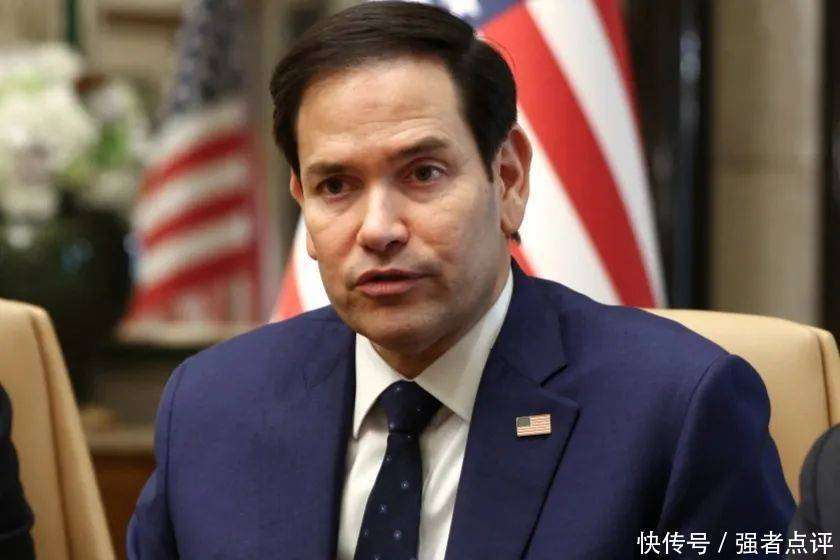
美国务卿:美元已不是全球储备货币,多国正寻找美元替代品
Sou Hu Cai Jing· 2026-02-13 08:49
Core Viewpoint - The U.S. Secretary of State Rubio revealed that nearly half of the countries no longer view the U.S. dollar as the global reserve currency, marking a significant acknowledgment from the U.S. government about the declining status of the dollar [1][3] Group 1: Dollar's Declining Status - A majority of countries have stopped holding dollar assets as reserve currencies, indicating a shift in global financial dynamics [3] - The total U.S. national debt has surpassed $38 trillion, with annual interest payments exceeding $1.3 trillion, raising concerns about the sustainability of the dollar [5] - The weaponization of the dollar and fluctuating U.S. policies have created unease among global central banks, complicating the dollar's role in international trade [5] Group 2: Shift in Asset Preferences - Central banks are increasingly diversifying their reserves to avoid reliance on U.S. debt, with countries like China strategically reducing their holdings of U.S. Treasury bonds [7] - If confidence in the dollar wanes, funds will seek new safe havens, with gold being one option, though its limitations prevent it from fully replacing the dollar [9] - The euro is seen as a potential successor to the dollar, but internal complexities within the Eurozone raise concerns among investors [9] Group 3: Future of Currency Dynamics - The current trend of de-dollarization is more about reserve diversification rather than a revolutionary shift away from the dollar [11] - The U.S. government is taking measures to stabilize the dollar's position by seeking control over key resources, such as oil in Venezuela and rare earth elements in Greenland [13] - China's efforts to internationalize the renminbi are progressing, particularly in cross-border transactions and commodity pricing, positioning it as a reliable alternative in specific trade areas [13]