存款搬家

Search documents
2025年9月金融数据点评:居民存款搬家暂缓,社融受基数效应回落
Shanghai Aijian Securities· 2025-10-17 06:42
Report Industry Investment Rating No relevant content provided. Core Viewpoints - In September 2025, financial data was neutral, continuing the trend of "weak credit and rising M1 year-on-year". Affected by the base effect, the year-on-year growth rate of social financing is expected to decline. The "deposit relocation" process needs further verification, and the bond market is expected to be mainly volatile [6][30]. Summary by Directory 1. Financial Data Review - **Social Financing**: In September 2025, the year-on-year growth rate of social financing declined slightly to 8.68%. The government bond's driving effect on social financing weakened due to the misaligned issuance rhythm and high base from the previous year. Excluding government bonds, the year-on-year growth rate of social financing was 5.94% [4][10]. - **Money Supply**: M1 continued its high - growth trend, with a year-on-year growth rate of 7.2% in September, up 1.2 percentage points from the previous month. The year-on-year gap between M1 and M2 widened to -1.2%. The growth was driven by a low base last year and increased fiscal spending [5][17]. - **Credit**: The total credit was slightly weak and structurally differentiated. In September, new RMB loans were 129 billion yuan, slightly lower than expected. Corporate short - term loans expanded, while resident credit was weak. Resident short - term loans increased less year - on - year, and the personal consumption loan discount policy's effect was not fully shown. Resident long - term loans increased year - on - year due to housing policy optimization and the sales season. Overall, the credit data showed that policy guidance was effective in some areas, but enterprise long - term investment willingness and resident consumption credit recovery were still constraints [20][21]. - **Deposit**: In September, RMB deposit data showed structural differentiation. Resident deposits increased significantly, while non - banking financial institution deposits decreased. This was affected by seasonal factors and the high base from the previous year, and the "deposit relocation" trend needs further verification [27]. 2. Financial Data and Bond Market Outlook - The financial data in September was neutral, and the bond market is expected to improve slightly in the fourth quarter but remain a weak asset, mainly volatile. Investors should focus on four short - term disturbance factors: tariff trends, fund sales fee rate adjustments, inflation trends, and equity market performance [30].
9月金融数据点评:存款搬家暂缓,债市仍未顺风
Shenwan Hongyuan Securities· 2025-10-17 06:29
Group 1 - The core viewpoint of the report indicates that the growth rate of social financing (社融) has declined, primarily due to a high base effect and weak credit demand from the real sector. New short-term loans for enterprises and medium to long-term loans for residents are highlights, but their sustainability remains to be observed [4][3] - In September 2025, new RMB loans amounted to 1.29 trillion yuan, down from 1.59 trillion yuan in September 2024. New social financing was 3.53 trillion yuan, compared to 3.76 trillion yuan in the same month last year, with a year-on-year growth rate of 8.7% [3][4] - The report notes that the equity market's profit-making effect has weakened, leading to a pause in the trend of residents moving deposits into the market. The significant drop in new non-bank deposits in September reflects this trend [4][3] Group 2 - The M1 growth rate has increased, and the M1-M2 spread has contracted to the lowest level since 2022. However, the correlation between M1, M2, and economic activity has weakened, indicating complex underlying factors [4][32] - The report highlights structural bright spots in September's financial data, but these are largely influenced by base effects and short-term policy impacts. The bond market is primarily pricing in redemption pressures rather than a combination of weak fundamentals and loose liquidity [4][5] - Recommendations for bond investments in Q4 2025 suggest prioritizing convertible bonds, short-term credit bonds, and short-term interest rate bonds, while advising caution with long-term and ultra-long-term bonds due to increased volatility [4][5]
中资券商股集体走低 非银存款下半年首现负增长 市场关注存款搬家进程
Zhi Tong Cai Jing· 2025-10-17 06:05
广发证券则表示,市场风偏波动但不改增量资金入市趋势,券商板块景气度有望震荡上行,但估值滞 涨,资本市场稳定性提升下券商板块兼具工具属性,建议关注Q3业绩弹性催化以及华泰证券 (601688)(A/H)、东方证券(600958)(A/H)、中金公司(601995)(H)、国泰海通(A/H)、中信证券 (600030)(A/H)等投资机会。 中资券商股集体走低,截至发稿,广发证券(000776)(01776)跌5.15%,报19.88港元;中信建投 (601066)证券(06066)跌4.23%,报13.37港元;国泰海通(02611)跌3.07%,报15.18港元;光大证券 (601788)(06178)跌2.22%,报10.58港元。 消息面上,最新发布的9月金融数据显示,存款结构呈现显著分化,住户存款与非银金融机构存款呈 现"一增一减"。其中,住户存款新增2.96万亿元,同比多增7600亿元;非银存款减少1.06万亿元,同比 少增1.97万亿元。爱建证券发布研报称,该格局并非意味着存款向资本市场迁移进程的逆转,而是受到 季节性因素与去年同期高基数的共同扰动,尚不能据此断定"存款搬家"趋势的终结,其持续性仍需 ...
港股异动 | 中资券商股集体走低 非银存款下半年首现负增长 市场关注存款搬家进程
智通财经网· 2025-10-17 06:04
智通财经APP获悉,中资券商股集体走低,截至发稿,广发证券(01776)跌5.15%,报19.88港元;中信建 投证券(06066)跌4.23%,报13.37港元;国泰海通(02611)跌3.07%,报15.18港元;光大证券(06178)跌 2.22%,报10.58港元。 消息面上,最新发布的9月金融数据显示,存款结构呈现显著分化,住户存款与非银金融机构存款呈 现"一增一减"。其中,住户存款新增2.96万亿元,同比多增7600亿元;非银存款减少1.06万亿元,同比 少增1.97万亿元。爱建证券发布研报称,该格局并非意味着存款向资本市场迁移进程的逆转,而是受到 季节性因素与去年同期高基数的共同扰动,尚不能据此断定"存款搬家"趋势的终结,其持续性仍需后续 月份数据的进一步验证。 广发证券则表示,市场风偏波动但不改增量资金入市趋势,券商板块景气度有望震荡上行,但估值滞 涨,资本市场稳定性提升下券商板块兼具工具属性,建议关注Q3业绩弹性催化以及华泰证券(A/H)、东 方证券(A/H)、中金公司(H)、国泰海通(A/H)、中信证券(A/H)等投资机会。 ...

四季度AH配置展望:“共振”还是“跷跷板”
Changjiang Securities· 2025-10-17 05:11
Group 1: AH Market Performance - A-shares have significantly outperformed H-shares since the beginning of Q3 2025, indicating a divergence from the AH premium rate trends[3] - The AH premium rate index recently touched a historical low of 120, suggesting a potential reconfiguration of the premium rate central tendency[20] - The premium rate is influenced by liquidity differences, investor structure, and tax policies between A-shares and H-shares[5] Group 2: Q4 Outlook - The Q4 investment strategy should shift focus from aggressive tech growth sectors to policy-favored areas such as consumption and re-inflation sectors[7] - A-share earnings growth is expected to be stronger than H-share, with the ChiNext and Sci-Tech 50 indices showing higher projected earnings per share (EPS) growth rates[12] - The liquidity in A-shares remains robust, with a significant portion of trading activity driven by "deposit migration" phenomena[69] Group 3: Valuation and Risk - The valuation of H-shares appears less attractive compared to A-shares, with the Hang Seng Index's risk premium at relatively low levels[98] - The risk premium for H-shares is currently insufficient for foreign investors, while the Nasdaq remains appealing due to its risk premium levels[100] - The report highlights potential risks including policy misalignment and model failures that could impact future performance[13]
居民存款最新数据传递出何信息
Zheng Quan Ri Bao· 2025-10-16 16:16
Core Insights - The People's Bank of China reported a significant increase in RMB deposits, with a total increase of 22.71 trillion yuan in the first three quarters of this year, including a rise of 12.73 trillion yuan in household deposits [1][2] - The high growth in deposits reflects the flexibility of residents' financial behavior and indicates potential future economic growth and policy directions [1] Deposit Trends - The phenomenon of "deposit migration" is observed, where household deposits increased by 2.96 trillion yuan in September while non-bank deposits decreased by 1.06 trillion yuan, indicating a shift in asset allocation among residents [1] - The current asset allocation behavior of residents is highly flexible, responding to relative changes in yields between bank savings and other assets [1] Consumer Behavior - Residents are adopting a more rational consumption approach, with a prevailing "precautionary saving" mindset, leading to unfulfilled large consumption demands [2] - In the first three quarters, RMB loans increased by 14.75 trillion yuan, with household loans rising by 1.1 trillion yuan, indicating that consumer demand remains weak and credit recovery needs to continue [2] Economic Implications - The substantial increase in household deposits represents a large "reservoir" of funds, indicating strong potential purchasing power that could support future consumption and investment [2] - If a portion of these deposits flows into consumption or investment in the future, it could provide strong support for demand and act as a driving force for economic growth [2]
M1与M2剪刀差明显收敛 9月末社融存量同比增8.7%
Mei Ri Jing Ji Xin Wen· 2025-10-16 14:53
Core Insights - The People's Bank of China reported that the total social financing scale reached 437.08 trillion yuan by the end of September, with a year-on-year growth of 8.7% [1] - The increase in social financing is significantly supported by accelerated government bond issuance and improved corporate bond and equity financing channels [4] Monetary Policy and Financing - The broad money supply (M2) stood at 335.38 trillion yuan at the end of September, reflecting a year-on-year increase of 8.4%, supported by proactive fiscal policies and moderately loose monetary policies [3][8] - The weighted average interest rate for new corporate loans was approximately 3.1%, down about 40 basis points year-on-year, indicating a generally abundant supply of credit resources [3][5] Social Financing Growth - In the first three quarters, the incremental social financing totaled 30.09 trillion yuan, which is 4.42 trillion yuan more than the same period last year [4] - Government bonds played a crucial role in supporting social financing, with net financing of 11.46 trillion yuan in the first three quarters, an increase of 4.28 trillion yuan year-on-year [4] Credit Supply and Demand - By the end of September, the balance of RMB loans was 270.39 trillion yuan, showing a year-on-year growth of 6.6% [5] - The low interest rates indicate a high level of credit resource supply, meeting the financing needs of the real economy effectively [6][7] Consumer Behavior and Market Dynamics - The recent increase in M1, which reached 113.15 trillion yuan with a year-on-year growth of 7.2%, signals a recovery in personal investment and consumption demand [8] - The phenomenon of "deposit migration" reflects residents reallocating their savings into higher-yielding assets, influenced by changing interest rates and market conditions [9]

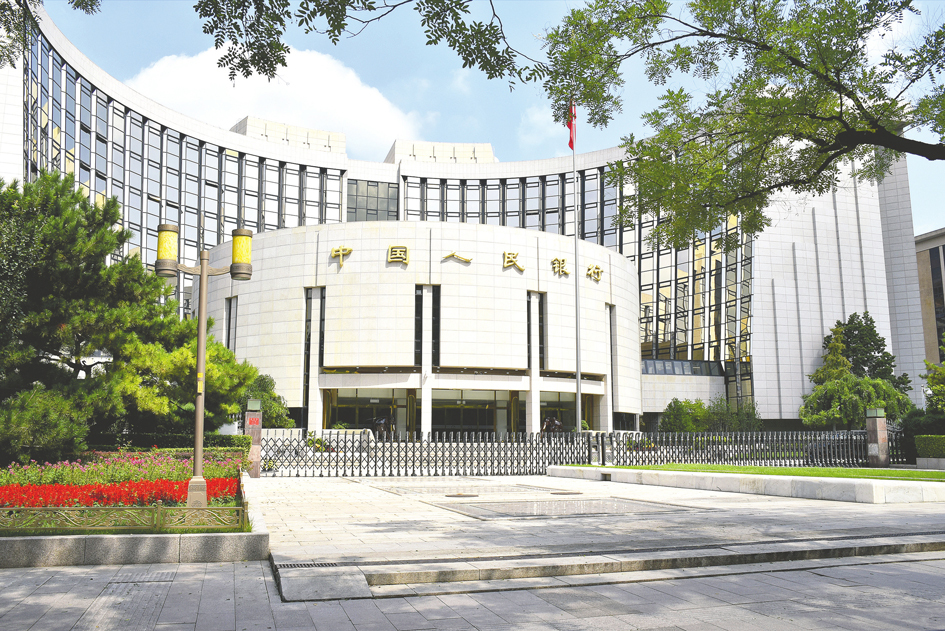
“存款搬家”背后原因浮出水面
财联社· 2025-10-16 14:21
Core Viewpoint - The recent data from the People's Bank of China indicates a significant increase in RMB deposits, with a notable shift in the dynamics of non-bank financial institution deposits and household savings, suggesting a reallocation of assets by residents rather than a simple "deposit migration" to the stock market [1][2]. Group 1: Deposit Trends - In the first three quarters, RMB deposits increased by 22.71 trillion yuan, with non-bank financial institution deposits rising by 4.81 trillion yuan [1]. - By the end of September, household deposits grew by 12.73 trillion yuan, a substantial increase compared to 9.77 trillion yuan at the end of August [1]. - The phenomenon of "deposit migration" is characterized as residents reallocating their savings based on changes in asset return rates, rather than a direct transfer to the stock market [1][2]. Group 2: Non-Bank Deposits - Non-bank deposits saw a significant increase in July and August, with July's increase at 2.14 trillion yuan and August's at 1.2 trillion yuan, indicating a trend of high growth [2]. - The assumption that this increase in non-bank deposits directly correlates with a migration of household savings into the stock market is deemed overly simplistic, as evidenced by the subsequent drop in non-bank deposits in September [2][3]. Group 3: Bank Strategies - Banks are increasingly relying on non-bank deposits and interbank certificates of deposit to expand their liabilities, especially when household deposit growth slows [3]. - The issuance of government bonds and special bonds in July and August created a demand for banks to increase their liabilities, leading to a rise in non-bank deposit figures [3]. Group 4: Wealth Management Products - The total scale of bank wealth management products decreased by 128.47 billion yuan by the end of September, falling to 30.82 trillion yuan [4]. - Despite a slight increase in the sales proportion of equity-linked products, there has not been a significant surge in overall sales of these products [5][6]. - The popularity of index-linked products remains high, while direct investments in specific stock market sectors are less favored [6].

“存款搬家”进程暂缓?
Di Yi Cai Jing Zi Xun· 2025-10-16 12:41
Core Insights - The process of "deposit migration" has shown signs of slowing down, with significant divergence in deposit structures observed in September, where household deposits increased while non-bank financial institution deposits decreased [2][3] Deposit Structure Changes - In September, household deposits increased by 2.96 trillion yuan, a year-on-year increase of 760 billion yuan, marking the first time in the second half of the year that monthly household deposits exceeded 2 trillion yuan [3][4] - Conversely, non-bank deposits decreased by 1.06 trillion yuan, a year-on-year decrease of 1.97 trillion yuan, representing the first negative growth in non-bank deposits in the second half of the year [3][5] Monetary Supply Dynamics - The changes in household and non-bank deposits have led to a contrasting performance in M1 and M2 monetary aggregates, with M1 showing an increase and M2 experiencing a decline [2][8] - As of September, M2's year-on-year growth rate was 8.4%, down from 8.8% in August, while M1's growth rate rose to 7.2%, up from 6% in August, indicating enhanced market liquidity [8][9] Economic and Policy Influences - The structural changes in deposits are attributed to a combination of fiscal policy actions, market fluctuations, and shifts in household asset allocation preferences [4][5] - Analysts suggest that the decline in non-bank deposits is influenced by last year's high base effect, market volatility, and adjustments in asset management products [5][6] Investment Behavior - The concept of "deposit migration" reflects residents reallocating their savings into other assets based on changes in expected returns, indicating a dynamic shift in investment behavior [6][7] - Despite the recent slowdown in the migration of household savings to capital markets, the process of asset reallocation continues, as evidenced by improvements in new fund establishment and account openings [6][7]

楼市最后防线破了?结婚人数增多、居民存款率却在下降,什么信号
Sou Hu Cai Jing· 2025-10-16 12:07
Group 1: Real Estate Market Changes - The recent loosening of purchase restrictions in Beijing and Shanghai marks a significant shift in the real estate market, which had previously maintained strict controls [2][4] - The new policies primarily target suburban areas, indicating a strategy to redirect buyers away from core urban zones, as local governments struggle with declining land sale revenues [4][6] - In Suzhou, the removal of a two-year resale restriction has led to a surge in second-hand property listings, with a notable increase of over 3,000 listings within 24 hours, while prices have dropped by 11.8% [7][9] Group 2: Marriage Trends - The marriage registration numbers saw a surprising rebound in 2025, with 353.9 million couples registered, a 10.9 million increase from the previous year, largely due to policy changes that simplified the registration process [15][18] - The increase in marriage registrations is not indicative of a genuine desire to marry among young people, as the underlying demographic trends show a decline in the eligible population [20][25] - The rise in marriage numbers is accompanied by an increase in divorce rates, suggesting that while more people are marrying, economic pressures and changing social norms are leading to higher divorce rates [20][22] Group 3: Savings and Investment Behavior - A significant drop in household savings of 1.12 trillion yuan in July indicates a shift in consumer behavior, with many opting to invest in higher-yielding financial products rather than keeping money in low-interest bank accounts [27][29] - The trend of "savings migration" reflects a broader reallocation of assets, with funds moving from traditional savings to capital markets, driven by low interest rates and a more favorable investment climate [29][30] - Despite the apparent movement towards investment, the underlying economic conditions remain weak, with traditional sectors like real estate and consumer goods still struggling [30][35]