
宏观经济

Search documents
光大期货软商品日报-20251031
Guang Da Qi Huo· 2025-10-31 05:09
Group 1: Report Industry Investment Rating - No relevant content provided Group 2: Core Views of the Report - For cotton, on Thursday, ICE U.S. cotton fell 1.39% to 65.09 cents per pound, CF601 rose 0.11% to 13,600 yuan per ton, and the main - contract position decreased by 902 lots to 577,600 lots. The spot price index of cotton 3128B was 14,545 yuan per ton, up 10 yuan from the previous day. After the Fed cut interest rates by 25BP as expected, Powell unexpectedly took a hawkish stance, reducing the probability of a 25BP rate cut in December, but it's still likely. After the China - U.S. summit in South Korea, there was some easing in tariffs. Domestically, Zhengzhou cotton futures prices fluctuated around 13,600 yuan per ton. The market sentiment was divided. Looking ahead, there are relatively optimistic expectations for the macro and fundamentals. The current supply peak will gradually ease, and the domestic cotton supply - demand pattern is not very loose. Zhengzhou cotton has a bottom support, and the upward drive depends more on the macro level [1]. - For sugar, in the 2025/26 sugar - crushing season, the government of Uttar Pradesh will raise the sugar - cane price by up to 300 rupees per ton. The purchase price of early - maturing sugar - cane is set at 4,000 rupees per ton (equivalent to 321.24 yuan per ton), and that of ordinary varieties is 3,900 rupees per ton (equivalent to 313.21 yuan per ton). The spot price of Guangxi sugar - making groups is 5,660 - 5,750 yuan per ton, with only a few down 10 yuan per ton; Yunnan sugar - making groups' price is 5,590 - 5,640 yuan per ton, and the mainstream price of processed sugar is 5,790 - 5,950 yuan per ton, remaining unchanged. The Fed's rate cut was in line with market expectations and had limited impact. Raw sugar continued to hit new lows on Thursday, lacking buying and a bottom - finding drive. Domestic Yunnan sugar mills have started crushing, and Guangxi will start in mid - November. Benefiting from restricted imports of syrup, the price shows strong resistance to decline, but the rebound is weak under the high - yield expectation. It should be treated with a volatile mindset, and news from the Chengdu Sugar Conference should be watched [1]. Group 3: Summary by Relevant Catalogs 1. Research Views - **Cotton**: The international market is affected by Fed's interest - rate policy and China - U.S. tariff relations. Domestically, the futures price fluctuates around 13,600 yuan per ton. There are optimistic expectations for the future, and the supply pressure will ease. Zhengzhou cotton has bottom support, and the upward drive depends on the macro level [1]. - **Sugar**: The government of Uttar Pradesh raises the sugar - cane price. The spot price of sugar has little change. Raw sugar hits new lows, and the domestic sugar price shows resistance to decline but weak rebound under high - yield expectation. It should be treated with a volatile mindset [1]. 2. Daily Data Monitoring - **Cotton**: The 1 - 5 contract spread is - 10 yuan, down 5 yuan; the main - contract basis is 1,243 yuan, up 23 yuan. The spot price in Xinjiang is 14,658 yuan per ton, up 8 yuan, and the national average is 14,843 yuan per ton, up 3 yuan [2]. - **Sugar**: The 1 - 5 contract spread is 65 yuan, unchanged; the main - contract basis is 278 yuan, up 22 yuan. The spot price in Nanning and Liuzhou is 5,750 yuan per ton, unchanged [2]. 3. Market Information - **Cotton**: On October 30, the number of cotton futures warehouse receipts was 2,434, down 26 from the previous day, and the valid forecast was 1,228. The arrival prices of cotton in different domestic regions were: 14,658 yuan per ton in Xinjiang, 14,873 yuan per ton in Henan, 14,884 yuan per ton in Shandong, and 14,954 yuan per ton in Zhejiang. The comprehensive load of yarn was 51.2, unchanged; the comprehensive inventory of yarn was 26.2, unchanged; the comprehensive load of short - fiber cloth was 51.8, down 0.1; the comprehensive inventory of short - fiber cloth was 30, up 0.1 [3]. - **Sugar**: On October 30, the spot price of sugar in Nanning and Liuzhou was 5,750 yuan per ton, unchanged. The number of sugar futures warehouse receipts was 7,541, down 84 from the previous day, and the valid forecast was 586 [3][4]. 4. Chart Analysis - There are multiple charts for cotton and sugar, including the closing price, basis, contract spread, and warehouse - receipt data of the main contracts, showing the historical trends from 2021 - 2025 [6][15]
银河期货有色金属衍生品日报-20251030
Yin He Qi Huo· 2025-10-30 11:42
Group 1: Report Summary - The report provides a daily analysis of the non - ferrous metals market on October 30, 2025, covering copper, alumina, electrolytic aluminum, cast aluminum alloy, zinc, lead, nickel, stainless steel, tin, industrial silicon, polysilicon, and lithium carbonate [1]. - It includes market reviews, important information, logical analyses, and trading strategies for each metal [1][2][3]. Group 2: Market Reviews Copper - The main contract of Shanghai copper 2512 closed at 87,960 yuan/ton, down 0.1%, and the Shanghai copper index increased positions by 2,982 lots to 620,000 lots. LME closed at $11,090/ton, up 0.55%. Shanghai copper spot was at a discount of 55 yuan/ton [1]. Alumina - The alumina 2601 contract decreased by 28 yuan to 2,816 yuan/ton. The northern spot comprehensive price of alumina was 2,840 yuan, up 5 yuan [8]. Electrolytic Aluminum - The Shanghai aluminum 2512 contract decreased by 10 yuan to 21,245 yuan/ton. Spot prices in East China, South China, and Central China were 21,190 yuan (up 30), 21,070 yuan (flat), and 21,050 yuan (up 10) respectively [16]. Cast Aluminum Alloy - The cast aluminum alloy 2512 contract increased by 100 yuan to 20,750 yuan/ton. The spot price of ADC12 aluminum alloy ingots in various regions remained flat [24]. Zinc - The Shanghai zinc 2512 contract fell 0.13% to 22,365 yuan/ton, and the Shanghai zinc index increased positions by 4,449 lots to 214,800 lots. The spot price in Shanghai was 22,300 - 22,425 yuan/ton [31]. Lead - The Shanghai lead 2512 contract fell 0.06% to 17,350 yuan/ton, and the Shanghai lead index decreased positions by 2,688 lots to 119,800 lots. The average price of SMM1 lead was flat at 17,200 yuan/ton [37]. Nickel - The main contract of Shanghai nickel NI2512 decreased by 40 to 120,980 yuan/ton, and the index increased positions by 3,185 lots. The premium of Jinchuan nickel, Russian nickel, and electrowinning nickel changed to varying degrees [42]. Stainless Steel - The main contract of stainless steel SS2512 decreased by 50 to 12,725 yuan/ton, and the index decreased positions by 8,627 lots. The spot price of cold - rolled was 12,550 - 12,850 yuan/ton, and hot - rolled was 12,450 - 12,500 yuan/ton [50]. Tin - The main contract of Shanghai tin 2512 closed at 283,600 yuan/ton, down 2,650 yuan/ton or 0.93%, and the position decreased by 2,185 lots to 72,249 lots. The average spot price of tin ingots in Shanghai was 284,000 yuan/ton, down 1,300 yuan/ton [55]. Industrial Silicon - The main contract of industrial silicon decreased. The spot prices of different grades in various regions remained stable [89]. Polysilicon - The main contract of polysilicon increased. The spot prices of different types of polysilicon and related downstream product prices had minor changes [90]. Lithium Carbonate - The lithium carbonate 2601 contract increased by 980 to 83,400 yuan/ton, and the index increased positions by 36,888 lots. The spot prices of battery - grade and industrial - grade lithium carbonate increased [76]. Group 3: Important Information Macro - level - The Fed cut interest rates by 25 basis points and ended quantitative tightening, but Powell's hawkish remarks on December's interest - rate cut prospects reduced the market's expectation of a December rate cut from 95% to 65% [2]. - The Sino - US economic and trade teams reached a consensus, with the US canceling a 10% "fentanyl tariff" on Chinese goods and suspending a 24% reciprocal tariff for another year [16][24][56]. Industry - level - Chile's state - owned mining company ENAMI obtained environmental approval for a new $1.7 - billion copper smelter [2]. - Some zinc mines in Southwest, North, and Central China have production adjustments such as maintenance and resumption of production [32]. - A large alumina enterprise in North China has two roasting furnaces under maintenance due to heavy pollution weather [9]. - Some electrolytic aluminum plants overseas and in China have production cuts [17]. - Some stainless steel mills plan to cut production to relieve the supply - demand contradiction in the fourth quarter [51]. - Indonesia closed 1,000 illegal mining sites [57]. - The production of some polysilicon plants in Southwest China will be reduced in November [69]. - China will suspend the implementation of lithium - battery and its material export control measures for one year [78]. Group 4: Logical Analysis Copper - Macroscopically, the dollar strengthened due to Powell's hawkish remarks, and the Sino - US leaders' meeting was slightly disappointing. Fundamentally, the supply of copper mines is tight, and the production of electrolytic copper in October is expected to decline. The consumption is weak, and the spot has turned to a discount [3][4]. Alumina - The supply and demand of alumina are still significantly in surplus. The market expects production cuts in the future, which drives the price to rebound slightly at a low level. However, the non - implementation of production cuts and the open import window suppress the rebound [11]. Electrolytic Aluminum - Macroscopically, the market's expectation of a December Fed rate cut has decreased, and the Sino - US economic and trade consensus eases the risk - aversion sentiment. Fundamentally, overseas production cuts intensify the supply - demand tension, and the domestic consumption has resilience [18]. Cast Aluminum Alloy - Macroscopically, the Fed's hawkish remarks increase uncertainty, but the Sino - US trade negotiation is positive. Fundamentally, the supply of scrap aluminum is tight, the supply of the regenerative aluminum alloy industry is shrinking, and the demand is resilient, supporting the price [26]. Zinc - Domestically, the winter storage of smelters has increased, the processing fees have decreased, and some smelters may cut production in November. The consumption is expected to weaken. Overseas, the inventory is relatively low, and the LME zinc price is strong. The domestic export window is open [33]. Lead - Some lead - storage enterprises' orders have improved, but they have reduced production due to high lead prices. The supply side may increase production as the price of lead scrap has not risen significantly. The lead price may decline [39]. Nickel - The Fed's interest - rate cut and hawkish remarks have an impact. The LME nickel inventory is slowly increasing, and the supply - demand is loose. The price is supported by cost, and it will fluctuate widely [45]. Stainless Steel - The terminal demand in October is not optimistic, and it is the end of the peak season. The supply side has production cuts, the cost support is not strong, and the price has encountered resistance [51]. Tin - The Sino - US leaders' meeting result is slightly disappointing. The supply of tin mines is still tight, and the production of smelters in September decreased. The demand is slowly recovering, and the downstream procurement is cautious [57]. Industrial Silicon - The start - up rate of silicon plants in Northwest China is at a high level, and those in Southwest China will stop production at the end of the month. The demand for organic silicon and aluminum alloy is stable, and the production of polysilicon will be reduced in November. There may be inventory reduction [62]. Polysilicon - The production in Southwest China will be reduced in November. The demand is expected to be poor, but there is still resilience. The market will be in a tight - balance state in November. The old warehouse receipts' negative impact on the market is weakening [69]. Lithium Carbonate - The weekly production has decreased, and the inventory is being reduced. The fundamentals are healthy, attracting bullish funds. The price is expected to continue rising [78]. Group 5: Trading Strategies Copper - Unilateral: The medium - term upward trend continues. Adopt a strategy of buying on dips, but be cautious of short - term pullbacks when chasing high [5]. - Arbitrage: Hold cross - market positive arbitrage and arrange cross - period positive arbitrage after the domestic inventory starts to decline [6]. - Options: Wait and see [7]. Alumina - Unilateral: There is an expectation of further production cuts in November. The price will bottom out in the short term [12]. - Arbitrage: Wait and see [13]. - Options: Wait and see [13]. Electrolytic Aluminum - Unilateral: The aluminum price is expected to fluctuate upward after the market sentiment stabilizes [19]. - Arbitrage: Wait and see [20]. - Options: Wait and see [21]. Cast Aluminum Alloy - Unilateral: The aluminum alloy price will follow the aluminum price to adjust due to macro - sentiment and then maintain a strong trend after stabilizing [27]. - Arbitrage: Consider a long - AD short - AL arbitrage [27]. - Options: Wait and see [27]. Zinc - Unilateral: Buy on dips. Pay attention to the export volume and the commissioning of new smelters in the North [34]. - Arbitrage: Advance the operation of buying SHFE and selling LME according to the export situation [34]. - Options: Wait and see [34]. Lead - Unilateral: Partially close profitable short positions. If the resumption and increase of production of regenerative lead smelters accelerate, the lead price may fall further [40]. - Arbitrage: Wait and see [40]. - Options: Exit the position by taking profit on selling out - of - the - money call options [40]. Nickel - Unilateral: Fluctuate widely [46]. - Arbitrage: Wait and see [47]. - Options: Sell a wide - straddle combination of the 2512 contract [48]. Stainless Steel - Unilateral: Recommend short - selling on rebounds [52]. - Arbitrage: Wait and see [53]. Tin - Unilateral: Fluctuate at a high level. Pay attention to the Sino - US trade relationship [58]. - Options: Wait and see [59]. Industrial Silicon - Unilateral: Hold short - term long positions and exit near the previous high [63]. - Arbitrage: None [63]. - Options: Sell out - of - the - money put options [63]. Polysilicon - Unilateral: Partially reduce long positions to take profit and buy on dips later [72]. - Arbitrage: Reverse arbitrage on far - month contracts [73]. - Options: Hold long call options [74]. Lithium Carbonate - Unilateral: Buy on dips [80]. - Arbitrage: Wait and see [80]. - Options: Sell out - of - the - money put options [80].
江西财经大学联合主办宏观经济形势秋季研讨会
Sou Hu Cai Jing· 2025-10-30 10:05
Core Viewpoint - The "China Economic Outlook" seminar highlighted the resilience and potential of China's economy amidst external uncertainties, emphasizing the importance of macroeconomic policies and structural optimization for achieving annual targets [1][2]. Group 1: Economic Performance and Policy Direction - The National Development and Reform Commission's Macro Economic Research Institute reported that China's economy has shown strong resilience and steady progress in 2023, maintaining stable growth despite rising external uncertainties [1]. - The seminar discussed the macroeconomic situation, fiscal policy orientation, technological innovation, regional economic development, foreign trade, and future policy focus, with experts agreeing that the 20th Central Committee's fourth plenary session has provided a blueprint for high-quality economic development [2][6]. Group 2: New Analytical Platform - The "China Macroeconomic Monitoring, Forecasting, and Policy Evaluation Analysis Platform" was launched to provide dynamic monitoring, trend forecasting, and policy effect evaluation, combining effective market mechanisms with proactive government involvement [4]. - The platform integrates data collection, modeling algorithms, and visualization features, marking a significant step towards intelligent macroeconomic analysis [4]. Group 3: Future Economic Strategy - Experts emphasized the need for a balanced approach to domestic economic work and international trade, advocating for stronger macroeconomic policies to stabilize market expectations and social confidence [6]. - There is a call to continue promoting technological innovation and industrial upgrading, optimizing regional economic layouts, and expanding high-level openness to solidify the recovery of the domestic economy [6].

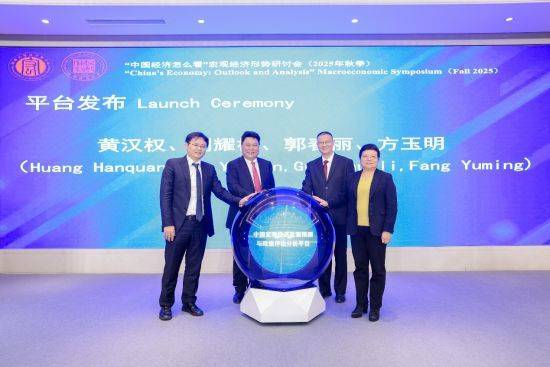
“中国经济怎么看”宏观经济形势秋季研讨会举办
Zhong Guo Xin Wen Wang· 2025-10-28 12:15
中国宏观经济研究院院长黄汉权在致辞中表示,今年以来,我国经济运行顶住压力、稳中有进,体现出 强大韧性和潜力,在外部不确定性持续上升的背景下,我国经济总体保持平稳增长,结构优化持续推 进,科技创新加快赋能新质生产力发展,宏观政策协同效应不断显现,全年实现预期目标具备坚实基 础。 会议还发布了"中国宏观经济监测预测与政策评估分析平台",旨在通过数据智能与模型分析,对宏观经 济运行态势进行动态监测、趋势预测与政策效果评估,为政府部门和研究机构提供决策参考和技术支 撑。 "中国经济怎么看"宏观经济形势秋季研讨会举办 中新网北京10月28日电 (记者 王梦瑶)10月28日,由中国宏观经济研究院与江西财经大学联合主办、民 进中央经济委员会协办的"中国经济怎么看"宏观经济形势秋季研讨会在北京举行,围绕我国前三季度经 济运行形势及下一阶段宏观政策方向展开研讨交流。 与会专家们一致认为,当前我国经济正处于结构调整和动能转换的关键阶段,要坚持稳中求进工作总基 调,统筹国内经济工作和国际经贸斗争,更好发挥消费对畅通国民经济循环的作用。要积极实施更加有 力有效的宏观政策,稳定市场预期和社会信心,以高质量发展的确定性应对外部环境变化的 ...
《有色》日报-20251028
Guang Fa Qi Huo· 2025-10-28 00:59
1. Report Industry Investment Ratings No investment ratings are provided in the reports. 2. Core Views Copper - The preliminary consensus between China and the US boosts market optimism, and copper prices hit a new high this year. In the short - term, the negotiation rhythm will drive trading. The 9 - month CPI further consolidates the expectation of interest rate cuts in October, with 2 possible cuts this year and the Fed stopping balance - sheet reduction. - Tight copper ore supply supports the price bottom. If by - product prices like sulfuric acid continue to fall and TC remains low, smelters may cut production. Downstream demand has strong resilience. In the long - term, supply - demand contradictions support the upward movement of copper prices, while short - term rapid increases may suppress demand. The main contract should focus on the support around 86,000 yuan/ton [1]. Aluminum - Alumina futures prices rebounded slightly, and spot market trading became more active. Supply pressure is significant due to high domestic operating capacity and an open import window. Demand is weak, and the full - caliber inventory increased by 64,000 tons last week. With the end of the rainy season in Guinea, cost support from the ore end is weakening. Short - term alumina prices will be under pressure, with the main contract oscillating between 2,750 - 2,950 yuan/ton [3]. - Aluminum prices were strong, breaking through 21,300 yuan/ton. The macro - environment is mixed, and the fundamentals are in a tight - balance. Supply of ingots is restricted by the high direct - supply ratio of molten aluminum, and demand shows resilience in the peak season. Aluminum ingot inventory increased by 1,000 tons to 626,000 tons on October 28. Short - term Shanghai aluminum will maintain a strong oscillation, with the main contract in the range of 20,800 - 21,400 yuan/ton [3]. Aluminum Alloy - Casting aluminum alloy prices oscillated strongly, with cost support becoming more prominent. Tight scrap aluminum supply pushed up procurement costs, and the refined - scrap price difference narrowed. The supply - demand is in a tight - balance. Supply is restricted by raw - material circulation and policy uncertainty, and demand shows stable resilience. Inventory is decreasing. Short - term ADC12 prices will maintain a strong oscillation, with the main contract in the range of 20,300 - 20,900 yuan/ton [4]. Zinc - The preliminary consensus between China and the US warms the macro - atmosphere, and zinc prices oscillated strongly. The supply - side logic of loose supply has spread from zinc ore to zinc ingots, and subsequent supply growth may be limited due to compressed smelting profits. Demand is stable, and there is a risk of a short squeeze in LME zinc, supporting zinc prices. The export window for zinc ingots is intermittently open. Short - term zinc prices have support at the bottom, but the fundamentals have limited elasticity for continuous upward movement. The main contract should refer to 21,800 - 22,800 yuan/ton [8]. Tin - Tin ore supply is tight, and processing fees remain low. In September, domestic tin ore imports decreased month - on - month. The change in Myanmar's tax method is expected to limit the improvement of tin ore supply this year. Demand is still weak, and although AI and the photovoltaic industry drive some consumption, it cannot make up for the decline in traditional consumption. Tin prices will oscillate strongly, and the follow - up depends on macro - changes and Myanmar's supply recovery [10]. Nickel - The Shanghai nickel market oscillated, and refined nickel prices rose slightly. Overseas, the expectation of Fed interest rate cuts is rising; domestically, the 14th Five - Year Plan brings policy expectations. Refined nickel production remains high. Ore prices are firm, but nickel - iron prices are under pressure, and industry profits are shrinking. Stainless steel demand is weak, while downstream ternary materials still have restocking needs. Inventory is accumulating. Short - term prices will oscillate, with the main contract in the range of 120,000 - 128,000 yuan/ton [12]. Stainless Steel - The stainless - steel market oscillated narrowly, and spot prices were slightly adjusted down. Overseas, the expectation of Fed interest rate cuts is rising; domestically, policies are mainly for stability. Nickel ore prices are firm, but nickel - iron prices are under pressure, and chromium - iron markets are weak. Supply pressure will increase in October, and demand improvement is not obvious. Social inventory is decreasing slowly. Short - term prices will oscillate weakly, with the main contract in the range of 12,500 - 13,000 yuan/ton [14]. Lithium Carbonate - Lithium carbonate futures were strong, with the main contract LC2601 rising 2.53% to 81,900 yuan/ton. After entering the peak season, there is a supply - demand gap, which is expected to widen in October. Production is increasing, mainly from new salt - lake projects and increased lithium - spodumene subcontracting. Downstream demand is optimistic, and raw - material inventory is decreasing. Short - term prices will run strongly, with the upper limit first observing the capital performance around 82,000 - 83,000 yuan/ton, and then 85,000 yuan/ton if it breaks through [16]. 3. Summaries by Catalog Copper Price and Basis - SMM 1 electrolytic copper price increased by 2.08% to 88,520 yuan/ton; SMM 1 electrolytic copper premium decreased by 55 yuan/ton to - 45 yuan/ton. The refined - scrap price difference increased by 15.30% to 4,379 yuan/ton. The LME 0 - 3 spread decreased to - 25.97 dollars/ton. The import profit and loss improved to - 786 yuan/ton [1]. Month - to - Month Spread - The 2511 - 2512 spread increased by 40 yuan/ton to 20 yuan/ton; the 2512 - 2601 spread decreased by 30 yuan/ton to 10 yuan/ton; the 2601 - 2602 spread decreased by 60 yuan/ton to - 20 yuan/ton [1]. Fundamental Data - In September, electrolytic copper production was 1.121 million tons, a 4.31% month - on - month decrease; imports were 334,300 tons, a 26.50% month - on - month increase. The import copper concentrate index decreased by 4.22% to - 42.70 dollars/ton. Domestic mainstream port copper concentrate inventory decreased by 0.38% to 678,100 tons. The electrolytic copper rod - making start - up rate decreased to 61.55%, while the recycled copper rod - making start - up rate increased to 18.29%. Domestic social inventory decreased by 1.13% to 184,500 tons; bonded - area inventory decreased by 5.02% to 92,800 tons; SHFE inventory decreased by 4.94% to 104,800 tons; LME inventory decreased by 0.28% to 136,000 tons; COMEX inventory increased by 0.13% to 348,000 short tons; SHFE warrants increased by 0.92% to 35,400 tons [1]. Aluminum Price and Spread - SMM A00 aluminum price increased by 0.24% to 21,160 yuan/ton; SMM A00 aluminum premium decreased by 10 yuan/ton to - 40 yuan/ton. The average price of alumina in Shandong decreased by 0.71% to 2,795 yuan/ton [3]. Month - to - Month Spread - The 2511 - 2512 spread remained at - 20 yuan/ton; the 2512 - 2601 spread decreased by 15 yuan/ton to 0 yuan/ton; the 2601 - 2602 spread decreased by 15 yuan/ton to 0 yuan/ton; the 2602 - 2603 spread increased by 10 yuan/ton to - 15 yuan/ton [3]. Fundamental Data - In September, alumina production was 7.6037 million tons, a 1.74% month - on - month decrease; electrolytic aluminum production was 3.6148 million tons, a 3.16% month - on - month decrease; imports were 246,800 tons, a 13.57% month - on - month increase; exports were 29,000 tons, a 13.07% month - on - month increase. The aluminum profile start - up rate increased by 0.37% to 53.70%; the aluminum cable start - up rate increased by 0.63% to 64.40%; the aluminum plate - strip start - up rate decreased by 1.47% to 67.00%; the aluminum foil start - up rate decreased by 0.55% to 71.90%; the primary aluminum alloy start - up rate increased by 1.03% to 59.00%. China's electrolytic aluminum social inventory increased by 0.16% to 626,000 tons; LME inventory decreased by 0.81% to 469,000 tons [3]. Aluminum Alloy Price and Spread - SMM aluminum alloy ADC12 prices remained unchanged at 21,200 yuan/ton. The refined - scrap price difference in Foshan for broken primary aluminum increased by 3.32% to 1,869 yuan/ton [4]. Month - to - Month Spread - The 2511 - 2512 spread increased by 25 yuan/ton to - 65 yuan/ton; the 2512 - 2601 spread decreased by 75 yuan/ton to - 75 yuan/ton; the 2601 - 2602 spread increased by 40 yuan/ton to - 5 yuan/ton; the 2602 - 2603 spread decreased by 35 yuan/ton to 55 yuan/ton [4]. Fundamental Data - In September, recycled aluminum alloy ingot production was 661,000 tons, a 7.48% month - on - month increase; primary aluminum alloy ingot production was 283,000 tons, a 4.43% month - on - month increase; scrap aluminum production was 797,600 tons, an 8.16% month - on - month increase; unforged aluminum alloy ingot imports were 82,200 tons, a 15.77% month - on - month increase; exports were 23,500 tons, a 19.24% month - on - month decrease. The recycled aluminum alloy start - up rate increased by 7.73% to 57.54%; the primary aluminum alloy start - up rate increased by 4.60% to 56.57%. The recycled aluminum alloy ingot weekly social inventory decreased by 0.18% to 54,700 tons. The daily inventory in Foshan increased by 0.23% to 33,323 tons; in Ningbo, it decreased by 1.27% to 13,179 tons; in Wuxi, it decreased by 7.09% to 1,873 tons [4]. Zinc Price and Spread - SMM 0 zinc ingot price increased by 0.09% to 22,210 yuan/ton; the premium remained at - 55 yuan/ton. The import profit and loss improved to - 5,139 yuan/ton; the Shanghai - London ratio decreased to 7.34 [8]. Month - to - Month Spread - The 2511 - 2512 spread decreased by 15 yuan/ton to - 55 yuan/ton; the 2512 - 2601 spread increased by 5 yuan/ton to - 25 yuan/ton; the 2601 - 2602 spread remained unchanged at - 35 yuan/ton; the 2602 - 2603 spread increased by 5 yuan/ton to - 10 yuan/ton [8]. Fundamental Data - In September, refined zinc production was 600,100 tons, a 4.17% month - on - month decrease; imports were 22,700 tons, an 11.61% month - on - month decrease; exports were 2,500 tons, a 696.78% month - on - month increase. The galvanizing start - up rate decreased to 57.48%; the die - casting zinc alloy start - up rate decreased to 53.13%; the zinc oxide start - up rate decreased to 56.36%. China's zinc ingot seven - region social inventory decreased by 1.09% to 163,500 tons; LME inventory decreased by 1.46% to 37,000 tons [8]. Tin Spot Price and Basis - SMM 1 tin price increased by 0.57% to 283,500 yuan/ton; the SMM 1 tin premium decreased by 16.67% to 250 yuan/ton. The LME 0 - 3 premium increased by 43.00% to 143 dollars/ton [10]. Internal - External Ratio and Import Profit and Loss - The import profit and loss worsened by 4.00% to - 16,052.47 yuan/ton; the Shanghai - London ratio decreased to 7.92 [10]. Month - to - Month Spread - The 2511 - 2512 spread decreased by 16.33% to - 570 yuan/ton; the 2512 - 2601 spread decreased by 100.00% to - 200 yuan/ton; the 2601 - 2602 spread decreased by 80.00% to - 90 yuan/ton; the 2602 - 2603 spread increased by 400.00% to 350 yuan/ton [10]. Fundamental Data (Monthly) - In September, tin ore imports were 8,714 tons, a 15.13% month - on - month decrease; SMM refined tin production was 10,510 tons, a 31.71% month - on - month decrease; refined tin imports were 1,269 tons, a 2.08% month - on - month decrease; exports were 1,748 tons, a 6.59% month - on - month increase; Indonesian refined tin exports were 4,800 tons, a 50.00% month - on - month increase. The SMM refined tin average start - up rate decreased by 31.77% to 43.60%; the SMM solder enterprise start - up rate increased by 2.19% to 74.80%. The average price of 40% tin concentrate in Yunnan increased by 0.59% to 271,500 yuan/ton; the Yunnan 40% tin concentrate processing fee remained unchanged at 12,000 yuan/ton [10]. Inventory Change - SHEF weekly inventory increased by 1.32% to 5,766 tons; social inventory decreased by 2.69% to 6,828 tons; SHEF daily warrants increased by 1.53% to 5,652 tons; LME daily inventory decreased by 0.91% to 2,725 tons [10]. Nickel Price and Basis - SMM 1 electrolytic nickel price increased by 0.12% to 123,050 yuan/ton; 1 Jinchuan nickel price increased by 0.08% to 124,300 yuan/ton; the 1 Jinchuan nickel premium decreased by 3.92% to 2,450 yuan/ton; 1 imported nickel price increased by 0.16% to 122,250 yuan/ton; the 1 imported nickel premium remained at 400 yuan/ton. The LME 0 - 3 spread decreased to - 194 dollars/ton. The futures import profit and loss improved by 38.59% to - 759 yuan/ton; the Shanghai - London ratio increased to 7.98. The price of 8 - 12% high - nickel pig iron decreased by 0.21% to 929 yuan/nickel point [12]. Production Cost - The cost of integrated MHP - produced electrowon nickel decreased by 0.62% to 116,448 yuan/ton; the cost of integrated high - grade nickel matte - produced electrowon nickel decreased by
Dallas Fed Manufacturing Production Index remains unchanged in October
Youtube· 2025-10-27 15:31
Leslie, yeah, the uh Federal Federal Dallas Federal Reserve's uh business activity index rising to minus5 from minus 8.7%. So, still challenged, but not as challenged as it was in the prior month. The outlook for business activity remains positive at 7, but it did drop down from 8.4%.These surveys do a decent job of following the outlook for uh the general numbers for the uh national economy. Each survey is a little different. Uh production was unchanged at 5.2%.New orders index remains negative at minus 1. ...
丰元股份:二级市场股价受宏观经济、行业周期波动等多方面因素影响
Zheng Quan Ri Bao· 2025-10-27 08:14
Group 1 - The company's stock price in the secondary market is influenced by various factors such as macroeconomic conditions and industry cycle fluctuations, leading to a certain level of uncertainty [2] - The company's technology and capacity layout can support its performance obligations [2] - The company has signed a "Lithium Iron Phosphate Cooperation Framework Agreement," with specific details disclosed in its announcement [2]

宏观经济周报-20251027
工银国际· 2025-10-27 05:17
宏观经济周报 2025 年第 44 周 一、中国宏观 高频:本周 ICHI 综合景气指数较上周显著回升,重回扩张区间,显示经济景气 度整体回暖,基本面韧性进一步增强。分项来看,消费景气指数小幅回落至收 缩区间,显示节后需求惯性在高基数影响下有所放缓。投资景气指数显著抬 升,节后投资活动继续推进。制造业结构升级、设备更新与科技创新项目带动 投资活跃度上升。出口景气指数延续平稳,虽全球需求偏弱,但外贸结构优 化、多元市场拓展仍支撑出口稳定。生产景气指数大幅回升、强势扩张,显示 假期后供给端修复明显,工业生产快速恢复常态。总体来看,本周综合景气指 数在假期扰动消退后恢复性回升,经济动能从消费主导转向生产与投资共振, 预计后续政策推动下,景气水平有望维持温和扩张态势。 2025 年前三季度中国 GDP 同比增长 5.2%,比去年同期加快 0.4 个百分点,主 要宏观指标平稳。就业保持稳定、物价温和上涨、国际收支平衡,展现出强大 的抗压性与稳定性。具体来看,一方面新质生产力加快形成,高质量发展动能 充沛。创新链与产业链深度融合,新兴产业快速成长,高技术制造业增加值同 比增长 9.6%,人工智能、数字经济、绿色转型等新动 ...
铝行业周报:宏观利好,去库延续,铝价突破21000元/吨-20251026
Guohai Securities· 2025-10-26 13:03
Investment Rating - The report maintains a "Recommended" rating for the aluminum industry [1] Core Views - The macroeconomic environment is favorable, with continued destocking trends and aluminum prices breaking through 21,000 RMB/ton [1][8] - The demand for aluminum is expected to remain stable, supported by ongoing economic growth and a favorable policy environment [13] - The aluminum industry is projected to maintain high prosperity due to limited supply growth and potential demand increases [13] Summary by Sections 1. Prices - As of October 24, the LME three-month aluminum closing price was 2,856.5 USD/ton, up 315.0 RMB/ton week-on-week, a 1.5% increase [17] - The Shanghai aluminum active contract closed at 21,225.0 RMB/ton, reflecting a week-on-week increase of 315.0 RMB/ton [23] 2. Production - In September 2025, the electrolytic aluminum production was 3.615 million tons, a decrease of 11.8 thousand tons month-on-month [55] - The alumina production for the same month was 7.604 million tons, down 13.5 thousand tons month-on-month [55] 3. Inventory - As of October 23, the national aluminum ingot inventory was recorded at 618,000 tons, with a week-on-week decrease of 9,000 tons [9] - The domestic aluminum rod inventory increased to 145,000 tons, with a week-on-week decrease of 3,000 tons [9] 4. Key Companies and Earnings Forecast - China Hongqiao (1378.HK) is rated "Buy" with an EPS forecast of 2.65 RMB for 2025 [7] - Tianshan Aluminum (002532.SZ) is also rated "Buy" with an EPS forecast of 1.00 RMB for 2025 [7] - Shenhuo Co. (000933.SZ) is rated "Buy" with an EPS forecast of 2.13 RMB for 2025 [7] 5. Supply and Demand - Domestic supply remains stable, while overseas supply disruptions have occurred, such as Century Aluminum's production halt in Iceland [9] - The demand side shows a mixed picture, with high aluminum prices suppressing downstream purchasing enthusiasm [9]




有色金属周报-20251024
Jian Xin Qi Huo· 2025-10-24 12:17
Group 1: Report Information - Report title: Non-ferrous Metals Weekly Report [1] - Date: October 24, 2025 [2] - Researchers: Zhang Ping, Yu Feifei, Peng Jinglin [3] Group 2: Copper Core View - Affected by the improved macro - atmosphere and strong medium - term fundamentals, copper prices are expected to continue rising next week [7]. Market Review - This week, the main contract of Shanghai copper operated in the range of (84410, 87860), with total positions rising 7% to 584,000 lots. LME copper operated in the range of (10536.5, 10969). The net long position of funds decreased by about 3% to 57,476 lots, and the commercial net short position decreased by 7% to 73,093 lots [7]. Fundamental Analysis Supply - Copper ore processing fees are in a deeper inversion. SMM seven - port copper concentrate inventory decreased. In September, the import of copper concentrates and their ores decreased month - on - month. Domestic cold - material processing fees fell again. In September, domestic electrolytic copper production decreased significantly, and it is expected to continue to decline in October [10][11][13]. Demand - The weekly operating rate of scrap copper rods increased slightly, while that of refined copper rods decreased. The operating rate of wire and cable and enameled wire increased slightly, but the overall consumption was lackluster [15][16]. Spot - Domestic copper stocks decreased by 0.08 to 274,000 tons, and bonded area stocks decreased by 0.49 to 92,800 tons. The LME + COMEX market increased stocks by 1,439 tons to 450,000 tons [17]. Group 3: Lithium Carbonate Core View - Due to short - term supply - demand boom, continuous inventory reduction, and unresolved supply - side disturbances, lithium carbonate futures are expected to move up [27]. Market Review - This week, lithium carbonate futures rose, with the main contract operating in the range of (75340, 80880), and total positions increasing by 7.5% to 812,000 lots. Spot prices also moved up, but the trading was dull [26]. Fundamental Analysis Supply - Lithium ore prices moved up, and the losses of salt plants increased. The weekly output of lithium carbonate reached a new high, and the production costs of purchasing lithium spodumene and lepidolite increased [30][31]. Demand - The prices of ternary materials, lithium iron phosphate, lithium cobalt oxide, and battery cells all increased. The domestic power market is in the peak season, and the demand for materials is supported [32][33][34]. Spot - The price difference between electric - grade and industrial - grade lithium carbonate is at a low level. Lithium carbonate inventory decreased by 2,292 tons to 130,366 tons [36][37]. Group 4: Aluminum Core View - Aluminum prices are expected to remain in a high - level shock, with a low - buying strategy recommended [46]. Market Review - This week, Shanghai aluminum rose unilaterally, hitting a new high for the year. The overseas market is worried about tariff risks. The demand side has gradually fulfilled its expectations in the peak season, but the downstream performance lacks highlights [42]. Fundamental Changes Bauxite - Domestic bauxite supply is tight, and prices in some regions have risen slightly. Imported bauxite prices are weak [47][48]. Alumina - Alumina prices have initially stabilized, with the bottom slightly rising. The import window remains open [50][51]. Electrolytic Aluminum - The profit of the smelting industry remains at a high level. The operating capacity remains unchanged. The export of aluminum profiles has slightly recovered, and the import window of aluminum ingots remains closed. The operating rate of downstream processing enterprises has declined slightly, and aluminum ingot stocks have decreased slightly [56][64][66]. Group 5: Nickel Core View - Nickel prices remain in a range - bound pattern, with support at the 120,000 level. Pay attention to overseas market changes and Indonesian policy risks [80]. Market Review - This week, Shanghai nickel was in a narrow - range shock in the first four days and rose on Friday, but it has not broken out of the range - bound pattern. The futures market maintains a contango structure, and the import window remains closed [75][80]. Fundamental Changes Nickel Ore - The prices of Philippine and Indonesian nickel ores remained stable this week. Some smelters have started procurement plans in advance [81]. Ferronickel - Ferronickel prices continued to fall this week, and it is expected that the downward trend will continue [80]. Electrolytic Nickel - The production capacity of electrowon nickel is rapidly releasing, but the output is difficult to increase significantly in the short term [92][93]. Nickel Sulfate - Nickel salt prices remained stable this week. It is expected that the supply of nickel sulfate will still increase slightly in October [96][98]. Stainless Steel - The inventory of stainless steel in Wuxi and Foshan decreased slightly this week, but it is expected that the inventory will not decline significantly [103]. Group 6: Zinc Core View - Zinc ore processing fees have peaked and declined. The supply of zinc ingots has increased, and the demand is weak. Pay attention to the implementation of export volume and gradually enter the market for reverse arbitrage [106]. Market Review - LME zinc inventory is at a low level, and the risk of structural shortage has increased. Shanghai zinc rose oscillatingly. The import window has been deeply closed since July, and there is a small amount of exports [105]. Fundamental Analysis Supply - Domestic zinc ore processing fees have peaked and declined. In October, the overall output of refined zinc increased month - on - month. The import window remains closed, and the export window is open [115][116]. Demand - The operating rates of galvanizing, die - casting zinc alloy, and zinc oxide all decreased slightly, and the overall demand has declined [117][118]. Spot - Domestic zinc stocks decreased to 162,100 tons, and LME zinc inventory decreased to below 40,000 tons [119].