量化宽松

Search documents
U.S. stocks are chipping away at Europe’s outperformance, and Powell slipped in this dovish signal on Fed rates that Wall Street overlooked
Yahoo Finance· 2025-09-21 22:14
Market Performance - U.S. stocks have rebounded significantly, with the S&P 500 up 13% year to date and the Nasdaq up 17% [2] - The DAX index in Germany is up 19% this year, while the FTSE 100 in the U.K. is up 13% [2] - Hong Kong's Hang Seng Index has surged 32% this year, indicating a strong performance compared to European markets [3] Investor Sentiment - Investor sentiment towards Europe has shifted negatively due to concerns about deficit outlooks in the U.K. and France, alongside subdued economic growth [3] - Analysts at Deutsche Bank express frustration over the lack of progress in government spending in Germany, which has raised concerns about long-term growth implications [4] U.S. Market Drivers - U.S. markets are benefiting from optimism surrounding the AI revolution, robust corporate earnings, and continued GDP growth, alongside tax cuts and the Federal Reserve's easing policies [5] - The Federal Reserve's recent rate cut is viewed as a "risk-management cut," indicating a cautious approach rather than the beginning of an aggressive easing cycle [6]
复盘美联储降息周期,比特币、股市、黄金将何去何从?
Sou Hu Cai Jing· 2025-09-21 04:17
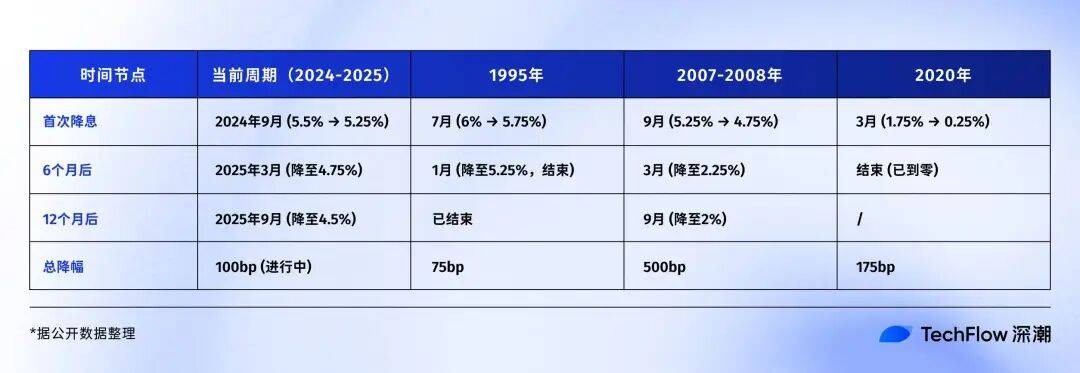
Group 1 - The article discusses the anticipation surrounding the Federal Reserve's interest rate decision, with expectations of a 25 basis point cut from 4.5% to 4.25% [1][2][24] - Historical patterns indicate that once the Federal Reserve enters a rate-cutting cycle, various asset classes often experience significant rallies [2][4] - The current economic indicators suggest that the ongoing rate cut cycle resembles the preventive rate cuts of 1995, with a low unemployment rate of 4.1% and GDP growth [9][10] Group 2 - The article outlines three historical rate-cutting scenarios: preventive (1995), crisis (2007), and panic (2020), each leading to different asset performance outcomes [11][12][19] - In the 1995 scenario, a modest rate cut led to a significant bull market in stocks, while the 2007 cuts preceded a major financial crisis [6][7][10] - The 2020 emergency cuts resulted in unprecedented liquidity, causing Bitcoin to surge from $3,800 to $69,000, highlighting the impact of aggressive monetary policy on asset prices [8][18][19] Group 3 - The article emphasizes the importance of understanding the context of rate cuts, as the reasons behind them can significantly influence market reactions [31][32] - It notes that the current market sentiment is cautious yet optimistic, with Bitcoin trading near historical highs, unlike the previous bear market conditions seen in 2019 [27][49] - The potential for a "rational prosperity" scenario is discussed, where Bitcoin may not see explosive growth but could experience steady increases as liquidity increases [27][49] Group 4 - The performance of traditional assets during rate-cutting cycles is analyzed, showing that not all rate cuts lead to stock market rallies [30][31] - Defensive sectors tend to outperform during economic downturns, while cyclical sectors may do better in stronger economic conditions [32][34] - The article also highlights the stable performance of gold during rate cuts, with an average increase of 32% over two years in past cycles [40][44][45] Group 5 - The article concludes by suggesting that the next 6-12 months could be critical for asset performance as the current rate-cutting cycle progresses [50][51] - It raises the possibility of unexpected events influencing market dynamics, such as geopolitical tensions or technological advancements [51][52] - The changing landscape of the monetary system and the role of cryptocurrencies as a reflection of these changes are emphasized [53][54]

美联储降息落地美股放量创新高 9月魔咒被打破?
Di Yi Cai Jing· 2025-09-21 03:53
Group 1 - The Federal Reserve's announcement of a rate cut in 2025 and potential further monetary easing has led to a three-week rise in the S&P 500 and Nasdaq Composite indices, with trading volumes reaching their highest level since April due to "triple witching" expirations [1] - Despite the positive market performance, there was a net outflow of over $40 billion from U.S. stock funds last week, the highest since December of last year, indicating valuation concerns may influence future market direction [1][5] - The U.S. economy shows resilience, with initial jobless claims decreasing to 231,000, below market expectations, and retail sales rising by 0.6%, three times the market forecast, suggesting stable consumer spending despite inflation [2] Group 2 - The Federal Reserve's decision to restart the easing cycle by cutting the federal funds rate by 25 basis points reflects growing concerns over the labor market, overshadowing inflation worries [2] - The economic outlook from the Fed remains optimistic, which may extend the interval between future rate cuts, despite some internal disagreements within the Federal Open Market Committee [3] - The yield on U.S. Treasury bonds has risen, indicating that the recent rate cut was already priced in by the market, with the two-year Treasury yield increasing to 3.576% and the ten-year yield to 4.139% [3] Group 3 - The Nasdaq Composite and S&P 500 indices have seen gains due to renewed optimism in AI-related stocks, with the communication services sector leading the way with a 3.4% increase [4] - Alphabet's stock rose by 5.8% following a partnership announcement with PayPal, while Intel's shares surged by 23% after Nvidia's investment in the company [4] - Despite historical trends showing September as a poor month for U.S. stocks, all three major indices are currently in an upward trend, with a record 58% of fund managers believing stocks are overvalued [5][6] Group 4 - The current market resilience is supported by multiple fundamental factors, including a technology-led investment cycle, robust economic fundamentals, and a relatively accommodative Federal Reserve policy [7] - Potential bearish catalysts for the stock market include rising long-term Treasury yields and persistent inflation trends, although there is currently no strong evidence linking recent labor market weakness to economic contraction [7]
21评论丨日本央行“欲加息而不能”
2 1 Shi Ji Jing Ji Bao Dao· 2025-09-19 22:20
虽然日本央行一直在寻找加息的时机,只要经济和物价形势有所改善就加息,但已经连续四次会议维持 现有政策,这主要是因为美国的关税政策给日本经济和物价带来极大的不确定性。虽然8月份的日本消 费者物价指数上升2.7%,时隔9个月跌到3%以下,但日本央行内部有很多意见认为,需要在分析下个月 的企业短期经济观察调查和分行行长会议的报告后才能确认经济的走势。 尽管如此,市场还是认为日本央行会在今年10月或者12月,最迟到明年1月决定加息。虽然到10月初自 民党将选出怎样的新总裁还是一个不确定因素,但美国关税对日本经济带来的影响已经开始显现,比如 今年8月日本对美汽车出口额同比下降了28%,日本对美出口整体下降了13.8%。市场预测日本企业的业 绩将会进一步下滑,而企业员工的薪资增长势头能不能继续保持也会出现问题。所以,日本证券市场很 可能因为政治和经济因素而在10月份出现调整局面,美联储这次降息决定给日本市场带来的短期拉动效 应也可能迅速消失,留下的是美日货币政策方向差异再度显现。 美联储的降息实际上也制约了日本央行加息的可能性,因为日本不希望看到日元汇率的巨幅震荡。但如 果日本央行维持现有政策的话,日元可能继续贬值。如果 ...
美联储要“变天”了?共和党推新法案,要求终结双重使命!
Jin Shi Shu Ju· 2025-09-19 15:13
Core Viewpoint - A new bill introduced by House Republicans aims to reform the Federal Reserve's dual mandate, focusing primarily on controlling inflation rather than maximizing employment and price stability [2][3]. Group 1: Legislative Changes - The "Price Stability Act of 2025" seeks to end the Federal Reserve's dual mandate established in 1977, which requires it to maximize employment and ensure price stability [2]. - House Financial Services Committee Chairman French Hill emphasized the need for a clear focus on inflation control to protect American households [2]. Group 2: Criticism of the Federal Reserve - Republican lawmakers argue that the Federal Reserve's expanding regulatory scope has hindered its ability to stabilize prices and threatens its independence [3]. - Treasury Secretary Becerra criticized the Federal Reserve's evolution since the 2008 financial crisis, claiming it has distorted financial markets and weakened its independence [5]. Group 3: Proposals for Reform - There are calls for a comprehensive review of the Federal Reserve's operations, including its monetary and regulatory policies, to enhance its independence and accountability [5][6]. - Former Federal Reserve Governor Kevin Walsh suggested a new agreement between the Treasury and the Federal Reserve to clarify their goals and enhance independence [6]. Group 4: Public Trust and Future Meetings - Recent polling indicates that only 45% of Americans trust the Federal Reserve to manage the economy effectively, with 33% approving of Chairman Powell's performance [6]. - The Federal Open Market Committee (FOMC) recently lowered the federal funds rate by 25 basis points, and the next policy meeting is scheduled for October 28-29 [7].
「转」中方再抛271亿美债,背后最大“接盘侠”竟然是它!
Sou Hu Cai Jing· 2025-09-19 10:57
Core Insights - China has sold $27.1 billion in U.S. Treasury bonds over two months, reducing its holdings to $757 billion, the lowest since 2009 [1][2] - The Federal Reserve emerged as the largest buyer of these bonds, surprising many analysts who expected Japan or the UK to step in [1][2] - The sale reflects China's strategy to diversify its foreign exchange reserves away from U.S. debt, amid rising U.S. debt levels and ongoing trade tensions [2][3] Group 1: China's Actions - China reduced its U.S. Treasury holdings significantly, indicating a strategic shift in its investment approach [1][2] - The reduction in holdings is a response to the increasing U.S. debt, which has surpassed $36 trillion, and high interest payments projected at $928 billion for 2025 [1][2] - Ongoing U.S.-China trade tensions have also influenced China's decision to sell off U.S. bonds as a form of market pressure [1][2] Group 2: Market Dynamics - The Federal Reserve's intervention in the bond market has been crucial, holding $4.2 trillion in U.S. debt, more than the combined holdings of China, Japan, and the UK [2] - The volatility in U.S. Treasury yields has deterred investors, making bonds less attractive [1][2] - The future of the U.S. Treasury market remains uncertain, with ongoing concerns about rising debt levels and fluctuating yields [2][3]
美联储重启降息对全球股市影响几何?
Hua Xia Shi Bao· 2025-09-19 07:57
Group 1 - The Federal Reserve announced a 25 basis point cut in the federal funds rate target range to 4.00% to 4.25%, marking the first rate cut of 2025 and following three cuts in 2024 [2][3] - The nature of the rate cut is categorized as a preventive cut, aimed at preemptively addressing potential economic risks rather than responding to a severe economic downturn [3][8] - Historical analysis shows that preventive rate cuts generally have a positive impact on the U.S. stock market, reducing corporate financing costs and potentially stimulating mergers and acquisitions [4][5] Group 2 - The current economic environment is characterized by "stagflation," with a GDP growth rate of 2.4% in Q4 2024, indicating a gradual slowdown but not a clear recession [8][9] - The inflation rate remains relatively high, with core PCE and CPI growth rates at 2.86% and 3.2% respectively, complicating the effectiveness of the current rate cut [8][10] - The first phase of the current rate cut cycle has not met expectations, with the stock market showing weak performance despite multiple rate cuts [9][10] Group 3 - There has been a significant outflow of funds from the U.S. stock market, with approximately $259 billion exiting in the first half of the year, primarily moving to safer assets like bonds and money markets [13][15] - Non-U.S. markets, particularly in China and Europe, have seen increased foreign investment, with China experiencing a net increase of $10.1 billion in foreign holdings of stocks and funds in the first half of 2025 [14][15] - The trend of capital outflow from U.S. equities is viewed as a rebalancing of asset allocation rather than a mass exodus, reflecting investor caution regarding the U.S. economy and high valuations [15][16] Group 4 - The potential impact of the Fed's second phase of rate cuts on global markets will depend on whether the Fed adopts a moderate preventive approach or a more aggressive easing strategy [17][18] - If the Fed continues with a moderate approach, U.S. stock market funds are likely to remain within the domestic financial system, while some capital may seek opportunities in global markets [17][18] - An aggressive easing strategy could lead to a temporary boost in global markets due to increased liquidity, but risks of a sharp capital outflow could arise if inflation pressures force the Fed to tighten policy [18][19]

越来越确定,A股这一次就是慢牛!
Sou Hu Cai Jing· 2025-09-19 03:02
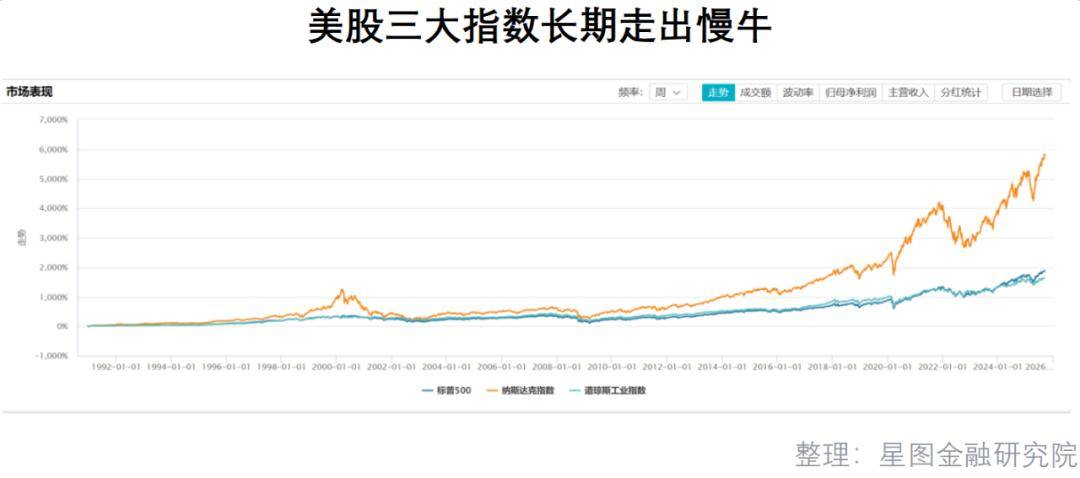
Group 1 - The A-share market is experiencing a cooling period, showing a trend of oscillation and upward movement, which raises concerns among investors about the sustainability of the current market momentum [1] - The article aims to analyze the causes of the 40-year slow bull market in the US stock market and compare it with the current situation of the A-share market to help investors seize investment opportunities [1] - Since the 1980s, the US stock market has entered a slow bull phase, characterized by a structural long-term bull market lasting over 40 years, with annualized returns of 8%-10% for equity investments [1][7] Group 2 - The period from 1982 to 1987 was marked by a consumer-driven bull market, where high interest rates initially controlled inflation, leading to economic recovery and stock market growth [3] - From 1988 to 1994, the US economy experienced a transition with a focus on consumer and pharmaceutical sectors, benefiting from globalization and technological advancements [4] - The late 1990s saw the rise of the internet economy, with significant capital inflow into tech companies, although this period also led to the formation of market bubbles [5] Group 3 - The decade from 2000 to 2009 was characterized by a crisis period, where the bursting of the internet bubble and subsequent financial scandals led to a significant downturn in the stock market [6] - Since 2010, the dominance of technology giants has shaped the market, supported by low interest rates and quantitative easing, which have provided ample liquidity [6][9] - The long-term economic fundamentals of high growth and low inflation have been crucial for the sustained slow bull market in the US [7] Group 4 - The A-share market is beginning to show signs of a slow bull pattern, with improvements in macroeconomic conditions, corporate earnings, and institutional reforms [14] - A decline in risk-free interest rates has provided ample liquidity for the A-share market, similar to the low interest rate environment in the US [14][17] - The improvement in corporate earnings, driven by domestic demand and emerging industries, is a key foundation for the A-share slow bull market [17] Group 5 - Continuous capital market reforms and the acceleration of long-term funds entering the market are optimizing the investment ecosystem in the A-share market [21] - The introduction of various ETF products has provided investors with diverse and low-cost investment options, enhancing market stability [21][22] - The article concludes that understanding the underlying logic of a slow bull market is essential for investors to navigate the capital market effectively [22]
今年首次降息!回顾美联储近年来的利率调整操作
Sou Hu Cai Jing· 2025-09-18 02:02
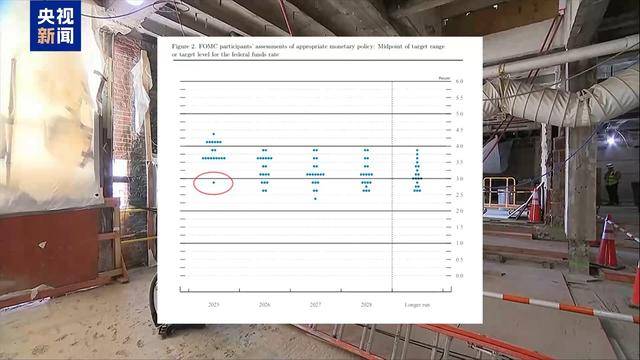
Group 1 - The Federal Reserve announced a 25 basis point reduction in the federal funds rate target range to between 4.00% and 4.25%, aligning with market expectations [1] - This marks the first rate cut of 2025 and follows three rate cuts in 2024, with indications of two more cuts expected this year [1][3] - The Federal Open Market Committee noted a slowdown in U.S. economic activity in the first half of the year, with employment growth decelerating and a slight increase in the unemployment rate, although it remains at historically low levels [1] Group 2 - Inflation rates have risen and remain at relatively high levels, with the Fed's monetary policy goals focused on achieving full employment and stabilizing long-term inflation at 2% [1] - The committee expressed concerns about the uncertainty surrounding the economic outlook and acknowledged the rising risks to employment [1] - The voting result for the rate cut was 11 to 1, with Stephen Milan being the sole dissenting vote advocating for a 50 basis point cut [1] Group 3 - The latest economic outlook from the Fed indicated that 9 out of 19 officials believe there will be two more rate cuts by the end of 2025, with one official suggesting a total cut of 1.25% this year [3] - Historically, the Fed has utilized the dollar's dominance to adjust interest rates in a manner that serves U.S. interests, impacting global wealth distribution [4] - From March 2020, the Fed aggressively cut rates to near zero in response to the pandemic, leading to significant inflation increases, with the Consumer Price Index reaching a 9.1% year-over-year rise in June 2022, the highest since 1980 [4] Group 4 - To combat severe inflation, the Fed raised rates 11 times from March 2022 to July 2023, totaling a 525 basis point increase, maintaining rates at their highest level since 2001 [6] - The Fed's rate cuts and aggressive monetary policies have significant implications for emerging markets, creating challenges such as increased difficulty in financing and higher debt costs [6]
美国银行破产,日本一击致命反杀美元?扭转40年的国运?
Sou Hu Cai Jing· 2025-09-17 10:36
Group 1: U.S. Banking Sector Issues - In recent years, the U.S. banking sector has faced significant challenges, with multiple bank failures causing global financial instability [2][4] - Notable bank failures in 2023 include Silicon Valley Bank with $209 billion in assets, Signature Bank with $110 billion, and First Republic Bank with approximately $230 billion, primarily due to rising interest rates and subsequent asset devaluation [2][4] - The Federal Reserve's interest rate hikes, reaching 5.25%-5.5%, aimed to combat inflation but resulted in substantial unrealized losses for banks, totaling $413 billion in the first quarter of 2025 [4] Group 2: Japanese Economic Response - Japan's economic strategy under Governor Kazuo Ueda has focused on maintaining a negative interest rate of -0.1% and controlling the yield curve, despite global interest rate increases [9][11] - The depreciation of the yen from 130:1 to over 150:1 against the dollar has benefited Japanese exporters like Toyota and Sony, although it has increased import costs for consumers [11] - Japan's central bank has begun to gradually normalize monetary policy, with interest rate hikes in March and July 2024, reflecting a response to rising wages and stable inflation around 2% [11][13] Group 3: Future Outlook - The outlook for Japan's economy remains cautious, with high debt levels and demographic challenges, while the yen's depreciation has led to an expanded trade surplus in 2024 [13] - The U.S. banking sector is expected to see fewer failures in 2025 due to enhanced regulatory measures, although unrealized losses remain a concern [13] - Japan's potential to counter the dollar's dominance hinges on global economic conditions and the Federal Reserve's actions, with a gradual approach to policy changes being emphasized [13]