AI硬件

Search documents
金融工程日报:市场缩量反弹,创业板指领涨、AI硬件方向集体反弹-20250911
Guoxin Securities· 2025-09-11 05:22
The provided content does not contain any specific quantitative models or factors, nor does it include their construction processes, formulas, evaluations, or backtesting results. The documents primarily focus on market performance, sector analysis, investor sentiment, capital flows, ETF premiums/discounts, block trading, and institutional activities. These are descriptive analyses and do not involve quantitative modeling or factor-based strategies.
美股新AI巨头诞生ORCL市值暴增2700亿美元,Robinhood推出社交发帖功能,颠覆创新
3 6 Ke· 2025-09-11 03:21
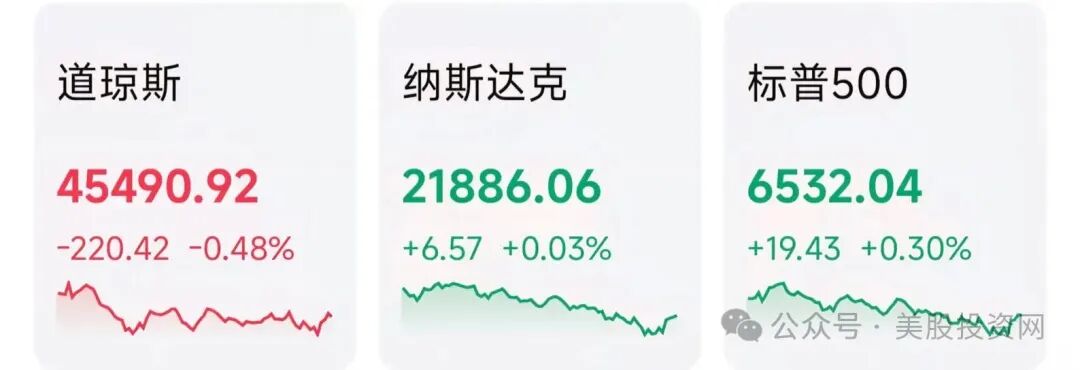
Group 1: Market Overview - August PPI data unexpectedly cooled, alleviating market inflation pressures and boosting investor optimism regarding potential accelerated rate cuts by the Federal Reserve, which in turn supported the U.S. stock market [1] - Oracle signed a groundbreaking $300 billion cloud services agreement with OpenAI, enhancing market confidence in the long-term growth of the AI industry [1] - The Dow Jones Industrial Average was dragged down by a decline in Apple’s stock price, failing to follow other major indices upward [1] Group 2: Oracle's Performance - Oracle's stock surged due to impressive cloud service performance expectations and the signing of a $300 billion cloud services agreement [3] - The company's unconfirmed revenue backlog (RPO) reached $455 billion by the end of August, tripling in just three months, with expectations to push this figure towards $500 billion soon [3][4] - Oracle anticipates its cloud business revenue to reach $18 billion in the current fiscal year, a 77% year-over-year increase, with projected growth to $32 billion, $73 billion, $114 billion, and $144 billion over the next four years [4] Group 3: Strategic Transformation - The partnership with OpenAI marks a significant shift for Oracle, transitioning from traditional enterprise services to becoming a leading AI computing power supplier [5] - This collaboration not only signifies a breakthrough in revenue but also establishes Oracle's long-term leadership position in the AI cloud infrastructure market [5] - Oracle's shift to a long-term subscription revenue model enhances revenue predictability, customer stickiness, and growth potential [5] Group 4: Comparison with Broadcom - Broadcom's stock also saw a significant increase following a $10 billion AI accelerator order from OpenAI, highlighting its capabilities in the AI hardware sector [6][7] - Unlike Oracle's subscription model, Broadcom relies on one-time product sales, but the order strengthens its narrative in the AI hardware market [7] - Both Oracle and Broadcom illustrate a market trend where companies successfully transition their business narratives to high-growth sectors, leading to explosive stock price increases [7][8] Group 5: Robinhood's New Initiative - Robinhood announced the launch of "Robinhood Social," a platform allowing users to track and view the trades of verified investors, set to launch early next year [10] - This new feature aims to enhance information transparency and authenticity compared to traditional social media platforms [10][12] - The platform will initially invite 10,000 users for testing, with plans to expand based on market response, focusing on real-time updates of shared trades [15]



每日复盘:市场震荡拉升,Al硬件股集体反弹-20250910
Guoyuan Securities· 2025-09-10 15:21
Market Performance - On September 10, 2025, the Shanghai Composite Index rose by 0.13%, the Shenzhen Component Index increased by 0.38%, and the ChiNext Index climbed by 1.27%[3] - The total market turnover was 20,039.51 billion yuan, a decrease of 1,481.28 billion yuan from the previous trading day[3] - A total of 2,442 stocks rose while 2,769 stocks fell across the market[3] Sector and Style Analysis - The top-performing sectors included Communication (3.31%), Media (1.87%), and Electronics (1.52%)[21] - The worst-performing sectors were Power Equipment & New Energy (-1.23%), Nonferrous Metals (-0.91%), and Basic Chemicals (-0.82%)[21] - Growth stocks outperformed value stocks, with large-cap growth leading small-cap growth[21] Fund Flow Insights - On September 10, 2025, the net outflow of main funds was 56.20 billion yuan, with large orders seeing a net outflow of 118.26 billion yuan and small orders experiencing a net inflow of 206.52 billion yuan[25] - Major ETFs like the Huaxia SSE 50 ETF and the Huatai-PB CSI 300 ETF saw significant decreases in turnover, with changes of -11.96 billion yuan and -3.23 billion yuan respectively[29] Global Market Overview - On September 10, 2025, major Asia-Pacific indices closed higher, with the Hang Seng Index up 1.01% and the Nikkei 225 Index up 0.87%[32] - European indices showed mixed results, with the DAX Index down 0.37% and the FTSE 100 Index up 0.23%[33] - In the US, major indices also rose, with the Dow Jones Industrial Average increasing by 0.43%[33]
ETF收评 | 沪深两市成交额不足2万亿,AI硬件反攻,5G50ETF、通信ETF涨超4%
Ge Long Hui· 2025-09-10 09:48
Market Overview - The A-share market experienced a collective increase, with the Shanghai Composite Index rising by 0.13%, the Shenzhen Component Index by 0.38%, and the ChiNext Index by 1.27%, while the North Stock 50 fell by 0.16% [1] - The total trading volume in the Shanghai and Shenzhen markets was 20,040 billion yuan, a decrease of 1,481 billion yuan compared to the previous day, marking the first time in 20 trading days that the volume fell below 20,000 billion yuan [1] - Over 2,400 stocks in the market saw an increase [1] Sector Performance - AI hardware showed strong performance, with key sectors such as copper-clad laminates, CPO, and fiberglass leading the gains, while major infrastructure, short dramas, 6G, and tourism sectors were active during the day [1] - The new energy industry chain experienced a collective decline, with gold, PEEK materials, and chemical sectors also retreating [1] ETF Performance - AI computing ETFs saw significant gains, with the Bosera 5G50 ETF, Guotai 50 ETF, and Southern AI ETF rising by 4.58%, 4.52%, and 4.14% respectively [1] - The gaming sector saw a midday surge, with the Puyin Ansheng Gaming Media ETF increasing by 4.05%, currently at a premium/discount rate of 1.92% [1] - The telecommunications sector performed well, with Penghua Telecom ETF, Huatai-PineBridge Telecom 50 ETF, and E Fund Telecom ETF all rising over 3% [1] Declines in Specific Sectors - The new energy sector faced a broad decline, with leading ETFs in photovoltaic and lithium battery sectors falling by 1.97%, 1.92%, and 1.86% respectively [1] - Gold stocks weakened, with the gold stock ETF declining by 1.94% [1]
财信证券晨会纪要-20250908
Caixin Securities· 2025-09-07 23:42
Market Overview - The overall market showed positive performance with the Shanghai Composite Index closing at 3812.51, up 1.24%, and the Shenzhen Component Index rising 3.89% to 12590.56 [1] - The ChiNext Index and the STAR 50 Index experienced significant gains, with increases of 6.55% and 3.39% respectively [1] Industry Dynamics - The China Securities Regulatory Commission released a draft regulation on the management of public fund sales fees, aiming to lower investor costs and enhance market order [29] - In August 2025, sales of excavators and loaders in China increased, with domestic sales growth outpacing exports [30][32] - The Jinshang-Hubei ±800 kV UHVDC project commenced operations, capable of delivering 4 million kilowatts of electricity, marking a significant development in China's power transmission capabilities [34] - Global OLED panel shipments saw a slight decline of 2% year-on-year in Q2 2025, with a notable shift in demand towards IT products like monitors and laptops [36] Company Updates - Muyuan Foods reported a 27.1% year-on-year increase in pig sales for August 2025, although sales revenue decreased by 12.3% [41] - Wens Foodstuff Group experienced a 17.7% decline in pig sales revenue in August, while chicken sales revenue saw a minor decrease of 0.71% [42] - Junshi Biosciences announced positive results from a Phase III clinical trial for its anti-IL-17A monoclonal antibody for treating moderate to severe plaque psoriasis [45] - Aihua Long received IVDR CE certification for its hepatitis B testing kits, allowing entry into the EU market [47] - Beingmate released its sixth employee stock ownership plan, aiming to align employee interests with company growth [49][51]
腾讯研究院AI速递 20250908
腾讯研究院· 2025-09-07 16:01
Group 1 - Anthropic has implemented a policy to restrict access to its Claude service for entities with majority ownership by Chinese capital, citing legal, regulatory, and security risks [1] - The restriction also applies to entities from countries considered adversaries, such as Russia, Iran, and North Korea, with expected global revenue impact in the hundreds of millions of dollars [1] Group 2 - AI Key, an external AI assistant hardware for iPhone, sold out within 7 hours of launch, priced at $89, but is seen as redundant given the existing capabilities of iPhones [2] - The trend of AI hardware startups is viewed as short-lived, with future value lying in integrating AI as a system attribute rather than a standalone function [2] Group 3 - Tencent's "Hunyuan Game" platform has launched version 2.0, introducing features like game-to-video generation and custom model training [3] - The new AI capabilities allow users to create high-quality dynamic videos from game images and descriptions, significantly lowering the barrier for custom model training [3] Group 4 - Alibaba has released the Qwen3-Max-Preview model, boasting over a trillion parameters, outperforming competitors in various benchmarks [4] - The model supports over 100 languages and offers a maximum context of 256k, with a tiered pricing model based on token usage [4] Group 5 - ByteDance's Seed team has introduced Robix, a unified "robot brain" that integrates reasoning, task planning, and human-robot interaction [5][6] - Robix employs a hierarchical architecture to separate high-level decision-making from low-level control, enabling dynamic reasoning and execution [6] Group 6 - Rokid's AR+AI glasses sold 40,000 units within 5 days of launch, highlighting their lightweight design and user-friendly features [7] - The product includes customizable audio and translation capabilities, and Rokid has opened its SDK for developers, expanding its global reach [7] Group 7 - Anthropic has agreed to a $1.5 billion settlement in a copyright lawsuit involving the illegal download of 7 million books, marking a significant moment in AI and copyright disputes [8] - The settlement involves compensation for approximately 500,000 books, averaging $3,000 per book, while the financial impact is considered manageable relative to Anthropic's recent funding and revenue [8] Group 8 - The Sensor Tower report indicates that global downloads of generative AI applications reached nearly 1.7 billion in the first half of 2025, with in-app purchase revenue of $1.9 billion, reflecting a 67% quarter-over-quarter growth [10] - The report highlights a demographic shift, with female users of AI assistants exceeding 30%, and emphasizes the competitive pressure on vertical applications [10] Group 9 - OpenAI's recent paper defines "hallucination" in AI models and identifies its root causes, suggesting that current evaluation methods encourage guessing rather than acknowledging uncertainty [11] - The paper proposes a revised evaluation approach that penalizes confident errors more than uncertainty, aiming to improve the reliability of AI responses [11]

机构称科创板二季度量价修复明显,关注科创板50ETF(588080)等产品配置价值
Mei Ri Jing Ji Xin Wen· 2025-09-05 14:25
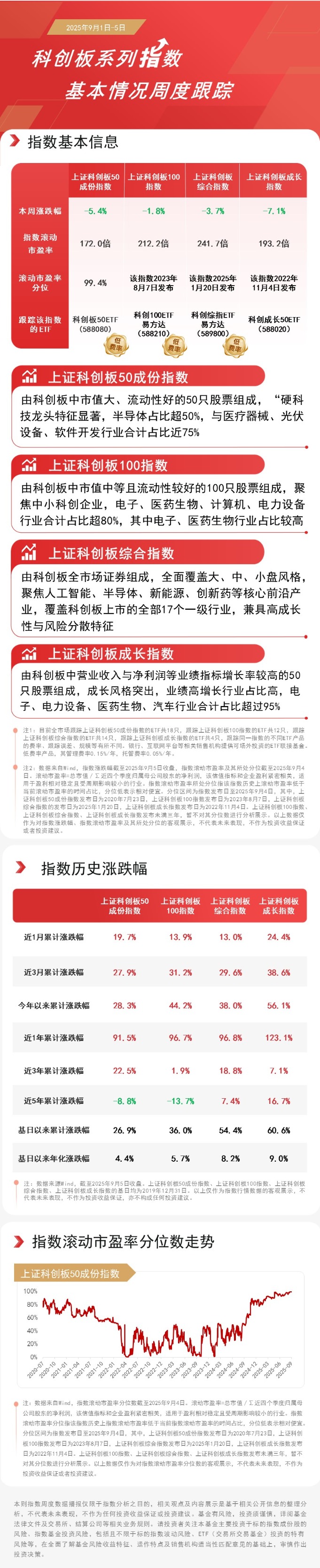
Market Performance - The overall adjustment in AI hardware sectors such as CPO, semiconductors, and PCBs, while the innovative drug sector showed active performance, and new energy sectors like batteries and photovoltaic equipment surged [1] - The STAR 100 index fell by 1.8%, the STAR Composite index decreased by 3.7%, the STAR 50 component index dropped by 5.4%, and the STAR Growth index declined by 7.1% [1][3] ETF Performance - As of the end of August this year, the STAR 50 ETF (588080) saw a year-to-date growth of over 16 billion yuan, ranking first among similar products [1] - The STAR 50 ETF has maintained a leading position in tracking error control and achieved an excess return of 0.43% since 2024 [1] Financial Metrics - According to Shenwan Hongyuan Securities, the STAR market showed significant price and volume recovery in Q2 2025, with profit growth rate excluding photovoltaic sectors returning to 14.4% and revenue growth rate rising to 12.5% [1] - The return on equity (ROE) for the STAR market increased by 0.2 percentage points compared to Q1 2025, and when excluding photovoltaic sectors, it rose by 0.4 percentage points to 3.1% [1] Index Composition - The STAR 50 index consists of 50 stocks with large market capitalization and good liquidity, with over 50% in semiconductors and nearly 75% combined with medical devices and photovoltaic equipment [4] - The STAR 100 index focuses on 100 medium-cap stocks, with over 80% in electronics, biomedicine, computers, and power equipment [4] - The STAR Composite index covers all market securities, focusing on core industries such as AI, semiconductors, new energy, and innovative drugs [4] - The STAR Growth index includes 50 stocks with high growth rates in revenue and net profit, with over 95% in electronics, power equipment, biomedicine, and automotive sectors [4]
机器人板块回调,机器人ETF易方达(159530)本周“吸金”超6亿元
Sou Hu Cai Jing· 2025-09-05 14:14
Market Performance - The Guozheng Robotics Industry Index decreased by 1.9%, while the CSI Smart Electric Vehicle Index increased by 3% this week [1] - The CSI Consumer Electronics Theme Index fell by 3.7%, and the CSI Internet of Things Theme Index also dropped by 1.9% [1] - The E Fund Robotics ETF (159530) attracted over 600 million yuan this week, bringing its total size to approximately 6.3 billion yuan [1] Company Developments - UBTECH announced a new record contract worth 250 million yuan for humanoid robot products and solutions with a well-known domestic company, following a previous major order of nearly 100 million yuan in July [1] - The contract focuses on the Walker S2 humanoid robot, with delivery set to commence within this year [1] Industry Insights - The CSI Smart Electric Vehicle Index is expected to represent a significant direction for embodied intelligence, covering various segments of the industry chain including power systems, perception systems, decision-making systems, execution systems, communication systems, and vehicle production [3] - The CSI Consumer Electronics Theme Index focuses on AI hardware, which is currently a major category of smart terminal products, involving companies engaged in component production and complete machine brand design and manufacturing [4] - The CSI Internet of Things Theme Index emphasizes the importance of IoT as a foundational element for achieving connectivity among smart terminals, comprising stocks from companies involved in information collection, transmission, and IoT applications [5]


点石成金:短期宏观不确定性扰动,股指由流畅上行到震荡上行
Guo Tou Qi Huo· 2025-09-05 13:30
Report Summary 1) Report Industry Investment Rating No information provided. 2) Core View of the Report - Short - term macro uncertainties are rising, and the stock index may shift from smooth upward movement to volatile upward movement. The market style temporarily maintains an overweight on the technology growth sector, while also paying attention to opportunities in the consumer and cyclical style leading sectors [4]. 3) Summary by Related Content Domestic Macroeconomic Situation - Financially, credit factors are steadily recovering, and the growth rate of securities net investment - type assets has been rising since hitting the bottom in July last year, which supports the equity market in the medium term. The implementation of the long - cycle assessment mechanism for insurance funds in July helps improve the investment enthusiasm of insurance funds and the stability of the capital market. Since August, the capital side has been positive, and the return of various types of funds may continue [2]. - The current inventory cycle in China is at a low level but lacks driving factors. The real - estate short - cycle indicators are still weak, and the inventory cycle is expected to oscillate at a low level waiting for drivers. The implementation of anti - involution and domestic demand expansion policies is a key point [2]. Overseas Macroeconomic Situation - The game between Trump and the Federal Reserve has intensified, increasing the uncertainty of the Fed's interest - rate cut path. Although it is currently in a stable period for Sino - US risk management, most positive factors have been priced in, so more attention should be paid to risks. The US may need to refund billions of dollars in tariffs, which will worsen its fiscal situation. Trump will appeal the ruling, and the follow - up development is worth watching [3]. - After the global financial conditions reached a high, there have been small fluctuations in US dollar liquidity in recent days, and the long - term bond yields in developed markets have risen significantly [3]. Market Structure and Allocation - In terms of valuation, there is a structural differentiation in the market. The trading congestion of technology stocks is relatively high in the short term, while the valuation of the consumer sector is relatively low. Macro - liquidity is concentrated in the financial market and has not effectively reached the real economy. Attention should be paid to policy support for the real economy and the matching of valuation and corporate earnings [4]. - With the entry of incremental funds and the position - adjustment behavior of on - market funds, the previous dominant style may be further exaggerated. The market style temporarily maintains an overweight on the technology growth sector and also focuses on opportunities in the consumer and cyclical style leading sectors [4]. Market Performance on a Specific Date - On September 4, the market weakened unilaterally throughout the day. The ChiNext Index fell more than 5% during the session, and the STAR 50 Index closed down more than 6%. The large - consumer sector strengthened against the trend, while the new - energy industry chain rose and then fell, and sectors such as the semiconductor industry chain, AI hardware, and GPU concepts回调 significantly [1].
大涨125%!ASIC要带动科技起飞了!
格隆汇APP· 2025-09-05 13:11
Core Viewpoint - The article highlights Broadcom's impressive financial performance, particularly in the AI semiconductor sector, with a significant year-over-year revenue increase and a substantial backlog of orders, indicating strong future growth potential [2][3]. Financial Performance - Broadcom's FY25Q3 total revenue reached $15.95 billion, a 22% year-over-year increase, exceeding market expectations by $110 million [4] - AI semiconductor revenue surged to $5.2 billion, marking a 63% increase and accounting for nearly 50% of the semiconductor business [4] - The company reported a backlog of $110 billion in orders, with a significant portion related to AI, providing a solid foundation for future growth [4][13] - Q4 guidance anticipates total revenue of $17.4 billion, a 24% year-over-year increase, with AI semiconductor revenue projected to reach $6.2 billion, a 66% increase [4] Business Breakdown - Broadcom's AI revenue is primarily driven by its custom AI accelerators (XPU), which account for 65% of AI revenue and are increasingly replacing GPUs in major clients like Google and Meta [5] - The company has invested over 15% annually in R&D for five consecutive years, establishing a strong technological moat [5] - Broadcom's networking solutions, including the "Jericho4" router, are tailored for large-scale AI deployments, enhancing its competitive edge [6][7] - Software revenue from VMware contributes significantly, with a gross margin of 93%, further bolstering overall profitability [7] Market Dynamics - The shift towards ASICs is driven by the need for customized solutions as large models become more specialized, offering 30%-50% higher computational efficiency compared to GPUs [10] - Major tech companies are increasingly focused on cost efficiency, with ASIC solutions reducing AI computing costs by 30%-40%, prompting higher order volumes [11] - The $110 billion backlog includes long-term contracts, securing growth for the next 1-2 years, contrasting with competitors reliant on short-term orders [13] Future Outlook - Key factors influencing Broadcom's future performance include the timely delivery of a $10 billion order from OpenAI, the increasing adoption of XPU over GPU, and the recovery of non-AI business segments [14] - The company is positioned to capitalize on the growing demand for AI hardware, with a strong order book and technological advantages [15]