AI硬件

Search documents
牛回速归?固态电池大爆发,AI硬件强劲反弹!8月美国非农数据即将出炉,高手看好这些主线
Sou Hu Cai Jing· 2025-09-05 09:33
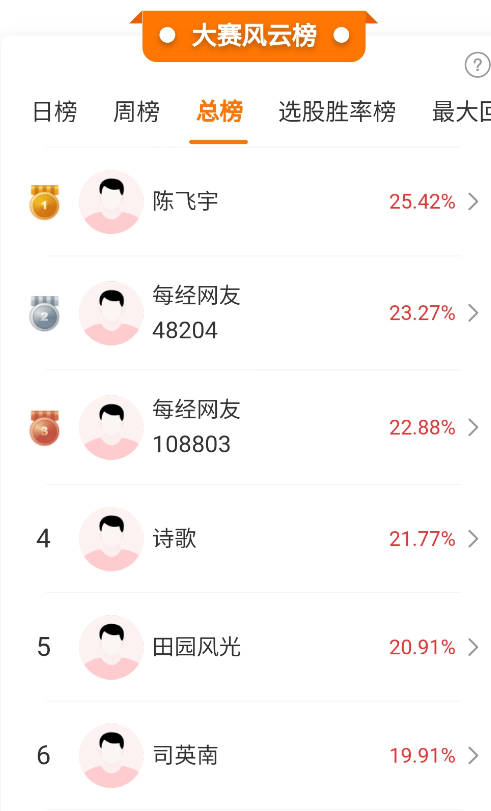
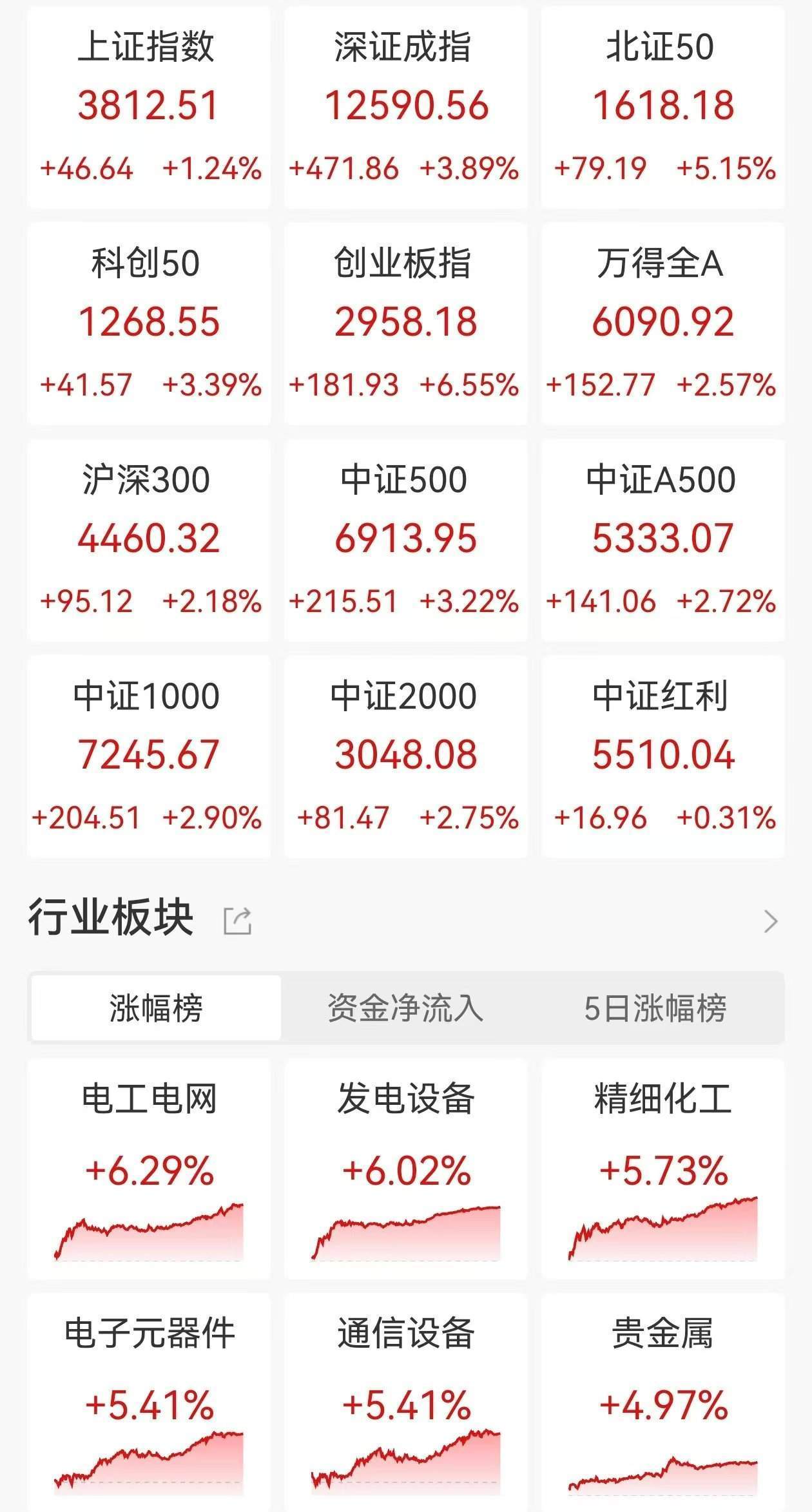
Group 1 - A-shares experienced a strong rebound after three consecutive days of decline, with the Shanghai Composite Index rising by 1.24% to close at 3812.51 points, and the ChiNext Index increasing by 6.55% [1] - The trading volume in the Shanghai and Shenzhen markets reached 230.47 billion yuan, a decrease of 239.6 billion yuan compared to the previous trading day [1] - Solid-state battery and AI hardware stocks led the gains, with notable performance from the stock "Xian Dao Intelligent" which hit a 20% limit up [1] Group 2 - The "Digging Gold Competition" saw participants achieving significant returns, with the champion recording a yield of 25.42%, and 531 participants achieving positive returns [1] - The competition is designed to help investors learn and practice trading strategies without financial risk, using simulated funds [2][9] - The second phase of the national futures simulation competition is ongoing, providing participants with a virtual fund of 1 million yuan to trade [2][9] Group 3 - Market volatility has increased, particularly in AI hardware stocks, which have seen significant price fluctuations due to profit-taking by investors [3] - The competition's top performers maintained high profitability rates despite market turbulence, indicating effective trading strategies [4] Group 4 - Experts in the competition suggest that the market may enter a high volatility phase, with key support at 3730 points and resistance between 3900 and 4000 points for the Shanghai Composite Index [6] - There is a growing expectation of a potential interest rate cut by the Federal Reserve, prompting interest in gold and silver sectors [6] Group 5 - Participants in the competition are encouraged to consider ETFs for easier stock selection amidst the vast number of available stocks [8] - The competition emphasizes the importance of holding quality stocks rather than frequently trading, which can lead to losses in a bull market [8]

ETF收评 |A股三大指数今日集体大涨, 创业板指反包大涨6.55%,创业板新能源ETF涨超10%、电池ETF、锂电池ETF涨停
Sou Hu Cai Jing· 2025-09-05 08:01
Market Overview - The A-share market experienced a collective surge, with the Shanghai Composite Index closing up 1.24%, ending a three-day decline [1] - The Shenzhen Component Index rose by 3.89%, while the ChiNext Index increased by 6.55%, reaching a new high since January 2022 [2] - Total trading volume across Shanghai and Shenzhen markets was 23,484 billion yuan, a decrease of 2,335 billion yuan from the previous day [1] Sector Performance - Over 4,800 stocks in the market saw an increase, with significant gains in the industrial chain and AI hardware sectors, which rebounded strongly [1] - The energy metals and photolithography concept stocks led the gains, while the food and beverage sector lagged behind [1] - The new energy sector has seen a continuous rise for three days, with several ETFs related to new energy and AI hardware experiencing substantial increases [4] ETF Highlights - New energy ETFs, including those from Guotai, Huaxia, and Penghua, all rose over 10% [4] - AI hardware ETFs, such as Guotai's AI ETF and Huaxia's 5G communication ETF, increased by 6.62% and 6.58%, respectively [4] - Long-term government bond ETFs faced declines, with 30-year bond ETFs dropping by 1% [4]

ETF收评 | 创业板指反包大涨6.55%,创业板新能源ETF涨超10%、电池ETF、锂电池ETF涨停
Ge Long Hui A P P· 2025-09-05 07:58
Market Performance - The A-share market experienced a collective surge, with the Shanghai Composite Index rising by 1.24%, ending a three-day decline [1] - The ChiNext Index saw a significant increase of 6.55%, reaching its highest closing price since January 2022 [1] - Total trading volume across Shanghai, Shenzhen, and Beijing was 23,484 billion yuan, a decrease of 2,335 billion yuan from the previous day [1] Sector Performance - Over 4,800 stocks in the market recorded gains, with the new energy industry chain experiencing a wave of limit-up stocks, including companies like Xian Dao Intelligent and Jin Lang Technology [1] - The AI hardware sector rebounded strongly, with Shenghong Technology hitting a 20% limit-up and achieving a new high [1] - Energy metals and photolithography concept stocks also saw significant gains, while the banking and food & beverage sectors lagged behind [1] ETF Performance - The new energy sector ETFs have shown strong performance, with the ChiNext New Energy ETFs from Guotai, Huaxia, and Penghua all rising over 10% [1] - Battery ETFs from various fund companies, including China Merchants Fund and ICBC Credit Suisse Fund, reached their limit-up [1] - The AI hardware sector ETFs also rebounded, with Guotai's ChiNext AI ETF and Huaxia's 5G Communication ETF rising by 6.62% and 6.58% respectively [1] - Long-term government bond ETFs faced declines, with 30-year government bond ETFs from Bosera dropping by 1% [1] - Bank stocks experienced a pullback, with bank ETFs and bank ETF funds declining by 1.03% and 0.96% respectively [1]
一轮行情的中途休整,后续行情会如何演绎?
Mei Ri Jing Ji Xin Wen· 2025-09-05 00:22
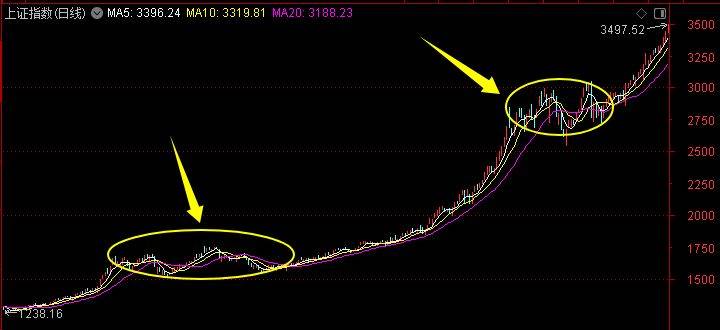
Market Performance - The A-share market experienced a collective pullback, with the Shanghai Composite Index down 1.25%, Shenzhen Component down 2.83%, and ChiNext down 4.25% [1] - The trading volume in the Shanghai and Shenzhen markets reached 25,443 billion, an increase of 1,802 billion compared to the previous day [1] - A total of 2,297 stocks rose while 2,990 stocks fell, with a median decline of 0.35% in stock prices [1] Sector Analysis - Recently, sectors such as semiconductors, communication equipment, electronic chemicals, and aerospace saw significant declines, while consumer sectors like retail, beauty care, food and beverage, and tourism showed gains [1] - The market adjustment is attributed to the crowded trading in technology sectors, particularly AI hardware, which has seen rapid price increases [1][2] Market Outlook - The market is expected to experience a period of consolidation, with the Shanghai Composite Index showing signs of increased volatility as it approaches key resistance levels [3] - Historical patterns indicate that significant market corrections often occur during bull markets, typically lasting 1-2 months [4][5][7][10] - The potential for deep market corrections is considered low, with expectations leaning towards range-bound trading as a form of market rest [9] Key Indicators - The recent decline in AI hardware stocks is marked by the appearance of two significant bearish candles, indicating a phase of adjustment or consolidation for this sector [9] - The upcoming third-quarter earnings reports are seen as a critical window for assessing the performance of leading AI hardware companies, which could influence market trends [12][13] Investment Opportunities - During the current market adjustment, sectors that have not seen significant gains, such as tourism, retail, and food services, may present short-term investment opportunities, especially with the upcoming National Day holiday driving consumer spending [13]
股指期货将震荡整理,白银期货再创上市以来新高黄金、白银期货将偏强震荡,焦煤、原油期货将震荡偏弱,螺纹钢、玻璃、纯碱、PTA、PVC 期货将偏弱震荡
Guo Tai Jun An Qi Huo· 2025-09-04 13:59
Report Industry Investment Rating No relevant content provided. Core Viewpoints - Through macro - fundamental and technical analysis, the report predicts the trend of various futures on September 4, 2025, including股指期货,国债期货, and commodity futures [2]. Summary by Related Catalogs Futures Market Overview - On September 3, 2025, the stock market showed a differentiated trend. The ChiNext Index strengthened, while most other indices declined. The A - share trading volume decreased. The Hong Kong stock market also declined, but the inflow of south - bound funds reached a record high. Global stock markets showed mixed trends [14][15][17]. - On September 3, 2025, the bond market was generally positive. Treasury bond futures closed higher, and most bond yields declined. The global long - term bond selling wave intensified, but on September 4, US bond yields generally fell [38][40][43]. - On September 3, 2025, most international precious metal futures closed higher, and base metal futures showed mixed trends. Crude oil futures declined [10][11]. Specific Futures Predictions Stock Index Futures - Expected to be in a volatile consolidation on September 4, 2025. For example, IF2509 has resistance levels at 4441 and 4481 points and support levels at 4392 and 4360 points [2]. - In September 2025, the IF, IH, IC, and IM main contracts are expected to have a relatively strong and wide - range oscillation [18]. Treasury Bond Futures - The ten - year Treasury bond futures main contract T2512 on September 4, 2025, is likely to have a relatively strong and wide - range oscillation, with resistance levels at 108.30 and 108.43 yuan and support levels at 108.00 and 107.91 yuan [39]. - The thirty - year Treasury bond futures main contract TL2512 on September 4, 2025, is likely to have a relatively strong and wide - range oscillation, with resistance levels at 117.4 and 117.7 yuan and support levels at 116.7 and 116.5 yuan [43]. Commodity Futures - **Precious Metals**: Gold and silver futures are expected to be relatively strong on September 4, 2025. The silver futures main contract AG2510 may reach a new high since its listing [2][3]. - **Base Metals**: Copper futures are expected to be relatively strong, while alumina and nickel futures show different trends. The alumina futures main contract AO2601 is likely to be weakly volatile, and the nickel futures main contract NI2510 is expected to be in a volatile consolidation [3][58][63]. - **Energy and Chemicals**: Crude oil, PTA, and PVC futures are expected to be weakly volatile on September 4, 2025. The crude oil futures main contract SC2510 is likely to decline slightly [6]. - **Building Materials**: Rebar, glass, and soda ash futures are expected to be weakly volatile on September 4, 2025 [6]. Macro - Information and Trading Alerts - 12 provinces have raised the minimum wage standard this year, with an increase of about 8% - 12% in most provinces [7]. - The joint working group of the Ministry of Finance and the central bank held a meeting to discuss issues related to the bond market and promote its stable and healthy development [7]. - China's Ministry of Commerce imposed anti - dumping duties on US fiber optic producers, with rates ranging from 33.3% to 78.2% [7]. - The Fed's Beige Book shows that economic activity in most parts of the US has hardly changed recently, and consumer spending is flat or declining [8]. - The number of job openings in the US in July decreased to 7.181 million, the lowest in 10 months [8]. - Fed officials have different views on interest rate cuts. One believes that interest rates should be cut this month, while the other thinks the current rate is appropriate [8]. - The eurozone's August composite PMI final value slightly increased, but the service industry PMI declined [8].
9月4日主题复盘 | 指数延续调整态势,大消费、造纸表现活跃,AI硬件全线大跌
Xuan Gu Bao· 2025-09-04 08:45
Market Overview - The market experienced fluctuations with the ChiNext index leading the decline, dropping over 6%. Retail and food stocks rose, with companies like Guoguang Chain and Anji Food hitting the daily limit. Financial stocks such as Pacific Securities and Agricultural Bank reached historical highs [1] - The total trading volume for the day was 2.58 trillion [1] Consumer Sector Highlights - The consumer sector showed strong performance, with stocks like Anzheng Fashion and Huijia Times hitting the daily limit. The Zhejiang Shaoxing government announced a new consumption policy aimed at boosting spending through 15 measures, including consumption vouchers and promoting cultural and tourism integration [4][6] - The upcoming Mid-Autumn Festival and National Day holidays have led to a significant increase in domestic flight ticket bookings, with over 1.76 million tickets reserved, marking a 24% increase compared to the same period last year [4] Paper Industry Activity - The paper sector was active, with companies like Jingxing Paper and Songyang Resources hitting the daily limit. Major paper manufacturers announced price increases due to rising raw material costs, with expectations for continued price hikes as the industry enters its traditional peak season [7][8] - Analysts predict that the paper price will continue to rise, supported by seasonal demand and cost pressures, potentially improving profitability for the industry [8] Other Sector Movements - The Apple supply chain, energy storage, and large financial sectors showed localized activity, while AI hardware stocks faced significant declines [9] - The market saw a continuous trading volume exceeding 2 trillion, indicating robust activity in the financial sector [11]







资讯早间报-20250904
Guan Tong Qi Huo· 2025-09-04 00:39
Report Summary 1. Market Performance - **Futures Market**: In the domestic futures market, most contracts closed lower overnight. Gold and silver futures rose over 1%, while coking coal dropped over 3%, and several other commodities like coke and low-sulfur fuel oil fell over 2% [3]. - **Stock Market**: A-share market showed a mixed trend. The ChiNext Index rose 0.95%, while the Shanghai Composite Index fell 1.16% and the Shenzhen Component Index fell 0.65%. The Hong Kong Hang Seng Index dropped 0.6% [24]. - **Bond Market**: Bond futures in China closed higher, with the 30-year and 10-year main contracts rising 0.46% and 0.21% respectively. Global long-term bond yields generally increased, with the US 30-year Treasury yield breaking through 5% [44]. - **Foreign Exchange Market**: The onshore RMB against the US dollar rose 8 basis points at 16:30, while the US dollar index fell 0.17% [46][47]. 2. Important News **Macro News** - The joint working group of the Ministry of Finance and the People's Bank of China held its second meeting, emphasizing the synergy of fiscal and monetary policies [7]. - The RatingDog China Services PMI in August reached 53, the highest since May 2024 [8]. - Atlanta Fed President Bostic believes one rate cut this year is appropriate, subject to inflation and employment conditions [8]. **Energy and Chemical Futures** - The Shanghai Futures Exchange will launch the standard warehouse receipt generation business for offset printing paper futures from November 20, 2025 [9]. - OPEC+ will consider further increasing oil production at a meeting on Sunday, which may involve lifting a 1.65 million barrels per day production cut [9]. - China's methanol port inventory increased to 142.77 million tons as of September 3, 2025 [10]. - National urea production from January to August 2025 was 47.42 million tons, a 9.7% year-on-year increase [10]. **Metal Futures** - The Shanghai Gold Exchange will adjust the margin levels and price limits of several gold and silver contracts from September 5, 2025 [13][40]. - The World Gold Council is seeking to launch a digital form of gold, which could transform the $900 billion London physical gold market [13][42]. - Chile's lithium carbonate exports in August 2025 were 16,900 tons, a 19.2% month-on-month decrease [14]. **Black Futures** - Jinyie Iron and Steel Group conducted maintenance on a 450m³ blast furnace from August 31 to September 10, affecting daily pig iron production by about 1,700 tons [18]. - Shandong coking enterprises resumed production on September 3 after a period of production restrictions [18]. **Agricultural Futures** - Malaysia's palm oil inventory in August 2025 is expected to reach 2.2 million tons, a 4.06% increase from July [20]. - Yunnan's sugar sales as of the end of August 2025 were 2.0823 million tons, with a sales rate of 86.09% [22]. - La Nina may return from September, affecting global weather and climate [22]. 3. Financial Market **Stock Market** - Southbound funds' net inflow into the Hong Kong stock market reached HK$1.00573 trillion as of September 3, setting a new high [24]. - 41 brokerages have recommended 281 stocks for September, with an overall optimistic view on the A-share market [26]. - Institutions have shown high enthusiasm for researching North Exchange-listed companies [26]. **Industry** - The Ministry of Agriculture and Rural Affairs and the Ministry of Industry and Information Technology aim to build agricultural machinery verification platforms by 2027 [28]. - The second-hand housing market in Beijing and Shenzhen showed different trends in August, while Guangzhou's market slowed down [28]. - New energy vehicle retail sales in August reached 1.079 million units, a 5% year-on-year increase [30]. - Major paper mills announced price increases in early September [30]. **Overseas Markets** - Brazilian President Lula plans to hold a special BRICS leaders' summit on September 8 to discuss US trade policies [31]. - The US economy showed little change in recent weeks, with consumer spending flat or declining [31]. - The US job openings in July dropped to 7.181 million, a 10-month low [32]. - Some Fed officials have different views on interest rate cuts [32]. - The eurozone's August composite PMI rose slightly to 51 [32]. - The Bank of Japan may raise interest rates if the economy and prices meet expectations [34]. - Japan's new fiscal year budget application reached a record ¥122.4 trillion [34]. - South Korea's Q2 GDP grew 0.7% quarter-on-quarter [35]. - Australia's Q2 GDP grew 1.8% year-on-year [36]. **International Stock Markets** - US stocks closed mixed, with the Dow down 0.05% and the Nasdaq up 1.02% [37]. - European stocks closed higher, with the German DAX up 0.46% [37]. - Barclays believes the S&P 500 is not overvalued, especially technology stocks [38]. - Foreign investors are withdrawing from the Vietnamese stock market at an unprecedented rate [39]. **Commodity Market** - Gold and silver futures rose, while oil futures fell [3][41]. - The London Metal Exchange postponed its Asian opening time by 90 minutes [40]. **Bond Market** - China's bond market rose, while global long-term bond yields increased [44]. - US Treasury yields fell across the board [45]. **Foreign Exchange Market** - The onshore RMB against the US dollar rose slightly, while the US dollar index fell [46][47].
陆家嘴财经早餐2025年9月4日星期四
Wind万得· 2025-09-03 22:49
Group 1 - The Ministry of Finance and the central bank held a meeting to discuss the operation of the financial market, government bond issuance management, and the offshore RMB bond issuance mechanism [2] - FTSE Russell announced changes to the FTSE China A50 Index, including the inclusion of companies such as BeiGene and WuXi AppTec, effective September 22 [2] Group 2 - Twelve provinces in China have raised the minimum wage this year, with increases ranging from 8% to 12%, resulting in all provinces having a minimum wage exceeding 2000 yuan [3] - The Ministry of Commerce of China determined that U.S. fiber optic manufacturers circumvented anti-dumping measures, imposing anti-dumping duties on several companies, with rates as high as 78.2% [3] Group 3 - A-share market showed mixed performance, with the ChiNext Index rising by 0.95%, while the Shanghai Composite Index fell by 1.16% [4] - The Hong Kong Hang Seng Index decreased by 0.6%, with significant net inflows from southbound funds reaching 10057.3 billion HKD year-to-date [4][5] Group 4 - The North Exchange has seen increased institutional research activity, with 68 companies announcing 77 research records since August [6] - Allegations of insider trading are being investigated in Hong Kong, involving staff from the stock exchange and the Securities and Futures Commission [6] Group 5 - The agricultural sector aims to develop high-end intelligent agricultural machinery by 2027, focusing on testing platforms and application centers [8] - In August, the retail sales of new energy vehicles in China reached 1.079 million units, marking a 25% year-on-year increase [8] Group 6 - Tesla's sales in major European markets have significantly declined, with a 39% drop in new car registrations in Germany in August [10] - LG Energy Solution signed battery supply agreements with Mercedes-Benz, with a total capacity of 107 GWh, potentially worth around 768 billion yuan [10] Group 7 - The U.S. stock market showed mixed results, with the Dow Jones down 0.05% and the Nasdaq up 1.02%, driven by strong performances from tech stocks [15] - Global long-term bond sell-off intensified, with U.S. 30-year Treasury yields surpassing 5% [16] Group 8 - The onshore RMB closed at 7.1468 against the USD, with a slight increase, while the offshore RMB fell to 7.1397 [21] - The South Korean economy showed a 0.7% quarter-on-quarter growth in Q2, exceeding initial estimates [20]

创业板市值“老二”易主了!市场风格会切换吗?
Mei Ri Jing Ji Xin Wen· 2025-09-03 09:50
Market Overview - The A-share market showed mixed performance with the Shanghai Composite Index and Shenzhen Component Index down by 1.16% and 0.65% respectively, while the ChiNext Index rose by 0.95% [1] - The trading volume in the Shanghai and Shenzhen markets exceeded 2.3 trillion yuan, a significant decrease of over 500 billion yuan compared to the previous day [1] Market Sentiment and Technical Analysis - Market sentiment is nearing a low point, and a rebound will require increased trading volume [2] - Key technical levels to watch include the August 26 high of 3888 points for upward momentum and the August 28 low of 3761 points for potential further declines [2] - The performance of small-cap and micro-cap stocks has been notably weak, particularly in the CSI 1000 Index and CSI 2000 Index [2] Valuation Trends - Recent weeks have seen low valuation stocks outperform high valuation stocks across the A-share market [3] - The valuation gap between small-cap and large-cap stocks remains significant, with historical high ratios in PE valuations between various indices [3] Sector Performance - The communication equipment sector showed some recovery, with a 1.1% increase in the sector index, driven by strong performances from stocks like Zhongji Xuchuang and Tianfu Communication [3] - Zhongji Xuchuang's market capitalization has surpassed that of Dongfang Caifu, marking a shift in the second-largest market cap on the ChiNext [4] Impact of Major Stocks - Major stocks like "Yizhongtian" contributed significantly to the ChiNext Index's performance, indicating their influence on broader market movements [5] - The upcoming Apple product launch is anticipated to impact the performance of consumer electronics stocks, with analysts divided on the potential for a major upgrade cycle driven by the iPhone 17 [5][6] Investment Opportunities - Recent trends suggest that the market's adjustment phase may provide entry points for investors, particularly in small-cap and micro-cap stocks that have seen substantial gains since April 8 [7] - The CPO sector, represented by "Yizhongtian," is crucial for determining the future trajectory of AI hardware stocks, with a focus on key components like CPO, PCB, and AI chips [7]



金十数据全球财经早餐 | 2025年9月3日
Jin Shi Shu Ju· 2025-09-02 23:08
Group 1 - The U.S. stock market experienced a decline, with the Dow Jones falling by 0.55%, the S&P 500 down by 0.69%, and the Nasdaq decreasing by 0.82% [3] - Major European indices also fell, with Germany's DAX30 down by 2.29%, the UK's FTSE 100 down by 0.87%, and the Euro Stoxx 50 down by 1.42% [3] - In Hong Kong, the Hang Seng Index dropped by 0.47% to 25,496.55 points, while the Hang Seng Tech Index fell by 1.22% to 5,728.46 points, with a total market turnover of HKD 328.12 billion [4] - The A-share market saw all three major indices decline, with the Shanghai Composite Index down by 0.45%, the Shenzhen Component down by 2.14%, and the ChiNext Index down by 2.85%, with a total turnover of CNY 2.87 trillion [5] Group 2 - The wholesale sales of new energy passenger vehicles in China increased by 24% year-on-year in August, reaching 1.3 million units [11] - The gold price reached a new historical high, closing at USD 3,533.43 per ounce, up by 1.64% [6] - WTI crude oil prices rose by 1.46% to USD 65.37 per barrel, while Brent crude oil increased by 1.38% to USD 69 per barrel [6] - The semiconductor sector in Hong Kong faced significant declines, with companies like Hua Hong Semiconductor and SMIC dropping over 4% and 5% respectively [4]