即时零售

Search documents
安踏接入淘宝闪购 全国超千家门店运动装备“分分钟送达”
Zheng Quan Ri Bao Wang· 2025-12-19 13:17
Core Viewpoint - Anta Sports Products Co., Ltd. has officially integrated its brand Anta into Taobao Flash Purchase, enhancing its omnichannel retail strategy and meeting consumer demand for immediate delivery of sports equipment [1][2] Group 1: Company Developments - Anta has launched its products on Taobao Flash Purchase, covering 174 cities including Shanghai, Beijing, and Guangzhou, with plans to expand to over 4,000 stores by 2026 [1] - The product offerings on Taobao Flash Purchase include essential winter items such as down jackets, windbreakers, cotton shoes, and running shoes, featuring Anta's proprietary warming technology and collaborations with NBA star Kyrie Irving [1] Group 2: Industry Trends - The demand for sports equipment has shifted towards immediate consumption triggered by various sports scenarios, prompting local sports brands to quickly establish a presence in instant retail through platforms like Taobao Flash Purchase [2] - The integration of online and offline operations by local sports brands on platforms like Tmall is providing consumers with a new shopping experience [2]
2026年中国食品饮料行业投资策略——捕捉细分渠道及品类增长
野村东方国际证券· 2025-12-19 10:03
Core Viewpoint - The retail sector is under pressure, with social retail sales growth slowing down and valuations in the food and beverage sector at a low point [2][3][10]. Group 1: Social Retail Sales and Consumer Price Index - Social retail sales growth has declined, with total retail sales in October 2025 increasing by 2.9% year-on-year, while the growth rates for dining and commodity retail sales were 1.1% and 4.0% respectively [3][6]. - The Consumer Price Index (CPI) turned positive in October 2025, following a decline in food prices, with food CPI down 2.9% year-on-year [3][10]. Group 2: Food and Beverage Sector Performance - The food and beverage sector is experiencing significant pressure, with the overall profit of the liquor sector down 23.9% year-on-year in Q3 2025, largely due to strict regulations impacting the industry [12]. - The beverage segment shows strong growth from leading companies, with soft drink revenue reaching 106.2 billion yuan, up 14.4% year-on-year, while the dairy sector faced challenges with a slight decline in revenue [13][14]. Group 3: Market Trends and Consumer Confidence - The online retail channel is growing faster than offline, with a 6.3% year-on-year increase in online sales as of October 2025, driven by food categories [16]. - Consumer confidence is gradually improving, with the consumer confidence index rising from 87.5 in January to 89.4 in October 2025, contributing significantly to GDP growth [18][21]. Group 4: Valuation and Investment Opportunities - The food and beverage sector is currently at a low valuation level, with a price-to-earnings ratio of approximately 21.4 times, placing it in the 10.9% percentile of the last decade [10][11]. - The sector's dividend rate has slightly decreased but still has room for improvement, with the overall dividend rate fluctuating between 60% and 73% from 2019 to 2023 [23].


加速布局深圳 盒马光明首店开业
Sou Hu Cai Jing· 2025-12-19 08:47
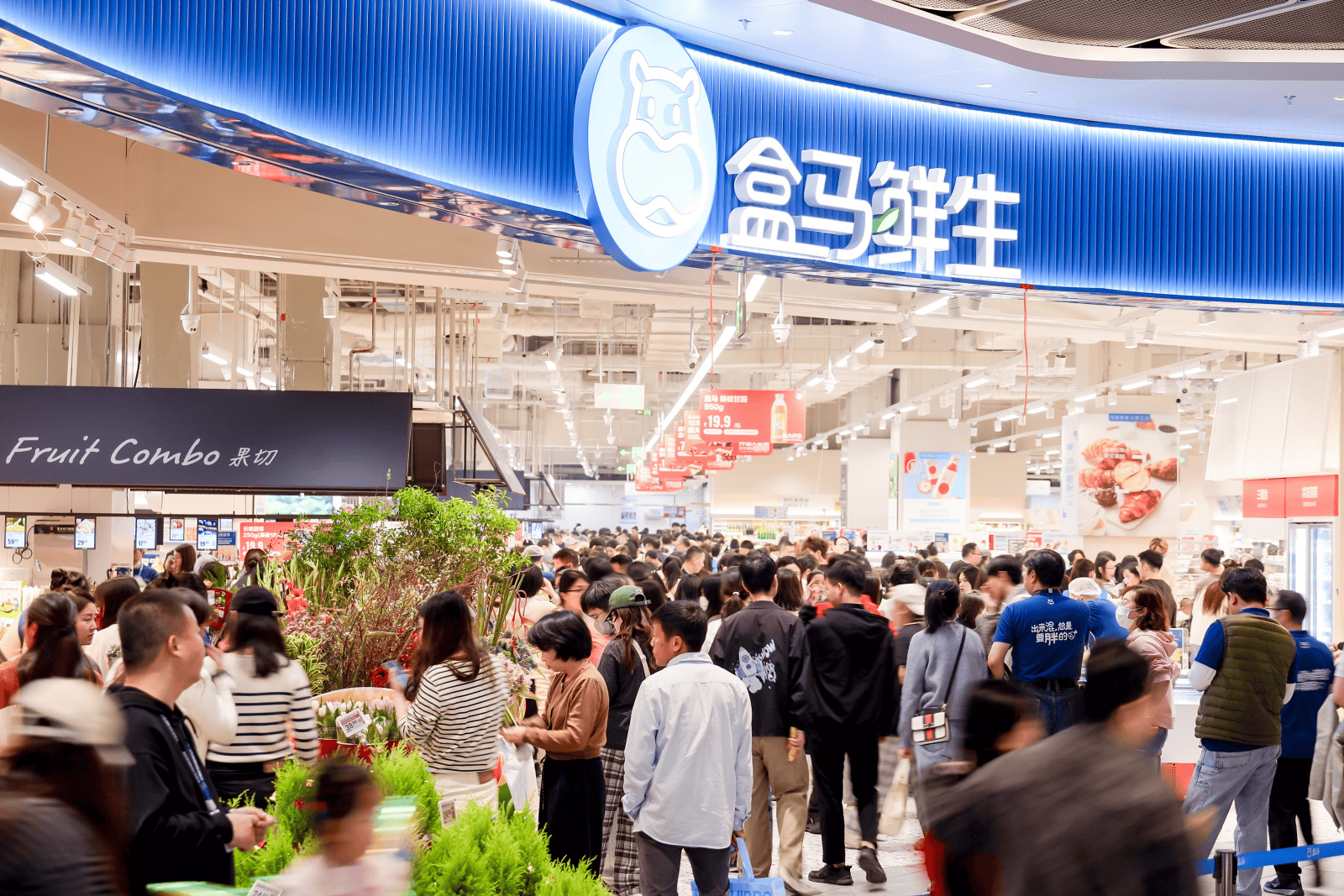
Group 1 - Hema Fresh has opened its first store in Shenzhen's Guangming District, enhancing its instant retail service network in the area [1] - The store offers over 4,000 product categories, including fresh produce, daily necessities, and food items, with a focus on high-quality offerings such as live seafood [1][2] - The store aims to transform traditional retail spaces into "fresh social hubs," featuring a variety of organic and Hong Kong-standard products [1] Group 2 - The store provides differentiated services, including live cooking of seafood like king crabs and Boston lobsters, to create an instant dining experience [2] - Hema's expansion into Guangming is a strategic move to tap into the growing local population and the consumption upgrade driven by the tech industry [4] - The store leverages Hema's global sourcing supply chain and instant retail capabilities to enhance the consumer experience and stimulate the local retail market [4]
京东折扣超市北京首店开业
Sou Hu Cai Jing· 2025-12-19 06:13
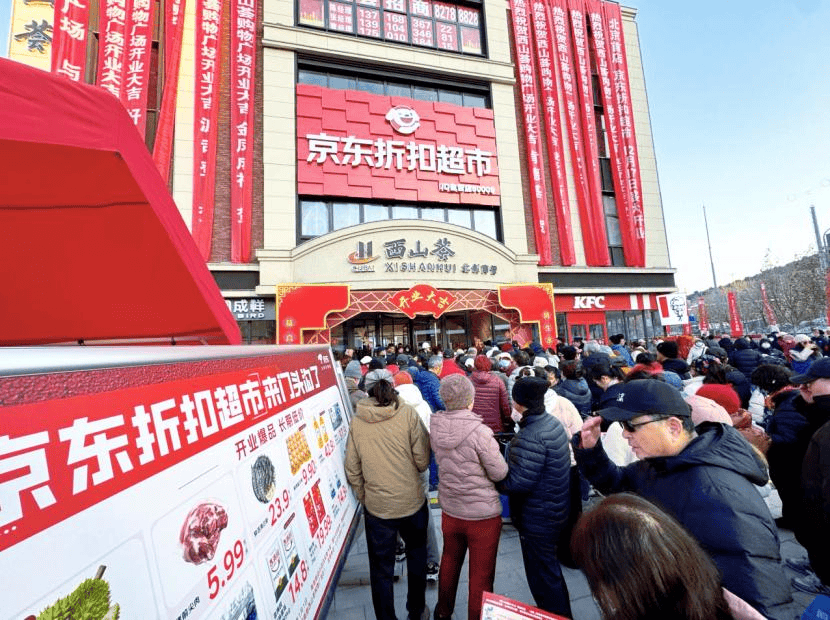
Core Insights - JD's discount supermarket has opened its ninth store in Beijing, emphasizing the integration of local culture and the expansion of quality goods and services [1] Group 1: Store Details - The new store, Xishan Hui, follows a "large store + full category" model, covering an area of 5,000 square meters and serving a high-density consumer area within a 5-kilometer radius and a resident population of 200,000 [3] - The location in Mentougou is strategically chosen near the Nanjing East logistics hub, allowing for rapid replenishment through an established supply chain [3] Group 2: Supply Chain and Freshness - The store employs a multi-channel supply chain model, including direct sourcing from producers, factory direct supply, and private label products, effectively reducing intermediary costs [3] - Fresh produce can be delivered from order to shelf in as little as 1 hour, ensuring freshness while maintaining low prices [3] Group 3: Omnichannel Strategy - The store integrates online and offline channels, allowing customers to place orders via the JD app with delivery in as fast as 30 minutes [3] - The company aims to enhance operational efficiency and focus on essential consumer needs and regional specialty products to create exclusive bestsellers [3]

又一天猫品牌布局即时零售,超千家安踏线下门店接入淘宝闪购
Jin Rong Jie Zi Xun· 2025-12-19 05:19
Group 1 - Anta officially integrates with Taobao Flash Purchase, covering 174 cities including Shanghai, Beijing, and Guangzhou, with over 1,000 offline stores now available on the platform [1][4] - The integration is expected to expand to over 4,000 stores by 2026, allowing consumers to order from nearby stores for quick delivery [1] - Products available through Taobao Flash Purchase include essential winter items such as down jackets, windbreakers, cotton shoes, and running shoes, including Anta's proprietary "Six Degrees Core" winter gear and NBA star Kyrie Irving's merchandise [2][3] Group 2 - The integration is a key step in Anta's strategy to deepen its omnichannel retail approach, enhancing the "online + offline" strategy to cover more consumer scenarios, particularly for urgent needs and instant delivery [6] - This move aims to meet consumer demands for timely purchases in situations like travel and fitness, with a focus on creating a distributed fulfillment network where stores act as warehouses [6] - The rise of instant retail through Taobao Flash Purchase reflects a shift in consumer behavior, emphasizing immediate consumption needs alongside traditional bulk purchasing during promotional events [6]


奔富也有点卖不动了, 富邑在中国放慢扩张脚步
Xin Lang Cai Jing· 2025-12-19 00:14
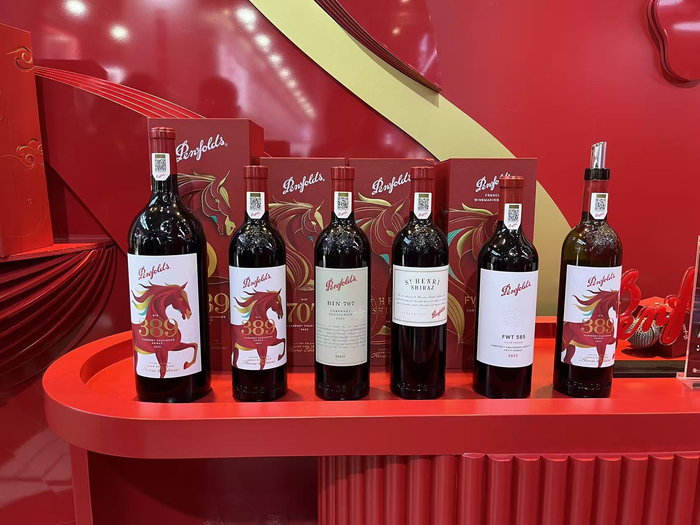
Core Viewpoint - Treasury Wine Estates (TWE) has lowered its sales growth expectations due to a slowdown in wine category sales, particularly in China and the U.S., where inventory levels are above ideal [1] Group 1: Financial Performance - TWE expects EBIT (Earnings Before Interest and Taxes) for the first half of FY2026 to be between AUD 225 million and AUD 235 million, with the second half expected to exceed the first half [1] - The company anticipates that the Penfolds brand will generate approximately AUD 200 million in EBIT for the first half of FY2026, with a balanced performance expected for the entire year [1] Group 2: Market Dynamics - The Chinese market showed a year-on-year sales increase during the traditional consumption peak from August to October 2025, but TWE expects growth to be below the original operational plan for FY2026 due to reduced consumption scenarios [1] - The end of anti-dumping and countervailing duties on Australian wine imports in China starting March 29, 2024, will intensify competition as TWE re-enters the market [3] Group 3: Strategic Initiatives - TWE is focusing on product differentiation to attract younger consumers, including collaborations with celebrities like Hua Chenyu to enhance brand appeal [5] - The company has established 12,000 retail points across China, partnering with various channels to increase product visibility [5] - TWE is prioritizing e-commerce channels, particularly social platforms like Xiaohongshu, to engage with consumers and adapt to changing shopping behaviors [7] Group 4: Inventory and Management Changes - TWE is facing an inventory crisis in China and plans to reduce stock levels held by domestic distributors while limiting parallel imports to maintain brand integrity [11] - A leadership change occurred with Tim Ford stepping down as CEO after 14 years, succeeded by Sam Fischer, who acknowledged challenges in key markets [11] - The company is implementing the "TWE Ascent" global business transformation plan aimed at achieving long-term benefits [11]
研究称2025年中国工业实现超预期增长
Zhong Guo Xin Wen Wang· 2025-12-18 17:11
Core Viewpoint - The China Electronic Information Industry Development Research Institute predicts that China's industrial production will exceed expectations in 2025, achieving a successful conclusion to the "14th Five-Year Plan" amid rapidly changing international circumstances. Industrial production is expected to maintain stable growth in 2026 [1][2]. Group 1: Industrial Production - In the first 11 months of 2025, the industrial added value of large-scale enterprises in China increased by 6% year-on-year, marking the highest level for the same period since 2022 [1]. - The contribution rate of the industrial sector to China's GDP growth reached 36.1% in the first three quarters, also at a high level in recent years [1]. Group 2: Industrial Investment - In the first 10 months of 2025, industrial investment grew by 4.9% year-on-year, with a decrease of 7.2 percentage points compared to the previous year's total [1]. - Looking ahead to 2026, major projects under the "15th Five-Year Plan" are expected to start, with an improved investment environment and increased financial support, leading to a stabilization in industrial investment growth [1]. Group 3: Export and Consumption - In the first 10 months of 2025, the export delivery value of large-scale industrial enterprises increased by 2.7% year-on-year, with a decline of 4.0 percentage points compared to the first quarter and a decrease of 2.4 percentage points compared to the previous year [2]. - For 2026, while export pressures are anticipated to remain, resilience is expected [2]. - Consumer confidence and capacity in China are gradually recovering, with improvements in consumption supply quality and expansion. The rapid development of "artificial intelligence + consumption" is leading to emerging trends in instant retail, smart green consumption, and sports consumption, indicating a stable and positive outlook for consumption in the coming year [2].
中百集团大撤退:30家门店关闭背后的零售业寒冬与转型阵痛
Xin Lang Cai Jing· 2025-12-18 11:15
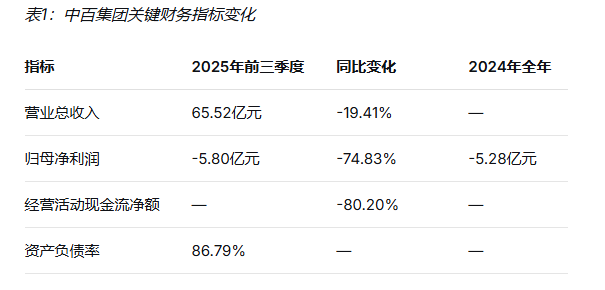
根据公司公告披露的详细信息,这批被关闭的门店中超过七成是因为长期经营亏损且扭亏无望。闭店清单中包 括2005年开业的老店和2022年开业的新店,横跨近二十年,表明问题具有普遍性而非局限于旧模式门店。从地 域分布看,这30家门店覆盖了湖北省内多个城市,显示了业绩下滑的区域广度和深度。 短期财务阵痛是不可避免的。中百集团在公告中明确列出了关闭门店将产生的一次性损失构成,这些成本将直 接影响公司2025年全年业绩。 更为严峻的是,关店过程中还存在诸多不确定性风险。公告中特别指出,"因关店解约在具体实施过程中,存 在由此带来的业主和租户赔偿、员工补偿、资产损失以及诉讼等风险"。 近日公告显示,截至2025年11月,中百集团(维权)已累计关闭仓储大卖场30家,预计产生关店损失约1.8亿 元。今年前三季度,这家区域零售巨头营业收入同比下降19.41%,净亏损达5.80亿元。 同时,其ESG评级已滑落至行业垫底的CCC级,近期更是因违规操作被暂停军队采购资格。这些数字和事件共 同揭示了一个严峻的现实:即便经过胖东来模式调改,传统零售企业仍然深陷转型困境。 断臂求生:关店决策的财务逻辑与阵痛 中百集团关闭门店的步伐在2025 ...

新华都:公司通过矩阵式营销方法提升产品在消费者心智中的影响力,深化与头部品牌的合作
Zheng Quan Ri Bao Zhi Sheng· 2025-12-18 09:38
Core Viewpoint - The company focuses on internet marketing, prioritizing consumer needs and responding to national consumption promotion policies [1] Group 1: Business Strategy - The company employs a matrix marketing approach to enhance product influence in consumers' minds and deepens collaboration with leading brands [1] - The company actively captures flow spillover opportunities from emerging e-commerce channels, such as interest-based and content-based e-commerce [1] Group 2: Market Adaptation - The company explores instant retail models, utilizing flexible sales strategies and user experiences to meet market demands [1] - The company aims to leverage policy opportunities, relying on technological empowerment and omnichannel service capabilities to provide quality services for brands and consumers [1]

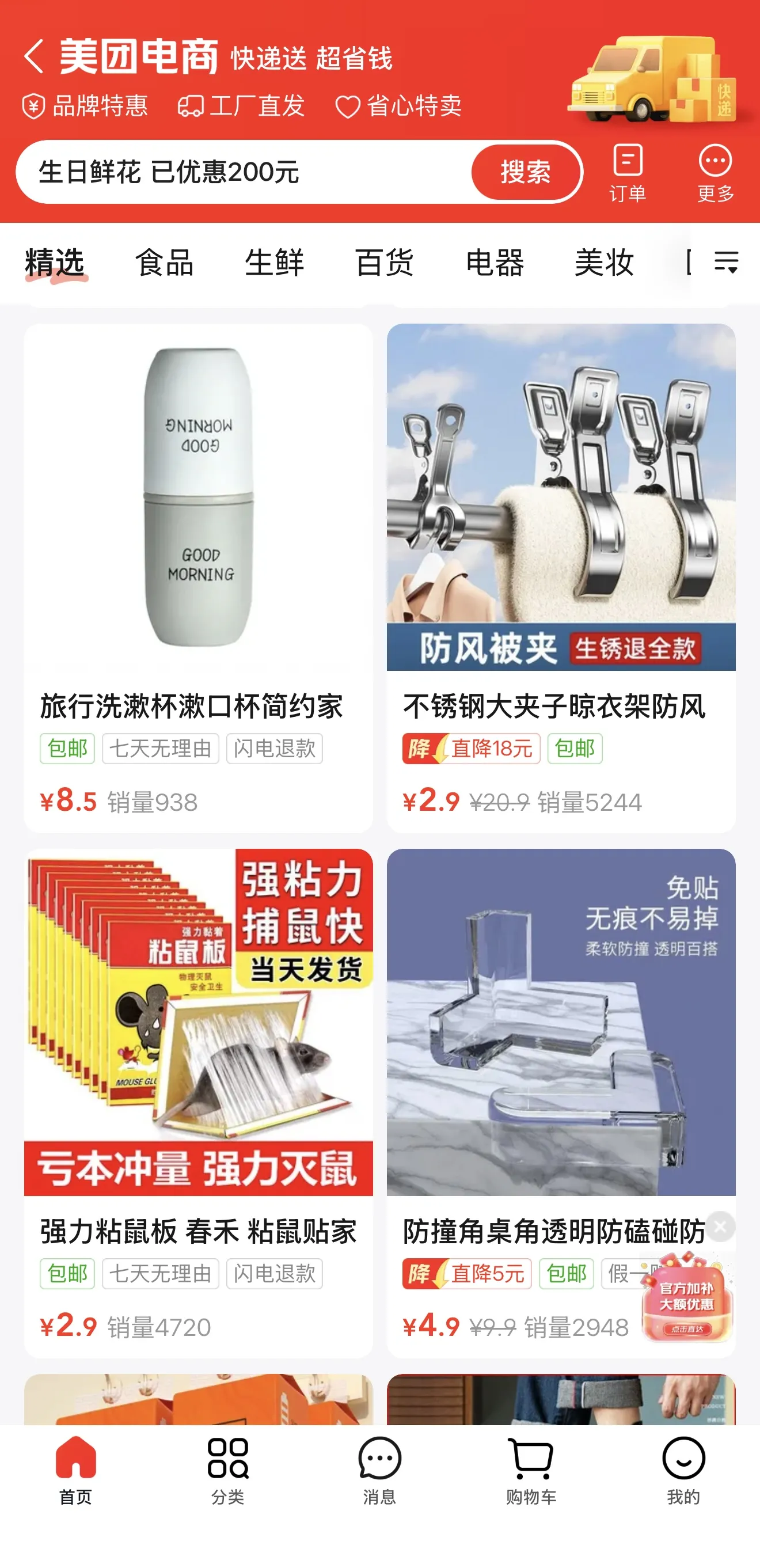
美团暂停“团好货”,内部邮件称“快递电商难以承接即时零售用户需求”
Cai Jing Wang· 2025-12-18 09:19
Core Insights - Meituan has decided to suspend its "Tuan Hao Huo" (Meituan E-commerce) business to focus on exploring new retail formats [1][4] - The decision comes as the grocery retail industry evolves, and the current express e-commerce model struggles to meet the demands of instant retail consumers [1] - Meituan's Q3 financial report indicates strong growth in its new business segments, particularly in grocery retail [1] Group 1 - The "Tuan Hao Huo" business was launched in August 2020 as a B2C e-commerce initiative and was later integrated into the Meituan app [1] - The internal email from Meituan highlights the need for change in response to industry trends and consumer needs [1] - The company plans to communicate with affected personnel regarding future plans following the business suspension [1] Group 2 - Meituan has been actively exploring new retail formats and has announced plans to expand instant retail services, including the continued expansion of its flash purchase business [1] - The "Xiang Xiao Supermarket" service network has already reached over 30 cities, including major urban centers like Beijing, Shanghai, and Guangzhou [1]